01/Overview
The Chinese Crested is a small, elegant companion breed known for its fine-boned build, expressive appearance, and two distinct coat varieties: Hairless and Powderpuff. The breed is affectionate, lively, intelligent, and often strongly attached to its family.
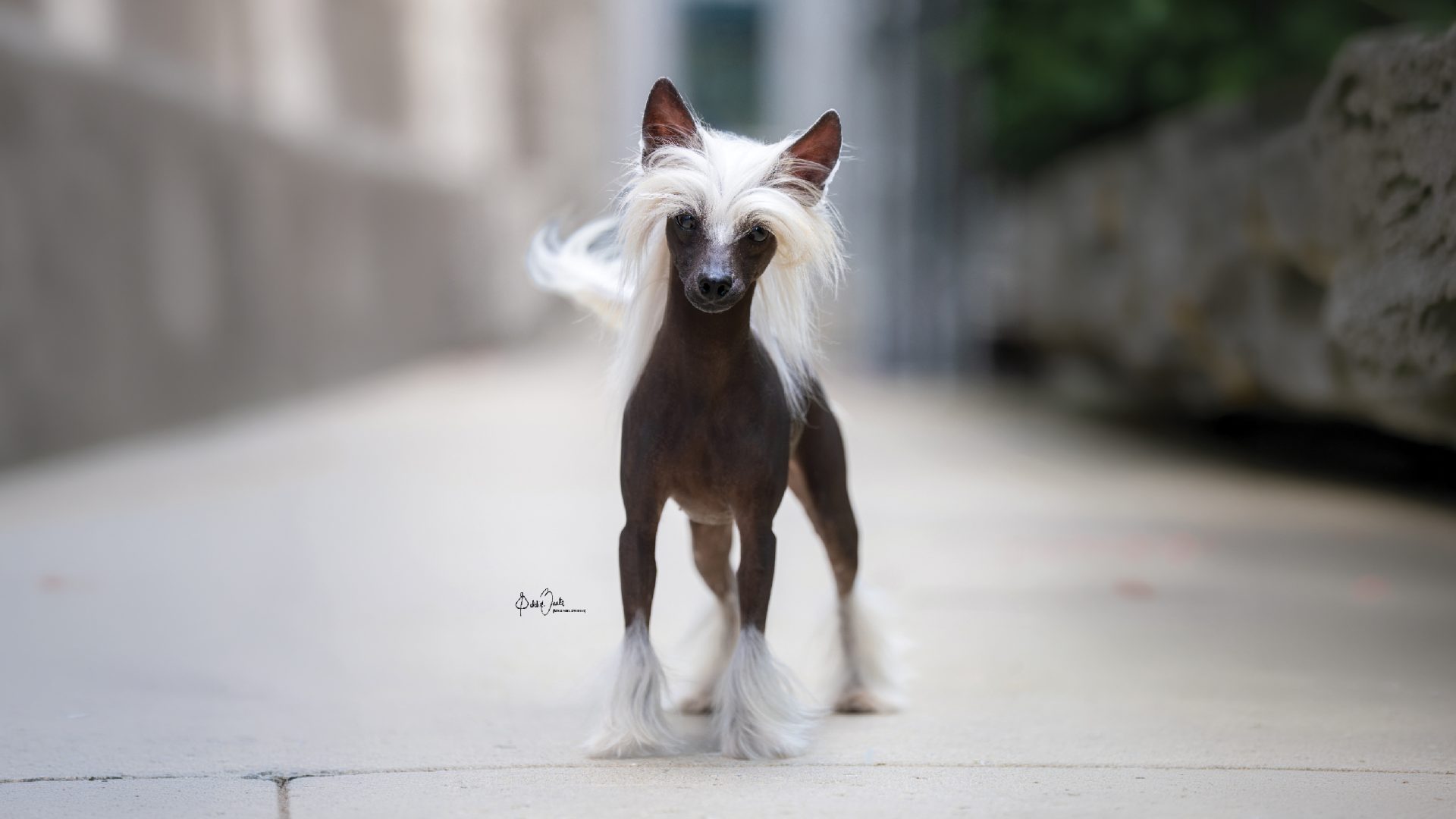
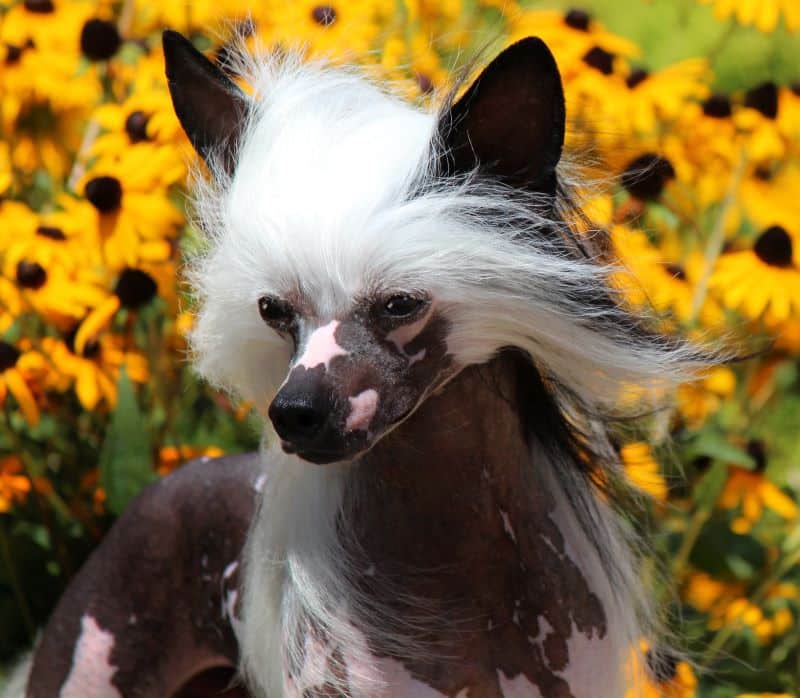
The Hairless variety has soft, smooth skin with hair on the head, feet, and tail, while the Powderpuff is covered in a soft, silky coat. Both varieties can occur in the same litter and share the same overall structure and temperament.
Highlights
02/History
The exact origins of the Chinese Crested are not completely documented, but the breed is believed to descend from ancient hairless dogs that were developed and traded in different parts of the world.
Chinese sailors are often associated with the breed’s early history. Hairless dogs were kept aboard ships, where they may have helped control vermin and also served as companions. Through trade routes, dogs of this type traveled to ports in Africa, Asia, and other regions.
Over time, smaller hairless dogs became closely associated with China, where they were further developed as companion animals. The breed eventually became known as the Chinese Crested because of this connection and because of the distinctive crest of hair on the head of the Hairless variety.
The breed includes two coat varieties, Hairless and Powderpuff. The Hairless has exposed skin with hair on the head, feet, and tail, while the Powderpuff has a full coat. Both varieties are genetically linked and may be born in the same litter.
Chinese Cresteds began gaining greater recognition in Europe and North America during the nineteenth and twentieth centuries. Breeders and exhibitors helped establish a consistent type and promote the breed through organized dog shows.
The American Kennel Club recognized the Chinese Crested in 1991 and placed the breed in the Toy Group. The American Chinese Crested Club serves as the breed’s AKC parent club.
The Fédération Cynologique Internationale also recognizes the Chinese Crested and places it in Group 9, Companion and Toy Dogs.
03/Appearance
An adult Chinese Crested stands 11 to 13 inches tall at the withers and typically weighs between 8 and 12 pounds.
Skull: The Chinese Crested has a slightly rounded and elongated skull that is clean and refined. The head should be proportionate to the body and free from coarseness.
Expression: The expression is alert, bright, and lively, with a gentle and attentive appearance.
Eyes: The eyes are medium in size, set well apart, and should be dark enough to complement the dog’s color. They should not appear overly prominent.
Ears: The ears are large, set low, and carried erect in the Hairless variety. Powderpuffs may have either erect or dropped ears.
Muzzle: The muzzle is clean, tapering gradually toward the nose, and should appear balanced with the skull.
Nose: The nose is prominent and may vary in color according to the pigmentation of the dog.
Bite: The Chinese Crested has a scissors or level bite. Hairless dogs may have incomplete dentition, while Powderpuffs should have a full complement of teeth.
The Chinese Crested is a fine-boned, elegant Toy breed with a graceful and balanced outline. The body is slightly longer than tall, with a level topline, moderately deep chest, and a tucked-up abdomen.
The breed should appear light and refined without looking weak or fragile. The bone is slender but sufficient for an active companion dog, and the overall structure should support smooth, agile movement.
Texture: The Chinese Crested comes in two coat varieties. The Hairless variety has soft, smooth skin with silky hair on the head, feet, and tail, while the Powderpuff has a soft, fine, silky double coat that covers the body.
Standard Colors
04/Consider
The Chinese Crested is affectionate, lively, sensitive, and closely attached to its family. Anyone considering the breed should be prepared for regular skin or coat care depending on the variety, consistent training, early socialization, dental care, and moderate daily exercise.
Interaction With Family
The level of affection a breed typically shows towards family members and familiar individuals.
Good With Other Dogs
The innate friendliness of a dog towards other dogs can depend on its breed.
Good With Young Children
The degree to which a breed will typically be patient with young children.
Amount Of Shedding
How much hair a breed typically leaves behind on clothes, furniture and floors.
Frequency Of Grooming
How often a breed needs brushing, bathing or a professional trim to stay in condition.
Amount Of Drooling
How prone a breed is to drool — worth knowing before you keep a towel by the door.
Openness To Strangers
How openly a breed tends to greet new people, visitors and strangers.
Protective Nature
How likely a breed is to alert you to — and stand between you and — anything unfamiliar.
Playfulness Level
How enthusiastic a breed stays about games and play well past puppyhood.
Trainability Level
How readily a breed takes direction and works with you rather than around you.
Barking Level
How much a breed uses its voice, and how readily.
Energy Level
How much get-up-and-go a breed brings to an average day.
Health
The Chinese Crested is generally a healthy and long-lived breed with a typical lifespan of 13 to 18 years. Preventive veterinary care, balanced nutrition, regular exercise, dental care, and maintenance of a healthy weight can help support long-term health.
The Chinese Crested is affectionate, lively, intelligent, and often deeply attached to its family. Many individuals enjoy staying close to their people and can be especially devoted companions.
The breed is usually playful and alert without being overly demanding. Some Cresteds can be reserved with unfamiliar people, so early socialization helps them become comfortable with different environments, visitors, dogs, and everyday situations.
Because the breed is sensitive, calm handling and positive training methods generally work best. Harsh corrections can make a Chinese Crested timid or reluctant to engage.
Exercise Expectations
A healthy adult generally benefits from about 30 to 45 minutes of activity each day, divided into manageable sessions. Games, trick training, and secure opportunities to explore can provide additional mental stimulation. Hairless dogs may need extra protection from cold temperatures and strong sunlight during outdoor activity. Exercise should also be adjusted to the dog’s age, fitness level, and weather conditions.
Grooming Expectations
The Chinese Crested can adapt well to apartment or house living as long as it receives regular exercise, companionship, and mental stimulation. The breed generally prefers living indoors and staying close to its family.
Hairless dogs may need sweaters or coats in cold weather and protection from excessive sun exposure during warmer months. Powderpuffs require more coat maintenance but do not need the same level of exposed-skin care.
The Crested usually does best with people who appreciate an affectionate, sensitive, and playful companion. Consistent routines, gentle handling, and regular interaction help the Chinese Crested settle comfortably into family life.
05/Puppies
Chinese Crested puppies are affectionate, playful, curious, and quick to form close bonds with their families. They benefit from gentle handling, early socialization, consistent routines, and positive training from an early age.
Both Hairless and Powderpuff puppies can be born in the same litter, and their grooming needs begin to differ as their coats and skin develop.
A Chinese Crested puppy should have a predictable daily schedule that includes regular meals, potty breaks, naps, play, training, and quiet time. A crate or secure puppy area can provide a safe place to rest and can also support housetraining.
Early socialization should introduce the puppy to different people, well-mannered dogs, household sounds, surfaces, vehicles, and unfamiliar environments. These experiences should remain positive and appropriate for the puppy’s age.
Training can begin as soon as the puppy arrives home. Short sessions can focus on name response, recall, leash walking, house training, basic manners, and calm behavior around visitors. Because the breed is sensitive, patient and reward-based methods are generally the most effective.
A puppy should receive a complete and balanced diet formulated for growth. Young puppies generally do best with several small meals throughout the day before gradually transitioning to an adult feeding schedule.
Exercise should focus on supervised play, short walks, and gentle exploration. Hairless puppies may need protection from cold weather and prolonged sun exposure, while Powderpuff puppies should become accustomed to regular brushing from an early age.
Regular veterinary visits are important during the first year. Grooming routines such as nail trimming, ear checks, tooth brushing, skin care for Hairless puppies, and coat care for Powderpuffs should also begin early.
06/Activities
Chinese Cresteds are intelligent, agile, and responsive dogs that often enjoy activities involving movement, problem-solving, and close cooperation with a handler. Here are some of the dog sports and activities in which Chinese Cresteds may participate:
Agility: Chinese Cresteds can use their speed, balance, and coordination while navigating obstacle courses.
Obedience: Obedience Trials allow the breed to demonstrate focus, responsiveness, and reliable performance with a handler.
Rally: Rally Obedience combines obedience exercises with movement through a designated course and can provide both mental and physical stimulation.
Fast CAT: This timed 100-yard dash gives the Chinese Crested an opportunity to use its speed and enthusiasm for running.
Scent Work: Chinese Cresteds can use their sense of smell to locate specific odors hidden in containers, indoor spaces, outdoor areas, or vehicles.
Conformation Shows: Chinese Cresteds compete in Conformation Shows, where judges evaluate each dog according to the Breed Standard, including structure, movement, coat or skin, expression, temperament, and overall type.
Trick Dog: Trick training provides mental stimulation and gives the Chinese Crested an enjoyable way to use its intelligence and responsiveness.
Therapy Work: A calm, friendly, and well-socialized Chinese Crested may participate in therapy visits to hospitals, schools, assisted living facilities, and other settings.
Canine Good Citizen: Chinese Cresteds may participate in programs that evaluate everyday manners, social behavior, and reliability around people and other dogs.
Gallery
07/Standards
The Chinese Crested is recognized by the world’s leading registries and kennel organizations, which categorize the breed into a specific Group based on its unique characteristics. This breed is recognized worldwide under the following Group designations:
The ideal Chinese Crested is described by a Breed Standard that is approved by each of the world’s leading registries and kennel organizations. The Standards for this breed may be found in the following links:
08/Clubs
Chinese Crested clubs support breed education, responsible breeding, health initiatives, Conformation shows, Performance events, and adherence to the Breed Standard.
American Chinese Crested Club: Founded in 1979, this is the national breed club for the Chinese Crested in the United States and the breed’s AKC parent club.
Chinese Crested Club of Canada: Established in 1992, Canada’s national organization for the Chinese Crested welcomes breeders, exhibitors, and breed enthusiasts.
Chinese Crested Club of GB: Formed in 1969, the breed club in the UK is dedicated to promoting and preserving the Chinese Crested through dog shows and educational initiatives.
09/Rescue
Breed-specific rescue organizations help Chinese Cresteds that have been surrendered, abandoned, or found in shelters. These groups may provide foster care, veterinary treatment, behavioral evaluation, and placement with an appropriate adoptive family.
American Chinese Crested Club Rescue: The breed’s American Kennel Club parent club can provide rescue contacts, referrals, or guidance for Chinese Cresteds needing placement in the United States.
Crest-Care, Inc.: A nonprofit rescue organization dedicated to helping Chinese Cresteds and their mixes in need through foster care, rehabilitation, and adoption.
Chinese Crested Club of Canada: Canada’s national breed club may provide information or referrals for Chinese Cresteds needing rescue or rehoming.
Chinese Cresteds may also be found through local shelters, toy breed rescue organizations, and national adoption databases. These resources can provide additional options for people interested in adopting a Chinese Crested or Crested mix.
10/Facts
Two Varieties in One Breed
Chinese Cresteds come in Hairless and Powderpuff varieties, and both can be born in the same litter.
Hairless Dogs Still Have Furnishings
The Hairless variety typically has hair on the head, feet, and tail, creating the breed’s distinctive crest, socks, and plume.
The Powderpuff Has a Full Coat
Powderpuffs are covered in a soft, fine, silky coat and require more regular brushing than the Hairless variety.
Known for Warm Skin
Hairless Cresteds often feel warm to the touch.
11/FAQ
Chinese Cresteds can make excellent pets for people who want an affectionate, lively, and closely bonded companion. They usually do best with gentle handling, regular interaction, and consistent routines.
Official Standard of the Chinese Crested
General Appearance: A toy dog, fine-boned, elegant and graceful. The distinct varieties are born in the same litter. The Hairless with hair only on the head, tail and feet and the Powderpuff, completely covered with hair. The breed serves as a loving companion, playful and entertaining.
Size, Proportion, Substance: Size - Ideally 11 to 13 inches. However, dogs that are slightly larger or smaller may be given full consideration. Proportion - rectangular-proportioned to allow for freedom of movement. Body length from withers to base of tail is slightly longer than the height at the withers. Substance - Fine-boned and slender but not so refined as to appear breakable or alternatively not a robust, heavy structure.
Head: Expression - Alert and intense. Eyes - Almond-shaped, set wide apart. Dark-colored dogs have dark-colored eyes, and lighter-colored dogs may have lighter-colored eyes. Eye rims match the coloring of the dog. Ears - Uncropped large and erect, placed so that the base of the ear is level with the outside corner of the eye. Skull - The skull is arched gently over the occiput from ear to ear. Distance from occiput to stop equal to distance from stop to tip of nose. The head is wedge-shaped viewed from above and the side. Stop - Slight but distinct. Muzzle - Cheeks taper cleanly into the muzzle. Nose - Dark in dark-colored dogs; may be lighter in lighter-colored dogs. Pigment is solid. Lips - Lips are clean and tight. Bite - Scissors or level in both varieties. Missing teeth in the Powderpuff are to be faulted. The Hairless variety is not to be penalized for absence of full dentition.
Neck, Topline, Body: Neck - Neck is lean and clean, slightly arched from the withers to the base of the skull and carried high. Topline - Level to slightly sloping croup. Body - Brisket extends to the elbow. Breastbone is not prominent. Ribs are well developed. The depth of the chest tapers to a moderate tuck-up at the flanks. Light in loin. Tail - Tail is slender and tapers to a curve. It is long enough to reach the hock. When dog is in motion, the tail is carried gaily and may be carried slightly forward over the back. At rest the tail is down with a slight curve upward at the end resembling a sickle. In the Hairless variety, two-thirds of the end of the tail is covered by long, flowing feathering referred to as a plume. The Powderpuff variety's tail is completely covered with hair.
Forequarters: Angulation - Layback of shoulders is 45 degrees to point of shoulder allowing for good reach. Shoulders - Clean and narrow. Elbows - Close to body. Legs - Long, slender and straight. Pasterns - Upright, fine and strong. Dewclaws may be removed. Feet - Hare foot, narrow with elongated toes. Nails are trimmed to moderate length.
Hindquarters: Angulation - Stifle moderately angulated. From hock joint to ground perpendicular. Dewclaws may be removed. Feet - Same as forequarters.
Coat: The Hairless variety has hair on certain portions of the body: the head (called a crest), the tail (called a plume) and the feet from the toes to the front pasterns and rear hock joints (called socks). The texture of all hair is soft and silky, flowing to any length. Placement of hair is not as important as overall type. Areas that have hair usually taper off slightly. Wherever the body is hairless, the skin is soft and smooth. Head crest begins at the stop and tapers off between the base of the skull and the back of the neck. Hair on the ears and face is permitted on the Hairless and may be trimmed for neatness in both varieties. Tail plume is described under Tail. The Powderpuff variety is completely covered with a double soft and silky coat. Close examination reveals long thin guard hairs over the short silky undercoat. The coat is straight, of moderate density and length. Excessively heavy, kinky or curly coat is to be penalized. Grooming is minimal-consisting of presenting a clean and neat appearance.
Color: Any color or combination of colors. Gait: Lively, agile and smooth without being stilted or hackneyed. Comes and goes at a trot moving in a straight line.
Temperament: Gay and alert.
Approved June 12, 1990
Effective April 1, 1991

Purebred Chinese Cresteds are a unique and old dog breed with two varieties (Hairless and Powderpuff) that dates back to the 1400’s as shown


Meet the Breeders
Interview with a Toy Group Breeder Kathy Knoles – I’m a fourth generation fancier and I have been breeding Chinese Cresteds for over 25

All About Judging
When judging the Chinese Crested breed, judges should remember that both varieties are judged by the identical standard except for some differences.
The tail is set high, long, and tapering, and is carried in a gentle curve when the dog is moving. In the Hairless variety, the lower portion of the tail is covered with a silky plume, while the Powderpuff carries a fully coated tail.
Standard Markings
A Note About Color: Any color or combination of colors is acceptable in the Chinese Crested.
Coat Type
Hairless, Silky
The structure of the coat this breed carries.
Coat Length
Short, Medium
How long the breed's coat grows when kept in condition.
Adaptability Level
How easily a breed copes with changes in home, routine, noise and weather.
Mental Stimulation Needs
How much a breed needs a job, a puzzle or training to stay content.
A Chinese Crested should receive a complete and balanced diet appropriate for the dog’s age, activity level, and body condition. Portions should be measured carefully because excess weight can place additional strain on the joints and reduce overall fitness.
Most adults do well with two measured meals per day, while puppies may need three or four smaller meals as they grow. Treats can be useful during training but should remain a modest part of the dog’s total daily calorie intake.
Fresh water should always be available. Maintaining a lean body condition can help support mobility, cardiovascular health, and overall well-being.
The Chinese Crested is intelligent and responsive, making the breed capable of learning quickly when training is consistent and engaging. Short sessions with food rewards, praise, toys, or play are often the most effective.
Early training should include recall, leash manners, house training, impulse control, and calm behavior around visitors and other dogs. Socialization is equally important and should introduce the dog to a variety of people, sounds, surfaces, and environments.
The Crested can be sensitive to pressure, so patient and reward-based methods are generally more successful than forceful corrections.
Powderpuffs need more frequent brushing to prevent tangles and mats in the soft, silky coat. Particular attention should be given to areas behind the ears, under the legs, and around the furnishings. Both varieties need regular nail trimming, ear checks, and dental care. Tooth brushing is especially important because dental problems can be a concern in the breed.