Members
01/Overview
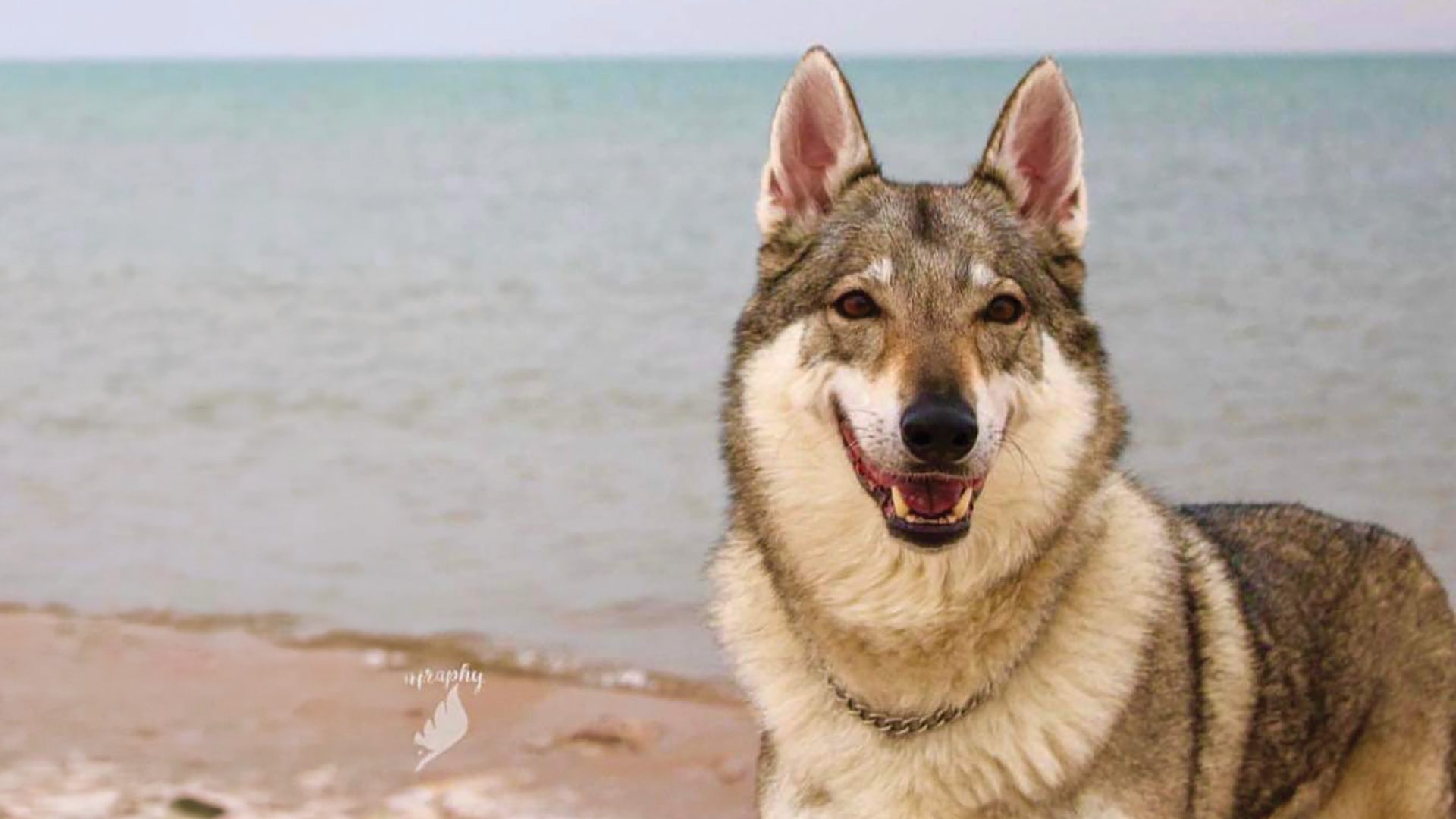
The Czechoslovakian Vlciak is a medium-to-large, athletic working breed developed in the former Czechoslovakia. It has a strong, rectangular body, erect triangular ears, a wedge-shaped head, and a dense weather-resistant coat that contributes to its wolf-like appearance.
The breed is intelligent, energetic, alert, and highly devoted to its family. Czechoslovakian Vlciaks need experienced handling, extensive socialization, consistent training, and substantial physical and mental activity. They are often independent thinkers and generally do best with people who understand demanding working breeds.
Highlights
02/History
The Czechoslovakian Vlciak was developed in the former Czechoslovakia during the 20th century as part of a military breeding program. The project began in the 1950s with the goal of combining the trainability and working ability of the German Shepherd Dog with the endurance, resilience, and physical characteristics of the Carpathian wolf.
Early breeding involved carefully selected German Shepherd Dogs and Carpathian wolves. Subsequent generations were bred with an emphasis on working ability, stamina, adaptability, trainability, and a stable temperament.
The breed was used in military and border patrol work, where endurance, tracking ability, and the capacity to work in difficult conditions were especially valued. Over time, organized breeding moved beyond the original experimental program and focused on establishing a consistent breed type.
The Czechoslovakian Vlciak was later recognized as a national breed and gained wider recognition throughout Europe. Today, it is kept as a working dog, companion, show dog, and participant in activities that test endurance, tracking, obedience, and overall versatility.
03/Appearance
The Czechoslovakian Vlciak is a medium-to-large breed. Males should stand at least 25.5 inches tall at the withers, while females should measure at least 23.5 inches. Males generally weigh a minimum of 57 pounds, with females generally weighing 44 pounds or more.
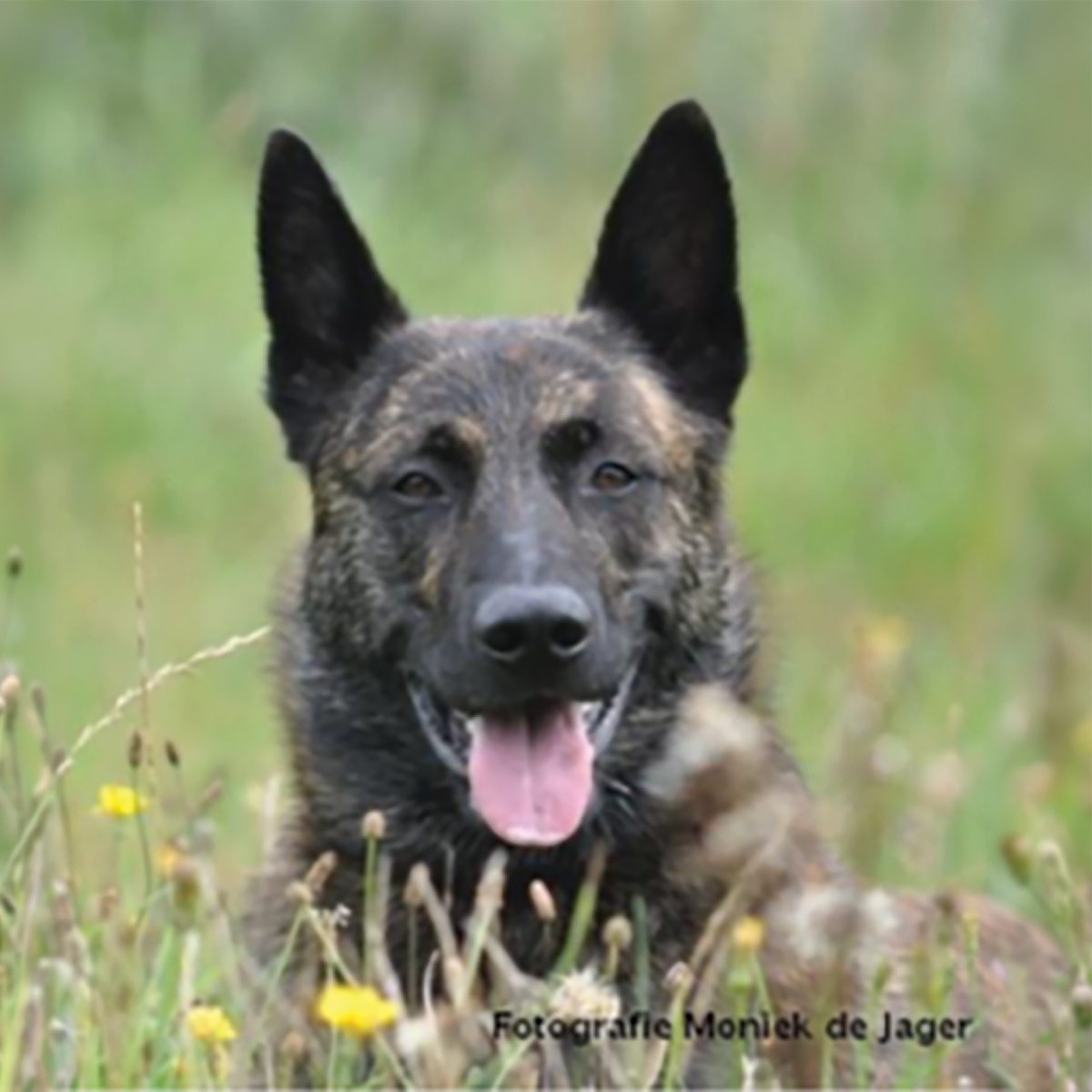
Skull: The Czechoslovakian Vlciak has a symmetrical, wedge-shaped head with a slightly arched forehead and a moderately broad skull. The stop is moderate and clearly defined.
Expression: The expression is alert, intelligent, attentive, and self-assured.
Eyes: The eyes are small, almond-shaped, and set slightly obliquely. They are generally amber in color and contribute to the breed’s characteristic expression.
Ears: The ears are erect, triangular, short, and set high. They should be firm and carried attentively.
Muzzle: The muzzle is clean, strong, and gradually tapers toward the nose without appearing pointed.
Nose: The nose is oval in shape and black, with well-developed nostrils.
Bite: The jaws are strong, with a complete scissor or level bite. Full dentition is preferred
The Czechoslovakian Vlciak has a rectangular body that is slightly longer than tall, with a strong, athletic, and well-muscled build. The frame should show sufficient bone and substance without appearing heavy or cumbersome.
The chest is deep but not excessively broad, the back is firm, and the overall construction should support endurance, speed, agility, and efficient movement over long distances. The breed should present a balanced combination of strength, stamina, and lightness of movement.
Texture: The Czechoslovakian Vlciak has a straight, close-lying coat with a dense undercoat that becomes especially pronounced in winter. The winter coat is significantly fuller than the summer coat and provides strong protection against harsh weather. The hair is generally longer around the neck and along the body during colder months. The skin is elastic and tight without wrinkles or dark pigment. An open or curly coat is considered a fault.
Standard Colors
Standard Markings
04/Consider
The Czechoslovakian Vlciak is an intelligent, athletic, independent, and highly active working breed that needs experienced handling, extensive socialization, consistent training, and substantial daily exercise. Its strong instincts and endurance make it best suited to people who understand demanding working breeds and can provide structure, mental stimulation, and meaningful activity.
Interaction With Family
The level of affection a breed typically shows towards family members and familiar individuals.
Good With Other Dogs
The innate friendliness of a dog towards other dogs can depend on its breed.
Good With Young Children
The degree to which a breed will typically be patient with young children.
Amount Of Shedding
How much hair a breed typically leaves behind on clothes, furniture and floors.
Frequency Of Grooming
How often a breed needs brushing, bathing or a professional trim to stay in condition.
Amount Of Drooling
How prone a breed is to drool, worth knowing before you keep a towel by the door.
Openness To Strangers
How openly a breed tends to greet new people, visitors and strangers.
Protective Nature
How likely a breed is to alert you to anything unfamiliar, and stand between you and it.
Playfulness Level
How enthusiastic a breed stays about games and play well past puppyhood.
Trainability Level
How readily a breed takes direction and works with you rather than around you.
Barking Level
How much a breed uses its voice, and how readily.
Energy Level
How much get-up-and-go a breed brings to an average day.
Health
The Czechoslovakian Vlciak is generally a hardy breed with a typical lifespan of about 12 to 15 years. Regular veterinary care, balanced nutrition, appropriate exercise, and maintaining a healthy body condition can help support long-term health. Responsible breeding programs use health screening for orthopedic, cardiac, neurological, dental, and inherited conditions that may occur within the breed.
The Czechoslovakian Vlciak is intelligent, alert, energetic, independent, and strongly bonded to its family. The breed is highly observant and often reserved with unfamiliar people, while remaining loyal and closely connected to those it knows well.
Because of its working background and strong instincts, early socialization is especially important. Consistent exposure to different people, dogs, environments, and situations can help develop confidence and stable behavior.
Exercise Expectations
Most adults benefit from at least 90 minutes of physical activity each day, depending on age, fitness, and individual energy level. Running, hiking, tracking, canicross, scent work, and structured training can all help meet these needs. The breed generally does best when physical exercise is combined with mental work and opportunities to use its natural endurance and problem-solving ability.
Grooming Expectations
The Czechoslovakian Vlciak is best suited to an experienced, active household that can provide consistent training, substantial exercise, and close interaction. The breed may be challenging for people unfamiliar with independent, high-drive working dogs.
A securely fenced area is important because the breed can be athletic, curious, and inclined to roam. Daily structure, training, and meaningful activity are more important than simply having access to a yard.
Czechoslovakian Vlciaks often form strong bonds with their families and generally do best when included in daily life rather than left alone for long periods.
05/Puppies
Czechoslovakian Vlciak puppies are intelligent, energetic, curious, and highly observant. Early socialization and consistent training are especially important because the breed can be independent, sensitive to its environment, and strongly influenced by instinct.
A Czechoslovakian Vlciak puppy should follow a predictable daily routine that includes meals, potty breaks, naps, play, and short training sessions. A crate or secure puppy area can help with housetraining and provide a safe place to rest.
Training should begin early with name response, recall, leash manners, housetraining, basic cues, and impulse control. Positive reinforcement, patience, and consistency are especially important with this intelligent and independent breed.
Socialization should be broad but controlled, with positive exposure to unfamiliar people, dogs, vehicles, household activity, and new environments. Experiences should be introduced gradually and should not overwhelm the puppy.
Puppies should receive a complete and balanced diet formulated for growth, divided into several smaller meals each day. Exercise should focus on supervised play, short walks, exploration, and age-appropriate training rather than prolonged running or strenuous activity.
Routine veterinary care, vaccinations, parasite prevention, dental care, nail trimming, ear checks, and regular coat care should also begin during puppyhood.
06/Activities
Czechoslovakian Vlciaks are athletic, intelligent working dogs that can excel in activities involving endurance, tracking, problem-solving, and close cooperation with a handler. Here are some activities and dog sports in which the breed may participate:
Tracking: Czechoslovakian Vlciaks can use their strong scenting ability and persistence to follow complex scent trails.
Scent Work: The breed can perform structured scent-detection exercises that challenge both focus and problem-solving ability.
Search and Rescue: Their endurance, agility, and scenting ability can make them suitable for specialized search work with appropriate training.
Obedience: Structured Obedience exercises can help develop focus, responsiveness, and reliable control.
Rally: Rally Obedience combines obedience skills with movement through a predetermined course and encourages teamwork with the handler.
Agility: Their athleticism and coordination can make Agility an effective outlet for both physical and mental energy.
Canicross: The breed’s stamina and running ability can make it well suited to distance running with a handler.
Bikejoring: Properly conditioned adults may enjoy pulling and running alongside a bicycle in controlled settings.
Conformation Shows: Czechoslovakian Vlciaks may compete in Conformation Shows, where judges evaluate each dog according to the Breed Standard.
Hiking: Their endurance and athletic build make them capable companions for long hikes and challenging terrain.
Endurance Activities: Healthy adults can participate in long-distance conditioning, trekking, and other activities that test stamina and physical fitness.
Gallery
07/Standards
The Czechoslovakian Vlciak is recognized by the world’s leading registries and kennel organizations, which categorize the breed into a specific Group based on its unique characteristics. This breed is recognized worldwide under the following Group designations:
The ideal Czechoslovakian Vlciak is described by a Breed Standard that is approved by each of the world’s leading registries and kennel organizations. The Standards for this breed may be found in the following links:
08/Clubs
Czechoslovakian Vlciak clubs support breed preservation, education, responsible breeding, health initiatives, working ability, and adherence to the Breed Standard.
Czechoslovakian Vlcak Club of America: The breed organization in the United States is dedicated to promoting and preserving the Czechoslovakian Vlciak through education, responsible breeding practices, dog shows, and various dog sports and activities.
09/Rescue
Because the Czechoslovakian Vlciak is still relatively uncommon in North America, dedicated breed-specific rescue organizations are limited. Rescue and rehoming assistance is often coordinated through breed clubs, experienced breeders, and broader working-dog or Northern-breed rescue networks.
Czechoslovakian Vlcak Club of America: The American Kennel Club (AKC) parent club for the breed can provide guidance, breeder contacts, or information about a Czechoslovakian Vlciak that need rehoming.
10/Facts
Military Origins
The Czechoslovakian Vlciak was developed in the former Czechoslovakia during the 1950s as part of a military breeding program.
Exceptional Endurance
Czechoslovakian Vlciaks were selected for their service and the ability to travel long distances over difficult terrain.
Distinct Wolf-Like Appearance
Like wolves, the breed is known for its erect ears, wedge-shaped head, dense coat, amber eyes, and athletic build.
Strong Tracking Ability
Their scenting ability, persistence, and endurance make them well suited to tracking and other demanding working activities.
11/FAQ
Czechoslovakian Vlciaks can make good companions for experienced, active households that can provide extensive exercise, training, socialization, and structure. They are intelligent and devoted but can be demanding because of their independence and working instincts.

Written by
Dan Sayers is the Executive Editor of SHOWSIGHT. He is a member of the World Dog Press Association and the Dog Writers Association of America, which recognized his illustrations in the award-winning Encyclopedia of K-9 Terminology. Dan is a longtime supporter of the sport of dogs and an advocate for the conservation of recognized breeds in all their forms and functions. He is a member of the Morris and Essex Kennel Club, and for 45 years, the Irish Water Spaniel Club of America where he serves as AKC Delegate, Archivist, and approved Breed Mentor. Dan breeds under the Quiet Storm prefix and has judged the IWSCA National Specialty Sweepstakes twice.
Official Standard of the Czechoslovakian Vlciak
History: In 1958, the Czechoslovakian Border Guard suffered frequent dog illnesses. Around 1200 dogs had to be excluded from service at the age of eight due to their inability to continue to perform. Only 1% could tolerate the strains of service to the age of ten. The dogs showed low endurance and considerable fatigue when requested to cover distances of 31 miles at temperatures of 60 degrees Fahrenheit. Those same dogs took approximately sixty hours to recuperate after working in these conditions. The Board Guard conducted a biological experiment which included forty Border Guard German Shepherds with four Carpathian wolves: Brita (♀), Argo (♂), Sarik (♂) and Lejdy (♀). The third-generation dogs from the experiment overtook the German Shepherds on a track because of their superb orientation abilities, endurance in running, and the excellent, resilient quality of their fur. In 1964-65, the results of the experiment were published, and a new breed emerged that would be a quick learner, with a solid structure, high persistence, resistance to adverse conditions, and fast reactions. The selective breeding process was the beginning of the dog we know today as the Czechoslovakian Vlciak (CSV) and Col. Karel Hartl, and Frantisek Rosik, (“Dedo”), became the co-founders of the breed. One of the requirements for recognition by Fédération Cynologique Internationale (FCI) was to show the breed’s working abilities. Since the breed was originally bred to be border patrol dogs, Rosik reached out to Peter Krotkovsky who was tasked with building carts for mushing teams. On January 16-17, 1988, the CSV mushing teams competed at their first sled race in Slovakia. The teams were up against strong competition from the Nordic breeds and the Czech mountain dogs. The race was approximately 7.5 miles. The CSV teams won both categories C (2-3 sled dogs) and B (4-6 sled dogs). The CSVs were not sprinters but preferred mid to long-distance races using an energy-saving low trot reaching an average speed of 7.5- 8mph. Based on this, the kennel club set endurance testing conditions for the breed, which included running alongside a bike. For the first time in history, 40km (Approximately 24.8 miles) speed races to 100km (approximately 62 miles) endurance runs with the dogs took place. In 1999 the breed was recognized by Federation Cynologique Internationale. The standard was written from the dog Rep z Pohranicni Straze, born on November 11, 1979. The Czechoslovakian Vlciak was accepted into the American Kennel Club’s Foundation Stock Service (2001).
General Appearance: The national dog of the Czech Republic and Slovakia, the Czechoslovakian Vlciak was bred to be an all-purpose utilitarian dog for the Czechoslovakian Military between 1955-1965. The most distinguishing fact about the Czechoslovakian Vlciak is its physical resemblance to the wolf in its facial mask, coat, hair color, texture and movement. They have excellent olfactory properties, and orientation abilities which makes them superior natural trackers. The versatility of the Czechoslovakian Vlciak allows it to be used for many purposes (Guard, scent work/tracking, rescue dog, and mushing). The Czechoslovakian Vlciak is an alert, intelligent, loyal dog with superior eyesight. They have immense endurance even against adverse external influences. Its perseverance is admirable – trotting twenty-five miles can be done effortlessly. The Czechoslovakian Vlciak’s relatively narrow chest is flexible allowing the lungs to expand. They are extremely lithe, having greater mobility in their joints, which accounts for their effortless, light movement. They have an energy saving, longer low trot (typical movement). The Czechoslovakian Vlciak can spring to great heights from a standstill. They are focused and vigilant. The Czechoslovakian Vlciak is extremely loyal to his master and his family. Males are distinctly masculine and females feminine.
Size, Proportion, Substance: No matter the type or size, the most important consideration should be that the dog looks balanced. There is a natural range in size in the breed. Males are ideally more than 25 ½ inches tall at the withers and weigh at least 57 pounds. Bitches are ideally more than 23 ½ inches tall at the withers and weight at least 44 pounds. It is a large breed with a rectangular framed body. The length to height proportion should be 10:9, this is an important trait. The length of leg should be 55% of the total height. The entire conformation is the impression of depth and solidity without bulkiness, exhibiting wolf-like strength, endurance and agility. Faults – Massive build.
Head: The head is symmetrical and is a well-muscled blunt wedge when viewed from the side and above. The sex of the dog should be readily apparent. Eyes – Small, slanting, color can vary from amber to yellow with black, tight-fitting rims. Ears – Pricked, thin, triangular, and short. The lateral point of the set of the ears and the outer corner of the eyes are in direct line. Ears are set moderately wide so that a vertical line down from the tip of the erect ears would run close to the side of the head. Backskull – When seen from the front, the topskull is slightly arched with a clearly visible occiput and no marked frontal furrow. The cheeks are clean and sufficiently muscled, but not protruding. There is a slight to moderate stop. Muzzle – The muzzle is clean and not broad, with a straight nasal bridge. The ratio of back skull to muzzle is 3:2. Nose – Black. Lips – The lips are tight fitting with full black pigment. Jaws/Teeth – Jaws are strong and symmetrical. Well-developed teeth with notable canines. Full dentition is preferred but the absence of two PM1 (premolar 1) or of both M3 (molar 3) is not to be penalized. Bite – Scissor or level. Any deviation should be faulted in accordance with its severity.
Neck, Topline, Body: Neck – Dry, well-muscled. The neck must be sufficiently long for the nose to touch the ground effortlessly. In repose neck forms an angle of up to 40 degrees to the horizontal. Faults – Presence of dewlap. Topline – Flowing transition from the neck to the body. The topline slopes away slightly. The back is firm and straight with short, well-muscled loin which is not broad. The loin slopes slightly to a moderately sloped croup. The croup is well-muscled, but not broad. Body – Length of body to height at the withers is ideally a 10:9 ratio. The chest is roomy, pear-shaped, and narrowing towards the sternum. The depth of chest does not reach to the elbows. The prosternum does not extend beyond the shoulder joints. Underline – Taut with a moderately tucked-up abdomen. Tail – High set, hanging straight down. The ideal length of the tail bone is to the hock. Carried in a sickle shape when dog is at attention.
Forequarters: The shoulders are well muscled and pronounced but they must not interrupt the flow of the topline. Front legs are straight, strong, and close together, with slightly turned-out feet. The well-muscled shoulder blade is positioned to the front of the torso. It forms an angle of about 65 degrees with the horizontal plane. The strongly muscled upper arm forms an angle of 120-130 degrees to the shoulder blade. The well-defined, flexible elbows fit close to the chest and turn neither in nor out. The forearms are long, clean and straight. The length of the forearm and pastern is 55% of height at withers. Dewclaws on the forelegs should not be removed. The pastern joint is solid and flexible. The pastern is long and forms an angle of at least 75 degrees to the ground. Light and springy in movement. The forefeet are large and turned slightly outwards with long arched toes and strong dark nails. Foot pads are elastic and dark.
Hindquarters: Powerful and stand parallel. An imaginary vertical line drawn from the point of the ischium, would run midway through the hock joint. Dewclaws on hind legs are undesirable and if present should be removed. The upper thigh is long well-muscled and forms an angle of 80 degrees to the pelvis. The hip joint is sturdy and flexible. The stifle is strong and flexible. The long, clean, and well-muscled lower thigh forms an angle of about 130 degrees with the hock. The hock joint is solid and flexible. The long, clean hock is almost vertical to the ground. The hind feet are long and have arched toes with strong dark nails.
Coat: The skin is elastic and tight without wrinkles or dark pigment. The coat is straight and close. Winter and summer coat varies greatly. In winter months a large undercoat is prevalent when combined with the upper coat creates a dense coat covering the whole body. Hair should cover abdomen, upper thighs, inner ear, scrotum, and the area between the toes. Neck is well-furred. Faults – Open or curly coat.
Color: Yellow-gray, brown-gray, silver-gray, dark-gray, and sable each with a characteristic light mask on the lower part of the face and under the chin. Light hair also on the underside of the neck and the chest. Faults – A non-pronounced mask.
Gait: Harmonious, light-footed, ground covering trot in which the limbs skim over the ground as closely as possible. Head and neck incline to the horizontal. Pacing when walking is typical. Faults – Short, cumbrous movement.
Temperament: The Czechoslovakian Vlciak is a lively, alert, and challenging breed. They are extremely intelligent, self-thinking persistent dogs with a quick reaction. Fearless and courageous, can be suspicious of strangers. Very loyal to its master. Faults – Extremely timid with flight reaction.
Disqualifications: Any solid-colored coat.
Approved August 7, 2024
Effective June 26, 2024

Meet the Breeders
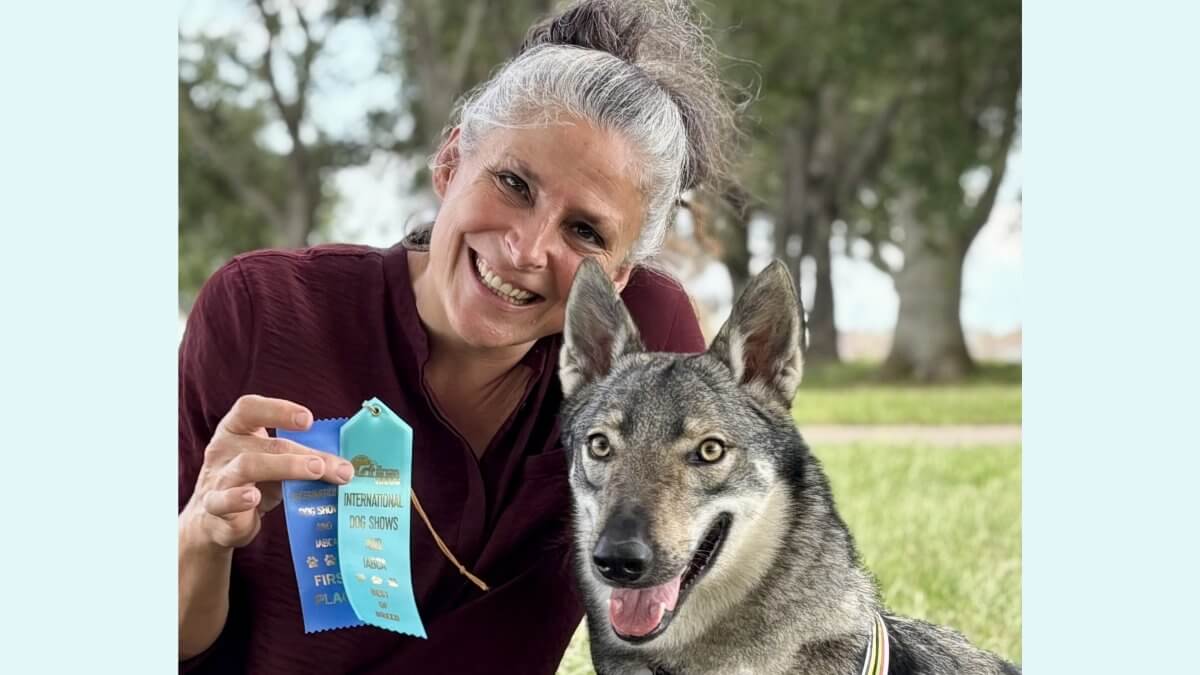
Sharon DiGennaro of DireWolf Kennel shares her journey with Czechoslovakian Vlciaks, breed hallmarks, and the future of CSVs in sport.

Meet the Breeders
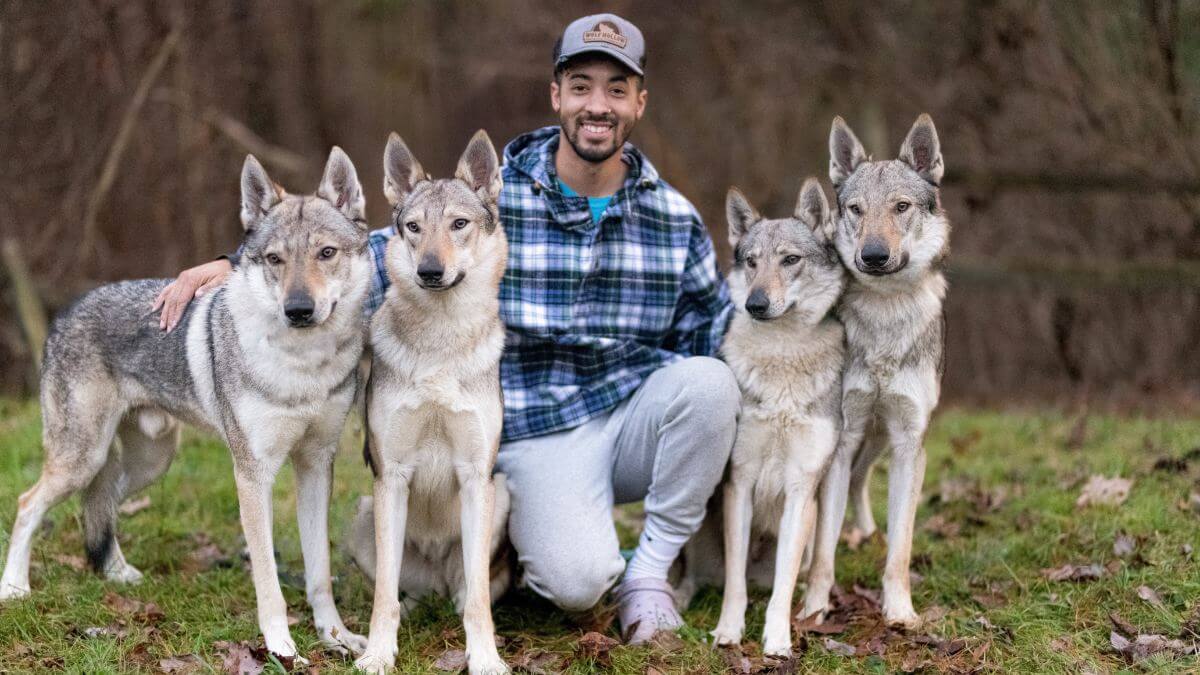
Aric Bryant is the breeder behind Vormir Czechoslovakian Vlcak. Read about the kennel’s beginnings, puppies, and much more!
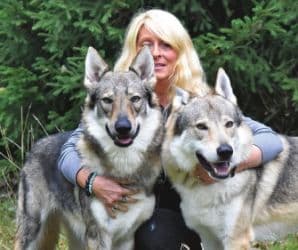
The Czechoslovakian Vlcak, also known as the Czechoslovakian wolfdog, is a huge working dog breed that originated in Czechoslovakia.
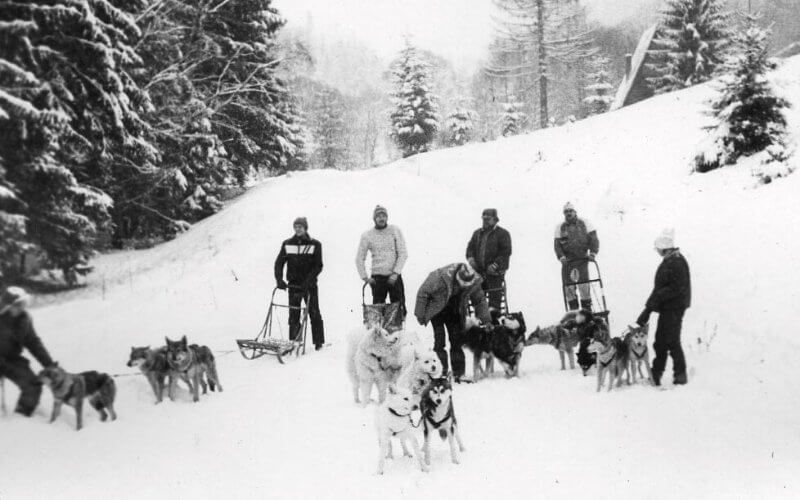
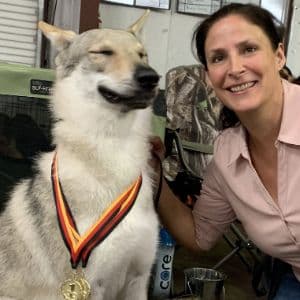
The Czechoslovakian Vlcak is a large working dog breed, originally bred for working border patrol in Czechoslovakia in the 1950s.
The tail is set high and hangs straight down when the dog is at rest. When the dog is excited or moving, it may be carried in a sickle shape. It should remain well proportioned to the body and contribute to the breed’s balanced, athletic appearance.
A Note About Color: The coat of the Czechoslovakian Vlciak may be yellow-gray, brown-gray, silver-gray, dark-gray, or sable in color, each with a characteristic light mask on the lower part of the face and under the chin. Light hair is also on the underside of the neck and the chest. A non-pronounced mask is considered a fault in the breed.
Coat Type
Straight and Close
The structure of the coat this breed carries.
Coat Length
Medium
How long the breed's coat grows when kept in condition.
Adaptability Level
How easily a breed copes with changes in home, routine, noise and weather.
Mental Stimulation Needs
How much a breed needs a job, a puzzle or training to stay content.
A Czechoslovakian Vlciak should receive a complete and balanced diet appropriate for its age, size, activity level, and body condition. Highly active dogs may require more calories than dogs with a less demanding routine.
Most adults do well with two measured meals per day, while puppies generally need several smaller meals. Treats can be useful during training but should remain a limited part of daily calorie intake.
Fresh water should always be available, especially after exercise or outdoor activity.
The Czechoslovakian Vlciak is highly intelligent but can also be independent and sensitive, which makes consistent and experienced training important. Positive reinforcement, clear expectations, and varied sessions generally work better than repetitive or harsh methods.
Training should begin early with recall, leash manners, house training, basic cues, impulse control, and calm behavior around people and other animals. Because the breed may have strong prey and roaming instincts, reliable recall and secure handling are especially important.
Mental challenges, tracking exercises, scent work, and problem-solving activities can help keep training engaging.
More frequent brushing may be needed when the undercoat is being shed. Bathing can be done as needed, and the coat should be dried thoroughly afterward. Nails should be trimmed regularly, ears should be checked for debris or irritation, and teeth should be brushed routinely.