Members
01/Overview
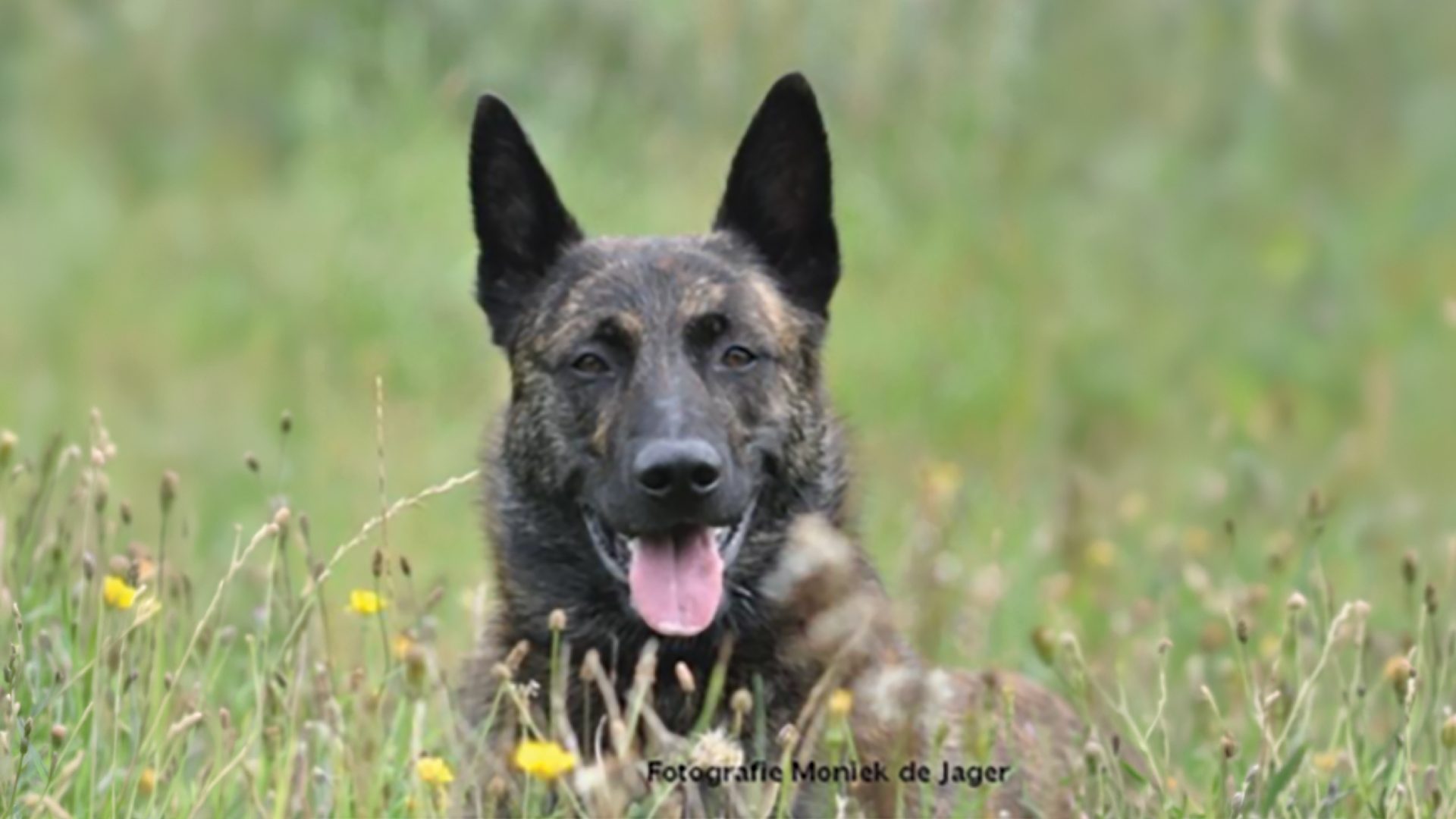
The Dutch Shepherd is a medium-sized herding breed developed in the Netherlands for farm work, livestock management, and general utility. It has an athletic build, a balanced outline, and may have a short, long, or rough coat.
The breed is intelligent, alert, active, and highly trainable. Dutch Shepherds typically require regular physical exercise, structured training, and mental stimulation, and they often form strong working partnerships with their handlers.
Highlights
02/History
The Dutch Shepherd originated in the Netherlands, where it was developed as an all-purpose farm dog. Farmers relied on the breed to herd and guard livestock, keep animals away from crops, accompany flocks, and perform other practical tasks around the farm.
The breed was selected primarily for working ability, endurance, intelligence, and adaptability. Dutch Shepherds needed to work independently when necessary while also responding closely to a handler’s direction.
As farming methods changed and traditional herding work declined, the breed found new roles in police work, military service, search and rescue, protection work, and various dog sports. These jobs helped to preserve many of the working qualities for which the breed had originally been valued.
The Dutch Shepherd has remained closely associated with the Netherlands and continued to be maintained in three coat varieties: Short-Hair, Long-Hair, and Rough-Hair. Brindle coloring became one of the breed’s most recognizable characteristics.
03/Appearance
The Dutch Shepherd typically stands between 21.5 and 24.5 inches tall at the withers, with males generally taller than females. Weight is usually from 42 to 75 pounds, depending on sex and overall build.
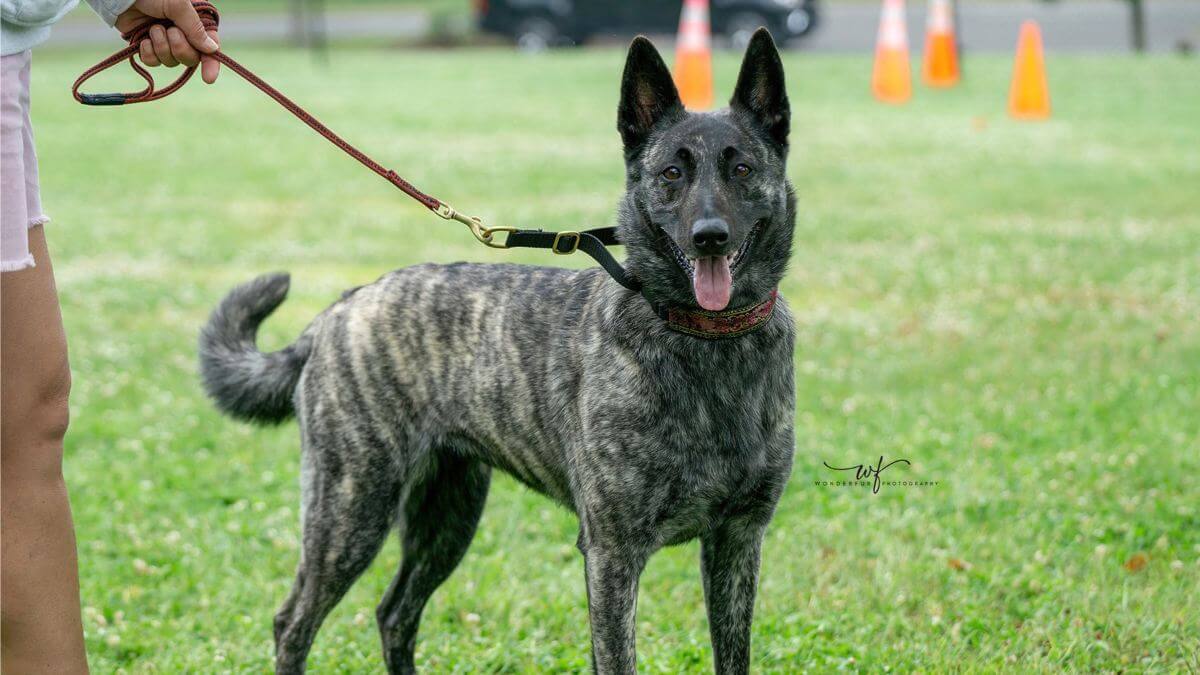
Skull: The Dutch Shepherd has a flat, moderately broad skull that is proportionate to the body. The stop is slight but distinct, and the head should appear clean and wedge-shaped.
Expression: The expression is intelligent, alert, and attentive.
Eyes: The eyes are medium-sized, almond-shaped, and dark in color, set slightly obliquely.
Ears: The ears are medium-sized, set high, and carried erect. They are firm, pointed, and contribute to the breed’s alert expression.
Muzzle: The muzzle is strong and approximately equal in length to the skull, tapering gradually toward the nose without appearing pointed.
Nose: The nose is black and well developed.
Bite: The jaws are strong, with a complete scissors bite.
The Dutch Shepherd is slightly longer than tall, with a balanced, athletic outline and a firm, functional build. The breed should appear strong and well muscled without looking heavy or coarse.
The chest is deep but not excessively broad, the back is firm, and the body has enough substance to support endurance, agility, and sustained working activity. Overall structure should reflect a versatile herding dog capable of efficient movement and prolonged work.
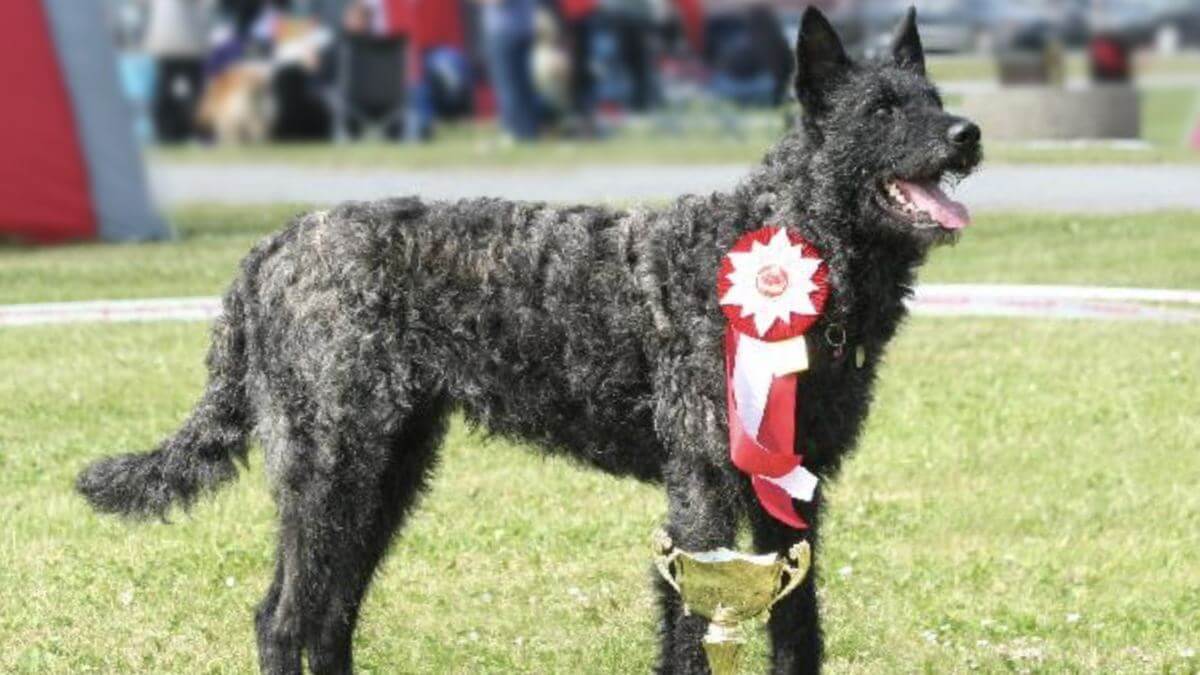
Texture: The Dutch Shepherd has three coat varieties: Short-Hair, Long-Hair, and Rough-Hair. The breed is shown in a natural coat without excessive grooming. Whiskers are present in all coat-types.
The short-hair coat is uniformly quite hard, close fitting, and not too short with a woolly undercoat. The ruff, breeches, and tail plume are clearly visible. The long-hair coat is long, straight, and well fitting, harsh to the touch, without curls or waves, also with a woolly undercoat. The ruff and breeches are distinct and the tail is abundantly coated. The head, ears, feet, and hind legs below the hocks are short and densely coated. The backsides of the forelegs show a strongly developed coat, the feathering shortening in length towards the feet. There are no fringes at the ears. The rough-hair coat is a dense, harsh, tousled coat with a woolly, dense undercoat all over the body except for the head. The coat should be close fitting. The upper and lower lips should be well covered with hair, with a beard, and two well-defined, coarse, rough eyebrows that are distinct but not exaggerated. Furnishings are not soft. The hair on the skull and on the cheeks is less strongly developed. In profile it seems as if the head has a more square appearance. Strongly developed breeches are desirable. The tail is covered all round with hair. The brindle color may be less pronounced because of the tousled coat. The rough-hair coat should be hand-plucked on average twice a year.
04/Consider
The Dutch Shepherd is intelligent, active, alert, and highly trainable. The breed needs regular exercise, structured training, mental stimulation, and consistent interaction with its handler.
Because Dutch Shepherds were developed for demanding work, they generally do best in homes that can provide both physical activity and purposeful training.
Interaction With Family
The level of affection a breed typically shows towards family members and familiar individuals.
Good With Other Dogs
The innate friendliness of a dog towards other dogs can depend on its breed.
Good With Young Children
The degree to which a breed will typically be patient with young children.
Amount Of Shedding
How much hair a breed typically leaves behind on clothes, furniture and floors.
Frequency Of Grooming
How often a breed needs brushing, bathing or a professional trim to stay in condition.
Amount Of Drooling
How prone a breed is to drool, worth knowing before you keep a towel by the door.
Openness To Strangers
How openly a breed tends to greet new people, visitors and strangers.
Protective Nature
How likely a breed is to alert you to anything unfamiliar, and stand between you and it.
Playfulness Level
How enthusiastic a breed stays about games and play well past puppyhood.
Trainability Level
How readily a breed takes direction and works with you rather than around you.
Barking Level
How much a breed uses its voice, and how readily.
Energy Level
How much get-up-and-go a breed brings to an average day.
Health
The Dutch Shepherd is generally a hardy and healthy breed with a typical lifespan of about 11 to 14 years. Balanced nutrition, regular exercise, preventive veterinary care, and maintaining a healthy body condition can help support the long-term health of any dog.
The Dutch Shepherd is intelligent, alert, loyal, and highly responsive to training. The breed is often strongly attached to its family or handler, and usually prefers having a job or regular activity.
Dutch Shepherds can be naturally watchful and may be reserved with unfamiliar people. Early socialization is important to help them develop confidence and appropriate behavior in different situations.
Exercise Expectations
Most healthy Dutch Shepherds benefit from at least 60 to 90 minutes of activity each day, depending on age, fitness, and working drive. Running, hiking, structured training, scent activities, and dog sports can all meet these needs. Exercise should include both physical activity and problem-solving tasks to help prevent boredom and unwanted behavior.
Grooming Expectations
The Dutch Shepherd is best suited to an active household that can provide regular exercise, training, and mental stimulation. The breed often does well with people who enjoy dog sports, outdoor activities, or structured training.
A securely fenced area can be useful, but it does not replace daily interaction and purposeful activity. The breed may become restless or develop unwanted behaviors if left without enough exercise or mental engagement.
Dutch Shepherds usually thrive when they have clear routines, consistent handling, and regular opportunities to work closely with their handlers.
05/Puppies
Dutch Shepherd puppies are active, intelligent, and quick to learn. They benefit from early socialization, consistent routines, and structured training sessions that help with developing confidence, focus, and appropriate behaviors.
A Dutch Shepherd puppy should have a regular schedule that includes meals, potty breaks, naps, play, and short training sessions. A crate or secure puppy area can help with housetraining and provide a safe place to rest.
Early socialization should include positive exposure to different people, well-mannered dogs, household sounds, surfaces, vehicles, and unfamiliar environments. Because the breed can be naturally alert and watchful, these experiences should remain controlled and positive.
Training can begin with name response, recall, leash walking, housetraining, basic cues, and impulse control. Short, reward-based sessions usually work best and can gradually become more challenging as the puppy matures.
Puppies should receive a complete and balanced diet formulated for growth, divided into several small meals each day. Exercise should focus on supervised play, short walks, and age-appropriate exploration rather than prolonged or strenuous activity.
Routine veterinary care, vaccinations, parasite prevention, nail trimming, ear checks, tooth brushing, and regular coat care should also begin during puppyhood.
06/Activities
Dutch Shepherds are athletic, intelligent working dogs that can excel in activities requiring speed, control, scenting, endurance, and close cooperation with a handler. Here are some activities and dog sports in which the breed may participate:
Herding: Dutch Shepherds can use their natural livestock-working instincts in structured herding activities.
Agility: The breed can use its speed, coordination, and responsiveness to navigate obstacle courses.
Obedience: Dutch Shepherds often perform well in structured exercises that test focus, precision, and teamwork.
Rally: Rally Obedience combines obedience exercises with movement through a predetermined course and can provide both mental and physical stimulation.
Tracking: The breed can follow scent trails and use its natural working ability in tracking exercises.
Scent Work: Dutch Shepherds can search for specific odors in different environments and conditions.
Protection Sports: Some Dutch Shepherds participate in structured working sports that test control, obedience, tracking, and protection skills.
Conformation Shows: Dutch Shepherds compete in Conformation Shows, where judges evaluate each dog according to the Breed Standard.
Search and Rescue: The breed’s endurance, trainability, and scenting ability can make individual dogs suitable for specialized search work.
Hiking and Running: Properly conditioned adults can enjoy longer hikes, running, and other demanding outdoor activities.
Gallery
07/Standards
The Dutch Shepherd is recognized by the world’s leading registries and kennel organizations, which categorize the breed into a specific Group based on its unique characteristics. This breed is recognized worldwide under the following Group designations:
The ideal Dutch Shepherd is described by a Breed Standard that is approved by each of the world’s leading registries and kennel organizations. The Standards for this breed may be found in the following links:
08/Clubs
Dutch Shepherd clubs support breed education, responsible breeding, health initiatives, promotion of the Breed Standard, and participation in Conformation Shows and various dog sports.
Dutch Shepherd Dog Club of America: This is the national breed organization in the United States dedicated to promoting and preserving the Dutch Shepherd.
Dutch Shepherd Club of Canada: Supporters of the breed in Canada promote the breed through education initiatives, responsible breeding practices, and breed-related activities.
09/Rescue
Because the Dutch Shepherd is less common than many other working and herding breeds, dedicated breed-specific rescue organizations are relatively limited. Rescue assistance is often provided through breed clubs, working-dog rescues, and individual volunteers.
North American Dutch Shepherd Rescue: A breed-focused rescue organization that helps Dutch Shepherds in need of foster care, rehabilitation, and placement in new homes.
Dutch Shepherd Dog Club of America: The AKC breed parent club may provide rescue contacts, rehoming guidance, or information about Dutch Shepherds needing placement.
10/Facts
Developed in the Netherlands
The Dutch Shepherd originated in the Netherlands as an all-purpose farm and herding dog.
Bred for Versatility
The breed was used to herd livestock, guard property, accompany flocks, and perform general farm work.
Comes in Three Coat Varieties
Dutch Shepherds may have Short-Hair, Long-Hair, or Rough-Hair coats.
Brindle Is a Defining Feature
Gold Brindle and Silver Brindle are the only recognized coat colors in the breed.
Used in Modern Working Roles
Dutch Shepherds are commonly seen in police work, military service, search and rescue, and protection sports.
Highly Trainable
The breed is valued for intelligence, responsiveness, stamina, and a strong willingness to work with a handler.
11/FAQ
Dutch Shepherds can make excellent pets for active people who can provide regular exercise, training, and mental stimulation. They are intelligent, loyal, and often strongly attached to their families.

Written by
Dan Sayers is the Executive Editor of SHOWSIGHT. He is a member of the World Dog Press Association and the Dog Writers Association of America, which recognized his illustrations in the award-winning Encyclopedia of K-9 Terminology. Dan is a longtime supporter of the sport of dogs and an advocate for the conservation of recognized breeds in all their forms and functions. He is a member of the Morris and Essex Kennel Club, and for 45 years, the Irish Water Spaniel Club of America where he serves as AKC Delegate, Archivist, and approved Breed Mentor. Dan breeds under the Quiet Storm prefix and has judged the IWSCA National Specialty Sweepstakes twice.
Official Standard for the Dutch Shepherd
General Appearance: The first impression of the Dutch Shepherd is of a medium-sized, middle-weighted, well-muscled dog of powerful and well-balanced structure. His carriage is natural and relaxed, but alert. He is a dog with lots of endurance, a lively temperament and an intelligent expression. The breed is presented in three coat types, short-, long- and rough-haired. The difference between sexes is clearly recognizable, especially in the shape of the head and build of body. Both male and female should be judged equally. Faults - Any deviation from these specifications is a fault. In determining whether a fault is minor, serious, or major, these two factors should be used as a guide: 1. The extent to which it deviates from the standard, 2. The extent to which such deviation would actually affect the working ability and welfare of the dog.
Size Proportion, Substance: Males should be 22½ to 24½ inches in height and females 21½ to 23½ inches, measured at the withers. The length, measured from point of breastbone to point of buttock, compared to the height, should be a 10 to 9 ratio. Bone structure is solid and moderate weight in correct proportion to his height, appearance well balanced, neither too light or too heavy. Males under 21 inches or over 26 inches shall be disqualified. Females under 20 inches or over 25 inches shall be disqualified.
Head: Size should be in proportion to the body. Is wedge-shaped seen from above and in profile. The skull and muzzle are equal in length. Expression - should be intelligent and lively, indicating alertness, attention and readiness for activity. Eyes - are dark colored and medium size, set slightly oblique, almond shaped and not protruding. Dogs with distinctly yellow or blue eyes shall be disqualified. Ears - are medium sized, stiff, and erect. Disqualification - drooping or hanging ears. Skull - is flat and never rounded. The stop is moderate and distinct. Muzzle – The bridge of the muzzle is straight and parallel to the top of the skull. The jaws should be strong and powerful. Nose - is black without spots or discolored areas. The lips should be tight and black, with no pink showing on the outside. Teeth - full complement of strong, white teeth, evenly set. Bite - is scissors. A level, overshot or undershot bite is a fault.
Neck, Topline, Body: Neck - is not too short, dry, without folds and gradually flowing into the body. Topline - There is a smooth, gentle transition from the neck to the top line of the body, in which head and neck are carried in a natural pose. The withers are slightly higher and slope into the back, which must be level, straight, and firm from withers to hip joints. Body - Firm, but not coarse. Chest - Deep and long, not narrow, ribs slightly sprung. The fore chest is fairly well developed. Abdomen - Slight tuck up. Loin – Firm and short with moderate depth, Croup - is slightly sloping and moderate length. Tail - At rest, hangs straight down or with a slight curve. Reaches to the hock. In action, carried gracefully upwards, never curled or carried sideways. Cropped or stump tail are disqualifications.
Forequarters: Shoulder-blades are well joined to the body and well sloping. The forelegs are powerful, of good length, well-muscled. The bone is solid but not heavy. Always generally showing a straight line, but with sufficient suppleness of pastern. The upper arm is approximately equal in length to the shoulder-blades and well angulated with the connecting bones. The elbow is well attached. Forefeet are oval, well knit, toes arched. Nails are black and pads are elastic and dark. Dewclaws are permissible.
Hindquarters: The hind-legs are powerful and well-muscled. The bone is solid but never heavy. Not excessively angulated. With a correctly angulated rear, a perpendicular line dropped from the point of rump will meet the top of the rear foot. The thigh and lower thigh are of approximately equal length. The hock is perpendicular. Dewclaws - none present. The hind feet are oval and well-knit with arched toes, black nails and elastic dark pads.
Coat: The dog is shown in natural coat without excessive grooming. Whiskers are present in all coat-types. The short-hair coat is uniformly quite hard, close fitting, and not too short coat with a woolly undercoat. The ruff, breeches and tail plume are clearly visible. The long-hair coat is long, straight, and well fitting, harsh to the touch, without curls or waves also with a woolly undercoat. The ruff and breeches are distinct and the tail abundantly coated. The head, ears, feet and hind legs below the hocks are short and densely coated. The backsides of the forelegs show a strongly developed coat, the feathering shortening in length towards the feet. There are no fringes at the ears. The rough-hair coat is dense, harsh, tousled coat with a woolly, dense undercoat all over the body except for the head. The coat should be close fitting. The upper and lower lips should be well covered with hair, with beard, and two well defined, coarse rough eyebrows that are distinct but not exaggerated. Furnishings are not soft. The hair on the skull and on the cheeks is less strongly developed. In profile it seems as if the head has a more square appearance. Strongly developed breeches are desirable. The tail is covered all round with hair. The brindle color may be less pronounced because of the tousled coat. The rough hair coat should be hand-plucked on average twice a year.
Color: Brindle. The base color is golden or silver. Golden can vary from light sand color to chestnut red. The brindle may be black or a dark brown and is clearly present all over the body and in the ruff, breeches and tail. A small amount of white on chest or toes is permitted. Too much black is a fault, as well as heavy white markings on the chest or feet. A black mask is preferred. Disqualification - Solid white markings elsewhere than on tips of toes, chest, or frosting on muzzle.
Gait: Dog is a trotter with free, smooth and supple movement, without exaggerated drive or stride. The Dutch Shepherd tends to single track at a fast gait; the legs, both front and rear, converging toward the center line of gravity of the dog. The backline should remain firm and level, parallel to the center of motion, with no crabbing.
Temperament: The Dutch Shepherd should reflect the qualities of loyalty and reliability, alertness, and watchfulness. He is active, independent, with persistence, intelligence, prepared to be obedient, and gifted with the true shepherding temperament. The Dutch Shepherd Dog works willingly together with its owner and he deals independently with any task which is assigned to him. When herding larger flocks he must have the capacity to work together with several other dogs. He should not show fear or shyness nor viciousness by unwarranted or unprovoked attack.
Disqualifications: Males under 21 inches or over 26 inches. Females under 20 inches or over 25 inches. Yellow or blue eyes. Drooping or hanging ears. Cropped or stump tail. Solid white markings elsewhere than on tips of toes, chest, or frosting on muzzle.
Approved January 11, 2016
Effective January 1, 2017
Discover the versatile Dutch Shepherd: a brindle-coated, intelligent herding breed excelling in show, performance, and work.
All About Judging
Explore the versatile Dutch Shepherd – a powerful, intelligent breed excelling in sports, work, and family life. Learn more now!
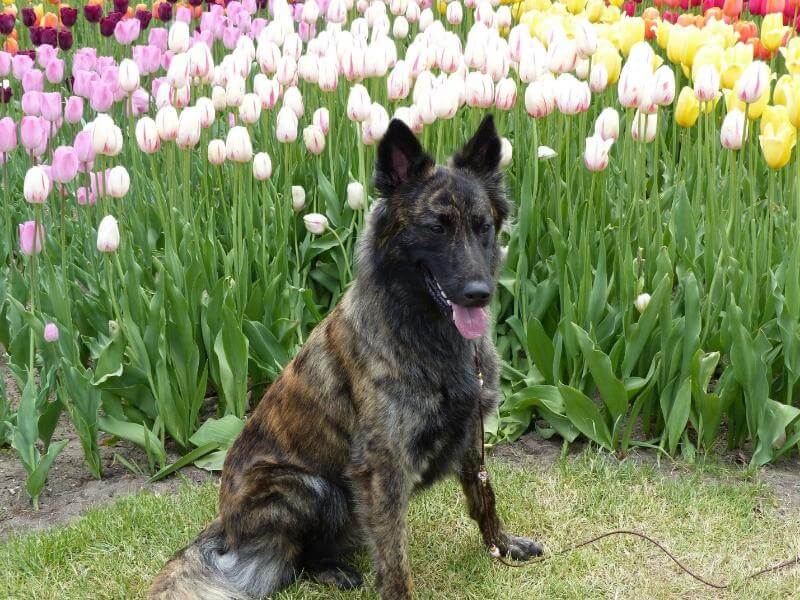
The Dutch Shepherd is an intelligent, rustic farm dog. It was originally used by Dutch shepherds for all-around farm work.
The tail is set as a natural continuation of the topline and reaches approximately to the hock. At rest, it hangs with a slight curve, while in motion it may be carried higher but should not curl over the back.
Standard Colors
Standard Markings
A Note About Color: The base color is golden or silver. Golden can vary from light sand color to chestnut red. The brindle may be black or a dark brown and is clearly present all over the body and in the ruff, breeches, and tail. A small amount of white on the chest or toes is permitted. Too much black is a fault, as well as heavy white markings on the chest or feet. A black mask is preferred. Solid white markings elsewhere than on the tips of toes, chest, or frosting on muzzle are disqualifications in the show ring.
Coat Type
Double
The structure of the coat this breed carries.
Coat Length
Short
How long the breed's coat grows when kept in condition.
Adaptability Level
How easily a breed copes with changes in home, routine, noise and weather.
Mental Stimulation Needs
How much a breed needs a job, a puzzle or training to stay content.
A Dutch Shepherd should receive a complete and balanced diet appropriate for its age, activity level, and body condition. Highly active or working dogs may require more calories than dogs with less demanding routines.
Most adult dogs do well with two measured meals per day, while puppies generally need several smaller meals. Treats can be useful during training but should remain a limited part of the daily calorie intake.
Fresh water should always be available, especially after exercise, training, or working activities.
The Dutch Shepherd is highly intelligent and generally responds well to structured, consistent training methods. The breed learns quickly and often performs best when training includes variety, clear expectations, and regular mental challenges.
Positive reinforcement using food rewards, toys, praise, and play can help with maintaining motivation. Early training should focus on recall, leash manners, impulse control, basic cues, and calm behavior around people and other dogs.
Because the breed can be intense and highly driven, training should remain consistent throughout the dog’s life rather than stopping with basic obedience commands.
Seasonal shedding can be heavy, especially when the undercoat is being shed. Rough-Hair dogs may also benefit from periodic hand-stripping to maintain proper coat texture. Nails should be trimmed regularly, ears should be checked for debris or irritation, and teeth should be brushed routinely.