Members
01/Overview
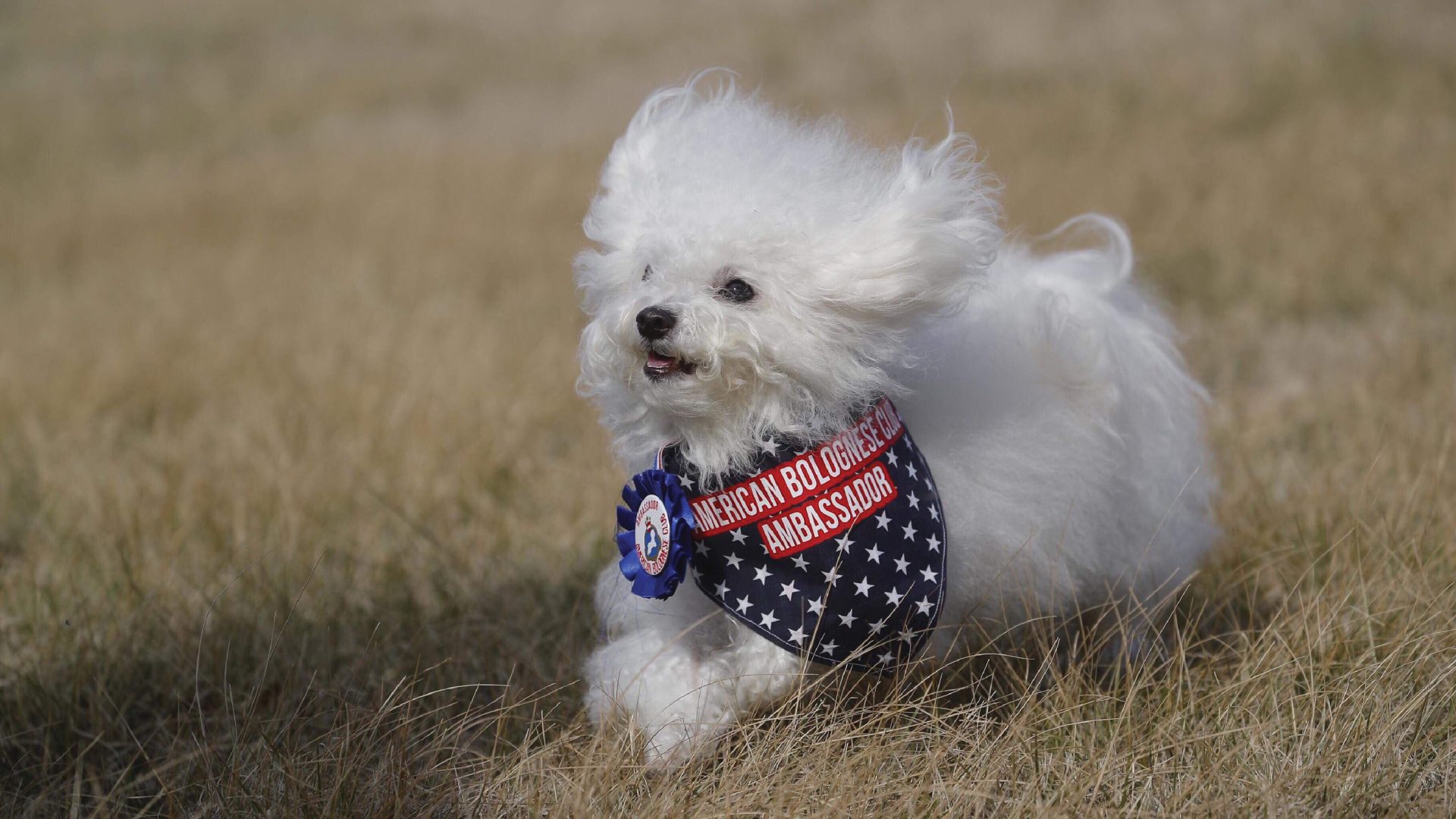
The Bolognese is a small companion breed from Italy with a compact body, long white coat, and a calm, affectionate nature. It belongs to the Bichon family of breeds and was developed primarily as a household companion.
The breed is intelligent, devoted, and typically attaches closely to its family. Bolognese are generally moderate in activity and do well with regular early socialization, regular walks, gentle play, and consistent training.
Highlights
02/History
The Bolognese originated in Italy and takes its name from the city of Bologna. It is one of several small Mediterranean companion breeds in the Bichon family of dogs.
The breed was highly valued by European nobility for centuries and was often kept as a companion in aristocratic households. Bolognese were sometimes given as prestigious gifts between noble families and members of royal courts.
Historical references to small, white, companion dogs resembling the Bolognese appear in European art and written records from the Renaissance period and earlier. Their role was primarily that of a stylish companion rather than any kind of working dog.
As political and social conditions changed in Europe, the breed declined in number. Dedicated Bolognese breeders in Italy and other countries later worked to preserve and reestablish the breed.
03/Appearance
The Bolognese typically stands between 9 and 11 inches tall at the withers and weighs from 6 to 10 pounds.
Skull: The Bolognese has a flat skull that is the same length as the width, measured at the level of the zygomatic arches, with a well-defined but not exaggerated stop.
Expression: The expression is happy, intelligent, and rather serious.
Eyes: The eyes are large, round, and ochre in color, set well apart and framed by dark eye rims.
Ears: The ears are set high, long, and hanging, with the front edges lying close to the head. They are covered with long hair.
Muzzle: The muzzle is straight and relatively short, tapering only slightly toward the nose.
Nose: The nose is large, black, and set on the same line as the muzzle.
Bite: The jaws are well developed, with a scissor bite.
The Bolognese is compact and squarely built, with body length approximately equal to the height at the withers. The breed should appear balanced and substantial for its small size without looking heavy.
The chest is broad and deep, the ribs are well developed, and the body has moderate bone and a slight tuck up. Overall, the Bolognese should have a sturdy, well-proportioned outline with free and balanced movement.
Texture: The Bolognese has two hair types. One on the body, the other on the ears and tail. Long flocks of wavy open ringlets, which appear as crinkles, are all over the body from the topline to the feet. Hair never lies flat. The hair is longer and silkier on the tail and ears. It is shorter on the muzzle. Coat texture ranges from coarse to smooth; coat curl ranges from loose to tight. A correct coat is essential in the breed.
Standard Colors
Standard Markings
04/Consider
The Bolognese is affectionate, intelligent, calm, and closely attached to its family members. The breed generally has moderate exercise needs but benefits from early socialization, regular walks, consistent training, and daily companionship.
Interaction With Family
The level of affection a breed typically shows towards family members and familiar individuals.
Good With Other Dogs
The innate friendliness of a dog towards other dogs can depend on its breed.
Good With Young Children
The degree to which a breed will typically be patient with young children.
Amount Of Shedding
How much hair a breed typically leaves behind on clothes, furniture and floors.
Frequency Of Grooming
How often a breed needs brushing, bathing or a professional trim to stay in condition.
Amount Of Drooling
How prone a breed is to drool, worth knowing before you keep a towel by the door.
Openness To Strangers
How openly a breed tends to greet new people, visitors and strangers.
Protective Nature
How likely a breed is to alert you to anything unfamiliar, and stand between you and it.
Playfulness Level
How enthusiastic a breed stays about games and play well past puppyhood.
Trainability Level
How readily a breed takes direction and works with you rather than around you.
Barking Level
How much a breed uses its voice, and how readily.
Energy Level
How much get-up-and-go a breed brings to an average day.
Health
The Bolognese is generally a healthy and long-lived breed, with a typical lifespan of about 12 to 14 years. Balanced nutrition, regular exercise, dental care, preventive veterinary visits, and maintaining a healthy weight can help support long-term health.
The Bolognese is affectionate, calm, intelligent, and strongly attached to members of the family. The breed is usually gentle and companion-oriented, often preferring to stay close to familiar people.
Bolognese can be reserved with strangers, so early socialization is helpful. They generally respond well to patient handling and a predictable routine.
Exercise Expectations
Around 20 to 30 minutes of activity each day is suitable for many healthy adults, depending on age and fitness. Mental stimulation through training, puzzle toys, and scent games can also be useful.
Grooming Expectations
The Bolognese adapts well to apartment or house living and prefers an indoor lifestyle close to its family. Its moderate exercise needs make it suitable for many different households.
This breed may not enjoy being left alone for long periods and can become very attached to familiar people. Early socialization, regular companionship, and consistent routines are important.
The Bolognese is best suited to people who are looking for a small, affectionate companion and are prepared to provide regular grooming, training, and daily interaction.
05/Puppies
Bolognese puppies are affectionate, curious, and closely attached to people from an early age. They benefit from gentle socialization, consistent routines, and positive training to help them develop confidence and good manners.
A Bolognese puppy should have a regular schedule that includes meals, potty breaks, naps, playtime, and short training sessions. A crate or secure puppy area can help with housetraining and provide a safe place to rest.
Early socialization should include positive exposure to different people, well-mannered dogs, household sounds, surfaces, vehicles, and new environments. Introductions should be gradual and appropriate for the puppy’s age.
Training can begin with name response, recall, leash walking, housetraining, and basic cues. Short, reward-based sessions usually work best.
Puppies should receive a complete and balanced diet formulated for growth, divided into several small meals each day. Exercise should focus on supervised play, short walks, and gentle exploration rather than prolonged or strenuous activity.
Regular veterinary care, vaccinations, parasite prevention, nail trimming, ear checks, tooth brushing, and coat care should also begin during puppyhood.
06/Activities
Bolognese are intelligent, responsive companion dogs that can enjoy activities involving focus, movement, and teamwork with a handler. Here are some activities and dog sports in which the breed may participate:
Obedience: Bolognese can perform structured exercises that test focus, responsiveness, and teamwork.
Rally: Rally Obedience combines obedience exercises with movement through a predetermined course and can provide both mental and physical stimulation.
Scent Work: The breed can use its sense of smell to locate specific odors in different environments.
Trick Dog: Trick training provides mental stimulation and can strengthen communication between the dog and handler.
Conformation Shows: Bolognese compete in Conformation Shows, where judges evaluate each dog according to the Breed Standard.
Canine Good Citizen: The breed may participate in programs that evaluate everyday manners and appropriate behavior around people and other dogs.
Therapy Work: A calm, well-socialized Bolognese may participate in therapy visits in suitable settings.
Walking and Exploring: Daily walks and gentle outdoor exploration can provide useful exercise and mental stimulation.
07/Standards
The Bolognese is recognized by the world’s leading registries and kennel organizations, which categorize the breed into a specific Group based on its unique characteristics. This breed is recognized worldwide under the following Group designations:
The ideal Bolognese is described by a Breed Standard that is approved by each of the world’s leading registries and kennel organizations. The Standards for this breed may be found in the following links:
08/Clubs
Bolognese clubs support breed education, responsible breeding, health testing, promotion of the Breed Standard, and participation in Conformation Shows and other activities.
American Bolognese Club: Founded in 2010, this national breed organization in the United States is dedicated to promoting and preserving the Bolognese.
British Bolognese Club: Founded in 1994, this club supports the breed in the United Kingdom through education initiatives and a variety of dog events.
09/Rescue
Because the Bolognese is relatively uncommon, dedicated breed-specific rescue organizations are limited. Rescue assistance is often coordinated through breed clubs, individual volunteers, or broader small-dog rescue networks.
American Bolognese Club: The national parent club for the breed may provide rescue contacts, rehoming guidance, or information about Bolognese needing placement in the United States.
British Bolognese Club: Members of the breed club in the UK can provide guidance or contacts for Bolognese needing rescue or rehoming.
10/Facts
Italian Origin
The Bolognese originated in Italy and takes its name from the city of Bologna.
Part of the Bichon Family
The breed is related to other small Mediterranean companion dogs in the Bichon family of recognized breeds.
Favored by European Nobility
Bolognese were historically kept as companions by aristocratic and royal families.
Traditionally a Companion Breed
Unlike many small breeds developed for vermin control or hunting, the Bolognese was bred primarily for companionship.
Distinctive White Coat
The breed is acclaimed for its long flocks of wavy, open ringlets and its natural, slightly tousled appearance.
Relatively Rare
The Bolognese remains less common than many other small companion breeds, particularly outside the European Union.
11/FAQ
Bolognese can make excellent pets for people looking for a small, affectionate, and calm companion. They usually enjoy close contact with their families and do well with regular interaction and gentle training.

Written by
Dan Sayers is the Executive Editor of SHOWSIGHT. He is a member of the World Dog Press Association and the Dog Writers Association of America, which recognized his illustrations in the award-winning Encyclopedia of K-9 Terminology. Dan is a longtime supporter of the sport of dogs and an advocate for the conservation of recognized breeds in all their forms and functions. He is a member of the Morris and Essex Kennel Club, and for 45 years, the Irish Water Spaniel Club of America where he serves as AKC Delegate, Archivist, and approved Breed Mentor. Dan breeds under the Quiet Storm prefix and has judged the IWSCA National Specialty Sweepstakes twice.
Official Standard of the Bolognese
History: The Bolognese dog is believed to have originated in Bologna, Italy, hence its name. The Bolognese breed's history can be traced back several centuries, with evidence of its existence dating back to at least the 11th century in Italy. Initially bred as companions for nobility and wealthy families, Bolognese dogs were highly cherished and often given as gifts to European royalty and aristocrats. During the Renaissance period, especially in the 16th and 17th centuries, Bolognese dogs became particularly popular among Italian nobility and were frequently depicted in art, including paintings by renowned artists such as Titian and Goya. Bolognese dogs were highly valued as loyal companions and were favored by various royal families, including the Medici family of Florence. Despite experiencing a decline in numbers during the 19th century, dedicated breed enthusiasts helped revive and preserve the Bolognese breed, ensuring its continued existence today. Today, the Bolognese dog remains a beloved companion and family pet, known for its affectionate nature, intelligence, and charming appearance. While still relatively rare compared to some other small breeds, the Bolognese continues to capture the hearts of dog lovers around the world.
General Appearance: The Bolognese, a member of the Bichon family, is an enchanting small, white companion dog with a compact and sturdy, square body. Known for its long flocks of wavy open ringlets all over the body, with the hair shorter on the face. Against the solid white fur is a dark all black nose and dark eyes with notable black eye rims. The Bolognese is a rather serious dog and generally not high energy but is intelligent and witty. They are known for their moments of playful expression displayed by the “Bolo Dance”. They are slightly more reserved and shyer than their cousin, the Bichon Frise. Known as an ancient breed of the Italian aristocracy, they were considered the breed of the European nobility.
Size, Proportion, Substance: Size – The ideal height for dogs is 9 ½ to 11 inches and 9 to 10 ½ inches for bitches. A tolerance of ½ inch above or below the ideal height is allowed but not preferred. Severe fault includes any dog under 9 inches or over 11 ½ inches and any bitch under 8 ½ inches or over 11 inches. The minimum height does not apply to puppies under 12 months of age. Proportion – The Bolognese has a square build; the length of the body, measured from the point of the shoulder to the point of the buttock bone, is equal to that of the height at the withers. The length of the head reaches 1/3 of the height at the withers. The depth of the chest is almost half of the height at the withers. Correct proportions are very important in this breed. Substance – The breed should be compact and of medium bone, with well sprung ribs. The sternum protrudes moderately in front of the point of the shoulder. The back is level to the loin. The croup is very broad and slightly sloping. There is a slight tuck up. Weight: The ideal weight is not to exceed 10 pounds.
Head: The width of the skull, measured at the level of the zygomatic arches is the same as the length. The skull is flat. Nose to stop is slightly shorter than from stop to occiput. The stop is accentuated. Nose is large and black. Expression – Happy, intelligent, and rather serious. Eyes – The correct position of the eyes is sub frontal. This is essential for the correct expression. The large, round eyes are ochre in color, not black. They have well pigmented black rims and dark iris; The eyeball must not be prominent; the white of the eye is not visible. Disqualification – Complete lack of pigmentation of the eye rims. Ears – High set; they are long and hanging but rather rigid at their base; carried away from the head giving a broad appearance to the head. Skull – The skull is flat and slightly oval in shape in the sagittal direction with rather convex sides. The protuberances of the frontal bones are well developed. The frontal furrow is only slightly accentuated, as is also the occipital protuberance. The length of the skull is slightly more than that of the muzzle. Stop – Rather accentuated. Muzzle – Nose to stop is slightly shorter than from stop to occiput. The topline of the muzzle is straight and the sides of the muzzle are parallel, so that the forepart of the muzzle is almost square. The lower orbital region is well chiseled. Planes (Muzzle and Skull) – The longitudinal axes of the skull and muzzle are parallel. Nose – Large and set on the same line as the topline of the muzzle. Seen in profile the front is vertical. Must be black; complete lack of pigment or any color other than black is disqualifying. Lips – Upper lips being only slightly developed in depth, they do not cover the bottom lops, and the lower profile of the muzzle is determined by the lower jaw. Bite – Jaws normally developed. An undershot or overshot jaw is a disqualifying fault. Teeth – White and evenly aligned with strong and complete definition. Articulation of incisors as scissor bite; level bite is tolerated. P1 missing is tolerated.
Neck, Topline, Body: Neck – The length of the neck is equal to the length of the head and is without a dewlap. A good length of neck is appreciated but should not be too long. This gives elegance to the breed. Topline – The straight profile of the back and that of the loin are slightly convex and merge harmoniously in the line of the croup. Withers only slightly prominent above the top line. Body – The dog should be of a square construction. The length of the body, measured from the point of the shoulder to the point of the buttock bone is equal to that of the height at the withers. A compact body with a lot of substance is very important in the breed. Chest – Ample, let down to level of elbows, with well-sprung ribs, the depth reaching almost half of the height at the withers. The sternum protrudes moderately in front of the point of the shoulder. Ribs – Well-sprung ribs. Underline and belly – Following the profile of the sternum, then rises slightly towards the belly. Back – Straight. Loin – Short and strong. The straight profile of the back and that of the loin are slightly convex and merge harmoniously in the line of the croup. Withers only slightly prominent above the top line. Croup – Very broad and only slightly sloping. Tail – Set in the line of the croup and is curved high and graceful over the back. It should not be flat on the back nor curly. The correct carriage of the tail gives a pleasant outline. Disqualifying fault is a tail less Bolognese.
Forequarters: Shoulders – The shoulder blades, upper arm and forearm are approximately the same length. The shoulders are laid back to approximately a 45-degree angle. The upper arm extends back so the elbow is placed directly under the withers when viewed from the side. Legs above the pasterns are straight. Pasterns are slightly sloping. The elbows are held close to the body. Pasterns – Seen from the front, the pasterns continue the vertical line of the forearm. Seen in profile, they are slightly slanting. Dewclaws – Dewclaws may be removed. Feet – Oval shaped. Toes – Well arched. Pads – Well cushioned dark pads. Nails – Very hard black nails.
Hindquarters: Viewed from behind, the hind legs must follow from the point of the buttock bone to the ground in a perfectly vertical line. The legs are parallel to each other.
Coat: Hair – There are two hair types. One on the body, the other on the ears and tail. Long flocks of wavy open ringlets, which appear as crinkles, are all over the body from the top line to the feet. Hair never lies flat. The hair is longer and silkier on the tail and ears. It is shorter on the muzzle. Coat texture ranges from coarse to smooth; coat curl ranges from loose to tight. Correct coat is essential in the breed.
Color: Pure white. Young dogs often have a champagne tone on the ears until 18 months of age which is perfectly acceptable. Disqualifying faults are any color other than white, or patches and flecks of any color anywhere on the head or body; this does not apply to the champagne tone on ears or body of puppies under 18 months of age.
Gait: Movement at a trot is free, effortless, and smooth with a noble and distinguished head carriage. In profile, the forelegs and hindlegs extend equally with an easy reach and drive that maintain a steady topline. Moving away, the hindquarters travel with moderate width between them and the foot pads can be seen.
Temperament: Happy yet calm and serene. Not very active. Extremely bonded to his master and his entourage.
Disqualifications: Complete lack of pigmentation of the eye rims. Complete lack of pigment of the nose. Nose of any color other than black. Overshot bite. Undershot bite. Tailless. Any other color than white; exceptions made for champagne tones in puppies under 18 months of age. Patches and flecks of any color on the head or body; exceptions made for champagne tone in puppies under 18 months of age. The foregoing description is that of the ideal Bolognese. Any deviation from the above-described dog must be penalized to the extent of the deviation.
Approved August 7, 2023
Effective June 26, 2024


Meet the Breeders
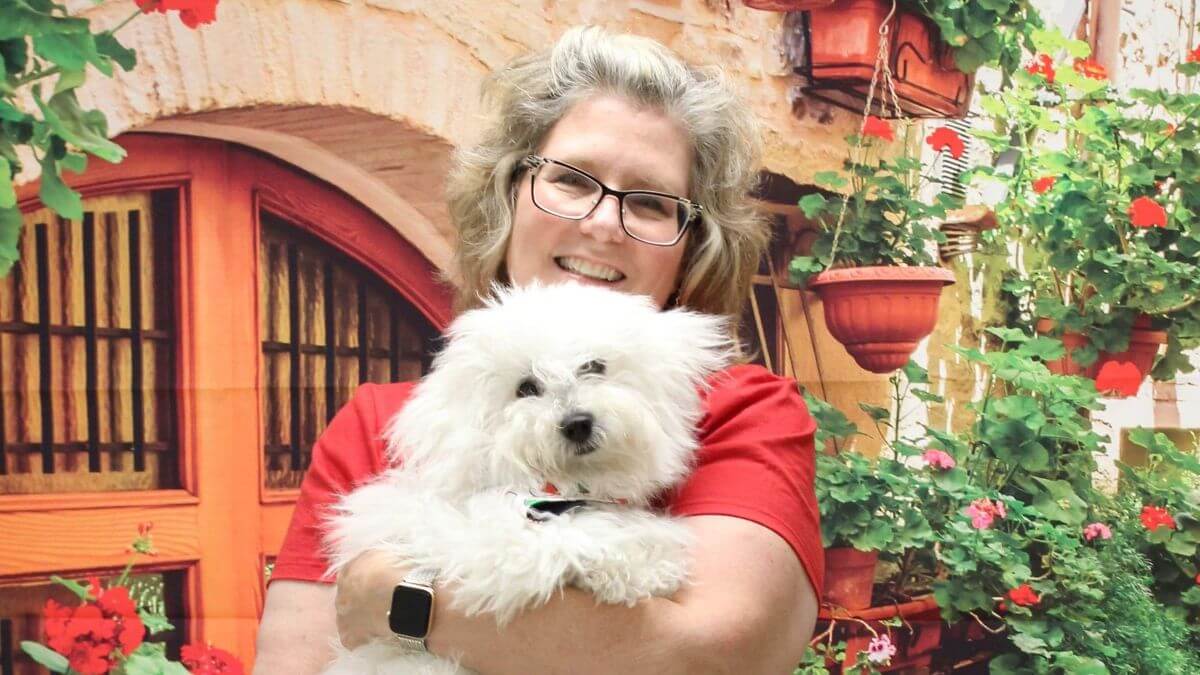
Karen Winters of Aria Bolognese shares her journey, health testing, Puppy Culture, and why the Bolognese excels as a companion dog.
Meet the Breeders
Lisa Heimiller of Blossom Bolognese shares her journey, breed hallmarks, testing, and passion for preserving the rare Bolognese breed.


Meet the Breeders
Darice M. Vanasse is the breeder behind the My Regal Bolognese. Read about the kennel’s beginnings, the champions, the puppies.
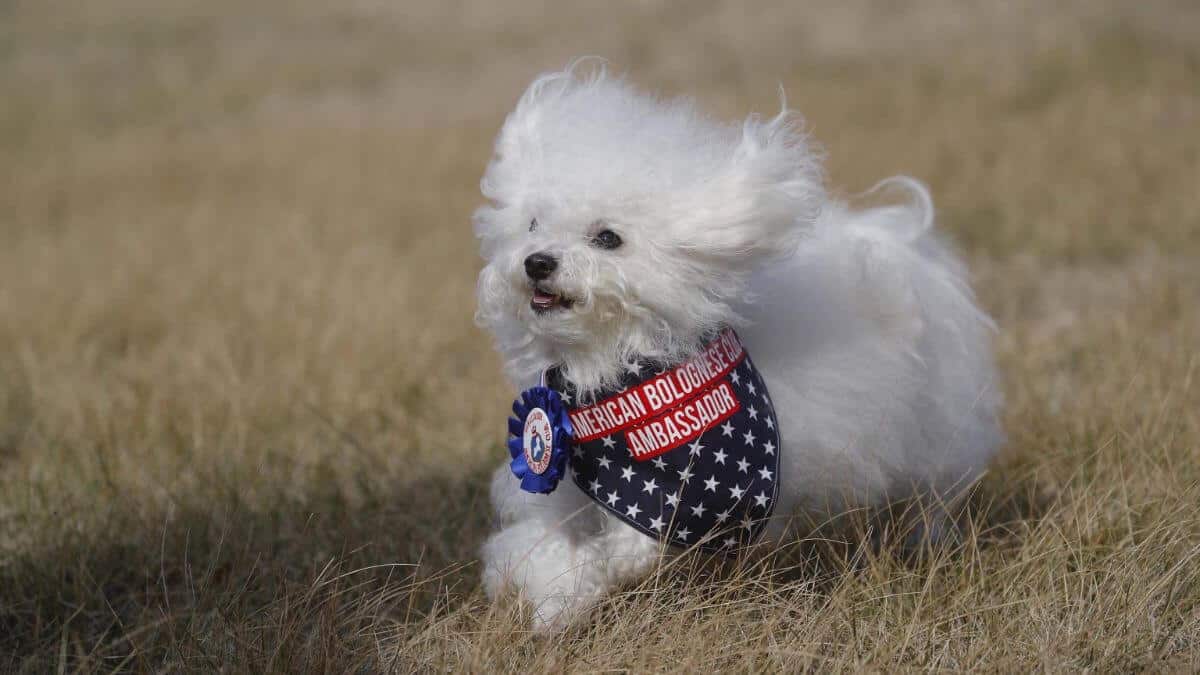

Discover the enchanting Bolognese: a rare, devoted companion with a rich history as the ultimate gift of Italian nobility.
The tail is set high and carried curved over the back. It is covered with long hair and contributes to the breed’s compact, balanced outline.
A Note About Color: The coat of the Bolognese is pure white. Young dogs often have a champagne tone on the ears until 18 months of age, which is perfectly acceptable. Disqualifying faults are any color other than white, or patches and flecks of any color anywhere on the head or body; this does not apply to the champagne tone on ears or body of puppies under 18 months of age.
Coat Type
Wavy
The structure of the coat this breed carries.
Coat Length
Long
How long the breed's coat grows when kept in condition.
Adaptability Level
How easily a breed copes with changes in home, routine, noise and weather.
Mental Stimulation Needs
How much a breed needs a job, a puzzle or training to stay content.
A Bolognese should receive a complete and balanced diet appropriate for its age, activity level, and body condition. Portions should be measured carefully because small dogs can gain excess weight quickly.
Most adults do well with two meals per day, while puppies usually need several smaller meals. Treats can be useful during training, but they should remain a limited part of the daily calorie intake.
Fresh water should always be available.
The Bolognese is intelligent and usually learns well with positive, consistent training. Short sessions using food rewards, praise, and gentle repetition tend to work best.
Early training should focus on housetraining, recall, leash manners, basic cues, and calm behavior around visitors and other dogs. Because the breed can be sensitive, harsh corrections should be avoided.
Bathing can be done as needed, followed by thorough drying and combing. The coat is generally kept in a rather natural, rustic appearance and is not heavily trimmed. Nails should be trimmed regularly, ears should be checked for debris or irritation, and teeth should be brushed routinely.