01/Overview
The Dalmatian is a breed of great distinction, known for its unique spotted coat, balance, and poise. Originally used as a coach dog, the breed has a rich and useful history that is reflected in its versatility, athletic build, and intelligent expression. Dals, as they are called by their friends, are outgoing and alert, making them excellent watchdogs as well as trusted companions. They are renowned for their stamina and endurance, traits that made them effective as the escorts and guardians of horse-drawn carriages.
Highlights
02/History
The Dalmatian is a breed rich in history and distinctive in appearance, known for its uniquely spotted coat. The breed's origins are somewhat mysterious, with various theories suggesting its early presence in Europe, Asia, and Africa. Historical documentation and artistic depictions indicate the breed has been known since ancient times.
The name "Dalmatian" is generally believed to derive from Dalmatia, a region of present-day Croatia, where the breed was notably present and refined. However, the exact origins of the breed are still subject to debate among canine historians and breed enthusiasts.
Dalmatians were historically used for a variety of purposes. They were known as carriage dogs due to their unique ability to run alongside horse-drawn vehicles. Their role offered both style and protection, and was extended to the breed's use as a firehouse dog that would run ahead of fire engines to clear a path and guard equipment. The Dal's enduring association with firehouses remains a symbolic aspect of the breed's history.
In addition to these roles, Dalmatians have been used as hunting dogs, circus performers, and war sentinels, showcasing their versatility and adaptability to complete various tasks and in a variety of environments.
The breed gained official recognition by major kennel clubs in the late 19th and early 20th centuries. The American Kennel Club (AKC) recognized the Dalmatian in 1888, acknowledging its distinct qualities and many contributions. The Fédération Cynologique Internationale (FCI) and The Royal Kennel Club (UK) also recognized the breed, further solidifying its status within the international dog community.
Throughout its history, the Dalmatian has remained a symbol of elegance, strength, and intelligence. The breed's unique spots, athletic build, and dignified demeanor have made it a much loved and recognizable breed worldwide. Whether in the show ring, as a companion, or in various working roles, the Dal continues to be enjoy enduring support from its legion of admirers.
03/Appearance
An adult Dalmatian typically stands at about 19 to 24 inches tall at the shoulder. In terms of weight, mature Dals usually weigh between 45 and 70 pounds. This contributes to the breed's distinctive profile and lends itself to its historical and contemporary roles.
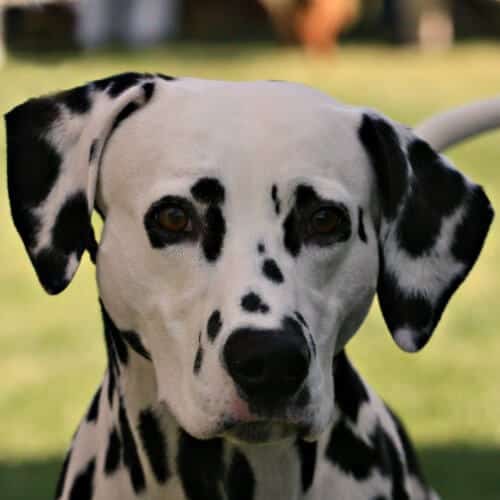
Skull: The skull of the Dalmatian is about as wide as it is long, and flat on top with a slight vertical furrow and a moderately well-defined stop. The cheeks taper smoothly towards the muzzle.
Expression: The expression is typically bright and alert, reflecting the breed’s keen intelligence and stable character.
Eyes: The eyes are medium-sized, round, bright, and set moderately apart. Their color varies, either brown or blue, or any combination thereof, adding to their distinctive appearance.
Ears: Set high and relatively close together, the ears are of moderate size, thin, tapering towards a rounded tip and carried close to the head.
Muzzle: The muzzle is about the same length as, and parallel to, the skull. It is long and powerful, but never snipey.
Nose: The nose is completely pigmented, in harmony with the coat's color; black in black-spotted dogs and brown in liver-spotted dogs.
Bite: The Dalmatian has a scissors bite, where the upper incisors closely overlap the lower incisors. Overshot and undershot bites are unacceptable.
The Dalmatian is a harmoniously built dog, showcasing a balance between strength and elegance. This breed has a square-proportioned body, meaning the length of the body, from the forechest to the buttocks, is approximately equal to the height at the withers. This proportion contributes to the breed’s efficient, balanced, and effortless movement.
The Dalmatian possesses substantial bone, yet without a hint of coarseness. This combination of strength and balance is vital for endurance and speed, attributes that are essential for the breed’s function as a coach dog.
Texture: The Dalmatian's coat is a defining feature of the breed, characterized by its short length and fine texture. It lies close to the body, giving the dog a sleek and glossy appearance. This coat is not only distinctive but also practical, providing a certain degree of protection while being relatively easy to maintain.
Standard Colors
Standard Markings
04/Consider
Owning a Dalmatian can be a unique and rewarding experience, as this breed is known for its distinctive appearance and energetic personality. However, it's essential for potential caretakers to understand the responsibilities of owning this breed. Dals are active, intelligent dogs that require regular exercise, mental stimulation, and consistent training. Their social nature means they thrive in environments where they can interact with their human companions and participate in many and varied activities.
Interaction With Family
The level of affection a breed typically shows towards family members and familiar individuals.
Good With Other Dogs
The innate friendliness of a dog towards other dogs can depend on its breed.
Good With Young Children
The degree to which a breed will typically be patient with young children.
Amount Of Shedding
How much hair a breed typically leaves behind on clothes, furniture and floors.
Frequency Of Grooming
How often a breed needs brushing, bathing or a professional trim to stay in condition.
Amount Of Drooling
How prone a breed is to drool — worth knowing before you keep a towel by the door.
Openness To Strangers
How openly a breed tends to greet new people, visitors and strangers.
Protective Nature
How likely a breed is to alert you to — and stand between you and — anything unfamiliar.
Playfulness Level
How enthusiastic a breed stays about games and play well past puppyhood.
Trainability Level
How readily a breed takes direction and works with you rather than around you.
Barking Level
How much a breed uses its voice, and how readily.
Energy Level
How much get-up-and-go a breed brings to an average day.
Health
The Dalmatian is a generally healthy and robust breed, but like all dogs, they can be prone to certain health issues. Owners should be mindful of any symptoms and maintain regular veterinary check-ups to ensure the long-term health and well-being of their dogs. The average lifespan of a Dalmatian ranges from 11 to 13 years. Early detection and management of any health issue can contribute significantly to a Dal's quality of life.
Understanding the Dalmatian's personality is key to maintaining a harmonious relationship with this breed. The Dal is known for its high energy levels and intelligent mind, traits that necessitate regular mental and physical stimulation. Consequently, these dogs are generally well-suited to experienced dog owners who can provide consistent training and socialization.
Dalmatians tend to have a sensitive nature, which means they often respond best to positive reinforcement training techniques. Harsh methods often lead to counterproductive outcomes. When it comes to being alone, Dals can manage short periods by themselves, but given their social inclination, they prefer the company of their human partners or other pets. Extended periods of isolation can lead to undesirable behaviors stemming from boredom or anxiety.
As for interactions with other dogs and young children, Dalmatians usually do well, especially if they are socialized from a young age. However, their size and exuberance can be overwhelming for very young children, so supervision and proper introduction are crucial. In terms of their disposition towards strangers, Dals can be reserved initially but typically warm up once they realize there is no threat. This breed, with its vigilant and protective nature, can be an effective watchdog.
Overall, Dalmatians are affectionate and loyal companions. They thrive in environments where they can participate in activities with their families and have enough space to expend their energy. For the right handler or household, a Dalmatian can be a joyful and engaging member of the family.
Exercise Expectations
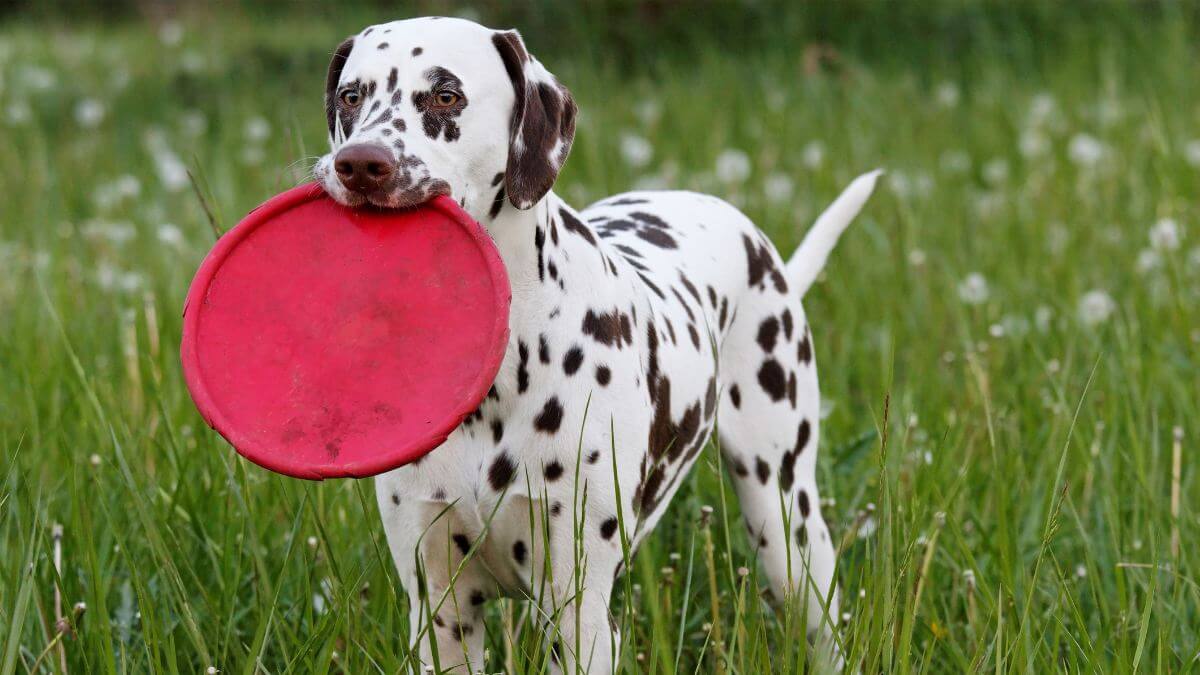
Dalmatians possess a significant amount of energy that needs to be channeled appropriately through exercise. These dogs thrive on daily activities such as long walks, runs, or hikes. Their stamina and endurance make them excellent companions for jogging or biking, but it’s important to gradually build up to more intense activities, especially for young dogs whose joints and bones are still developing. The intensity of the exercise should match the dog’s age, health status, and individual energy level. While younger and more active Dalmatians might require more vigorous exercise, older dogs may do well with moderate but consistent activity. It's essential to observe their behavior and adjust their exercise routine accordingly. Playfulness is another characteristic of the Dalmatian. These dogs enjoy interactive games like fetch, frisbee, and tug-of-war, which not only provide physical exercise but also offer mental stimulation. Engaging in play is a great way for Dals to bond with their human companions and to burn off extra energy. In addition to physical activities, mental exercise is also crucial for this intelligent breed. Interactive puzzle toys, regular training sessions, and obedience games can help to keep a Dal's mind active and prevent boredom, which can sometimes lead to destructive behavior. A lack of adequate exercise can lead to a variety of issues in the Dalmatian, including hyperactivity, restlessness, and behavioral problems. Therefore, making sure the Dal receives sufficient exercise is vital for overall health and happiness. A Dalmatian that is well-exercised will be more relaxed, obedient, and a joy to have around.
Adapting the living environment (and lifestyle) to accommodate a Dalmatian is essential for the dog's well-being and everyone's mutual happiness. This breed is adaptable, but it does have specific needs that should be considered.
When it comes to apartment living, Dalmatians can adapt, provided their exercise needs are met daily. These energetic dogs require ample space to move and play, and without regular and sufficient physical activity, a Dal living in an apartment is likely to become restless and exhibit behavioral issues. Daily walks, runs, or visits to a dog park are essential to keep the dog healthy and happy living in a smaller.
Regarding the breed's weather tolerance, Dalmatians generally do well in various climates. However, due to their short coats, they may not tolerate extreme cold very well. In colder climates, it’s advisable to provide them with a coat or sweater during outdoor activities. Conversely, in hot weather, Dals can be prone to overheating. It's important to provide them with access to shade and plenty of fresh water, and to avoid strenuous exercise during the hottest parts of the day.
Dalmatians are also known for their loyalty and love for human companionship, making them excellent family companions. However, due to their size and energy, supervision around young children is advised. These dogs can be exuberant in their play, so teaching both the dog and the children how to interact safely is important.
05/Puppies
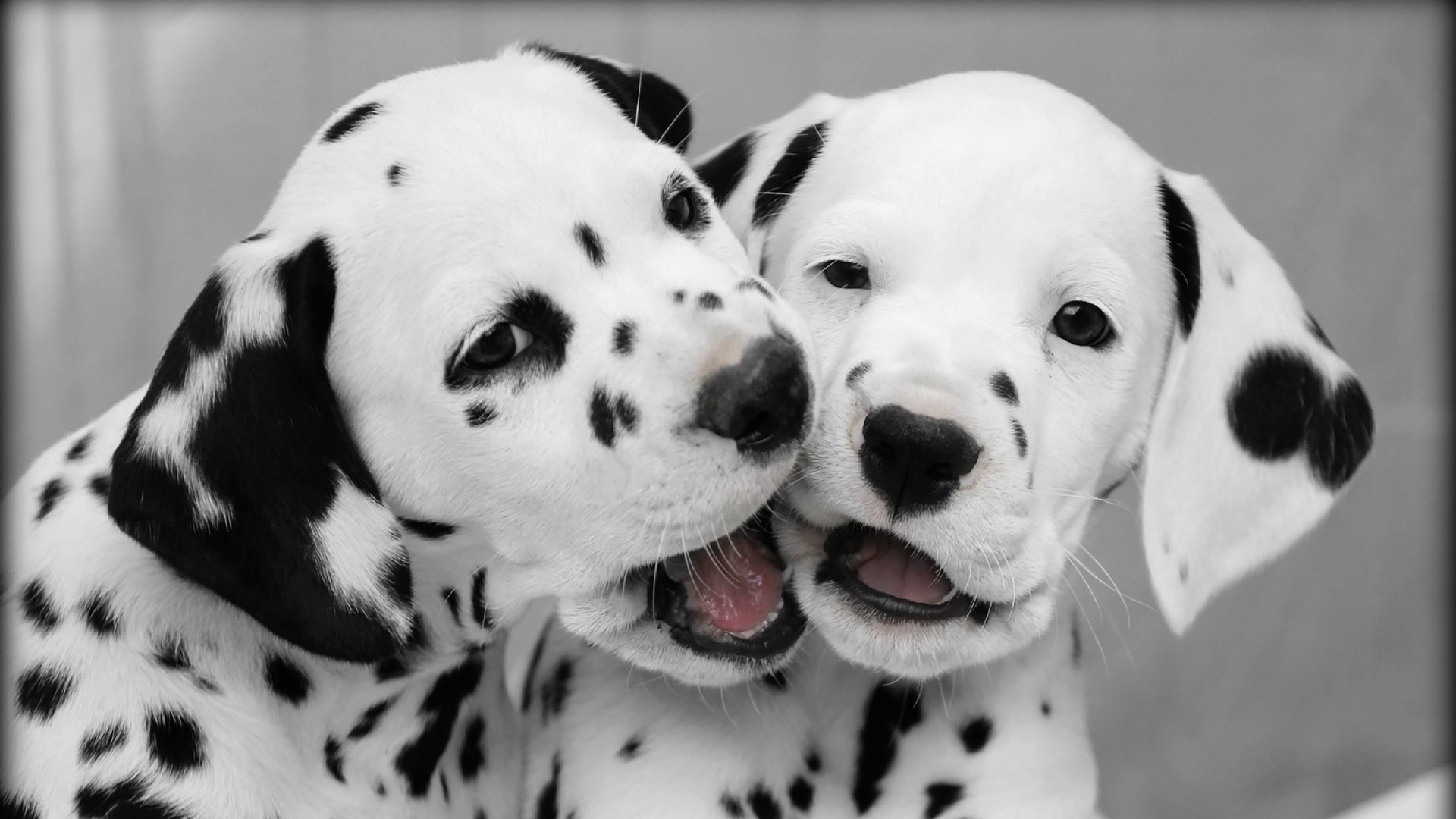
The arrival of a litter of Dalmatian puppies is an exciting and rewarding experience. These playful and energetic pups are a delight top watch as they grow to become distinctive and athletic adult dogs. Understanding their specific needs is key to ensuring healthy development and a seamless integration into their new households.
Caring for a Dalmatian puppy requires attention to the physical, mental, and social development of the growing dog. From the moment the pup arrives in its new home, establishing a routine for feeding, potty training, socialization, and exercise is crucial.
Feeding a Dalmatian puppy a balanced diet is fundamental for its growth. Puppies require more frequent feeding than adults, typically three to four meals a day, and it's important to feed high-quality puppy food that meets the pup's nutritional needs. This can be adjusted as the pup grows and its dietary requirements change. Monitoring growth and adjusting the food intake to avoid overfeeding is important, as maintaining a healthy weight is crucial for those developing joints and bones.
Early socialization is vital for the Dalmatian puppy. Exposure to various people, environments, sounds, and experiences helps in developing a well-rounded and confident adult dog. Positive and gentle introduction to these new experiences is key to making sure the pup doesn't become overwhelmed.
Training should begin early too. The Dalmatian puppy is intelligent and learns quickly, but it can also be occasionally stubborn. Consistency, patience, and positive reinforcement techniques are effective training techniques. Early training and socialization pave the way for good behavior.
The Dalmatian puppy is energetic and requires ample playtime and exercise, but it's essential to balance this with the need for rest. Exercise should be age-appropriate, avoiding overly strenuous activities until the pup is fully grown. This will support the puppy's developing bones and joints.
Regular veterinary check-ups are crucial in monitoring a Dalmatian puppy's health. This including vaccinations, parasite control, and general health assessments. It’s also important to discuss care with the puppy's breeder, as the information shared will come from someone with direct experience with the needs of the breed.
Caring for a Dalmatian puppy requires time, dedication, and patience, but the rewards of raising a well-adjusted and healthy adult are immense. As the puppy grows, it will not only develop into a strikingly beautiful dog, it will also become a loyal, loving, and capable companion.
06/Activities
The Dalmatian is a highly energetic and intelligent dog, making these dogs excellent candidates for participating in a variety dog sports. Engaging a Dal in these activities not only provides the physical exercise needed, it also offers mental stimulation and strengthens the bond between dog and handler. Here are some activities and dog sports that are well-suited for Dalmatians:
Obedience: Obedience Trials test a dog's ability to perform a set of standardized exercises, which require training and teamwork between dog and handler.
Agility: This high-energy sport involves a dog navigating a complex course that includes jumps, tunnels, and weave poles. Dalmatians can excel in Agility due to their athleticism and intelligence.
Rally Obedience: A fun twist on traditional Obedience, Rally-O encourages dogs and their handlers to navigate a course together, completing various tasks along the way.
Tracking: Leveraging a Dal's keen sense of smell, tracking involves following a scent trail to locate a hidden object. This activity stimulates the dog's natural instincts and provides mental engagement.
Flyball: This is a fast-paced team sport that involves dogs running over hurdles to retrieve a ball and return it to their handlers. It can be a great outlet for a Dalmatian's high energy.
Barn Hunt: A newer sport where dogs locate a rat (safely enclosed in a tube) hidden among hay bales, this exciting event tests a dog's hunting and scenting ability.
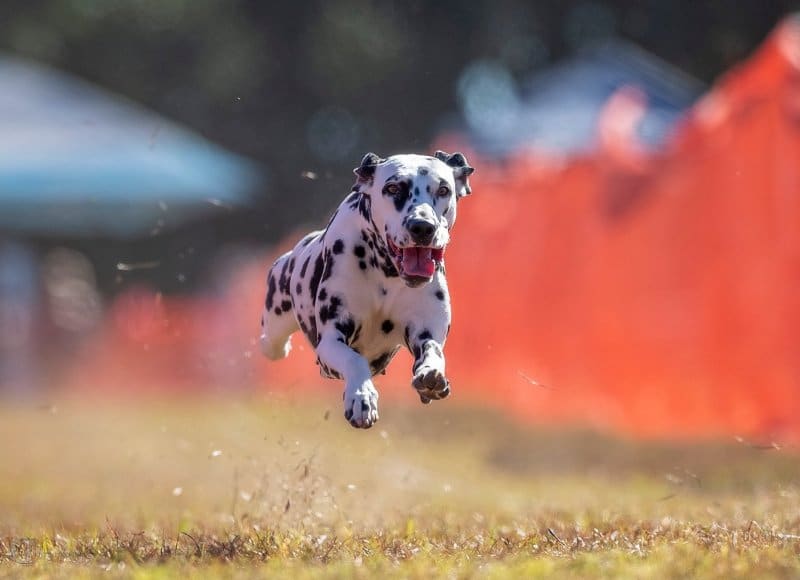
Fast CAT: Originally designed for sighthounds, this sport provides a fast-paced chase after a mechanically operated lure. What dog wouldn't love this activity?
Dock Diving: This is a sport where dogs jump from a dock into a pool for distance or height. Dalmatians with a love for water can enjoy, and excel at, this soaking sport.
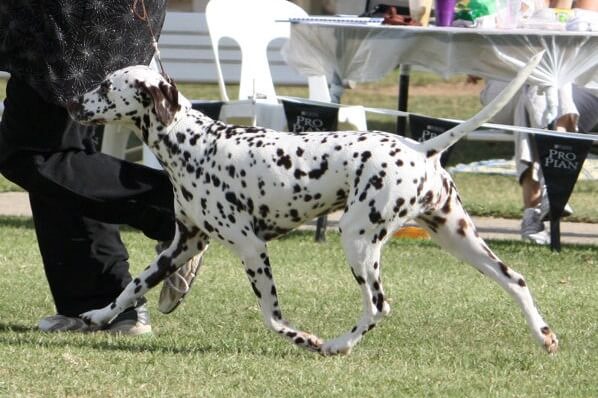
Conformation Shows: Dalmatians, with their distinct appearance and graceful movement, are popular participants in Conformation Shows.
These activities will not only provide a Dalmatian with the physical exercise it requires, they can also cater to the breed's intelligence and need for mental stimulation. Participation in these dog sports also fosters good behavior and social skills as it strengthens the bond shared between each Dal and its favorite human partner.
Gallery
07/Standards
The Dalmatian is recognized by the world's leading registries and kennel organizations, which categorize the breed into a specific Group based on its unique characteristics. This breed is recognized worldwide under the following Group designations:
The ideal Dalmatian is described by a Breed Standard that is approved by each of the world’s leading registries and kennel organizations. The Breed Standards for this breed may be found in the following links:
08/Clubs
Dalmatian clubs play a crucial role in the preservation, education, and promotion of the breed. These organizations offer resources and support for breeders, exhibitors, and enthusiasts, fostering a community that's dedicated to the welfare and betterment of the breed.In the United States, the Dalmatian Club of America (DCA) is the national organization. It serves as an invaluable resource for breed-specific information, including health initiatives, training, and responsible breeding practices. The DCA also organizes events, shows, and educational programs, contributing significantly to the promotion and preservation of the breed across the country.In Canada, the Dalmatian Club of Canada (DCC) fulfills a similar role, offering guidance and support to owners and breeders. Through various initiatives and events, the DCC is dedicated to upholding the Breed Standard and ensuring the health and well-being of all Dalmatians in Canada.The United Kingdom hosts the British Dalmatian Club, which is renowned for its commitment to the breed. The club provides a platform for Dalmatian enthusiasts in the UK to engage in breed-specific activities, share knowledge, and participate in events aimed at celebrating and promoting the breed.These clubs form the basis of their country's Dalmatian community, offering a wealth of knowledge and resources to anyone with an interest in the breed. Their members advocate for responsible breeding practices, proper care, and the overall health of the breed.
09/Rescue
Dalmatians can regrettably find themselves in need of a new home on occasion. Due to unforeseen circumstances, such as owner illnesses, financial hardships, or behavioral challenges, a Dal can find itself without a home. Rescue groups rise to the occasion, helping these loyal companions find loving forever homes.In the United States, there are several Dalmatian rescue groups dedicated to the breed. These organizations, such as the Dalmatian Rescue of Southern California and the Dalmatian Rescue of Colorado, focus on rehoming Dals and providing the care they need. Their volunteer members work tirelessly to match Dalmatians with suitable homes, making sure each dog receives the love and attention it deserves.In the United Kingdom, Dalmatian rescue efforts are supported by organizations like British Dalmatian Welfare. This group is dedicated to the well-being of Dalmatians across the UK, providing assistance in rehoming and offering support to caretakers.Rehoming can be a fulfilling way to give a Dalmatian a second chance. For those who are open to the idea, it's recommended to contact the breed club members who assist with rescue efforts, and to check out local shelters and rescues which might occasionally have a Dal in need.
10/Facts
Historical Role
Originally, Dalmatians were used as carriage dogs in Croatia and the surrounding areas. The dogs' role was to run alongside, acting as protectors, and in the process, adding a touch of elegance.
Firehouse Mascots
The Dalmatian is famously known as a firehouse mascot. This tradition started because of the breed's compatibility with horses. When fire engines were pulled by horses, Dalmatians were used to clear the way and guard the firehouse and equipment.
Unique Spots
Every Dalmatian spot is unique. The dogs are born with plain white coats, and their spots only start to appear as they grow, usually within three to four weeks after birth.
Versatile Performers
Dalmatians are versatile working dogs. Aside from being carriage dogs, they have been used for a variety of tasks, including as hunters, circus performers, and guards during wartime.
Disney Fame
The 1961 Disney movie 101 Dalmatians brought the breed immense popularity. However, this led to indiscriminate breeding and increased the number of Dals in shelters.
Royal Favorites
The Dalmatian has been favored by royalty and aristocrats throughout its long history. These dogs were often painted in portraits alongside their noble owners.
Marathon Runners
Dalmatians have impressive stamina and can typically run long distances with ease, earning them a reputation as the original "Marathoner's dog."
11/FAQ
The average lifespan of a Dalmatian ranges from about 11 to 13 years. However, with proper care, including a healthy diet, regular exercise, and routine veterinary check-ups, some Dals can live longer. The breed's longevity is also influenced by genetics and the overall lifestyle provided by their human companions.
Official Standard of the Dalmatian
General Appearance: The Dalmatian is a distinctively spotted dog; poised and alert; strong, muscular and active; free of shyness; intelligent in expression; symmetrical in outline; and without exaggeration or coarseness. The Dalmatian is capable of great endurance, combined with fair amount of speed. Deviations from the described ideal should be penalized in direct proportion to the degree of the deviation.
Size, Proportion, Substance: Desirable height at the withers is between 19 and 23 inches. Undersize or oversize is a fault. Any dog or bitch over 24 inches at the withers is disqualified. The overall length of the body from the forechest to the buttocks is approximately equal to the height at the withers. The Dalmatian has good substance and is strong and sturdy in bone, but never coarse.
Head: The head is in balance with the overall dog. It is of fair length and is free of loose skin. The Dalmatian's expression is alert and intelligent, indicating a stable and outgoing temperament. The eyes are set moderately well apart, are medium sized and somewhat rounded in appearance, and are set well into the skull. Eye color is brown or blue, or any combination thereof; the darker the better and usually darker in black-spotted than in liver-spotted dogs. Abnormal position of the eyelids or eyelashes (ectropion, entropion, trichiasis) is a major fault. Incomplete pigmentation of the eye rims is a major fault. The ears are of moderate size, proportionately wide at the base and gradually tapering to a rounded tip. They are set rather high, and are carried close to the head, and are thin and fine in texture. When the Dalmatian is alert, the top of the ear is level with the top of the skull and the tip of the ear reaches to the bottom line of the cheek. The top of the skull is flat with a slight vertical furrow and is approximately as wide as it is long. The stop is moderately well defined. The cheeks blend smoothly into a powerful muzzle, the top of which is level and parallel to the top of the skull. The muzzle and the top of the skull are about equal in length. The nose is completely pigmented on the leather, black in black-spotted dogs and brown in liver-spotted dogs. Incomplete nose pigmentation is a major fault. The lips are clean and close fitting. The teeth meet in a scissors bite. Overshot or undershot bites are disqualifications.
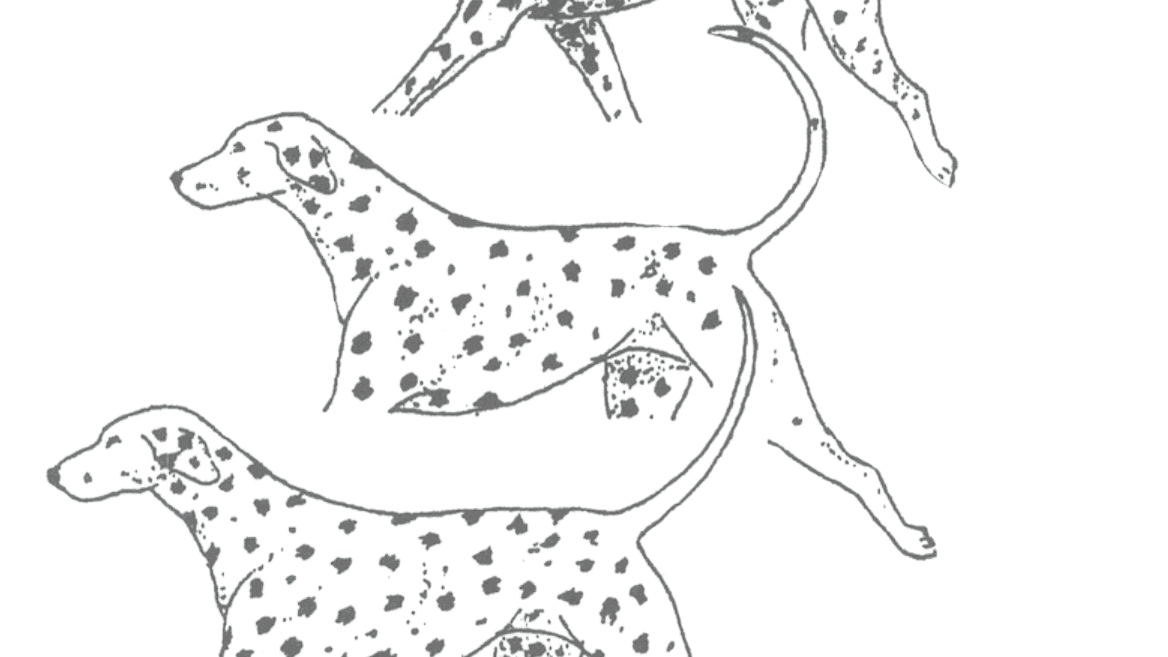
Neck, Topline, Body: The neck is nicely arched, fairly long, free from throatiness, and blends smoothly into the shoulders. The topline is smooth. The chest is deep, capacious and of moderate width, having good spring of rib without being barrel shaped. The brisket reaches to the elbow. The underline of the rib cage curves gradually into a moderate tuck-up. The back is level and strong. The loin is short, muscular and slightly arched. The flanks narrow through the loin. The croup is nearly level with the back. The tail is a natural extension of the topline. It is not inserted too low down. It is strong at the insertion and tapers to the tip, which reaches to the hock. It is never docked. The tail is carried with a slight upward curve but should never curl over the back. Ring tails and low-set tails are faults.
Forequarters: The shoulders are smoothly muscled and well laid back. The upper arm is approximately equal in length to the shoulder blade and joins it at an angle sufficient to insure that the foot falls under the shoulder. The elbows are close to the body. The legs are straight, strong and sturdy in bone. There is a slight angle at the pastern denoting flexibility.
Hindquarters: The hindquarters are powerful, having smooth, yet well defined muscles. The stifle is well bent. The hocks are well let down. When the Dalmatian is standing, the hind legs, viewed from the rear, are parallel to each other from the point of the hock to the heel of the pad. Cowhocks are a major fault.
Feet: Feet are very important. Both front and rear feet are round and compact with thick, elastic pads and well arched toes. Flat feet are a major fault. Toenails are black and/or white in black- spotted dogs and brown and/or white in liver- spotted dogs. Dewclaws may be removed.
Coat: The coat is short, dense, fine and close fitting. It is neither woolly nor silky. It is sleek, glossy and healthy in appearance.
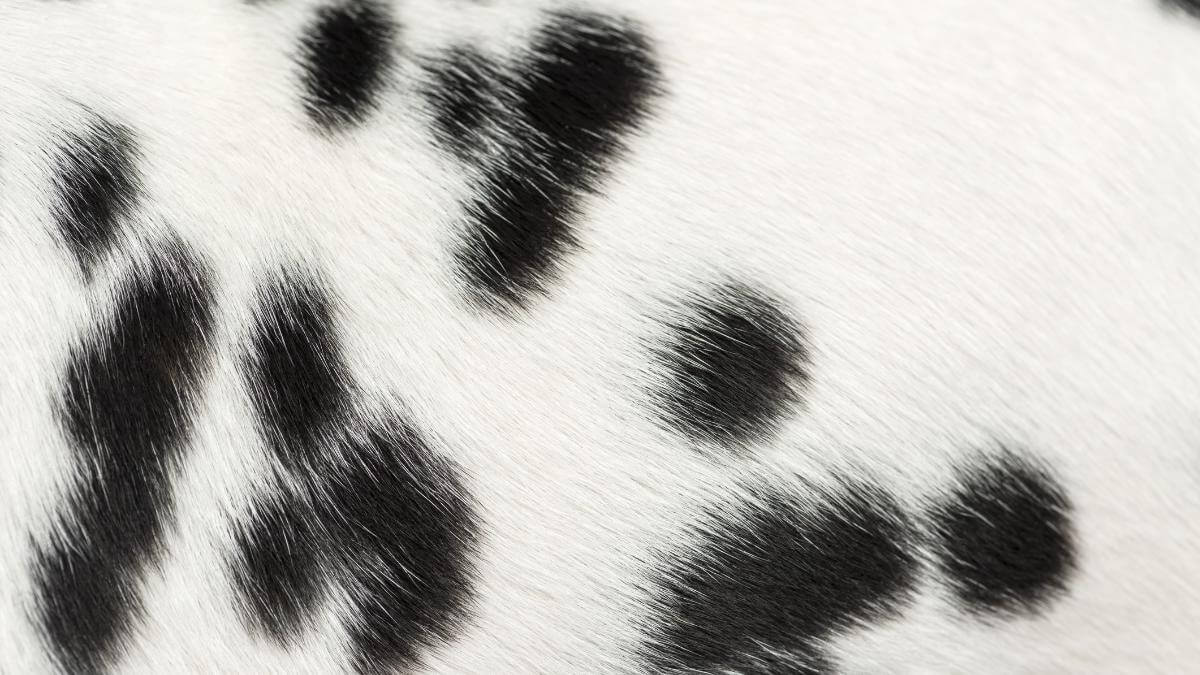
Color and Markings: Color and markings and their overall appearance are very important points to be evaluated. The ground color is pure white. In black-spotted dogs the spots are dense black. In liver-spotted dogs the spots are liver brown. Any color markings other than black or liver are disqualified. Spots are round and well-defined, the more distinct the better. They vary from the size of a dime to the size of a half-dollar. They are pleasingly and evenly distributed. The less the spots intermingle the better. Spots are usually smaller on the head, legs and tail than on the body. Ears are preferably spotted. Tri-color (which occurs rarely in this breed) is a disqualification. It consists of tan markings found on the head, neck, chest, leg or tail of a black- or liver-spotted dog. Bronzing of black spots and fading and/or darkening of liver spots due to environmental conditions or normal processes of coat change are not tri-coloration. Patches are a disqualification. A patch is a solid mass of black or liver hair containing no white hair. It is appreciably larger than a normal sized spot. Patches are a dense, brilliant color with sharply defined, smooth edges. Patches are present at birth. Large color masses formed by intermingled or overlapping spots are not patches. Such masses should indicate individual spots by uneven edges and/or white hairs scattered throughout the mass.
Gait: In keeping with the Dalmatian's historical use as a coach dog, gait and endurance are of great importance. Movement is steady and effortless. Balanced angulation fore and aft combined with powerful muscles and good condition produce smooth, efficient action. There is a powerful drive from the rear coordinated with extended reach in the front. The topline remains level. Elbows, hocks and feet turn neither in nor out. As the speed of the trot increases, there is a tendency to single track.
Temperament: Temperament is stable and outgoing, yet dignified. Shyness is a major fault.
Scale of Points
General Appearance 5
Size, proportion, substance 10
Head Neck, topline, body 10
Forequarters 5
Hindquarters 5
Feet 5
Coat 5
Color and markings 25
Gait 10
Temperament 10
Total 100
Disqualifications: Any dog or bitch over 24 inches at the withers. Overshot or undershot bite. Any color markings other than black or liver. Tri-color. Patches.
Approved July 11, 1989
Effective September 6, 1989


Meet the Judges
Edna González reflects on judging Non-Sporting breeds at Westminster 2026, sharing insights on her assignments and overall impressions.


Meet the Breeders
Sue Sommerfield shares 48 years of insight into Flat-Coats, Dalmatians, breeding, training, and the future of purebred dogs.
Explore the distinct breed types of the Dalmatian and Pointer, highlighting their history, standards, and functional characteristics.
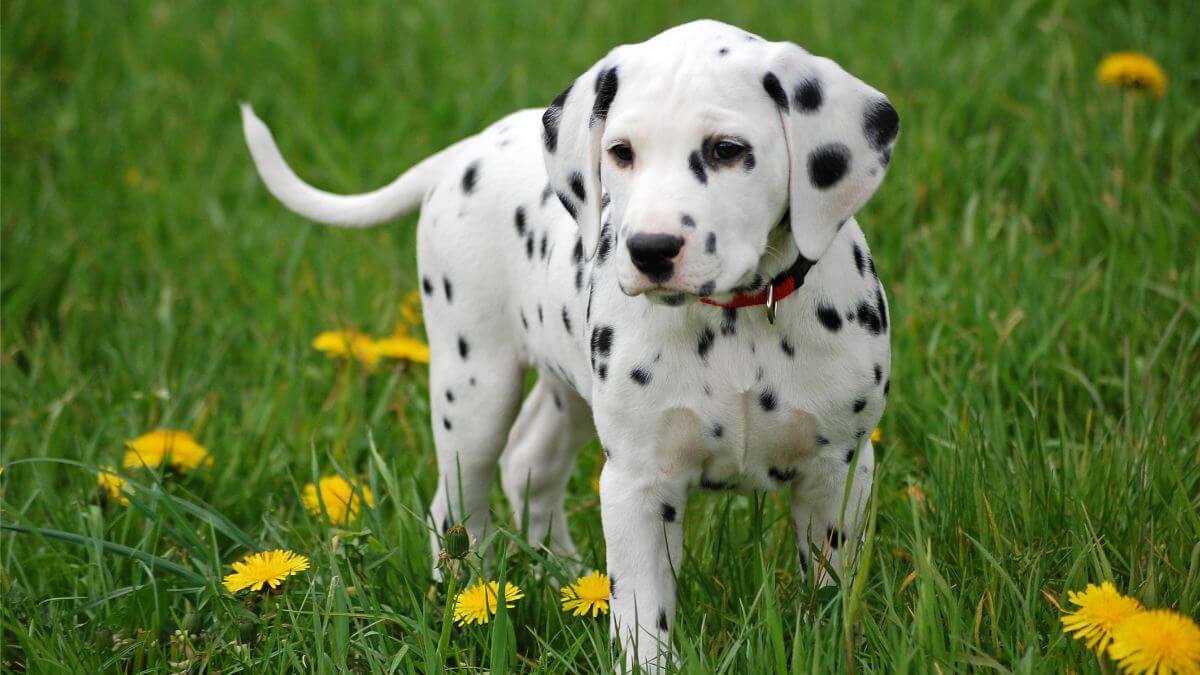
Discover the Dalmatian’s athletic legacy! Learn about their history, road trials, and why they’re more than just spots!
Dog Sports
Explore the Dalmatian’s history, unique traits, and versatility as both a working dog and loyal family companion.
Dog Shows
Understanding the ideal tail carriage in Dalmatians: a natural extension of the topline, slightly curved, never curled.
All About Judging
Discover judging Dalmatians beyond spots—insights into their traits, movement, and breed history await in this article.
American Kennel Club (AKC)
Amanda Gill of Crescent Hill Dalmatians shares her insights on various topics regarding dog sports and performance events.

Meet the Breeders
Marie Zink is the breeder behind the Bret D Dalmatians. Read about the kennel’s beginnings, champions, dogs, puppies, and more!
The Dalmatian's tail is a natural extension of the topline. It is strong at the root and moderately set, not too low, and tapers towards the tip. The tail is carried in a slight upward curve and should never be curled over the back in a ring shape or set too low on the body. Instead, it reaches to the hock and is never docked. Since the breed was developed to run alongside horse-drawn carriages, the tail provides balance when the dog is moving at a trot. Its coat is dense and sleek, and continues the pattern of spots that is the breed's distinctive feature.
A Note About Color: The coat of the Dalmatian has a pure white ground color with distinct spots in dense black or liver-brown. The spots should be round and well-defined, varying in size from a dime to a half-dollar. The ears are preferably spotted, and the spots on the head, legs, and tail are usually smaller than those on the body. Spots should be evenly distributed; however, patches (a solid mass of black or liver without an intermingling of white) are unacceptable in the breed.
Coat Type
Smooth
The structure of the coat this breed carries.
Coat Length
Short
How long the breed's coat grows when kept in condition.
Adaptability Level
How easily a breed copes with changes in home, routine, noise and weather.
Mental Stimulation Needs
How much a breed needs a job, a puzzle or training to stay content.
Proper feeding and nutrition are crucial for the health and well-being of a Dalmatian. Given the breed's energetic nature, these dogs require a diet that adequately fuels their active lifestyle while also considers their unique health needs, particularly their predisposition to urinary stones.
When it comes to puppies, a Dalmatian pup's diet should be carefully monitored to support rapid growth without overfeeding, which can lead to bone and joint problems. High-quality puppy food formulated for medium-to-large breeds is generally recommended, split into multiple meals throughout the day to aid digestion and prevent bloat.
For adult Dalmatians, the dietary focus shifts to maintaining an ideal body condition. A balanced diet with appropriate levels of protein, fats, carbohydrates, and essential nutrients is key. Adult Dals typically do well on two meals per day. The amount of food, usually measured in cups, varies depending on the dog's size, age, activity level, and metabolism. It's important to adjust food portions accordingly to prevent obesity, which can exacerbate health issues like joint problems.
Dalmatians have a unique urinary system that makes them prone to forming urate stones, so their diet should aim to maintain a proper urinary pH. This may involve choosing foods with certain protein sources or feeding a diet formulated for urinary health. It's also essential to make sure they have constant access to fresh water to help flush their system and reduce the risk of stone formation.
Regular consultation with a veterinarian or a canine nutritionist can provide tailored advice to meet the Dalmatian’s specific dietary needs. With a well-managed diet, a Dal can enjoy a healthy, active life alongside its human companions.
Training a Dalmatian requires an understanding of the breed's intelligent yet sometimes stubborn nature. These dogs, with their quick minds and high energy levels, respond best to engaging and consistent training methods. Training should ideally begin from a young age, as early socialization and basic obedience lay the foundation for a well-behaved adult dog.
Dalmatians are known for their intelligence, which makes them generally easy to train, but their independent streak can sometimes pose a challenge. Positive reinforcement techniques, such as using treats and praises, work effectively in motivating them during training sessions. It is crucial to be patient and consistent, as mixed signals or irregular training can lead to confusion and undesirable behaviors.
While Dalmatians are not typically excessive barkers, they will bark to alert their family to something unusual. Their vocalizations, however, are more about communication than a tendency towards incessant noise-making. Training can help to manage the barking and help with understanding when it's appropriate to be vocal.
The breed's intelligence and high energy also mean Dalmatians can have a moderate potential to wanderlust. They may chase after interesting scents or moving objects if not properly trained or confined. Therefore, it's important to teach a reliable recall command and provide a secure environment when they're off-leash.
In terms of predation, Dalmatians were historically used as hunters and some dogs may still possess the instinct to chase. This trait can be managed with proper training and socialization, especially if the dog is introduced to different environments and situations from a young age.
Grooming Expectations
Dalmatians are known for their minimal grooming needs, but they are also known for shedding. They shed year-round, with some seasonal peaks, so regular brushing is key to managing loose hair and maintaining a clean coat. Using a rubber grooming mitt or a short-bristled brush at least once a week can effectively remove dead hair and distribute skin oils, which helps to keep the coat shiny. While Dalmatians don’t require frequent baths, occasional bathing is necessary to keep their coat clean and reduce any doggy odor. It’s important to use a mild dog shampoo to avoid drying out the skin. After a bath, drying the coat thoroughly is essential, as dampness can cause skin irritation. Dalmatian grooming also includes regular nail trimming, as overly long nails can cause discomfort and lead to problems with walking and running. Depending on the dog's activity level, the nails may naturally wear down, but it's still important to check and trim them as needed. Ear care is another crucial aspect of care. The Dal's ears should be checked regularly for signs of infection, wax buildup, or debris, since they can be prone to holding moisture. Cleaning with a gentle, dog-specific ear cleaner can prevent most ear problems from developing. Lastly, regular dental care is vital for the Dalmatian's overall health. Brushing the teeth several times a week with a dog-formulated toothpaste can help to prevent tartar buildup and many gum diseases.