Members
Sue Sommerfield shares 48 years of insight into Flat-Coats, Dalmatians, breeding, training, and the future of purebred dogs.
The Weekly Brief
The best of SHOWSIGHT editorials, weekly wins, and breeder commentary — delivered to your inbox every Sunday morning.
Sue Sommerfield
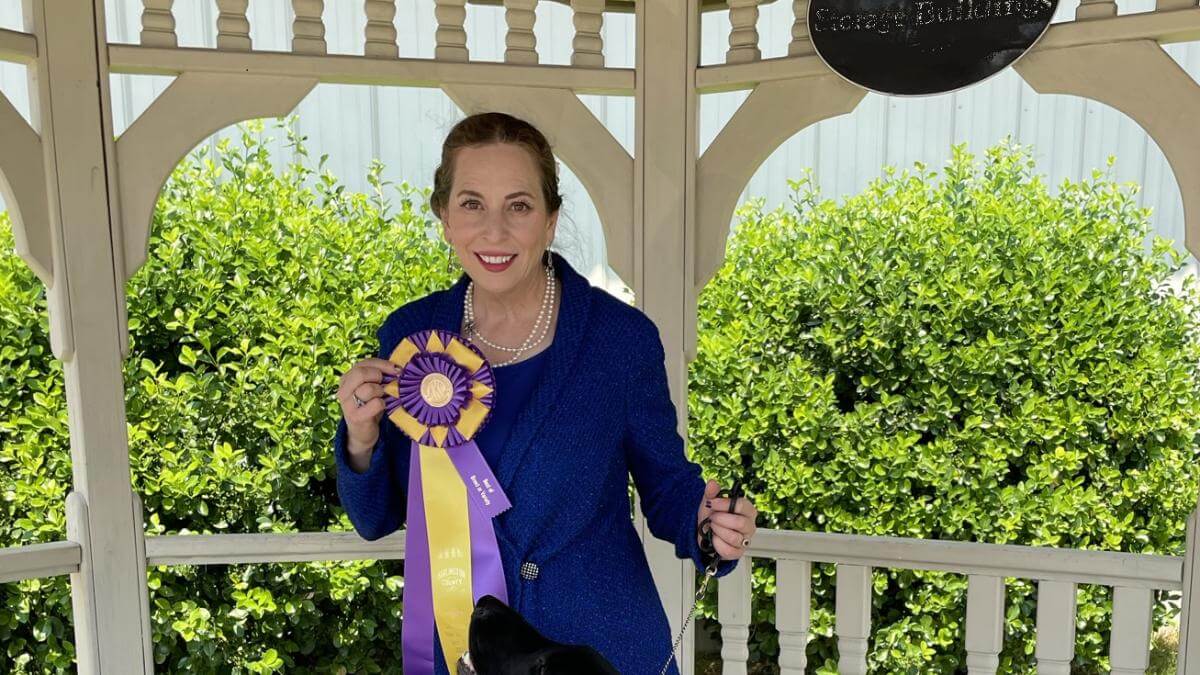
1. I’m Sue Sommerfield and I live in Alexandria, Virginia. I started out as a kid, showing Boxers and Dalmatians in Breed, Obedience, and Junior Showmanship 48 years ago; now I am into Flat-Coated Retrievers. I bred Dalmatians under the Culúrien prefix and had good success with producing Specialty and top-ranked Group winners, and I have shown in Canada and Australia. I currently own a dog training company, primarily teaching basic obedience and service dogs.
2. In both Dalmatians and Flat-Coats, proper structure with excellent front assembly (including forechest/prow), strong rear, and good feet are all crucial to correct breed type.
In Flat-Coats, hallmarks are temperament, movement, and outline (including head). Temperament is typically excellent in Flat-Coats, fortunately! Too often, though, a dog will win because she looks like everything else in the ring in silhouette, even if incorrect.
Flat-Coats need to have a cohesive outline, correct shoulders and prow, with enough bone and depth of muzzle to carry heavy birds all day. Gait needs to be efficient and clean; short legs, rears in another zip code, a high-stepping prance, cow-hocked rears, and flat feet aren’t doing them any favors in conserving energy for a long day of work.
In Dalmatians, hallmarks are temperament, movement, and markings. As an endurance trotting breed, Dals should be confident dogs, without high-stepping or stilted movement, with clean, distinct spotting.
It’s so critical to breed for good, solid temperament in Dals; dogs that you can live with, without resorting to extensive management tactics just so they can handle everyday life like encountering other dogs and strangers (major fault: shyness). People in all breeds tend to make too many excuses for a poor temperament. Concerns regarding markings are missing nose or eye trim (major faults) and extremely heavy, blotchy markings. Once upon a time, these dogs would have absolutely been placed as pets. Now, breeders place them, handlers show them, and judges award them, so this hallmark is deteriorating. Color and markings are 25 percent of the Standard, but 75 percent is dog, so it’s a key component that has to be balanced appropriately. Judges used to emphasize markings too much. Currently, the trend is to virtually discount markings altogether.
3. Absolutely. There’s a significant bias against purebred dogs if they are NOT rescues, and virulent negativity against any breeding of dogs whatsoever. Strangely, people still love to watch dog shows on TV, ignoring that disconnect!
There’s also a misconception that ANY shelter dog can be trained to be a service dog or any other task (herding, tracking, etc.) without any appreciation for the inherited predisposition for such training, nor the temperament needed. I get calls all the time from people who want me to train their shelter doodle for service dog work. Some can indeed do it well enough, but in most cases, they would do better with a well-bred purebred pup with a proper start in life. The general public sees no advantage to a well-bred purebred dog over a mixed-breed from a shelter with obvious temperament issues. This is a battle that the show world is losing, rapidly.
4. The bias against purebreds and breeding is a substantial concern affecting all segments of the dog world.
5. The old-school model of exhibitors was breeders with a kennel full of dogs who were producing multiple litters a year, and starting new pups out every season. But I’ve known so many people over the years, with just one or two dogs, who have no interest in Performance events, so they drop out of dog shows altogether after finishing a Championship, never to be heard from again. Grand Championships and NOHS (National Owner-Handled Series) do offer incentive to keep showing. As the US population ages, it’s a way to attract individuals retiring and looking for a new hobby. Over the years, I’ve developed wonderful friendships with other competitors while waiting for Groups, which could be a valid enticement for those retirees looking for a social activity, which, in turn, could help to keep dog shows vibrant with new competitors.

Meet the Breeders