Members
01/Overview
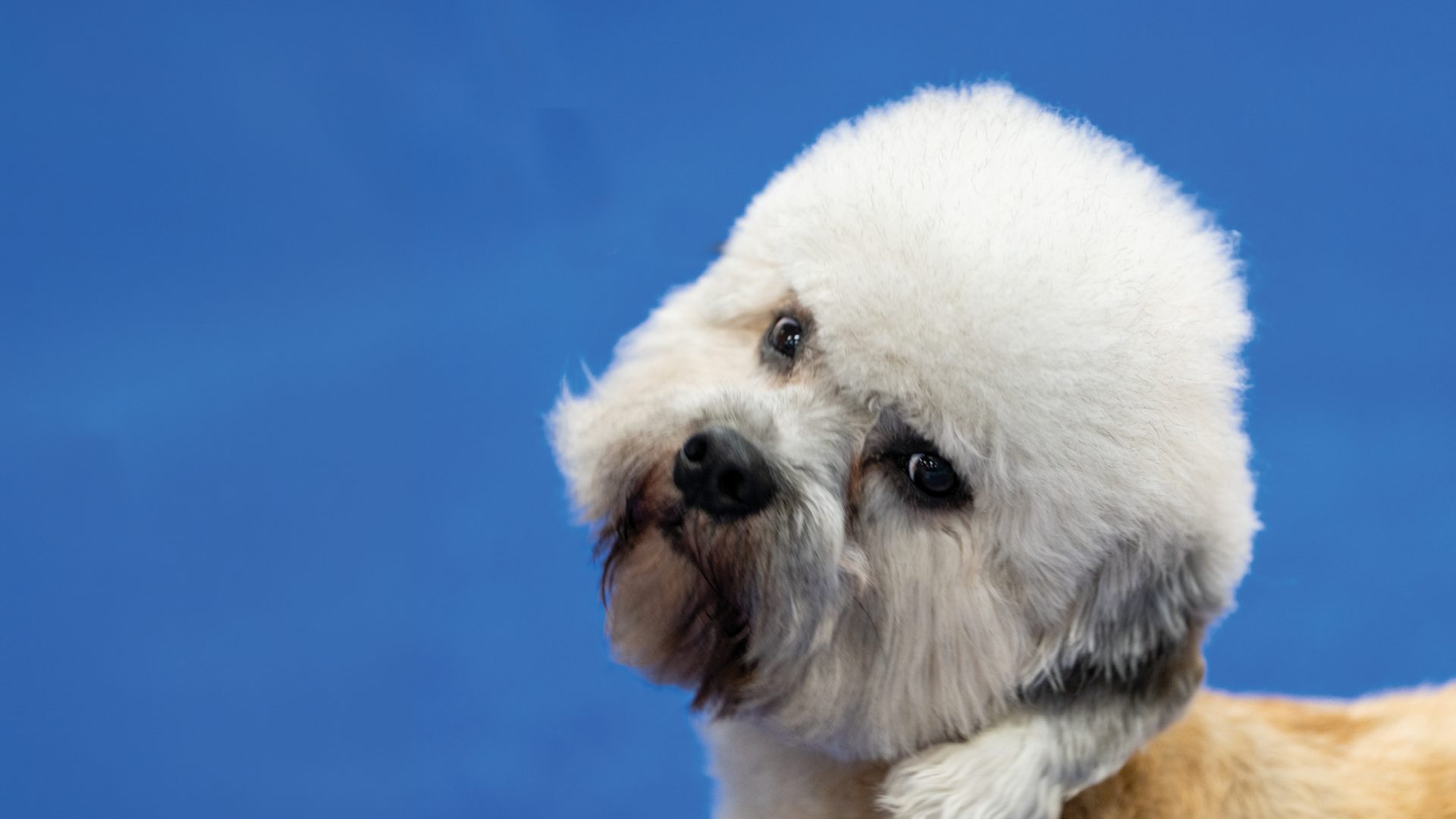
The Dandie Dinmont Terrier is a small yet sturdy terrier known for its distinctive long body, curved topline, and silky topknot. Originally bred for hunting otters and badgers, it is both tenacious in the field and affectionate at home. Unlike many terriers, Dandie Dinmonts are generally calm and always independent, making them excellent companions for those seeking a loyal, moderately active pet.
Highlights
02/History
The Dandie Dinmont Terrier has a rich and well-documented history dating back to the 18th century in the Scottish-English border region. Originally bred by farmers and hunters, these terriers were valued for their skill in hunting otters and badgers, requiring both strength and tenacity to work in challenging terrain.
Unlike many breeds whose origins are obscure, the Dandie Dinmont Terrier can trace its name and lineage to a specific literary reference. The breed was famously named after a fictional character, Dandie Dinmont, from Sir Walter Scott’s 1814 novel Guy Mannering. Dinmont, a farmer, owned a pack of small but fearless terriers, which were modeled after real-life working dogs of the region. The breed quickly gained popularity, with wealthy landowners and nobility taking an interest in preserving and refining its bloodline.
Early Scottish and English breeders developed the Dandie from rough-coated working terriers that were common in the Border country. Unlike other terriers, which typically have straight, level toplines, the Dandie Dinmont was bred to have a distinctive curved topline and a longer body, giving it a unique and easily recognizable silhouette.
By the 19th century, the breed had established a devoted following, particularly among hunters, gamekeepers, and those who appreciated its loyal and affectionate nature. The Royal Kennel Club (UK) officially recognized the Dandie Dinmont Terrier in 1873, making it one of the earliest breeds to receive recognition. The American Kennel Club (AKC) followed suit in 1886, classifying it within the Terrier Group.
03/Appearance
The Dandie Dinmont Terrier stands between 8 to 11 inches tall at the shoulder. Both males and females typically weigh 18 to 24 pounds.
Skull: The Dandie Dinmont Terrier has a large, broad skull, slightly domed, with a well-defined stop.
Expression: Soft yet alert, conveying intelligence and confidence.
Eyes: Large, round, and set wide apart, in shades of rich, dark hazel with dark eye rims, giving an unforgettably expressive look.
Ears: Set low, hanging close to the cheeks, wide at the base and tapering to a point, with feathering at the tips.
Muzzle: Strong and deep, tapering slightly toward the nose while remaining well-proportioned to the skull.
Nose: Always black, prominent, and well-developed.
Bite: Tight scissors bite, with strong, well-set teeth essential for gripping prey.
The Dandie Dinmont Terrier has a long, low-set body, with a distinctive curved topline that sets it apart from most other terriers. Despite its small size, the breed is sturdy and well-muscled, built for strength, agility, and endurance. Its deep chest and strong legs contribute to the Dandie’s ability to navigate rough terrain, while its distinctive coat adds to its unique appearance.
Texture: The Dandie Dinmont Terrier has a distinctive double coat, with a soft, linty undercoat and a crisp, hard topcoat that provides protection against harsh weather and rough terrain. The coat is not wiry like many other terriers but has a unique mix of soft and coarse textures, requiring regular grooming to maintain its shape.
Standard Colors
04/Consider
Owning a Dandie Dinmont Terrier requires an understanding of their moderate exercise needs, unique grooming requirements, and independent yet affectionate temperament. While they are less stubborn than some terriers, they still benefit from consistent training and socialization. Their strong hunting instincts make them alert and tenacious, but they are also loyal and gentle companions who thrive in close family settings.
Interaction With Family
The level of affection a breed typically shows towards family members and familiar individuals.
Good With Other Dogs
The innate friendliness of a dog towards other dogs can depend on its breed.
Good With Young Children
The degree to which a breed will typically be patient with young children.
Amount Of Shedding
How much hair a breed typically leaves behind on clothes, furniture and floors.
Frequency Of Grooming
How often a breed needs brushing, bathing or a professional trim to stay in condition.
Amount Of Drooling
How prone a breed is to drool, worth knowing before you keep a towel by the door.
Openness To Strangers
How openly a breed tends to greet new people, visitors and strangers.
Protective Nature
How likely a breed is to alert you to anything unfamiliar, and stand between you and it.
Playfulness Level
How enthusiastic a breed stays about games and play well past puppyhood.
Trainability Level
How readily a breed takes direction and works with you rather than around you.
Barking Level
How much a breed uses its voice, and how readily.
Energy Level
How much get-up-and-go a breed brings to an average day.
Health
The Dandie Dinmont Terrier is generally a hardy and long-lived breed, with a lifespan of 12 to 15 years. While they are relatively healthy, they are prone to some genetic and structural health concerns. Responsible breeding, regular veterinary care, and a balanced diet contribute to their longevity and well-being.
The Dandie Dinmont Terrier is affectionate, intelligent, and independent, with a personality that blends terrier tenacity with a calm, dignified nature. Unlike many terriers, they are less hyperactive and stubborn, making them a great choice for those who want a more relaxed but still spirited companion.
They are deeply loyal to their families and enjoy being close to their human companions but are also comfortable with some independence. While generally friendly and social, they can be reserved around strangers and make alert but not overly vocal watchdogs. They get along well with other dogs and older children, though their hunting instincts make them unreliable around small pets. With proper training and socialization, they become well-mannered, adaptable companions.
Exercise Expectations
They excel in dog sports like obedience, scent work, and earthdog trials, which engage both their intelligence and natural hunting instincts. While they enjoy outdoor adventures, they are also content relaxing indoors with their family, making them a well-balanced companion.
Grooming Expectations
Dandie Dinmont Terriers are adaptable and affectionate, making them suitable for various living situations, including apartments and homes with yards. They thrive in close companionship with their caretakers and do not do well when left alone for long periods.
Their calm indoor nature makes them easy to live with, but they still need daily exercise and mental stimulation. Due to their hunting instincts, they should be supervised around small pets. With proper training and socialization, they make loyal, well-mannered companions for families, singles, and seniors alike.
05/Puppies
Bringing home a Dandie Dinmont Terrier puppy requires early socialization, structured training, and consistent care to ensure they grow into well-adjusted adults. These puppies are intelligent, curious, and playful, but they also have an independent streak that requires patient training.
Proper socialization and training should begin early to prevent shyness or aloofness. Introducing them to varied experiences, sounds, and handling will help them adjust to family life. Puppies should be taught basic obedience commands using positive reinforcement techniques, as they respond best to gentle but firm guidance.
Dandie Dinmont Terrier puppies require a nutrient-rich diet formulated for small breeds, divided into three to four meals per day to support steady growth. As they mature, their feeding schedule transitions to two meals per day. Careful portion control is important, as excess weight can put strain on their long backs and short legs.
Providing safe chew toys helps with teething and prevents destructive chewing. Early house training and crate training are beneficial for creating structure and security. Grooming routines should also begin early, including brushing, ear cleaning, and nail trimming, so the puppy becomes accustomed to regular care.
06/Activities
Earthdog Trials: Dandie Dinmont Terriers perform well in Earthdog Trials, where they navigate underground tunnels to locate a quarry scent.
Obedience: Their intelligence and eagerness to please make them strong competitors in Obedience Trials, where they showcase their ability to follow commands with precision.
Rally: This sport combines obedience and teamwork, requiring them to complete a series of commands on a structured course.
Scent Work: Their strong sense of smell and problem-solving skills make them excellent participants in Scent Work, where they search for hidden scents.
Tracking: They can excel in Tracking Trials, following a scent trail across different terrains.
Agility: While not as fast as some breeds, they can enjoy Agility, navigating obstacle courses with enthusiasm and determination.
Fast CAT: Their natural prey drive makes them well-suited for Fast CAT, a 100-yard sprint chasing a mechanical lure.
Conformation Shows: As a recognized breed by the AKC, they participate in Conformation Events, where judges evaluate them based on breed standards.
Therapy Work: With their affectionate and calm nature, many Dandie Dinmont Terriers make excellent Therapy Dogs, providing emotional support in hospitals, nursing homes, and schools.
Gallery
07/Standards
The Dandie Dinmont Terrier is recognized by the world’s leading registries and kennel organizations, which categorize the breed into a specific Group based on its unique characteristics. This breed is recognized worldwide under the following Group designations:
The ideal Dandie Dinmont Terrier is described by a Breed Standard that is approved by each of the world’s leading registries and kennel organizations. The Standards for this breed may be found in the following links:
08/Clubs
Dandie Dinmont Terrier Club of America: The official parent club for the breed in the United States, recognized by the American Kennel Club. The DDTCA supports breed education, health initiatives, and performance events.
Dandie Dinmont Terrier Club of Canada: The national club for Dandie Dinmont owners in Canada, providing breed resources, event participation, and support for responsible ownership.
The Dandie Dinmont Terrier Club: Founded in 1875, this is the oldest breed club in the world, dedicated to preserving and promoting the Dandie Dinmont Terrier in the United Kingdom.
09/Rescue
For those looking to adopt or assist a Dandie Dinmont Terrier in need, several rescue organizations work to rehabilitate and rehome the breed. These groups focus on rescue, fostering, medical care, and responsible rehoming to ensure each dog finds a loving and suitable home.
The Dandie Dinmont Terrier Rescue League: A dedicated rescue organization that assists in rescuing, rehabilitating, and rehoming Dandie Dinmont Terriers in need. They provide support for both adoptable dogs and owners who require assistance.
American Charitable Trust for Dandies: A nonprofit rescue dedicated to helping Dandie Dinmont Terriers in the United States find safe and loving homes. They work with shelters, foster homes, and adopters to ensure responsible placements.
Dandie Dinmont Terrier Club of America Rescue: The official rescue arm of the Dandie Dinmont Terrier Club of America (DDTCA), providing rescue, fostering, and rehoming services for Dandies in need across the United States.
For those considering adoption, reaching out to these breed-specific rescues is the best way to find a Dandie in need of a home. Additionally, local animal shelters and general dog rescue organizations may occasionally have Dandies available for adoption.
10/Facts
The Only Terrier Named After a Fictional Character
The breed gets its name from "Dandie Dinmont," a character in Sir Walter Scott’s 1814 novel Guy Mannering, making it the only dog breed named after a literary figure.
One of the Rarest Terrier Breeds
Dandie Dinmont Terriers have always been bred in small numbers, making them one of the rarest purebred dogs in the world today.
A Royal Favorite
The breed was favored by Queen Victoria, who owned Dandie Dinmonts and helped increase their popularity among aristocrats.
Born Dark, Lightens with Age
Puppies are born in dark shades of pepper or mustard and gradually lighten as they mature, a unique trait among terriers.
11/FAQ
Dandie Dinmont Terriers are low-shedding dogs, but their double coat requires regular grooming to maintain its distinctive appearance.

Written by
Dan Sayers is the Executive Editor of SHOWSIGHT. He is a member of the World Dog Press Association and the Dog Writers Association of America, which recognized his illustrations in the award-winning Encyclopedia of K-9 Terminology. Dan is a longtime supporter of the sport of dogs and an advocate for the conservation of recognized breeds in all their forms and functions. He is a member of the Morris and Essex Kennel Club, and for 45 years, the Irish Water Spaniel Club of America where he serves as AKC Delegate, Archivist, and approved Breed Mentor. Dan breeds under the Quiet Storm prefix and has judged the IWSCA National Specialty Sweepstakes twice.
Official Standard of the Dandie Dinmont Terrier
General Appearance: Originally bred to go to ground, the Dandie Dinmont Terrier is a long, low-stationed working terrier with a curved outline. The distinctive head with silken topknot is large but in proportion to the size of the dog. The dark eyes are large and round with a soft, wise expression. The sturdy, flexible body and scimitar shaped tail are covered with a rather crisp double coat, either mustard or pepper in color.
Size, Proportion, Substance: Height is from 8 to 11 inches at the top of the shoulders. Length from top of shoulders to root of tail is one to two inches less than twice the height. For a dog in good working condition, the preferred weight is from 18 to 24 pounds. Sturdily built with ample bone and well developed muscle, but without coarseness. The overall balance is more important than any single specification.
Head: The head is strongly made and large, but in proportion to the dog’s size. Muscles are well developed, especially those covering the foreface. The expression shows great determination, intelligence and dignity. The eyes are large, round, bright and full, but not protruding. They are set wide apart and low, and directly forward. Color, a rich dark hazel. Eye rims dark. The ears are set well back, wide apart and low on the skull, hanging close to the cheek, with a very slight projection at the fold. The shape is broad at the base, coming almost to a point. The front edge comes almost straight down from base to tip; the tapering is primarily on the back edge. The cartilage and skin of the ear are rather thin. The ear’s length is from three to four inches. The skull is broad between the ears, gradually tapering toward the eyes, and measures about the same from stop to occiput as it does from ear to ear. Forehead (brow) well domed. Stop well defined. The cheeks gradually taper from the ears toward the muzzle in the same proportion as the taper of the skull. The muzzle is deep and strong. In length, the proportions are a ratio of three (muzzle) to five (skull). The nose is moderately large and black or dark colored. The lips and inside of the mouth are black or dark colored. The teeth meet in a tight scissors bite. The teeth are very strong, especially the canines, which are an extraordinary size for a small dog. The canines mesh well with each other to give great holding and punishing power. The incisors in each jaw are evenly spaced and six in number.
Neck, Topline, Body: The neck is very muscular, well developed and strong, showing great power of resistance. It is well set into the shoulders and moderate in length. The topline is rather low at the shoulder, having a slight downward curve and a corresponding arch over the loins, with a very slight gradual drop from the top of the loins to the root of the tail. Both sides of the backbone well muscled. The outline is a continuous flow from the crest of the neck to the tip of the tail. The body is long, strong and flexible. Ribs are well sprung and well rounded. The chest is well developed and well let down between the forelegs. The underline reflects the curves of the topline. The tail is 8 to 10 inches in length, rather thick at the root, getting thicker for about four inches, then tapering off to a point. The set-on of the tail is a continuation of the very slight gradual drop over the croup. The tail is carried a little above the level of the body in a curve like a scimitar. Only when the dog is excited may the tip of the tail be aligned perpendicular to its root.
Forequarters: There should be sufficient layback of shoulder to allow good reach in front; angulation in balance with hindquarters. Upper arms nearly equal in length to the shoulder blades, elbows lying close to the ribs and capable of moving freely. The forelegs are short with good muscular development and ample bone, set wide apart. Feet point forward or very slightly outward. Pasterns nearly straight when viewed from the side. Bandy legs and fiddle front are objectionable.
Hindquarters: The hind legs are a little longer than the forelegs and are set rather wide apart, but not spread out in an unnatural manner. The upper and lower thighs are rounded and muscular and approximately the same length; stifles angulated, in balance with forequarters. The hocks are well let down and rear pasterns perpendicular to the ground.
Feet: The feet are round and well cushioned. Dewclaws preferably removed on forelegs. Rear feet are much smaller than the front feet and have no dewclaws. Nails strong and dark; nail color may vary according to the color of the dog. White nails are permissible. Flat feet are objectionable.
Coat: This is a very important point: The hair should be about two inches long; the body coat is a mixture of about ⅔ hardish hair with about ⅓ soft hair, giving a sort of crisp texture. The hard is not wiry. The body coat is shortened by plucking. The coat is termed pily or pencilled, the effect of the natural intermingling of the two types of hair. The hair on the underpart of the body is softer than on the top. The head is covered with very soft, silky hair, the silkier the better. It should not be confined to a mere topknot but extends to cover the upper portion of the ears, including the fold, and frames the eyes. Starting about two inches from the tip, the ear has a thin feather of hair of nearly the same color and texture as the topknot, giving the ear the appearance of ending in a distinct point. The body of the ear is covered with short, soft, velvety hair. The hair on the muzzle is of the same texture as the foreleg feather. For presentation, the hair on the top of the muzzle is shortened. The hair behind the nose is naturally more sparse for about an inch. The forelegs have a feather about two inches long, the same texture as the muzzle. The hind leg hair is of the same texture but has considerably less feather. The upper side of the tail is covered with crisper hair than that on the body. The underside has a softer feather about two inches long, gradually shorter as it nears the tip, shaped like a scimitar. Trimming for presentation is to appear entirely natural; exaggerated styling is objectionable.
Color: The color is pepper or mustard. Pepper ranges from dark bluish black to a light silvery gray, the intermediate shades preferred. The topknot and ear feather are silvery white, the lighter the color the better. The hair on the legs and feet should be tan, varying according to the body color from a rich tan to a very pale fawn. Mustard varies from a reddish brown to a pale fawn. The topknot and ear feather are a creamy white. The hair on the legs and feet should be a darker shade than the topknot. In both colors the body color comes well down the shoulders and hips, gradually merging into the leg color. Hair on the underpart of the body is lighter in color than on the top. The hair on the muzzle (beard) is a little darker shade than the topknot. Ear color harmonizes with the body color. The upper side of the tail is a darker shade than the body color, while the underside of the tail is lighter, as the legs. Some white hair on the chest is common.
Gait: Proper movement requires a free and easy stride, reaching forward with the front legs and driving with evident force from the rear. The legs move in a straight plane from shoulder to pad and hip to pad. A stiff, stilted, hopping or weaving gait and lack of drive in the rear quarters are faults to be penalized.
Temperament: Independent, determined, reserved and intelligent. The Dandie Dinmont Terrier combines an affectionate and dignified nature with, in a working situation, tenacity and boldness.
Approved February 9, 1991
Effective March 27, 1991
Dog Sports
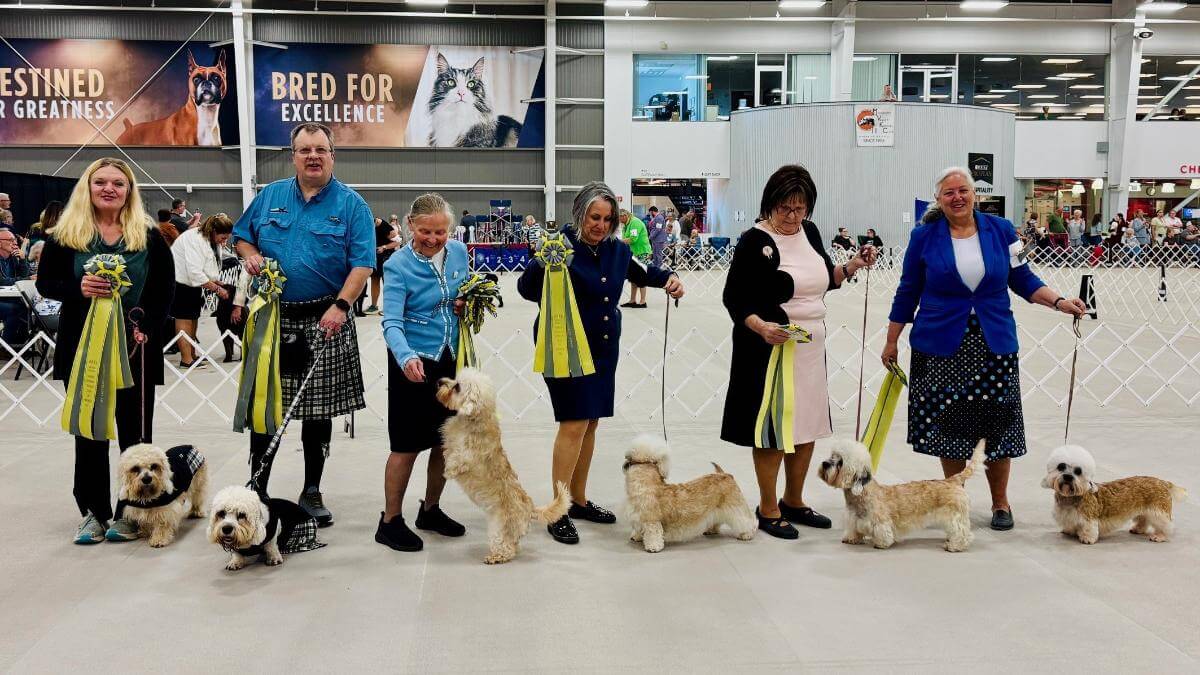
Discover the Dandie Dinmont Terrier’s versatility in performance sports, from scent work to dock diving – and couch lounging!
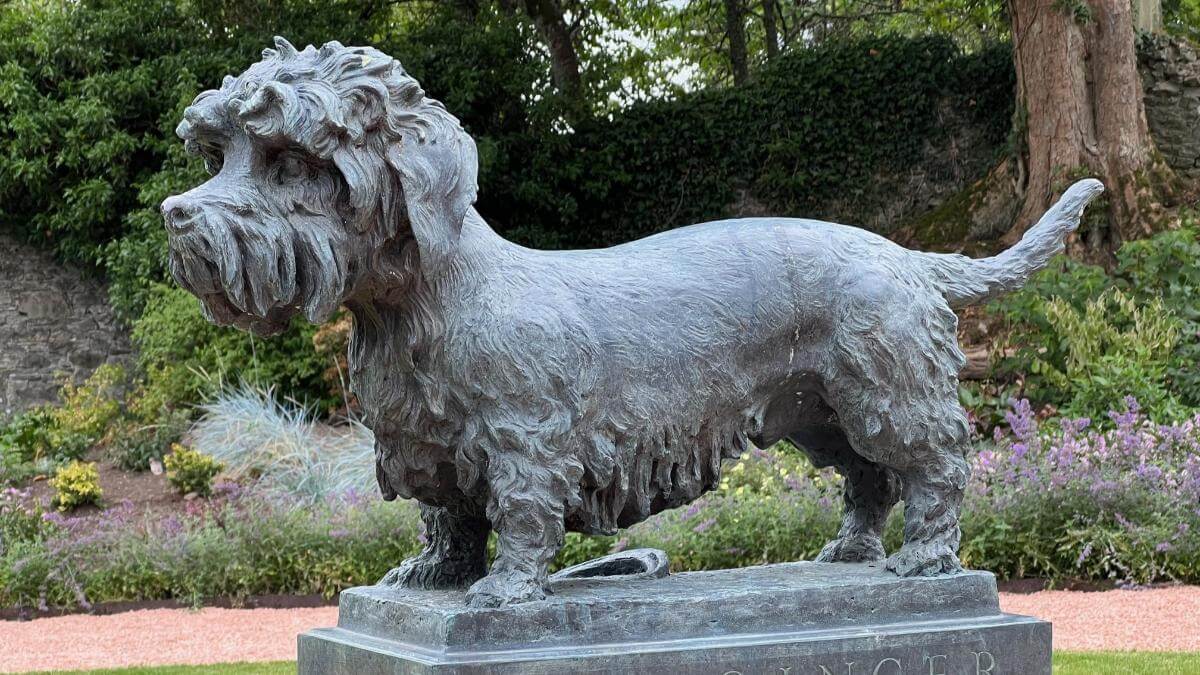
Celebrate 150 years of the Dandie Dinmont Terrier Club and discover the breed’s rich history, charm, and preservation efforts.
Dog Shows
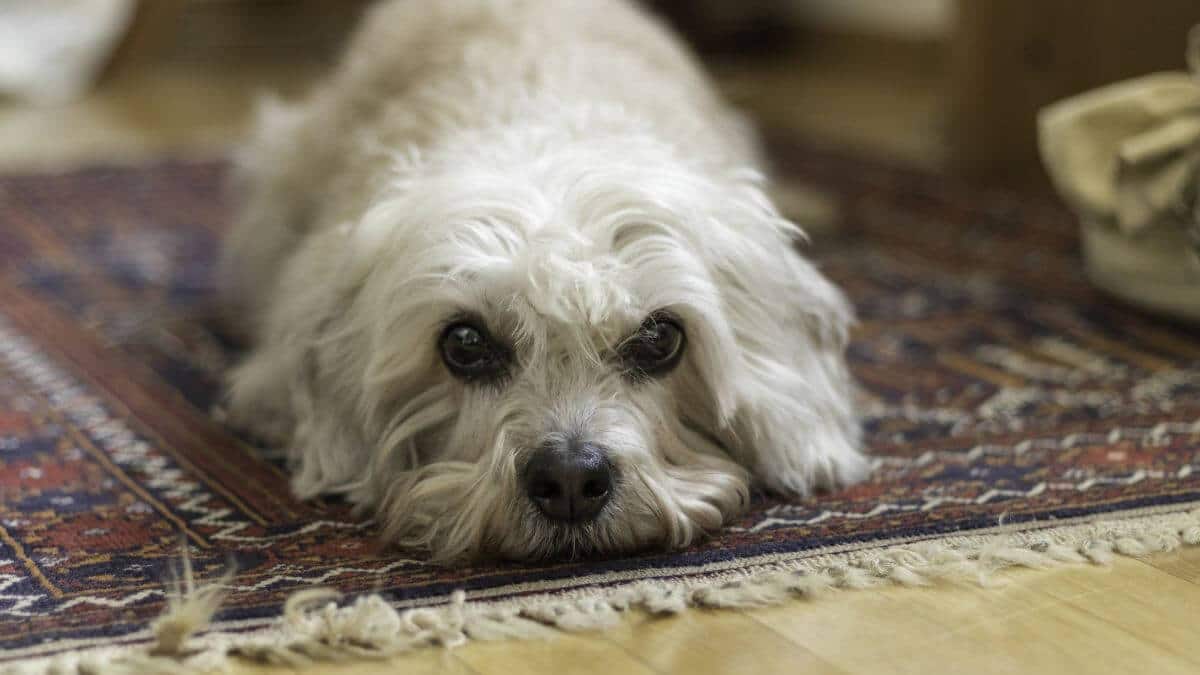
Dandie Dinmonts prove their versatility in Obedience, Agility, Nosework, and more—clever, entertaining, and full of surprises!

Meet the Breeders
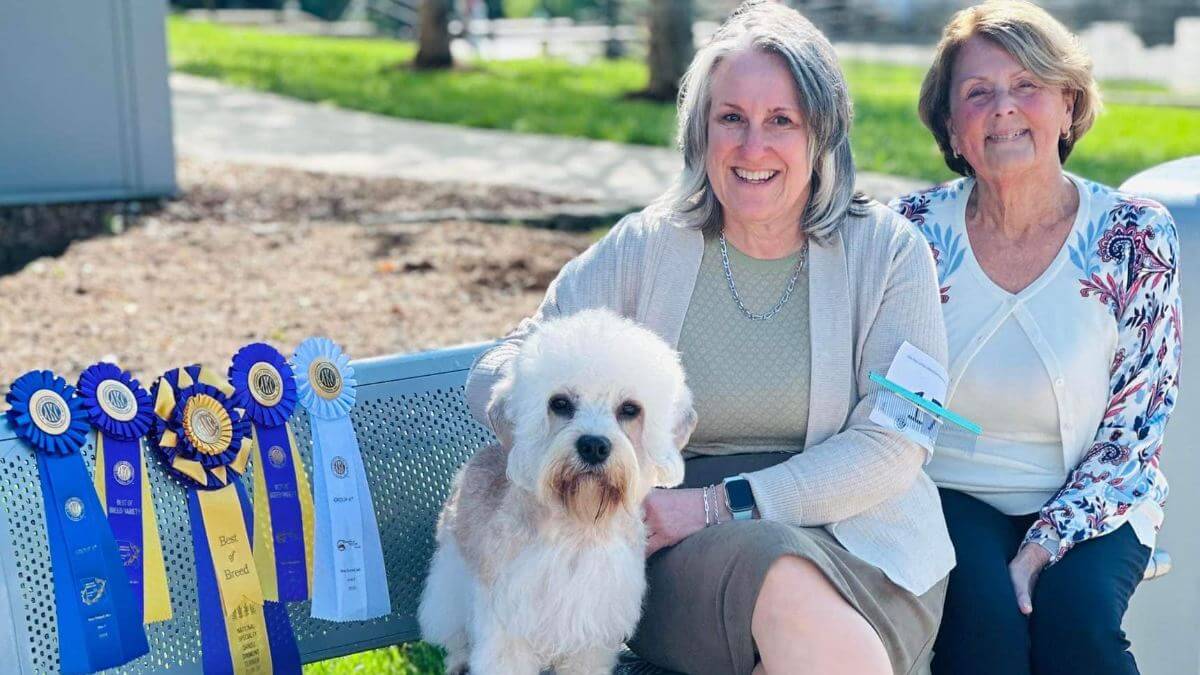
Betty-Anne Stenmark & Sandra Pretari Hickson are the breeders behind King’s Mtn. Dandie Dinmont Terriers. Read more.


Meet the Breeders
Anita Kay Simpson is the breeder behind Tarwathie Dandies. Read about the kennel’s beginnings, Dandie Dinmont Terrier puppies, and much more!

All About Judging
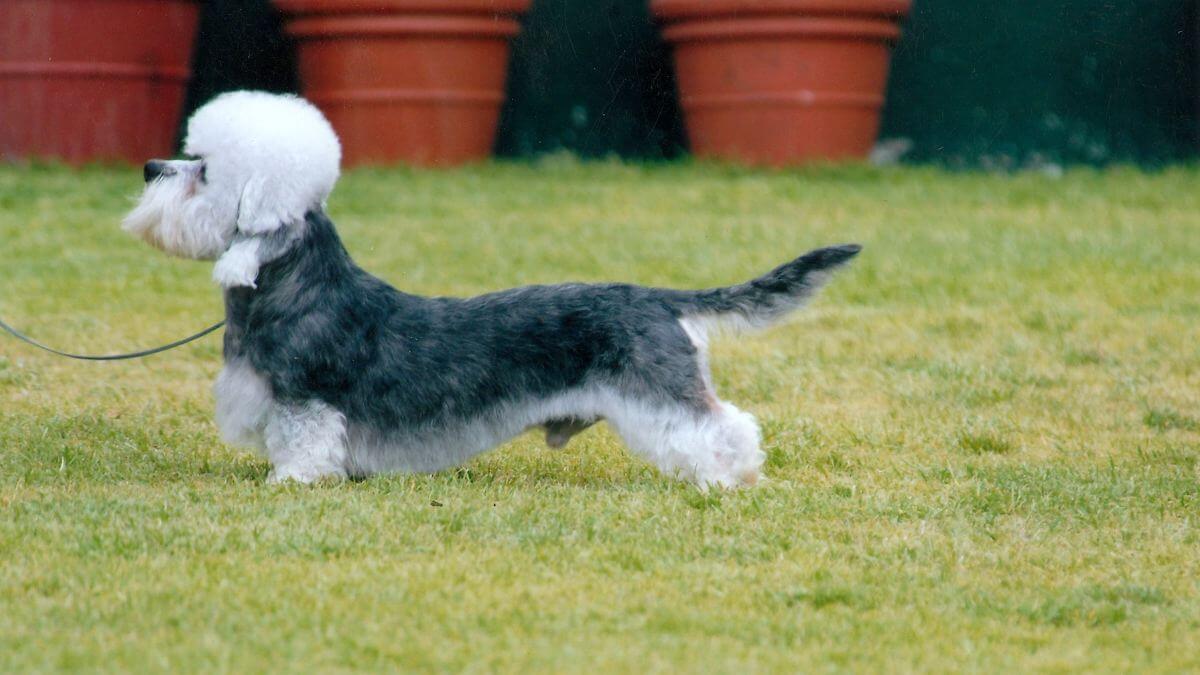
Learn how to judge the Dandie Dinmont Terrier: Essential elements of breed type, silhouette, and movement for achieving accurate assessments.
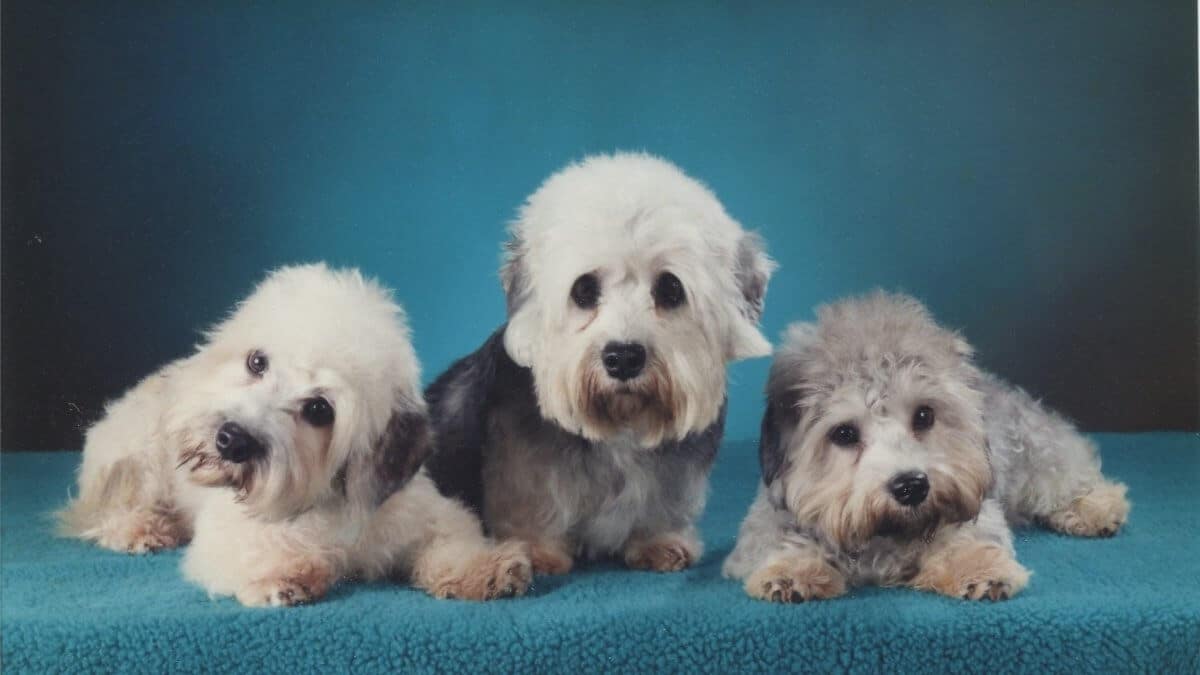
Discover the joys and challenges of living with Dandie Dinmont Terriers, from managing their quirks to celebrating their roles as family.
Profiles & Interviews
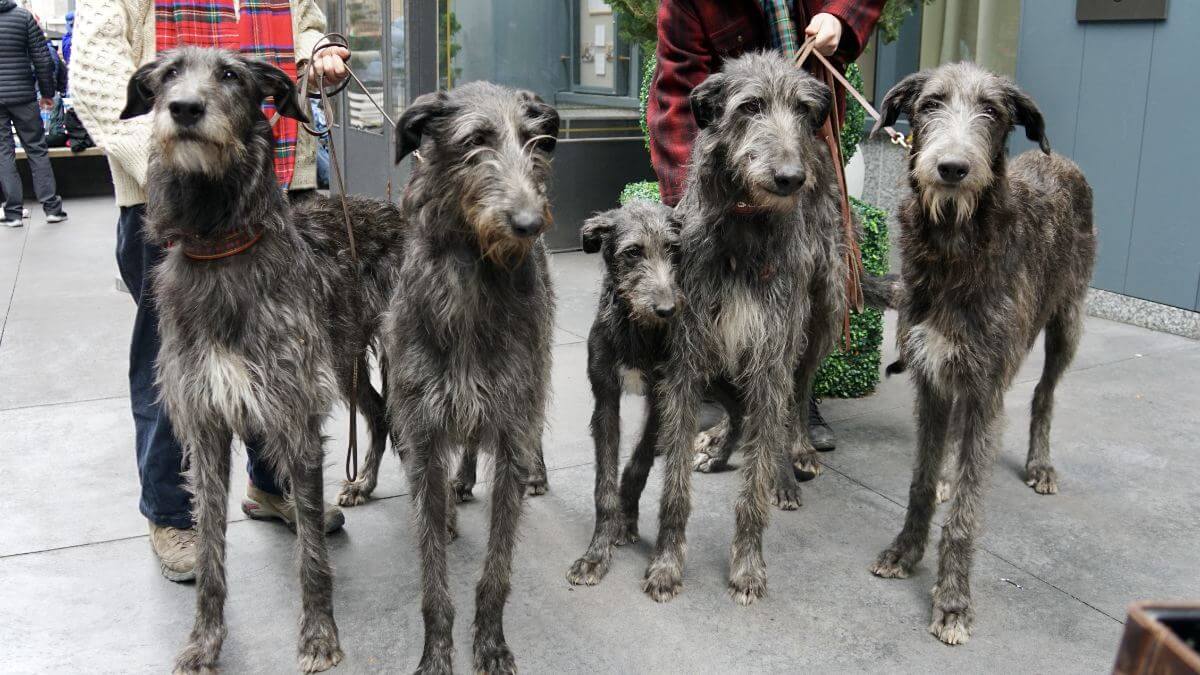
Discover the joy of Scottish heritage at the 2024 Tartan Day Parade, featuring bagpipers, dancers, and adorable Scottish dog breeds.

Meet the Judges
Interview with Kerry Lee 2023 MCKC Dog Show Breed Judge. Read about his experience with judging at the prestigious dog show.
The Dandie Dinmont Terrier's tail measures 8 to 10 inches in length. It is thicker at the base and tapers to a fine point, carried in a slight upward curve that resembles a scimitar shape when in motion. The tail should never be curled over the back or carried too high.
A Note About Color: At birth, Dandies are quite dark-coated. In adults, the color is found on the ends of the hard coat, although the length of the colored portion may vary considerably. The actual color of the tip, the length of the colored portion of each shaft, and the density of the hard coat all affect a dog’s color. The body color is not confined to the top of the back, but covers the neck, shoulders, and hips, gradually blending into the leg color. Hair on the underpart of the body is lighter in color than on the top. The upper side of the tail is darker than the body color, while the underside of the tail, and the legs, is lighter. The hair on the muzzle (beard) is a little darker than the topknot. The ear color harmonizes with the body color.
Coat Type
Double
The structure of the coat this breed carries.
Coat Length
Medium
How long the breed's coat grows when kept in condition.
Adaptability Level
How easily a breed copes with changes in home, routine, noise and weather.
Mental Stimulation Needs
How much a breed needs a job, a puzzle or training to stay content.
A balanced, high-quality diet is essential to maintaining the health and energy of the Dandie Dinmont Terrier. They require protein-rich food to support their muscle tone and overall well-being, along with controlled portions to prevent obesity.
Puppies should be fed three to four small meals per day, using a formula designed for small breeds to support their growth. As they mature, they transition to two meals per day, with portion sizes adjusted based on activity level and metabolism. Most adult Dandies require ¾ to 1.5 cups of high-quality dry food daily, divided into two meals. Treats should be given in moderation, and weight should be monitored to prevent back strain from excess weight.
Dandie Dinmont Terriers are intelligent and eager to learn, but they also have an independent streak, making early training essential. They respond best to positive reinforcement, including treats, praise, and consistency. Harsh corrections can make them stubborn or resistant, so a gentle but firm approach works best.
Basic obedience training, including sit, stay, and recall, should begin early. While not as prone to excessive barking as some terriers, they still need early socialization to prevent timidity or aloofness. Their strong prey drive means leash training is crucial, as they may chase small animals. Engaging them in interactive training, scent work, or dog sports helps keep their minds active and behavior well-balanced.
Weekly brushing helps prevent matting and keeps the coat looking tidy. Regular ear cleaning, nail trimming, and dental care are essential to maintain overall health. While they are low shedders, their coat requires consistent maintenance to ensure they stay looking their best.