Members

01/Overview
The English Setter is a graceful and elegant breed, epitomizing both canine beauty and utility as a gun dog. It is one of the oldest gundog breeds, with roots that can be traced back to the 14th century in England. Characterized by a uniquely speckled coat and a gentle demeanor, the English Setter is as comfortable in the field as it is in the family home, making this gentle breed a versatile and cherished companion for outdoorsmen and homebodies alike.
Highlights
02/History
The English Setter has a rich heritage that traces back over several centuries, weaving a tale of hunting prowess, unwavering companionship, and refinement.
Originating in England, the breed's development is credited to a mix of spaniel and pointer bloodlines, which were meticulously bred to produce the ideal bird dog. By the 19th century, dedicated breeders, including Sir Edward Laverack and R. Purcell Llewellin, made significant contributions to refining the breed, leading to the English Setter's elegant appearance and its proficiency as a field dog.
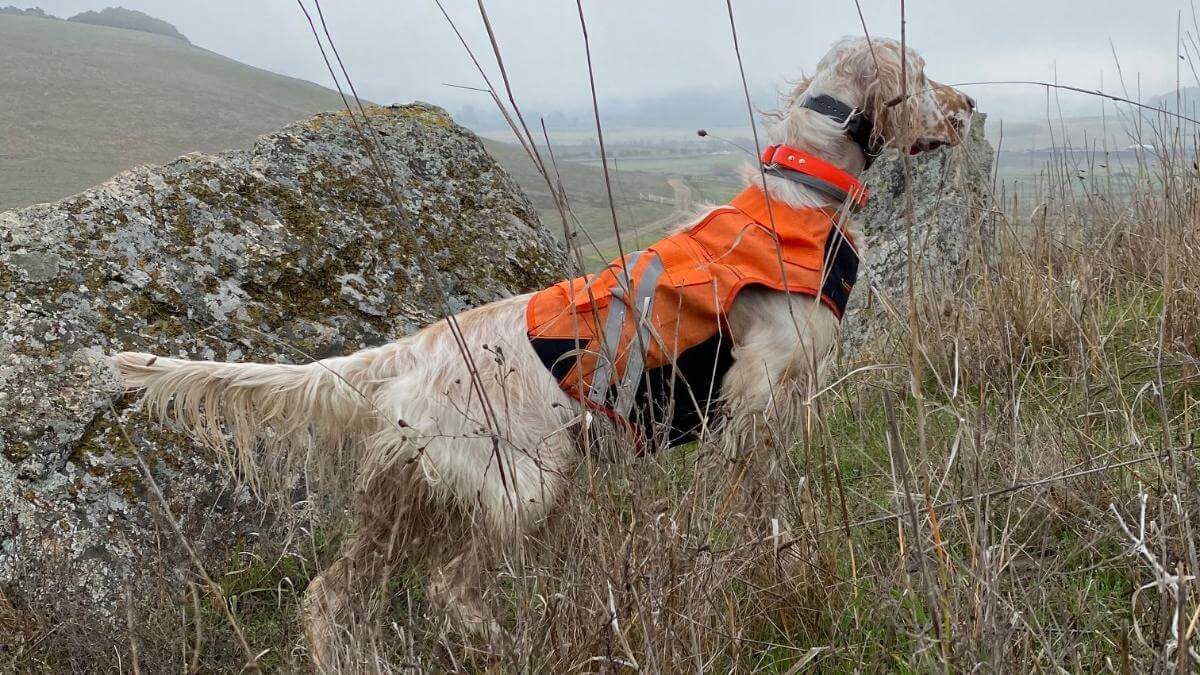
The breed's name gives a nod to its original function and behavior while working in the field. When the dog detects a game bird, it "sets" or crouches low, indicating the bird's position to the hunter. This behavior distinguished these dogs from other bird dogs and gave rise to the setter’s distinctive name.
While the primary purpose of the English Setter was to assist with hunting birds, the breed’s gentle demeanor, striking good looks, and loyal nature quickly endeared it to households as a beloved companion. The reputation of the dogs transcended beyond hunting circles, leading them to become one of the first breeds recognized by purebred dog registries and dog show organizations.
The English Setter earned official recognition by the mid-19th century. The breed holds a special distinction in the United States as one of nine original “charter breeds” recognized by the American Kennel Club (AKC) in 1878. This early acknowledgment cemented the breed’s place among America's sporting fraternity. Internationally, the Fédération Cynologique Internationale (FCI) has also recognized the breed, and in its homeland, The Royal Kennel Club in the UK has consistently celebrated and supported the enduring legacy of the breed.
Today, the breed's journey from the English countryside to homes around the world highlights the versatility, charm, and lasting appeal of these stylish gun dogs. Valued both as an efficient hunter, an elegant show dog, and a loyal family member, the English Setter continues to hold a distinguished place in the pantheon of purebred dogs.
03/Appearance
In terms of height, adult male English Setters typically stand between 25 to 27 inches tall at the shoulder, while mature females usually range from 23 to 25 inches in height.
When it comes to weight, males weigh approximately 65 to 80 pounds, and females tend to weigh between 45 to 55 pounds.

The English Setter has a medium to large frame that presents a harmonious balance of strength and elegance. The body is slightly longer than the dog is tall, ensuring agility and endurance in the field. This build suggests the capacity for great strength and stamina, with style and grace. The combination of strength of construction and high style is reflective of the breed’s origins as a hunting companion that is able to work tirelessly across varying terrain - and look good while doing so.
Texture: The English Setter boasts a medium-length coat that lies flat against the body. A slight wave is permissible, but the coat should never be wooly or curly. Instead, it must be silky to the touch, with feathering on the ears, chest, abdomen, underside of the thighs, backs of all legs, and on the tail. The feathering shouldn't be so excessive as to hide the dog's silhouette or its movement.
Markings: The English Setter’s coat presents "belton" markings ranging from distinct flecking to roan shading. There are no specifically required markings for the breed.
Standard Colors
04/Consider
Owning an English Setter requires making a commitment to a companion that is both gentle and active. As a dog deeply rooted in hunting traditions, the breed requires consistent engagement, both mentally and physically. Whether a hunting companion, show dog, or family pet, there are several things to consider to ensure this dog lives a fulfilling and happy life.
Interaction With Family
The level of affection a breed typically shows towards family members and familiar individuals.
Good With Other Dogs
The innate friendliness of a dog towards other dogs can depend on its breed.
Good With Young Children
The degree to which a breed will typically be patient with young children.
Amount Of Shedding
How much hair a breed typically leaves behind on clothes, furniture and floors.
Frequency Of Grooming
How often a breed needs brushing, bathing or a professional trim to stay in condition.
Amount Of Drooling
How prone a breed is to drool — worth knowing before you keep a towel by the door.
Openness To Strangers
How openly a breed tends to greet new people, visitors and strangers.
Protective Nature
How likely a breed is to alert you to — and stand between you and — anything unfamiliar.
Playfulness Level
How enthusiastic a breed stays about games and play well past puppyhood.
Trainability Level
How readily a breed takes direction and works with you rather than around you.
Barking Level
How much a breed uses its voice, and how readily.
Energy Level
How much get-up-and-go a breed brings to an average day.
Health
The English Setter is generally a healthy breed, but like all dogs, it can be subject to certain health anomalies. Recognizing early signs and providing preventive care play a crucial role in ensuring the longevity and well-being of the dog. Lifespan: The English Setter typically has a lifespan of 12 years. Regular check-ups with a veterinarian and feeding a balanced diet can promote a healthier, and potentially longer, life.
The English Setter is often described as a "gentleman by nature," with its temperament being one of its most endearing qualities. Gentle, calm, and friendly, English Setters are known for their affectionate nature, making them excellent companions for families.
For novice dog owners, the English Setter is a welcoming choice. The breed’s even-tempered and gentle nature often fits well with those who may be new to dog ownership. These dogs have a moderate sensitivity level, responding best to positive reinforcement. Harsh training methods are not suitable for these gentle souls; instead, a kind word and a gentle touch yield the best results.
While sociable and affectionate, English Setters prefer to be in the company of their human family or other pets rather than being left alone for extended periods. Isolation can sometimes lead to unwanted behaviors or signs of anxiety.
When it comes to interactions with other dogs, English Setters typically exhibit a friendly demeanor. Aggressive behavior is uncommon, and many setters relish playtime with their canine counterparts. This same gentle nature extends to children, making these dogs patient and loving family pets. As always, it's important to ensure that interactions between dogs and young children are supervised to guarantee safety for both parties.
Lastly, strangers will often find a warm reception from an English Setter. They may initially bark to signal an approaching person, but after a brief introduction, they tend to be amicable and sociable. The overarching personality of the English Setter is one of mildness, kindness, and a genuine love for companionship.
Exercise Expectations
These dogs thrive when they receive regular and ample opportunities to stretch their legs and run. This exercise not only taps into their athletic prowess, it also helps to manage their weight and overall health. A long, brisk walk, or even better, a run in a secured open area can be beneficial for them. The intensity of their play and exercise sessions can vary depending on individual dogs and their age. Younger English Setters are notably more energetic and require more vigorous activities, while older ones might prefer moderate exercise. Playfulness is another hallmark of the breed. Engaging this breed in interactive games, like fetch or tug-of-war, can be both fun and rewarding. It not only provides physical stimulation but also reinforces the bond between the dog and the family members. However, it's essential to remember that while physical exercise is crucial, mental stimulation is equally important for the English Setter. Activities that challenge the dog’s mind, like puzzle toys or obedience training sessions, can be very satisfying for this strong and gentle breed.
Life with an English Setter can be a delightful experience, but understanding the breed’s unique needs and preferences will ensure both the dog and its human companion enjoy a harmonious life together.
For those residing in apartments, it's worth noting that while English Setters can adapt to apartment living, they do require ample daily exercise to expend their inherent energy. A lack of activity can result in restlessness or unwanted behaviors. However, with sufficient exercise and mental stimulation, they can be quite content in smaller spaces.
Given the breed's origin as a bird dog in the somewhat chilly British Isles, English Setters generally fare well in cooler weather. Their medium-length coat offers protection against the cold, but it's essential to monitor them during extreme conditions to ensure they're not exposed for extended periods. Regular grooming also helps to maintain the insulating properties of their coat.
On the other hand, in hot weather, care should be taken. Like many dogs, English Setters can be susceptible to heat exhaustion or heat stroke. It's crucial to provide them with plenty of shade and fresh water, and to avoid intense physical activities during the peak heat hours of the day.
In essence, living with an English Setter means understanding the breed’s sporting dog lineage while also catering to the affectionate and sociable nature of these dogs. Providing them with a balanced mix of exercise, mental stimulation, and loving companionship all but guarantees that life with this breed will be both rewarding and fun-filled.
05/Puppies
The arrival of English Setter puppies brings a bundle of joy and energy into the household. These puppies, with their soft coats and expressive eyes, quickly endear themselves to their families. However, it's crucial to remember that this phase of their life is foundational. The experiences, training, and care they receive during this period will greatly influence their temperament and behavior as adults.
Raising an English Setter puppy requires a combination of proper nutrition, early socialization, consistent training, and regular health check-ups.
Nutrition plays a pivotal role in the healthy development of the puppy. A diet rich in essential nutrients supports the pup’s rapid growth and ensures it matures into a strong and healthy adult. It's advisable to consult with a veterinarian to determine the best food and feeding schedule tailored to the specific needs of the puppy.
Socialization is another key aspect of raising a well-adjusted English Setter. Introducing the puppy to a variety of experiences, environments, people, and other animals during their early months helps them grow into confident and sociable adults. Positive experiences during this critical period can prevent the development of unnecessary fears or aggressive behaviors later in life.
Consistent training from a young age is vital. English Setter puppies, like all young dogs, can be playful and a bit mischievous. Establishing boundaries, teaching basic commands, and reinforcing positive behaviors will set the stage for a well-behaved adult dog. Using reward-based training methods is often the most effective approach with this breed.
Lastly, regular vet check-ups and vaccinations are essential to monitor the puppy's health and protect them from various infectious diseases. Following a recommended vaccination and deworming schedule will ensure the puppy stays healthy and gets a great start in life.
06/Activities
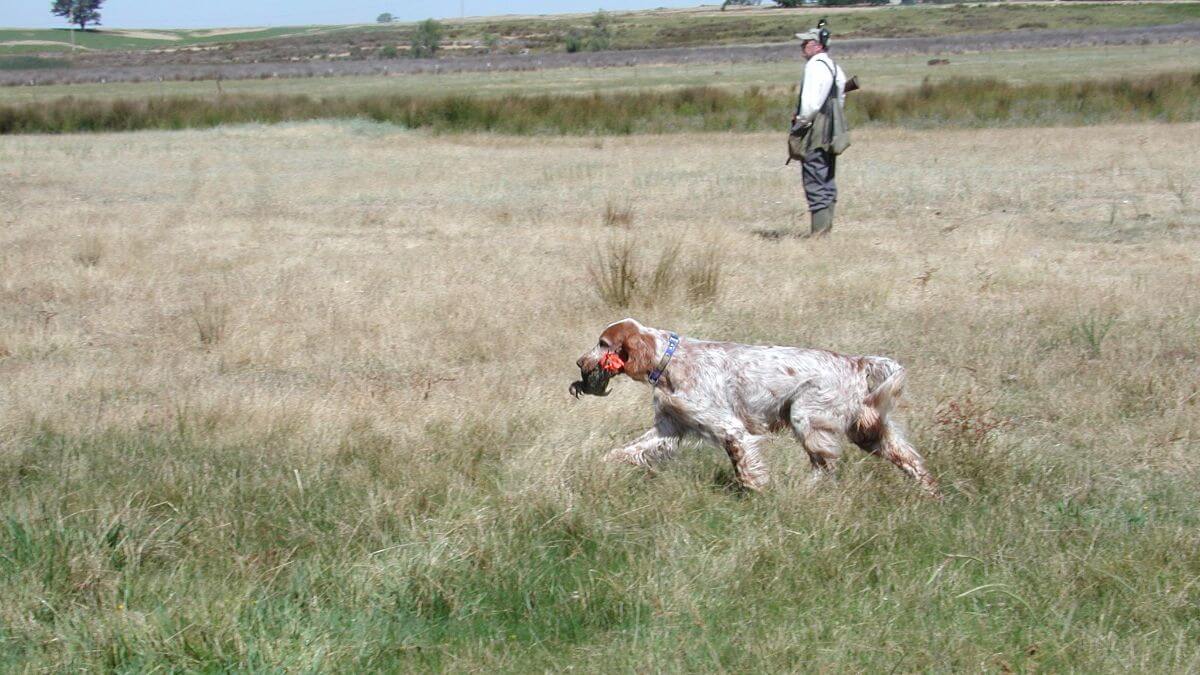
Originating as bird dogs, English Setters possess a natural athleticism and a keen sense for various activities and dog sports. Engaging them in these activities not only taps into their inherent skills, it also provides an excellent outlet for their energy and an opportunity for bonding with their owners.
The breed's combination of athleticism, intelligence, and temperament makes the English Setter well-suited for a variety of activities and dog sports. Whether these dogs are competing at a high level or simply enjoying these activities recreationally with their owners, they are likely to thrive when their natural talents are recognized and nurtured.
Gallery
07/Standards
The English Setter is recognized by the world's leading registries and kennel organizations, which categorize the breed into a specific Group based on its unique characteristics. This breed is recognized worldwide under the following Group designations:
The ideal English Setter is described by a Breed Standard that is approved by each of the world’s leading registries and kennel organizations. The Breed Standards for this breed may be found in the following links:
08/Clubs
09/Rescue
10/Facts
Natural Bird Dogs
English Setters possess a natural inclination towards bird hunting. This is evident in their "setting" behavior, where they crouch low near hidden game birds to signal their location to hunters.
Early Documentation
The English Setter's history can be traced back to as early as the 14th century, with some literature and artwork showcasing dogs that resemble the modern breed.
Diverse Lineage
English Setters are believed to have evolved from a mix of spaniels and pointers, which is evident in their keen sense of smell and pointing behavior.
Exercise Enthusiasts
Despite their calm demeanor indoors, English Setters are quite active outdoors. Regular exercise is a must to keep them happy and healthy.
Highly Trainable
With their intelligent and eager-to-please nature, English Setters can be trained effectively for many sports and activities. However, a gentle approach is advised, given their sensitive disposition.
11/FAQ
The English Setter is a member of the Sporting Group, originally bred for hunting game birds. Characterized by its unique "belton" coat pattern, this breed is admired for its beauty as well as for its keen sense and ability to "set" when it locates hidden birds.
Official Standard for the English Setter
General Appearance: An elegant, substantial and symmetrical gun dog suggesting the ideal blend of strength, stamina, grace, and style. Flat-coated with feathering of good length. Gaiting freely and smoothly with long forward reach, strong rear drive and firm topline. Males decidedly masculine without coarseness. Females decidedly feminine without over-refinement. Overall appearance, balance, gait, and purpose to be given more emphasis than any component part. Above all, extremes of anything distort type and must be faulted.
Head: Size and proportion in harmony with body. Long and lean with a well defined stop. When viewed from the side, head planes (top of muzzle, top of skull and bottom of lower jaw) are parallel. Skull-oval when viewed from above, of medium width, without coarseness, and only slightly wider at the earset than at the brow. Moderately defined occipital protuberance. Length of skull from occiput to stop equal in length of muzzle. Muzzle- long and square when viewed from the side, of good depth with flews squared and fairly pendant. Width in harmony with width of skull and equal at nose and stop. Level from eyes to tip of nose. Nose-black or dark brown, fully pigmented. Nostrils wide apart and large. Foreface-skeletal structure under the eyes well chiseled with no suggestion of fullness. Cheeks present a smooth and clean-cut appearance. Teeth-close scissors bite preferred. Even bite acceptable. Eyes-dark brown, the darker the better. Bright, and spaced to give a mild and intelligent expression. Nearly round, fairly large, neither deepset nor protruding. Eyelid rims dark and fully pigmented. Lids fit tightly so that haw is not exposed. Ears-set well back and low, even with or below eye level. When relaxed carried close to the head. Of moderate length, slightly rounded at the ends, moderately thin leather, and covered with silky hair.
Neck and Body: Neck-long and graceful, muscular and lean. Arched at the crest and cleancut where it joins the head at the base of the skull. Larger and more muscular toward the shoulders, with the base of the neck flowing smoothly into the shoulders. Not too throaty. Topline-in motion or standing appears level or sloping slightly downward without sway or drop from withers to tail forming a graceful outline of medium length. Forechest-well developed, point of sternum projecting slightly in front of point of shoulder/upper arm joint. Chest-deep, but not so wide or round as to interfere with the action of the forelegs. Brisket deep enough to reach the level of the elbow. Ribs-long, springing gradually to the middle of the body, then tapering as they approach the end of the chest cavity. Back-straight and strong at its junction with loin. Loin-strong, moderate in length, slightly arched. Tuck up moderate. Hips-croup nearly flat. Hip bones wide apart, hips rounded and blending smoothly into hind legs. Tail-a smooth continuation of the topline. Tapering to a fine point with only sufficient length to reach the hock joint or slightly less. Carried straight and level with the back. Feathering straight and silky, hanging loosely in a fringe.
Forequarters: Shoulder-shoulder blade well laid back. Upper arm equal in length to and forming a nearly right angle with the shoulder blade. Shoulders fairly close together at the tips. Shoulder blades lie flat and meld smoothly with contours of body. Forelegs- from front or side, forelegs straight and parallel. Elbows have no tendency to turn in or out when standing or gaiting. Arm flat and muscular. Bone substantial but not coarse and muscles hard and devoid of flabbiness. Pasterns-short, strong and nearly round with the slope deviating very slightly forward from the perpendicular. Feet-face directly forward. Toes closely set, strong and well arched. Pads well developed and tough. Dewclaws may be removed.
Hindquarters: Wide, muscular thighs and well developed lower thighs. Pelvis equal in length to and forming a nearly right angle with upper thigh. In balance with forequarter assembly. Stifle well bent and strong. Lower thigh only slightly longer than upper thigh. Hock joint well bent and strong. Rear pastern short, strong, nearly round and perpendicular to the ground. Hind legs, when seen from the rear, straight and parallel to each other. Hock joints have no tendency to turn in or out when standing or gaiting.
Coat: Flat without curl or wooliness. Feathering on ears, chest, abdomen, underside of thighs, back of all legs and on the tail of good length but not so excessive as to hide true lines and movement or to affect the dog's appearance or function as a sporting dog.
Markings and Color: Markings-white ground color with intermingling of darker hairs resulting in belton markings varying in degree from clear distinct flecking to roan shading, but flecked all over preferred. Head and ear patches acceptable, heavy patches of color on the body undesirable. Color-orange belton, blue belton (white with black markings), tricolor (blue belton with tan on muzzle, over the eyes and on the legs), lemon belton, liver belton.
Movement and Carriage: An effortless graceful movement demonstrating endurance while covering ground efficiently. Long forward reach and strong rear drive with a lively tail and a proud head carriage. Head may be carried slightly lower when moving to allow for greater reach of forelegs. The back strong, firm, and free of roll. When moving at a trot, as speed increases, the legs tend to converge toward a line representing the center of gravity.
Size: Dogs about 25 inches; bitches about 24 inches.
Temperament: Gentle, affectionate, friendly, without shyness, fear or viciousness.
Approved November 11, 1986


Meet the Judges
Tyron Atkinson reflects on judging at the Westminster Kennel Club 2026 Dog Show, highlighting breed type, winners, and overall entry quality.

American Kennel Club (AKC)
Claire Wisch Abraham reflects on judging at the 2025 AKC National Championship, highlighting depth of quality and memorable winners.
Dogs in the Media
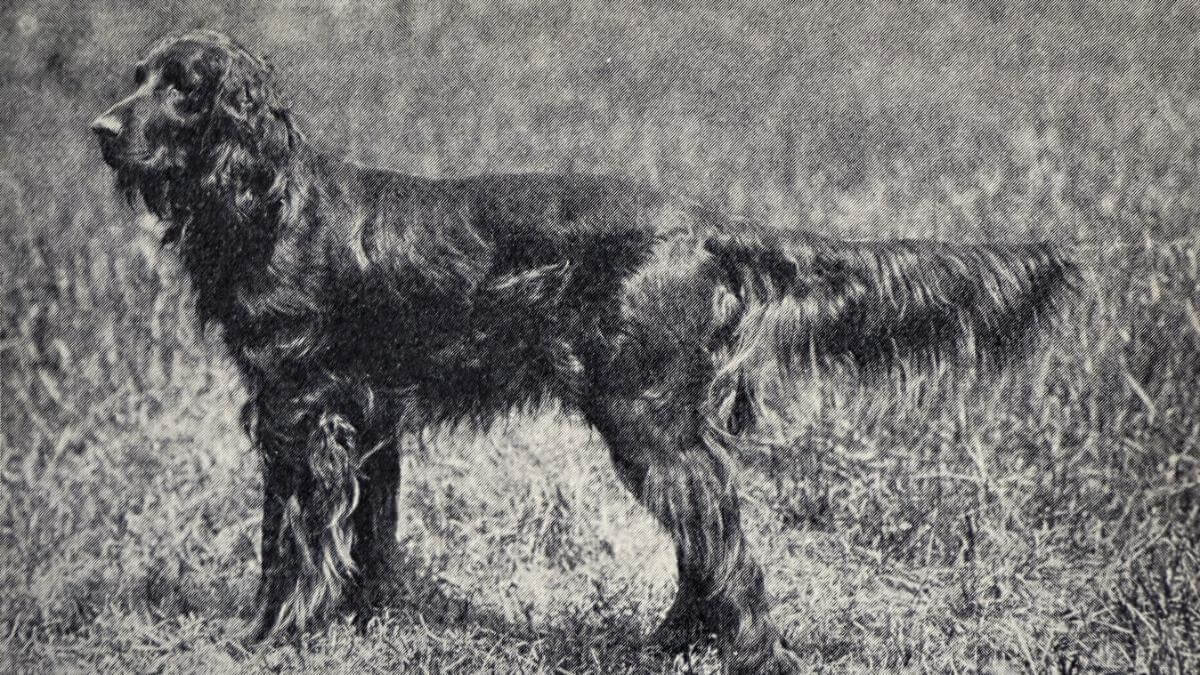
A historical look at field trials and bench shows in early 20th-century America, exploring their role in sporting dog evaluation.

Dog Sports
English Setters: Versatility Personified Would you like a medium-sized, hardy, great family dog that would love to join in your activities and compete in dog sports with you AND cuddle on the couch? If so, how about considering an English Setter? Maybe you already have an English Setter and are looking for activities to do […]


The English Setter combines elegance with strong stamina, ideal for both fieldwork and family life, with a loving, easygoing temperament.


All About Judging
Discover the art of judging English Setters: learn their history, traits, and unique qualities that make them exceptional companions.

Explore the history of famous English Setters, from Rummey’s breeding legacy to Daro’s Westminster triumph and Hadji’s record wins.
Dog Sports
Discover the rich history and versatile abilities of English Setters, from hunting to therapy dogs and agility champions. A breed for all!

Discover the elegant and symmetrical English Setter: a versatile gun dog known for its moderate temperament and hunting prowess.
The tail of the English Setter is an extension of the spine, lending balance to the dog's overall appearance. It serves as an indicator of mood and intention, especially when the dog is at work in the field.
Positioned nearly level with the croup, the tail extends to a length reaching the hocks. It is carried straight or slightly curved, but it should never be raised too high. The feathering on the tail is long, forming a fringe that diminishes in length towards the tip.
The breed's tail is never docked, allowing it to wave easily when the dog is in motion. The tail showcases the breed's grace and fluidity, whether at a trot in the show ring or in pursuit of game in an open field.
A Note About Color: The coat's color is white with darker hairs intermingled throughout known as “belton” markings. Consistent flecking of the darker-colored hairs is preferred, and heavy patches of color are undesirable. Tricolor dogs have solid tan on the muzzle, above the eyes, and on the legs.
Coat Type
Double, Silky
The structure of the coat this breed carries.
Coat Length
Medium
How long the breed's coat grows when kept in condition.
Adaptability Level
How easily a breed copes with changes in home, routine, noise and weather.
Mental Stimulation Needs
How much a breed needs a job, a puzzle or training to stay content.
Feeding an English Setter requires understanding the dog’s specific nutritional needs at each stage of life. Puppies have different dietary needs compared to adult dogs, and those needs change as they mature.
When feeding an English Setter puppy, it's essential to provide the pup with high-quality puppy food that's rich in essential nutrients to support rapid growth. Puppy food formulas typically have the right balance of proteins, fats, vitamins, and minerals that a growing puppy needs. For the first few months, puppies will generally require multiple smaller meals throughout the day to sustain their energy levels.
As English Setters transition to adulthood, their dietary needs change. An adult English Setter typically requires a well-balanced diet that includes protein, carbohydrates, fats, vitamins, and minerals. The exact amount of food a mature English Setter needs can vary based on the dog’s age, activity level, metabolism, and overall health. On average, many adult English Setters do well on about 2 to 2.5 cups of high-quality dog food divided into two meals a day.
However, always be guided by the recommendations provided by the dog food manufacturer and, more importantly, consult with a veterinarian or canine nutritionist to determine the ideal amount and type of food for the individual dog.
Feeding charts can be a helpful tool to gauge the amount of food required, but it's essential to monitor the dog's weight and make adjustments as necessary. Overfeeding or underfeeding can lead to health issues, so being vigilant about portion sizes and feeding routines is crucial.
It's also worth noting that English Setters can sometimes be prone to obesity, especially if they aren't getting enough exercise. Treats should be given in moderation and factored into the dog's daily caloric intake to be sure the dog is maintaining a healthy weight.
The English Setter is known for its amiable disposition, but like all breeds, it benefits from consistent training to become well-mannered and responsive. Training an English Setter can be a rewarding experience due to the breed’s willingness to please and its affectionate nature.
The breed's intelligence is evident in the English Setter’s ability to grasp new commands, but these dogs also have an independent streak, which might sometimes be mistaken for stubbornness. Positive reinforcement methods, such as treats, praise, and play, tend to yield the best results. Harsh corrections or training techniques can be counterproductive, as they might cause the dog to become hesitant or even fearful.
Barking is a trait that some English Setters might exhibit, especially if they are alerting their owners to something unusual in their environment. While it's natural for these dogs to bark occasionally, it's beneficial to train them to stop on command or to reduce excessive barking.
Another aspect to consider is the breed’s inherent bird-hunting instincts. The English Setter has a natural "birdiness" and might be inclined to chase after birds or even other small animals. Training these setters to have a reliable recall, and working on impulse control, can be particularly important, especially in open areas.
The potential for wanderlust is another factor to consider. While these dogs are typically devoted to their families, the allure of chasing a scent or exploring a new area can be tempting. It's crucial to ensure they're in a secure area or on a leash during walks to prevent them from wandering off.
Predatory instincts are generally low in English Setters compared to some other breeds, but it's always wise to monitor interactions with small pets and unfamiliar animals.
Grooming Expectations
Grooming an English Setter is relatively straightforward, but consistent care is key. The breed’s coat can range from flat to slightly wavy and is of medium length. Regular combing and brushing, at least a few times a week, will help to prevent tangles and matting while also distributing the natural oils of the skin. This routine not only ensures that the coat remains silky and lustrous, it also offers a chance to check for any skin issues, ticks, or other potential problems. While English Setters are not considered heavy shedders compared to some breeds, they do shed year-round, with some increased shedding typically seen in the spring and fall. Regular brushing aids in managing and reducing the amount of loose hair around the house. Beyond brushing, regular ear cleaning is essential for the English Setter. The breed’s floppy ears can be prone to infections if not kept clean and dry. Checking the ears weekly and cleaning as needed can help to prevent potential issues from becoming chronic problems. Additionally, like all breeds, the English Setter benefits from regular nail trims to prevent overgrowth, which can lead to discomfort or even injury. Dental care, including brushing the teeth or providing dental chews, helps to maintain good oral health and fresh breath.