Members
A historical look at field trials and bench shows in early 20th-century America, exploring their role in sporting dog evaluation.
Joseph A. Graham
The Weekly Brief
The best of SHOWSIGHT editorials, weekly wins, and breeder commentary — delivered to your inbox every Sunday morning.
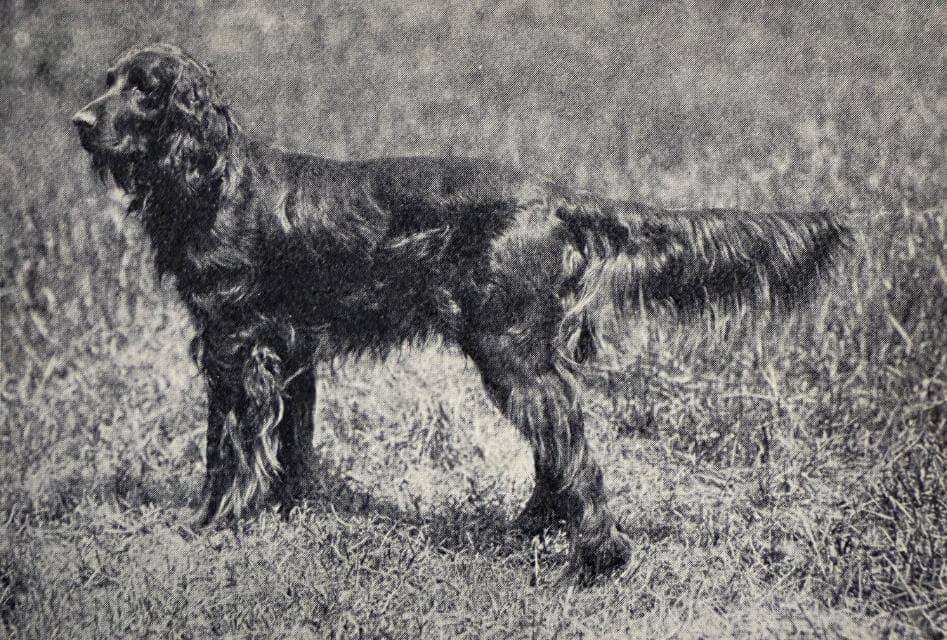
The Sporting Dog was published in 1904 by The MacMillan Company as part of The American Sportsman’s Library, edited by Caspar Whitney. The chapter titled “Bench Shows and Field Trials” is reprinted here in its entirety for the benefit of contemporary purebred dog breeders and exhibitors.
Public competitions are the only means of determining accurately the qualities of horses or dogs used in sport. Private competitions might answer the same purpose, but no dependence can be placed upon the information which comes from such surroundings. It grows too fast between point of origin and written history. Even in the case of public competitions and public records the two elements of personal ignorance and personal bias cannot be eliminated. Publicity, however, usually produces enough of checks and attrition to furnish a reasonably reliable record in the long run.
So definite is the comparative value of public competitions, that I, for one, have little faith in the opinions on sporting dogs prior to the introduction of field trials and bench shows in England. I have seen and read too many foolish tales from well-meaning but narrow imaginations to pay much attention to a comparative judgment formed without opportunities of comparison. There was a great deal of good breeding before the days of public competition, but it was irregular and not severely tested. There may have been a few superlative specimens. Even so much, however, I would accept with doubt.
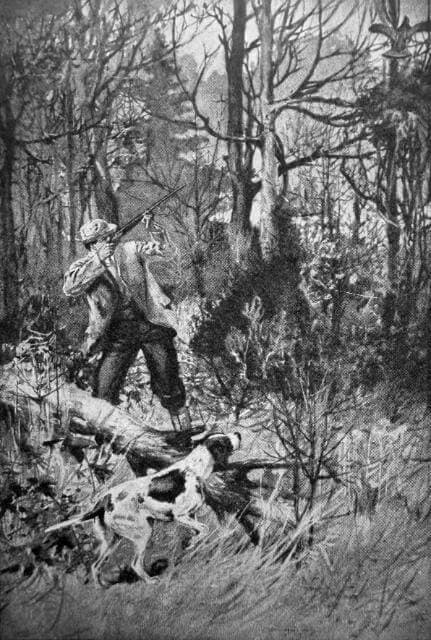
In the case of greyhounds, the record of progress is plain enough since the establishment of the institutional public event, the Waterloo Cup, three-quarters of a century ago. At that, there are plenty of ignorant people who think that there never has been a second Master McGrath or Coomassie, though, by what I should regard as a safe gauge, it may be assumed that neither of those animals would last through the second round of a modern Waterloo running.
In foxhounds, also, a sufficiently progressive standard may have been fixed by the constant competition of hounds in the great semi-public packs of the English hunting counties. In America, the foxhound has been largely developed by a survival of the fittest in private contests. That, to again insist, does not produce a great deal of confidence in the neighborhood reputation of certain hounds. A record of superiority is not standard until it becomes public.
The student of sporting dogs will hear a great deal of discontent with bench shows and field trials, but, whatever the drawback may be, he will continue his studies in their records.
The first bench show in America was held at Mineola, New York, in 1874, in connection with the Queens County Agricultural Fair. It was principally made up of shooting dogs. Mr. Orgill, who had a handsome family of small pointers, was one of the principal exhibitors. The first Westminster Kennel Club show was held in 1876 [sic] and that association has thenceforward been recognized as the leading factor in bench shows.
In fact, I believe that it is the only club which has had a permanent financial success. The dog public is a small part of the population in America, if we count only those who care for the fine points of the breeds. In the last analysis, it is men of European birth who really sustain American bench show activity. The history of bench shows in a community usually is that the first one which is held after a period of desuetude is a pecuniary success, since the general love of novelty and the friendliness of the newspapers move a crowd. Then, from season to season, the affair dwindles, and finally the club goes out of existence. Four or five years past, and another nucleus of enthusiasts launches a new bench show club to go through the same experience.
In the early days, sporting dogs constituted the important part of the exhibits. Of late years the owners of sporting dogs have paid more attention to trials on game and have neglected bench shows. This has always been true of Greyhound men, and has lately become equally characteristic of field dog and hound owners. Meanwhile, the interest in fancy breeds has rapidly developed, and it is now the collies, Boston terriers, pet spaniels, and fox-terriers which are the large entries and which attract attention.
For a long time the classes of bench shows were under A.K.C. jurisdiction made up in each breed of puppy, open, and challenge classes. A dog got into the challenge class after a certain number of wins in the open class, and became a champion after a certain number of wins in the challenge class. This classification fell into disfavor because, by taking a moderate specimen around to the smaller shows where there was little competition, it was easy to create a champion and mislead those who trusted the bench shows for records of excellence. The present system is puppy, novice, limit, open, and winners classes. The limit class is for those which have only done a certain amount of winning; the open class is for any dog without regard to winnings; the award of winner is made to the best dog taken from the open, limit, and novice classes. In other words, the winner in each of these classes is put into the ring and the best dog is picked. The championship is achieved after a certain number of wins in the winners class. When the winners class was first adopted by the American Kennel Club, the championship followed a certain number of wins, all shows being on the same footing. Later was devised the present system of grading the shows according to the number of entries, and crediting the candidate for a championship with a certain number of points according to the number of entries. An attempt was recently made to grade the shows according to the amount of money offered in prizes, but many exhibitors disapproved and the project was for the time postponed.
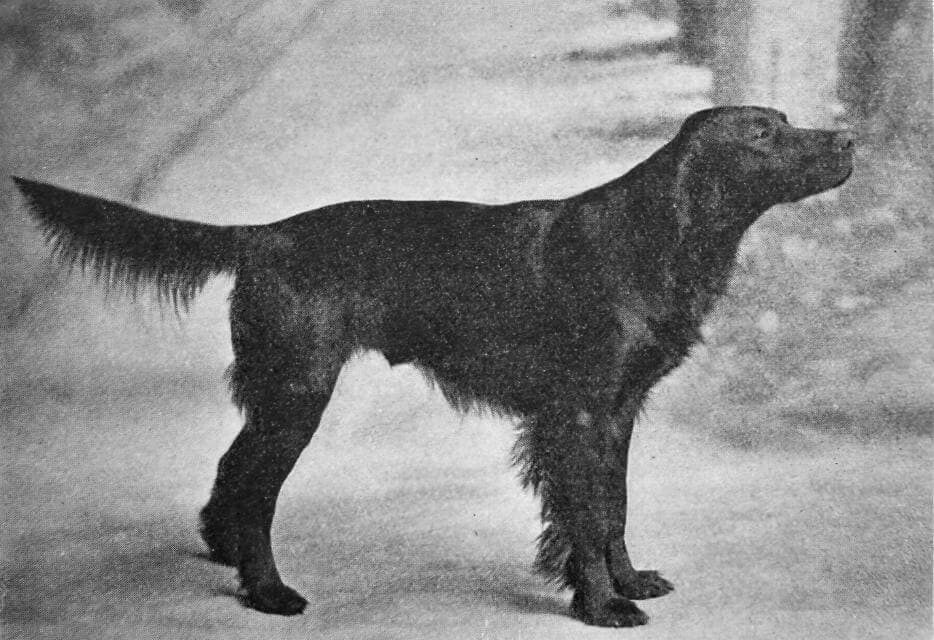
Field trials followed quickly the importation of English winning Pointers and setters. The chief interest developed in the central West, though the New York and other Eastern people also early began their field trial competition. At first the entries were a miscellaneous lot, which would excite amusement if they appeared before latter-day judges. Irish, Gordon, crossbred, and native English setters, most of them merely pet shooting dogs, appeared together. At the beginning the system was to judge according to the number of points. Five points was made the standard, and the dogs which made five points were taken into the second series. That rule soon reduced itself to absurdity, since a very cheap dog of fairly good nose could, with a bit of luck or alert handling, get his five points, while a high-class dog would throw himself out by a flush. The field men then introduced the “heat” system, in which they followed the rule of coursing. That is, when the braces were drawn, each dog which beat his competitor was carried into the next series, and so on. This, however, was found not to work satisfactorily, since by the drawing of two first-rate dogs together, or by a difference in conditions, or by accidents, the best dogs in a stake were frequently beaten. The “spotting” system was then adopted and prevails to-day.
The field rules of most clubs call for three judges. The dogs are drawn in braces by lot and are put down in that order for the first series. The judges then pick out, without regard to any special number, the dogs which they think have class enough to be among the winning probabilities. Further running is left to the discretion of the judges, who run the animals in braces or singly in order to satisfy themselves of the comparative merits. Shooting is rarely required in field trials at present. The judges, however, sometimes order the handler to shoot over a point in order to test the dog. In most trials the heats are from twenty to forty minutes. In the principal championship stakes the rules usually require the heats to be three hours long. In all trials the judges are required to insist upon the quality of performance and not the mere number of points. They are instructed to look for bird sense, as well as for speed and range, but are warned against stress upon retrieving, that being an artificial and not a natural performance.
I should advise everyone who desires to be informed about field dogs to attend a few of these public trials. He will find an agreeable lot of sportsmen and will learn a great deal about the qualities of dogs which he would never discover from the reports or even from personal conversations with actual spectators. Not that the reports are usually anything but accurate, but that they necessarily assume a foundation of knowledge on the part of the reader. I have found that people who depend upon reading or hearsay grossly exaggerate the faults and shortcomings of these field trial dogs. They do not realize that the standard of judgment is beyond comparison higher and more severe than that applied to everyday dogs. It would also be a valuable education in many respects if the student would make a few entries in public trials and get into the competition of patrons.
He cannot learn to estimate dog performance in any other way so quickly and thoroughly. At the same time, I should warn him strongly against entering second-rate dogs merely through good nature or curiosity. Field trial clubs are anxious to get as many entries as possible in order that their prizes may be alluring, but it does not do field trials any good, and it makes the investigator feel a bit foolish if he sends dogs to the races which have not been thoroughly tried out against a veteran performer of standard merit. Most field trial patrons have gone through this disagreeable experience, and the beginner would as well avoid it by watchfully trying out his candidates, without waiting to make the trials before a crowd.
Both field trial and bench judges are nearly always honest and sincere. They are far from omniscient and their notions; especially when they have good intentions combined with weak memories and still weaker powers of discrimination; and this often happens. With bench judging there is not much dissatisfaction—except where type is a standing dispute—of a justified kind. The best dog nearly always gets the blue ribbon, the doubt arising oftener over the second and third places.
Field trial owners have more incompetence to meet, at least more inconsistencies and unaccountable fancies. The association of handlers [has] asked that clubs give consideration to a list of judges approved by handlers as representatives of the owners. Possibly a definite and intelligible system of judging will grow out of this effort. Heretofore it has been discouraging for owners to encounter this week[’s] judges who are tickled by style, next week[’s] lovers of speed and range and the week after sticklers for carefulness in locating birds. The most demoralizing judges are those who have in their mind no fixed rules at all, but divide up the awards as politicians distribute nominations—to satisfy geography and various interests. Still, judges seldom pick a poor dog, and at the end of every season the best ones are found to have done the most winning.
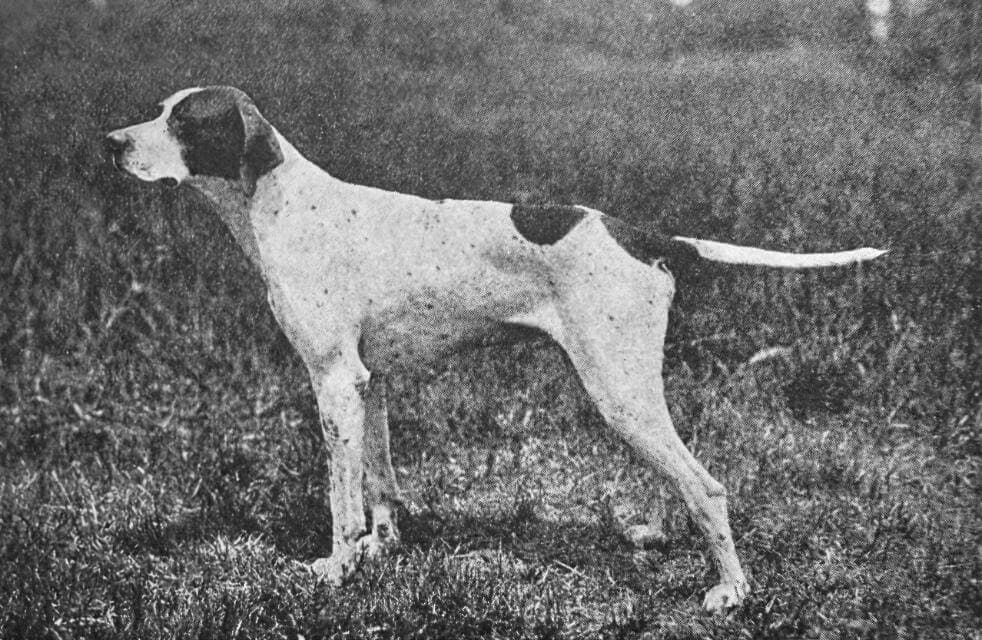
Granting this, it is likely that field trials will begin to decline, —as coursing invariably does in such a case, —unless the owners find judges upon whose mental processes as well as moral intent they can rely with some certainty. A step toward a more reliable method would be to abandon the three-judge custom at field trials and employee one judge, giving him power to select his own assistance to follow different dogs. As the practice now goes, winners are often selected by the judge who has the most of that petty self-assertion so commonly found in company with narrow comprehension; or by a compromise in which each judge’s first choice is setback for a dog not really first-class, but good enough for a sort of “nobody objects” agreement. Progress and experience may be expected to adjust these tribunal troubles, which, after all, only show that high-class dogs are more abundant than they used to be at field trials, and that finer powers of analysis are demanded to determine the many close contests.
The rapid vogue of coursing in San Francisco was measurably, if not chiefly, due to the unshakable faith of owners and public in not only the bona fides, but the mens aqua of the judge, John Grace. When the field trial owner invests $250 or $300 apiece in a string of young setters or pointers, he likes to know what to expect, and he will not repeat the trouble and expense if the judging is unreliable and inconsistent. One umpire, referee, or judge is the best system in all contests of sport. Field trials will almost certainly come to the general conclusion of experience.
Including Canada and California, recognized public field trials number annually about twenty-five on quail and chicken, with four or five for the beagles, and at least two, one in New England and one in Kentucky, for foxhounds. The circuit on birds begins in August with the chicken trials of the Iowa or Nebraska clubs and moves later over into Canada, keeping the handlers busy for several weeks, though most of them take a rest before the quail trials open in Ohio about the middle of October. The state clubs run along until the first of December, the Interstate Championship, now called the American Championship, for winners, being decided at the conclusion of the state events. The “big” private clubs, the Eastern and the United States, have held trials respectively in North Carolina and near the Tennessee-Mississippi line. Just after the United States trial, usually about the first of February, what its members call “the” championship has been coming off. This is the event which has been won by Tony’s Gale, Joe Cumming, Lady’s Count Gladstone, Sioux, and Geneva. It is a special club, not under any other body, but the winning of the stake has so far been esteemed the crowning performance of each season. The title of this body is now the National Championship Association.
Lately there has been a movement to consolidate the American, —Interstate, —the Canadian, and the National Championships, so that an undisputed winner may be crowned each year. But some differences of opinion and some inconveniences of travel will probably operate against any stable plan of concentrating on one field dog championship. One or another championship association may dissolve, —the finances being a burden when entries are so limited, —and thus leave a single trial supreme for a season, but others will arise, for reasons of geography and the convenience of owners.
None of these associations has an extensive membership or the elements of permanence. In effect they are little more than agencies for the owners and handlers. Their funds consist almost wholly of entrance fees. Most of them consist of a president and a secretary, with one or two active helpers from the scanty membership. The secretary does most of the management. Even the championship clubs lack stability and coherence. In 1902, for the American Championship Association, Mr. James Pease of Chicago paid a large part of the winnings out of his private means. In 1903, the stake fell through altogether. I have heard that the National Championship Club costs Mr. Herman Duryea $1000 a year as a personal contribution. The Eastern Club has always been the strongest of the field trial clubs, but in its early days it consisted chiefly of Messrs. James L. Breese, Pierre Lorillard, and a few of their New York friends. Mr. Lorillard is still active, with Mr. George Crocker and three or four more as his dependable associates. Some time, it is fair to assume, the field trial clubs will be better organized and consolidated, with reliably good grounds and systematic management.
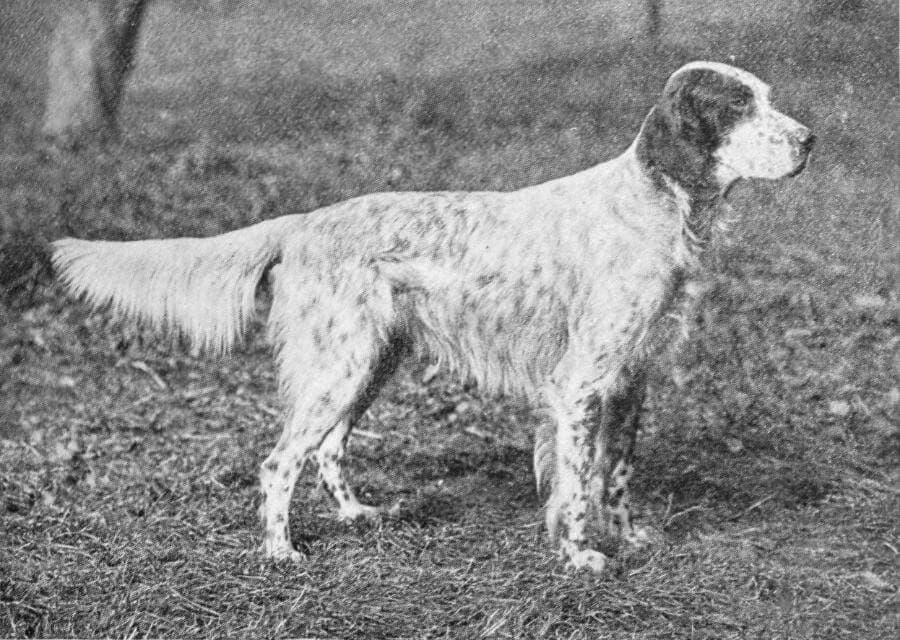
Somebody might compile a key to the relative meanings of adjectives applied to sporting performers. It is human nature to connect a word with its significance in ordinary affairs. When they read that a race-horse is slow, a “dog,” or an “ice-wagon,” people cannot always remember that the comparison is with the greatest winners and not with common private stock. Nor can they grasp the fact that every horse on that particular track can, in condition, do a mile in less than 1:40, while the best horse on the track could not beat 1:38, a percentage plenty wide for betting purposes, but very narrow as related to horses in general. A Yale foot-ball player may be described as the weak brother of the team. Readers, especially those who know little of the game, easily imagine that the young man is a poor specimen among other young men, whereas he is a picked athlete, and weak only by a small margin as compared with the three or four other men in the whole land who play the position better. Sporting writers are compelled to pronounce opinions within the respective grades of performance, but on top of that they are rather more of the Sir Oracle than is wholly necessary. And the worst of it is that deductive writers pick up these reportorial phrases as not relative but absolute records, and deliver dogmas to the multitude about inferiority and deterioration.
The corrective is to remember that on a first-rate race-track every horse is fast; that when the big colleges compete in foot-ball, every player is a selected and trained man; that in every prominent field trial of dogs each pointer or setter has been chosen from among many good ones, and that not even a yellow ribbon ever goes on the collar of an inferior dog at one of the big bench shows. In the presence of the sophisticated a dabbler would better not boast too much about what his neighborhood dogs would do with field trial winners. Somebody may call for demonstration; and if he tries to demonstrate, he will be quickly reduced to a state of chumpish confusion.

Dog Show History