Members
01/Overview
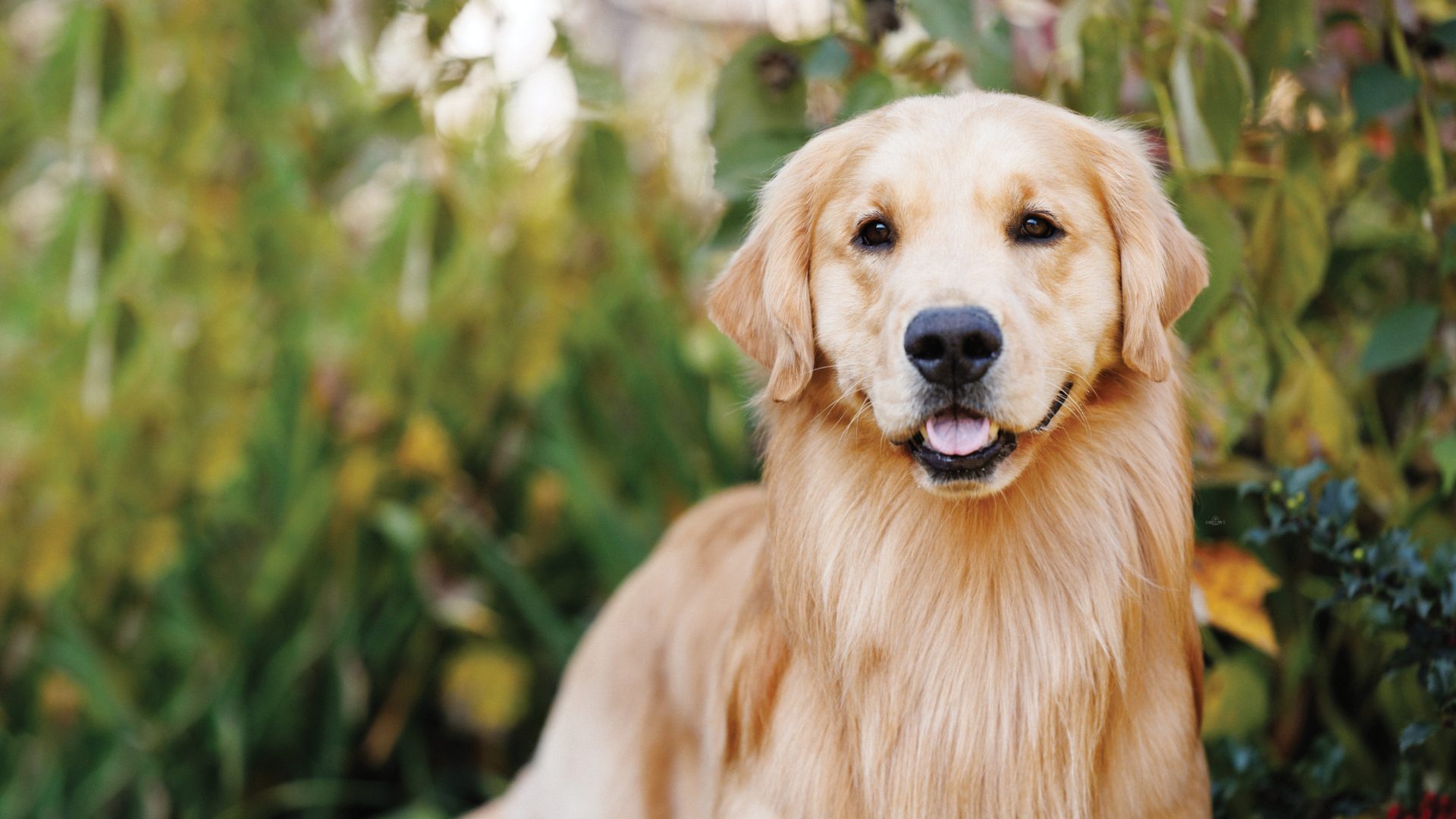
The Golden Retriever, with its radiant coat and amiable disposition, has long been one of the most cherished dog breeds in the United States and around the world. Originating from the rugged highlands of Scotland and bred primarily for retrieving upland birds and waterfowl, the breed quickly gained favor due to its exceptional temperament and versatility. Whether as a loyal companion, diligent worker, or show-stopping champion, the “Golden” embodies the fine qualities of the quintessential family dog, remaining ever-enthusiastic, adaptable, and loving.
Highlights
02/History
The legacy of the Golden Retriever traces back to the misty highlands of Scotland in the mid-19th century. During a period when hunting was both a sport and a practical means of securing food, there arose a need for a dog that could adeptly retrieve game from both water and land.
The breed’s origins are credited to Dudley Marjoribanks, later known as Lord Tweedmouth. In the 1860s, seeking a proficient retriever with an excellent nose and a keen love for water, Lord Tweedmouth crossed a yellow retriever from a litter of black Wavy-Coated Retrievers with the now-extinct Tweed Water Spaniel. Subsequent crossings included Bloodhounds, Irish Setters, and more Tweed Water Spaniels, resulting in offspring that laid the foundation for today's Golden Retriever.
Puppies were given as gifts to gamekeepers and gentlemen hunters who used the dogs primarily for hunting. The yellow retrievers quickly gained popularity outside private circles, however, not just for their prowess in the field but also for their friendly dispositions.
Official recognition of the breed has a storied history. The Royal Kennel Club (UK) acknowledged the Golden Retriever as a distinct breed in 1911. The American Kennel Club (AKC) followed suit in 1925, and the Fédération Cynologique Internationale (FCI) also offered its acknowledgment, thus cementing the breed’s global recognition.
From its humble beginnings in Scotland, the Golden Retriever has become one of the most popular and cherished breeds worldwide. Its initial role as a hunter's companion has broadened immensely, with Goldens now serving as Search & Rescue Dogs, Therapy Dogs, and Assistance Dogs, and most importantly, as beloved family members.
03/Appearance
Adult male Golden Retrievers typically stand between 23 and 24 inches tall at the withers. By contrast, mature females generally measure from 21.5 to 22.5 inches tall.
In terms of weight, males commonly weigh within the range of 65 to 75 pounds, while females tend to be somewhat lighter, often weighing between 55 to 65 pounds.

The Golden Retriever exhibits a harmonious balance of proportions. The breed displays a strong and active build, well-suited for its historical work in the field. The Golden’s body is slightly longer than it is tall, at a ratio of 12:11. Males possess a more substantial bone structure than females, but without coarseness. The substance and quality of the breed’s build emphasize its agility, strength, and reliable nature, essential traits for a dog initially bred for the demanding job of retrieving game in often difficult conditions.
Texture: The coat of the Golden Retriever is dense and water-resistant, consisting of a firm outer layer and a soft, insulating undercoat. This double coat varies in length but lies close to the body, being slightly wavy or straight.
Standard Colors
04/Consider
The Golden Retriever, with its friendly demeanor and loyal nature, is a popular choice among serious dog enthusiasts and families alike. Owning this breed, however, comes with specific responsibilities and factors to consider that will nurture the relationship between the Golden and everyone in the home.
Interaction With Family
The level of affection a breed typically shows towards family members and familiar individuals.
Good With Other Dogs
The innate friendliness of a dog towards other dogs can depend on its breed.
Good With Young Children
The degree to which a breed will typically be patient with young children.
Amount Of Shedding
How much hair a breed typically leaves behind on clothes, furniture and floors.
Frequency Of Grooming
How often a breed needs brushing, bathing or a professional trim to stay in condition.
Amount Of Drooling
How prone a breed is to drool, worth knowing before you keep a towel by the door.
Openness To Strangers
How openly a breed tends to greet new people, visitors and strangers.
Protective Nature
How likely a breed is to alert you to anything unfamiliar, and stand between you and it.
Playfulness Level
How enthusiastic a breed stays about games and play well past puppyhood.
Trainability Level
How readily a breed takes direction and works with you rather than around you.
Barking Level
How much a breed uses its voice, and how readily.
Energy Level
How much get-up-and-go a breed brings to an average day.
Health
The Golden Retriever is typically a robust and healthy dog, blessed with a sturdy constitution. However, like all breeds and mixed breeds, the Golden can be susceptible to specific health conditions. Prospective owners should be aware of these potential issues and work closely with a trusted breeder and veterinarian to ensure their dog maintains optimal health throughout its life. Lifespan: The average lifespan of a Golden Retriever ranges between 10 and 12 years, but with proper care, regular check-ups, and a balanced diet, many can thrive beyond these years.
The Golden Retriever is renowned for its warm and approachable demeanor, making the breed one of world’s most treasured of all purebreds. The temperament of each dog will vary somewhat, but many shared characteristics all but define the breed.
The Golden is especially suitable for novice owners due to its patient and forgiving nature. The breed’s innate eagerness to please translates to a dog that is typically straightforward to train, although it thrives best with consistent guidance and positive reinforcement.
The breed possesses a high sensitivity level, being acutely in tune with its family's emotions. This heightened empathy means the Golden resonates well in a positive, love-filled environment, but can be affected if exposed to frequent tension or raised voices.
Being an inherently social creature, the Golden Retriever cherishes companionship. Extended periods of solitude aren't ideal for the breed, and a lonely Golden may show signs of separation anxiety, which can manifest as destructive behaviors or excessive barking.
The Golden’s sociable nature extends to its interactions with both humans and other animals. The breed generally has harmonious relationships with other dogs, especially when properly socialized from a young age. Its gentle and patient demeanor also makes the Golden an outstanding companion for children. The breed exhibits a natural tolerance and affection that endears it to families with young ones.
Furthermore, the Golden Retriever’s congenial disposition isn't limited to familiar faces. These dogs tend to be welcoming and approachable, often greeting strangers with enthusiasm. This friendliness extends to an almost universal acceptance of other dogs, emphasizing the importance of early and consistent encouragement from a young age. While the breed’s warm nature is cherished by many, it's worth noting that its tendency to greet almost everyone with a wagging tail means the Golden isn’t typically suited for guard duties.
Exercise Expectations
A typical Golden is endowed with a moderate to high energy level, which is a testament to the breed’s sporting heritage. Daily exercise is not just a suggestion; it is a necessity for this breed. Exercise can include brisk walks, play sessions in a fenced yard, or even structured activities like fetch or Agility training. An adult Golden might require two hours or more of daily exercise to remain fit and happy. The Golden’s inherent enthusiasm often translates to a playful disposition. This playfulness can be channeled into various activities, such as tug-of-war, frisbee or even water-based games, given the breed's natural affinity for swimming. The intensity of exercise is also something to consider. While the typical Golden loves a good play session or a run in the park, it's also important to include low-impact exercises, especially as a dog ages, to ensure joint health and overall well-being. Balancing vigorous activities with moments of calm and relaxation can also benefit the Golden Retriever’s mental health. Training sessions, puzzle toys, and even scent games can serve as excellent mental stimulants for this intelligent breed.
Golden Retrievers are versatile dogs, known as much for their adaptable nature as for their affectionate disposition. However, ensuring an optimal living environment is paramount to the breed’s happiness.
While Goldens are moderately sized dogs, the breed’s energy and activity levels require ample space for movement. This means that, although they can adapt to apartment living, they thrive best in homes with yards where they can freely play and explore. If residing in an apartment, it's essential to provide frequent outdoor excursions to compensate for the lack of open space.
In terms of weather adaptability, the Golden’s double coat equips it for a range of temperatures. The thick undercoat offers insulation in colder climates, making the breed quite winter-hardy. Yet, it's important to remember that, like all dogs, the breed can still be susceptible to extreme cold, especially when exposed for extended periods.
Conversely, in hot weather, the Golden Retriever’s dense coat can be a challenge. The breed can overheat if it exerts itself too much in high temperatures. Therefore, during the summer months, it's crucial to provide the Golden with shaded areas and plenty of water, and to avoid midday outdoor activities when the sun is at its peak.
05/Puppies
The Golden Retriever puppy is renowned for its boundless energy and playful demeanor, and its soft, golden coat that makes it irresistibly adorable. The Golden’s curious nature, combined with its innate love for humans, makes this puppy an excellent companion from the earliest stages of life.
When bringing home a Golden Retriever puppy, it's essential to ensure a safe and nurturing environment. As a young dog, the Golden is quite active and requires constant supervision to prevent it from chewing household items or ingesting harmful objects. Providing the puppy with an assortment of toys will help with catering to its teething and play needs.
Nutrition is paramount during the growing phases of a Golden life. It's recommended to feed the pup a high-quality puppy food that provides all the necessary nutrients for healthy growth. It's also a good practice to set a regular feeding schedule.
Regular veterinary check-ups, especially during the first year, are crucial. These will include vaccinations, deworming, and general health assessments to guarantee the puppy is growing as expected.
It's also the ideal time to begin basic obedience training. The Golden, being eager to please and highly trainable, will benefit immensely from early training sessions, helping it to grow into a well-behaved adult.
Socialization is another critical aspect of puppy care. Introducing the Golden Retriever puppy to various environments, people, and other animals will help to instill confidence and reduce the chances of fear or aggression in adulthood.
06/Activities
The Golden Retriever is more than just a pretty face and gentle companion. The breed is incredibly versatile, known for its intelligence, agility, and adaptability. Over the years, Goldens have been involved in a variety of activities and dog sports, showcasing the breed’s diverse skill set.
The Golden Retriever is truly multifaceted, making the breed suitable for a wide range of activities. Engaging a Golden in these activities not only showcases its many talents, it also provides the mental stimulation and physical exercise that this breed craves.
Gallery
07/Standards
The Golden Retriever is recognized by the world's leading registries and kennel organizations, which categorize the breed into a specific Group based on its unique characteristics. This breed is recognized worldwide under the following Group designations:
The ideal Golden Retriever is described by a Breed Standard that is approved by each of the world’s leading registries and kennel organizations. The Breed Standards for this breed may be found in the following links:
08/Clubs
09/Rescue
10/Facts
Origin
The Golden Retriever originated in Scotland in the mid-19th century. Developed by crossing a yellow retriever with the now-extinct Tweed Water Spaniel, further crosses were made with Bloodhounds, Irish Setters, and perhaps other breeds.
Famous Golden Retrievers
The breed has been popularized in media and cinema. Famous Golden Retrievers include “Buddy” from the movie Air Bud and “Comet” from the TV show Full House.
Presidential Pooches
Presidents Gerald Ford and Ronald Reagan had Golden Retrievers while they were in the Oval Office.
Soft Mouth
The Golden Retriever has what's known as a "soft mouth," meaning it can carry things in its mouth without damaging them. This trait is still essential for the breed’s original purpose of retrieving game without causing damage.
Swimmer's Build
The breed has webbed feet, which makes it an excellent swimmer. The breed’s water-resistant coat also helps it in aquatic environments.
Versatile Workers
Apart from being great family pets, Golden Retrievers have worked as Search & Rescue Dogs, Therapy Dogs, Service Dogs, and even as Bomb Detection Dogs,
Popularity
The Golden consistently ranks as one of the most popular dog breeds in the United States by the American Kennel Club, and around the world by international registries and kennel organizations.
Intelligence
According to Dr. Stanley Coren, a professor of canine psychology at the University of British Columbia in Vancouver, the Golden Retriever is the fourth smartest dog breed.
Puppyhood
The Golden is known to maintain its puppy-like enthusiasm and behavior longer than some other breeds, often until it is three or four years old.
Gentle Nature
Despite their size, many Golden Retrievers think of themselves as lap dogs and won't hesitate to curl up with their owners.
11/FAQ
Yes, the Golden Retriever is renowned for being an excellent family dog. The breed is known for its gentle nature, patience, and affectionate demeanor. Its friendly disposition makes it especially good with children, and it typically gets along well with other pets in the household.

Written by
Dan Sayers is the Executive Editor of SHOWSIGHT. He is a member of the World Dog Press Association and the Dog Writers Association of America, which recognized his illustrations in the award-winning Encyclopedia of K-9 Terminology. Dan is a longtime supporter of the sport of dogs and an advocate for the conservation of recognized breeds in all their forms and functions. He is a member of the Morris and Essex Kennel Club, and for 45 years, the Irish Water Spaniel Club of America where he serves as AKC Delegate, Archivist, and approved Breed Mentor. Dan breeds under the Quiet Storm prefix and has judged the IWSCA National Specialty Sweepstakes twice.
Official Standard for the Golden Retriever
General Appearance: A symmetrical, powerful, active dog, sound and well put together, not clumsy nor long in the leg, displaying a kindly expression and possessing a personality that is eager, alert and self-confident. Primarily a hunting dog, he should be shown in hard working condition. Overall appearance, balance, gait and purpose to be given more emphasis than any of his component parts. Faults-Any departure from the described ideal shall be considered faulty to the degree to which it interferes with the breed’s purpose or is contrary to breed character.
Size, Proportion, Substance: Males 23 to 24 inches in height at withers; females 21½ to 22½ inches. Dogs up to one inch above or below standard size should be proportionately penalized. Deviation in height of more than one inch from the standard shall disqualify. Length from breastbone to point of buttocks slightly greater than height at withers in ratio of 12:11. Weight for dogs 65 to 75 pounds; bitches 55 to 65 pounds.
Head: Broad in skull, slightly arched laterally and longitudinally without prominence of frontal bones (forehead) or occipital bones. Stop well defined but not abrupt. Foreface deep and wide, nearly as long as skull. Muzzle straight in profile, blending smooth and strongly into skull; when viewed in profile or from above, slightly deeper and wider at stop than at tip. No heaviness in flews. Removal of whiskers is permitted but not preferred. Eyes friendly and intelligent in expression, medium large with dark, close-fitting rims, set well apart and reasonably deep in sockets. Color preferably dark brown; medium brown acceptable. Slant eyes and narrow, triangular eyes detract from correct expression and are to be faulted. No white or haw visible when looking straight ahead. Dogs showing evidence of functional abnormality of eyelids or eyelashes (such as, but not limited to, trichiasis, entropion, ectropion, or distichiasis) are to be excused from the ring. Ears rather short with front edge attached well behind and just above the eye and falling close to cheek. When pulled forward, tip of ear should just cover the eye. Low, hound-like ear set to be faulted. Nose black or brownish black, though fading to a lighter shade in cold weather not serious. Pink nose or one seriously lacking in pigmentation to be faulted. Teeth scissors bite, in which the outer side of the lower incisors touches the inner side of the upper incisors. Undershot or overshot bite is a disqualification. Misalignment of teeth (irregular placement of incisors) or a level bite (incisors meet each other edge to edge) is undesirable, but not to be confused with undershot or overshot. Full dentition. Obvious gaps are serious faults.
Neck, Topline, Body: Neck medium long, merging gradually into well laid back shoulders, giving sturdy, muscular appearance. No throatiness. Backline strong and level from withers to slightly sloping croup, whether standing or moving. Sloping backline, roach or sway back, flat or steep croup to be faulted. Body well balanced, short coupled, deep through the chest. Chest between forelegs at least as wide as a man’s closed hand including thumb, with well developed forechest. Brisket extends to elbow. Ribs long and well sprung but not barrel shaped, extending well towards hindquarters. Loin short, muscular, wide and deep, with very little tuck-up. Slab-sidedness, narrow chest, lack of depth in brisket, excessive tuck-up to be faulted. Tail well set on, thick and muscular at the base, following the natural line of the croup. Tail bones extend to, but not below, the point of hock. Carried with merry action, level or with some moderate upward curve; never curled over back nor between legs.
Forequarters: Muscular, well coordinated with hindquarters and capable of free movement. Shoulder blades long and well laid back with upper tips fairly close together at withers. Upper arms appear about the same length as the blades, setting the elbows back beneath the upper tip of the blades, close to the ribs without looseness. Legs, viewed from the front, straight with good bone, but not to the point of coarseness. Pasterns short and strong, sloping slightly with no suggestion of weakness. Dewclaws on forelegs may be removed, but are normally left on. Feet medium size, round, compact, and well knuckled, with thick pads. Excess hair may be trimmed to show natural size and contour. Splayed or hare feet to be faulted.
Hindquarters: Broad and strongly muscled. Profile of croup slopes slightly; the pelvic bone slopes at a slightly greater angle (approximately 30 degrees from horizontal). In a natural stance, the femur joins the pelvis at approximately a 90-degree angle; stifles well bent; hocks well let down with short, strong rear pasterns. Feet as in front. Legs straight when viewed from rear. Cow-hocks, spread hocks, and sickle hocks to be faulted.
Coat: Dense and water-repellent with good undercoat. Outer coat firm and resilient, neither coarse nor silky, lying close to body; may be straight or wavy. Untrimmed natural ruff; moderate feathering on back of forelegs and on underbody; heavier feathering on front of neck, back of thighs and underside of tail. Coat on head, paws, and front of legs is short and even. Excessive length, open coats, and limp, soft coats are very undesirable. Feet may be trimmed and stray hairs neatened, but the natural appearance of coat or outline should not be altered by cutting or clipping.
Color: Rich, lustrous golden of various shades. Feathering may be lighter than rest of coat. With the exception of graying or whitening of face or body due to age, any white marking, other than a few white hairs on the chest, should be penalized according to its extent. Allowable light shadings are not to be confused with white markings. Predominant body color which is either extremely pale or extremely dark is undesirable. Some latitude should be given to the light puppy whose coloring shows promise of deepening with maturity. Any noticeable area of black or other off-color hair is a serious fault.
Gait: When trotting, gait is free, smooth, powerful and well coordinated, showing good reach. Viewed from any position, legs turn neither in nor out, nor do feet cross or interfere with each other. As speed increases, feet tend to converge toward center line of balance. It is recommended that dogs be shown on a loose lead to reflect true gait.
Temperament: Friendly, reliable, and trustworthy. Quarrelsomeness or hostility towards other dogs or people in normal situations, or an unwarranted show of timidity or nervousness, is not in keeping with Golden Retriever character. Such actions should be penalized according to their significance.
Disqualifications: Deviation in height of more than one inch from standard either way. Undershot or overshot bite.
Approved October 13, 1981
Reformatted August 18, 1990


Breeding with Intention


Meet the Judges
José Miguel Doval Sánchez reflects on judging Labradors and Golden Retrievers at Westminster 2026, highlighting quality and top entries.
American Kennel Club (AKC)
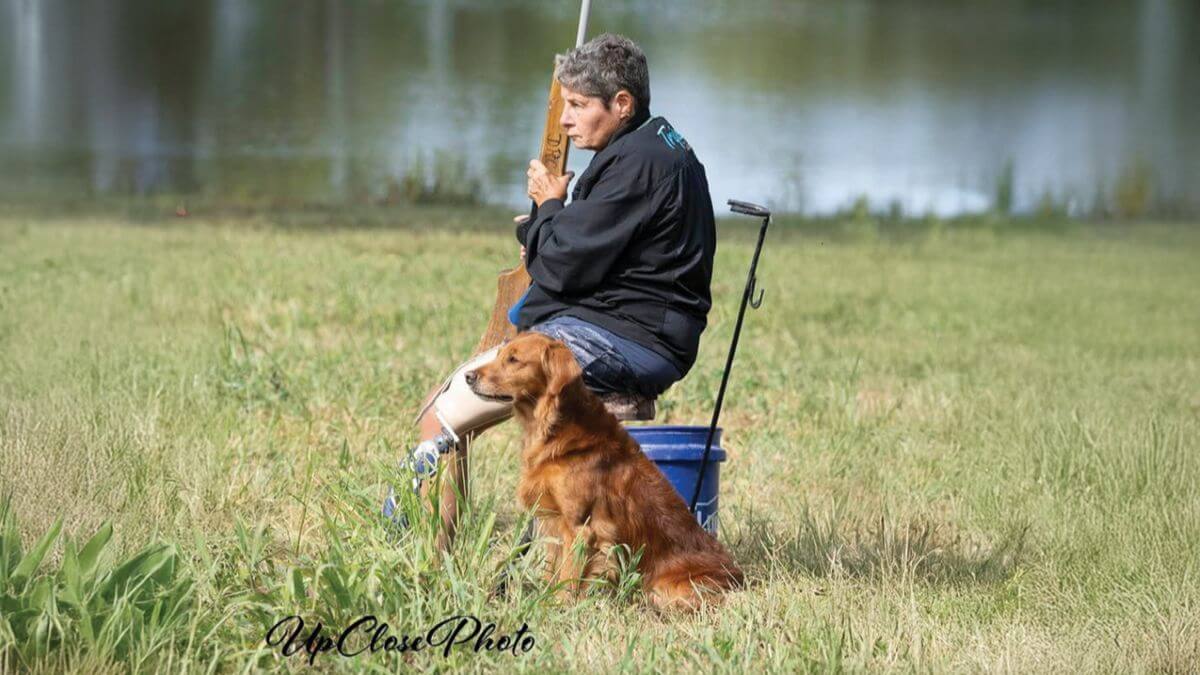
Roberta Hockenberry shares how Syd, her extraordinary Golden Retriever, became an intuitive service partner and life-changing companion.


Meet the Breeders
Helen Dorrance Ducat breeds Golden Retrievers, American Eskimo Dogs, & Whippets, sharing insights on breeding, health, and industry trends.
Feeding & Nutrition
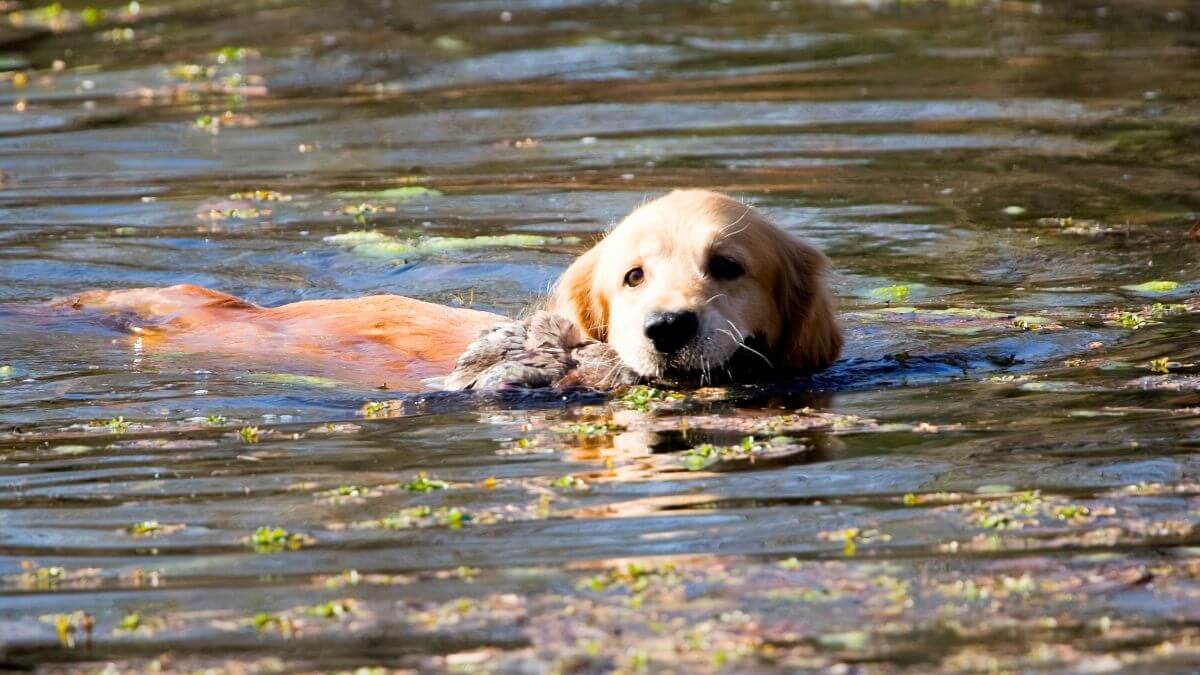
Understanding the essential hunting traits in Golden Retrievers: insights for judges on the breed’s work ethic and abilities.

Dog Sports
Discover the essence of the Golden Retriever, known for their intelligence and gentle spirit. Find out what makes them a perfect companion.
Dog Shows
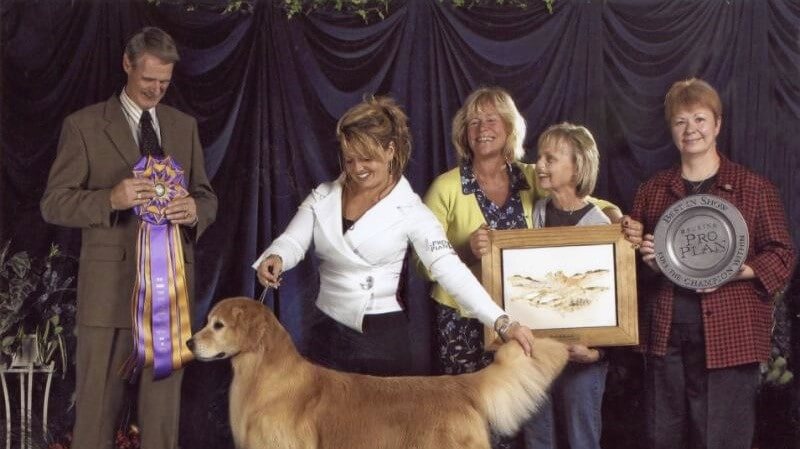
Essential tips for judging Golden Retrievers, including understanding breed standards and addressing misconceptions about proportions & coat.

All About Judging
Explore the key elements of judging Golden Retrievers with insights on standards, judging criteria, and the importance of true breed type.
Profiles & Interviews
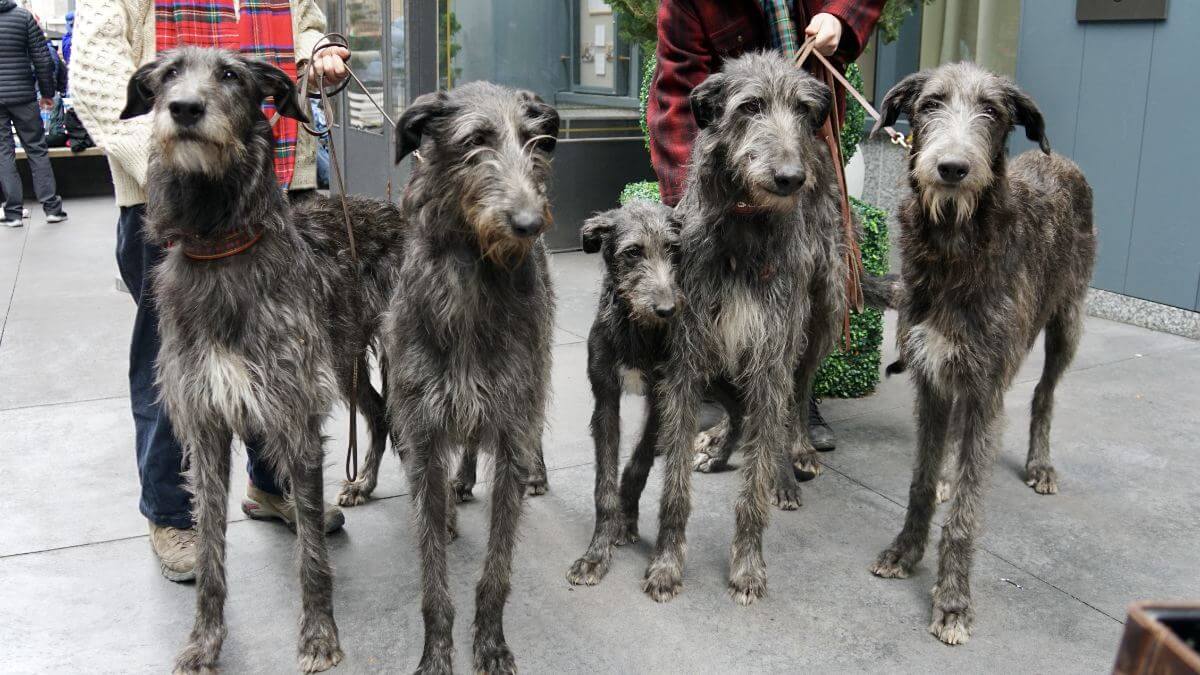
Discover the joy of Scottish heritage at the 2024 Tartan Day Parade, featuring bagpipers, dancers, and adorable Scottish dog breeds.
The tail of the Golden Retriever is a notable feature of the breed, exemplifying both strength and grace. Set on at a level with the back and reaching down to the hocks, it possesses a thick base that gradually tapers towards the tip. In motion, the tail is carried with a merry action but should never curl over the back.
The Golden Retriever’s tail is never docked; instead, it remains full and natural, showcasing its heavily feathered appearance that harmonizes beautifully with the rest of the coat.
A Note About Color: The Golden Retriever’s color is a defining characteristic. The breed’s coat ranges in color from a light pale gold through a deep reddish gold, always with a “brilliant” hue. Feathering on the back of the legs, underbody, “pants,” and tail may be lighter in color. Some Goldens will have a few white hairs on the chest or toes, although this is not desirable, and many will exhibit a graying of the face and/or body with age. However, black spots or shadings, and any off-color areas, are undesirable in the breed.
Coat Type
Double
The structure of the coat this breed carries.
Coat Length
Medium
How long the breed's coat grows when kept in condition.
Adaptability Level
How easily a breed copes with changes in home, routine, noise and weather.
Mental Stimulation Needs
How much a breed needs a job, a puzzle or training to stay content.
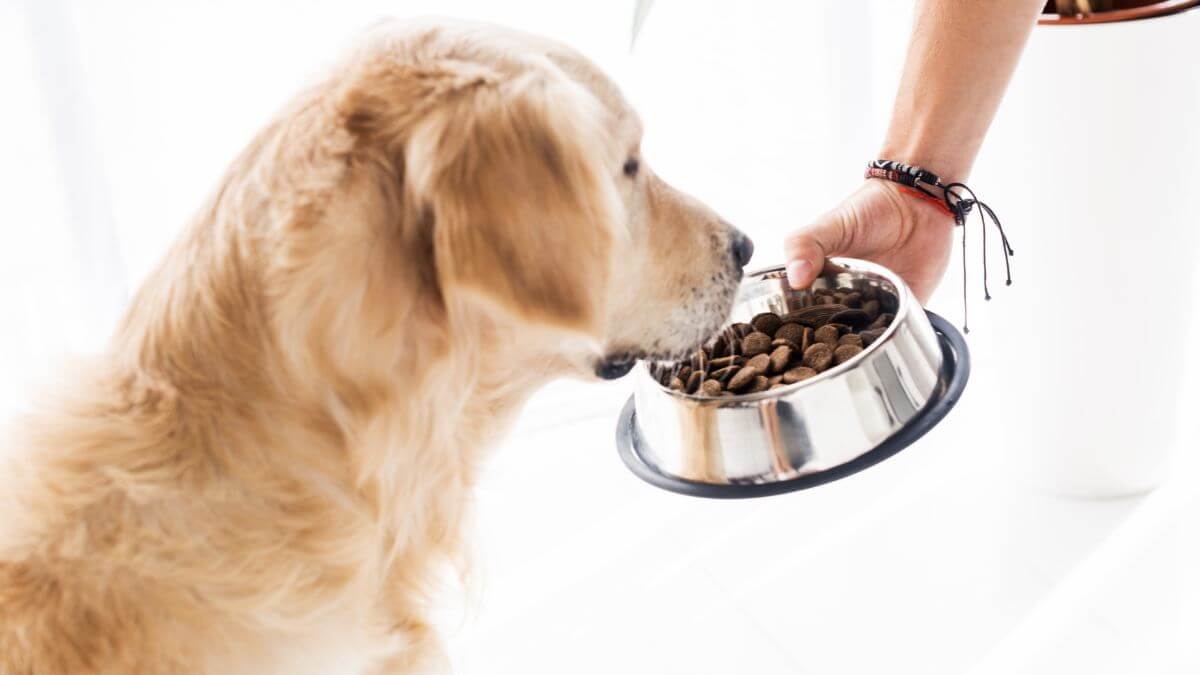
The nutritional needs of a Golden Retriever evolve throughout the dog’s life, from the energetic puppy phase to the more sedate senior years. It's essential to provide a balanced diet that aligns with each life stage to provide for each dog’s overall health and vitality.
When dealing with a puppy, it's vital to feed specially formulated puppy food that caters to the pup’s rapid growth and energy needs. This stage often requires multiple meals each day, typically three or four, to distribute daily food intake and to support a puppy’s fast-growing body.
Transitioning to adulthood, the Golden Retriever will require a shift in its dietary needs. Adult dog foods are designed to maintain health, energy, and an ideal body weight, and the typical adult will consume between 2 to 3 cups of high-quality dry food every day, split into two meals. The exact amount, however, can vary based on factors such as age, metabolism, activity level, and overall health.
It's crucial to monitor the Golden Retriever’s weight and adjust its food intake accordingly. The quantity of the food that’s fed is just as important as its quality, and a balanced diet, rich in proteins and essential fats, and fortified with necessary vitamins and minerals, will support robust health. Regular vet consultations can help to guide specific nutritional needs and recommend dietary adjustments if necessary.
Golden Retrievers, famed for their friendly disposition and gentle temperament, are also one of the most intelligent and eager-to-please breeds. This combination makes these dogs notably receptive to training, often seen excelling in Obedience and Agility Trials.
By starting an early training regimen, a foundation for a lifetime of good behavior can be established. This early training helps in fostering communication, understanding, and trust between a puppy and its handler. The puppy phase is the optimal time to introduce basic commands such as "sit," "stay," and "come."
An essential aspect of a young Golden's training is socialization. This breed's inherent sociability and affable nature can be nurtured by exposing a puppy to various environments, sounds, people, and animals. Positive experiences during this early period can ensure that the dog grows into a well-adjusted and confident adult.
Golden Retrievers, with their boundless enthusiasm and zest for life, often excel in obedience training. Their inherent desire to please their owners means they respond positively to commands and corrections. However, this eagerness can sometimes manifest as over-exuberance. Teaching impulse control and calmness is crucial too, especially during the energetic puppy and adolescent phases.
Mental stimulation is vital for a breed as intelligent as the Golden Retriever. Beyond basic obedience, these dogs thrive when presented with challenges that engage their minds. Activities like fetch and puzzle toys, and sports such as Scent Work, Tracking, and Agility can provide the intellectual engagement they crave. These activities not only cater to the breed’s cognitive needs, they also help with channeling energy in a positive direction.
While Goldens are generally known for their amiable and tolerant nature, training is still necessary to curb potential behavioral issues such as jumping on guests, counter-surfing, and excessive barking. Addressing these behaviors while a pup is young can prevent bad habits from becoming established.
Positive reinforcement is the most effective approach when training a Golden. These dogs respond exceptionally well to rewards, be it in the form of treats, praise, or play. Their sensitivity means they can be disheartened by harsh corrections. Celebrating their successes and gently guiding them away from mistakes ensures a positive training experience.
Consistency remains paramount in training any dog, including a Golden Retriever. Regular training sessions, clear commands, and a consistent approach will encourage understanding and an adherence to the desired behaviors. Given the breed’s intelligence, a Golden can pick up on inconsistencies quickly, which can lead to unintended confusion.
Grooming Expectations
The Golden sports a dense, water-repellent outer coat paired with a soft undercoat. This combination helps the breed to find comfort in various climates, but it also means the coat sheds throughout the year, with a notable increase during the spring and fall seasons. Regular brushing, preferably multiple times a week, is crucial to reduce shedding, prevent matting, and distribute the coat's natural oils, thus promoting a healthy sheen. In addition to coat care, routine cleaning of the Golden’s ears is vital, given their floppy nature, to prevent infections. Similarly, regular nail trims will avoid unnecessary overgrowth, which could lead to discomfort or issues with walking. Oral care is another pivotal aspect of grooming. Regular tooth brushing, combined with dental chews or toys, can aid in reducing tartar buildup and maintaining good dental health. Bathing a Golden is generally recommended about once every month, unless the dog gets particularly dirty or has a distinct odor. Using a dog-specific shampoo can help to preserve the natural oils in the coat and prevent skin issues.