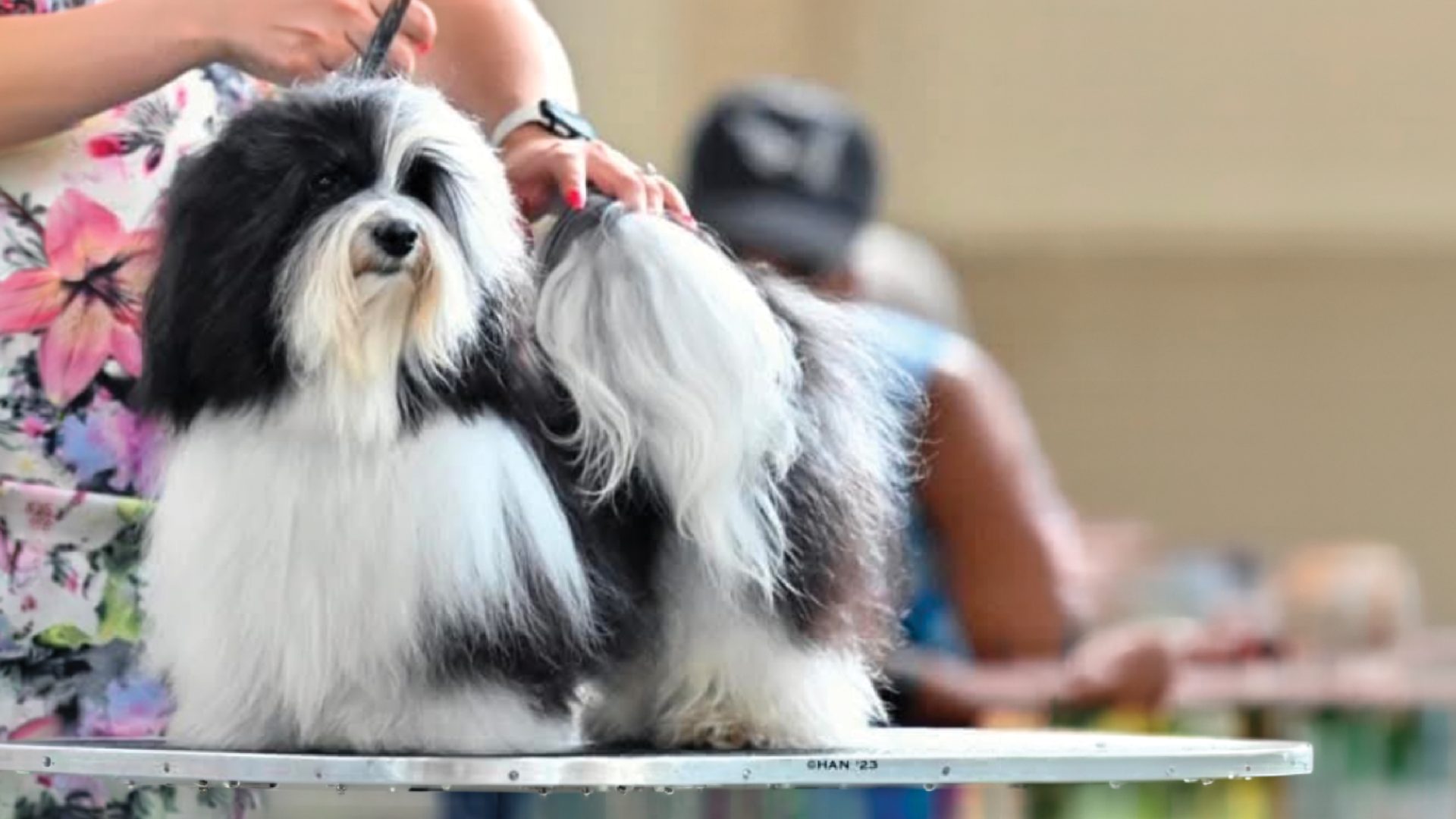
01/Overview
The Havanese is a small yet sturdy breed of dog, known for its cheerful and friendly demeanor. Originating from the island of Cuba, this breed has gained popularity worldwide, especially in the United States, for its affectionate nature and adaptability to various living situations. The Havanese is not just a delightful and intelligent companion, it also excels in Conformation dog shows and Agility and Obedience trials, making this a versatile breed for both show enthusiasts and active families.
Highlights
02/History
The Havanese, a breed rich in history and culture, has its roots deeply embedded in the fabric of Cuban society. This charming and spirited breed is the national dog of Cuba and the country’s only native dog breed.
The ancestors of the Havanese are believed to have arrived in Cuba with Spanish settlers in the early 16th century. Those dogs were likely part of the Bichon family, which includes breeds like the Bichon Frise and Maltese. Over time, the dogs adapted to the climate by producing a luxurious coat that provided protection from the hot sun.
In Cuba, the Havanese was a treasured companion of the aristocracy in the 18th century. Their small size, affectionate nature, and beautiful coat made them ideal lapdogs and ladies’ companions. The breed remained relatively unknown outside of the country before the Cuban Revolution in the late 1950s. The turmoil led to the breed's near extinction in its native land; however, a few people who fled to the United States and other countries brought their Havanese dogs with them, ensuring the breed’s survival and its development outside of Cuba.
In the United States, dedicated breeders began to work on establishing and preserving the breed. The Havanese was officially recognized by the American Kennel Club (AKC) in 1996 and has since gained popularity both as a show dog and a beloved pet. The breed has also been recognized by other major kennel clubs, including the Fédération Cynologique Internationale (FCI) and the Royal Kennel Club (UK).
Despite its turbulent history, the Havanese has emerged as a resilient and joyful breed, embodying the spirit of its Cuban heritage. Its journey from the laps of Cuban nobility to international recognition is a testament to its enduring appeal and adaptability.
03/Appearance
Both male and female Havanese ideally stand between 9 and 10.5 inches at the shoulder, although the acceptable height range is between 8.5 and 11.5 inches. In terms of weight, Havanese generally weigh from 7 to 13 pounds.
Skull: The Havanese has a slightly rounded skull, which is broad and in proportion to the dog's overall size. The forehead is flat, and there is a moderate stop (the point where the muzzle meets the forehead).
Expression: Their expression is soft and intelligent, often described as gentle and inquisitive. The expression conveys a sense of warmth and friendliness.
Eyes: The eyes are almond-shaped, dark brown, and large but not protruding. The eye shape, color, and placement contribute to the breed's characteristic warm yet mischievous expression.
Ears: The ears of the Havanese are set high on the head and are of medium length. They fold gently and hang close to the head, framing the face and enhancing a friendly appearance.
Muzzle: The muzzle of the Havanese is full and slightly shorter than the skull, with a straight nasal bridge. The muzzle tapers slightly but is neither snipey nor square.
Nose: The nose leather is either black or brown in color, thus complementing the color of the coat.
Bite: The Havanese typically has a scissors bite, where the upper incisors closely overlap the lower incisors. A full complement of incisors is preferred.
The Havanese is characterized by its slightly longer than tall body, giving it a distinctive appearance. The breed displays a well-proportioned build with moderate bone, a short upper arm with moderate shoulder layback, and a straight topline that rises slightly from the withers to the croup. A unique springy gait results from the breed's overall structure and its playful, spirited personality.
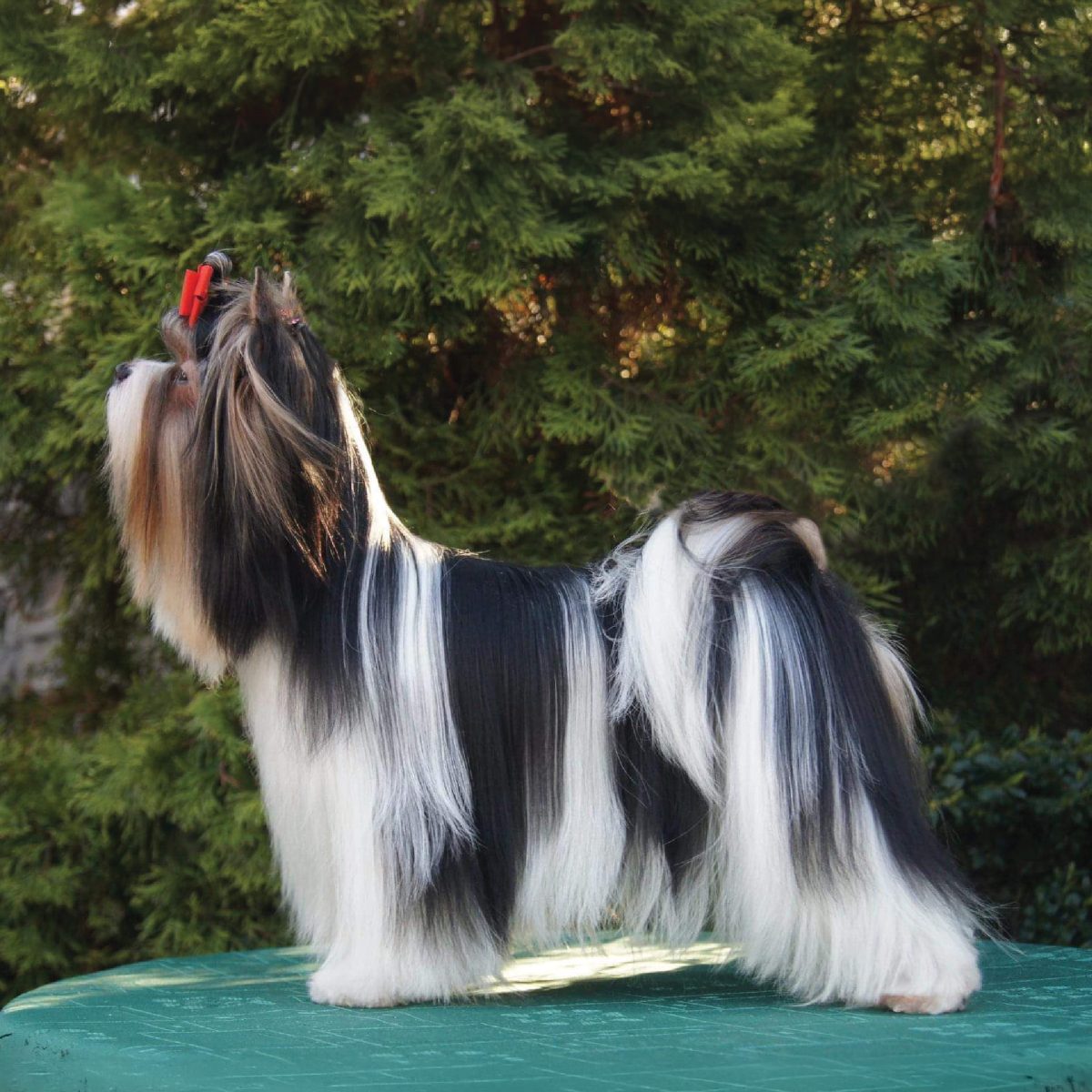
Texture: The Havanese boasts a unique double coat that is one of its most distinctive features. The texture is soft and lightweight, although the topcoat is slightly heavier than the undercoat. The silkiness and lightness of the coat give the Havanese a characteristic flowing action when moving.
Standard Colors
04/Consider
The Havanese, with its joyful demeanor and luxurious coat, is a popular breed among dog lovers and families. While they make excellent companions, owning a Havanese also involves specific responsibilities and considerations. Prospective owners should be well-informed about the breed's needs to provide a happy and healthy life for their canine companion.
Interaction With Family
The level of affection a breed typically shows towards family members and familiar individuals.
Good With Other Dogs
The innate friendliness of a dog towards other dogs can depend on its breed.
Good With Young Children
The degree to which a breed will typically be patient with young children.
Amount Of Shedding
How much hair a breed typically leaves behind on clothes, furniture and floors.
Frequency Of Grooming
How often a breed needs brushing, bathing or a professional trim to stay in condition.
Amount Of Drooling
How prone a breed is to drool — worth knowing before you keep a towel by the door.
Openness To Strangers
How openly a breed tends to greet new people, visitors and strangers.
Protective Nature
How likely a breed is to alert you to — and stand between you and — anything unfamiliar.
Playfulness Level
How enthusiastic a breed stays about games and play well past puppyhood.
Trainability Level
How readily a breed takes direction and works with you rather than around you.
Barking Level
How much a breed uses its voice, and how readily.
Energy Level
How much get-up-and-go a breed brings to an average day.
Health
Havanese are generally healthy and resilient dogs, but like all breeds, they have their own set of health considerations. It is important for prospective caretakers to be aware of these health issues and work closely with a reputable breeder and veterinarian. The average lifespan of a Havanese is about 14 to 16 years, and with attentive care, a proper diet, and regular veterinary check-ups, many Havanese live full and happy lives within this range.
The personality of a Havanese is a delightful blend of affection, intelligence, and playfulness, making them an ideal companion for various households, including those with novice owners. Understanding the nuances of their temperament is essential for anyone considering adding a Havanese to their family.
Havanese are known for their high sensitivity level. They are highly attuned to the emotions and environment around them, which makes them excellent companions but also means they may not thrive in highly chaotic or loud environments. Their adaptability allows them to adjust to different living situations, but they greatly appreciate a stable routine.
Being alone is not something Havanese enjoy. They thrive on companionship and can become anxious if left alone for extended periods. This breed craves interaction and is happiest when part of family activities. This trait makes them less suitable for households where they would spend much time alone.
When it comes to their interaction with other dogs and young children, Havanese are generally very friendly. They tend to get along well with other pets in the household and are gentle and playful with children, making them an excellent choice for families. However, as with any breed, early socialization and training are key to fostering these positive interactions.
Havanese are also quite friendly toward strangers, though they may initially be reserved. Once they warm up, they are typically welcoming and sociable. This trait, combined with their lack of strong guarding instincts, does not make them ideal guard dogs, but excellent pets for those seeking a friendly, sociable companion.
Exercise Expectations
The exercise needs of a Havanese are moderate. They do not require extensive physical activity but do need daily opportunities to play and explore. A couple of short walks each day, along with some playtime, is typically sufficient to meet their exercise requirements. This breed particularly enjoys interactive games and activities that engage both their body and mind, such as fetch, hide-and-seek, or agility training. When it comes to their energy level, Havanese are lively and spirited without being overly hyperactive. They have a good balance of energy that makes them adaptable to various living situations, whether it's a house with a yard or an apartment. Their playful nature often shines through during exercise and playtime, bringing joy to their human companions. The intensity of exercise for a Havanese should be moderate. They enjoy being active and can participate in more vigorous play sessions, but they also need periods of rest and relaxation. It's important to monitor their activity to make sure that they are not over-exerted, especially in hot or humid weather, as they can be sensitive to extreme temperatures. Playfulness is a hallmark of the Havanese breed. They often exhibit a youthful zest for life, enjoying playful interactions with their family members and other pets. Incorporating play into their exercise routine not only helps them expend energy but also strengthens the bond between the dog and its human companion.
Living with a Havanese offers a unique blend of joy, companionship, and adaptability, making them an excellent choice for various living situations, from apartments to larger homes. Their small size and moderate exercise needs allow them to thrive in apartment settings, as long as their daily physical and mental stimulation needs are met. Havanese dogs are particularly sociable and enjoy being close to their families, making them ideal for those who can provide frequent interaction and companionship.
When it comes to weather adaptability, the breed's thick double coat offers some protection against cooler temperatures. However, they are not suited for extreme cold and may require additional warmth through sweaters or coats during chilly outings. Their comfort in cooler weather should be balanced with caution, as their small size makes them susceptible to rapid heat loss.
In contrast, hot weather poses a greater challenge for the Havanese. Their long coat can lead to overheating in warm climates. Providing a cool, shaded environment, access to water, and air-conditioned spaces during hot days is crucial. Exercise should be carefully timed to avoid the hottest parts of the day, and caretakers should be vigilant for signs of heat stress in their pets.
The breed's social nature means they do not fare well when left alone for long periods. Regular interaction, play, and inclusion in family activities are important to prevent feelings of isolation or separation anxiety. Making sure that they remain an active part of the household is key to their emotional well-being.
05/Puppies
Welcoming a Havanese puppy into your home is an exciting and rewarding experience. These puppies are known for their playful and affectionate nature, making them wonderful additions to any family. Raising a Havanese puppy, however, requires commitment and understanding of their specific needs during this crucial developmental stage.
Caring for a Havanese puppy involves a comprehensive approach that includes proper nutrition, socialization, training, and health care.
Nutrition is vital for a growing Havanese puppy. Feeding Havanese puppies with high-quality food tailored for small breeds is important for their proper growth and development. It's important to follow feeding guidelines and adjust portions based on the puppy's activity level and growth rate. Regular meals, rather than free-feeding, help establish a healthy eating routine and prevent obesity.
Socialization is another key aspect of caring for a Havanese puppy. Early exposure to different people, pets, environments, and experiences helps them develop into well-adjusted, confident adults. Puppy classes can be particularly beneficial, providing both socialization and foundational training.
Training should begin early, utilizing positive reinforcement techniques. Havanese puppies are intelligent and eager to please, making them responsive to training. Basic commands, housebreaking, and crate training are important elements of their early education. Consistency and patience in training are essential to develop a strong bond and encourage good behavior.
Health care is paramount for a Havanese puppy. Regular veterinary check-ups, vaccinations, and parasite control are essential for maintaining their health. Monitoring their development and addressing any health concerns early on is important for their long-term well-being.
Additionally, grooming is an important part of a Havanese puppy's care. Getting them accustomed to regular brushing and grooming from a young age will make it a more pleasant experience as they grow. This includes getting them comfortable with nail trimming, ear cleaning, and dental care.
06/Activities
The Havanese is well-suited for a variety of activities and dog sports. These activities not only provide physical and mental stimulation for the dog but also strengthen the bond between the dog and its handler. Here are some activities and sports in which Havanese can excel:
Agility: Havanese are agile and quick learners, making them great candidates for Agility courses where they navigate obstacles and jumps.
Obedience: Their eagerness to please and intelligence make them excellent at Obedience trials, where they perform a series of tasks on command.
Rally Obedience: This sport combines aspects of Obedience and Agility, with a focus on teamwork and communication between dog and handler.
Trick Training: They are quick to learn and enjoy performing tricks, which can be a fun and rewarding activity for both the dog and the handler.
Conformation Shows: Havanese can participate in Conformation Shows, where they are judged on their adherence to breed standards, including physical structure and temperament.
Therapy Work: With their affectionate and gentle nature, Havanese make excellent Therapy dogs, providing comfort and companionship in hospitals, schools, and nursing homes.
Search and Rescue (SAR): While not as common, some Havanese may be involved in SAR activities, using their keen sense of smell and agility.
Gallery
07/Standards
The Havanese is recognized by the world’s leading registries and kennel organizations, which categorize the breed into a specific Group based on its unique characteristics. This breed is recognized worldwide under the following Group designations:
The ideal Havanese is described by a Breed Standard that is approved by each of the world’s leading registries and kennel organizations. The Standards for this breed may be found in the following links:
08/Clubs
Havanese clubs play a crucial role in the promotion and preservation of the breed, offering resources and support to owners, breeders, and enthusiasts. These clubs often organize events, provide educational materials, and sometimes engage in rescue operations.
In the United States, the Havanese Club of America, established in 1979, is the official AKC parent club for the Havanese breed. This club is dedicated to the health and welfare of the Havanese and offers a wealth of information for both current and prospective Havanese owners.
In Canada, Havanese enthusiasts can turn to the Havanese Fanciers of Canada (HCF). This club, recognized by the Canadian Kennel Club, focuses on the promotion and preservation of the breed in Canada. It provides a platform for Canadian breeders and owners to connect and share information, and also organizes breed-specific events and shows.
In the United Kingdom, the Havanese is represented by the Havanese Club of GB. This club, though relatively younger, having been established in the 21st century, has quickly become a central hub for Havanese activities in the UK.
Each of these clubs, through their activities and resources, contributes significantly to the Havanese community. Membership in these clubs can offer invaluable support, education, and camaraderie for anyone passionate about Havanese dogs.
09/Rescue
Havanese rescue organizations play a crucial role in ensuring the well-being of Havanese dogs that find themselves in need of new homes due to various unforeseen circumstances. These groups provide care, rehabilitation, and work diligently to find loving forever homes for these dogs.
In the United States, Havanese Rescue Inc. is a prominent organization dedicated to the rescue of Havanese and Havanese-mix dogs. Established in 2004, HRI is a non-profit organization recognized for its charitable work in rescuing dogs that are homeless, soon-to-be-homeless, or those found in animal shelters.
Another significant rescue organization in the U.S. is the Havanese Angel League Organization for Rescue (HALO). HALO, a registered non-profit dedicated to the survival and care of Havanese dogs, was established in 2002.
In Canada, the Havanese Fanciers of Canada Rescue, a part of Havanese Fanciers of Canada INC., is a non-profit organization dedicated to the identification, rescue, and rehabilitation of neglected, lost, and surrendered Havanese.
In the United Kingdom, the Havanese Club of GB offers a re-homing and rescue service for Havanese dogs. This service provides Havanese dogs in the UK with access to support and care, aiming to find them new homes where they can continue to thrive.
10/Facts
National Dog of Cuba
The Havanese is the national dog of Cuba and the only breed native to the country.
Silk Road Connection
The breed's ancestors likely came to Cuba with Spanish traders, possibly tracing back to the Silk Road.
Bichon Family
The Havanese is part of the Bichon family, which includes breeds like the Bichon Frise and Maltese.
Survived Near Extinction
The Havanese nearly became extinct during the Cuban Revolution, but a few dogs brought to the US saved the breed from extinction.
No Undercoat
Unlike many breeds, the Havanese does not have an undercoat, which contributes to its status as a good choice for allergy sufferers.
Companion Dogs
Historically, Havanese were companion dogs for Cuban aristocrats and are known today for being excellent companions.
Long Lifespan
The Havanese has a relatively long lifespan, typically living between 14 and 16 years.
Famous Footsteps
The Havanese has walked the corridors of power, with one residing in the White House during John F. Kennedy's presidency.
11/FAQ
Havanese are considered low-shedders. They have a long, silky coat that doesn’t shed as much as many other breeds. However, their coats do require regular grooming to prevent matting.
Official Standard of the Havanese
General Appearance: The Havanese is a small, sturdy dog of immense charm. The native dog of Cuba, he is beloved as a friendly, intelligent and playful companion. He is slightly longer than tall, with a long, untrimmed, double coat. The Havanese has a short upper arm with moderate shoulder layback and a straight topline that rises slightly from the withers to the croup. The plumed tail is carried arched forward up over the back. The unique springy gait is a result of the breed's structure and playful, spirited personality. These characteristics of temperament, coat, structure and gait are essential to type.
Size, Proportion, and Substance: The ideal height is between 9 and 10½ inches, with an acceptable height range from 8½ to 11½ inches. Height at withers under 8½ inches or over 11½ inches is a disqualification, except that the minimum height shall not apply to dogs or bitches under twelve months of age. The height is slightly less than the length from the point of shoulder to point of buttocks, creating a rectangular outline. The Havanese is moderately boned and should never appear coarse or fragile.
Head: The expression is soft, intelligent and mischievous. Eyes are large, dark brown and almond-shaped. Chocolate dogs may have somewhat lighter brown eyes. Eye rims are solid black for all colors except for chocolate dogs which have solid brown eye rims. Incomplete or total lack of pigmentation of the eye rims is a disqualification. Ears are broad at the base, dropped, and have a distinct fold. They are set high on the skull, slightly above the endpoint of the zygomatic arch. When alert, the ears lift at the base but always remain folded. Ear leather, when extended, reaches halfway to the nose. The skull is broad and slightly rounded. The stop is moderate and the planes of the head are level. The cheeks are flat. Length of muzzle is slightly less than length of skull measured from stop to point of occiput. The muzzle is full and rectangular with a broad nose. The nose and lips are solid black for all colors except for chocolate dogs which have solid brown pigment. Incomplete or total lack of pigmentation of the nose or lips is a disqualification. Any color pigmentation other than black or brown on the eye rims, nose or lips is a disqualification. Small depigmented areas on lips due to rubbing against canine teeth will not disqualify. A scissors bite is ideal and a full complement of incisors is preferred.
Neck, Topline and Body: The neck is slightly arched, of moderate length, blends smoothly into the shoulders and is in balance with the height and length of the dog. The prosternum is evident but not prominent. The chest is deep, well developed, and reaches the elbow. The straight topline rises slightly from the withers to the croup. Measured from point of shoulder to point of buttocks, the body is slightly longer than the height at the withers. This length comes from the ribcage. Ribs are well sprung. The loin is short and well muscled. There is a moderate tuck-up. The tail is high-set and arches forward up over the back. It is plumed with long, silky hair. The tail plume may fall straight forward or to either side of the body. While standing, a dropped tail is permissible. The tail may not be docked.
Forequarters: The tops of the shoulder blades lie in at the withers, allowing the neck to blend smoothly into the back. Moderate shoulder layback is sufficient to carry the head and neck high. The upper arm is short. Elbows are tight to the body and forelegs are straight when viewed from any angle. The length from the foot to the elbow is equal to the length from elbow to withers. Pasterns are short, strong and flexible, very slightly sloping. Dewclaws may be removed. The feet have arched toes and point straight ahead. Pads and nails may be any color.
Hindquarters: The hind legs are muscular with moderate angulation. Hocks are well let down; pasterns are parallel from hock to foot. The croup is slightly higher than the withers. Dewclaws may be removed. The feet have arched toes and point straight ahead. Pads and nails may be any color.
Coat: Silky to the touch, the coat is soft and light in texture in both outer and undercoat, although the outer coat carries slightly more weight. The coat is long, abundant and wavy. It stands off the body slightly, but flows with movement. An ideal coat will permit the natural lines of the dog to be seen. Puppy coat may be shorter and have a softer texture than adult coat. A single, flat, frizzy or curly coat should be faulted. A coarse, wiry coat is a disqualification. A short, smooth coat with or without furnishings is a disqualification. The coat may be corded. Corded coats will naturally separate into wavy sections in young dogs and will in time develop into cords. Adult corded dogs will be completely covered with a full coat of tassel-like cords.
Color: All colors and marking patterns are permissible and are of equal merit. The skin may be any color.
Gait: The Havanese gait is springy. The characteristic spring is the result of the short upper arm combined with the rear drive. Front legs reach forward freely matching the moderate extension in the rear. On the move, the pads may be visible coming or going. The head is carried high and the slight rise in the topline holds under movement.
Temperament: The Havanese is friendly, playful, alert and intelligent with a sweet, non-quarrelsome disposition. Aggression or shyness should be faulted.
Presentation: Havanese should be shown as naturally as is consistent with good grooming. They may be shown either brushed or corded. The coat should be clean and well conditioned. In mature dogs, the length of the coat may cause it to fall to either side down the back but it should not be deliberately parted. Head furnishings are long and untrimmed, and may fall forward over the eyes or to both sides of the head; they may also be held in two small braids secured with plain elastic bands. The braids start above the inside corner of each eye and extend at least to the outside corner, forming the appearance of eyebrows. No other hair accessories are permitted. Minimal trimming of the anal and genital area is permissible but should not be noticeable on presentation. Hair on the feet and between the pads should be neatly trimmed. No other trimming or sculpting of the coat is permitted and is to be so severely penalized as to preclude placement. Havanese should be presented at a natural speed on a loose lead to properly assess the characteristic springy gait.
Faults: The foregoing description is that of the ideal Havanese. Any deviation from the above described dog must be penalized to the extent of the deviation.
Disqualifications: Height at withers under 8½ or over 11½ inches except that the minimum height shall not apply to dogs or bitches under twelve months of age. Incomplete or total lack of pigmentation of the eye rims. Incomplete or total lack of pigmentation of the nose or lips. Any color pigmentation other than black or brown on the eye rims, nose or lips. A coarse, wiry coat. A short, smooth coat with or without furnishings.
Approved August 9, 2011
Effective September 28, 2011
The tail of the Havanese is high-set and arches forward, up and over the back. It is plumed with long, silky hair which may fall straight forward or to either side of the body. While standing, the tail may drop; however, the tail may not be docked.
Standard Markings
A Note About Color: All colors and markings/patterns are permissible and are of equal merit. The skin may be any color. Disqualifications in the show ring include: incomplete eye rim pigment or a total lack of pigmentation; incomplete nose pigment or a total lack of pigmentation; incomplete lip pigment or a total lack of pigmentation; any color of pigmentation other than black or brown on the eye rims, nose, or lips.
Coat Type
Double, Silky
The structure of the coat this breed carries.
Coat Length
Long
How long the breed's coat grows when kept in condition.
Adaptability Level
How easily a breed copes with changes in home, routine, noise and weather.
Mental Stimulation Needs
How much a breed needs a job, a puzzle or training to stay content.
Feeding and nutrition are pivotal aspects of caring for a Havanese, as they significantly impact the dog's health, energy levels, and overall well-being. A balanced diet tailored to their specific needs is essential for maintaining their luxurious coat, supporting their energetic nature, and helping them live a long, healthy life.
When feeding a Havanese puppy, it's important to provide a diet that supports their rapid growth and development. Puppies generally require more protein and calories than adult dogs. High-quality puppy food, specifically formulated for small breeds, is usually recommended. These formulations are designed to provide the puppy with the correct balance of nutrients necessary for their development.
As the Havanese matures into adulthood, its dietary needs change. Adult Havanese should be fed a well-balanced diet that is appropriate for their age, size, and activity level. The amount of food, usually measured in cups per day, varies depending on the dog's weight and activity level. On average, an adult Havanese may require about ½ to 1 cup of dry dog food per day, divided into two meals. However, this can vary, and it's crucial to consult with a veterinarian to determine the exact portion size suitable for an individual dog's needs.
Havanese are known for their moderate energy levels, and their diet should reflect this. Overfeeding can lead to obesity, which can be a health concern for the breed. Monitoring the dog's weight and adjusting food portions as needed is vital. Treats should be given sparingly and should not exceed 10% of the dog's daily caloric intake.
Access to fresh, clean water is essential at all times. Regular mealtimes help establish a routine, aiding in digestive health and weight management.
When it comes to feeding a Havanese, quality of food is as important as quantity. High-quality dog food that lists meat as the first ingredient, free from unnecessary fillers, is ideal. Some Havanese may have specific dietary needs or sensitivities, so it's important to be aware of any signs of food allergies or digestive issues.
Training a Havanese can be a highly rewarding experience, given their intelligence and eagerness to please. This breed is known for its ability to learn quickly and respond well to positive reinforcement techniques, making them a suitable choice for first-time dog owners as well as experienced handlers.
One of the key aspects of training a Havanese is their intelligence. They are quick learners and can master basic commands and tricks with relative ease. However, their intelligence also means they can become bored with repetitive tasks. Therefore, keeping training sessions short, fun, and varied is crucial to maintaining their interest and engagement.
Despite their small size, Havanese have a moderate tendency to bark. This trait can be managed through training and socialization. Teaching them commands like "quiet" or "enough" and understanding the cause of their barking (such as boredom, attention-seeking, or alerting to strangers) can help control excessive barking.
The wanderlust potential in Havanese is relatively low compared to other breeds. They tend to be more home-oriented, which makes them less prone to wandering off. However, it's still important to make sure that they are properly trained to come when called and to understand boundaries, especially when off-leash in open areas.
Predation is not a dominant trait in the Havanese. They are generally friendly towards other animals, but early socialization is key to fostering this behavior. Exposing them to different environments, people, and other pets at a young age can help them develop into well-rounded and sociable adults.
Training a Havanese should be a positive and patient process. Using positive reinforcement, like treats and praise, works well with this breed. Harsh methods or negative reinforcement can be counterproductive, as they may lead to fearfulness or anxiety.
Grooming Expectations
The grooming needs of the Havanese are relatively high due to their coat type. Their long, silky hair can easily become matted and tangled if not regularly brushed. Daily brushing is recommended to prevent mats and to keep their coat smooth and clean. Using a good quality brush and comb specifically designed for long-haired breeds can make this task more effective and comfortable for the dog. In terms of shedding, the Havanese is a low-shedding breed. While they do lose some hair, it is not as much as many other breeds, making them a good choice for those concerned with pet hair in the home. However, their low shedding does not negate the need for regular grooming. Bathing a Havanese should be done as needed, typically every few weeks, depending on their lifestyle and level of outdoor activity. Using a dog-specific shampoo that is gentle on the skin and coat is important to avoid drying out their skin or causing irritation. It's also crucial to thoroughly dry their coat after bathing to prevent any skin issues. In addition to coat care, other grooming aspects such as nail trimming, ear cleaning, and dental care are important. Nails should be trimmed regularly to prevent discomfort and mobility issues. Ears should be checked and cleaned regularly to prevent infections, especially considering their long, floppy ears. Regular dental care, including teeth brushing and dental chews, helps in maintaining oral health and preventing dental diseases. Professional grooming every few months can also be beneficial, especially for trimming and maintaining the coat length and overall shape. A professional groomer can also assist in areas that might be challenging for caretakers to do at home, such as ear cleaning and anal gland expression.
Grooming is another aspect of living with a Havanese that requires attention. Their long, silky coat needs daily care to prevent matting and tangling. Alongside regular brushing, periodic baths and professional grooming sessions help maintain their coat's health and appearance.