Members
01/Overview
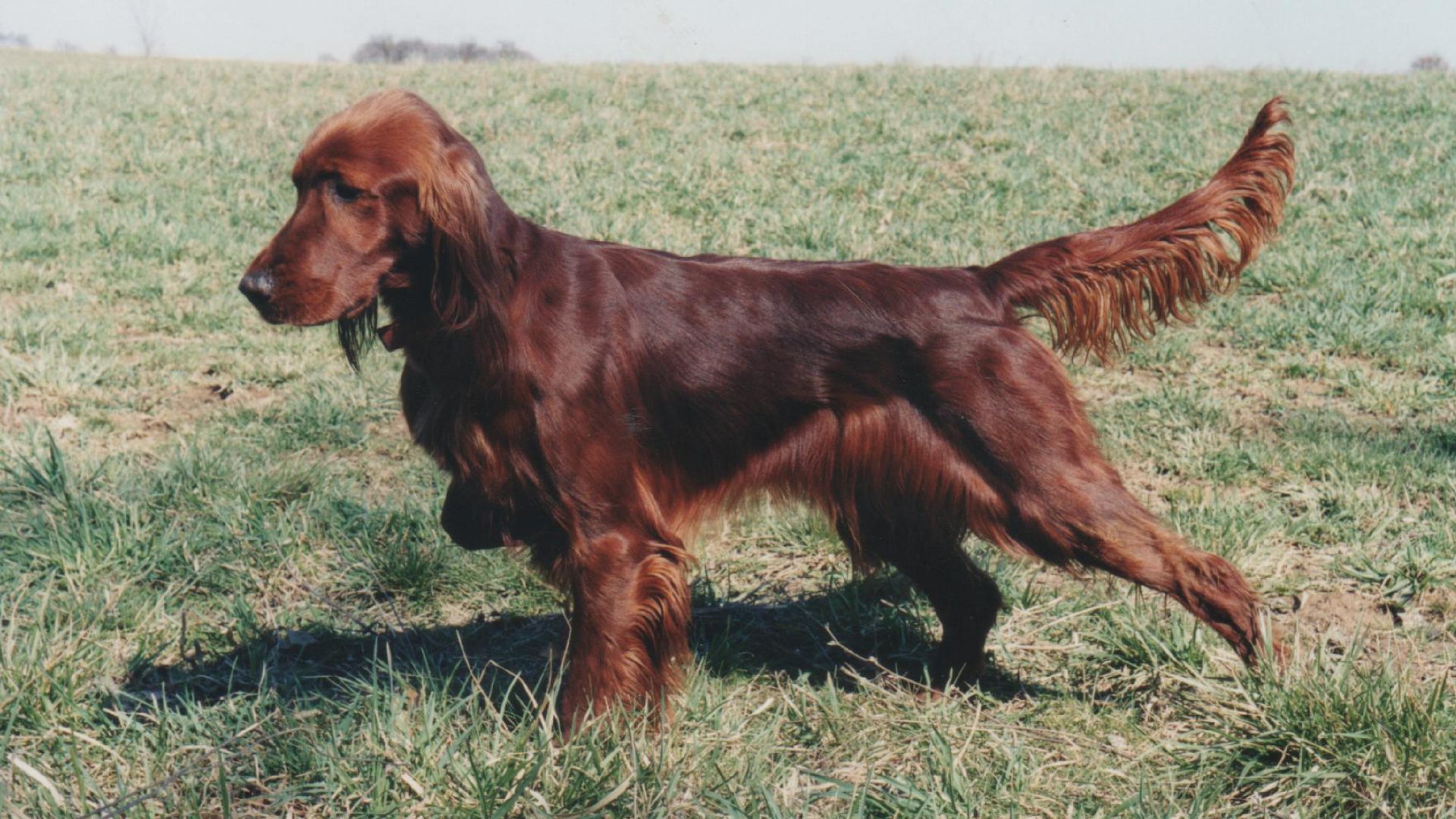
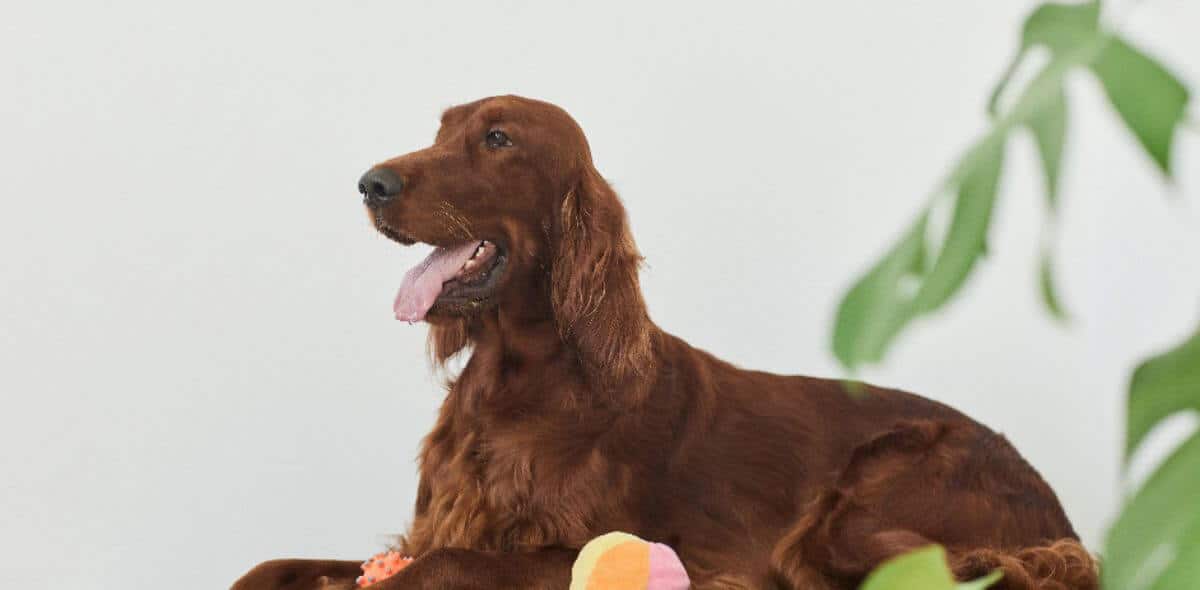
The Irish Setter is a friendly, active, and sweet-natured dog recognized by its flashy red coat and for its undeniable gracefulness. The breed was originally created in Ireland to work on farms and for hunting as a bird dog, although it is not often seen in the field today alongside similar pointing breeds. The Irishman's hunting skills, however, remain strong and individual dogs still perform their historic role as a hunter's companion. A good Irish Setter is usually slow to mature and will act like a puppy for several years, making it a great playmate for kids as well as a trusted partner for many years.
Highlights
02/History
The Irish Setter was bred to locate birds by using its keen sense of smell. The name “setter” represents the action this breed takes when it finds a bird; it “sets” down on its belly in the direction of the hidden bird and remains still until the hunter arrives. Prior to the development of the firearm, setters collaborated with trained falcons and hunters using nets to capture the birds. Today's setters operate as gundogs alongside hunters with rifles.
This breed was likely developed in the 1800s by Irish sportsmen looking to develop a sleek and rangy bird dog that could move swiftly and cover a large area of land. Irish Setters are probably the result of combining English Setters and Gordon Setters as well as spaniels and pointers.
The original Irish Setters were occasionally referred to as red spaniels, or modder rhu, which is Gaelic for "red dog." Instead of the solid dark red seen in the breed today, they were frequently red and white in color. Some of the so-called "shower of hail" canines had red coats with little white dots all over the body.
In the field, the breed developed a reputation as an energetic but resourceful worker. And since the inception of dog shows in the 1870s, the breed has also enjoyed success in the show ring due to its alluring appearance and rollicking gait.
The most well-known Irish Setter of all time, however, was a fictional creation—Big Red, the protagonist of Jim Kjelgaard's 1945 book of the same name. King Timahoe, an Irish Setter owned by President Richard Nixon, was named after a little hamlet in Ireland, the country of the president's ancestry.
03/Appearance
In terms of height, adult male Irish Setters measure around 27 inches tall at the shoulder, with females typically measuring around 25 inches tall. Males can weigh up to 70 pounds, while females generally weigh about 60 pounds.
The Irish Setter displays a racy and athletic figure. The breed's body is beautifully proportioned, with shoulders fine at the withers, deep, and sloping. The chest should be as deep as possible and relatively narrow in front. The ribs are nicely sprung, giving plenty of lung space that's needed for a far-ranging field dog. Loins are muscular and slightly arched, and the hindquarters are broad and robust.
Texture: The coat of the Irish Setter is short and fine on the head and forelegs. On the other parts of the body, the coat is of moderate length, flat, straight, and free of curl or wave. A pleasing fringe of hair (feathering) exists on the chest, brisket, belly, backs of the forelegs and thighs, and on the tail.
Standard Colors
04/Consider
The Irish Setter easily catches the eye with its gorgeous color, athletic figure, and beautiful head and tail. This breed is not simply beautiful, however, it is also very intelligent, friendly, and mischievous. These qualities make the breed a very likable choice for many people, but owning this breed requires a lot of responsibilities since it is not a dog that's suitable for every type of home environment.
Interaction With Family
The level of affection a breed typically shows towards family members and familiar individuals.
Good With Other Dogs
The innate friendliness of a dog towards other dogs can depend on its breed.
Good With Young Children
The degree to which a breed will typically be patient with young children.
Amount Of Shedding
How much hair a breed typically leaves behind on clothes, furniture and floors.
Frequency Of Grooming
How often a breed needs brushing, bathing or a professional trim to stay in condition.
Amount Of Drooling
How prone a breed is to drool, worth knowing before you keep a towel by the door.
Openness To Strangers
How openly a breed tends to greet new people, visitors and strangers.
Protective Nature
How likely a breed is to alert you to anything unfamiliar, and stand between you and it.
Playfulness Level
How enthusiastic a breed stays about games and play well past puppyhood.
Trainability Level
How readily a breed takes direction and works with you rather than around you.
Barking Level
How much a breed uses its voice, and how readily.
Energy Level
How much get-up-and-go a breed brings to an average day.
Health
The Irish Setter is typically a healthy breed of dog, known for its energetic nature and friendly disposition. However, like all breeds and mixed breeds, the Irish Setter can be susceptible to specific health conditions. Prospective owners should be aware of these potential issues and work closely with a trusted breeder and veterinarian to ensure the Irish Setter maintains optimal health throughout its life. Lifespan: The average lifespan of an Irish Setter ranges between 12 to 15 years. With proper care, regular check-ups, and a balanced diet, many can enjoy a life filled with activity and affection well within, and sometimes beyond, this range.

The Irish Setter displays a personality that is often described as rollicking, sweet-tempered, and affectionate. The breed is also known for its swiftness. With it being a high-energy breed, it is important to ensure every Irish Setter is provided with a safe environment, such as a large fenced yard.
Intelligence is one of the breed’s most appealing characteristics; however, the Irish Setter tends to be a really mischievous and independent breed, so the training requires a lot of patience and consistency. Like any other breed, the Irish Setter needs early socialization and exposure to different people, sounds, sights, and experiences while young.
Exercise Expectations
The breed depends on getting a sufficient amount of exercise daily, and the recommended amount is 1 to 2 hours per day. Healthy adults aged 2 to 7 should be given closer to 2 hours of walking each day, although it’s best to split this time into two different sessions. If this is not possible, the Irish Setters will gladly enjoy one long, playful session. Other than just going for a walk, the Irish Setter needs a lot of different activities and games to stay happy. With their friendly nature, these dogs enjoy being with their people and doing fun activities together. Playing fetch is one of many activities that will engage both dog and handler. And most Irish Setters are naturally attracted to water, so swimming sessions are a great way to burn energy, especially if the dog is recovering from injury. Mental stimulation is also an important part of the Irish Setter’s daily exercise regimen. Without it, the breed can be prone to a few bad behaviors. Since they are known for their intelligence, puzzle toys are a great choice for Irish Setters. However, the most important tool of all is plenty of socialization.
Living with an Irish Setter is a really pleasant experience as long as the proper care is provided. With it being a playful, active, and friendly breed, it needs a lot of outer space to run around. These dogs don’t like being left alone, so it’s essential for them to live indoors with their owners. Living with an Irish Setter means having a happy companion around at all times.
Irish Setters are large dogs and, with their high energy, their need for exercise is a little larger than the needs of many other dogs. When at home, the breed should have a large fenced yard to run around in between walks around the neighborhood. Its playful and happy nature makes it perfect company for energetic kids, although it’s important to always keep in mind that Irish Setters can be too much for toddlers who can be unintentionally bowled over.
There is no living creature that the Irish Setter does not find a friendly companion. Little kids, strangers, other dogs, and even cats are all suitable playmates. This breed can get along with anyone, and with that in mind, it makes the perfect pet for many people around the world.
Overall, the Irish Setter is highly adaptable. With it having been bred for the inclement Irish weather, this breed can easily handle cold and rainy weather; however, it can adapt to warm weather equally well. Still, if you live somewhere warm, it’s crucial to provide the dog plenty of shade or access to swimming.
05/Puppies

Irish Setters puppies have wonderful personalities. They are curious and playful, and they have no problem approaching strangers and letting people hold them. However, they can be a little rambunctious towards children. When choosing a puppy, always consider the breeder’s experience with this all-important decision.
Before bringing home an Irish Setter puppy, make sure to ensure a safe and nurturing environment. Since the breed is curious and playful from a young age, constant supervision is required to keep Irish Setter pups from harm. Providing them with toys will also help with their teething needs.
Puppies require different types of experiences than do adult dogs. Puppy kindergarten is a fantastic opportunity for puppies between the ages of 8 weeks and 4 months to obtain training, socialization, and exercise. They also enjoy 15 to 20 minutes of playtime in the yard each morning and evening. From 4 to 6 months of age, daily half-mile walks, weekly obedience training, and periods of free-play will all take care of their exercise needs.
For an Irish Setter puppy, crate training is necessary. This breed is extremely inquisitive and will inspect everything with its mouth. When no one is home to monitor the puppy, a crate will assist with keeping your puppy and your belongings safe and secure.
An Irish Setter puppy and its owner form a unique bond. It’s important to spend quality time fostering this bond, whether that is through engaging activities, instructive lessons, or tender cuddle time. This closeness not only promotes trust, it also deepens the bond of the human-canine relationship.
Regular veterinary check-ups are crucial during the first year of life. Vaccinations, deworming, and basic health checks should be performed at this time to ensure the puppy is growing normally.
Important aspects of puppy care include basic training and socialization. Training puppies at an early stage will allow them to grow into well-behaved adults. Early and consistent socialization will also instill confidence and reduce the chances of fear or misbehavior later in life.
06/Activities
Irish Setters are born to run, so their activities must contain a lot of it. Over the years, this breed has been involved in a variety of activities and dog sports, showcasing the breed’s diverse skill set.
Gallery
07/Standards
The Irish Setter is recognized by the world's leading registries and kennel organizations, which categorize the breed into a specific Group based on its unique characteristics. This breed is recognized worldwide under the following Group designations:
The ideal Irish Setter is described by a Breed Standard that is approved by each of the world’s leading registries and kennel organizations. The Breed Standards for this breed may be found in the following links:
08/Clubs
09/Rescue
10/Facts
Mascot
In Ireland, there is a company, Bus Eireann, that uses an Irish Setter as its mascot. The company has indicated the breed represents the friendly, reliable, and fast way in which they serve their customers.
Champion
One of the first Irish Setters to arrive in the country was “Elcho.” A champion show dog, he sired numerous litters of puppies and is credited with helping to establish the breed in the United States.
Presidential Companion
Richard Nixon's pet was called King of Timahoe. His staff gave the dog to the president as a present in 1969. King Timahoe was a well-liked dog at the White House, and Nixon frequently took him for walks around the White House lawn.
Tobacco
An Irish Setter named “Garryowen” was so popular that he had his own tobacco brand and was referenced in the book "Ulysses." When he died, he received a Chicago Tribune obituary.
Maturing
The Irish Setter is one of many dog breeds that has a tendency for a prolonged puppyhood. Although puppies mature at varying speeds, the physical growth of this breed typically outpaces its behavioral development. Consequently, as they get older, the vigor and disposition of puppyhood are retained somewhat longer.
11/FAQ
Yes, the Irish Setter is considered a good family dog due to its friendly and sweet nature. The breed is good with children, gentle and patient, and it can make a great playmate for children of all ages.

Written by
Dan Sayers is the Executive Editor of SHOWSIGHT. He is a member of the World Dog Press Association and the Dog Writers Association of America, which recognized his illustrations in the award-winning Encyclopedia of K-9 Terminology. Dan is a longtime supporter of the sport of dogs and an advocate for the conservation of recognized breeds in all their forms and functions. He is a member of the Morris and Essex Kennel Club, and for 45 years, the Irish Water Spaniel Club of America where he serves as AKC Delegate, Archivist, and approved Breed Mentor. Dan breeds under the Quiet Storm prefix and has judged the IWSCA National Specialty Sweepstakes twice.
Official Standard for the Irish Setter
General Appearance: The Irish Setter is an active, aristocratic bird dog, rich red in color, substantial yet elegant in build. Standing over two feet tall at the shoulder, the dog has a straight, fine, glossy coat, longer on ears, chest, tail and back of legs. Afield, the Irish Setter is a swift-moving hunter; at home, a sweet natured, trainable companion. At their best, the lines of the Irish Setter so satisfy in overall balance that artists have termed it the most beautiful of all dogs. The correct specimen always exhibits balance, whether standing or in motion. Each part of the dog flows and fits smoothly into its neighboring parts without calling attention to itself.
Size, Proportion, Substance: There is no disqualification as to size. The make and fit of all parts and their overall balance in the animal are rated more important. 27 inches at the withers and a show weight of about 70 pounds is considered ideal for the dog; the bitch 25 inches, 60 pounds. Variance beyond an inch up or down is to be discouraged. Proportion-Measuring from the breastbone to rear of thigh and from the top of the withers to the ground, the Irish Setter is slightly longer than it is tall. Substance-All legs sturdy with plenty of bone. Structure in the male reflects masculinity without coarseness. Bitches appear feminine without being slight of bone.
Head: Long and lean, its length at least double the width between the ears. Beauty of head is emphasized by delicate chiseling along the muzzle, around and below the eyes, and along the cheeks. Expression soft, yet alert. Eyes somewhat almond shaped, of medium size, placed rather well apart, neither deep set nor bulging. Color, dark to medium brown. Ears set well back and low, not above level of eye. Leather thin, hanging in a neat fold close to the head, and nearly long enough to reach the nose. The skull is oval when viewed from above or front; very slightly domed when viewed in profile. The brow is raised, showing a distinct stop midway between the tip of the nose and the well-defined occiput (rear point of skull). Thus the nearly level line from occiput to brow is set a little above, and parallel to, the straight and equal line from eye to nose. Muzzle moderately deep, jaws of nearly equal length, the underline of the jaws being almost parallel with the top line of the muzzle. Nose black or chocolate; nostrils wide. Upper lips fairly square but not pendulous. The teeth meet in a scissors bite in which the upper incisors fit closely over the lower, or they may meet evenly.
Neck, Topline, Body: Neck moderately long, strong but not thick, and slightly arched; free from throatiness and fitting smoothly into the shoulders. Topline of body from withers to tail should be firm and incline slightly downward without sharp drop at the croup. The tail is set on nearly level with the croup as a natural extension of the topline, strong at root, tapering to a fine point, nearly long enough to reach the hock. Carriage straight or curving slightly upward, nearly level with the back. Body sufficiently long to permit a straight and free stride. Chest deep, reaching approximately to the elbows with moderate forechest, extending beyond the point where the shoulder joins the upper arm. Chest is of moderate width so that it does not interfere with forward motion and extends rearwards to well sprung ribs. Loins firm, muscular and of moderate length.
Forequarters: Shoulder blades long, wide, sloping well back, fairly close together at the withers. Upper arm and shoulder blades are approximately the same length, and are joined at sufficient angle to bring the elbows rearward along the brisket in line with the top of the withers. The elbows moving freely, incline neither in nor out. Forelegs straight and sinewy. Strong, nearly straight pastern. Feet rather small, very firm, toes arched and close.
Hindquarters: Hindquarters should be wide and powerful with broad, well developed thighs. Hind legs long and muscular from hip to hock; short and perpendicular from hock to ground; well angulated at stifle and hock joints, which, like the elbows, incline neither in nor out. Feet as in front. Angulation of the forequarters and hindquarters should be balanced.
Coat: Short and fine on head and forelegs. On all other parts of moderate length and flat. Feathering long and silky on ears; on back of forelegs and thighs long and fine, with a pleasing fringe of hair on belly and brisket extending onto the chest. Fringe on tail moderately long and tapering. All coat and feathering as straight and free as possible from curl or wave. The Irish Setter is trimmed for the show ring to emphasize the lean head and clean neck. The top third of the ears and the throat nearly to the breastbone are trimmed. Excess feathering is removed to show the natural outline of the foot. All trimming is done to preserve the natural appearance of the dog.
Color: Mahogany or rich chestnut red with no black. A small amount of white on chest, throat or toes, or a narrow centered streak on skull is not to be penalized.
Gait: At the trot the gait is big, very lively, graceful and efficient. At an extended trot the head reaches slightly forward, keeping the dog in balance. The forelegs reach well ahead as if to pull in the ground without giving the appearance of a hackney gait. The hindquarters drive smoothly and with great power. Seen from front or rear, the forelegs, as well as the hind legs below the hock joint, move perpendicularly to the ground, with some tendency towards a single track as speed increases. Structural characteristics which interfere with a straight, true stride are to be penalized.
Temperament: The Irish Setter has a rollicking personality. Shyness, hostility or timidity are uncharacteristic of the breed. An outgoing, stable temperament is the essence of the Irish Setter.
Approved August 14, 1990
Effective September 30, 1990


American Kennel Club (AKC)
Claire Wisch Abraham reflects on judging at the 2025 AKC National Championship, highlighting depth of quality and memorable winners.

Meet the Judges
Gerardo Bernard shares his experience judging at the 2025 National Dog Show, reflecting on prestige, history, and excellence.

Meet the Judges
Robert Robinson shares insights on judging Gordon Setters, Irish Setters, and Weimaraners at the 2025 Morris & Essex Kennel Club show.


Meet the Owner Handlers
Meet Owner Handler Adam Kucera – his journey with Irish Setters, show wins, mentors, and goals in the world of Conformation.
Dogs in the Media
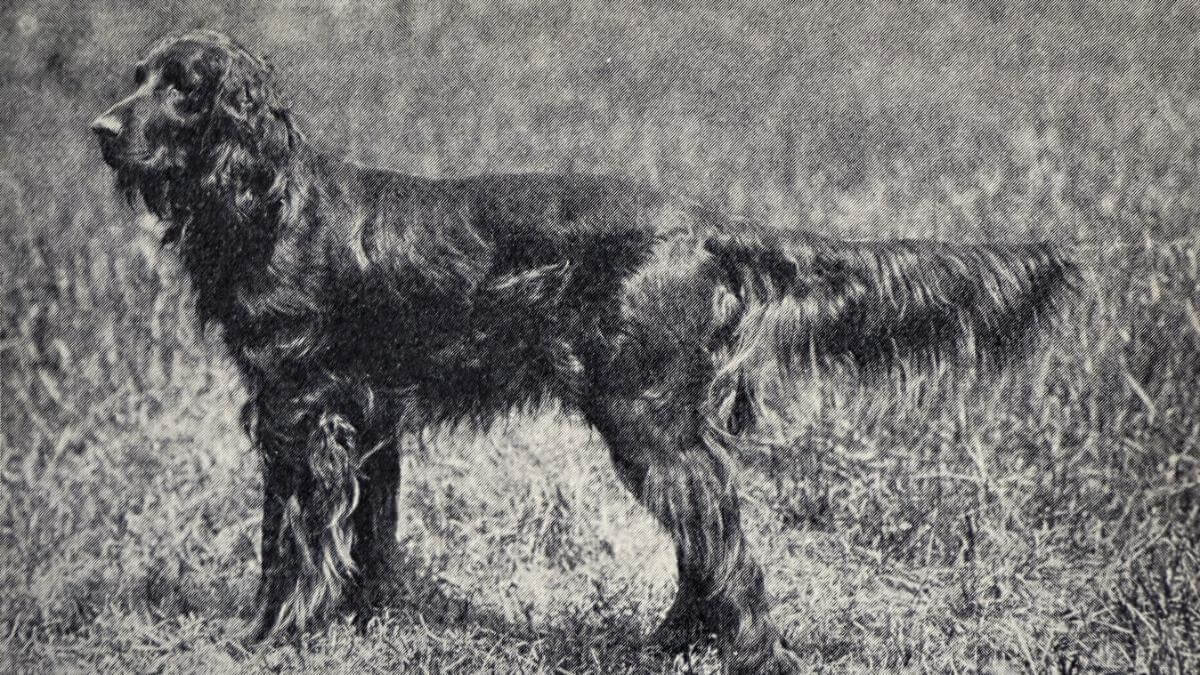
A historical look at field trials and bench shows in early 20th-century America, exploring their role in sporting dog evaluation.

Meet the Breeders
Laura Heidrich of Laurent Kennel shares insights from decades breeding champion Cocker Spaniels, Pointers & Irish Setters.
Meet the Breeders
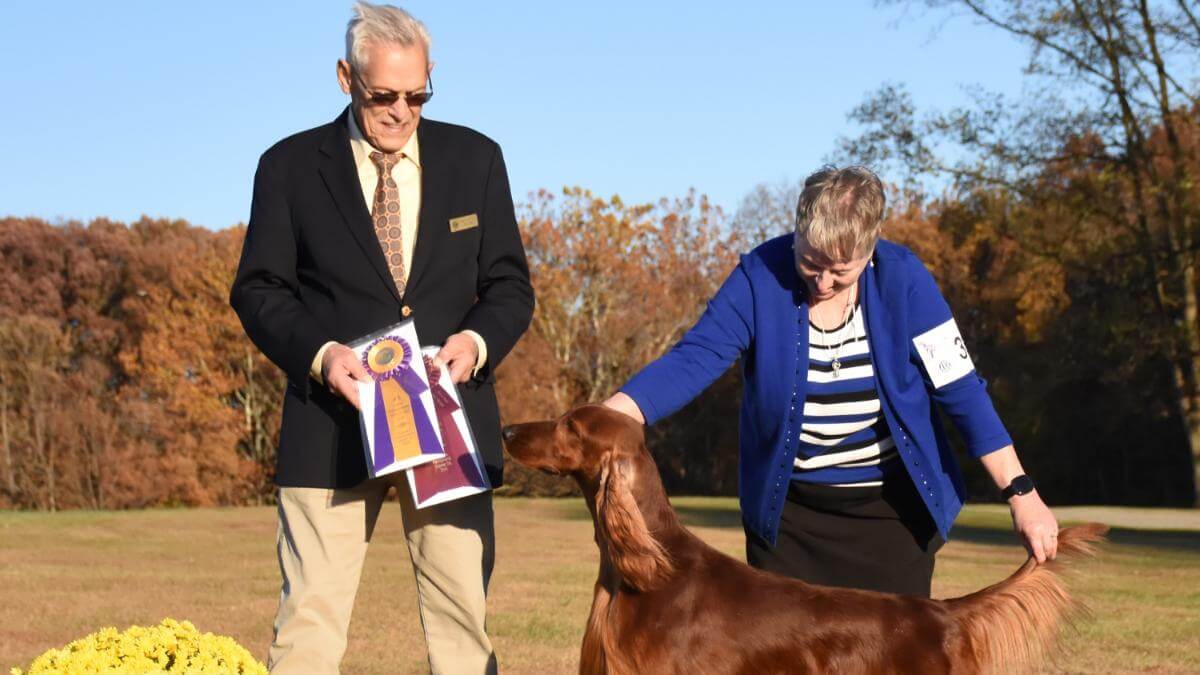
Patty Fanelli of Kinloch Irish Setters shares her decades-long dedication to breeding elegant, spirited champions with timeless appeal.
Explore the ISCA Foundation’s mission to enhance the lives of Irish Setters through education, research, and community support.

Dog Shows
Explore the Irish Setter’s dual nature excelling in show and field, highlighting the breed’s resurgence in Dual Championship titles.
The Irish Setter’s tail is one of the breed’s most beautiful and attractive features. Other than being just plain beautiful, the tail represents the most expressive part of this setter’s structure by showing the happy and outgoing nature of the breed. The tail should flow naturally as an extension of the sloping topline. Tail carriage is ideally close to being level with, or below, the back. In the field, the movement of the tail shows the dog's current interest. When at full speed, the tail of an Irish Setter acts as a rudder and a flag. While on point, the tail is rigid with intensity.
A Note About Color: The Irish Setter can exhibit a small amount of white on the throat, chest, or toes. A narrow, centered streak of white on the head is also acceptable; however, black hairs are not acceptable.
Coat Type
Silky
The structure of the coat this breed carries.
Coat Length
Medium
How long the breed's coat grows when kept in condition.
Adaptability Level
How easily a breed copes with changes in home, routine, noise and weather.
Mental Stimulation Needs
How much a breed needs a job, a puzzle or training to stay content.
An Irish Setter is a slow-maturing breed. Its puppylike enthusiasm will be displayed for several years, which makes the breed a perfect companion for active, older children. This breed can, however, be overwhelming for toddlers.
Overall, this breed is really friendly. It doesn’t matter if kids, adults, or even other dogs are in question, the Irish Setter will welcome one and all and initiate play. The breed can also be quite sensitive, so these dogs don’t really enjoy being alone for too long. They thrive on companionship and can become quite attached to their families. Although not being much of a guard dog, the breed is known for stepping in to protect its family if needed.
The Irish Setter is known as a canine athlete, so these dogs need to be fed a high-quality, balanced diet full of protein to support the breed’s energy needs and overall health. Protein sources such as chicken, lamb, and beef are essential for the dog's growth and development. They also supply the nutrients required to increase amino acid production, which is essential for the development and maintenance of healthy skin, tendons, muscles, hair, nails, and ligaments. Furthermore, without high-quality protein, a dog may be deficient in nutrients required for appropriate hormone production.
When it comes to feeding, it is important to measure portions according to the weight, age, and energy level of the dog. The recommended daily amount is 2 to 3 cups, divided into two meals, which helps to keep sugar levels stable while avoiding potential bloat.
Irish Setter puppies should be fed up to four times a day. Puppies usually require more food than adults do in order to grow up strong and healthy. During the first six months of their lives, some puppies may require up to three times the amount of food as an adult Irish Setter, just to maintain their energy and growth.
Meat, bone, offal, and a small amount of plant sources are all significant components of an Irish Setter's diet, each providing highly useful vitamins and minerals. A raw meal contains 70% moisture/water on average, which helps to keep the Irish Setter hydrated.
The Irish Setter is known for its friendly and outgoing disposition, which often translates into an eager-to-please attitude during training sessions. However, novice dog owners should be aware that this breed is also characterized by its high energy and a sometimes mischievous nature, which can occasionally make training a bit of a challenge.
Irish Setters are intelligent and can grasp commands quickly, but their playful and independent spirit sometimes comes into play, leading them to be easily distracted. Early socialization and consistent training from a young age are essential for the Irish Setter. Positive reinforcement techniques, such as treats and praise, tend to work best with this breed.
One potential challenge when training an Irish Setter is its tendency to bark. While these dogs aren't excessive barkers, they can be vocal when bored or left alone for extended periods. It's essential to address any excessive barking behavior early on and provide them with enough mental and physical stimulation as prevention measures.
Regarding their intelligence, Irish Setters are quick learners. However, their intelligence also means they can be a bit headstrong, so it's crucial for owners of these dogs to establish themselves as “top dog” early on. This will help to make training more straightforward and ensure commands are easily understood and readily followed.
Wanderlust potential is something to be aware of with the Irish Setter. The breed is known to have a somewhat strong prey drive, owing to its hunting lineage. This means an Irish Setter might chase after small animals or wander off if it catches an enticing scent. A securely fenced yard and a reliable recall command are vital for this breed.
Grooming Expectations
Irish Setters should be brushed at least every other day to keep their coats shiny and tangle-free. Bathing is not essential more than a couple of times a year, as long as it’s regularly brushed. This breed will need bathing only if the dog rolls in something dirty and stinky. Ear infections are not uncommon in breeds with pendant, or hanging, ears. Therefore, it is important to check the Irish Setter's ears once a week and clean them with a cotton ball soaked with a veterinarian-recommended cleanser. Never insert cotton swabs or anything else into the ear canal as this may cause injury. If the inside of an Irish Setter's ear smells unpleasant, seems red or sensitive, or the dog shakes his head or scratches at his ear regularly, the dog may have an ear infection. The Irish Setter's teeth should be brushed at least twice a week to remove plaque and bacteria. Brushing twice a day is even preferable to avoid gum disease and foul breath. If the dog doesn't naturally wear down its nails, they should be trimmed once or twice a month. Nails are too long if they can be heard clicking on the floor. Short, carefully trimmed nails maintain the feet in good shape and guard against scratches on your legs when your Irish Setter rushes up to greet someone. The Irish Setter can be one of the high-maintenance breeds when it comes to grooming, so patience is key. It’s important to always remember that grooming is not just about keeping the dog beautiful. It is also about monitoring the dog’s overall health and general well-being.