01/Overview
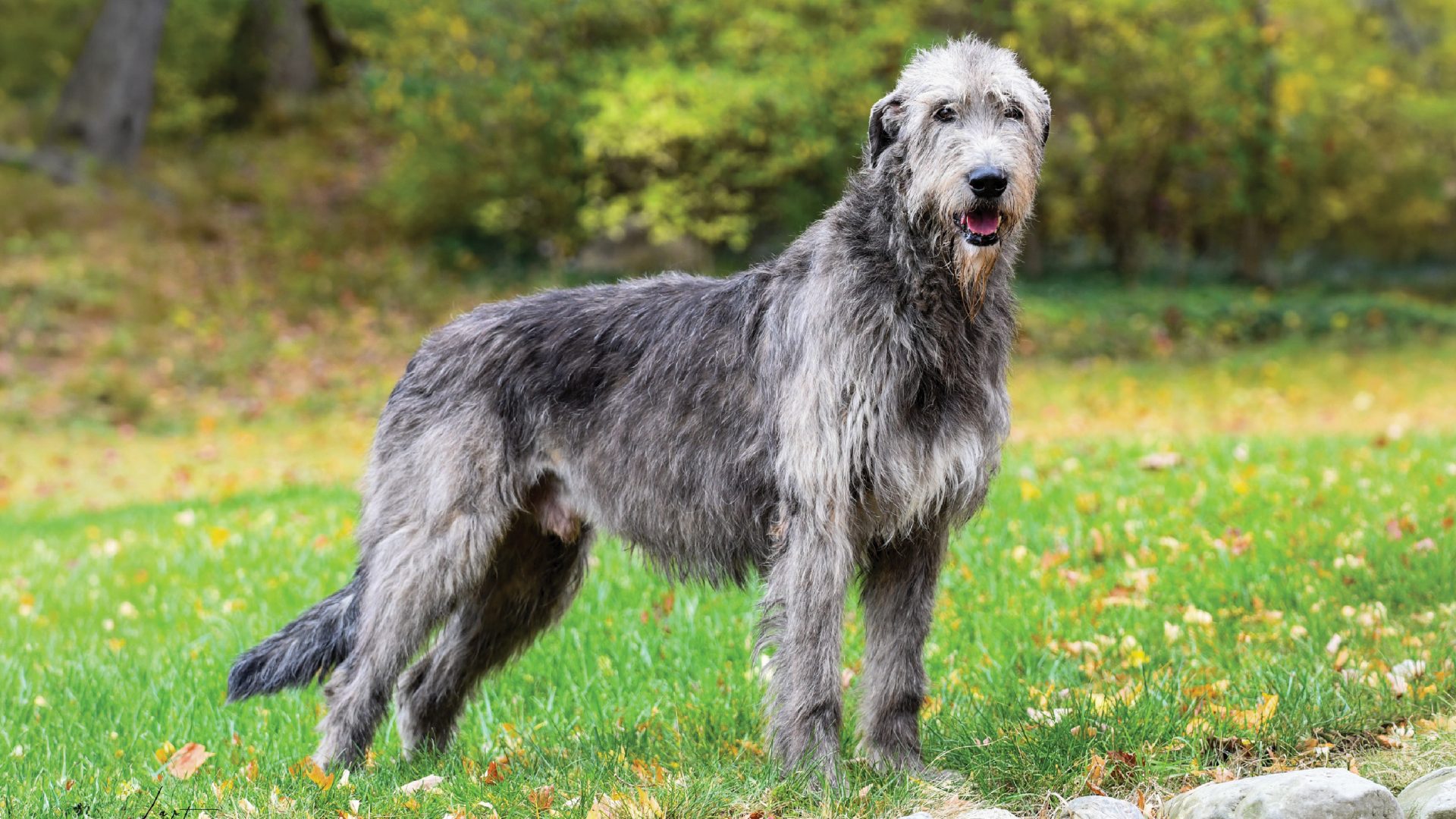
The Irish Wolfhound, hailed as the "gentle giant" of the canine world, stands as a symbol of grace, power, and antiquity. Hailing from Ireland, where it was originally known as cú faoil, the breed is renowned for its immense size and gentle temperament as well as for its legendary history. The Wolfhound's kind-hearted nature obscures its ancient use as a hunter of stag, boar, and wolf.
Highlights
02/History
The Irish Wolfhound, often referred to as a gentle giant, boasts an ancient lineage that traces back thousands of years. The breed's history is steeped in folklore and is as majestic and intriguing as the big dog itself.
Originating from Ireland, as its name suggests, the Irish Wolfhound was primarily used as a dog of war and as a hunting companion. Historical accounts, some dating as far back as Roman times, speak of the breed's prowess at hunting large game, particularly wolves and elk. The dog's size, strength, and speed made them formidable hunters, capable of taking down the most challenging prey. It has been said Wolfhound's were so efficient in their task that they played a significant role in the extinction of the Irish elk and the wolves of Ireland.
Apart from hunting, Irish Wolfhounds also played a crucial role in battles and in wars. They were used to pull men off horses and chariots, displaying both courage and loyalty on the battlefield. Their intimidating presence made them invaluable assets in combat situations.
Over time, as wolves became scarce in Ireland, the need for the Wolfhound declined. By the 19th century, the breed was on the brink of extinction. However, dedicated breed enthusiasts, particularly Captain George Augustus Graham, took it upon themselves to preserve and revive the breed. Graham and others crossbred the remaining hounds with other large breeds, including the the Great Dane and Scottish Deerhound, ensuring the continuation of the breed's lineage.
The Irish Wolfhound ultimately garnered official recognition from major kennel clubs around the world. The American Kennel Club (AKC) recognized the breed in the late 19th century, classifying it as a member of the Hound Group. Meanwhile, the Fédération Cynologique Internationale (FCI) acknowledged the breed as part of its group of Sighthounds. The Royal Kennel Club in the UK has also been an advocate for the breed, upholding its Breed Standard and promoting its growth throughout the United Kingdom.
Today, the Irish Wolfhound stands not as a fierce hunter or warrior but as a beloved family companion and show dog. The breed's noble history is a testament to its versatility, adaptability, and resilience.
03/Appearance
Adult male Irish Wolfhounds typically measure 32 inches or more at the withers, while mature females usually stand at a height that exceeds 30 inches.
In terms of weight, mature males generally weigh in excess of 120 pounds, whereas adult females typically weigh in at 105 pounds or more.
The Irish Wolfhound is an imposing yet graceful sighthound, with a length that’s slightly longer than its height. The overall construction of the hound is one that combines power without compromising elegance. The breed's substantial frame is well-muscled, ensuring strength as well as agility. A deep chest and long, strong limbs are a testament to the Wolfhound's historic role as a hunter of formidable and fast-moving game.
Texture: The coat of the Irish Wolfhound is rough and hard in texture, especially long and wiry over the eyes and under the jaw. It's a medium-length coat that serves to protect the hound from adverse weather conditions and the rough terrain on which it has historically hunted. Wooly or silky coats are unacceptable as they do not provide adequate protection in all types of weather.
Standard Colors
04/Consider
Choosing to bring an Irish Wolfhound into the home is a decision that comes with responsibility, especially given the breed's size and specific needs. Known for their gentle temperament and majestic stature, these giants of the dog world have captivated hearts for centuries. Today's prospective owners, however, should be aware of the breed's unique requirements to be able to provide a relationship that's harmonious for everyone.
Interaction With Family
The level of affection a breed typically shows towards family members and familiar individuals.
Good With Other Dogs
The innate friendliness of a dog towards other dogs can depend on its breed.
Good With Young Children
The degree to which a breed will typically be patient with young children.
Amount Of Shedding
How much hair a breed typically leaves behind on clothes, furniture and floors.
Frequency Of Grooming
How often a breed needs brushing, bathing or a professional trim to stay in condition.
Amount Of Drooling
How prone a breed is to drool — worth knowing before you keep a towel by the door.
Openness To Strangers
How openly a breed tends to greet new people, visitors and strangers.
Protective Nature
How likely a breed is to alert you to — and stand between you and — anything unfamiliar.
Playfulness Level
How enthusiastic a breed stays about games and play well past puppyhood.
Trainability Level
How readily a breed takes direction and works with you rather than around you.
Barking Level
How much a breed uses its voice, and how readily.
Energy Level
How much get-up-and-go a breed brings to an average day.
Health
The Irish Wolfhound, like all breeds and mixed breeds, can be predisposed to certain health conditions. Overall, dogs of this breed are robust, but given their size, they can sometimes be prone to issues that are common to giant dogs. Regular check-ups with a veterinarian who is familiar with the needs of this breed are essential. Lifespan: Irish Wolfhounds, on average, have a life expectancy of around 6 to 8 years. However, with proper care and attention to the hound's health needs, it's not uncommon for some to live longer.
The personality of the Irish Wolfhound is that of gentle introspection, deep loyalty, and an almost regal calmness. For anyone wondering if the breed is suitable for novice owners, it is essential to consider a few factors.
While the Wolfhound's temperament is forgiving and patient, the breed's significant size and specific needs can be a challenge for those who are unfamiliar with caring for a giant dog. However, with proper guidance and a commitment to understanding the needs of the breed, a first-time owner can have a rewarding relationship with the breed.
When it comes to their sensitivity level, Wolfhounds are known to form deep bonds with their families. This sensitivity means they thrive best in environments where they are included as part of daily activities and are not left alone for extended periods. Prolonged solitude can lead to feelings of isolation and sadness.
As prospective owners consider how an Irish Wolfhound might fare with other dogs, it is comforting to know they generally get along well with their canine counterparts. The breed's gentle nature means these hounds can coexist harmoniously with most other pets, although early socialization will always help to encourage smooth interactions.
Many potential owners of Wolfhounds ask about the breed's suitability around young children. With its calm disposition, this breed is typically good with kids. However, due to its size, supervision is always recommended, especially when this giant hound is around very young children. Safety is an essential concern in this case, for both the kids and the dog.
Exercise Expectations
For anyone contemplating the exercise needs of an Irish Wolfhound, it's important to understand that short daily walks and occasional sprints in a secured area are often enough. This breed has a moderate energy level, which means they aren't as demanding as some smaller, high-energy breeds. However, regular movement that's carefully monitored can help to prevent obesity and will keep muscles toned. In terms of intensity, Wolfhounds do enjoy moments of playfulness, especially when they are puppies. As they mature, they tend to mellow and become more laid-back, but they still enjoy play sessions with their families. Offering them toys or interactive playtime can be a great way to bond and provide them with the mental and physical stimulation they need. Lastly, while the Irish Wolfhound might appear stoic and composed, they have a playful side. Engaging in play sessions, offering them toys, and even participating in Agility or Lure Coursing can be a delightful experience for both the dog and the dog's handler. Whatever the activity, it is important to be sure that any vigorous activity is suitable for the hound's age and health, and to always provide an opportunity for rest and recovery.
Living with an Irish Wolfhound can be a truly rewarding experience, given the breed's gentle temperament and affectionate nature. These giant dogs, despite their imposing stature, often see themselves as lap dogs and crave close companionship with members of their family.
When considering the suitability of the breed for apartment living, it may come as a surprise that an Irish Wolfhound can adapt easily to small environments, provided it receives adequate exercise. However, space can be a real concern due to the hound's size. Ideally, a home with a yard where the dog can stretch its legs would be perfect, although it's the quality of time and exercise given, not necessarily the living space, that matters most.
Weather sensitivity is another aspect to consider. Irish Wolfhounds have a dense undercoat that offers some protection against cold weather, but they're not suited for extremely cold temperatures for prolonged periods. On the flip side, their thick coat can make them more susceptible to overheating in hot weather. During warm weather periods, it's essential to provide them with a cool resting place and make sure they have access to fresh water at all times.
05/Puppies
Irish Wolfhound puppies, like those of many giant breeds, grow rapidly and undergo a significant transformation in their first year. With their long legs, soft eyes, and playful demeanor, puppies of this breed can easily win the hearts of those around them. While they might look adorable and small for a short period, it's important to remember these pups will grow into one of the largest dog breeds in the world. As such, early socialization and training, and understanding of their unique growth needs, are crucial first steps for supporting a healthy and happy adulthood.
Caring for an Irish Wolfhound puppy demands a lot of attention, especially in terms of diet and exercise. Given the pup's rapid growth, a balanced and nutritious diet is essential to ensure proper bone and muscle development. It's also important to consult with a veterinarian or a breed-specific expert on dietary recommendations.
Exercise is a vital aspect of puppy care too, but it must be approached with caution. Over-exercising a young Wolfhound can put undue stress on the developing bones and joints, leading to potential health issues later on. Short, controlled play sessions and brief walks are best until the pup reaches maturity.
Additionally, Irish Wolfhounds are sensitive as puppies, both physically and emotionally. They thrive on human companionship and should be included in daily family activities.
Lastly, while they may have a gentle demeanor, basic obedience training and early exposure to new people, places, and pups are crucial. These experiences help to ensure the Irish Wolfhound puppy grows up to be a well-mannered and sociable adult, given its enormous size and considerable strength.
06/Activities
The Irish Wolfhound, with its rich history as a hunting and war dog, has transitioned beautifully into the modern world, becoming a beloved family companion. Yet, the breed's innate athleticism and sharp senses remain, making these hounds ideal candidates for a range of dog sports and activities.
It's vital for owners and handlers of Irish Wolfhounds to remember the unique needs of this giant breed. Proper care, nutrition, and ensuring they are not over-exerted, especially in their formative years, will set them up for success in any activity they pursue.
Gallery
07/Standards
The Irish Wolfhound is recognized by the world's leading registries and kennel organizations, which categorize the breed into a specific Group based on its unique characteristics. This breed is recognized worldwide under the following Group designations:
The ideal Irish Wolfhound is described by a Breed Standard that is approved by each of the world’s leading registries and kennel organizations. The Breed Standards for this breed may be found in the following links:
08/Clubs
09/Rescue
10/Facts
Literary Mention
The Irish Wolfhound has been mentioned in ancient texts and contemporary literature. From Roman records to old Irish proverbs and legends, this breed has long been a symbol of bravery and loyalty.
Gentle Giant
Despite their imposing size, Irish Wolfhounds are known for their gentle and affectionate nature. They often believe they're lap dogs, not realizing their enormous size.
Former War Dog
Historically, Irish Wolfhounds were not just hunters but also war dogs. They were employed to drag enemy warriors off horseback, showcasing their strength and training.
Speed
For such a large dog, the Irish Wolfhound can be surprisingly swift. Individuals of this breed have been clocked at speeds up to 35 miles per hour.
Short Lifespan
One of the sadder facts about the breed is its relatively short lifespan. On average, the Irish Wolfhound lives for about 6-8 years, though with proper care, some can reach 10 years or more.
National Symbol
The Irish Wolfhound is considered a symbol of Ireland, much like the shamrock or harp. It has been associated with Irish culture and folklore for centuries.
Low Barking Tendency
Unlike some breeds, Wolfhounds aren't known to be excessive barkers. They usually bark only when they have a real reason to do so.
Mascot Material
Due to their impressive size and demeanor, Irish Wolfhounds are often chosen as a mascot. Individuals have been mascots for various military regiments and sports teams.
11/FAQ
Irish Wolfhounds do shed, although not as heavily as some other dog breeds. Their coarse and wiry coat requires regular brushing to remove loose hairs and prevent matting, and regular grooming helps to manage and reduce the amount of hair that's found around the home.
Official Standard of the Irish Wolfhound
General Appearance: Of great size and commanding appearance, the Irish Wolfhound is remarkable in combining power and swiftness with keen sight. The largest and tallest of the galloping hounds, in general type he is a rough-coated, Greyhound-like breed; very muscular, strong though gracefully built; movements easy and active; head and neck carried high, the tail carried with an upward sweep with a slight curve towards the extremity. The minimum height and weight of dogs should be 32 inches and 120 pounds; of bitches, 30 inches and 105 pounds; these to apply only to hounds over 18 months of age. Anything below this should be debarred from competition. Great size, including height at shoulder and proportionate length of body, is the desideratum to be aimed at, and it is desired to firmly establish a race that shall average from 32 to 34 inches in dogs, showing the requisite power, activity, courage and symmetry.
Head: Long, the frontal bones of the forehead very slightly raised and very little indentation between the eyes. Skull, not too broad. Muzzle, long and moderately pointed. Ears, small and Greyhound-like in carriage.
Neck: Rather long, very strong and muscular, well arched, without dewlap or loose skin about the throat.
Chest: Very deep. Breast, wide.
Back: Rather long than short. Loins arched.
Tail: Long and slightly curved, of moderate thickness, and well covered with hair.
Belly: Well drawn up.
Forequarters: Shoulders, muscular, giving breadth of chest, set sloping. Elbows well under, neither turned inwards nor outwards.
Leg: Forearm muscular, and the whole leg strong and quite straight.
Hindquarters: Muscular thighs and second thigh long and strong as in the Greyhound, and hocks well let down and turning neither in nor out.
Feet: Moderately large and round, neither turned inwards nor outwards. Toes, well arched and closed. Nails, very strong and curved.
Hair: Rough and hard on body, legs and head; especially wiry and long over eyes and underjaw.
Color and Markings: The recognized colors are gray, brindle, red, black, pure white, fawn or any other color that appears in the Deerhound.
Faults: Too light or heavy a head, too highly arched frontal bone; large ears and hanging flat to the face; short neck; full dewlap; too narrow or too broad a chest; sunken or hollow or quite straight back; bent forelegs; overbent fetlocks; twisted feet; spreading toes; too curly a tail; weak hindquarters and a general want of muscle; too short in body. Lips or nose liver-colored or lacking pigmentation.
List of Points in Order of Merit 1. Typical. The Irish Wolfhound is a rough-coated Greyhound-like breed, the tallest of the coursing hounds and remarkable in combining power and swiftness. 2. Great size and commanding appearance. 3. Movements easy and active. 4. Head, long and level, carried high. 5. Forelegs, heavily boned, quite straight; elbows well set under. 6. Thighs long and muscular; second thighs, well muscled, stifles nicely bent. 7. Coat, rough and hard, especially wiry and long over eyes and under jaw. 8. Body, long, well-ribbed up, with ribs well sprung, and great breadth across hips. 9. Loins arched, belly well drawn up. 10. Ears, small, with Greyhound like carriage. 11. Feet, moderately large and round; toes, close, well arched. 12. Neck, long, well arched and very strong. 13. Chest, very deep, moderately broad. 14. Shoulders, muscular, set sloping. 15. Tail, long and slightly curved. 16. Eyes, dark. Note - The above in no way alters the "Standard of Excellence," which must in all cases be rigidly adhered to; they simply give the various points in order of merit. If in any case they appear at variance with Standard of Excellence, it is the latter which is correct.
Approved September 12, 1950
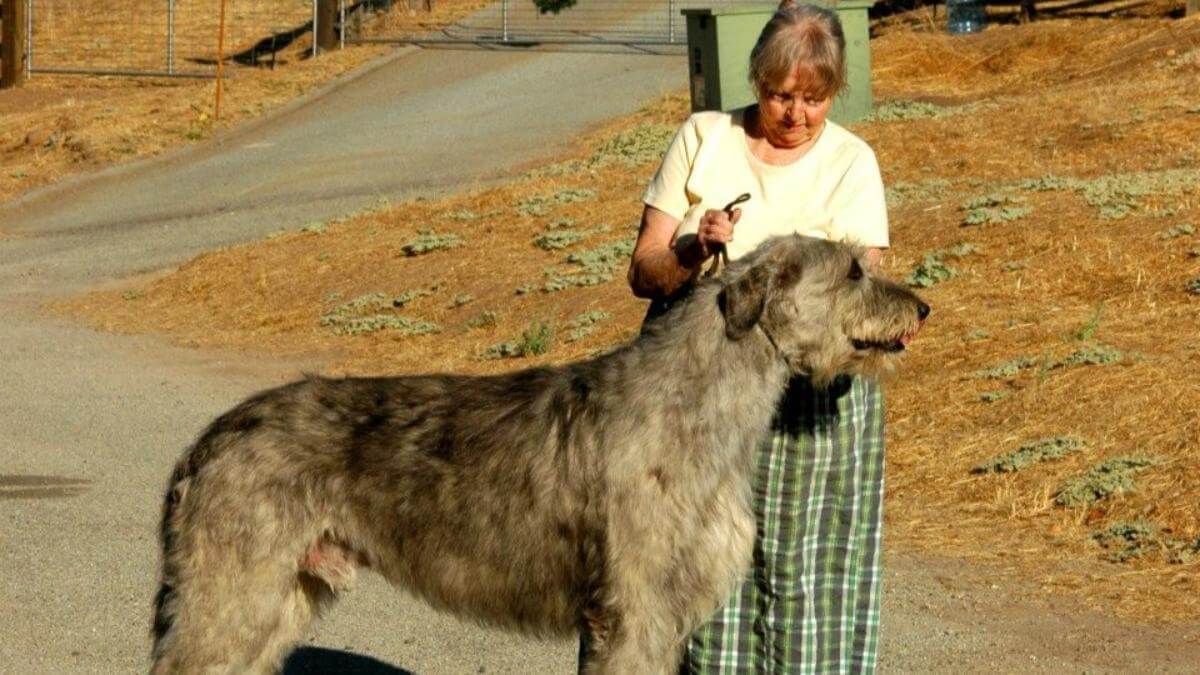

Explore the ancient origins, grandeur, and legacy of the Irish Wolfhound – history’s tallest and most majestic galloping hound.
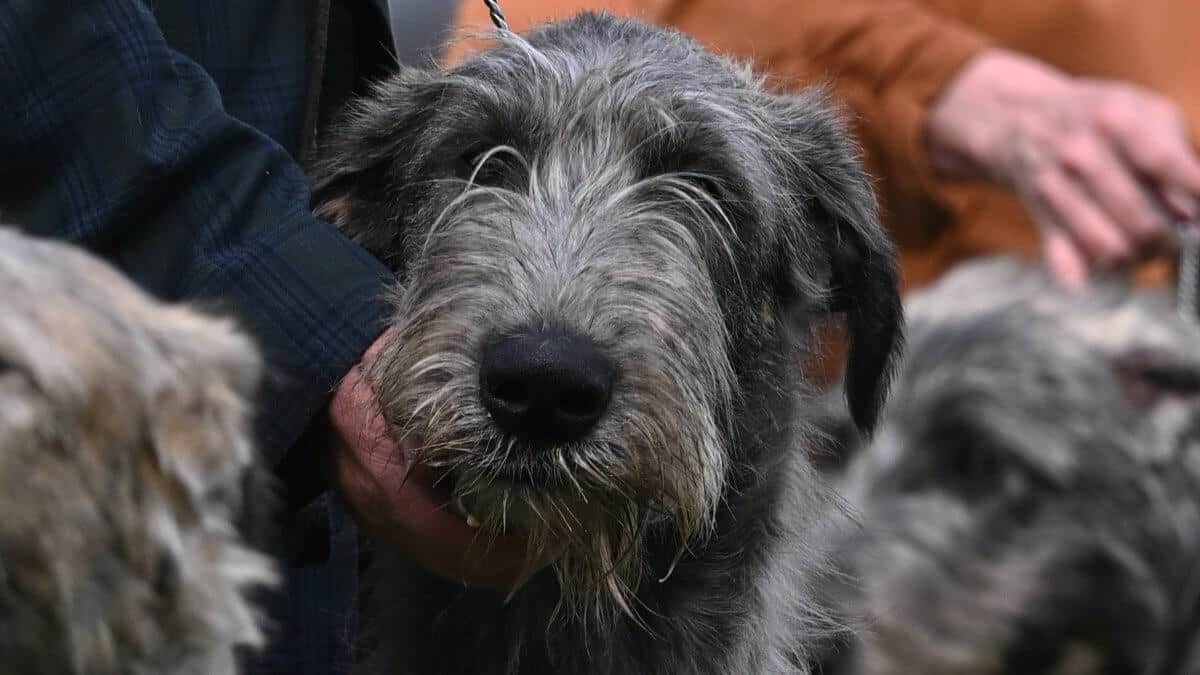

Dog Show Candids
Ringside photos from the Irish Wolfhound Club of America 95th National Specialty, which was held on May 26 – May 29, 2025, in Logan, Utah.

Meet the Breeders
Cheryl Riggs shares her journey in Irish Wolfhounds, breeding ethics, history, challenges, and the future of purebred dogs.
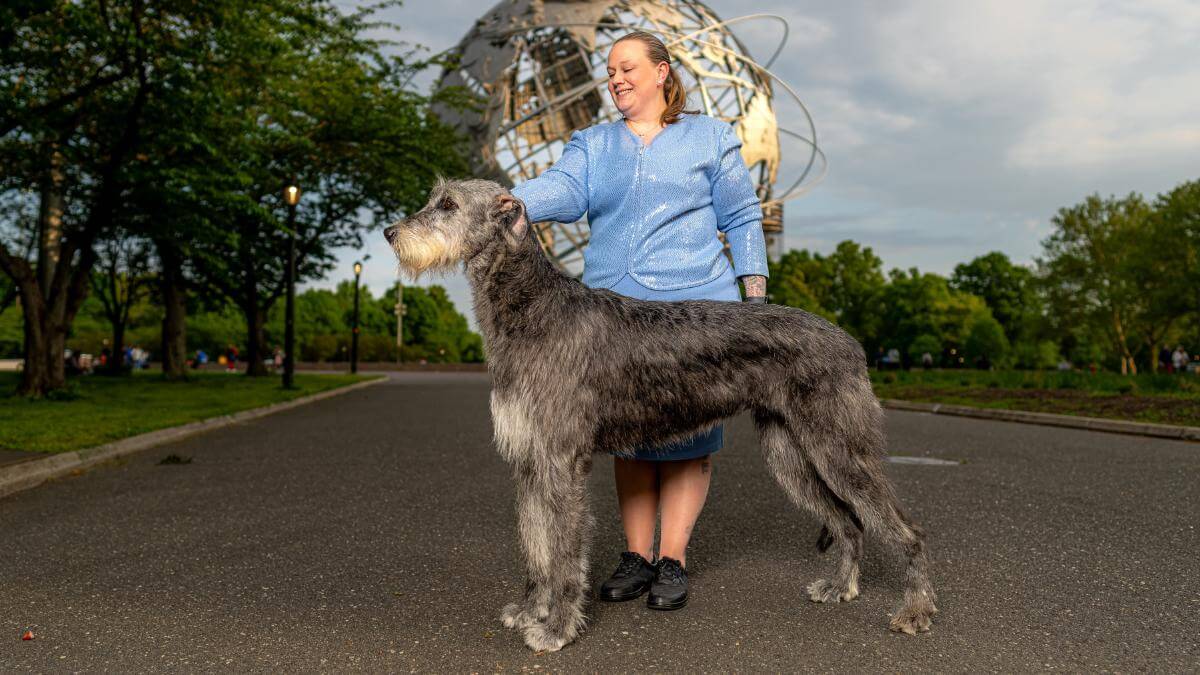
Meet the Breeders
Melissa Scofield, RVT, shares her journey with Irish Wolfhounds, breeding goals, and success as a dedicated Owner Handler.
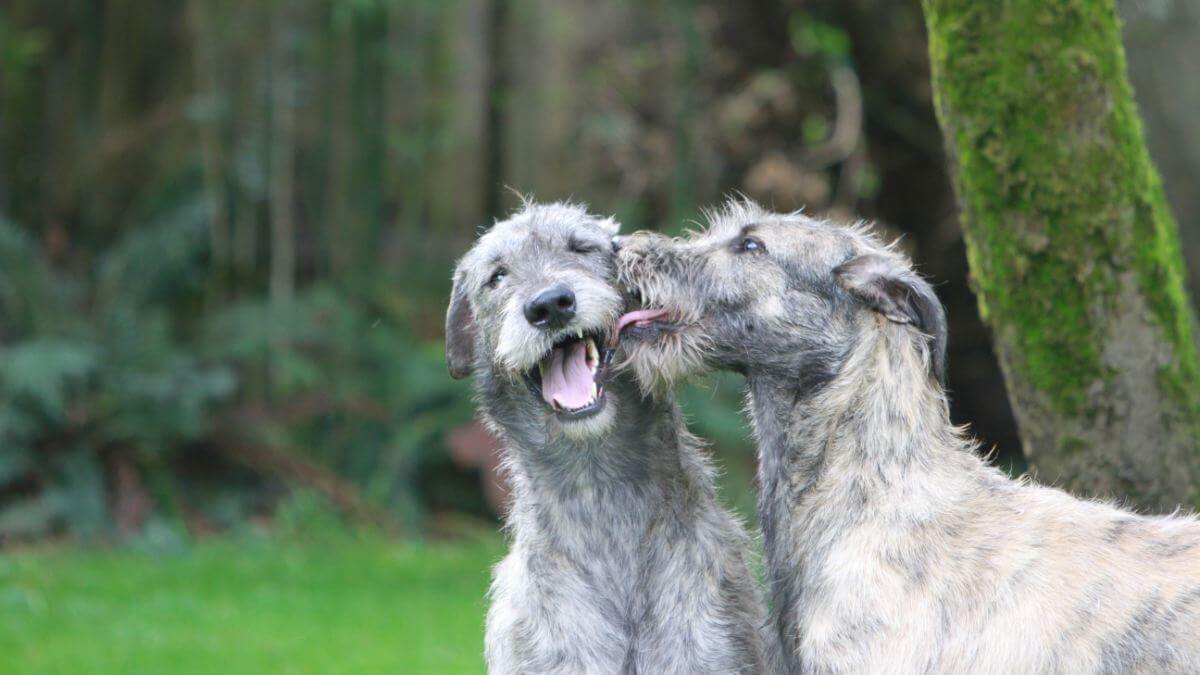
Dog Shows
Discover the timeless allure and rich legacy of Irish Wolfhounds, from ancient origins to cherished companions today.
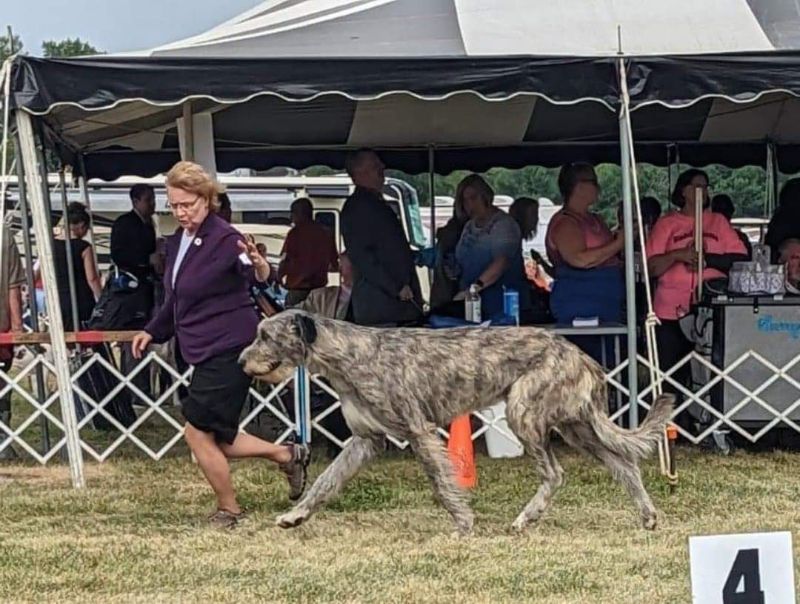
Meet the Breeders
Jeanie Pitzenberger is the breeder behind the Boondocks Irish Wolfhounds. Read about the kennel’s beginnings, the puppies, and much more!
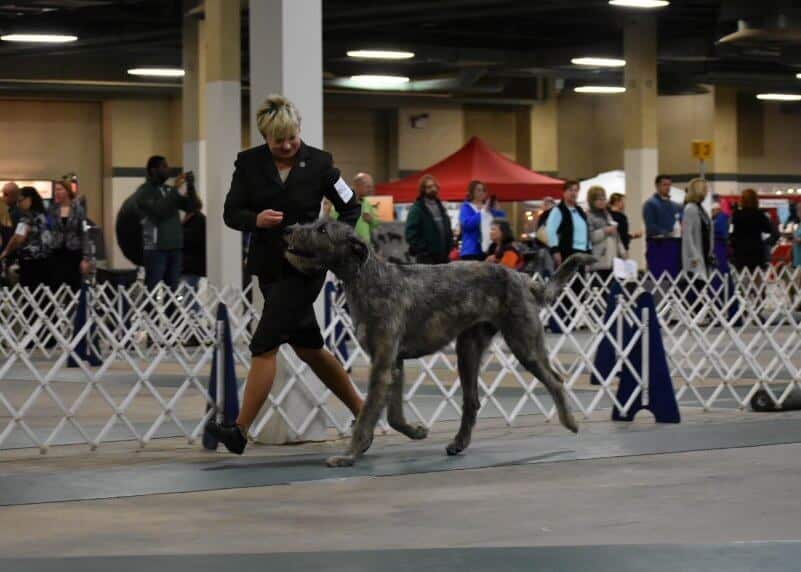
Meet the Breeders
Interview with Hound Group Breeder Gail Morad – I live in Michigan. I breed Irish Wolfhound dogs. My kennel is named Darom Irish Wolfhounds.
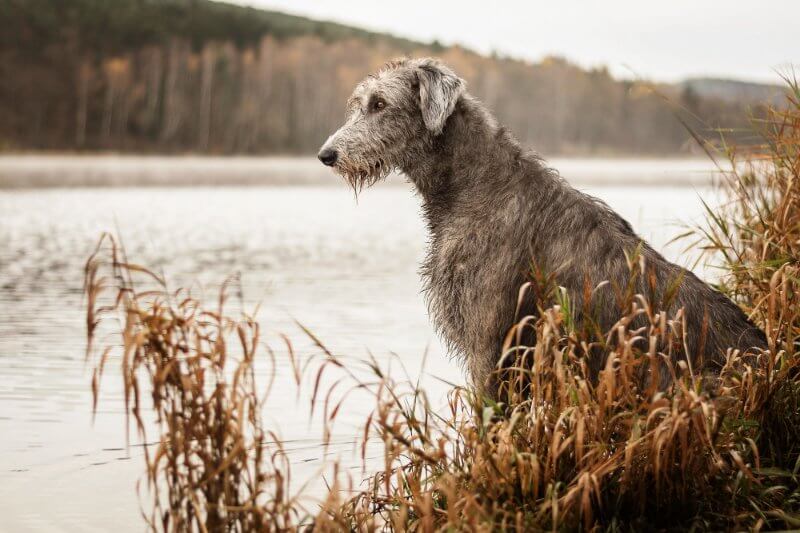
Meet the Breeders
Interview with Hound Group Breeder Jill Bregy – Wildisle Reg. Irish Wolfhounds – My kennel name is Wildisle reg. and it is registered with
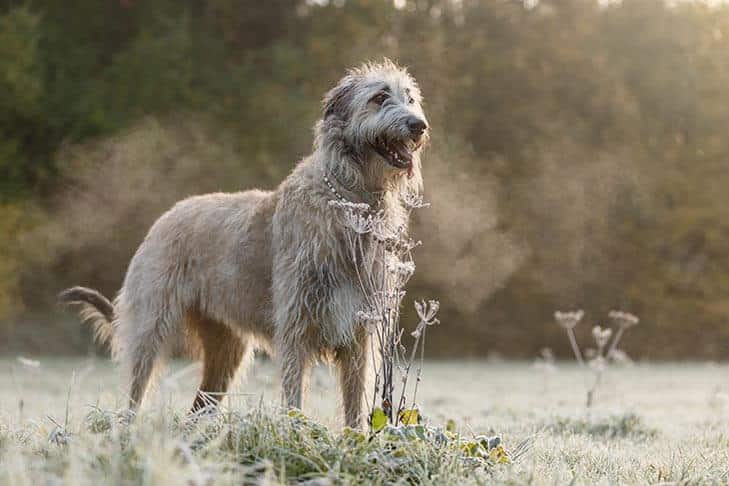
All About Judging
Judging Irish Wolfhounds – A Guide by Joel Samaha. Illustrations by Beverly Stobart and Robert Bernardi. The Irish Wolfhound Standard defines
The tail is long and moderately curved, but it does not curl over the back. It extends from a broad base and tapers to a point. In terms of placement, it is set on rather low. When the Wolfhound moves, the tail is carried with a slight upward arch; however, it is never raised above the level of the back. The coat on the tail is dense and rough, offering protection and adding to the hound’s distinguished appearance.
The Irish Wolfhound’s tail aids with balance and direction as the hound sprints after its quarry. When at rest, the tail hangs down, reaching beyond the hocks which showcases the breed's calm and composed demeanor.
Standard Markings
A Note About Color: The Irish Wolfhound hard and wiry coat comes in several recognized colors, including any color that appears in the Scottish Deerhound.
Coat Type
Wiry
The structure of the coat this breed carries.
Coat Length
Medium
How long the breed's coat grows when kept in condition.
Adaptability Level
How easily a breed copes with changes in home, routine, noise and weather.
Mental Stimulation Needs
How much a breed needs a job, a puzzle or training to stay content.
When it comes to meeting strangers, the Irish Wolfhound's historic usefulness as a guardian means these dogs can be reserved initially. However, once they sense there is no threat, they typically warm up and show their affectionate side.
Feeding an Irish Wolfhound appropriately is crucial to ensure it remains healthy and vibrant throughout their life. Given the breed's large size, the dietary needs of a Wolfhound are understandably greater than those of smaller breeds.
When thinking about feeding a Wolfhound puppy, it's important to provide a balanced diet that is rich in nutrients that support rapid growth. Puppies of the breed grow quickly, and their bones and muscles require just the right mix of protein, fats, and minerals. Premium puppy formulas designed specifically for large and giant breeds are recommended to meet these needs.
Feeding an adult Irish Wolfhound requires a slightly different approach. While it no longer grows at the same rate, the adult's large size means its diet should still be rich in protein, to maintain muscle mass, and it should be provided with balanced fats for energy. On average, an adult Wolfhound can consume between 4 to 8 cups of high-quality dog food daily, though this can vary based on age, activity level, and metabolism.
Speaking of the amount of food, it's not unusual for new Irish Wolfhound owners to seek guidance from feeding charts. While each dog is unique, and specific needs can vary, consulting with a veterinarian or a breed-specific guide can provide the ideal starting point.
It's typically advised to feed Irish Wolfhounds at least twice daily to prevent bloat, a condition for which deep-chested breeds can be susceptible. This routine not only aids in digestion but also helps in keeping a hound's energy levels consistent throughout the day.
Training an Irish Wolfhound can be a rewarding experience, especially given the breed's gentle nature and eagerness to please. Although this hound's majestic stature can sometimes be intimidating, beneath the imposing figure lies a sincere gentleness and a willingness to learn.
For those wondering about the ease of training a Wolfhound, it's worth noting that these big dogs are generally responsive to positive reinforcement techniques. Their intelligence means they can pick up commands relatively quickly; however, it's essential to remain patient and consistent throughout training sessions. Using treats, praise, and toys can effectively motivate these giants to follow commands and showcase their best behavior.
While the breed is not particularly known for being excessive barkers, the Irish Wolfhound can occasionally vocalize its feelings or alert its owners to something unusual. It's essential to understand the cause of the barking and address it appropriately. For instance, a Wolfhound might bark out of boredom, in which case increasing the dog's activity or providing it with interactive toys can help.
When it comes to the breed's intelligence, the Irish Wolfhound is undoubtedly considered a smart dog by those who them it well. These dogs have a keen understanding of their surroundings and can often sense the emotions of their owners. However, their independent nature can sometimes make them appear aloof or stubborn, so it's essential to establish leadership early on.
Regarding their wanderlust potential, it's not uncommon for Wolfhounds to be curious about their environment. Their history as a hunting dog has given them a certain level of prey drive. While they're generally good at staying within their assigned boundaries, it's always a good idea to have a secure fence and provide supervision when outdoors.
It bears repeating that a predation instinct is still present in the breed. This means they might occasionally chase after smaller animals, so early socialization and training can help with managing this instinct. It's important to always be aware of it, especially in areas with abundant wildlife.
Grooming Expectations
Irish Wolfhounds are moderate shedders. Regular brushing, about once a week, helps with removing the dead hair and prevents mats from forming. This will keep the coat looking its best and can provide an opportunity to check for skin issues or other health concerns. Additionally, other aspects of grooming should be done as needed. Nails can grow quickly and, if left unattended, can cause discomfort and even lead to foot problems. Checking the ears for signs of infection or wax buildup, and brushing the teeth to prevent dental issues, should also be part of a comprehensive grooming routine.