Members
01/Overview
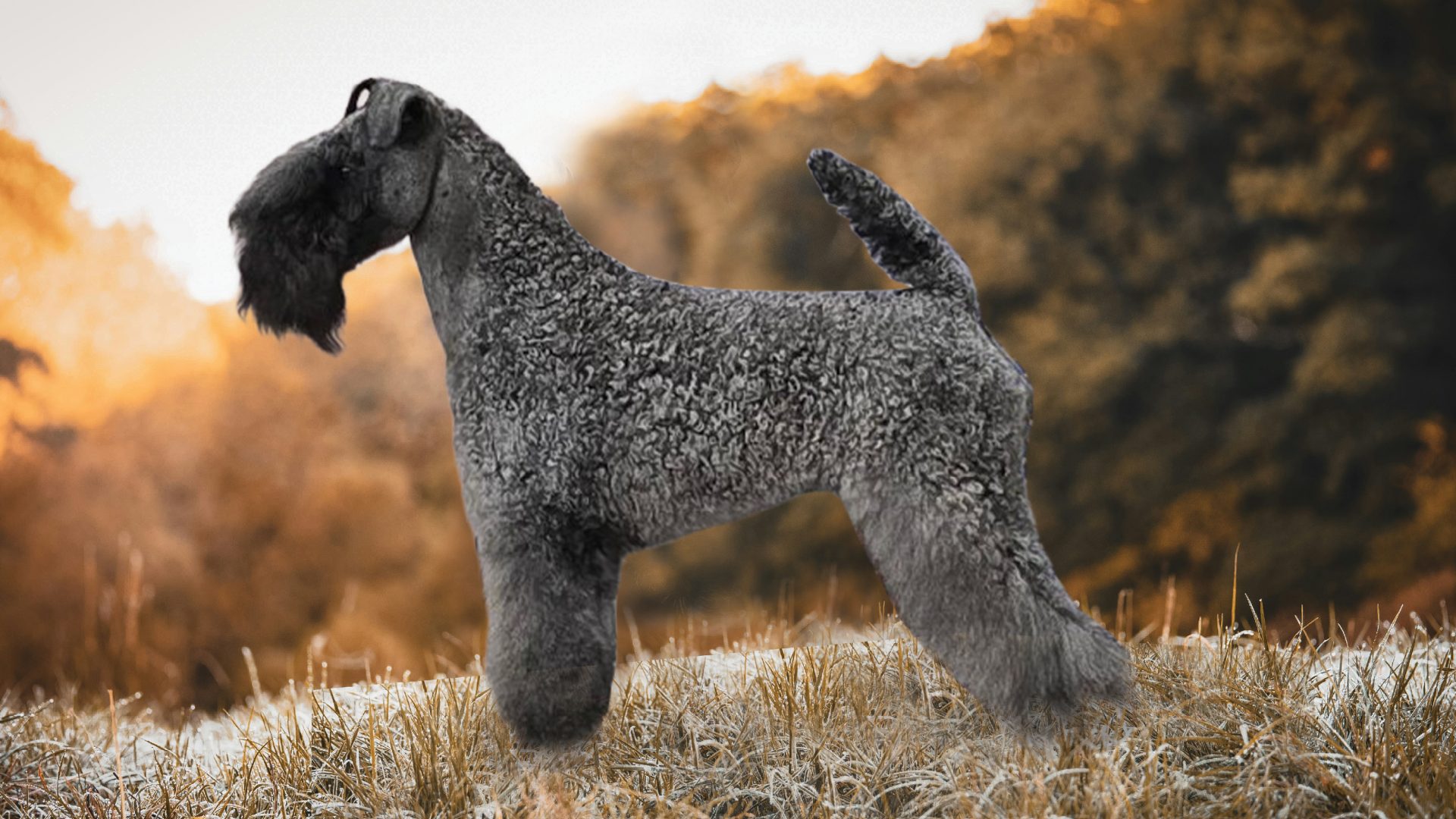
The Kerry Blue Terrier is a medium-sized terrier from Ireland known for its distinctive blue-gray coat, strong build, lively expression, and spirited character. Developed as a versatile farm and hunting dog, the breed combines intelligence, courage, and determination with a loyal and often playful personality.
02/History
The Kerry Blue Terrier originated in Ireland, particularly in County Kerry, where similar blue-coated terriers had been used for generations as all-purpose working dogs. Farmers valued them for their versatility, and the dogs were expected to handle a wide range of jobs rather than perform a single specialized task.
Kerry Blues were used to control rats and other vermin, hunt small game, guard property, and assist with livestock. They were also used for hunting Otters and other quarry, requiring strength, persistence, and the ability to work in difficult terrain.
The breed’s exact ancestry is not fully documented. It likely developed from native Irish terriers, with possible influence from other working dogs found in the region. Over time, selective breeding produced the characteristic soft, wavy coat and blue-gray coloring that distinguish the breed today.
Kerry Blue Terrier puppies are born black, with the coat gradually changing color as the dog matures. This progressive clearing process can take many months and is one of the breed’s most recognizable characteristics.
The breed became more prominent during the early twentieth century as Irish fanciers worked to establish a consistent type and promote it at organized dog shows. The Kerry Blue Terrier quickly became closely associated with Irish national identity and was one of the native breeds shown during the early development of organized canine competition in Ireland.
The Irish Kennel Club was founded in 1922, and the Kerry Blue Terrier played an important role in its early history. The breed was already gaining recognition beyond Ireland during this period and soon attracted interest in Britain and the United States.
The American Kennel Club recognized the Kerry Blue Terrier in 1922 and placed it in the Terrier Group. The United States Kerry Blue Terrier Club serves as the breed’s American Kennel Club parent club.
The Royal Kennel Club also recognizes the Kerry Blue Terrier in the Terrier Group. The Fédération Cynologique Internationale recognizes it as an Irish breed and places it in Group 3, Terriers, Section 1, Large and Medium-Sized Terriers.
03/Appearance
An adult male Kerry Blue Terrier stands 18 to 19.5 inches tall at the withers, while a mature female stands 17.5 to 19 inches tall. Males typically weigh 33 to 40 pounds, with females weighing somewhat less.
Skull: The Kerry Blue Terrier has a long, well-proportioned head with a flat skull and only a slight stop. The head should appear strong without becoming coarse or overly broad.
Expression: The expression is keen, alert, and intelligent, reflecting the breed’s confident and spirited character.
Eyes: The eyes are small, dark, and well placed, contributing to a sharp and attentive expression.
Ears: The ears are small to medium in size, V-shaped, and carried forward close to the cheeks. They are set high on the skull and should not appear heavy or overly large.
Muzzle: The muzzle is strong, deep, and well filled beneath the eyes, with powerful jaws and a clean outline.
Nose: The nose is black with large, open nostrils.
Bite: The Kerry Blue Terrier has strong white teeth that meet in a level or scissors bite, where the upper incisors slightly overlap the lower incisors.
The Kerry Blue Terrier is compact, well balanced, and strongly built, with a body that is close to square in proportion. The overall outline should convey strength, agility, and athletic ability without appearing heavy or coarse.
The chest is deep and moderately broad, with well-sprung ribs, a short back, and a strong loin. Bone is substantial in proportion to the dog’s size, providing the strength expected of a versatile working terrier while preserving freedom and efficiency of movement.
Texture: The Kerry Blue Terrier has a soft, dense, wavy coat without a harsh or wiry texture. The coat should be abundant and have a natural wave, giving the breed its distinctive appearance while remaining close enough to preserve the outline of the body.
Standard Colors
04/Consider
The Kerry Blue Terrier is intelligent, energetic, confident, and strongly attached to its family. Anyone considering the breed should be prepared for consistent training, early socialization, regular exercise, and frequent coat care.
Interaction With Family
The level of affection a breed typically shows towards family members and familiar individuals.
Good With Other Dogs
The innate friendliness of a dog towards other dogs can depend on its breed.
Good With Young Children
The degree to which a breed will typically be patient with young children.
Amount Of Shedding
How much hair a breed typically leaves behind on clothes, furniture and floors.
Frequency Of Grooming
How often a breed needs brushing, bathing or a professional trim to stay in condition.
Amount Of Drooling
How prone a breed is to drool, worth knowing before you keep a towel by the door.
Openness To Strangers
How openly a breed tends to greet new people, visitors and strangers.
Protective Nature
How likely a breed is to alert you to anything unfamiliar, and stand between you and it.
Playfulness Level
How enthusiastic a breed stays about games and play well past puppyhood.
Trainability Level
How readily a breed takes direction and works with you rather than around you.
Barking Level
How much a breed uses its voice, and how readily.
Energy Level
How much get-up-and-go a breed brings to an average day.
Health
The Kerry Blue Terrier is generally considered a healthy and sturdy breed with a typical lifespan of 12 to 15 years. Preventive veterinary care, balanced nutrition, regular exercise, good dental hygiene, and maintenance of a healthy weight can help support long-term health.
The Kerry Blue Terrier is confident, intelligent, energetic, and deeply loyal to its family. It often has a strong personality and may be both playful and independent, especially when it decides that something else is more interesting than the task at hand.
The breed can be affectionate with familiar people but may be reserved or assertive around unfamiliar dogs. Early socialization is important, and careful introductions can help the Kerry Blue develop appropriate behavior around other animals and new situations.
Kerry Blue Terriers can live successfully with respectful children, particularly when raised with them. Their strength and enthusiastic play style may be better suited to families with older children.
Exercise Expectations
A healthy adult generally benefits from about 60 minutes of activity each day, although particularly energetic individuals may need more. Scent games, retrieving, puzzle toys, and dog sports can provide additional mental engagement. Because the breed may have a strong prey drive and can be assertive around other dogs, off-leash exercise should take place only in a securely enclosed area.
Grooming Expectations
The Kerry Blue Terrier can often adapt to apartment living when given enough exercise, training, and mental activity. Its energy level, alert nature, and strong personality may require additional management in smaller homes.
A securely fenced yard can provide space for play, but outdoor time should not replace walks, training, and interaction with the family. The breed generally prefers living indoors and remaining involved in daily household life.
The Kerry Blue Terrier usually does best in a household that appreciates its intelligence, confidence, and independent character. Regular companionship, consistent routines, and structured activity help the breed thrive.
05/Puppies
Kerry Blue Terrier puppies are lively, curious, and quick to learn. Early routines, positive socialization, patient training, and regular grooming will help any pup develop into a confident and well-mannered adult.
A Kerry Blue Terrier puppy benefits from a predictable daily schedule that includes regular meals, potty breaks, sleep, play, training, and quiet time. A crate or secure puppy area can provide a safe place to rest and support housetraining when direct supervision is not possible.
Early socialization should introduce the puppy to different people, well-mannered dogs, household sounds, surfaces, vehicles, and unfamiliar environments. These experiences should remain positive and appropriate for the puppy’s age.
Training can begin as soon as the puppy arrives home. Short sessions can introduce name response, recall, leash walking, basic manners, impulse control, and calm greetings. Because the breed can be confident and independent, consistent expectations are especially important from an early age.
A Kerry Blue Terrier puppy should receive a complete and balanced diet formulated for growth. Exercise should focus on supervised play, short walks, and gentle exploration rather than forced running or repetitive jumping while the puppy is still developing.
Regular veterinary visits are important during the first year. Grooming should also begin early so that the puppy becomes comfortable with brushing, combing, beard care, nail trimming, ear checks, tooth brushing, and general handling.
06/Activities
Kerry Blue Terriers are energetic, athletic, and intelligent dogs that often enjoy activities involving movement, scent, problem-solving, and close work with a handler. Here are some of the dog sports and activities in which Kerry Blue Terriers may participate:
Agility: Kerry Blue Terriers can use their speed, balance, and athletic ability while navigating obstacle courses.
Obedience: Obedience Trials allow the breed to demonstrate focus, accuracy, and cooperation with a handler.
Rally: Rally Obedience combines movement through a course with varied obedience exercises that can help keep training engaging for this intelligent breed.
Scent Work: Kerry Blue Terriers can search for specific odors hidden in containers, indoor spaces, outdoor areas, or vehicles.
Tracking: Tracking allows the breed to follow a scent trail across different types of terrain using concentration and persistence.
Fast CAT: This timed 100-yard dash gives the Kerry Blue Terrier an opportunity to use its speed and chasing instinct in a controlled setting.
Conformation Shows: Kerry Blue Terriers compete in Conformation Shows, where judges evaluate each dog according to the Breed Standard, including structure, movement, coat, expression, temperament, and overall type.
Trick Dog: Trick training provides mental stimulation and gives the Kerry Blue Terrier a productive way to use its intelligence and playful nature.
Therapy Work: A calm, friendly, and well-socialized Kerry Blue Terrier may visit hospitals, schools, assisted living facilities, and other settings to provide companionship.
Canine Good Citizen: Kerry Blue Terriers may participate in programs that evaluate everyday manners, social behavior, and reliability around people and other dogs.
Gallery
07/Standards
The Kerry Blue Terrier is recognized by the world’s leading registries and kennel organizations, which categorize the breed into a specific Group based on its unique characteristics. This breed is recognized worldwide under the following Group designations:
The ideal Kerry Blue Terrier is described by a Breed Standard that is approved by each of the world’s leading registries and kennel organizations. The Standards for this breed may be found in the following links:
08/Clubs
Kerry Blue Terrier clubs support breed education, responsible breeding, health initiatives, rescue work, and participation in Conformation Shows and performance events.
United States Kerry Blue Terrier Club: Established in 1922, this is the national breed club for the Kerry Blue Terrier in the United States and the breed’s AKC parent club.
Kerry Blue Terrier Club of Canada: Active since the early 1960s, Canada’s national organization for the Kerry Blue welcomes breeders, exhibitors, companion dog families, and other breed enthusiasts.
Kerry Blue Terrier Association: Founded in 1947, the national breed club in the UK promotes the Kerry Blue Terrier through dog shows and educational initiatives.
09/Rescue
Breed-specific rescue organizations help Kerry Blue Terriers that have been surrendered, abandoned, or found in shelters. These groups may provide foster care, veterinary treatment, behavioral evaluation, and placement with an appropriate adoptive family.
United States Kerry Blue Terrier Club Rescue: The breed’s AKC parent club provides rescue information and may help connect Kerry Blue Terriers in need with foster or adoptive homes across the United States.
Kerry Blue Terrier Foundation: The Kerry Blue Terrier Foundation supports breed health, welfare, and education and can provide information about rescue or rehoming resources.
Kerry Blue Terrier Club of Canada: Canada’s national breed club may provide guidance about Kerry Blues needing rescue, welfare support, or rehoming.
Kerry Blue Terrier Association: The United Kingdom breed club supports the welfare and rehoming of Kerry Blue Terriers and may assist people seeking to adopt or surrender a dog.
Because the Kerry Blue Terrier is a relatively uncommon breed, dogs available through dedicated rescue programs may be limited. Local shelters, broader terrier rescue organizations, adoption databases, and breed clubs can provide additional information about a Kerry Blue Terrier or Kerry Blue mix currently needing a home.
10/Facts
Named for County Kerry
The breed takes its name from County Kerry in Ireland, where blue-coated terriers were used as versatile working dogs.
Puppies Are Born Black
Kerry Blue puppies are born with dark coats that gradually lighten and develop the characteristic blue-gray color as they mature.
An All-Purpose Irish Farm Dog
The breed was used for ratting, hunting, guarding property, and helping with livestock.
Closely Tied to Irish Kennel History
The Kerry Blue Terrier played an important role in the early development of organized dog showing in Ireland and became closely associated with Irish national identity.
11/FAQ
Kerry Blue Terriers can make excellent pets for people who appreciate an intelligent, loyal, and energetic companion. They need consistent training, regular exercise, frequent grooming, and plenty of interaction with their family.

Written by
Dan Sayers is the Executive Editor of SHOWSIGHT. He is a member of the World Dog Press Association and the Dog Writers Association of America, which recognized his illustrations in the award-winning Encyclopedia of K-9 Terminology. Dan is a longtime supporter of the sport of dogs and an advocate for the conservation of recognized breeds in all their forms and functions. He is a member of the Morris and Essex Kennel Club, and for 45 years, the Irish Water Spaniel Club of America where he serves as AKC Delegate, Archivist, and approved Breed Mentor. Dan breeds under the Quiet Storm prefix and has judged the IWSCA National Specialty Sweepstakes twice.
Official Standard of the Kerry Blue Terrier
General Appearance: The typical Kerry Blue Terrier should be upstanding well knit and in good balance, showing a well-developed and muscular body with definite terrier style and character throughout. Correct coat and color are important. A low-slung Kerry is not typical.
Size, Proportion, Substance: The ideal Kerry should be 18½ inches at the withers for a dog, slightly less for a bitch. In judging Kerries, a height of 18 to 19½ inches for a dog, and 17½ to 19 inches for a bitch, should be given primary preference. Only where the comparative superiority of a specimen outside of the ranges noted clearly justifies it should greater latitude be taken. In no case should it extend to a dog over 20 inches or under 17½ inches, or to a bitch over 19½ inches or under 17 inches. The minimum limits do not apply to puppies. The most desirable weight for a fully developed dog is from 33 to 40 pounds, bitches weighing proportionately less. A well-developed and muscular body. Legs moderately long with plenty of bone and muscle.
Head: Long, but not exaggerated, and in good proportion to the rest of the body. Well balanced. Eyes -Dark, small, not prominent, well placed and with a keen terrier expression. Anything approaching a yellow eye is very undesirable. Ears - V-shaped, small but not out of proportion to the size of the dog, of moderate thickness, carried forward close to the cheeks with the top of the folded ear slightly above the level of the skull. A "dead" ear, houndlike in appearance, is very undesirable. Skull - Flat, with very slight stop, of moderate breadth between the ears, and narrowing very slightly to the eyes. Foreface full and well made up, not falling away appreciably below the eyes but moderately chiseled out to relieve the foreface from wedginess. Little apparent difference between the length of the skull and foreface. Jaws deep, strong and muscular. Cheeks-Clean and level, free from bumpiness. Nose - Black, nostrils large and wide. Teeth - Strong, white and either level or with the upper (incisors) teeth slightly overlapping the lower teeth. An undershot mouth should be strictly penalized.
Neck, Topline, Body: Neck - Clean and moderately long, gradually widening to the shoulders upon which it should be well set and carried proudly. Back short, strong and straight (i.e., level), with no appearance of slackness. Chest deep and of moderate breadth. Ribs fairly well sprung, deep rather than round. A slight tuck-up. Loin short and powerful. Tail should be set on high, of moderate length and carried gaily erect, the straighter the tail the better.
Forequarters: Shoulders fine, long and sloping, well laid back and well knit. The elbows hanging perpendicularly to the body and working clear of the side in movement. The forelegs should be straight from both front and side view. The pasterns short, straight and hardly noticeable. Feet should be strong, compact, fairly round and moderately small, with good depth of pad free from cracks, the toes arched, turned neither in nor out, with black toenails.
Hindquarters: Strong and muscular with full freedom of action, free from droop or crouch, the thighs long and powerful, stifles well bent and turned neither in nor out, hocks near the ground and, when viewed from behind, upright and parallel with each other, the dog standing well up on them.
Coat: Correct coat is important it is to be soft, dense and wavy. A harsh, wire or bristle coat should be severely penalized. In show trim the body should be well covered but tidy, with the head (except for the whiskers) and the ears and cheeks clear.
Color: Color is important. The correct mature color is any shade of blue gray or gray blue from the deep slate to light blue gray, of a fairly uniform color throughout except that distinctly darker to black parts may appear on the muzzle, head, ears, tail and feet. Kerry color, in its process of "clearing," changes from an apparent black at birth to the mature gray blue or blue gray. The color passes through one or more transitions-involving a very dark blue (darker than deep slate), shades or tinges of brown, and mixtures of these, together with a progressive infiltration of the correct mature color. The time needed for this "clearing" process varies with each dog. Small white markings are permissible. Black on the muzzle, head, ears, tail and feet is permissible at any age. A black dog 18 months of age or older is never permissible in the show ring and is to be disqualified. Disqualification - A black dog 18 months of age or older is to be disqualified. (White markings on a black dog 18 months of age or older does not constitute clearing or mature color and the dog is to be disqualified.)
Gait: Full freedom of action. The elbows hanging perpendicularly to the body and working clear of the sides in movement; both forelegs and hind legs should move straight forward when traveling, the stifles turning neither in nor out.
Disqualifications: A black dog 18 months of age or older is to be disqualified. (White markings on a black dog 18 months of age or older does not constitute clearing or mature color and the dog is to be disqualified.)
Approved October 10, 2005
Effective January 1, 2006


Meet the Breeders
Dr. Natalia Samaj Kunze, DVM, DACT is the breeder behind Cross the Rubicon. Read about the kennel’s beginnings, puppies, and much more!


Meet the Breeders
Carl C. Ashby is the breeder behind Blujac Kerry Blue Terriers. Read about the kennel’s beginnings, Kerry Blue Terrier puppies, and much more!

Meet the Breeders
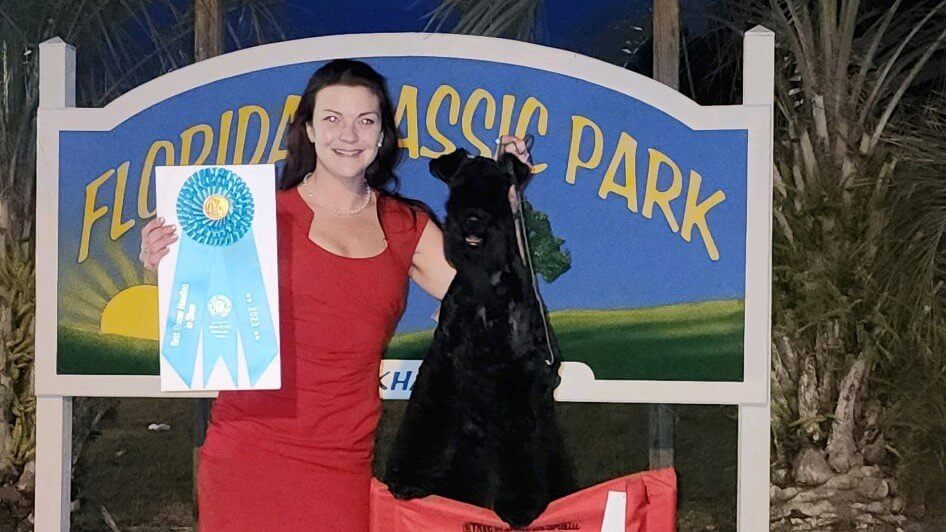
Interview with a Breeder/Owner Handler Krystal Purcell. Krystal shares her experience in the world of purebred dogs and dog events.

Meet the Judges
Interview with John Constantine-Amodei, 2023 MCKC Dog Show Breed Judge. Read about his experience with judging at the prestigious dog show.

Meet the Breeders
Lois Grier is the breeder behind Krisma Kerry Blue Terriers. Read about the kennel’s beginnings, champion dogs, puppies, photos and more!

Meet the Breeders
John and Kathy Garahan are breeders behind Kilgawny Kerry Blue Terriers. Read about the kennel’s beginnings, puppies, and much more!
Meet the Junior Handlers
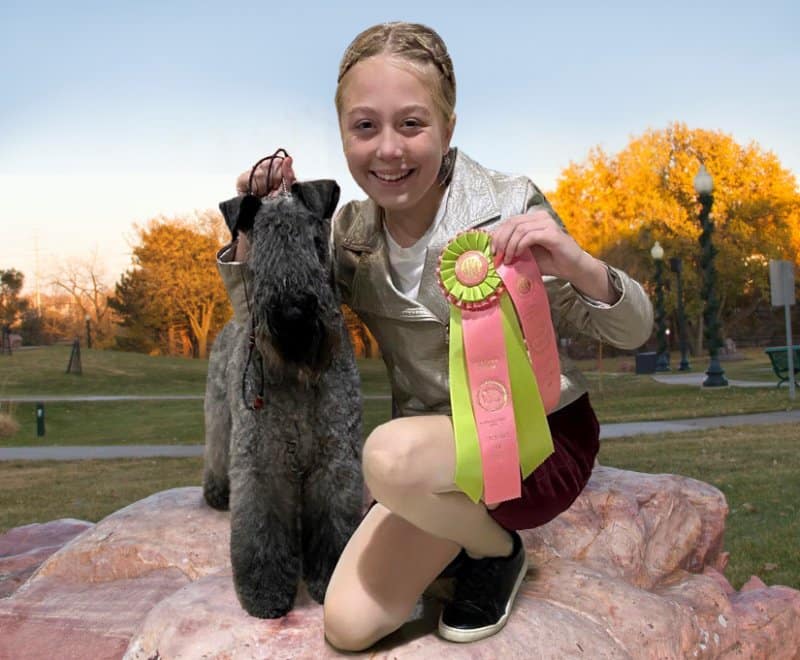
Interview with Averi Grier. Averi shares her thoughts on various topics regarding the Junior Showmanship ring.

Meet the Judges
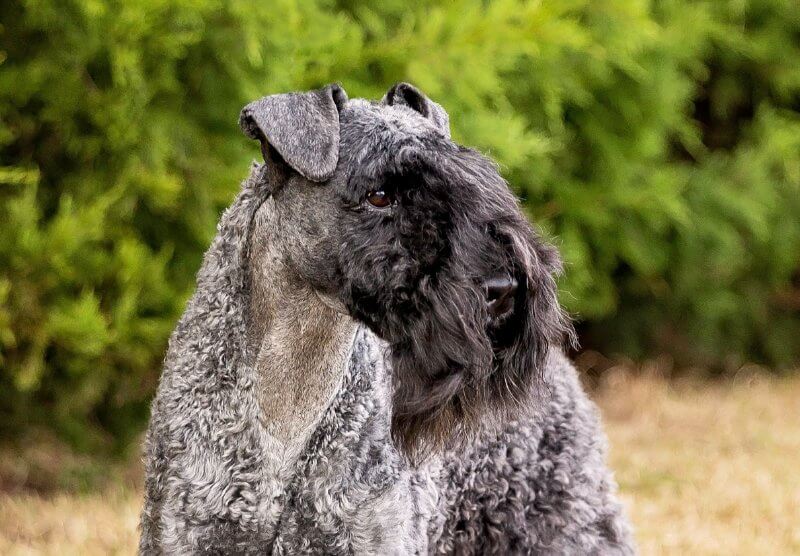
Insights from the 2022 MCKC Breed Judge Lydia Coleman Hutchinson. Read about the judge’s opinions on various topics regarding the show.
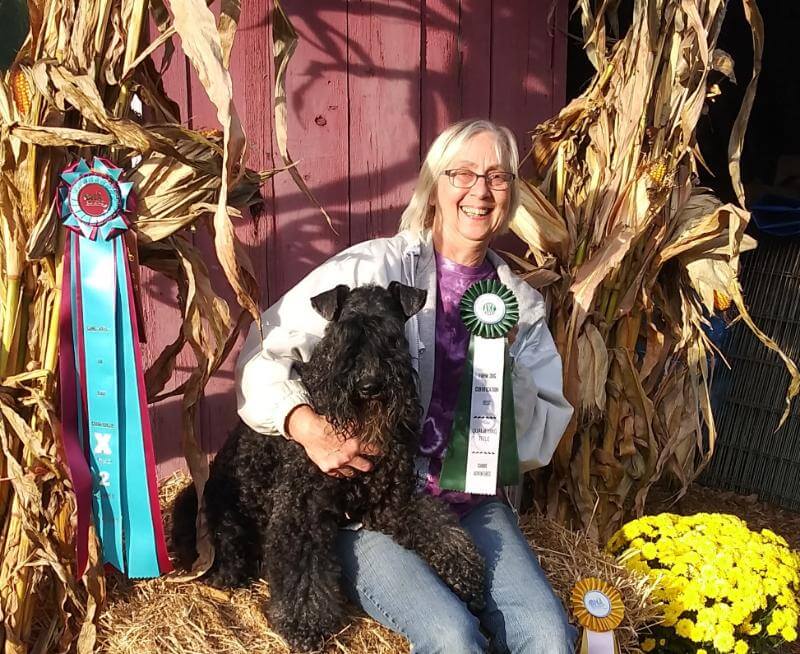
Meet the Breeders
Terese Worful is the breeder behind Valtera Kerry Blue Terriers. Read about kennel’s beginnings, champions, puppies, photos & more!
The tail is set high and carried erect, contributing to Kerry Blue Terrier’s alert and balanced outline. It may be naturally long or traditionally docked in countries where the practice is permitted.
A Note on Color: The Color of a Kerry Blue Terrier is important. The correct mature color is any shade of blue gray or gray blue, from the deep slate to light blue gray, and of a fairly uniform color throughout except that distinctly darker to black parts may appear on the muzzle, head, ears, tail and feet. Kerries appear black when born, and the color changes to the mature gray blue or blue gray. The color passes through one or more transitions. The time needed for this "clearing" process varies with each dog. A black dog 18 months of age or older is to be disqualified from competing in the show ring. Small white markings are permissible, and black on the muzzle, head, ears, tail and feet is permissible at any age.
Coat Type
Wavy
The structure of the coat this breed carries.
Coat Length
Medium
How long the breed's coat grows when kept in condition.
Adaptability Level
How easily a breed copes with changes in home, routine, noise and weather.
Mental Stimulation Needs
How much a breed needs a job, a puzzle or training to stay content.
A Kerry Blue Terrier should receive a complete and balanced diet suited to the dog’s age, activity level, and body condition. Portions should be measured carefully because excess weight can reduce agility and place unnecessary strain on the joints.
A puppy generally needs three or four small meals each day before gradually moving to two meals. Most adults are fed twice daily, with the amount adjusted according to the food’s caloric density and the dog’s level of activity.
Treats can be useful during training but should be given sparringly. Fresh water should always be available.
The Kerry Blue Terrier is intelligent and capable of learning quickly, but it can also be independent and strong-willed. Training is most effective when sessions are short, varied, and supported by praise, food rewards, toys, or play.
Early socialization should introduce the puppy to different people, well-mannered dogs, environments, sounds, and surfaces. Recall, leash manners, impulse control, and calm greetings are especially important because the breed can be strong and energetic.
Clear and consistent expectations can help to prevent unwanted habits such as pulling, excessive barking, or ignoring commands. Patient, reward-based training usually produces the best results.
The coat is typically trimmed and shaped regularly to maintain the breed’s characteristic outline. Unlike many terriers, the Kerry Blue is not hand-stripped because its coat is soft rather than harsh and wiry. The beard should be cleaned regularly because it can collect food and moisture. Nails should be trimmed as needed, ears should be checked for irritation or debris, and teeth should be brushed routinely.