Members
01/Overview
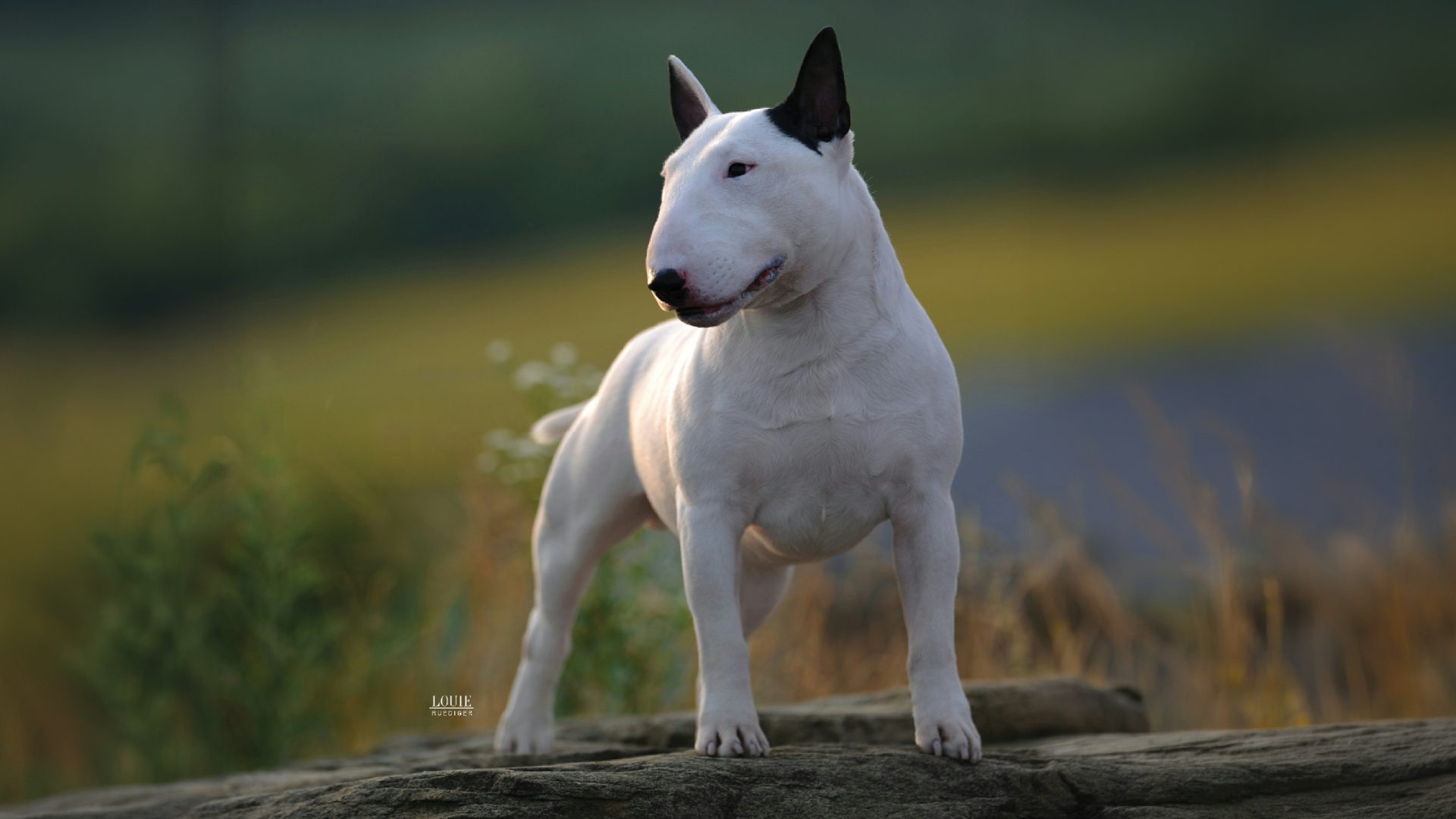
The Miniature Bull Terrier is a compact, muscular terrier known for its distinctive egg-shaped head, small triangular eyes, and playful personality. Developed as a smaller version of the Bull Terrier, the breed combines strength, confidence, and determination with an affectionate and often mischievous nature.
Highlights
02/History
The Miniature Bull Terrier originated in England during the nineteenth century and shares its early history with the Bull Terrier. Both breeds developed from crosses between Bulldogs and various terriers, producing strong, athletic dogs with courage, persistence, and a distinctive appearance.
During the 1800s, Bull Terriers varied considerably in size. Some were very small and became known as Miniature Bull Terriers or Toy Bull Terriers, while others developed into the larger Bull Terrier seen today.
Breeders began selecting the smaller dogs for a consistent miniature type while retaining the muscular build, unique head shape, and lively temperament of the larger breed. These dogs were also useful as ratters and vermin hunters, where their compact size and determination were practical advantages.
The breed’s development is closely associated with James Hinks of Birmingham, who helped refine the Bull Terrier type during the mid-nineteenth century. His breeding program emphasized a cleaner outline, a more uniform white coat, and the distinctive head shape that eventually became one of the defining characteristics of both Bull Terrier breeds.
Early Miniature Bull Terriers were sometimes bred extremely small, which created health and structural problems. Interest in these tiny dogs declined, and breeders later focused on producing a more substantial and balanced miniature dog.
The Miniature Bull Terrier was recognized as a distinct breed by The Kennel Club in Britain in 1939. Breeders continued working to maintain the same general type as the Bull Terrier while keeping the smaller size.
The American Kennel Club recognized the Miniature Bull Terrier in 1991 and placed it in the Terrier Group. The Miniature Bull Terrier Club of America serves as the breed’s American Kennel Club parent club.
The Fédération Cynologique Internationale also recognizes the Miniature Bull Terrier as a British breed and places it in Group 3, Terriers, Section 3, Bull Type Terriers.
03/Appearance
An adult Miniature Bull Terrier stands 10 to 14 inches tall at the withers and typically weighs between 18 and 28 pounds.
Skull: The Miniature Bull Terrier has a long, strong head that is deep from top to bottom and distinctly egg-shaped when viewed from the front. The top of the skull curves gently downward toward the nose without a noticeable stop.
Expression: The expression is keen, determined, and intelligent, with the small eyes contributing to the breed’s distinctive appearance.
Eyes: The eyes are small, triangular, dark, and set obliquely. They should be well sunken and give the dog a sharp, lively expression.
Ears: The ears are small, thin, and set close together. They are carried erect and should be capable of pointing firmly upward when the dog is alert.
Muzzle: The muzzle is strong, deep, and well filled, following the continuous curve of the head toward the nose. It should not appear narrow or weak.
Nose: The nose is black, with the tip bending downward and well-developed nostrils.
Bite: The Miniature Bull Terrier has sound, strong, and perfectly regular teeth that meet in a level or scissor bite with correctly placed canines.
The Miniature Bull Terrier is compact, muscular, and strongly built, with a body that is well balanced and substantial for its size. The overall outline should convey strength, agility, and power without appearing heavy or cumbersome.
The chest is broad and deep, the ribs are well sprung, and the back is short and strong. Bone is substantial in proportion to the dog’s size, supporting a dense, athletic build while preserving freedom of movement.
Texture: The Miniature Bull Terrier has a short, flat, harsh coat with a fine, glossy sheen. The hair lies close to the body and should feel firm to the touch without appearing soft or woolly.
Standard Colors
04/Consider
The Miniature Bull Terrier is strong, energetic, playful, and deeply attached to its family. Anyone considering the breed should be prepared for consistent training, early socialization, daily exercise, and a dog with plenty of determination and personality.
Interaction With Family
The level of affection a breed typically shows towards family members and familiar individuals.
Good With Other Dogs
The innate friendliness of a dog towards other dogs can depend on its breed.
Good With Young Children
The degree to which a breed will typically be patient with young children.
Amount Of Shedding
How much hair a breed typically leaves behind on clothes, furniture and floors.
Frequency Of Grooming
How often a breed needs brushing, bathing or a professional trim to stay in condition.
Amount Of Drooling
How prone a breed is to drool, worth knowing before you keep a towel by the door.
Openness To Strangers
How openly a breed tends to greet new people, visitors and strangers.
Protective Nature
How likely a breed is to alert you to anything unfamiliar, and stand between you and it.
Playfulness Level
How enthusiastic a breed stays about games and play well past puppyhood.
Trainability Level
How readily a breed takes direction and works with you rather than around you.
Barking Level
How much a breed uses its voice, and how readily.
Energy Level
How much get-up-and-go a breed brings to an average day.
Health
The Miniature Bull Terrier is generally considered a healthy and sturdy breed with a typical lifespan of 11 to 13 years. Preventive veterinary care, balanced nutrition, regular exercise, good dental hygiene, and maintenance of a healthy weight can help support long-term health.
The Miniature Bull Terrier is playful, confident, affectionate, and full of personality. It often forms a close bond with its family and can be both entertaining and stubborn, especially when it decides to do things its own way.
The breed is usually people-oriented, but early socialization is important around unfamiliar dogs, children, and new environments. Some Mini Bulls can be assertive with other dogs, so calm introductions and responsible supervision are important.
A Miniature Bull Terrier can live successfully with respectful children, especially when raised with them. Its muscular build and energetic play style may be too rough for very young children, so interactions should always be supervised.
Exercise Expectations
A healthy adult generally benefits from about 45 to 60 minutes of activity each day. Scent games, retrieving, puzzle toys, and dog sports can provide additional mental engagement. Because the breed can be strong and determined, off-leash exercise should take place only in a securely enclosed area.
Grooming Expectations
The Miniature Bull Terrier can adapt well to apartment living when given enough exercise, training, and mental activity. Its energetic nature and tendency to become bored may require extra management in smaller homes.
A securely fenced yard can provide space for play, but outdoor time should not replace walks, training, and interaction with the family. The breed generally prefers being indoors and staying close to its people.
The Miniature Bull Terrier usually does best in a household that appreciates its humor, strength, and independent personality. Regular companionship, consistent routines, and structured activity will help the breed thrive in any environment.
05/Puppies
Miniature Bull Terrier puppies are playful, energetic, and full of curiosity. Early routines, positive socialization, patient training, and appropriate outlets for their energy help any pup develop into a confident and capable adult.
A Miniature Bull Terrier puppy benefits from a predictable daily schedule that includes regular meals, potty breaks, sleep, play, training, and quiet time. A crate or secure puppy area can provide a safe place to rest and support house training when direct supervision is not possible.
Early socialization should introduce the puppy to different people, well-mannered dogs, household sounds, surfaces, vehicles, and unfamiliar environments. These experiences should remain positive and appropriate for the puppy’s age.
Training can begin as soon as the puppy arrives home. Short sessions can introduce name response, recall, leash walking, basic manners, impulse control, and calm greetings. Because the breed can be strong, persistent, and easily excited, polite behavior should be encouraged from the beginning.
A Miniature Bull Terrier puppy should receive a complete and balanced diet formulated for growth. Exercise should focus on supervised play, short walks, and gentle exploration rather than forced running or repetitive jumping while the puppy is still developing.
Regular veterinary visits are important during the first year. Grooming should also begin early so that the puppy becomes comfortable with brushing, nail trimming, ear checks, tooth brushing, and general handling.
06/Activities
Miniature Bull Terriers are energetic, athletic, and intelligent dogs that often enjoy activities involving speed, problem-solving, scent, and close work with a handler. Here are some of the dog sports and activities in which Miniature Bull Terriers may participate:
Agility: Miniature Bull Terriers can use their strength, speed, and coordination while navigating obstacle courses.
Obedience: Obedience Trials allow the breed to demonstrate focus, accuracy, and cooperation with a handler.
Rally: Rally Obedience combines movement through a course with varied obedience exercises that can help keep training engaging for this lively breed.
Scent Work: Miniature Bull Terriers can search for specific odors hidden in containers, indoor spaces, outdoor areas, or vehicles.
Fast CAT: This timed 100-yard dash gives the breed an opportunity to use its speed and chasing instinct in a controlled setting.
Barn Hunt: Barn Hunt allows Mini Bulls to use their natural hunting instincts to locate safely enclosed rats hidden among bales of straw.
Conformation Shows: Miniature Bull Terriers compete in Conformation Shows, where judges evaluate each dog according to the Breed Standard, including structure, movement, coat, expression, temperament, and overall type.
Trick Dog: Trick training provides mental stimulation and gives the Mini Bull a productive way to use its intelligence and playful personality.
Therapy Work: A calm, friendly, and well-socialized Miniature Bull Terrier may visit hospitals, schools, assisted living facilities, and other settings to provide companionship.
Canine Good Citizen: Miniature Bull Terriers may participate in programs that evaluate everyday manners, social behavior, and reliability around people and other dogs.
Gallery
07/Standards
The Miniature Bull Terrier is recognized by the world’s leading registries and kennel organizations, which categorize the breed into a specific Group based on its unique characteristics. This breed is recognized worldwide under the following Group designations:
The ideal Miniature Bull Terrier is described by a Breed Standard that is approved by each of the world’s leading registries and kennel organizations. The Standards for this breed may be found in the following links:
08/Clubs
Miniature Bull Terrier clubs support breed education, responsible breeding, health initiatives, rescue work, and participation in Conformation shows and Performance events.
Miniature Bull Terrier Club of America: Founded in 1966, this is the national breed club for the Miniature Bull Terrier in the United States and the breed’s AKC parent club.
Miniature Bull Terrier Club of Canada: Formed in 2009, Canada’s national organization for the breed welcomes Mini Bull exhibitors, companion dog families, and other breed enthusiasts.
The Miniature Bull Terrier Club: Established in 1938, this is the national breed club in the UK that promotes the Miniature Bull Terrier through dog shows and educational initiatives.
09/Rescue
Miniature Bull Terrier clubs support breed education, responsible breeding, health initiatives, rescue work, and participation in Conformation shows and Performance events.
Miniature Bull Terrier Club of America: Founded in 1966, this is the national breed club for the Miniature Bull Terrier in the United States and the breed’s AKC parent club.
Miniature Bull Terrier Club of Canada: Formed in 2009, Canada’s national organization for the breed welcomes Mini Bull exhibitors, companion dog families, and other breed enthusiasts.
The Miniature Bull Terrier Club: Established in 1938, this is the national breed club in the UK that promotes the Miniature Bull Terrier through dog shows and educational initiatives.
10/Facts
A Smaller Bull Terrier
The Miniature Bull Terrier was developed from the same early stock as the standard Bull Terrier, with breeders selecting smaller dogs while preserving the breed’s distinctive type.
Originally Used as a Ratter
Smaller Bull Terriers were valued for their ability to hunt and kill rats and other vermin.
Recognized Separately in Britain in 1939
The Royal Kennel Club recognized the Miniature Bull Terrier as a distinct breed in 1939.
Famous for a Mischievous Personality
The breed is often known for being playful, clownish, and determined, with a strong sense of independence.
11/FAQ
Miniature Bull Terriers can make excellent pets for people who appreciate a playful, affectionate, and strong-willed companion. They need consistent training, daily exercise, early socialization, and plenty of interaction with their family.

Written by
Dan Sayers is the Executive Editor of SHOWSIGHT. He is a member of the World Dog Press Association and the Dog Writers Association of America, which recognized his illustrations in the award-winning Encyclopedia of K-9 Terminology. Dan is a longtime supporter of the sport of dogs and an advocate for the conservation of recognized breeds in all their forms and functions. He is a member of the Morris and Essex Kennel Club, and for 45 years, the Irish Water Spaniel Club of America where he serves as AKC Delegate, Archivist, and approved Breed Mentor. Dan breeds under the Quiet Storm prefix and has judged the IWSCA National Specialty Sweepstakes twice.
Official Standard of the Miniature Bull Terrier
General Appearance: The Miniature Bull Terrier must be strongly built, symmetrical and active, with a keen, determined and intelligent expression. He should be full of fire, having a courageous, even temperament and be amenable to discipline.
Size, Proportion, Substance: Miniature Bull Terriers should be of correct size, compact, strongly built, with maximum bone and substance for their size while at all times appearing balanced. In proportion, the Miniature Bull Terrier should give the appearance of being just off square, measuring from breastbone to rear of thigh – slightly longer than tall. Height 10 to 14 inches as measured from the withers to the ground.
Head: The head should be long, strong and deep, right to the end of the muzzle, but not coarse. The full face should be oval in outline and be filled completely up, giving the impression of fullness with a surface devoid of hollows or indentations, i.e., egg shaped. The profile should curve gently downwards from the top of the skull to the tip of the nose. The top of the skull should be flat across from ear to ear. The distance from the tip of the nose to the eyes should be perceptibly greater than that from the eyes to the top of the skull. The underjaw should be deep and well defined. To achieve a keen, determined, and intelligent expression, the eyes should be well sunken and as dark as possible with a piercing glint. They should be small, dark, triangular and obliquely placed, set high up on the dog’s head, placed closer to the ears than to the nose. Blue eyes are a disqualification. The ears should be small, thin, and placed close together, capable of being held stiffly erect. The nose should be black, and bent downwards at the tip. The lips should be clean and tight. The teeth should meet in either a level or scissor bite with correctly placed canines. The teeth should be sound, strong and perfectly regular. While correct dentition is desirable, it should never be considered more important than the traits of the breed outlined in this standard.
Neck, Topline, Body: The neck should be very muscular, long, and arched; tapering from the shoulders to the head, it should be free from loose skin. The back should be short and strong with a slight arch over the loin. Behind the shoulders there should be no slackness or dip at the withers. The body should be well rounded with marked spring of rib and short coupled. The chest should be broad when viewed from the front. There should be great depth from withers to brisket, so that the latter is nearer to the ground than the belly. The underline, from the brisket to the belly, should form a graceful upward curve. The tail should be short, set on just below topline, and carried horizontally. It should be thick where it joins the body and should taper to a fine point.
Forequarters: The shoulders should be strong and muscular, but without heaviness. The shoulder blades/scapula should be laid back and approximately the same length as the upper arm/humerus. When viewed from the side the elbow should be directly below the highest point of the shoulder. The legs should be big boned but not to the point of coarseness. The forelegs should be of moderate length, perfectly straight, and the dog must stand firmly upon them. The elbows must turn neither in nor out, and the pasterns should be strong and upright. The feet are round and compact with well-arched toes like a cat.
Hindquarters: The hind legs should be parallel when viewed from behind. The thigh and second thigh are very muscular and well-developed. The stifle joint and hock are well angulated with hind pasterns short and upright. The feet are round and compact with well arched toes like a cat.
Coat: The coat should be straight, short, flat and harsh to the touch with a fine gloss. The dog’s skin should fit tightly.
Color: For white, pure white coat. Markings on head and skin pigmentation are not to be penalized. For colored, any allowed color to predominate. Allowed colors: Brindle, Black Brindle, Black and Tan, Red, Fawn – With or without white and/or smut markings. Any other color is a disqualification.
Gait: The dog shall move smoothly, covering the ground with free, easy strides, Fore and hind legs should move parallel to each other when viewed from in front or behind, with the forelegs reaching out well and the hind legs moving smoothly at the hip and flexing well at the stifle and hock. The dog should move compactly and in one piece but with a typical jaunty air that suggests agility and power.
Temperament: The temperament should be full of fire and courageous, but even and amenable to discipline.
Faults: Any departure from the foregoing points shall be considered a fault, and the seriousness of the fault shall be in exact proportion to its degree.
Disqualifications:
Blue eyes.
Any color other than allowed.
Approved January 13, 2026
Effective April 1, 2026
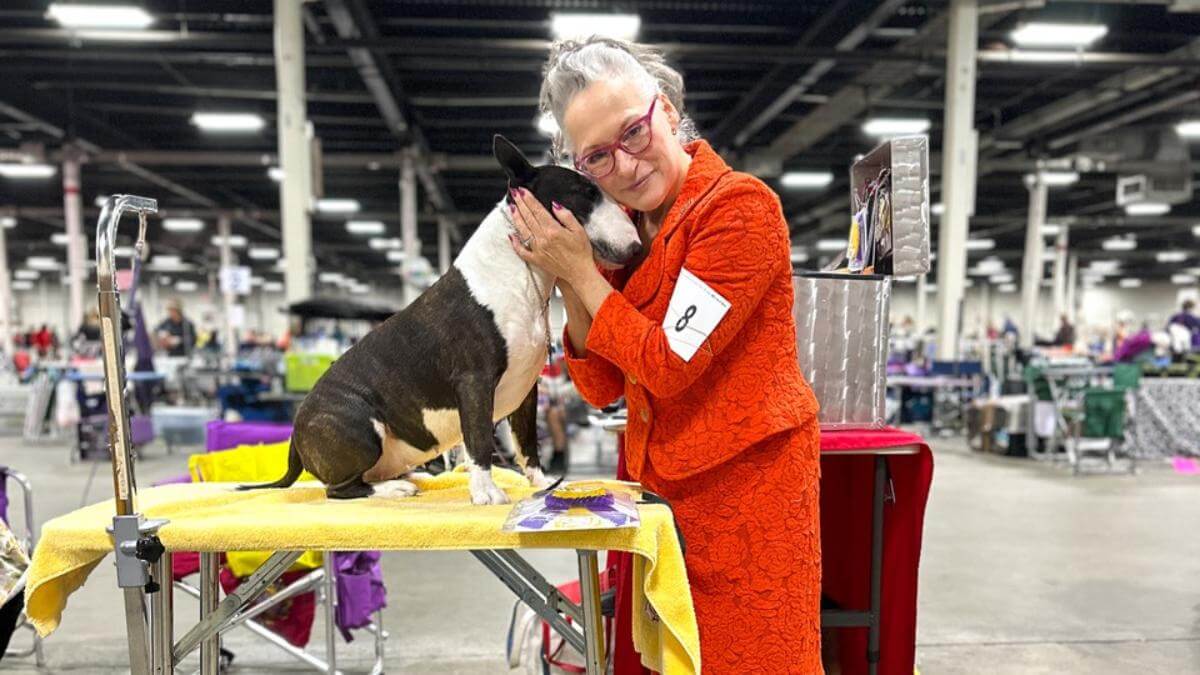

Meet the Breeders
Dédé Wilson of Legacy shares her lifelong passion for Miniature Bull Terriers, blending history, heart, and responsible breeding.

Meet the Breeders
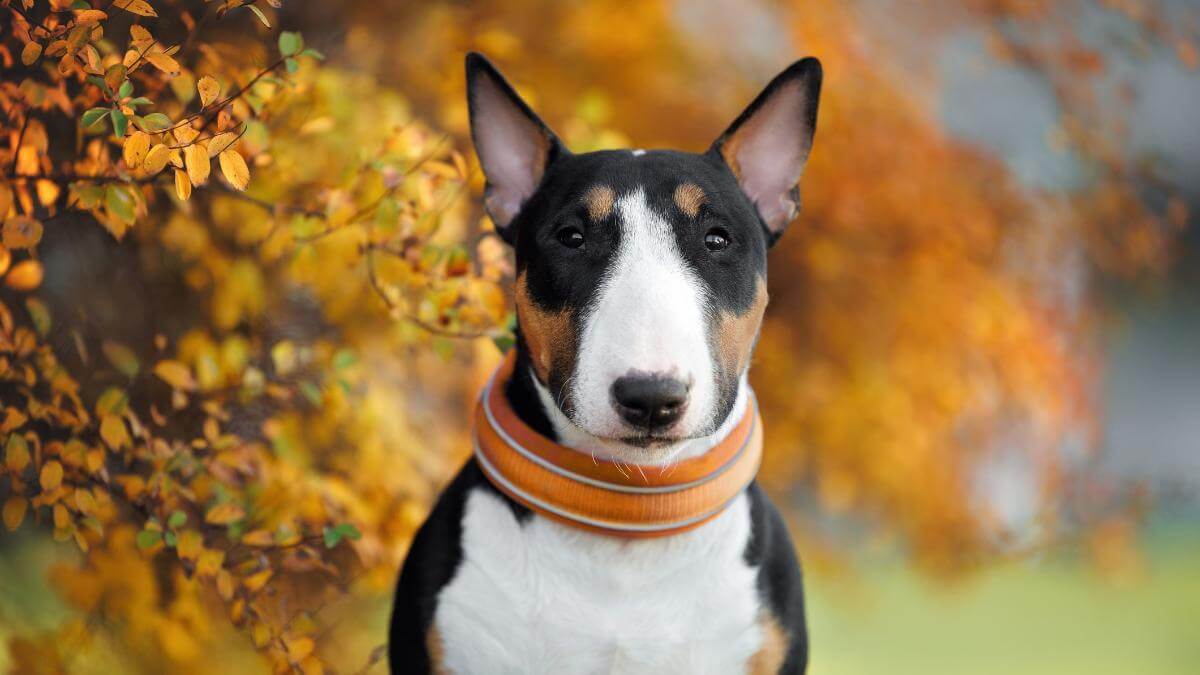
All About Judging
Explore the unique qualities, challenges, and judging criteria of Miniature Bull Terriers in dog shows, focusing on type and size.
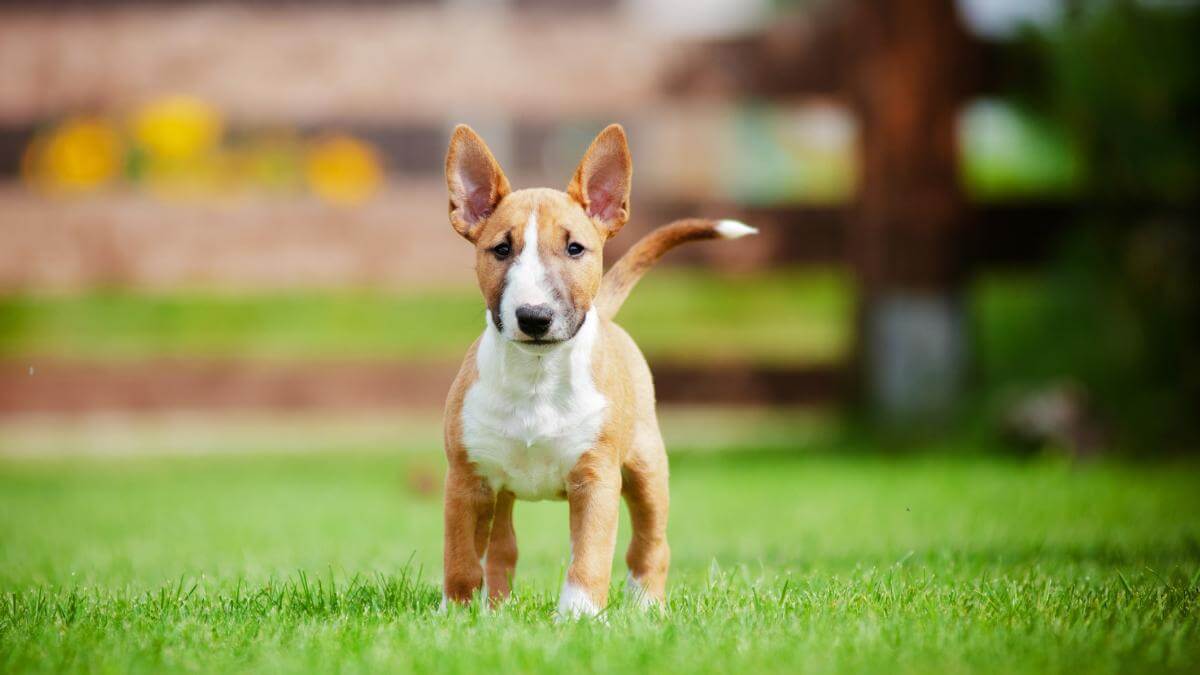
Discover the origins of the Miniature Bull Terrier, from blood sports in 1800s England to becoming a popular companion breed.
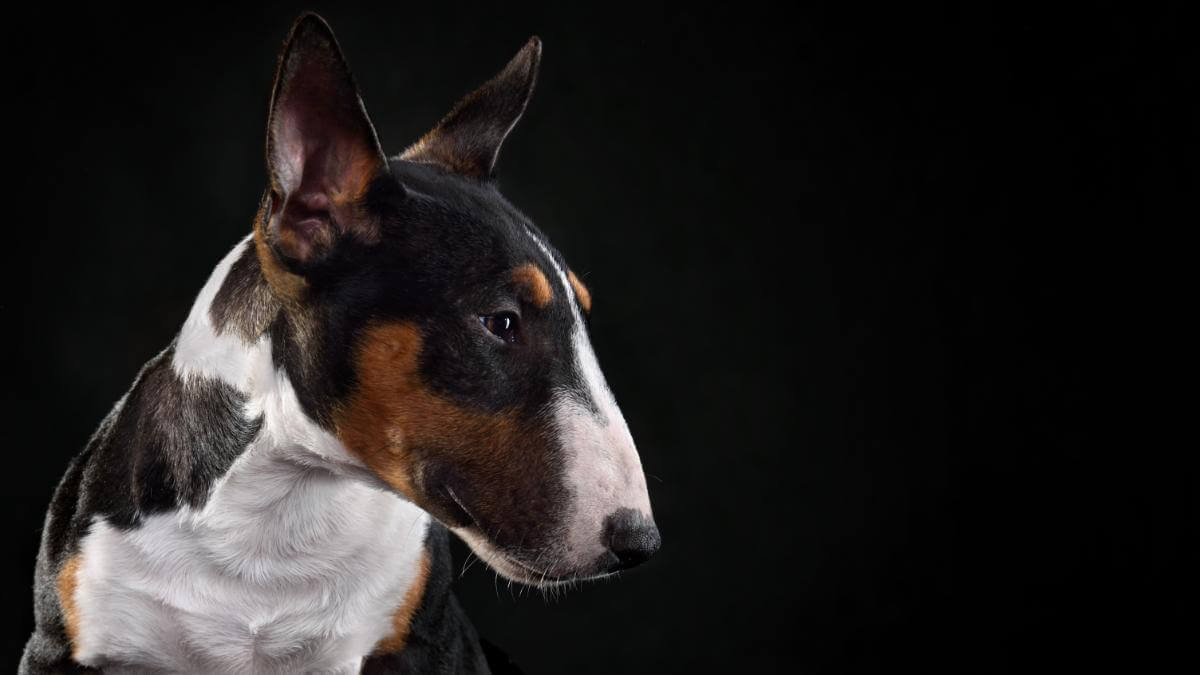
Discover the playful, intelligent, and mischievous nature of the MBT, a small dog with a big personality and endless charm.


Meet the Judges
Interview with Colin A. “Skip” Greaney 2023 MCKC Dog Show Breed Judge. Read about his experience with judging at the prestigious dog show.
Meet the Breeders
Crissy Brown-Stone is the breeder behind Brownstone Miniature Bull Terriers. Read about the kennel’s beginnings, puppies, photos & more!
The tail is short, set low, and carried horizontally. It is thick at the base and tapers gradually to a fine point, remaining in balance with the breed’s compact, muscular outline.
Standard Markings
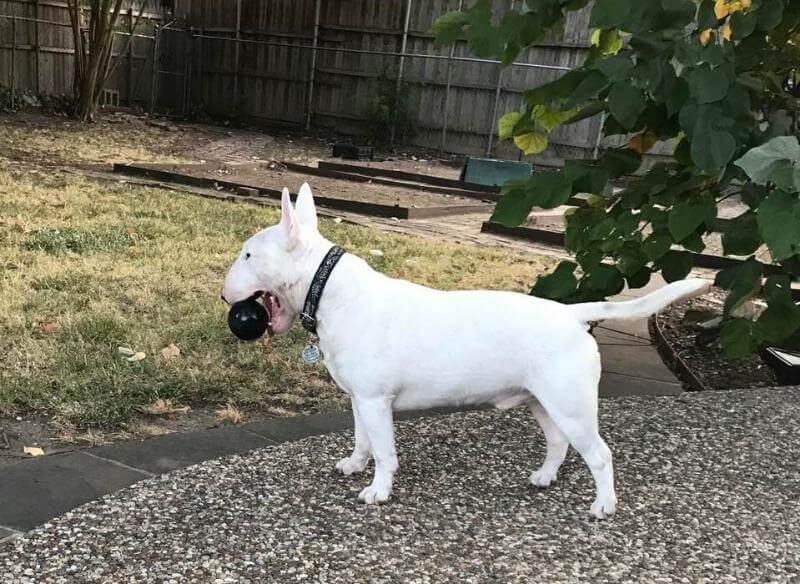
A Note About Color: The color of the White Miniature Bull Terrier is pure white. Markings on the head and skin pigmentation are not to be penalized in the show ring. Any allowed color is acceptable in the Colored dogs, with or without white and/or smut markings. Any other color is a disqualification.
Coat Type
Smooth
The structure of the coat this breed carries.
Coat Length
Short
How long the breed's coat grows when kept in condition.
Adaptability Level
How easily a breed copes with changes in home, routine, noise and weather.
Mental Stimulation Needs
How much a breed needs a job, a puzzle or training to stay content.
A Miniature Bull Terrier should receive a complete and balanced diet suited to the dog’s age, activity level, and body condition. Portions should be measured carefully because the breed can gain excess weight when overfed.
A puppy generally needs three or four small meals each day before gradually moving to two meals. Most adults are fed twice daily, with the amount adjusted according to the food’s caloric density and the dog’s level of activity.
Treats can be useful during training but should remain limited. Fresh water should always be available.
The Miniature Bull Terrier is intelligent but can also be independent, persistent, and easily distracted. Training is most effective when sessions are short, varied, and supported by praise, food rewards, toys, or play.
Early socialization should introduce the puppy to different people, well-mannered dogs, environments, sounds, and surfaces. Leash manners, recall, impulse control, and calm greetings are especially important because the breed is strong and enthusiastic.
Clear and consistent expectations can help to prevent unwanted habits such as jumping, pulling, or ignoring commands. Harsh methods can create resistance, while patient and engaging training usually encourages better cooperation.
The breed sheds moderately throughout the year, with shedding sometimes becoming more noticeable during seasonal changes. Bathing is needed only occasionally unless the dog becomes particularly dirty. Nails should be trimmed regularly, ears should be checked for irritation or debris, and teeth should be brushed routinely.