Members
01/Overview
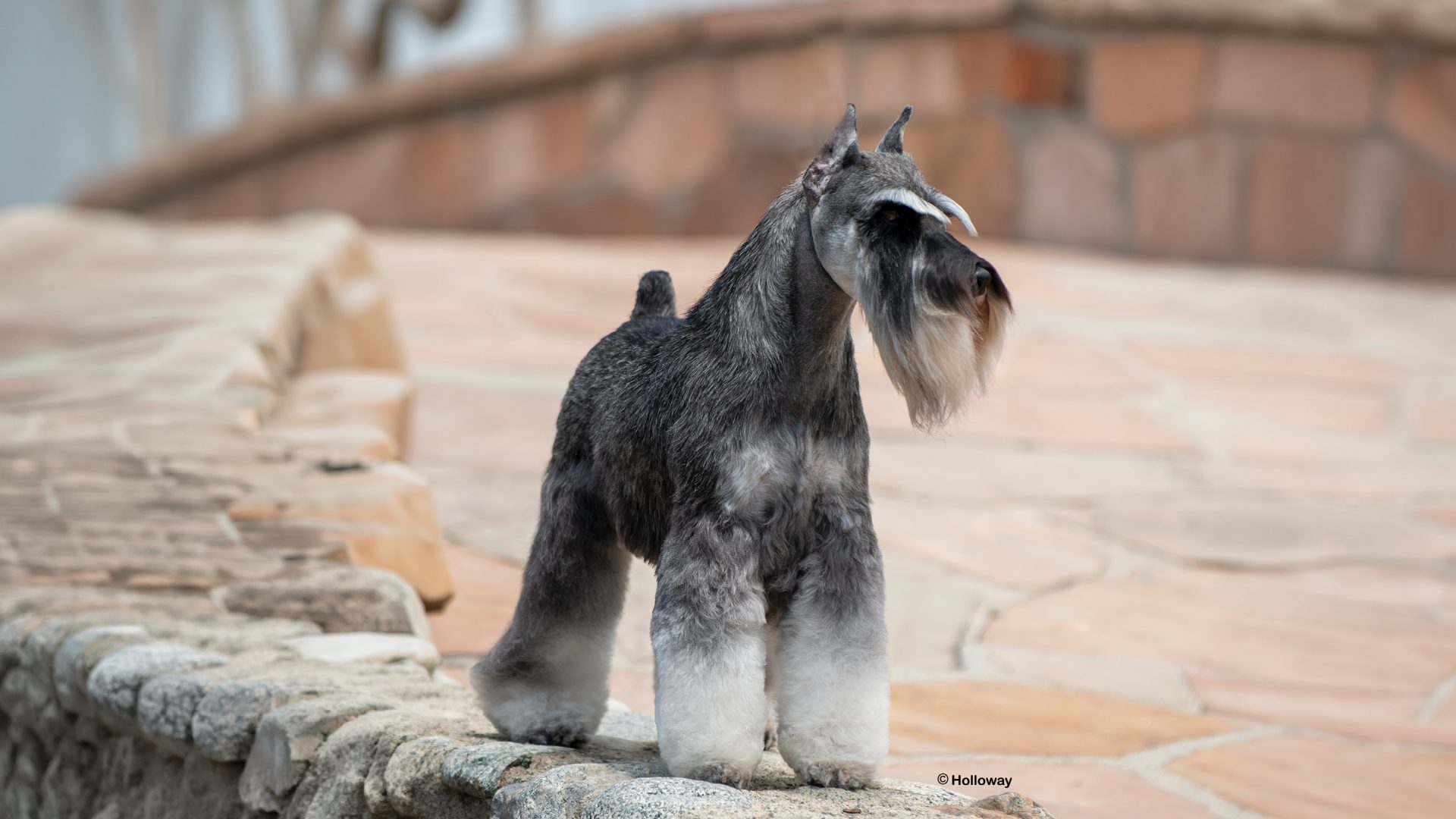
The Miniature Schnauzer is a small, sturdy terrier-type breed known for its distinctive beard, bushy eyebrows, wiry coat, and alert expression. Developed in Germany as a farm dog and vermin hunter, the breed combines intelligence, confidence, and lively energy with a strong attachment to its family.
Highlights
02/History
The Miniature Schnauzer originated in Germany during the late nineteenth century. It was developed from the Standard Schnauzer, with smaller dogs selectively bred to create a compact working companion suited to farms, stables, and households.
Breeders wanted a dog that retained the Standard Schnauzer’s intelligence, toughness, and distinctive appearance while being small enough to control rats and other vermin in tight spaces. Smaller Standard Schnauzers were crossed with breeds such as the Affenpinscher and possibly the Miniature Pinscher and other small German breeds.
The resulting dogs were sturdy, quick, and highly alert. They worked as ratters around barns and farm buildings, watched over property, and served as close companions to rural families.
The breed’s name comes from the German word “Schnauze,” referring to the muzzle or snout, and reflects the characteristic beard and facial furnishings that define the Schnauzer appearance.
The Miniature Schnauzer became increasingly distinct from the Standard and Giant Schnauzers as organized breeding developed. By the early twentieth century, breeders were working toward a more consistent size, coat, and overall type.
The breed spread beyond Germany and gained popularity in Europe and North America. The American Kennel Club recognized the Miniature Schnauzer in 1926. Unlike the Standard and Giant Schnauzers, which are placed in the Working Group, the Miniature Schnauzer is classified in the Terrier Group in the United States.
The American Miniature Schnauzer Club serves as the breed’s AKC parent club. The Fédération Cynologique Internationale recognizes the Miniature Schnauzer as a German breed and places it in Group 2, Pinscher and Schnauzer, Molossoid and Swiss Mountain and Cattledogs.
03/Appearance
An adult Miniature Schnauzer stands 12 to 14 inches tall at the withers. The breed typically weighs 11 to 20 pounds, with weight proportionate to height, bone, and overall balance.
Skull: The Miniature Schnauzer has a strong, rectangular head with a flat skull that is moderately broad between the ears. The head gradually narrows toward the eyes, with a distinct stop.
Expression: The expression is alert, intelligent, and spirited, emphasized by the breed’s characteristic eyebrows and beard.
Eyes: The eyes are small, dark brown, oval-shaped, and set well forward. They should convey a lively and attentive expression.
Ears: The ears are set high on the skull and may be cropped or natural. Natural ears are small, V-shaped, and fold forward close to the cheeks.
Muzzle: The muzzle is strong and rectangular, with the characteristic beard adding to its substantial appearance. It should not appear weak, narrow, or pointed.
Nose: The nose is black and well developed.
Bite: The Miniature Schnauzer has strong teeth that meet in a scissors bite, with the upper incisors closely overlapping the lower incisors.
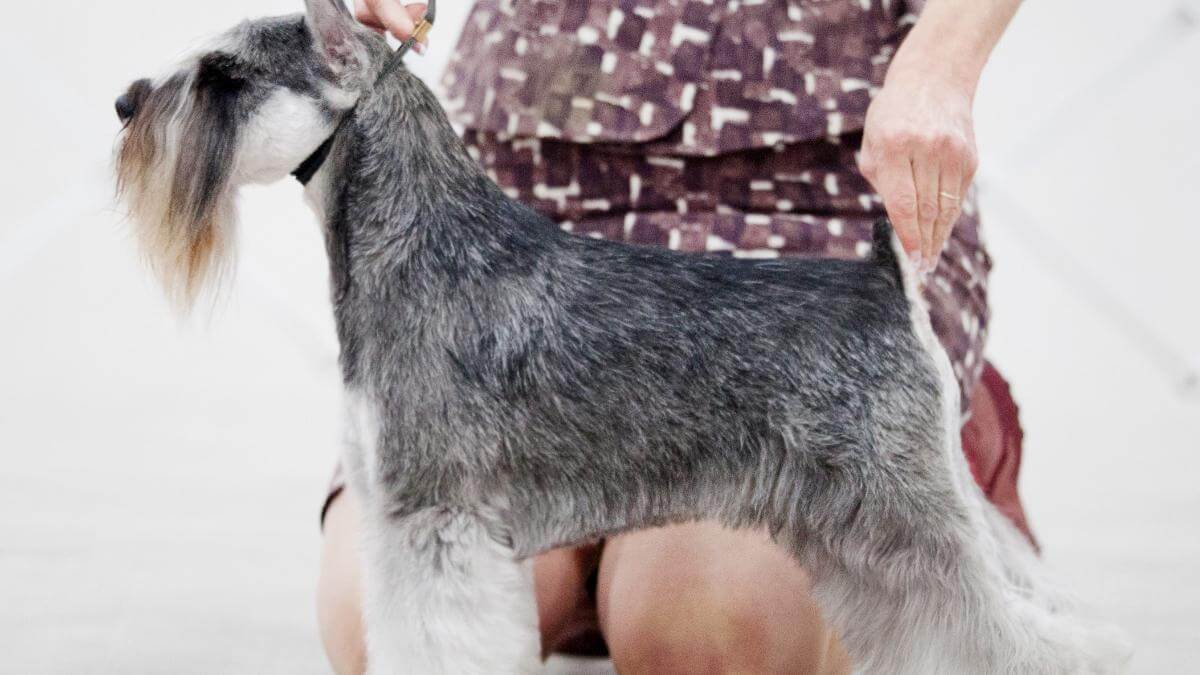
The Miniature Schnauzer is squarely built, with the length of the body from the point of the shoulder to the point of the buttocks approximately equal to the height at the withers. The overall outline is compact, sturdy, and balanced.
The body is strong without appearing heavy or coarse, with a deep chest, well-sprung ribs, a short back, and a firm loin. Bone is substantial for the breed’s size, providing strength and stability while preserving agility and efficient movement.
Texture: The Miniature Schnauzer has a double coat with a hard, wiry outer coat and a soft, close undercoat. The body coat should be harsh in texture, while longer furnishings on the legs, muzzle, and eyebrows create the breed’s characteristic appearance.
Standard Colors
Standard Markings
04/Consider
The Miniature Schnauzer is intelligent, alert, energetic, and strongly attached to its family. Anyone considering the breed should be prepared for consistent training, regular exercise, routine coat care, and a dog that often wants to remain involved in daily household life.
Interaction With Family
The level of affection a breed typically shows towards family members and familiar individuals.
Good With Other Dogs
The innate friendliness of a dog towards other dogs can depend on its breed.
Good With Young Children
The degree to which a breed will typically be patient with young children.
Amount Of Shedding
How much hair a breed typically leaves behind on clothes, furniture and floors.
Frequency Of Grooming
How often a breed needs brushing, bathing or a professional trim to stay in condition.
Amount Of Drooling
How prone a breed is to drool — worth knowing before you keep a towel by the door.
Openness To Strangers
How openly a breed tends to greet new people, visitors and strangers.
Protective Nature
How likely a breed is to alert you to — and stand between you and — anything unfamiliar.
Playfulness Level
How enthusiastic a breed stays about games and play well past puppyhood.
Trainability Level
How readily a breed takes direction and works with you rather than around you.
Barking Level
How much a breed uses its voice, and how readily.
Energy Level
How much get-up-and-go a breed brings to an average day.
Health
The Miniature Schnauzer is generally considered a healthy and hardy breed with a typical lifespan of 12 to 15 years. Preventive veterinary care, balanced nutrition, regular exercise, good dental hygiene, and maintenance of a healthy weight can help support long-term health.
The Miniature Schnauzer is intelligent, alert, spirited, and affectionate with its family. It often combines the confidence of a terrier-type dog with a strong desire to stay involved in everyday household life.
The breed is generally outgoing and attentive, although some individuals may be reserved with unfamiliar people at first. Early socialization helps the Miniature Schnauzer become comfortable with different people, dogs, environments, and situations.
Miniature Schnauzers can live successfully with respectful children and often enjoy active family life. Their lively personality and tendency to become excited around visitors make early manners especially useful.
Exercise Expectations
A healthy adult generally benefits from about 45 to 60 minutes of activity each day. Scent games, puzzle toys, and dog sports can provide additional mental engagement. Because the breed may chase small animals or become distracted by movement, off-leash exercise should take place only in a securely enclosed area.
Grooming Expectations
The Miniature Schnauzer can adapt well to apartment living when given enough exercise, training, and mental activity. Its alert nature and tendency to bark may require additional management in homes with close neighbors.
A securely fenced yard can provide space for play, but outdoor time should not replace daily walks, thoughtful training, and interaction with the family. The breed generally prefers living indoors and staying close to its people.
The Miniature Schnauzer usually does best in a household that appreciates its intelligence, energy, and lively personality. Regular companionship, consistent routines, and structured activity help the breed thrive.
05/Puppies
Miniature Schnauzer puppies are lively, curious, and quick to learn. Early routines, positive socialization, patient training, and regular grooming help any pup develop into a confident and well-mannered adult.
A Miniature Schnauzer puppy benefits from a predictable daily schedule that includes regular meals, potty breaks, sleep, play, training, and quiet time. A crate or secure puppy area can provide a safe place to rest and support housetraining when direct supervision is not possible.
Early socialization should introduce the puppy to different people, well-mannered dogs, household sounds, surfaces, vehicles, and unfamiliar environments. These experiences should remain positive and appropriate for the puppy’s age.
Training can begin as soon as the puppy arrives home. Short sessions can introduce name response, recall, leash walking, basic manners, impulse control, and calm greetings. Because Miniature Schnauzers are alert and quick to react to activity around them, early work on barking and focus can be especially useful.
A Miniature Schnauzer puppy should receive a complete and balanced diet formulated for growth. Exercise should focus on supervised play, short walks, and gentle exploration rather than forced running or repetitive jumping while the puppy is still developing.
Regular veterinary visits are important during the first year. Grooming should also begin early so that the puppy becomes comfortable with brushing, beard care, nail trimming, ear checks, tooth brushing, and general handling.
06/Activities
Miniature Schnauzers are intelligent, energetic, and highly trainable dogs that often enjoy activities involving speed, scent, problem-solving, and close work with a handler. Here are some of the dog sports and activities in which Miniature Schnauzers may participate:
Barn Hunt: Miniature Schnauzers can use their natural vermin-hunting instincts to locate safely enclosed rats hidden among bales of straw.
Agility: The breed’s speed, balance, and responsiveness can make Agility an excellent outlet for physical and mental energy.
Obedience: Obedience Trials allow the Miniature Schnauzer to demonstrate focus, accuracy, and cooperation with a handler.
Rally: Rally Obedience combines movement through a course with varied obedience exercises that can help keep training engaging for this quick-learning breed.
Scent Work: Miniature Schnauzers can search for specific odors hidden in containers, indoor spaces, outdoor areas, or vehicles.
Tracking: Tracking allows the breed to follow a scent trail across different types of terrain using concentration and persistence.
Fast CAT: This timed 100-yard dash gives the Miniature Schnauzer an opportunity to use its speed and chasing instinct in a controlled setting.
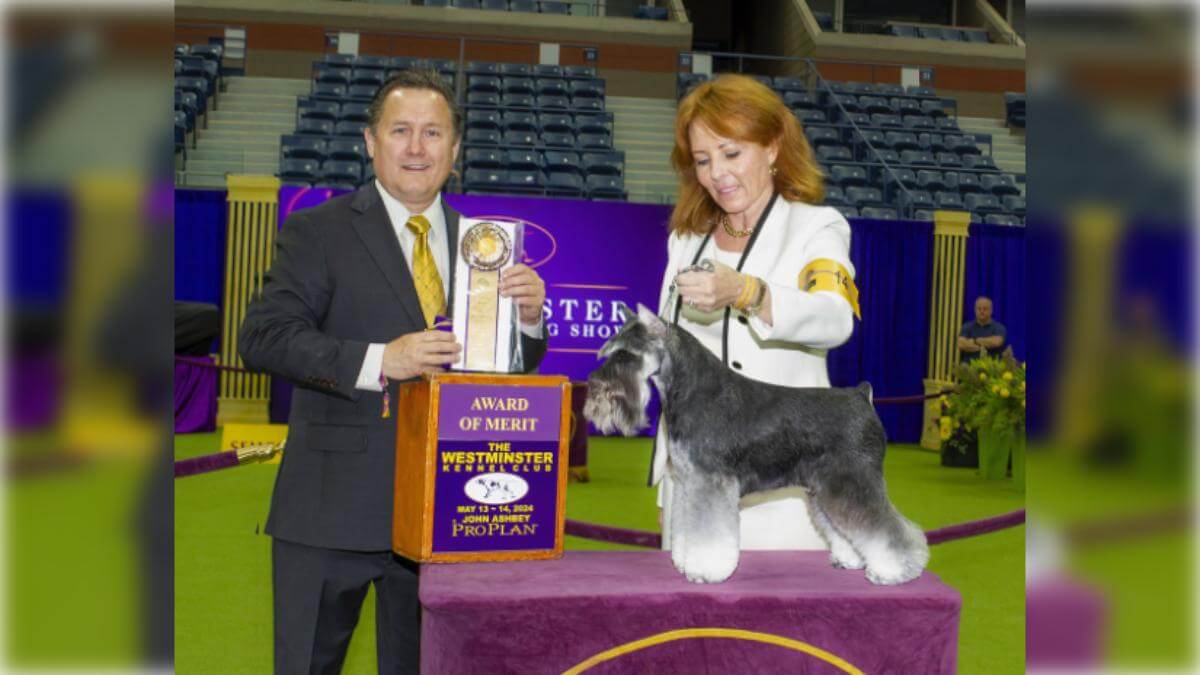
Conformation Shows: Miniature Schnauzers compete in Conformation Shows, where judges evaluate each dog according to the Breed Standard, including structure, movement, coat, expression, temperament, and overall type.
Trick Dog: Trick training provides mental stimulation and gives the Miniature Schnauzer a productive way to use its intelligence and enthusiasm.
Therapy Work: A calm, friendly, and well-socialized Miniature Schnauzer may visit hospitals, schools, assisted living facilities, and other settings to provide companionship.
Canine Good Citizen: Miniature Schnauzers may participate in programs that evaluate everyday manners, social behavior, and reliability around people and other dogs.
Gallery
07/Standards
The Miniature Schnauzer is recognized by the world’s leading registries and kennel organizations, which categorize the breed into a specific Group based on its unique characteristics. This breed is recognized worldwide under the following Group designations:
The ideal Miniature Schnauzer is described by a Breed Standard that is approved by each of the world’s leading registries and kennel organizations. The Standards for this breed may be found in the following links:
08/Clubs
Miniature Schnauzer clubs support breed education, responsible breeding, health initiatives, rescue work, and participation in Conformation shows and Performance events.
American Miniature Schnauzer Club: Founded in 1933, this is the national breed club for the Miniature Schnauzer in the United States and the breed’s AKC parent club.
Miniature Schnauzer Club of Canada: Founded in 1955, Canada’s national organization for the Mini Schnauzer welcomes breeders, exhibitors, companion dog families, and other breed enthusiasts.
The Miniature Schnauzer Club: Founded in 1953, this is the United Kingdom’s national breed club promotes the Miniature Schnauzer through dog shows and educational initiatives.
09/Rescue
Breed-specific rescue organizations help Miniature Schnauzers that have been surrendered, abandoned, or found in shelters. These groups may provide foster care, veterinary treatment, behavioral evaluation, and placement with an appropriate adoptive family.
American Miniature Schnauzer Club Rescue: The breed’s AKC parent club provides rescue information and may help connect Miniature Schnauzers in need with foster or adoptive homes across the United States.
Schnauzer Rescue of the Carolinas: A volunteer-based rescue organization that assists Mini Schnauzers and other Schnauzer-types through foster care, rehabilitation, and adoption.
Miniature Schnauzer Club of Canada: Canada’s national breed club may provide guidance about Miniature Schnauzers needing rescue, welfare support, or rehoming.
The Miniature Schnauzer Club Rescue: The breed club in the UK supports the welfare and rehoming of Mini Schnauzers and may assist people seeking to adopt or surrender a dog.
Local shelters and broader Schnauzer rescue organizations may also receive a Miniature Schnauzer or Mini Schnauzer mix. Adoption databases, breed clubs, and nearby shelters can provide additional information about a dog currently needing a home.
10/Facts
The Smallest Schnauzer Breed
The Miniature Schnauzer is the smallest of the three Schnauzer breeds, alongside the Standard Schnauzer and Giant Schnauzer.
Developed from the Standard Schnauzer
Breeders in Germany created the Mini Schnauzer by selectively breeding smaller Standard Schnauzers with other small breeds.
Bred as a Ratter
The breed was developed to control rats and other vermin around farms, barns, and stables.
A Terrier Group Exception
Although the breed originated from Schnauzer stock rather than traditional British terriers.
11/FAQ
Miniature Schnauzers can make excellent pets for people who want an intelligent, affectionate, and energetic companion. They need regular exercise, consistent training, routine grooming, and plenty of interaction with their family.
Official Standard of the Miniature Schnauzer
General Appearance: The Miniature Schnauzer is a robust, active dog of terrier type, resembling his larger cousin, the Standard Schnauzer, in general appearance, and of an alert, active disposition. Faults - Type - Toyishness, ranginess or coarseness.
Size, Proportion, Substance: Size - From 12 to 14 inches. He is sturdily built, nearly square in proportion of body length to height with plenty of bone, and without any suggestion of toyishness. Disqualifications - Dogs or bitches under 12 inches or over 14 inches.
Head: Eyes - Small, dark brown and deep-set. They are oval in appearance and keen in expression. Faults - Eyes light and/or large and prominent in appearance. Ears - When cropped, the ears are identical in shape and length, with pointed tips. They are in balance with the head and not exaggerated in length. They are set high on the skull and carried perpendicularly at the inner edges, with as little bell as possible along the outer edges. When uncropped, the ears are small and V-shaped, folding close to the skull. Head - strong and rectangular, its width diminishing slightly from ears to eyes, and again to the tip of the nose. The forehead is unwrinkled. The topskull is flat and fairly long. The foreface is parallel to the topskull, with a slight stop, and it is at least as long as the topskull. The muzzle is strong in proportion to the skull; it ends in a moderately blunt manner, with thick whiskers which accentuate the rectangular shape of the head. Faults - Head coarse and cheeky. The teeth meet in a scissors bite. That is, the upper front teeth overlap the lower front teeth in such a manner that the inner surface of the upper incisors barely touches the outer surface of the lower incisors when the mouth is closed. Faults - Bite - Undershot or overshot jaw. Level bite.
Neck, Topline, Body: Neck - Strong and well arched, blending into the shoulders, and with the skin fitting tightly at the throat. Body- Short and deep, with the brisket extending at least to the elbows. Ribs are well sprung and deep, extending well back to a short loin. The underbody does not present a tucked up appearance at the flank. The backline is straight; it declines slightly from the withers to the base of the tail. The withers form the highest point of the body. The overall length from chest to buttock appears to equal the height at the withers. Faults - Chest too broad or shallow in brisket. Hollow or roach back. Tail - set high and carried erect. It is docked only long enough to be clearly visible over the backline of the body when the dog is in proper length of coat. A properly presented Miniature Schnauzer will have a docked tail as described; all others should be severely penalized. Fault - Tail set too low.
Forequarters: Forelegs are straight and parallel when viewed from all sides. They have strong pasterns and good bone. They are separated by a fairly deep brisket which precludes a pinched front. The elbows are close, and the ribs spread gradually from the first rib so as to allow space for the elbows to move close to the body. Fault - Loose elbows. The sloping shoulders are muscled, yet flat and clean. They are well laid back, so that from the side the tips of the shoulder blades are in a nearly vertical line above the elbow. The tips of the blades are placed closely together. They slope forward and downward at an angulation which permits the maximum forward extension of the forelegs without binding or effort. Both the shoulder blades and upper arms are long, permitting depth of chest at the brisket. Feet short and round (cat feet) with thick, black pads. The toes are arched and compact.
Hindquarters: The hindquarters have strong-muscled, slanting thighs. They are well bent at the stifles. There is sufficient angulation so that, in stance, the hocks extend beyond the tail. The hindquarters never appear overbuilt or higher than the shoulders. The rear pasterns are short and, in stance, perpendicular to the ground and, when viewed from the rear, are parallel to each other. Faults - Sickle hocks, cow hocks, open hocks or bowed hindquarters.
Coat: Double, with hard, wiry, outer coat and close undercoat. The head, neck, ears, chest, tail, and body coat must be plucked. When in show condition, the body coat should be of sufficient length to determine texture. Close covering on neck, ears and skull. Furnishings are fairly thick but not silky. Faults - Coat too soft or too smooth and slick in appearance.
Color: Allowed colors: salt and pepper, black and silver and solid black. All colors have uniform skin pigmentation, i.e. no white or pink skin patches shall appear anywhere on the dog and the nose must be solid black. Salt and Pepper - The typical salt and pepper color of the topcoat results from the combination of black and white banded hairs and solid black and white unbanded hairs, with the banded hairs predominating. Acceptable are all shades of salt and pepper, from the light to dark mixtures with tan shadings permissible in the banded or unbanded hair of the topcoat. In salt and pepper dogs, the salt and pepper mixture fades out to light gray or silver white in the eyebrows, whiskers, cheeks, under throat, inside ears, across chest, under tail, leg furnishings, and inside hind legs. It may or may not also fade out on the underbody. However, if so, the lighter underbody hair is not to rise higher on the sides of the body than the front elbows. Black and Silver - The black and silver generally follows the same pattern as the salt and pepper. The entire salt and pepper section must be black. The black color in the topcoat of the black and silver is a true rich color with black undercoat. The stripped portion is free from any fading or brown tinge and the underbody should be dark. Black - Black is the only solid color allowed. Ideally, the black color in the topcoat is a true rich glossy color with the undercoat being less intense, a soft matting shade of black. This is natural and should not be penalized in any way. The stripped portion is free from any fading or brown tinge. The scissored and clippered areas have lighter shades of black. A small white spot on the chest is permitted, as is an occasional single white hair elsewhere on the body. Disqualifications - Dogs not of an allowed color or white striping, patching, or spotting on the colored areas of the dog, except for the small white spot permitted on the chest of the black. The body coat color in salt and pepper and black and silver dogs fades out to light gray or silver white under the throat and across the chest. Between them there exists a natural body coat color. Any irregular or connecting blaze or white mark in this section is considered a white patch on the body, which is also a disqualification. Nose any color other than solid black.
Gait: The trot is the gait at which movement is judged. When approaching, the forelegs, with elbows close to the body, move straight forward, neither too close nor too far apart. Going away, the hind legs are straight and travel in the same planes as the forelegs. Note - It is generally accepted that when a full trot is achieved, the rear legs continue to move in the same planes as the forelegs, but a very slight inward inclination will occur. It begins at the point of the shoulder in front and at the hip joint in the rear. Viewed from the front or rear, the legs are straight from these points to the pads. The degree of inward inclination is almost imperceptible in a Miniature Schnauzer that has correct movement. It does not justify moving close, toeing in, crossing, or moving out at the elbows. Viewed from the side, the forelegs have good reach, while the hind legs have strong drive, with good pickup of hocks. The feet turn neither inward nor outward. Faults - Single tracking, sidegaiting, paddling in front, or hackney action. Weak rear action.
Temperament: The typical Miniature Schnauzer is alert and spirited, yet obedient to command. He is friendly, intelligent and willing to please. He should never be overaggressive or timid.
Disqualifications: Dogs or bitches under 12 inches or over 14 inches. Dogs not of an allowed color or white striping, patching, or spotting on the colored areas of the dog, except for the small white spot permitted on the chest of the black. The body coat color in salt and pepper and black and silver fades out to light gray or silver white under the throat and across the chest. Between them there exists a natural body coat color. Any irregular or connecting blaze or white mark in this section is considered a white patch on the body, which is also a disqualification. Nose any color other than solid black.
Approved July 10, 2012
Effective September 04, 2012
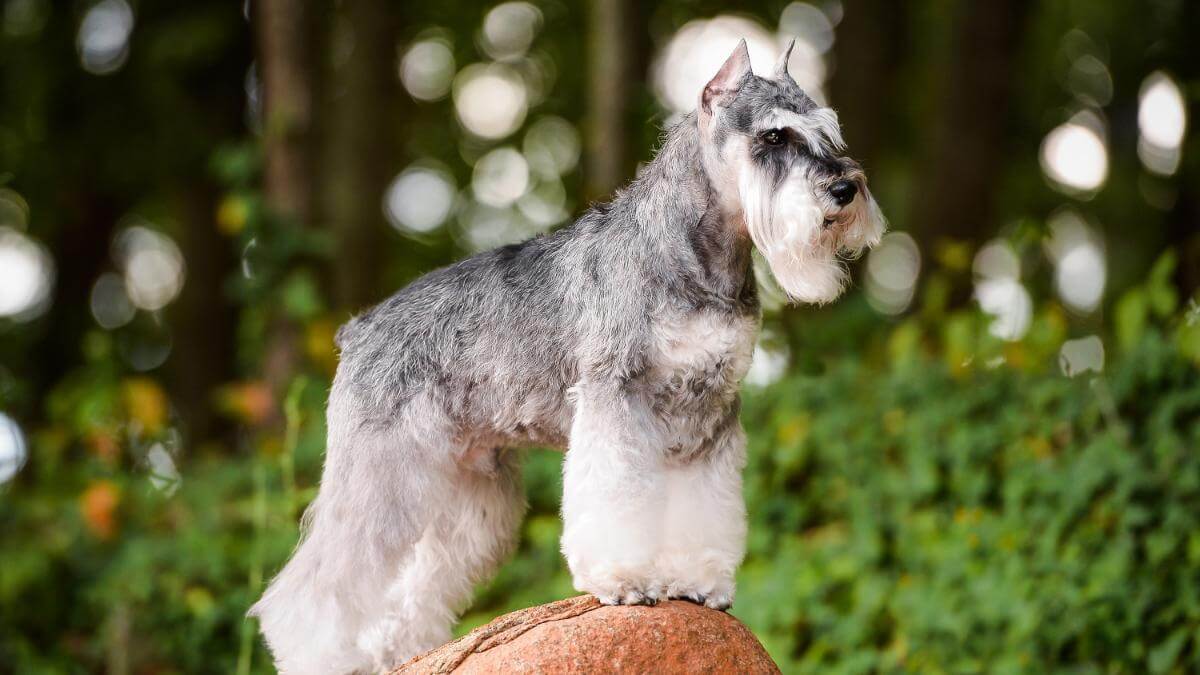
Discover the history, versatility, and unique qualities of the Miniature Schnauzer, a beloved family companion and skilled competitor.
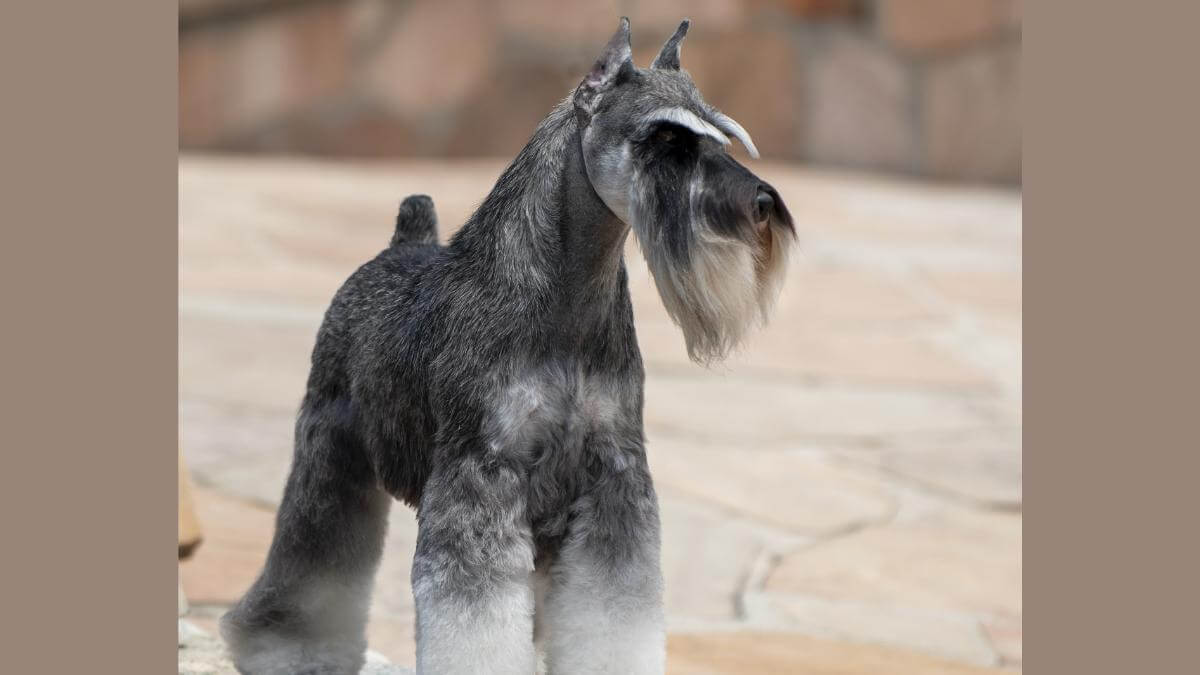
All About Judging
Learn about the Miniature Schnauzer’s history, traits, grooming, and judging standards for conformation shows and competitions.
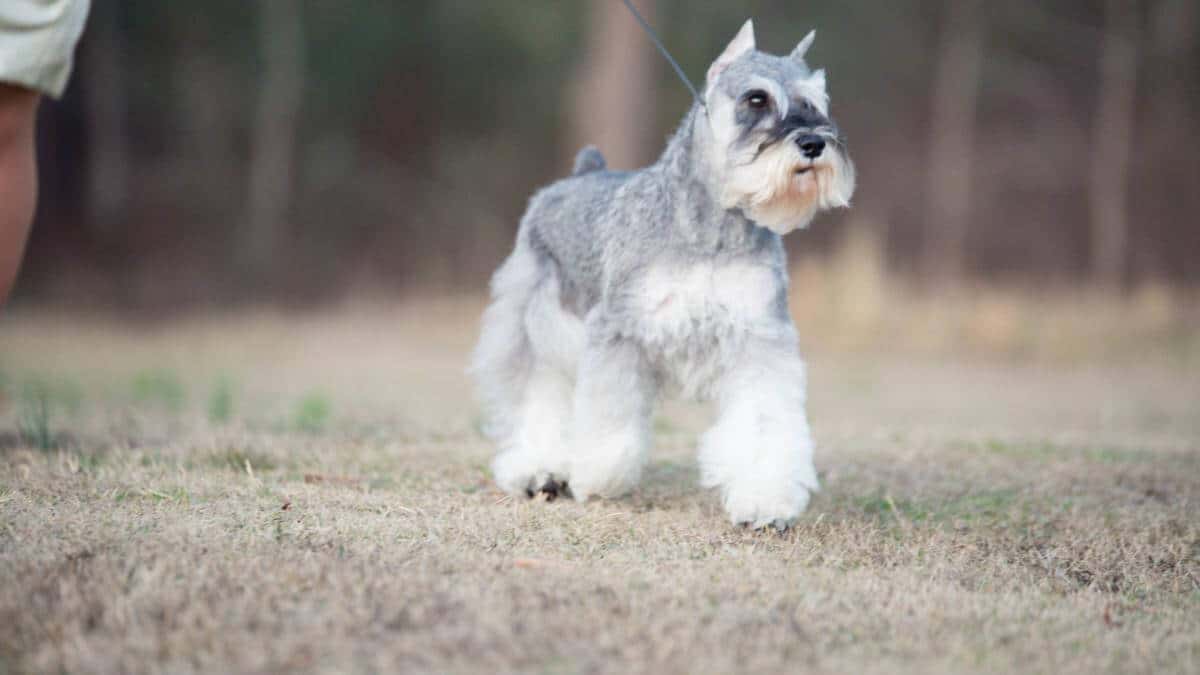
All About Judging
Learn about the Miniature Schnauzer’s unique blend of Terrier and Working Dog traits, from movement to coat and temperament.

Meet the Breeders
A 15-year Owner Handler and breeder shares insights on Miniature Schnauzers, challenges, mentorship, and the future of the sport.
Learn about the history, evolution, and unique traits of Schnauzers, including Standard, Miniature, and Giant breeds.

Meet the Judges
Lee Whittier shares insights on judging Miniature Schnauzers at Montgomery County, Terrier traditions, breeds’ future, and more.

Meet the Breeders
Marilyn Lande is the breeder behind Frostlande Kennels Miniature Terriers. Read about the kennel’s beginnings, Miniature Terriers puppies.

Meet the Breeders
Hilde Haakensen is the breeder behind Axcium Miniature Schnauzers. Read about the kennel’s beginnings, Miniature Schnauzer puppies.

Meet the Breeders
Carma Ewer is the breeder behind Carmel Miniature Schnauzers. Read about the kennel’s beginnings, Miniature Schnauzer puppies, and much more!
The tail is set high and carried erect, contributing to the Miniature Schnauzer’s alert and square outline. It may be naturally long or traditionally docked in countries where the practice is permitted.
A Note About Color: All colors of the Miniature Schnauzer have uniform skin pigmentation, i.e., no white or pink skin patches appear anywhere on the dog, and the nose must be solid black. The typical salt and pepper color of the topcoat results from the combination of black and white banded hairs and solid black and white unbanded hairs, with the banded hairs predominating. The black and silver color generally follows the same pattern as the salt and pepper. The entire salt and pepper section must be black. The body coat color in salt and pepper and black and silver dogs fades out to light gray or silver white under the throat and across the chest. Black is the only solid color allowed. Dogs not of an allowed color, or white striping, patching, or spotting on the colored areas of the dog, except for the small white spot permitted on the chest of the black, are disqualified from competing in the show ring.
Coat Type
Wiry, Double
The structure of the coat this breed carries.
Coat Length
Medium
How long the breed's coat grows when kept in condition.
Adaptability Level
How easily a breed copes with changes in home, routine, noise and weather.
Mental Stimulation Needs
How much a breed needs a job, a puzzle or training to stay content.
A Miniature Schnauzer should receive a complete and balanced diet suited to the dog’s age, activity level, and body condition. Portions should be measured carefully because excess weight can reduce mobility and place unnecessary strain on the joints.
A puppy generally needs three or four small meals each day before gradually moving to two meals. Most adults are fed twice daily, with the amount adjusted according to the food’s caloric density and the dog’s level of activity.
Because the Miniature Schnauzer can be prone to certain metabolic and pancreatic problems, high-fat foods and excessive table scraps are best avoided. Fresh water should always be available.
The Miniature Schnauzer is highly intelligent and usually responds well to consistent, reward-based training. Short, varied sessions using praise, food rewards, toys, and play can assist with maintaining attention and enthusiasm.
Early socialization should introduce the puppy to different people, well-mannered dogs, sounds, surfaces, and unfamiliar environments. Leash manners, recall, impulse control, and calm greetings are especially useful because the breed can be alert, vocal, and quick to react to activity around the home.
Clear expectations will help prevent habits such as excessive barking or demanding attention. Patient, engaging training usually produces better results than harsh methods.
Dogs kept in a traditional show coat are hand-stripped to preserve the harsh texture and proper color of the outer coat. Pet coats are often clipped for convenience, although clipping may soften the texture over time. The beard should be cleaned regularly because it can collect food and retain moisture. Nails should be trimmed as needed, ears should be checked for irritation or debris, and teeth should be brushed routinely.