Members
01/Overview
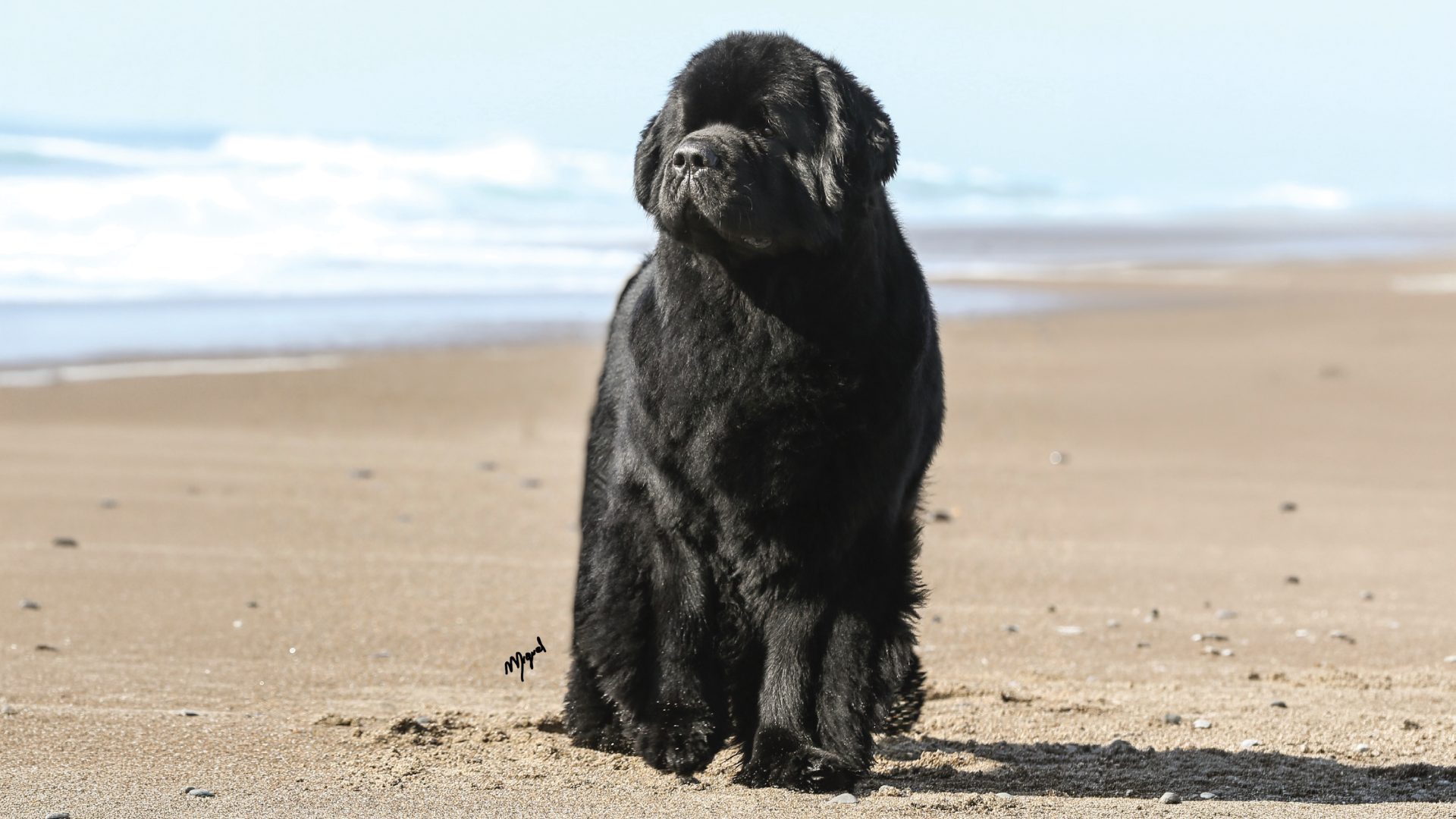
The Newfoundland, or “Newfie” as it is called by its many friends, is a majestic purebred known for its gentle disposition and impressive size. Originating from the Canadian island of Newfoundland, these dogs are natural water rescuers, renowned for their strength and swimming abilities. They possess a sweet-natured temperament, making them excellent family companions as well as reliable working dogs. Newfies are characterized by their thick, water-resistant coat and their large, bear-like appearance, embodying a perfect combination of strength, dignity, and sincerity.
Highlights
02/History
The Newfoundland has a rich and storied history, rooted in its namesake province, the island of Newfoundland off the Atlantic coast of Canada. Originally bred and utilized by the island's fishermen, Newfoundlands were esteemed for their incredible strength, swimming ability, and temperament, which made them ideal for the harsh conditions of the North Atlantic.
The exact origins of the breed are somewhat murky, with theories suggesting a mix of indigenous dogs and those brought to the island by European fishermen, possibly including Portuguese Water Dogs, Great Pyrenees, and even Mastiffs. Over time, these various breeds intermingled, leading to the development of the Newfoundland breed as it is known today.
Renowned for their water rescue abilities, Newfoundlands have a storied history of saving lives at sea. Their dense, water-resistant coat, webbed feet, and immense strength made them superbly suited for water rescues and other maritime activities. They were also used for hauling nets and carts, further showcasing their versatility and work ethic.
The breed's reputation for gentleness and loyalty was cemented in the 19th century when it gained popularity in England. It was during this time that a Breed Standard began to take shape, with an emphasis on the Newfie's large size, sweet disposition, and working ability.
The breed was officially recognized by the American Kennel Club (AKC) in the early 20th century. It has since become a beloved companion and working dog in the United States and around the world, participating in a variety of activities and dog sports such as Water Rescue and Therapy Dog work.
The Newfoundland's historical roles have shaped much of the breed's character. Today the breed remains renowned for its gentle nature, strength, and affinity for water, making it unique both in the world of working dogs. The Newfoundland's historical significance, and the roles it has played in the lives of people across centuries, continues to endear the breed to dog enthusiasts who appreciate a purebred with a heart as big as its body.
03/Appearance
Newfoundlands are known for their impressive size. On average, adult males measure about 28 inches tall at the shoulder, and mature females average a height of around 26 inches.
In terms of weight, male Newfoundlands typically weigh between 130 and 150 pounds. Females, being a bit smaller, generally weigh from 100 to 120 pounds.
Skull: The Newfoundland boasts a massive head, with a well-developed brow that conceals a moderate stop. The skull is broad, with a slightly arched crown and prominent occiput, and well-developed cheeks, all of which contribute to the breed’s soft and dignified appearance.
Expression: Characterized by a friendly and intelligent expression, the face radiates warmth and approachability. The expression is largely shaped by the eyes, which convey a sense of benevolence and kindness.
Eyes: The breed's eyes are one of its most captivating features. They are deep-set, dark brown, and spaced widely, adding character to the dog's expression. The eyes reflect a calm and gentle demeanor, typical of the Newfoundland.
Ears: The ears are rather small, triangular in shape with rounded tips, and set slightly above the brow and close to the head. This positioning contributes to a refined and sophisticated look, harmonizing with the overall size and shape of the head.
Muzzle: The muzzle is both deep and broad, providing a balance with the size of the skull. Its length is slightly less than that of the skull, with a straight or only slightly arched bridge.
Nose: The nose is large with well-opened nostrils. It is black, on black and white and black dogs, and self-colored on brown and gray dogs. Notably, the nose typically retains its pigmentation even in colder climates, a unique feature that underscores the breed’s adaptability to its native environment.
Bite: The Newfoundland has a level or a scissors bite, where the upper incisors closely overlap the lower incisors and are set squarely within the jaws. The bite reflects the breed’s ability to hold items in the water.
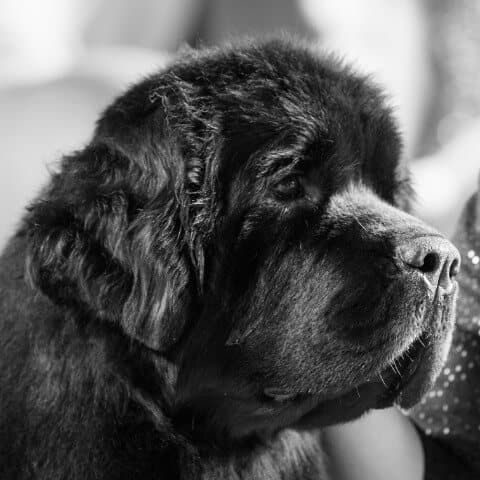
Newfoundlands are large, well-balanced dogs with a sturdy frame. They exhibit substantial bone that is essential for the breed’s original work as a draft animal and water rescuer. Despite its size, the breed is well known for its harmonious proportions that allow the dog to swim with extraordinary endurance. The Newfie's body is slightly longer than it is tall, measured from the point of the shoulder to the point of the buttocks and from the withers to the ground. The breed's overall substance is one of great strength and power, yet the dog retains an ease of movement.
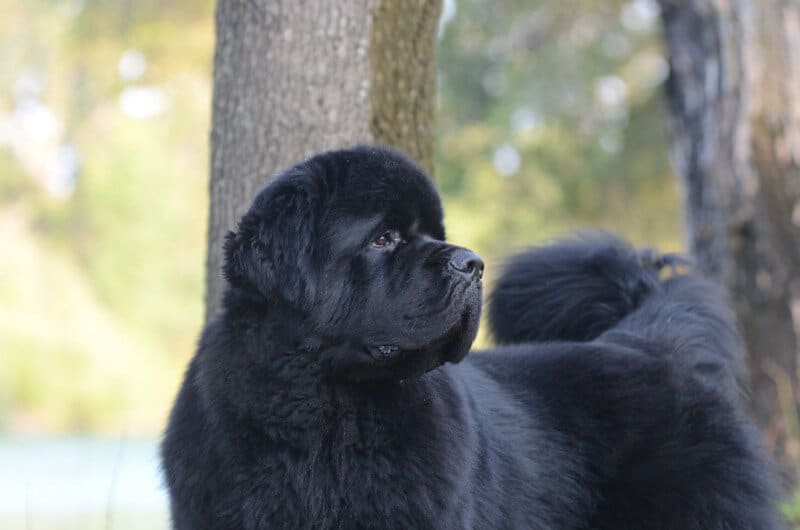
Texture: The double coat of the Newfoundland offers exceptional protection in cold, harsh weather and in icy water. The undercoat is soft and dense, whereas the water-resistant outer coat is coarse and moderately long, and may be either straight or wavy. The top coat lies flat against the body. It is short and fine on the face and muzzle, but the backs of the legs are feathered and the tail is covered in long, dense hair.
Markings: White Markings
Standard Colors
04/Consider
Owning a Newfoundland is a rewarding experience for those who appreciate a large, gentle companion. This breed requires careful consideration and understanding of its unique needs to ensure a harmonious living environment for both the dog and its human partner.
Interaction With Family
The level of affection a breed typically shows towards family members and familiar individuals.
Good With Other Dogs
The innate friendliness of a dog towards other dogs can depend on its breed.
Good With Young Children
The degree to which a breed will typically be patient with young children.
Amount Of Shedding
How much hair a breed typically leaves behind on clothes, furniture and floors.
Frequency Of Grooming
How often a breed needs brushing, bathing or a professional trim to stay in condition.
Amount Of Drooling
How prone a breed is to drool, worth knowing before you keep a towel by the door.
Openness To Strangers
How openly a breed tends to greet new people, visitors and strangers.
Protective Nature
How likely a breed is to alert you to anything unfamiliar, and stand between you and it.
Playfulness Level
How enthusiastic a breed stays about games and play well past puppyhood.
Trainability Level
How readily a breed takes direction and works with you rather than around you.
Barking Level
How much a breed uses its voice, and how readily.
Energy Level
How much get-up-and-go a breed brings to an average day.
Health
The Newfoundland is generally a healthy and sturdy breed, equipped with a robust frame that can handle various physical activities. Despite the breed's inherent strength, some Newfies, as with all breeds and mixed breeds, are prone to certain health conditions. It is crucial for future owners and caretakers to be aware of these risks and to collaborate closely with a reputable breeder and a veterinarian who is familiar with the breed. Lifespan: Typically, the average lifespan of a Newfoundland ranges from 9 to 10 years. However, with attentive care, regular veterinary check-ups, and proper nutrition, many Newfies enjoy a quality life well into their teens.
The personality of the Newfoundland is often described as gentle, patient, and amiable. This can make the breed an excellent companion, especially in households with children. The Newfie's immense size is matched by an equally big heart, characterized by a calm and affectionate nature. Newfoundlands are typically good with other dogs and pets, demonstrating their typically sociable and tolerant demeanor. They are known for their loyalty and attachment to their human companions, and they often form strong bonds with their families.
However, due to the Newfoundland's size and strength, early socialization and training are essential to make sure this giant canine is well-behaved and manageable. These dogs are generally not recommended for novice dog owners, as their size alone requires a handler who can confidently manage a large breed. Despite their size, Newfoundlands are sensitive and respond well to positive, reward-based training methods.
When it comes to being left alone, Newfoundlands can manage short periods on their own but thrive on companionship. They generally prefer to be with their families at all times. Although they are not known for being particularly dog aggressive, individual temperaments will vary just as with any breed. Typically, Newfies are friendly toward strangers, though they may exhibit a protective nature if they perceive a threat to their family.
Exercise Expectations
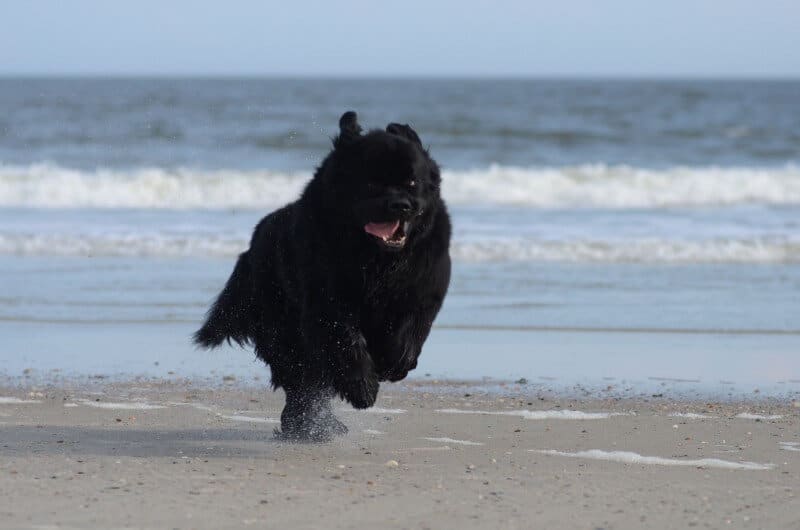
The exercise needs of a Newfoundland should be met with a balance of physical activity and rest. Daily walks are important for both physical and mental stimulation. These walks should be of moderate length and intensity, as overexertion can be harmful, especially for a breed prone to joint issues. Swimming is an excellent form of exercise for Newfoundlands, aligning with their natural affinity for water and their historical role as water rescue dogs. It provides a low-impact workout that is gentle on their joints. In terms of intensity, the exercise regimen should be adjusted to the dog's age, health status, and individual energy levels. Young puppies should have short, frequent play sessions, avoiding overly strenuous activities that could affect their developing bones and joints. Adult Newfoundlands require more structured exercise, but it's important to monitor them for signs of fatigue or overheating, especially in warm weather. Playfulness is another characteristic of the Newfoundland breed. They enjoy interactive play sessions with their human companions, such as fetch or gentle tug-of-war games, which also serve as bonding opportunities. These activities should be supervised and kept at a level that the dog finds enjoyable and is physically capable of handling.
Living with a Newfoundland is a unique experience due to their large size and gentle nature. It's important to consider their specific needs when it comes to their living environment.
Despite their size, Newfoundlands can adapt well to apartment living as long as their exercise needs are met. They are relatively inactive indoors and are content to relax by their caretaker's side. However, due to their large size, a home with ample space is ideal to ensure their comfort and mobility. A securely fenced yard where they can roam and play safely is a bonus, but not a necessity, as long as they receive adequate exercise through walks and outdoor activities.
Newfoundlands have a thick, water-resistant coat that provides insulation, making them well-suited to colder climates. They generally enjoy cooler weather and can spend time outdoors comfortably in lower temperatures. However, it's essential to provide a warm, dry shelter and to monitor them for any signs of discomfort or cold stress.
In contrast, their heavy coat makes them more susceptible to overheating in hot weather. During warmer months, it's crucial to provide plenty of shade and fresh water and to limit exercise during the hottest parts of the day. Air conditioning or fans inside the home can help keep them cool. Care should be taken to avoid heat exhaustion, and activities should be adjusted to the temperature and their tolerance.
Living with a Newfoundland also means dealing with drool, which is a natural part of their character. Keeping towels handy and regular cleaning can help manage this aspect of Newfoundland ownership.
05/Puppies
Newfoundland puppies, with their adorable expressions and fluffy coats, are a joy to behold. However, raising a Newfie pup requires commitment and understanding of the little ones' rapid growth and developmental needs. From the moment they are born, these puppies embark on a journey towards becoming the large, gentle giants for which they are quite famous.
Caring for a Newfoundland puppy involves a comprehensive approach that includes proper nutrition, socialization, training, and healthcare. Providing a diet specifically formulated for large breed puppies is essential for the pup's growth. This diet should support steady growth without causing excessive weight gain, which can stress developing bones and joints. The Newfie puppy benefit from frequent, small meals that supports its digestion and helps to prevent serious conditions such as bloat.
Early socialization is key in developing a well-rounded Newfoundland. Exposing the puppy to various people, environments, and situations helps to build its confidence and adaptability. Starting basic obedience training early, using positive reinforcement methods, is also crucial. This breed responds well to consistent, patient training, as puppies learn and adapt at their own pace.
Regular veterinary check-ups are vital for monitoring the health and growth of a Newfoundland pup. Keeping the puppy up-to-date with vaccinations and deworming is part of this health regimen. Discussing preventive care for common breed-specific health issues with a vet is also important.
Exercise for the Newfoundland puppy should be appropriately regulated. While the pup is playful and energetic, excessive or strenuous activity can be detrimental to its developing body. Gentle walks and play sessions are sufficient for a growing Newfie's physical and mental well-being.
Introducing grooming practices early on is also beneficial. Regular brushing not only helps the Newfoundland puppy become accustomed to grooming, it also maintains the health and shine of the coat. Grooming is also a great opportunity to check for any skin issues or parasites.
06/Activities
Newfoundlands are well-suited for various activities that capitalize on the breed's strength, intelligence, and amiable nature. Participating in these activities not only provides physical and mental stimulation, it also strengthens the bond that is shared between the dog and its handler. Here are some dog sports in which Newfoundlands can excel:
Draft Work: This involves the dog pulling a cart or wagon, an activity that utilizes the Newfoundland's strength and working heritage.
Obedience: Newfoundlands can perform well in Obedience Trials, demonstrating their trainability and desire to work in partnership with their handlers.
Rally Obedience: This is a sport combining elements of Obedience and Agility, where the each dog and handler navigates a course with printed directions for completing a variety of obedience tasks.
Tracking: Leveraging their strong sense of smell, Newfoundlands can participate in Tracking events, following a scent trail to find specific items or people.
Agility: While not as agile as some smaller breeds, the typical Newfoundland can still enjoy and participate in modified Agility courses that are suitable for the breed's size.
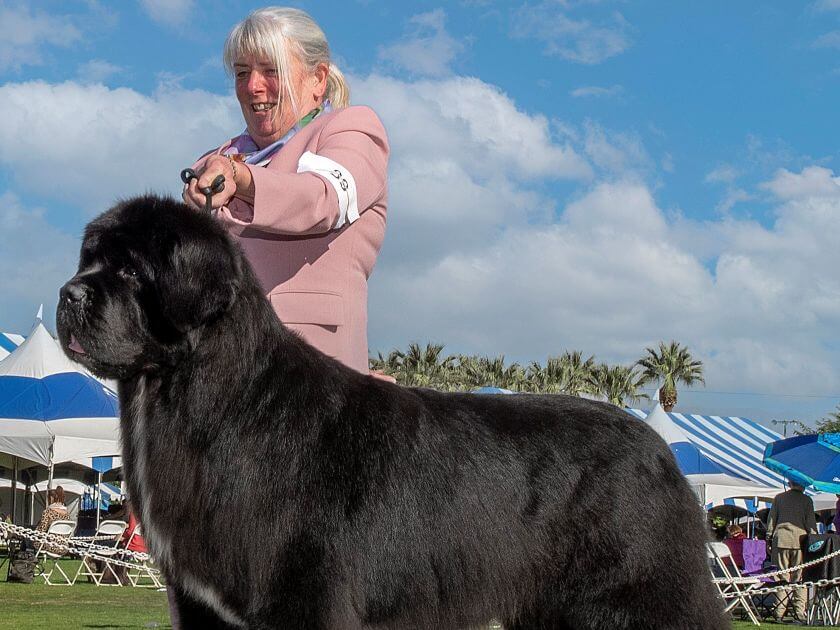
Conformation: Newfoundlands often participate in Conformation dog shows, where they are judged on how well they conform to the Breed Standard.
Water Rescue/Work: Given the breed's history as a working dog in water, Newfoundlands excel in Water Rescue and Water Work activities, showcasing their natural swimming abilities and strength.
Therapy Work: The breed's gentle and calm demeanor can make the Newfoundland an excellent Therapy Dog, providing comfort and support in various therapeutic settings.
Canine Good Citizen (CGC): This program reinforces a Newfoundland's good manners at home and in the community, and most can easily obtain their CGC certification.
These activities not only provide a constructive outlet for the Newfoundland's energy and intelligence, they also offer a rewarding way for the dog to interact with its environment and people in ways that reinforce the breed's natural abilities and instincts.
Gallery
07/Standards
The Newfoundland is recognized by the world's leading registries and kennel organizations, which categorize the breed into a specific Group based on its unique characteristics. This breed is recognized worldwide under the following Group designations:
The ideal Newfoundland is described by a Breed Standard that is approved by each of the world’s leading registries and kennel organizations. The Breed Standards for this breed may be found in the following links:
08/Clubs
The Newfoundland is supported by a network of organizations dedicated to its preservation and welfare. These clubs play a crucial role in promoting the breed, providing education and supporting breed-specific rescue efforts.In the United States, the Newfoundland Club of America (NCA) is the primary organization for breed enthusiasts. Founded in 1930, it offers a wealth of resources for both prospective and current Newfie owners, including information on health, training, and rescue. The NCA also organizes events and shows, fostering a community of breeders, exhibitors, and owners who are united by their love for the Newfoundland breed.In Canada, the primary organization is the Newfoundland Dog Club of Canada (NDCC). This club is instrumental in promoting the breed across Canada, organizing events, and providing resources for education and health. It also works to preserve the Breed Standard and the breed's heritage.In the United Kingdom, the Newfoundland Club is the premier organization for breed enthusiasts. Established in 1886, its members provide valuable information and resources, organize events, and support breed-specific rescue and rehoming efforts.In addition to these national clubs, there are many regional and local clubs in these countries, each contributing to the welfare and promotion of the Newfoundland more regionally. These organizations are instrumental in maintaining the breed's high standards and in supporting Newfie owners and enthusiasts in all aspects of breed care and management.
09/Rescue
Rescue groups play a vital role in the lives of Newfoundlands that are in need of a new home. These groups are dedicated to the rescue, rehabilitation, and rehoming of Newfies, helping these gentle giants receive the love and care they deserve.The Newfoundland Rescue Program, affiliated with the Newfoundland Club of America, provides support for Newfies in need across the United States. The group works with a network of volunteers and foster homes to offer care and find suitable homes for homeless Newfoundlands. The group's commitment to the breed includes not only rehoming efforts but also public education about the breed’s specific needs and characteristics.Similarly, the Newfoundland Dog Rescue operates in certain parts of Canada, focusing on the welfare of dogs in need. It volunteers direct their efforts towards providing medical care and fostering, and facilitating adoptions for Newfies that have been surrendered, abandoned, or are in need of a new home for any reason. This group operates with a deep understanding of the breed’s unique qualities and needs.Local shelters and general breed rescue groups can occasionally have a Newfoundland that is available for adoption. These organizations can also be instrumental in facilitating an adoption for a needy Newfoundland.
10/Facts
Origins
The Newfoundland originated on the island of Newfoundland off the northeastern coast of Canada. It was initially employed by Atlantic fishermen.
Water Rescue
Newfies are renowned for their water rescue abilities, thanks to their webbed feet, waterproof coat, and strong swimming skills.
Size
Newfoundlands are one of the largest dog breeds, with males typically weighing between 130 and 150 pounds and females from 100 to 120 pounds.
Gentle Giants
Despite their large size, Newfoundlands are known for their gentle and sweet disposition, earning them the nickname "gentle giants."
Nanny Dogs
Their patient and protective nature makes them excellent companions for children, often being referred to as "nanny dogs."
Famous Newfoundlands
Perhaps the most famous Newfoundland was "Seaman," the dog that accompanied Lewis and Clark on their expedition.
Lifespan
The average lifespan of a Newfoundland is around 9 to 10 years, which is typical for large dog breeds.
Coat
Newfies have a dense double coat that is water-resistant, helping them to stay warm and dry in cold and wet environments.
11/FAQ
Newfoundlands do shed, particularly during the change of seasons. They have a dense, water-resistant double coat that requires regular grooming to manage shedding. Brushing several times a week helps to remove loose hair and reduce the amount of hair around the house.

Written by
Dan Sayers is the Executive Editor of SHOWSIGHT. He is a member of the World Dog Press Association and the Dog Writers Association of America, which recognized his illustrations in the award-winning Encyclopedia of K-9 Terminology. Dan is a longtime supporter of the sport of dogs and an advocate for the conservation of recognized breeds in all their forms and functions. He is a member of the Morris and Essex Kennel Club, and for 45 years, the Irish Water Spaniel Club of America where he serves as AKC Delegate, Archivist, and approved Breed Mentor. Dan breeds under the Quiet Storm prefix and has judged the IWSCA National Specialty Sweepstakes twice.


American Kennel Club (AKC)
Andrew Ritter reflects on judging at the 2025 AKC National Championship and shares his take on quality, organization, and the year ahead.
Meet the Judges
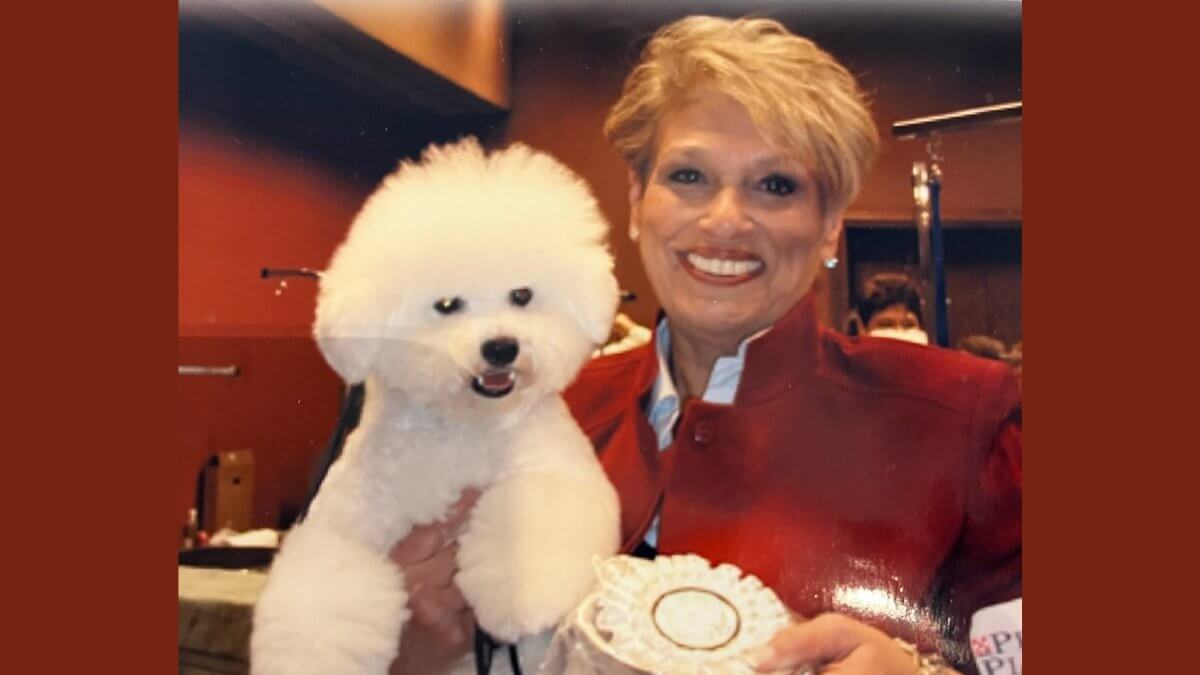
Mimi Winkler shares her experience judging Newfoundlands, Chows, and Schipperkes at the 2025 Morris & Essex All-Breed Dog Show.

Meet the Judges
Edward Fojtik reflects on judging Morris & Essex 2025, his breed assignments, and the pageantry that makes the show unforgettable for all!
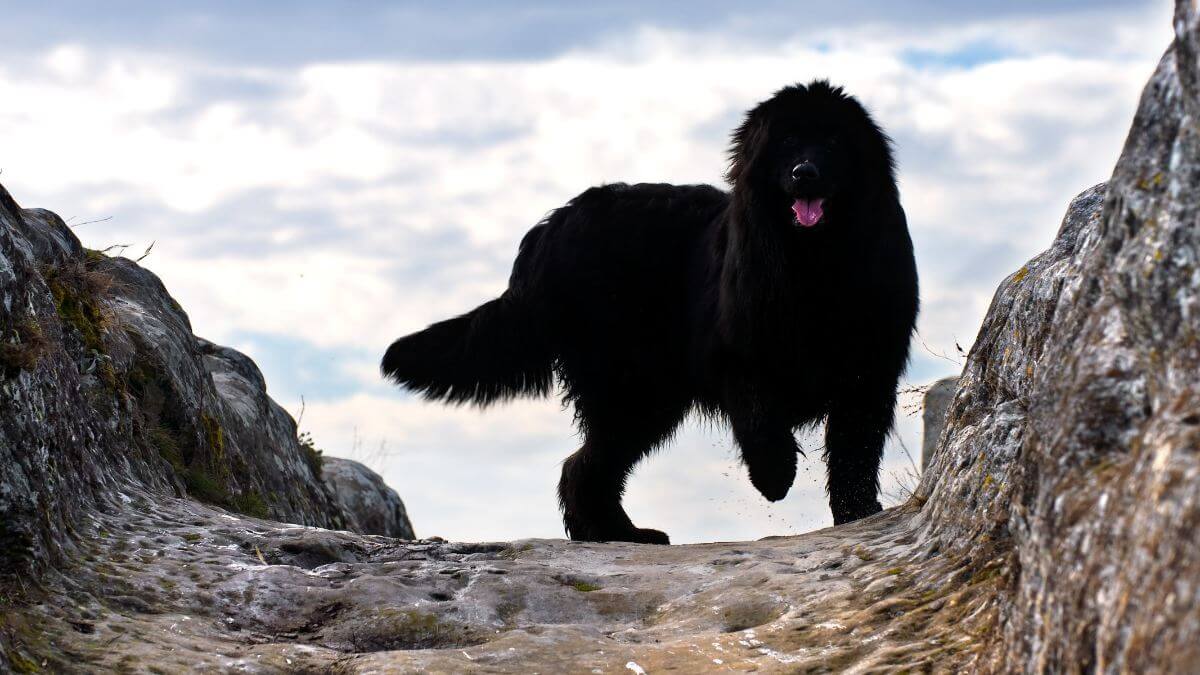
Discover the fascinating origins of the Newfoundland dog, its evolution, and its legacy as a working companion and lifesaver.
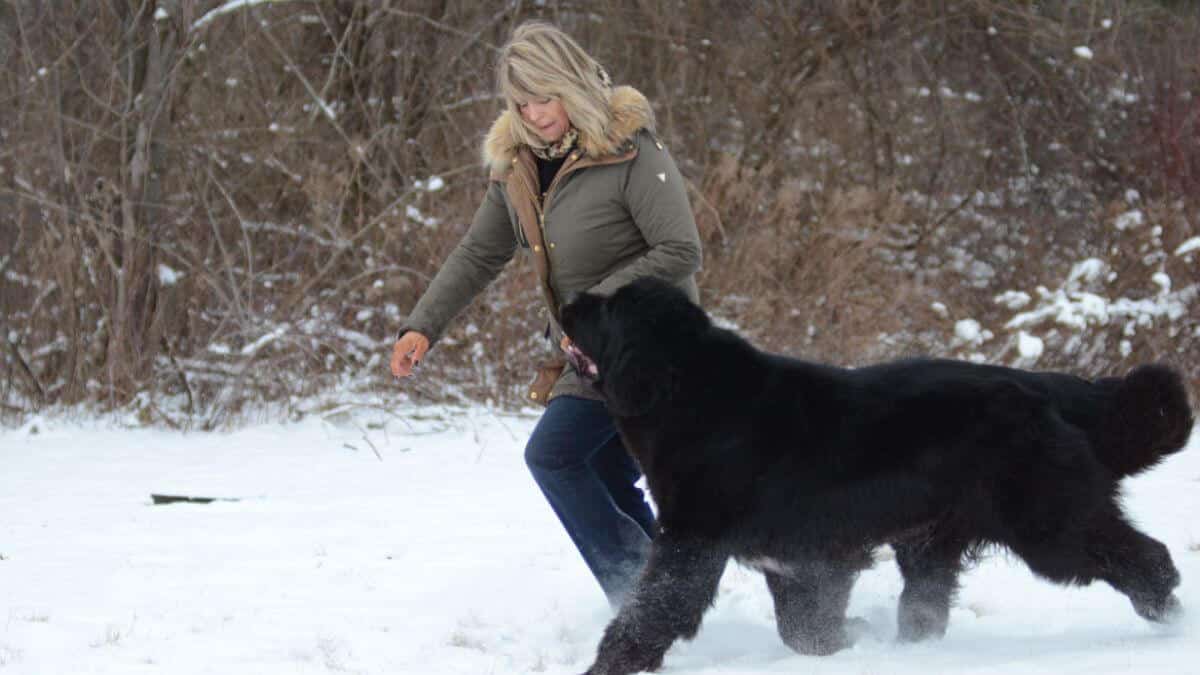
Discover the gentle strength and loyalty of the Newfoundland Dog, a devoted companion and powerful working breed.

Meet the Breeders
Ingrid Lyden is the breeder behind Naiska Newfoundlands. Read about the kennel’s beginnings, the puppies, and much more!
Learn more about living with a Newfoundland dog; personality, temperament, nutrition, health, and everything else you need to know.
The origin of the Newfoundland dog will always be a mystery. The big black dogs of Newfoundland have various hypotheses for their appearance.


Newfoundlands | But I Don’t Need a Show Dog ! Why do people recommend choosing a breeder (who shows and titles their dogs) to folks
The tail of the Newfoundland is an extension of its topline, set on the natural line of the croup. It is strong and broad at the base, reaching to the hocks without any kinks. The tail hangs straight down or with a slight curve when the dog is relaxed. In motion, the tail is carried straight out and should never curl over the back. Its length and carriage are important aspects of the Newfie's silhouette, reflecting the breed's strength on land and acting like a rudder in the water.
A Note About Color: The Newfoundland’s coat may be black, brown, gray, or white and black. White dogs with black markings are known as “Landseers.” Solid-colored dogs may have white on the chin, chest, toes, and tip of the tail, and the coat may appear tinged with bronze on black and gray dogs. Likewise, lighter furnishings are common on gray and brown dogs. No other colors and markings are acceptable in the breed.
Coat Type
Double
The structure of the coat this breed carries.
Coat Length
Medium
How long the breed's coat grows when kept in condition.
Adaptability Level
How easily a breed copes with changes in home, routine, noise and weather.
Mental Stimulation Needs
How much a breed needs a job, a puzzle or training to stay content.
Feeding and nutrition are critical components in the care of a Newfoundland. Given their large size, these dogs have specific dietary needs to maintain their health and energy levels. It's important for caretakers to provide a well-balanced diet that supports their substantial build and active lifestyle.
When feeding Newfoundland puppies, it's essential to focus on controlled growth. Puppies should be fed a large-breed specific formula that promotes steady, healthy development. Overfeeding can lead to rapid growth, putting undue stress on their bones and joints. A gradual transition to adult food is recommended around 18 months of age.
For adult Newfoundlands, their diet should be tailored to their individual activity level and metabolism. Typically, an adult Newfoundland will thrive on two meals per day. The amount of food, usually measured in cups per day, will vary based on the dog's size, age, and activity level. Caretakers should consult the feeding guidelines provided by the dog food manufacturer and adjust as needed to maintain a healthy weight.
Newfoundlands are prone to obesity, so monitoring their food intake and weight is crucial. Obesity can exacerbate health issues like joint problems and heart disease. Caretakers should regularly assess their Newfoundland's body condition and adjust their diet accordingly. Treats should be given in moderation, and human food should be avoided to prevent nutritional imbalances and weight gain.
In addition to a balanced diet, access to fresh water at all times is essential for their health and hydration, especially after exercise or in hot weather.
Training a Newfoundland requires patience, consistency, and an understanding of the breed's characteristics. Known for their intelligence and eagerness to please, Newfoundlands are generally responsive to training, but their large size means that training should start early while they are still manageable. This breed benefits from gentle, positive reinforcement techniques, as they are sensitive to their handler's tone and mood.
Despite their size, Newfoundlands are not known to be overly vocal, but they will bark to alert their family of anything unusual. It's important to teach them when barking is appropriate through consistent training and socialization. Their intelligence and problem-solving abilities make them quick learners, but they can also develop unwanted behaviors if not properly guided.
When it comes to trainability, Newfoundlands are often eager to please, which can make the training process smoother. However, their size can be a challenge, especially for novice dog owners. Teaching basic commands like sit, stay, come, and heel is crucial, not only for obedience but also for the safety of both the dog and those around them.
Predation is not typically a strong trait in the Newfoundland breed, but like any dog, they may chase after small animals if not properly trained. Their large size can make this behavior particularly hazardous, so early training to manage these instincts is important.
Newfoundlands also have a moderate potential for wanderlust. While they are generally homebodies, securing your yard with appropriate fencing is recommended to prevent any unintended roaming.
Grooming Expectations
The Newfoundland's coat is subject to moderate to heavy shedding, especially during seasonal changes. Regular brushing, at least a few times a week, is essential to remove loose fur, prevent matting, and keep the coat clean and glossy. During shedding seasons, daily brushing may be necessary to manage the increased shedding. While Newfoundlands are not particularly high-maintenance in terms of grooming complexity, their size and the density of their coat can make the process time-consuming. Using the right tools, such as a slicker brush and an undercoat rake, can make grooming more efficient and effective. Bathing should be done as needed, but not too frequently, to avoid stripping the coat of its natural oils. When bathing, it's important to use a dog-specific shampoo and make sure that the coat is thoroughly rinsed and dried to prevent any skin irritation or infection. Their ears should be checked regularly and kept clean to prevent infections, especially since their floppy ears can trap moisture and debris. Regular nail trimming is also important to avoid discomfort and potential problems with walking. As with all breeds, dental care is vital, and regular teeth brushing should be part of the Newfoundland's grooming routine.