Members
01/Overview
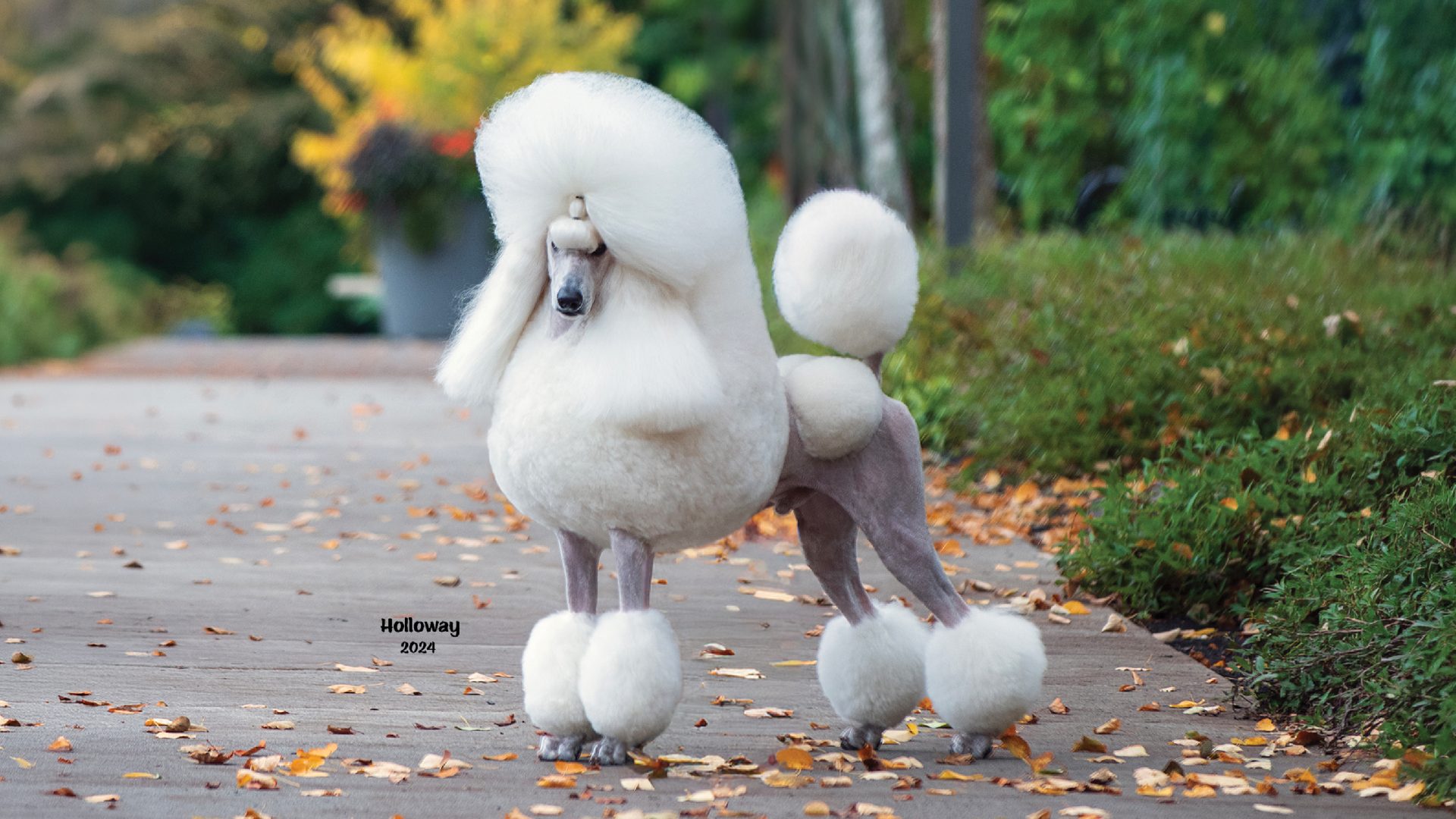
The Poodle is an intelligent, athletic, and elegant breed known for its distinctive curly coat, balanced build, and exceptional versatility. Highly trainable and people-oriented, the breed combines the abilities of a traditional water retriever with the temperament and adaptability of a devoted companion.
Poodles are recognized in three varieties in the United States: Standard, Miniature, and Toy. The Standard is the largest and oldest variety and retains the athleticism, stamina, and retrieving ability associated with the breed’s working origins.
Highlights
02/History
The Poodle has a long history as a water-retrieving dog in Europe. Although the breed became strongly associated with France, its development is generally traced to Germany, where its ancestors were used to retrieve waterfowl.
The breed’s name is connected to the German word “pudel,” referring to splashing in water. Early Poodles needed intelligence, swimming ability, endurance, and a willingness to retrieve game from lakes, rivers, and wetlands.
The Poodle’s distinctive coat served an important practical purpose in cold water. The dense, curly hair helped provide protection, while working dogs were traditionally clipped to reduce excess coat while leaving hair around important joints and areas of the body that benefited from additional warmth. This working trim eventually influenced the elaborate clips associated with Poodles in the show ring.
Over time, the breed became increasingly popular in France, where it was further refined and became closely associated with French culture. Poodles were valued not only as sporting dogs but also for their intelligence, trainability, and ability to perform tricks and entertain audiences.
The Standard Poodle represents the original and largest variety. Smaller Poodles were later developed through selective breeding, resulting in the Miniature and Toy varieties rather than through crosses with unrelated small breeds.
Poodles have performed a wide variety of roles throughout their history. In addition to retrieving waterfowl, they have worked as truffle hunters, circus performers, service dogs, and exemplary companions.
The American Kennel Club recognized the Poodle in 1887. In the United States, Standard, Miniature, and Toy Poodles are varieties of the same breed. The Standard and Miniature varieties compete in the Non-Sporting Group, while the Toy Poodle competes in the Toy Group.
The Poodle Club of America serves as the breed’s American Kennel Club parent club.
03/Appearance
An adult Standard Poodle measures over 15 inches tall at the withers. Males typically weigh between 60 and 70 pounds, while females generally weigh 40 to 50 pounds.
Skull: The Poodle has a moderately rounded skull with a slight but definite stop. The head should be long, refined, and proportionate to the body without appearing coarse.
Expression: The expression is intelligent, alert, and attentive, reflecting the breed’s responsive and confident nature.
Eyes: The eyes are very dark, oval in shape, and set far enough apart to give a bright, intelligent expression.
Ears: The ears are long, wide, and heavily feathered, hanging close to the head and set at or slightly below eye level.
Muzzle: The muzzle is long, straight, and fine, with sufficient strength and depth to remain balanced with the skull.
Nose: The nose is well developed, with pigmentation corresponding appropriately to the coat color.
Bite: The Poodle has strong white teeth that meet in a scissors bite.
The tail is set on high, straight, and carried upward when the dog is moving, contributing to the Poodle’s effortless elegance. It is traditionally docked to a sufficient length that ensures a balanced outline. Left natural, the tail is ideally carried away from the body and as straight as possible.
The Poodle is a squarely built, well-proportioned, athletic dog with a balanced and elegant outline. The distance from the breastbone to the point of the rump is approximately equal to the height at the withers.
The chest is deep and moderately wide, the back is short and level, and the loin is broad and muscular. Bone is strong and proportionate without appearing heavy or coarse.
Texture: The Poodle has a dense, naturally curly coat with a harsh texture. The coat should be thick, resilient, and evenly distributed, providing the characteristic fullness and definition associated with the breed.
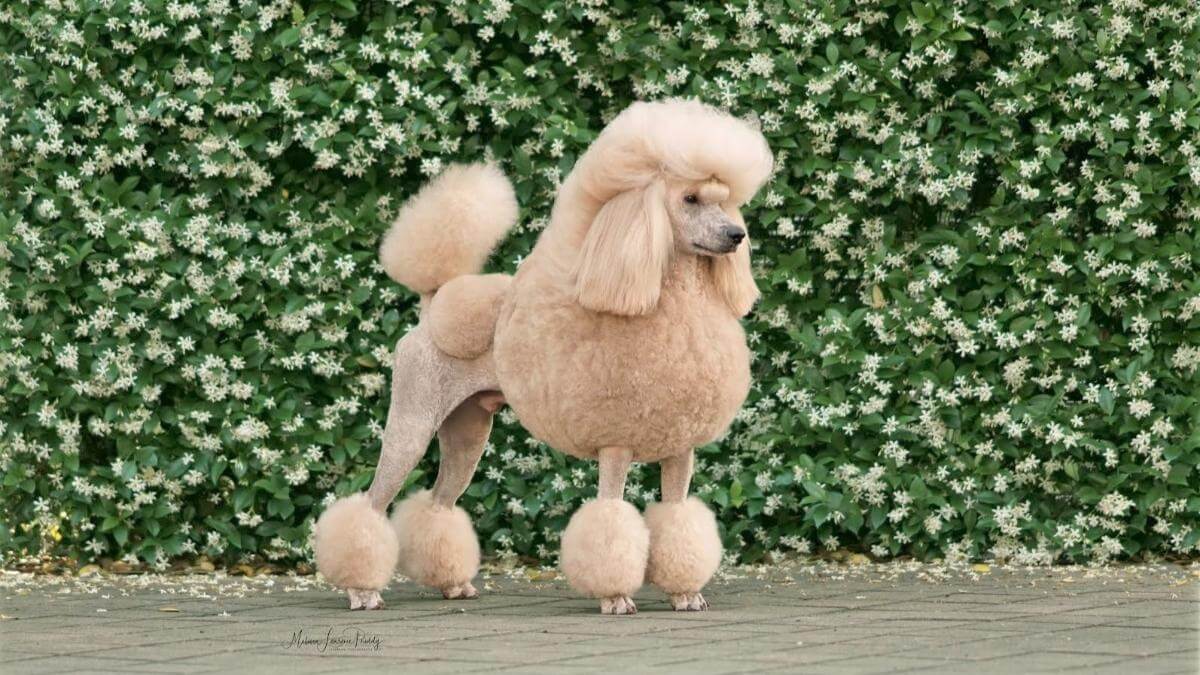
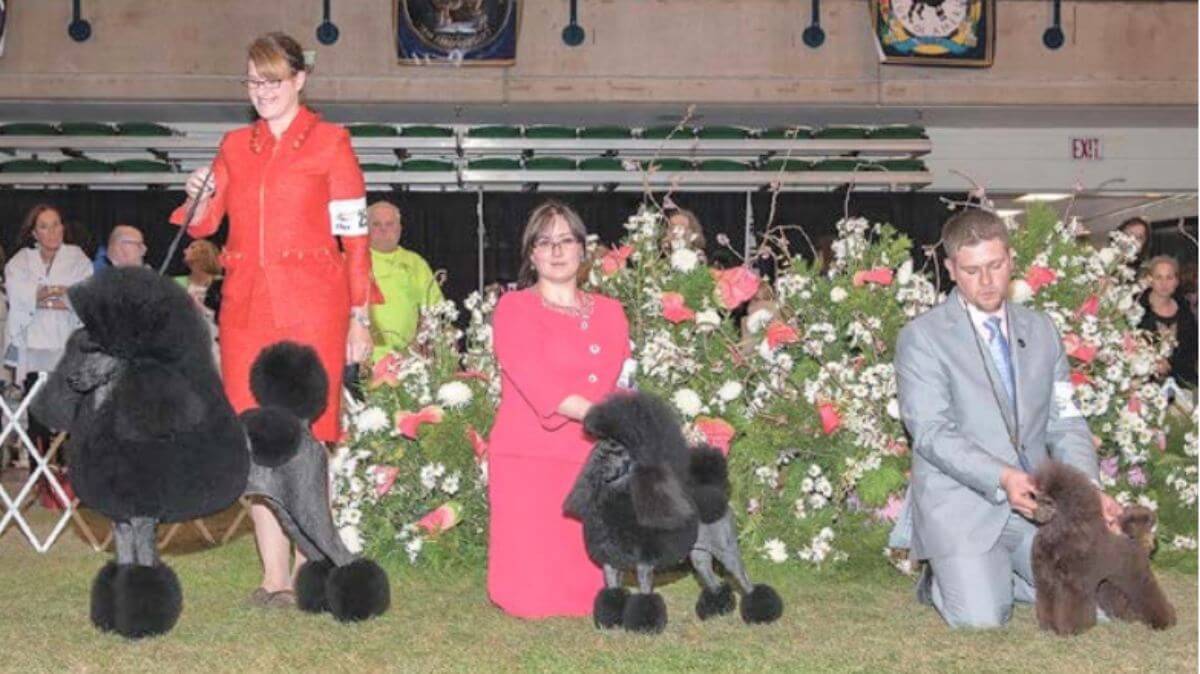
At dog shows, Poodles may be shown with a curly coat or a corded coat in the following clips only: Puppy (under 12 months of age), English Saddle, Continental, or Sporting. In all clips, the hair of the topknot may be left free or held in place by elastic bands. The hair is only of sufficient length to present a smooth outline. "Topknot" refers only to the hair on the skull, from the stop to the occiput. This is the only area where elastic bands may be used.
Standard Colors
04/Consider
The Poodle is intelligent, athletic, highly trainable, and closely connected to its family. Anyone considering the breed should be prepared for regular exercise, consistent training, extensive coat care, and plenty of mental stimulation.
Interaction With Family
The level of affection a breed typically shows towards family members and familiar individuals.
Good With Other Dogs
The innate friendliness of a dog towards other dogs can depend on its breed.
Good With Young Children
The degree to which a breed will typically be patient with young children.
Amount Of Shedding
How much hair a breed typically leaves behind on clothes, furniture and floors.
Frequency Of Grooming
How often a breed needs brushing, bathing or a professional trim to stay in condition.
Amount Of Drooling
How prone a breed is to drool, worth knowing before you keep a towel by the door.
Openness To Strangers
How openly a breed tends to greet new people, visitors and strangers.
Protective Nature
How likely a breed is to alert you to anything unfamiliar, and stand between you and it.
Playfulness Level
How enthusiastic a breed stays about games and play well past puppyhood.
Trainability Level
How readily a breed takes direction and works with you rather than around you.
Barking Level
How much a breed uses its voice, and how readily.
Energy Level
How much get-up-and-go a breed brings to an average day.
Health
The Poodle is generally a healthy and long-lived breed with a typical lifespan of 10 to 18 years. Preventive veterinary care, balanced nutrition, regular exercise, dental care, and maintenance of a healthy weight can help support long-term health.
The Poodle is intelligent, alert, active, and highly responsive to its family. The breed is known for learning quickly and often enjoys being involved in whatever is happening around the home.
They are usually affectionate and social, although some individuals may be reserved with unfamiliar people. Early socialization helps them become comfortable with different people, dogs, environments, and everyday situations.
Because of their intelligence, Poodles often need more than physical exercise alone. Training, problem-solving, and regular interaction help keep them mentally engaged and prevent boredom.
Exercise Expectations
A healthy adult generally benefits from at least 60 minutes of activity each day, with many individuals enjoying more. Activities that combine movement with training or problem-solving are especially well suited to the breed. Because Standard Poodles were developed as water retrievers, many enjoy swimming and retrieving games. Exercise should be adjusted according to the dog’s age, fitness level, and health.
Grooming Expectations
The Poodle can adapt well to different living environments as long as it receives enough exercise, training, companionship, and mental stimulation. Its intelligence and energy level make regular activity especially important.
Poodles often enjoy staying close to their families and may become bored if left without enough interaction or purposeful activity. Access to outdoor space can be useful, but walks, training, and shared activities are still necessary.
The breed usually does best with people who appreciate an intelligent, athletic, and highly trainable companion. Consistent routines, regular exercise, mental challenges, and proper coat care help the Standard Poodle thrive.
05/Puppies
Poodle puppies are intelligent, curious, energetic, and quick to learn. They benefit from early socialization, consistent routines, positive training, and plenty of opportunities to play, explore, and interact with people.
Puppies should have a predictable daily schedule that includes regular meals, potty breaks, naps, play, training, and quiet time. A crate or secure puppy area can provide a safe place to rest and can also support housetraining.
Early socialization should introduce the puppy to different people, well-mannered dogs, household sounds, surfaces, vehicles, and unfamiliar environments. These experiences should remain positive and appropriate for the puppy’s age.
Training can begin as soon as the puppy arrives home. Short sessions can focus on name response, recall, leash walking, house training, basic manners, and impulse control. Because Poodles learn quickly, varied and engaging lessons can help maintain interest and build confidence.
A Poodle puppy should receive a complete and balanced diet formulated for growth. Young puppies generally do best with several measured meals throughout the day before gradually transitioning to an adult feeding schedule.
Exercise should include supervised play, short walks, gentle retrieving, and exploration rather than repetitive or high-impact activity. As the puppy matures, exercise can gradually increase to match the breed’s athletic ability and energy level.
Regular veterinary visits are important during the first year. Grooming routines such as brushing, combing, nail trimming, ear checks, tooth brushing, and coat handling should also begin early so that the puppy becomes comfortable with regular care.
06/Activities
Standard Poodles excel in activities involving retrieving, movement, problem-solving, and close cooperation with a handler. Here are some of the dog sports and activities in which Poodles may participate:
Retrieving: Poodles can use their traditional water-retrieving instincts in structured retrieving activities and field work.
Dock Diving: Many Poodles enjoy jumping into water from a dock and retrieving toys, combining athleticism with their natural comfort in the water.
Agility: Poodles can use their speed, coordination, and quick reactions while navigating obstacle courses.
Obedience: Obedience Trials allow the breed to demonstrate focus, precision, responsiveness, and reliable performance with a handler.
Rally: Rally Obedience combines obedience exercises with movement through a designated course and can provide both mental and physical stimulation.
Tracking: Poodles can follow scent trails over varying terrain, making use of their intelligence and strong scenting ability.
Scent Work: The breed can use its sense of smell to locate specific odors hidden in containers, indoor spaces, outdoor areas, or vehicles.
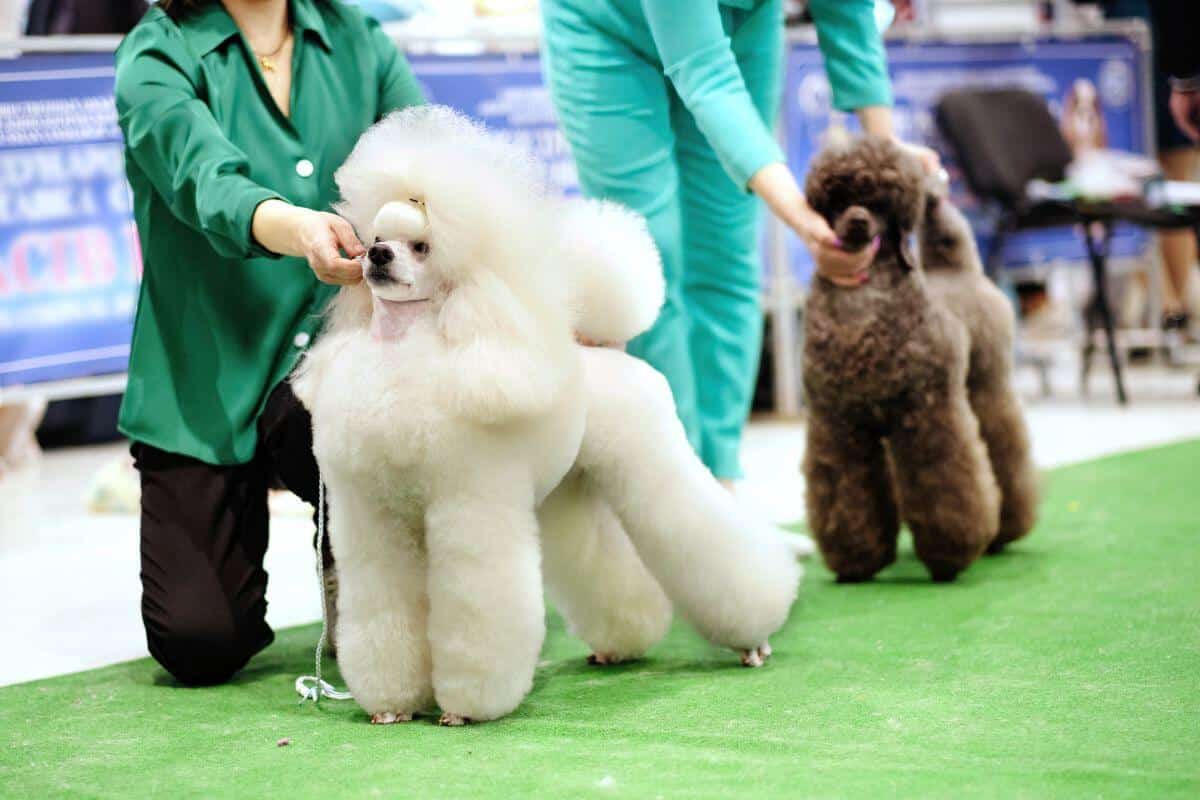
Conformation Shows: Poodles compete in Conformation Shows, where judges evaluate each dog according to the Breed Standard, including structure, movement, coat, expression, temperament, and overall type.
Trick Dog: Trick training provides mental stimulation and gives the Poodle an enjoyable way to use its intelligence and eagerness to learn.
Therapy Work: A calm, friendly, and well-socialized Poodle may participate in therapy visits to hospitals, schools, assisted living facilities, and other settings.
Canine Good Citizen: Poodles may participate in programs that evaluate everyday manners, social behavior, and reliability around people and other dogs.
Gallery
07/Standards
The Standard Poodle is recognized by the world’s leading registries and kennel organizations, which categorize the breed into a specific Group based on its unique characteristics. This breed is recognized worldwide under the following Group designations:
The ideal Standard Poodle is described by a Breed Standard that is approved by each of the world’s leading registries and kennel organizations. The Standards for this breed may be found in the following links:
08/Clubs
Poodle clubs support breed education, responsible breeding, health initiatives, Conformation shows, Performance events, and adherence to the Breed Standard.
Poodle Club of America: Formed in 1931, this is the national breed club for the Poodle in the United States and the breed’s AKC parent club. The club represents the Standard, Miniature, and Toy varieties.
Poodle Club of Canada: Canada’s national organization for the Poodle welcomes breeders, exhibitors, and breed enthusiasts across all three varieties.
The Poodle Club: Founded in 1876, the breed club in the United Kingdom is dedicated to promoting and preserving the Poodle through dog shows and educational initiatives.
09/Rescue
Breed-specific rescue organizations help Standard Poodles that have been surrendered, abandoned, or need rehoming. These groups may provide foster care, veterinary treatment, behavioral evaluation, and placement with an appropriate adoptive family.
Poodle Club of America Rescue Foundation: The rescue arm associated with the breed’s AKC parent club supports rescue efforts and helps connect Poodles in need with appropriate resources and placement.
Poodle Rescue of New England: A nonprofit organization that helps Poodles and Poodle mixes through foster care, rehabilitation, and adoption in the New England region.
Florida Poodle Rescue: A nonprofit organization dedicated to rescuing, rehabilitating, and rehoming Poodles and Poodle mixes throughout Florida.
Poodles may also be found through local shelters, all-breed rescue organizations, and national adoption databases. These resources can provide additional options for people interested in adopting a Standard Poodle or Poodle mix.
10/Facts
Originally Developed as a Water Retriever
The Poodle was bred to retrieve waterfowl and remains a capable swimmer and retriever.
The Breed Has German Roots
Although strongly associated with France, the Poodle’s development is generally traced to Germany.
The Name Comes from “Pudel”
The breed’s name is connected to the German word “pudel,” referring to splashing in water.
Traditional Clips Had a Practical Purpose
The Poodle’s characteristic clips were developed from working trims designed to reduce excess coat while maintaining a protective coat around important areas of the body.
11/FAQ
Poodles can make excellent pets for people who want an intelligent, affectionate, and active companion. They usually do best with regular exercise, training, mental stimulation, and close interaction with their family.

Written by
Dan Sayers is the Executive Editor of SHOWSIGHT. He is a member of the World Dog Press Association and the Dog Writers Association of America, which recognized his illustrations in the award-winning Encyclopedia of K-9 Terminology. Dan is a longtime supporter of the sport of dogs and an advocate for the conservation of recognized breeds in all their forms and functions. He is a member of the Morris and Essex Kennel Club, and for 45 years, the Irish Water Spaniel Club of America where he serves as AKC Delegate, Archivist, and approved Breed Mentor. Dan breeds under the Quiet Storm prefix and has judged the IWSCA National Specialty Sweepstakes twice.
Official Standard of the Poodle
The Standard for the Poodle (Toy variety) is the same as for the Standard and Miniature varieties except as regards heights.
General Appearance: Carriage and Condition - That of a very active, intelligent and elegant-appearing dog, squarely built, well proportioned, moving soundly and carrying himself proudly. Properly clipped in the traditional fashion and carefully groomed, the Poodle has about him an air of distinction and dignity peculiar to himself.
Size, Proportion, Substance: Size - The Standard Poodle is over 15 inches at the highest point of the shoulders. Any Poodle which is 15 inches or less in height shall be disqualified from competition as a Standard Poodle. The Miniature Poodle is 15 inches or under at the highest point of the shoulders, with a minimum height in excess of 10 inches. Any Poodle which is over 15 inches or is 10 inches or less at the highest point of the shoulders shall be disqualified from competition as a Miniature Poodle. The Toy Poodle is 10 inches or under at the highest point of the shoulders. Any Poodle which is more than 10 inches at the highest point of the shoulders shall be disqualified from competition as a Toy Poodle. As long as the Toy Poodle is definitely a Toy Poodle, and the Miniature Poodle a Miniature Poodle, both in balance and proportion for the Variety, diminutiveness shall be the deciding factor when all other points are equal. Proportion - To insure the desirable squarely built appearance, the length of body measured from the breastbone to the point of the rump approximates the height from the highest point of the shoulders to the ground. Substance - Bone and muscle of both forelegs and hindlegs are in proportion to size of dog.
Head and Expression: (a) Eyes - very dark, oval in shape and set far enough apart and positioned to create an alert intelligent expression. Major fault: eyes round, protruding, large or very light. (b) Ears - hanging close to the head, set at or slightly below eye level. The ear leather is long, wide and thickly feathered; however, the ear fringe should not be of excessive length. (c) Skull - moderately rounded, with a slight but definite stop. Cheekbones and muscles flat. Length from occiput to stop about the same as length of muzzle. (d) Muzzle - long, straight and fine, with slight chiseling under the eyes. Strong without lippiness. The chin definite enough to preclude snipiness. Major fault: lack of chin. Teeth - white, strong and with a scissors bite. Major fault: undershot, overshot, wry mouth.
Neck, Topline, Body: Neck well proportioned, strong and long enough to permit the head to be carried high and with dignity. Skin snug at throat. The neck rises from strong, smoothly muscled shoulders. Major fault: ewe neck. The topline is level, neither sloping nor roached, from the highest point of the shoulder blade to the base of the tail, with the exception of a slight hollow just behind the shoulder. Body - (a) Chest deep and moderately wide with well sprung ribs. (b) The loin is short, broad and muscular. (c) Tail straight, set on high and carried up, docked of sufficient length to insure a balanced outline. Major fault: set low, curled, or carried over the back.
Forequarters: Strong, smoothly muscled shoulders. The shoulder blade is well laid back and approximately the same length as the upper foreleg. Major fault - steep shoulder. Forelegs -Straight and parallel when viewed from the front. When viewed from the side the elbow is directly below the highest point of the shoulder. The pasterns are strong. Dewclaws may be removed. Feet - The feet are rather small, oval in shape with toes well arched and cushioned on thick firm pads. Nails short but not excessively shortened. The feet turn neither in nor out. Major fault - paper or splay foot.
Hindquarters: The angulation of the hindquarters balances that of the forequarters. Hindlegs straight and parallel when viewed from the rear. Muscular with width in the region of the stifles which are well bent; femur and tibia are about equal in length; hock to heel short and perpendicular to the ground. When standing, the rear toes are only slightly behind the point of the rump. Major fault - cow-hocks.
Coat: (a) Quality - (1) Curly: of naturally harsh texture, dense throughout. (2) Corded: hanging in tight even cords of varying length; longer on mane or body coat, head, and ears; shorter on puffs, bracelets, and pompons. (b) Clip - A Poodle under 12 months may be shown in the "Puppy" clip. In all regular classes, Poodles 12 months or over must be shown in the "English Saddle" or "Continental" clip. In the Stud Dog and Brood Bitch classes and in a non-competitive Parade of Champions, Poodles may be shown in the "Sporting" clip. A Poodle shown in any other type of clip shall be disqualified. (1) "Puppy" - A Poodle under a year old may be shown in the "Puppy" clip with the coat long. The face, throat, feet and base of the tail are shaved. The entire shaven foot is visible. There is a pompon on the end of the tail. In order to give a neat appearance and a smooth unbroken line, shaping of the coat is permissible. (2) "English Saddle" - In the "English Saddle" clip, the face, throat, feet, forelegs and base of the tail are shaved, leaving puffs on the forelegs and a pompon on the end of the tail. The hindquarters are covered with a short blanket of hair except for a curved shaved area on each flank and two shaved bands on each hindleg. The entire shaven foot and a portion of the shaven leg above the puff are visible. The rest of the body is left in full coat but may be shaped in order to insure overall balance. (3) "Continental" - In the "Continental" clip, the face, throat, feet, and base of the tail are shaved. The hindquarters are shaved with pompons (optional) on the hips. The legs are shaved, leaving bracelets on the hindlegs and puffs on the forelegs. There is a pompon on the end of the tail. The entire shaven foot and a portion of the shaven foreleg above the puff are visible. The rest of the body is left in full coat but may be shaped in order to insure overall balance. (4) "Sporting" - In the "Sporting" clip, a Poodle shall be shown with face, feet, throat, and base of tail shaved, leaving a scissored cap on the top of the head and a pompon on the end of the tail. The rest of the body, and legs are clipped or scissored to follow the outline of the dog leaving a short blanket of coat no longer than one inch in length. The hair on the legs may be slightly longer than that on the body. In all clips the hair of the topknot may be left free or held in place by elastic bands. The hair is only of sufficient length to present a smooth outline. "Topknot" refers only to hair on the skull, from stop to occiput. This is the only area where elastic bands may be used.
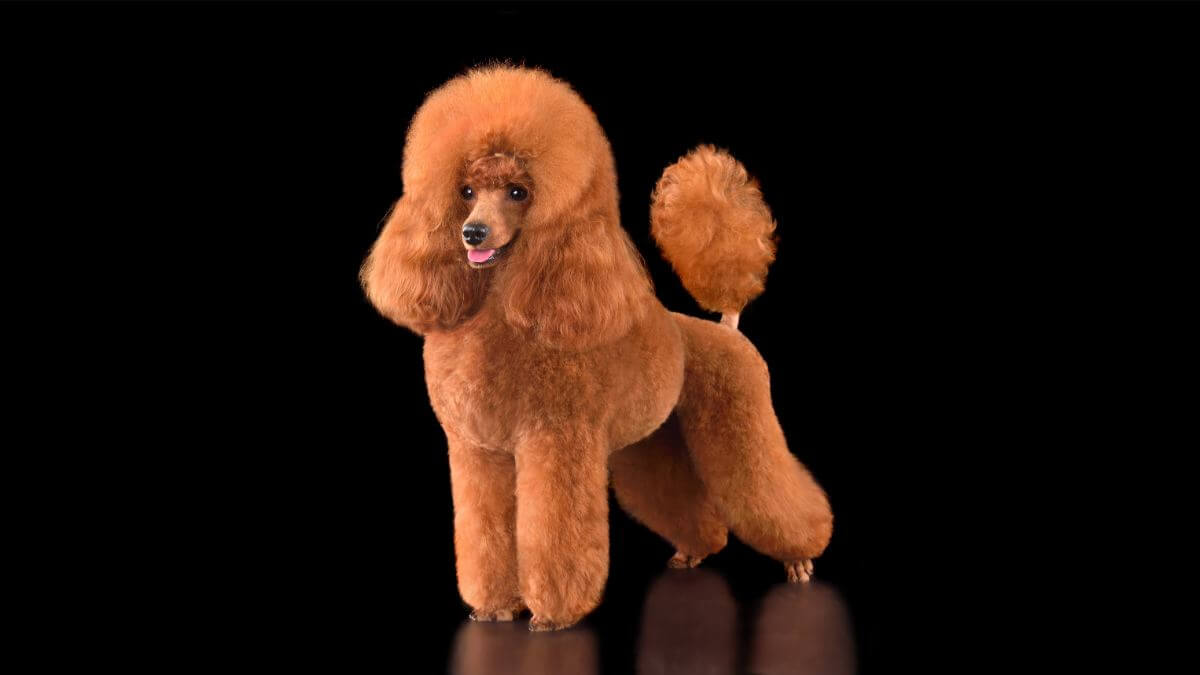
Color: The coat is an even and solid color at the skin. In blues, grays, silvers, browns, cafe-au-laits, apricots and creams the coat may show varying shades of the same color. This is frequently present in the somewhat darker feathering of the ears and in the tipping of the ruff. While clear colors are definitely preferred, such natural variation in the shading of the coat is not to be considered a fault. Brown and cafe-au-lait Poodles have liver-colored noses, eye-rims and lips, dark toenails and dark amber eyes. Black, blue, gray, silver, cream and white Poodles have black noses, eye-rims and lips, black or self colored toenails and very dark eyes. In the apricots while the foregoing coloring is preferred, liver-colored noses, eye-rims and lips, and amber eyes are permitted but are not desirable. Major fault: color of nose, lips and eye-rims incomplete, or of wrong color for color of dog. Parti-colored dogs shall be disqualified. The coat of a parti-colored dog is not an even solid color at the skin but is of two or more colors.
Gait: A straightforward trot with light springy action and strong hindquarters drive. Head and tail carried up. Sound effortless movement is essential.
Temperament: Carrying himself proudly, very active, intelligent, the Poodle has about him an air of distinction and dignity peculiar to himself. Major fault: shyness or sharpness.
Major Faults: Any distinct deviation from the desired characteristics described in the Breed Standard.
Disqualifications: Size - A dog over or under the height limits specified shall be disqualified. Clip - A dog in any type of clip other than those listed under coat shall be disqualified. Parti-colors - The coat of a parti-colored dog is not an even solid color at the skin but of two or more colors. Parti-colored dogs shall be disqualified.
Value of Points General appearance, temperament, carriage and condition.......30 Head, expression, ears, eyes and teeth.......20 Body, neck, legs, feet and tail.......20 Gait.......20 Coat, color and texture.......10
Approved August 14, 1984
Reformatted March 27, 1990
Grooming
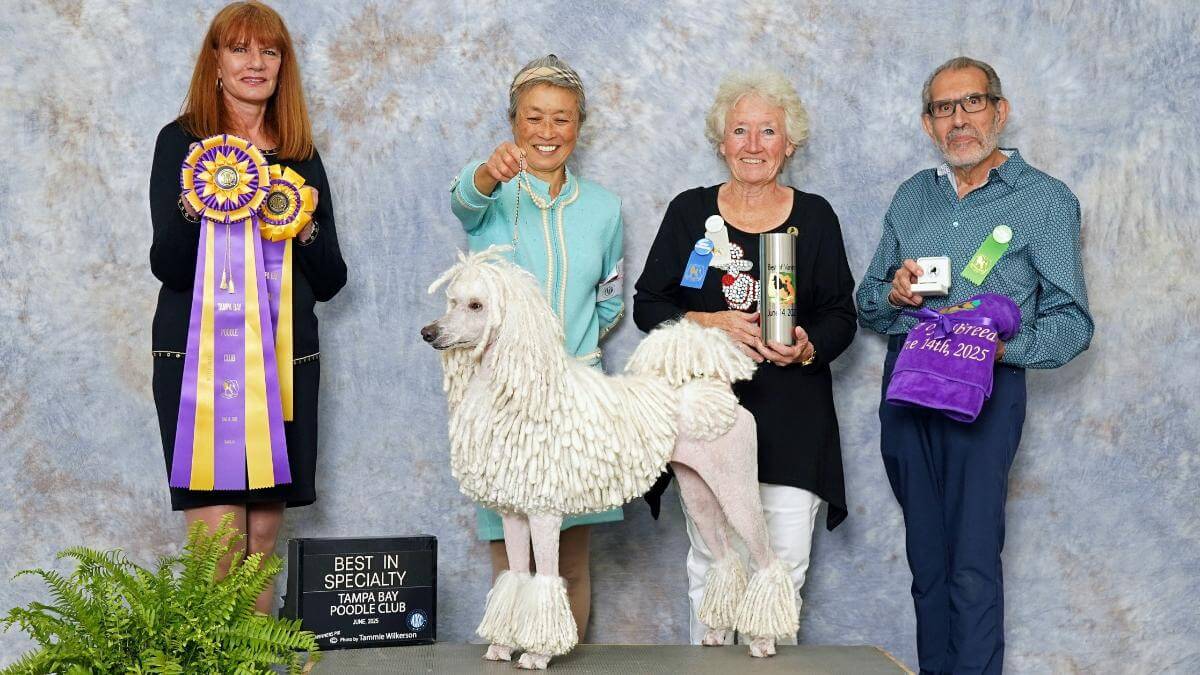
Discover the art of showing and grooming corded Poodles, from coat care to history-making wins in the show ring.


Meet the Breeders
Mary Olund of Cabernet Poodles shares her journey, breeding philosophy, and passion for preserving and promoting the Poodle breed.
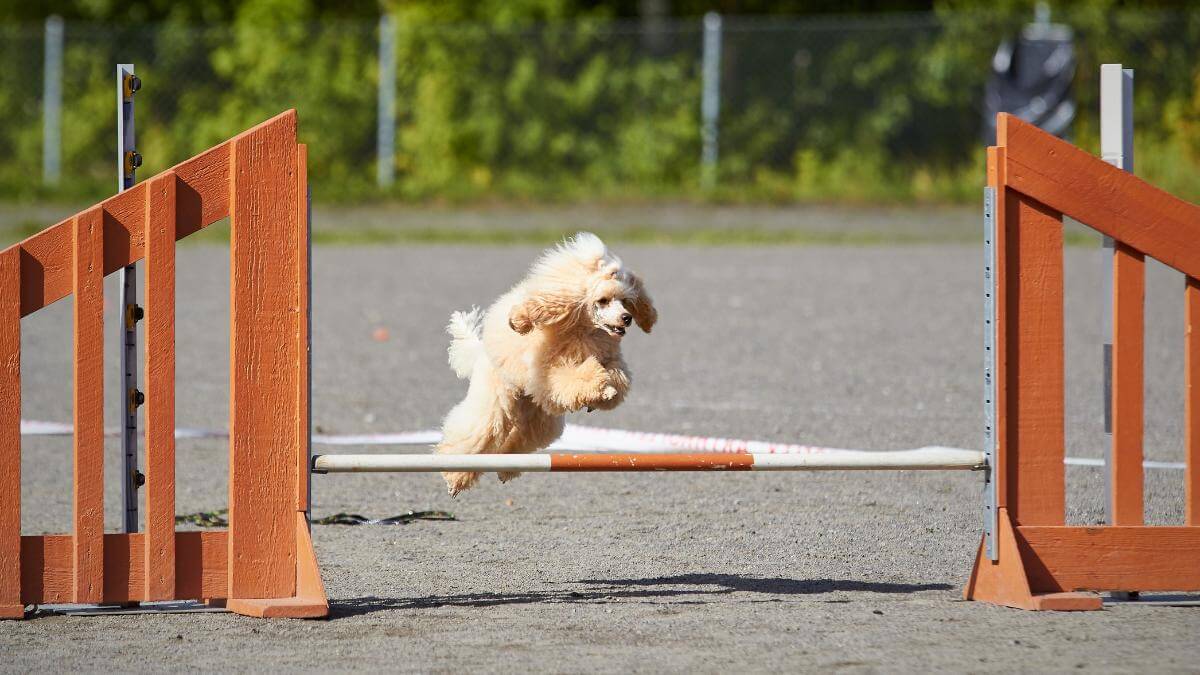
Explore the versatile history and traits of the Poodle, from hunting to therapy work, showcasing their intelligence and agility.


American Kennel Club (AKC)
Kissable Katie, a guide and medical alert dog, transforms Jill Dempsey’s life with confidence, support, and independence.
Meet the Breeders
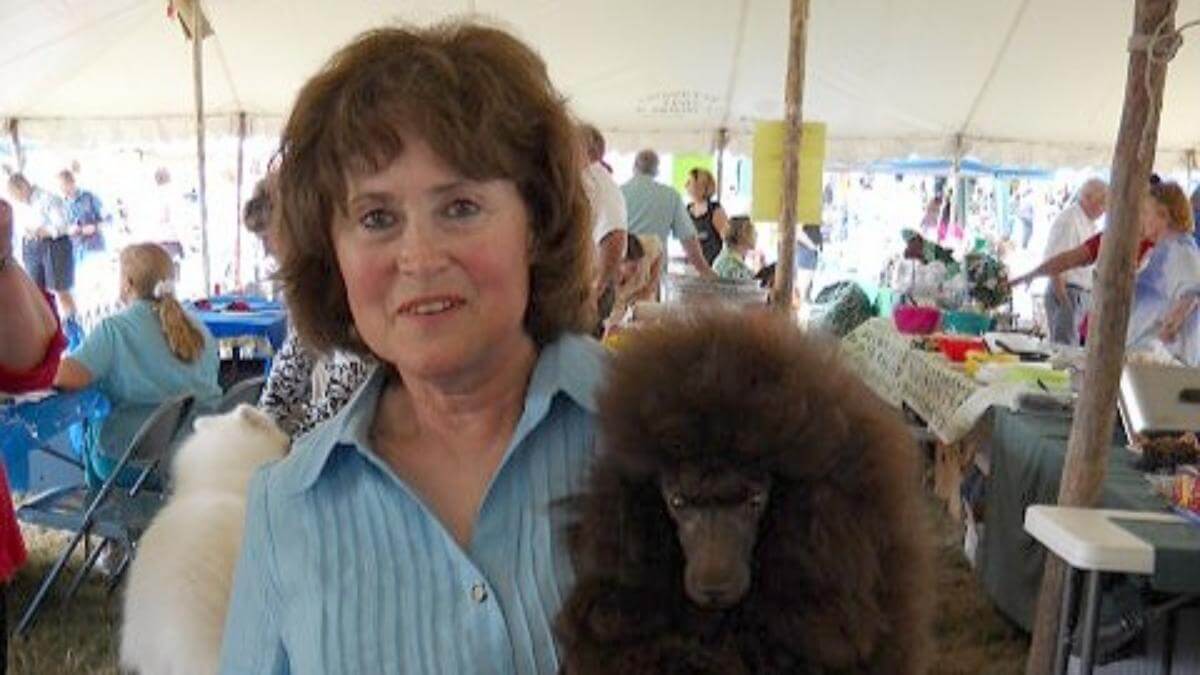
Explore Cathy Catelain’s journey in breeding Miniature Poodles, her successes, mentoring, and commitment to breed standards.
Learn the key standards and trims of Toy, Miniature, and Standard Poodles, including structure, movement, grooming, and breed characteristics.
All About Judging
Explore the art of judging Poodles, from movement and structure to uncovering true quality beneath the coat.
Discover the rich history, versatility, and enduring charm of the Poodle, a breed celebrated for its intelligence and elegance.
All About Judging
Judging the Poodle: Balance history, purpose, and elegance. Simplify standards, focus on key traits, and maintain breed integrity.
Standard Markings
A Note About Color: The Poodle’s coat is an even and solid color at the skin. In blues, grays, silvers, browns, cafe-aulaits, apricots and creams, the coat may show varying shades of the same color. This is frequently present in the somewhat darker feathering of the ears and in the tipping of the ruff. While clear colors are definitely preferred, such natural variation in the shading of the coat is not to be considered a fault. Brown and cafe-au-lait Poodles have liver-colored noses, eye-rims and lips, dark toenails, and dark amber eyes. Black, blue, gray, silver, cream and white Poodles have black noses, eye-rims and lips, black or self-colored toenails, and very dark eyes. In the apricots, while the foregoing coloring is preferred, liver-colored noses, eye-rims and lips, and amber eyes are permitted but are not desirable. Major fault: color of nose, lips and eye-rims incomplete, or of wrong color for color of dog. Parti-colored dogs shall be disqualified in the show ring. The coat of a parti-colored dog is not an even solid color at the skin but is of two or more colors.
Coat Type
Curly
The structure of the coat this breed carries.
Coat Length
Long
How long the breed's coat grows when kept in condition.
Adaptability Level
How easily a breed copes with changes in home, routine, noise and weather.
Mental Stimulation Needs
How much a breed needs a job, a puzzle or training to stay content.
A Standard Poodle should receive a complete and balanced diet appropriate for the dog’s age, size, activity level, and body condition. Portions should be measured carefully to support a lean, athletic build without unnecessary weight gain.
Most adults do well with two measured meals per day, while puppies may need three or four smaller meals as they grow. Treats can be useful during training but should remain a modest part of the dog’s total daily calorie intake.
Maintaining a healthy body condition can help support joint health, mobility, endurance, and overall fitness. Fresh water should always be available.
The Poodle is highly intelligent and usually very eager to learn. The breed often responds especially well to short, varied, and positive training sessions.
Food rewards, praise, toys, and play can all help maintain motivation. Early training should include recall, leash manners, house training, impulse control, basic cues, and calm behavior around visitors and other dogs.
Because Standard Poodles learn quickly, they can also become bored with excessive repetition. More advanced obedience, scent games, retrieving, trick training, and problem-solving exercises can provide useful mental challenges.
Many companion Poodles are kept in shorter clips that are easier to maintain, while dogs shown in Conformation require specific traditional clips. Professional grooming is commonly scheduled every four to six weeks, depending on coat length and style. Nails should be trimmed regularly, ears should be checked and kept clean, and teeth should be brushed routinely. Particular attention should be given to preventing mats around the ears, legs, feet, and areas where the coat rubs against a collar or harness.