Members
01/Overview
The Russell Terrier is a small, athletic terrier known for its compact build, alert expression, and energetic personality. Developed to work with foxhounds and pursue foxes below ground, the breed remains intelligent, bold, curious, and strongly driven by its hunting instincts.
Highlights
02/History
The (Jack) Russell Terrier originated in England during the nineteenth century and is closely associated with the Reverend John Russell, a clergyman and enthusiastic foxhunter from Devon. Russell wanted a small, agile terrier capable of keeping up with mounted hunts and entering underground dens, and small enough to be carried on horseback in bags.
The foundation of his breeding program is traditionally linked to a white terrier named Trump, acquired during the 1810s. Trump was described as predominantly white with tan markings and possessed the size, structure, and working character Russell valued.
These early terriers were bred primarily for performance rather than appearance. They needed enough stamina to travel with the hunt, a flexible chest that allowed them to work underground, and the courage to confront quarry without becoming overly heavy or cumbersome.
Over time, dogs descending from this working type developed into several related strains. Differences in height, leg length, body proportions, and regional breeding practices eventually led kennel organizations to recognize distinct breeds, including the Russell Terrier, Parson Russell Terrier, and Jack Russell Terrier.
The Russell Terrier represents the shorter-legged, slightly longer-bodied form. Its compact proportions allowed it to move efficiently above ground while remaining well suited to underground work.
The breed became established in Australia, where breeders helped to develop a more consistent type. This dedication played an important role in the breed’s international recognition. The Fédération Cynologique Internationale recognized the Jack Russell Terrier as an Australian-developed breed in 2000.
The American Kennel Club recognized the Russell Terrier in 2012 and placed it in the Terrier Group. The American Russell Terrier Club serves as the breed’s AKC parent club.
The Royal Kennel Club recognizes the Jack Russell Terrier in the Terrier Group, while the American Kennel Club uses the name Russell Terrier for the shorter-legged breed recognized in the United States.
03/Appearance
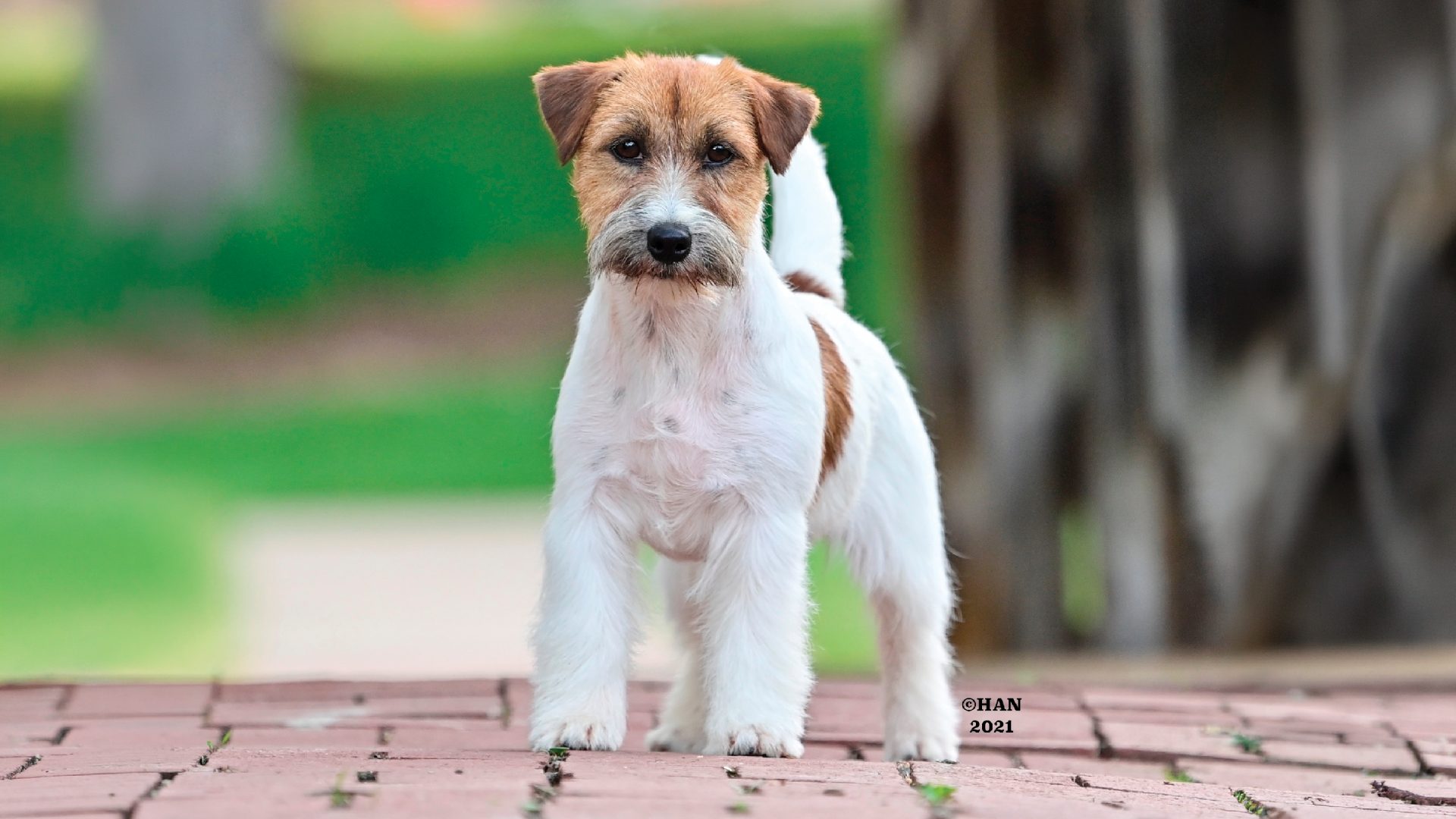
A mature Russell Terrier stands 10 to 12 inches tall at the withers and typically weighs between 9 and 15 pounds.
Skull: The Russell Terrier has a flat skull of moderate width that gradually narrows toward the eyes. The stop is well defined but not overly pronounced.
Expression: The expression is keen, alert, and intelligent, reflecting the breed’s lively and confident terrier character.
Eyes: The eyes are small, dark, almond-shaped, and set with an attentive expression. The eye rims are fully pigmented.
Ears: The ears are small, V-shaped, and carried as button ears or dropped ears. They fold forward close to the head and should not stand erect.
Muzzle: The muzzle is strong and slightly shorter than the skull. It tapers gradually toward the nose without appearing weak or pointed.
Nose: The nose is black and fully pigmented.
Bite: The Russell Terrier has strong teeth that meet in a scissor bite, with the upper incisors closely overlapping the lower incisors. A level bite is acceptable.
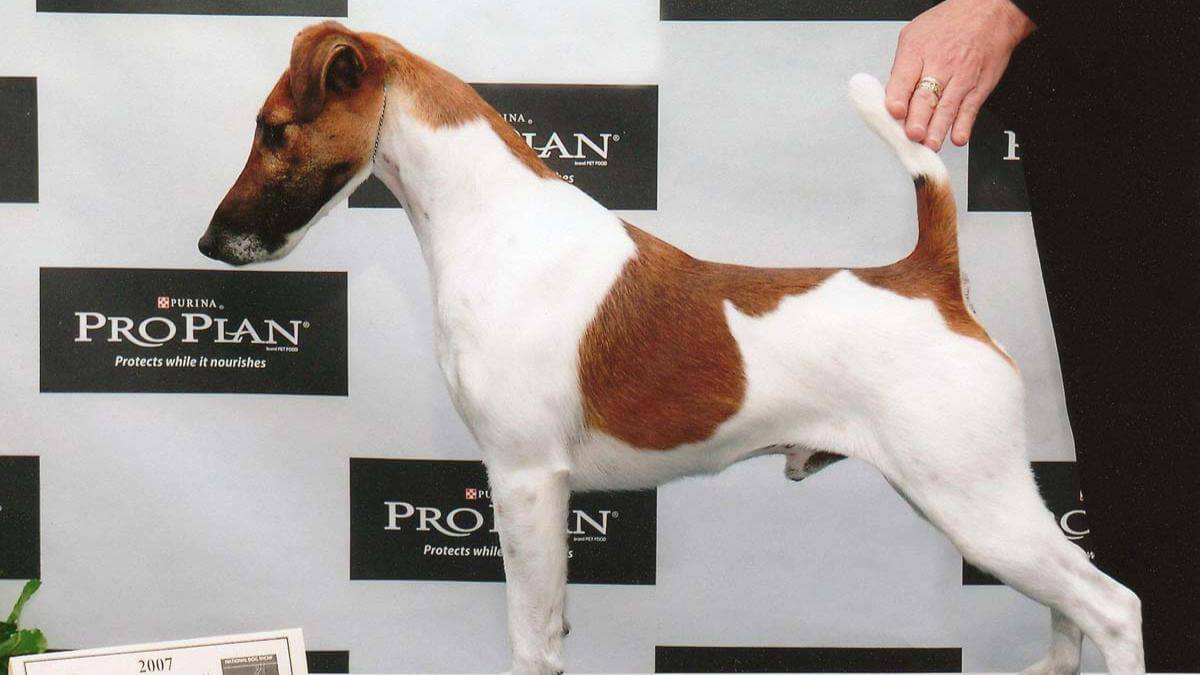
The Russell Terrier has a compact, balanced outline, with the body slightly longer than the height at the withers. The breed should appear athletic, flexible, and capable of moving efficiently both above and below ground.
The chest is moderately deep and narrow enough to be spanned by an average pair of hands, reflecting the breed’s original work in fox dens. Bone is proportionate to the dog’s size, providing sufficient strength without creating a heavy or coarse appearance.
Texture: The Russell Terrier may have a smooth, broken, or rough coat. Each type has a harsh, weather-resistant texture with a dense undercoat that provides protection during work outdoors. The coat should lie close enough to preserve the breed’s clean, athletic outline.
Standard Colors
Standard Markings
04/Consider
The Russell Terrier is energetic, intelligent, bold, and strongly influenced by its working terrier background. Anyone considering the breed should be prepared for consistent training, daily exercise, early socialization, and a dog that may dig, chase small animals, or become vocal when bored.
Interaction With Family
The level of affection a breed typically shows towards family members and familiar individuals.
Good With Other Dogs
The innate friendliness of a dog towards other dogs can depend on its breed.
Good With Young Children
The degree to which a breed will typically be patient with young children.
Amount Of Shedding
How much hair a breed typically leaves behind on clothes, furniture and floors.
Frequency Of Grooming
How often a breed needs brushing, bathing or a professional trim to stay in condition.
Amount Of Drooling
How prone a breed is to drool, worth knowing before you keep a towel by the door.
Openness To Strangers
How openly a breed tends to greet new people, visitors and strangers.
Protective Nature
How likely a breed is to alert you to anything unfamiliar, and stand between you and it.
Playfulness Level
How enthusiastic a breed stays about games and play well past puppyhood.
Trainability Level
How readily a breed takes direction and works with you rather than around you.
Barking Level
How much a breed uses its voice, and how readily.
Energy Level
How much get-up-and-go a breed brings to an average day.
Health
The Russell Terrier is generally considered a healthy and hardy breed, with a typical lifespan of 12 to 14 years. Preventive veterinary care, balanced nutrition, regular exercise, good dental hygiene, and maintenance of a healthy weight can help support long-term health.
The Russell Terrier is lively, confident, curious, and highly intelligent. It often approaches daily life with enthusiasm and may be affectionate, entertaining, and closely attached to its family.
The breed retains strong hunting instincts and may dig, chase, or investigate anything that moves. Early socialization and consistent boundaries are important, especially around unfamiliar dogs and small animals.
A Russell Terrier can live successfully with respectful children, particularly when raised with them. Its energetic and sometimes boisterous nature may be better suited to families with older children.
Exercise Expectations
A healthy adult generally benefits from at least 60 minutes of activity each day, although particularly energetic individuals may need more. Scent games, retrieving, puzzle toys, and dog sports can provide additional mental engagement. Because of the breed’s strong prey drive and tendency to follow scents, off-leash exercise should take place only in a securely enclosed area.
Grooming Expectations
The Russell Terrier can adapt to apartment living when given enough exercise, training, and mental activity. Its energy level, alert nature, and tendency to bark may require additional management in homes with close neighbors.
A securely fenced yard can provide space for play, but fencing should be checked carefully because the breed may dig beneath barriers, climb, or pursue animals beyond the property. Outdoor time should not replace daily walks, thoughtful training, and interaction with the family.
The Russell Terrier usually does best in an active household that appreciates its confidence, determination, and lively personality. Regular companionship, consistent routines, and structured activity help the breed thrive.
05/Puppies
Russell Terrier puppies are energetic, curious, and quick to explore their surroundings. Early routines, positive socialization, patient training, and appropriate outlets for their natural terrier instincts help any pup develop into a confident and manageable adult.
A Russell Terrier puppy benefits from a predictable daily schedule that includes regular meals, potty breaks, sleep, play, training, and quiet time. A crate or secure puppy area can provide a safe place to rest and support housetraining when direct supervision is not possible.
Early socialization should introduce the puppy to different people, well-mannered dogs, household sounds, surfaces, vehicles, and unfamiliar environments. These experiences should remain positive and appropriate for the puppy’s age.
Training can begin as soon as the puppy arrives home. Short sessions can introduce name response, recall, leash walking, basic manners, impulse control, and calm behavior around visitors. Because the breed may become distracted by movement or scent, recall and focus exercises are especially valuable.
A Russell Terrier puppy should receive a complete and balanced diet formulated for growth. Exercise should focus on supervised play, short walks, and gentle exploration rather than forced running or repetitive jumping while the puppy is still developing.
Regular veterinary visits are important during the first year. Grooming should also begin early so that the puppy becomes comfortable with brushing, nail trimming, ear checks, tooth brushing, and general handling.
06/Activities
Russell Terriers are energetic, athletic, and highly intelligent dogs that often enjoy activities involving speed, scent, problem-solving, and close work with a handler. Here are some of the dog sports and activities in which Russell Terriers may participate:
Earthdog: Russell Terriers can use their natural hunting instincts to locate quarry underground in a controlled setting.
Barn Hunt: Barn Hunt allows the breed to search for safely enclosed rats hidden among bales of straw.
Agility: The Russell Terrier’s speed, balance, and quick reactions can make Agility an excellent outlet for physical and mental energy.
Obedience: Obedience Trials test the breed’s ability to perform exercises accurately while working closely with a handler.
Rally: Rally Obedience combines movement through a course with varied obedience exercises that can help maintain the breed’s interest.
Scent Work: Russell Terriers can search for specific odors hidden in containers, indoor spaces, outdoor areas, or vehicles.
Fast CAT: This timed 100-yard dash provides a controlled opportunity for the breed to use its speed and chasing instinct.
Conformation Shows: Russell Terriers compete in Conformation Shows, where judges evaluate each dog according to the Breed Standard, including structure, movement, coat, expression, temperament, and overall type.
Trick Dog: Trick training provides mental stimulation and gives the Russell Terrier a productive way to use its intelligence and enthusiasm.
Canine Good Citizen: Russell Terriers may participate in programs that evaluate everyday manners, social behavior, and reliability around people and other dogs.
Gallery
07/Standards
The (Jack) Russell Terrier is recognized by the world’s leading registries and kennel organizations, which categorize the breed into a specific Group based on its unique characteristics. This breed is recognized worldwide under the following Group designations:
The ideal (Jack) Russell Terrier is described by a Breed Standard that is approved by each of the world’s leading registries and kennel organizations. The Standards for this breed may be found in the following links:
08/Clubs
Russell Terrier clubs support breed education, responsible breeding, health initiatives, rescue work, and participation in Conformation shows and Performance events.
American Russell Terrier Club: Founded in 1995, this is the national breed club for the Russell Terrier in the United States and the breed’s AKC parent club.
09/Rescue
Breed-specific rescue organizations help Russell Terriers that have been surrendered, abandoned, or found in shelters. These groups may provide foster care, veterinary treatment, behavioral evaluation, and placement with an appropriate adoptive family.
American Russell Terrier Club Rescue Resources: The breed’s AKC parent club may provide rescue contacts or guidance for Russell Terriers needing placement in the United States.
Local shelters and broader terrier rescue organizations may also receive a Russell Terrier or Russell mix. Adoption databases, breed clubs, and nearby shelters can provide additional information about dogs currently needing homes.
10/Facts
Named for Reverend John Russell
The breed traces its development to the Reverend John Russell, a nineteenth-century English clergyman and enthusiastic foxhunter.
Developed for Underground Work
Russell Terriers were bred to enter fox dens and drive quarry back into the open without being too large or heavy.
Closely Related to the Parson Russell Terrier
The Russell Terrier belongs to the same family of working terriers that include the Parson Russell Terrier and the Jack Russell Terrier.
Three Coat Types Are Accepted
Russell Terriers may have smooth, broken, or rough coats, all with a harsh, weather-resistant texture.
11/FAQ
Russell Terriers can make excellent pets for active people who appreciate an energetic, intelligent, and independent dog. They need consistent training, daily exercise, and productive outlets for their terrier instincts.

Written by
Dan Sayers is the Executive Editor of SHOWSIGHT. He is a member of the World Dog Press Association and the Dog Writers Association of America, which recognized his illustrations in the award-winning Encyclopedia of K-9 Terminology. Dan is a longtime supporter of the sport of dogs and an advocate for the conservation of recognized breeds in all their forms and functions. He is a member of the Morris and Essex Kennel Club, and for 45 years, the Irish Water Spaniel Club of America where he serves as AKC Delegate, Archivist, and approved Breed Mentor. Dan breeds under the Quiet Storm prefix and has judged the IWSCA National Specialty Sweepstakes twice.
Official Standard of the Russell Terrier
General Appearance: The Russell Terrier is a strong, active, lithe, predominately white bodied working Terrier of character with a flexible body of moderate length and rectangular profile. The overall dog must present a balanced image with no one part exaggerated over another. The Russell Terrier is full of life, and moves with confidence that matches his keen expression. Coat may be smooth, broken or rough and may have tan and/or black markings with no preference for coat type or markings. Tail docking is optional.
Size, Substance & Proportion: In size the Russell Terrier measures from 10 inches to 12 inches. Substance and weight should be proportionate to height, being neither too coarse nor too refined. The body is proportioned marginally longer than tall, the silhouette representing a distinct rectangle when measured from the point of shoulder to point of buttocks than from the withers to the ground. The height and weight descriptions indicate a sturdily built yet balanced dog with smooth muscle transitions, able to traverse narrow tunnels. There may be slight differences between males and females. Males should look masculine while females should look feminine. However both sexes must adhere to the breed standard. When viewed in profile the midline of the dog is at the elbow and the bottom of the brisket. Severe Fault - Any hint of achondroplasia. Disqualification - Height under 10 inches or over 12 inches.
Head and Neck: The skull is flat and of moderate width gradually decreasing in width to the eyes and then tapering to a wide muzzle, that narrows slightly to the end maintaining very strong jaws. The stop is well defined with minimal falling away under the eyes. The length of muzzle is slightly shorter than the length of the skull from the occiput to the stop. The cheek muscles are well developed. Nose - Black and fully pigmented. Disqualification - Nose any color other than black, not fully pigmented. Ears - Small V-shaped button or dropped ears carried close to the head of good texture and great mobility. The points of the ears are even with corner of the eye and pointed downward. The fold is level with the top of the skull or slightly above and forms a straight line when alert. Disqualification - Prick or semi-prick ears. Eyes - Dark, almond shaped with a keen expression of alertness. Eyes must not be prominent. Eyelid rims are to be fully pigmented black. Disqualifications - Blue eye or eyes. Bite/Teeth - The bite is a scissor bite with comparatively large teeth. A level bite is acceptable. Missing and broken teeth due to terrier work should not be penalized. The lips are black and are tight fitting. Disqualification -Overshot, undershot, wry mouth. Neck - A clean, strong neck tapering gradually into the withers is required for terrier work. The neck is of sufficient length to allow the terrier’s mouth to extend beyond its forepaws when working.
Forequarters: Shoulders are well laid back and not heavily loaded with muscle. The upper arm should be equal or nearly equal to the length of the scapula forming an approximate 90-degree angle. This assembly allows for sufficient length of upper arm to ensure the elbows are set under the body, with the sternum clearly in front of the point of shoulder. Proper reach matched with equal drive allows for efficiency of movement.
Forelegs: Forelegs are straight in bone from the elbows to the toes whether viewed from the front or the side with a slight angle to the pastern from the side. Legs are moderately well boned. The depth of the body from the withers to the brisket should equal the length of foreleg from elbows to the ground. Severe Faults: Benched or bent legs, leg length either less/more than the depth of body.
Body: The body of the Russell Terrier is proportioned marginally longer than tall, measuring slightly longer from the withers to the root of the tail than from the withers to the ground. The overall presentation is a compact, harmonious rectangular silhouette, in sound athletic condition. From the withers to the bottom of the brisket should represent 50 percent of the distance from the withers to the ground. The brisket should never fall below the elbow. The loins are short, strong and well muscled. The tuck up may be described as moderate. Scars incurred while hunting are not to be penalized. Topline - Level while in motion. There is a slight arch of loin, from muscling that is felt rather than seen. Chest - The small oval shaped, compressible chest is the hallmark of the breed and is the single most important attribute the Russell Terrier must have allowing it to work efficiently below ground. It must be compressible and small enough to be spanned by an average size man’s hands, approximately 14 to 15 inches at the top set. Ribs are to be well sprung from the spine, tapering on the sides forming an oval shape so that average-size hands of an adult can span the girth behind the elbows. The chest must never fall below the elbow. Severe Faults - Incorrectly shaped, unspannable, uncompressible chest falling below the elbow.
Hindquarters: Muscular and strong; when looking down on the dog, the width of the hindquarters is equal to the width of the shoulders. Angles are equal and balanced front to rear. The hind legs, when viewed from a rear standing position, are parallel. The stifles and low-set hocks are well angulated, allowing for good driving action.
Feet: Both front and hind are moderate in size, oval shaped, hard padded with toes moderately arched, turning neither in nor out.
Tail: The tail is set high enough so that the spine does not slope down to the base of the tail. Customarily, if docked, the tip of the tail should be level with the top of the ears. When moving or alert, the tail may be straight or with a slight curve forward and is carried erect or gaily. When the dog is at rest, the tail may drop.
Movement: Movement must be unrestricted and effortless, while exhibiting an attitude of confidence. The dog must always be exhibited and gaited on a "loose" lead. On the lateral, the dog must exhibit equal reach and equal drive. When moving down and back at slower speeds the dog must parallel track. As speed increases, feet tend to converge toward a centerline of balance.
Coat: May be smooth, broken or rough. Must be weatherproof: all coat types have an undercoat and a harsh outer coat. Coats are preferably natural and unaltered. The conformation underneath is the same with no preference being given to any particular coat type. The belly and underside should be well covered. The terrier is shown in its natural coat with minimal grooming. Sculpted furnishings are to be severely penalized. Smooth - A dense short, coarse smooth hair with an undercoat. Broken - Intermediate length hair, between smooth and rough, usually with facial furnishings and possibly a slight ridge down the back. Rough - Harsh and dense hair with an undercoat. Not thin, woolly, curly or silky.
Color: White is predominate with black and/or tan markings. There is no preference to markings so long as the dog remains 51 percent white. Tan can vary from lemon to mahogany. Ticking is acceptable. Disqualification - Less than 51 percent white, brindle coloring, any other color than listed above.
Temperament: An alert, lively, active, keen terrier with a very intelligent expression. The sporting character of the Russell Terrier is that of a spirited and game hunter. Their intensity for life is one of their most endearing traits. They are playful, curious, loyal and affectionate. Sparring is not acceptable.
Faults: The foregoing description is that of the ideal Russell Terrier. Any deviation from the above described dog must be penalized to the extent of the deviation.
Disqualifications: Height under 10 inches or over 12 inches. Prick or semi-prick ears. Blue eye or eyes. Overshot, undershot, wry mouth. Nose: Any color other than black, not fully pigmented. Less than 51 percent white, brindle coloring, any other color than listed above.
Approved May 2009
Effective January 1, 2010


American Kennel Club (AKC)
Kathleen Ferris shares insights on judging at the 2025 AKC National Championship, reflecting on quality, competition, and sport’s future.

Terrier Group
An in-depth look at Terrier anatomy, focusing on the importance of the long, level croup for function, balance, and type.

Grooming
Discover the history, traits, and grooming tips for the Russell Terrier, a small, agile breed with a strong hunting instinct.
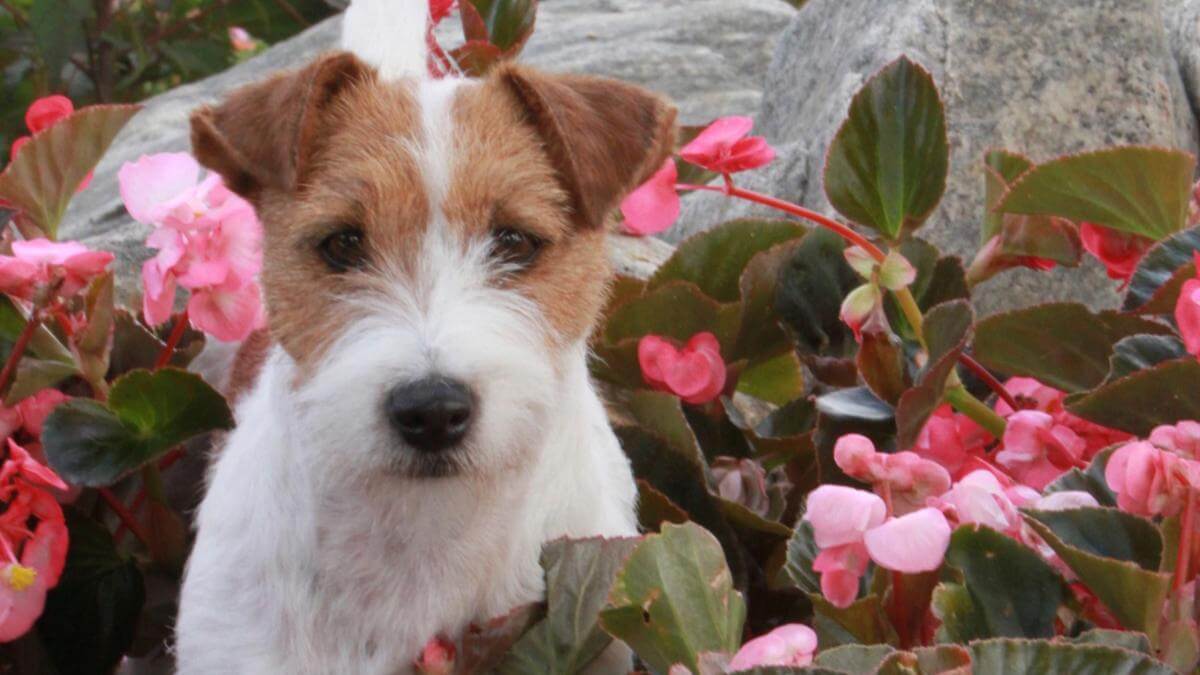
The Russell Terrier is a small, intelligent, and energetic dog with a big dog attitude, perfect for active owners seeking adventure.
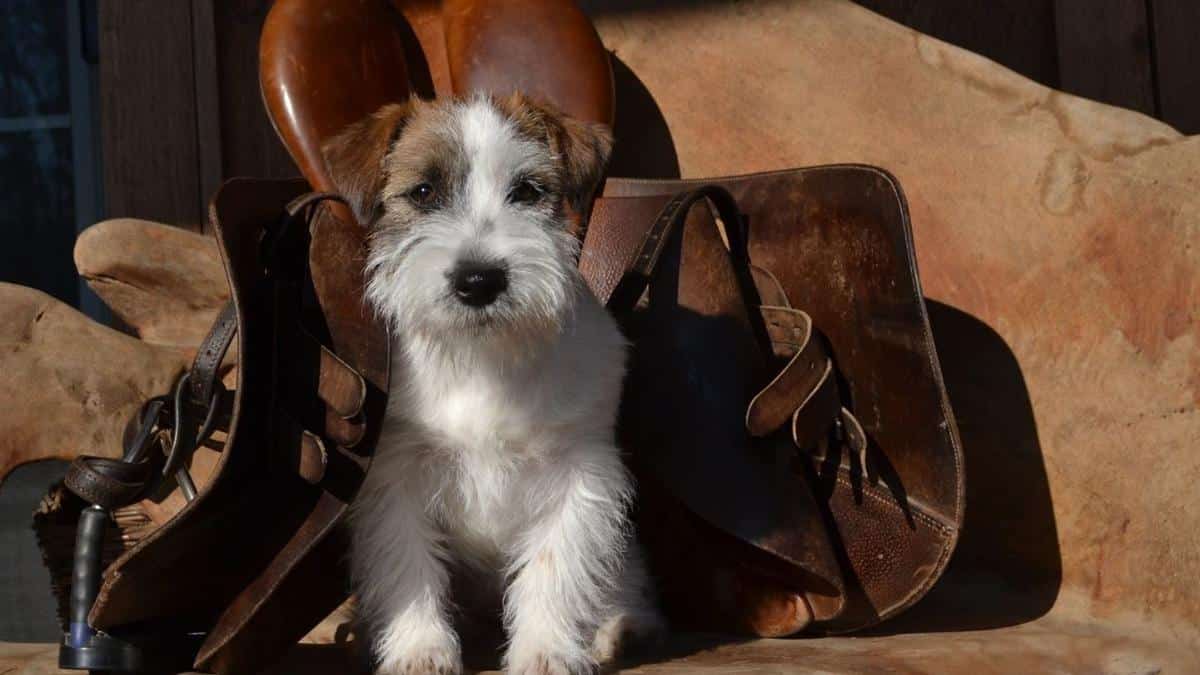
A Russell Terrier is a smart, playful, and versatile companion with a strong bond to their owner and a love for adventure.
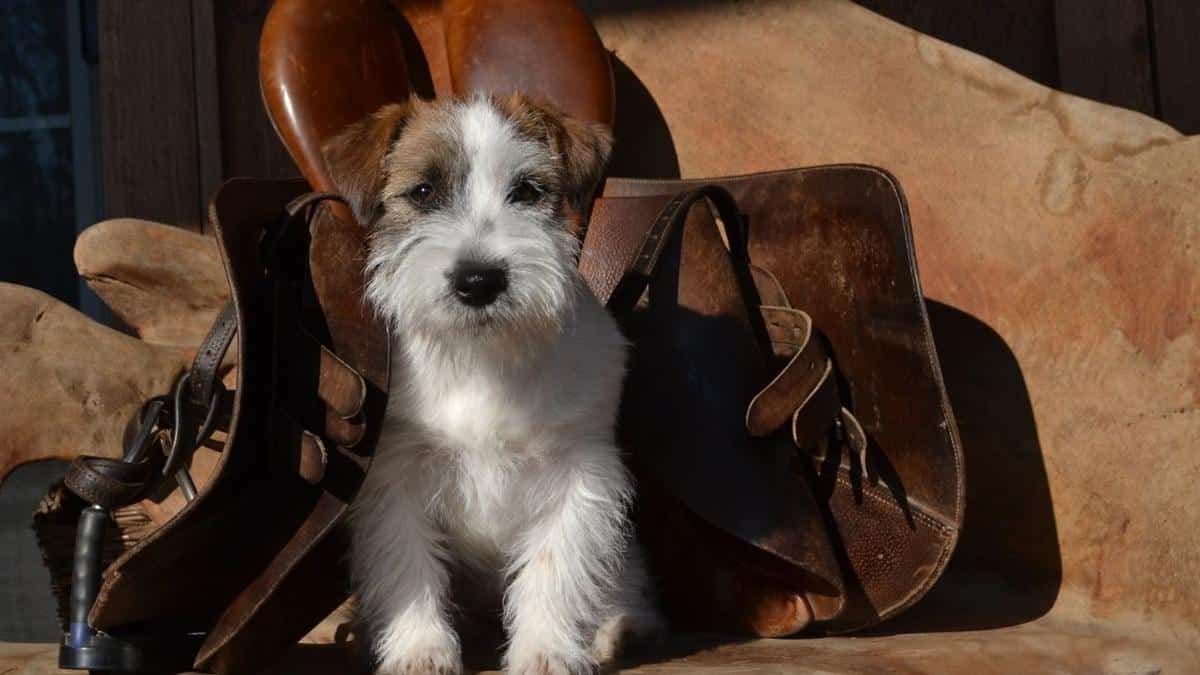
Learn about the Russell Terrier’s history, hunting skills, and unique traits that make them ideal companions for active families.
All About Judging
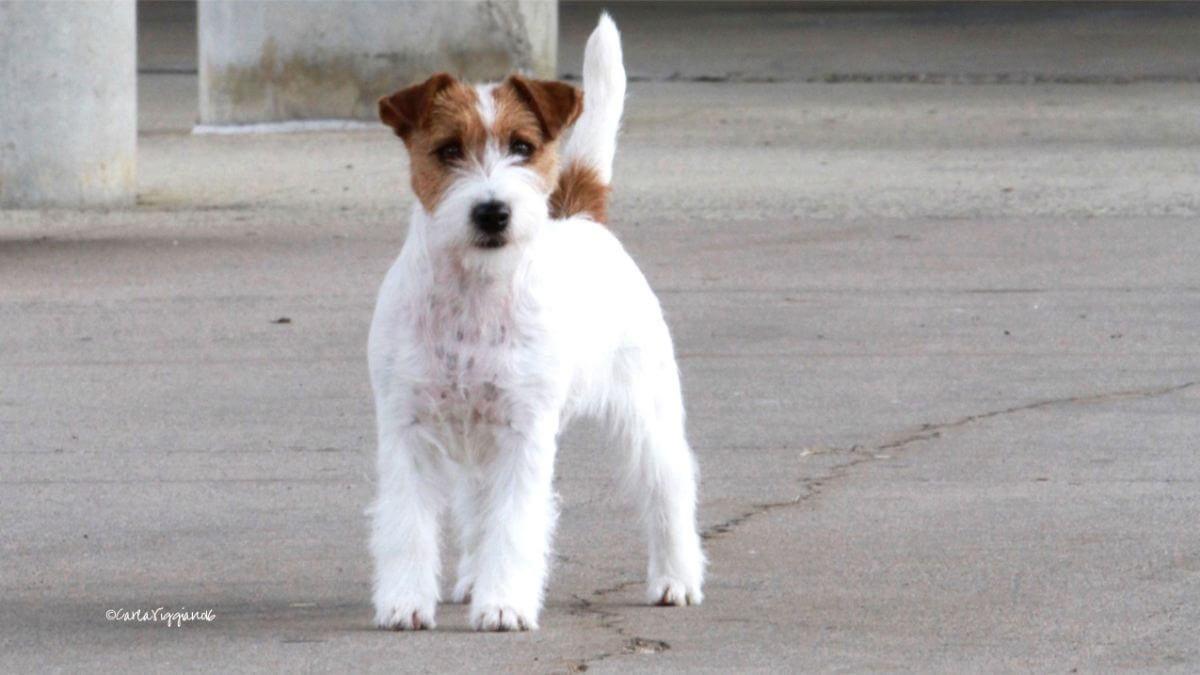
Learn how to judge the Russell Terrier, preserving its original form, agility, and working qualities with correct proportions and movement.

Meet the Breeders
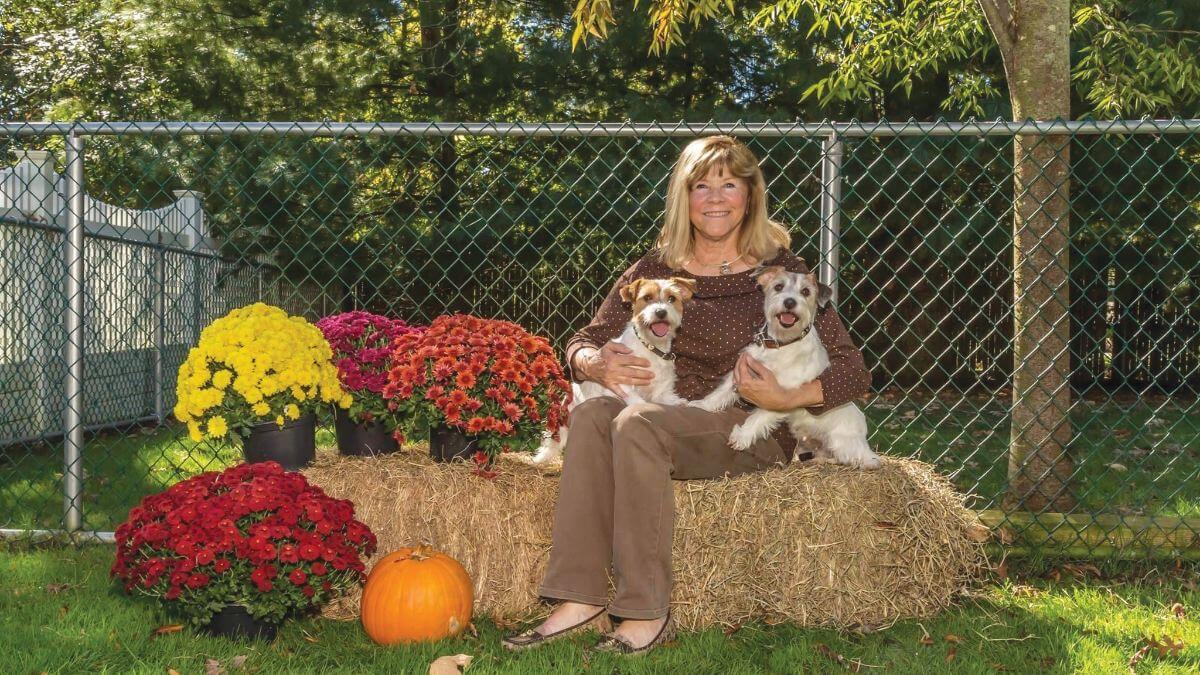
Sue Sobel is the breeder behind Foxfield Terriers Russell Terriers. Read about the kennel’s beginnings, puppies, and much more!

Dog Shows
Interview with Mr. Hiroshi Tsuyuki & Ms. Kao Miichi of Monamour Jack Russell Terriers, discussing the breed’s history, genetics, and more.
The tail is set high and carried upright when the Russell Terrier is alert or moving. It may be naturally long or traditionally docked in countries where the practice is permitted, and it should remain balanced with the breed’s compact, athletic outline.
A Note About Color: White is the Russell Terrier’s predominant color, with black and/or tan markings. There is no preference to markings so long as the dog remains 51 percent white. Tan can vary from lemon to mahogany. Ticking is acceptable. Less than 51 percent white, brindle coloring, and any other color than those listed in the Breed Standard are disqualifications in the show ring.
Coat Type
Wiry, Smooth
The structure of the coat this breed carries.
Coat Length
Short
How long the breed's coat grows when kept in condition.
Adaptability Level
How easily a breed copes with changes in home, routine, noise and weather.
Mental Stimulation Needs
How much a breed needs a job, a puzzle or training to stay content.
A Russell Terrier should receive a complete and balanced diet suited to the dog’s age, activity level, and body condition. Portions should be measured carefully because excess weight can reduce the breed’s agility and place unnecessary strain on the joints.
A puppy generally needs three or four small meals each day before gradually moving to two meals. Most adults are fed twice daily, with the amount adjusted according to the food’s caloric density and the dog’s activity level.
Treats can be useful during training but should remain limited. Fresh water should always be available.
The Russell Terrier is quick to learn but can also be independent, persistent, and easily distracted. Training is most effective when sessions are short, varied, and supported by praise, food rewards, toys, or play.
Early socialization should introduce the puppy to different people, well-mannered dogs, environments, sounds, and surfaces. Recall, leash manners, impulse control, and calm greetings are especially important because the breed may quickly pursue movement or scent.
Clear and consistent expectations can prevent unwanted habits such as digging, excessive barking, or ignoring commands. Harsh methods may create resistance, while patient and engaging training usually encourages better cooperation.
Smooth coats are easy to maintain with a grooming mitt or soft-bristle brush. Broken and rough coats may require hand-stripping to preserve their harsh texture and tidy outline, while pet coats are sometimes clipped for convenience. Bathing is needed only occasionally unless the dog becomes particularly dirty. Nails should be trimmed regularly, ears should be checked for irritation or debris, and teeth should be brushed routinely.