Members
01/Overview
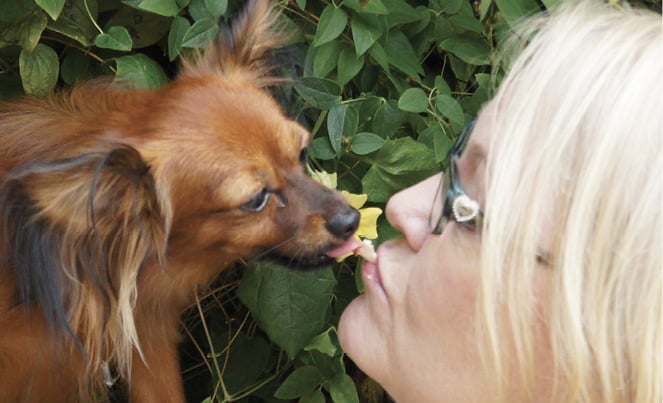
The Russian Toy is a small, elegant companion breed known for its fine-boned build, large expressive eyes, and lively personality. Available in both Smooth Coat and Long Coat varieties, the breed combines a delicate appearance with confidence, intelligence, and a strong attachment to its family.
Highlights
02/History
The Russian Toy originated in Russia and developed from small English Toy Terriers that were popular among the Russian aristocracy during the late nineteenth and early twentieth centuries. These tiny dogs were valued as fashionable companions and became especially common in wealthy households.
Following the Russian Revolution of 1917, many aristocratic companion breeds declined sharply in number. Organized breeding of English Toy Terriers largely disappeared, and the remaining small dogs in Russia were bred with limited access to imported stock.
By the mid-twentieth century, Russian breeders began working to preserve and develop these dogs as a distinct national breed. Because the surviving population differed from English Toy Terriers elsewhere in Europe, breeders gradually established their own type, emphasizing a small, elegant body, large ears, and lively temperament.
The Smooth Coat variety came first. In 1958, a long-coated puppy named Chikki was born from two smooth-coated parents in Moscow. Breeders recognized the potential of this new coat type and began developing what became known as the Moscow Longhaired Toy Terrier.
The Smooth Coat and Long Coat varieties were later brought together under a single breed standard. The breed was known for many years as the Russian Toy Terrier before the name was shortened to Russian Toy.
The Fédération Cynologique Internationale provisionally recognized the Russian Toy in 2006 and granted definitive recognition in 2017. The breed is placed in Group 9, Companion and Toy Dogs.
The American Kennel Club recognized the Russian Toy in 2022 and placed it in the Toy Group. The Russian Toy Club of America serves as the breed’s AKC parent club.
03/Appearance
A mature Russian Toy stands 8 to 11 inches tall at the withers and typically weighs up to 6.5 pounds.
Skull: The Russian Toy has a small, moderately wide skull with a clearly defined stop. The head is proportionate to the body and should appear refined rather than coarse.
Expression: The expression is bright, alert, and lively, reflecting the breed’s attentive and energetic character.
Eyes: The eyes are large, round, dark, and set well apart. They should be expressive without appearing excessively prominent.
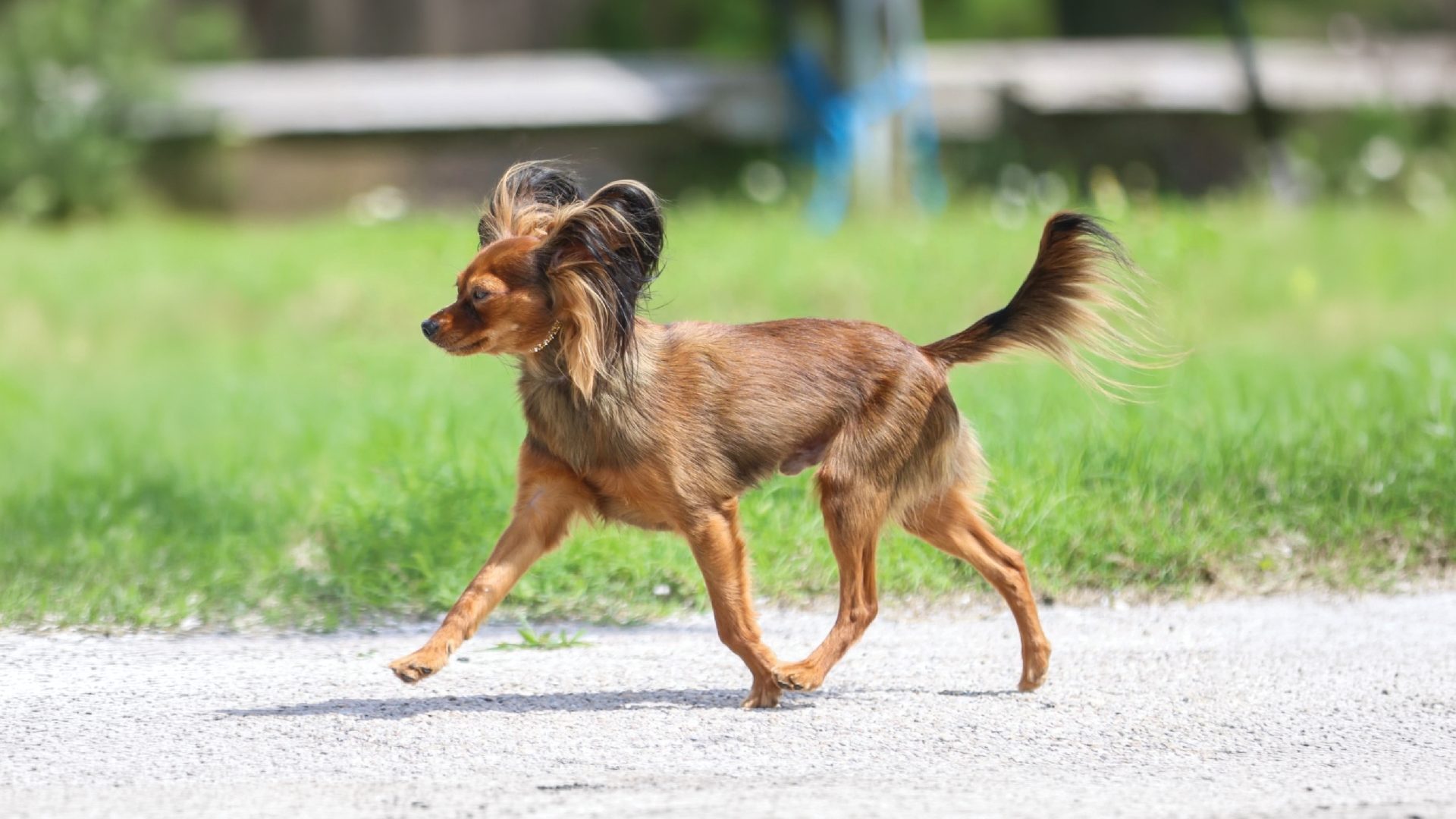
Ears: The ears are large, thin, set high, and carried erect. In the Long Coat variety, the ears are covered with distinctive feathering that becomes more developed with maturity.
Muzzle: The muzzle is dry, pointed, and shorter than the skull. It narrows gradually toward the nose without appearing weak.
Nose: The nose is small and dark, with pigmentation corresponding to the coat color.
Bite: The Russian Toy has small, white teeth that meet in a scissor bite.
The Russian Toy is fine-boned, elegant, and slightly longer than tall. The overall outline should appear light, balanced, and graceful without looking weak or overly delicate.
The chest is moderately deep, the back is straight, and the loin is short and firm. Bone is light but sufficient for the breed’s size, supporting quick, agile movement while preserving the refined appearance typical of a toy companion breed.
Texture: The Russian Toy comes in two coat varieties. The Smooth Coat has short, close-lying, shiny hair with no undercoat, while the Long Coat has moderately long, straight or slightly wavy hair with distinctive feathering on the ears, legs, and tail.
Standard Colors
Standard Markings
04/Consider
The Russian Toy is lively, affectionate, alert, and closely attached to its family. Anyone considering the breed should be prepared for careful handling, early socialization, consistent training, and regular exercise suited to a very small but energetic dog.
Interaction With Family
The level of affection a breed typically shows towards family members and familiar individuals.
Good With Other Dogs
The innate friendliness of a dog towards other dogs can depend on its breed.
Good With Young Children
The degree to which a breed will typically be patient with young children.
Amount Of Shedding
How much hair a breed typically leaves behind on clothes, furniture and floors.
Frequency Of Grooming
How often a breed needs brushing, bathing or a professional trim to stay in condition.
Amount Of Drooling
How prone a breed is to drool — worth knowing before you keep a towel by the door.
Openness To Strangers
How openly a breed tends to greet new people, visitors and strangers.
Protective Nature
How likely a breed is to alert you to — and stand between you and — anything unfamiliar.
Playfulness Level
How enthusiastic a breed stays about games and play well past puppyhood.
Trainability Level
How readily a breed takes direction and works with you rather than around you.
Barking Level
How much a breed uses its voice, and how readily.
Energy Level
How much get-up-and-go a breed brings to an average day.
Health
The Russian Toy is generally considered a healthy and long-lived breed, with a typical lifespan of 12 to 14 years. Preventive veterinary care, balanced nutrition, regular exercise, good dental hygiene, and maintenance of a healthy weight can help support long-term health.
The Russian Toy is affectionate, lively, alert, and closely attached to its family. Despite its tiny size, the breed is often confident and energetic, with a curious nature and a strong desire to stay involved in daily activities.
The breed can be friendly and outgoing, although some individuals may be reserved at first with unfamiliar people. Early socialization helps the Russian Toy become comfortable with different people, dogs, environments, and everyday situations.
Russian Toys can live successfully with respectful children, but their very small size makes careful handling especially important. Rough play, accidental drops, or interaction with much larger dogs can result in injury.
Exercise Expectations
A healthy adult generally benefits from about 30 to 45 minutes of activity each day, divided into manageable sessions. Puzzle toys, scent games, retrieving, and trick training can provide additional mental engagement. Because of the breed’s tiny size and fine-boned build, strenuous jumping, rough play, and uncontrolled interaction with larger dogs should be limited.
Grooming Expectations
The Russian Toy can adapt very well to apartment living because of its small size and moderate exercise needs. Its alert nature and tendency to bark may require additional management in homes with close neighbors.
The breed is highly portable and usually enjoys staying close to its family, but its small frame requires care around stairs, high furniture, and larger dogs. A secure indoor environment is especially important.
The Russian Toy usually does best in a household that appreciates its affectionate nature, lively personality, and delicate build. Regular companionship, gentle handling, and consistent routines help the breed thrive.
05/Puppies
Russian Toy puppies are lively, affectionate, curious, and quick to learn. Early routines, positive socialization, patient training, and careful handling help any pup develop into a confident and well-mannered adult.
A Russian Toy puppy benefits from a predictable daily schedule that includes regular meals, potty breaks, sleep, play, training, and quiet time. A crate or secure puppy area can provide a safe place to rest and support housetraining when direct supervision is not possible.
Early socialization should introduce the puppy to different people, well-mannered dogs, household sounds, surfaces, vehicles, and unfamiliar environments. These experiences should remain positive and appropriate for the puppy’s age.
Training can begin as soon as the puppy arrives home. Short sessions can introduce name response, recall, leash walking, basic manners, impulse control, and calm greetings. Because the breed is alert and quick to react, early focus and confidence-building exercises are especially useful.
A Russian Toy puppy should receive a complete and balanced diet formulated for growth. Because of the breed’s very small size, young puppies may benefit from several small meals throughout the day rather than long gaps between feedings.
Exercise should focus on supervised play, short walks, and gentle exploration. Repetitive jumping from furniture, rough handling, and uncontrolled play with larger dogs should be avoided while the puppy is still developing.
Regular veterinary visits are important during the first year. Grooming should also begin early so that the puppy becomes comfortable with brushing, nail trimming, ear checks, tooth brushing, and general handling.
06/Activities
Russian Toys are lively, intelligent, and agile dogs that often enjoy activities involving movement, problem-solving, and close work with a handler. Here are some of the dog sports and activities in which Russian Toys may participate:
Agility: Russian Toys can use their speed, balance, and quick reactions while navigating appropriately sized obstacle courses.
Obedience: Obedience Trials allow the breed to demonstrate focus, accuracy, and cooperation with a handler.
Rally: Rally Obedience combines movement through a course with varied obedience exercises that can help keep training engaging for this attentive breed.
Scent Work: Russian Toys can search for specific odors hidden in containers, indoor spaces, outdoor areas, or vehicles.
Fast CAT: This timed 100-yard dash gives the Russian Toy an opportunity to use its speed in a controlled setting.
Conformation Shows: Russian Toys compete in Conformation Shows, where judges evaluate each dog according to the Breed Standard, including structure, movement, coat, expression, temperament, and overall type.
Trick Dog: Trick training provides mental stimulation and gives the Russian Toy a productive way to use its intelligence and lively personality.
Therapy Work: A calm, friendly, and well-socialized Russian Toy may visit hospitals, schools, assisted living facilities, and other settings to provide companionship.
Canine Good Citizen: Russian Toys may participate in programs that evaluate everyday manners, social behavior, and reliability around people and other dogs.
Gallery
07/Standards
The Russian Toy is recognized by the world’s leading registries and kennel organizations, which categorize the breed into a specific Group based on its unique characteristics. This breed is recognized worldwide under the following Group designations:
The ideal Russian Toy is described by a Breed Standard that is approved by each of the world’s leading registries and kennel organizations. The Standards for this breed may be found in the following links:
08/Clubs
Russian Toy clubs support breed education, responsible breeding, health initiatives, rescue work, and participation in Conformation shows and Performance events.
Russian Toy Club of America: Founded in 2008, this is the national breed club for the Russian Toy in the United States and the breed’s AKC parent club.
Russkiy Toy Fancier of Canada: Canada’s national organization for the Russian Toy welcomes breeders, exhibitors, companion dog families, and other breed enthusiasts.
Russian Toy Club UK: Established in 2015, this is the organization in the UK that promotes the breed through dog shows and educational initiatives.
09/Rescue
Breed-specific rescue organizations help Russian Toys that have been surrendered, abandoned, or found in shelters. These groups may provide foster care, veterinary treatment, behavioral evaluation, and placement with an appropriate adoptive family.
Russian Toy Club of America Rescue Resources: The breed’s American Kennel Club parent club can provide rescue contacts or guidance for Russian Toys needing placement in the United States.
Russian Toy Club UK: The United Kingdom breed club may provide guidance about Russian Toys needing rescue or rehoming.
Because the Russian Toy is still a relatively uncommon breed outside its country of origin, dogs available through dedicated rescue programs may be limited. Local shelters, toy breed rescue organizations, adoption databases, and breed clubs can provide additional information about a Russian Toy or Russian Toy mix currently needing a home.
10/Facts
Developed in Russia
The Russian Toy was developed from small English Toy Terriers that became popular among the Russian aristocracy during the nineteenth century.
Two Coat Varieties
The breed comes in Smooth Coat and Long Coat varieties, both sharing the same general structure and temperament.
The Long Coat Began with One Puppy
A long-coated puppy named Chikki was born in Moscow in 1958 and became an important foundation for the Long Coat variety.
One of the Smallest Dog Breeds
Russian Toys typically weigh no more than about 6.5 pounds, giving them an especially delicate and refined appearance.
Large Ears Are a Signature Feature
The breed is known for its large, high-set ears, which are especially striking in Long Coats because of their feathering.
Recognized by the AKC in 2022
The American Kennel Club recognized the Russian Toy in 2022 and placed it in the Toy Group.
11/FAQ
Russian Toys can make excellent pets for people who want an affectionate, lively, and closely bonded companion. They need gentle handling, consistent training, regular exercise, and plenty of interaction with their family.
Official Standard of the Russian Toy
General Appearance: A small elegant dog, lively, long-legged, with fine bone and lean muscles. Sexual dimorphism only slightly defined. Active, cheerful, possessing keen intelligence, slightly aloof to strangers but neither cowardly nor aggressive.
Size, Proportion, Substance: The Russian Toy has a square build; the height, when measured vertically from the ground to the highest point of the withers, is equal to the length, when measured horizontally from the prosternum to the point of the buttocks. The height at the elbows is only slightly more than half of the height at withers. The chest is sufficiently deep reaching to the elbow. Height at withers for both dogs and bitches: 8 inches to 11 inches. Weight for both dogs and bitches: up to 6½ pounds. Disqualifications - Height at withers over 12 inches or under 7 inches. Weight less than 2 pounds.
Head: The head is small compared to the body. Expression - The expression is bright, attentive with attitude. Eyes are quite large, rounded, dark, slightly prominent, set well apart and looking straight ahead. Eyelids are tightly fitting. Black and Tan dogs have eyes that are darkest brown to black with black eye rims. Chocolate and Tan dogs have eyes that are brown to light brown and eye rims that are brown to light brown (darker color preferred). Blue and Tan dogs have eyes and eye rims that are slate grey. Red coated dogs have eyes that are darkest brown to black with black eye rims. Red Sable dogs have eyes that are darkest brown to black with black eye rims. Red Brown dogs have eyes and eye rims that are brown (darker color preferred). Ears -Ears are big, thin, set high, erect and wider at the base tapering to a triangular shape. Semi-pricked ears in longhaired dogs with heavy fringes is permissible but not desirable. Disqualification - Hanging (completely down) ears. Skull - The skull is high but not too wide (width at the level of zygomatic arches does not exceed the depth of the skull). Stop - The stop is clearly pronounced. Muzzle - The muzzle is lean and tapered and is slightly shorter than the skull. Cheekbones - The cheekbones are only slightly pronounced. Nose - Black and Tan dogs have black noses. Chocolate and Tan dogs have noses that are brown to light brown (darker color preferred). Blue and Tan dogs have slate grey noses. Red coated dogs have black noses. Red Sable dogs have black noses. Red Brown dogs have brown noses (darker color preferred). Lips - Lips are thin, lean, tight-fitting. Black and Tan dogs have black lips. Chocolate and Tan dogs have lips that are brown to light brown (darker color preferred). Blue and Tan dogs have slate grey lips. Red coated dogs have black lips. Red Sable dogs have black lips. Red Brown dogs have brown lips (darker color preferred). Bite - The teeth should meet in a scissor bite. Russian Toy teeth are small, white. Absence of two incisors is permitted in each jaw. Faults -Level bite or incisors sloping forward. The absence of more than two incisors in either jaw is a serious fault. Disqualifications - Overshot, undershot. Absence of one canine.
Neck, Topline, Body: Neck - The neck is long, lean, carried high, slightly arched. Topline - The topline gradually slopes from the withers to the root of the tail. Withers - The withers are slightly pronounced. Body - The chest is oval, sufficiently deep and not too wide. Underline -The underline has a tucked up belly and drawn up flanks, forming a nicely curved line from the chest to the flanks. Back - The back is strong and straight. Loin - The loin is short and slightly arched. Croup - The croup is somewhat rounded and slightly sloping. Tail - Tails may be natural or docked (only two or three vertebrae are left), and is carried high. The undocked (natural) tail is a sickle tail. The tail should not be carried lower than back level when moving. Fault - Low set tail.
Forequarters: Shoulders - The shoulder blades are moderately long and not too sloping. Upper Arm - The upper arm forms an angle of 105 degrees with the shoulder blade. The length of upper arm is approximately equal to the length of shoulder. Elbow - The elbow is in line with the body. Legs - Forequarters legs are thin and lean. Seen from the front, the front legs are straight and parallel. The forearm is long, straight. The carpus (wrist) is lean. Pasterns are almost vertical. Dewclaws may be removed or left natural. Feet and Toes - Forefeet are small, oval, turning neither in nor out with pads that are cushioned. Toes are well knit and arched. Hind feet are a little bit narrower than forefeet with pads that are cushioned and toes are well knit and arched. Pads and Nails - Black and Tan dogs have black nails and pads. Chocolate and Tan dogs have nails and pads that are brown to light brown (darker color preferred). Blue and Tan dogs have slate grey nails and pads. Red coated dogs have black nails and pads. Red Sable dogs have black nails and pads. Red Brown dogs have brown nails and pads (darker color preferred).
Hindquarters: Seen from the rear, the hind legs are straight and parallel, but standing a little bit wider than the forelegs. Stifles and hocks are sufficiently bent. Angulation - Hindquarters should be sufficiently angulated. The upper thigh muscles are lean and developed. The upper and lower thighs are of the same length. Hocks should be vertical. There should be no rear dewclaws. Serious fault - Short legs.
Skin: The skin should be dry and tight-fitting.
Coat: Hair - There exists two types for the breed: smooth-coated and long-coated. Smooth coat dogs have short, close-lying, shiny hair, without undercoat or bald patches. Long coat dogs have bodies covered with moderately long (one inch to three inches) straight or slightly wavy hair, close-lying, which does not hide the natural outline of the body. Hair on the head and on the front part of limbs is short and close-lying. There are distinct feathers on rear side of limbs. The feet have long, silky hair which completely hides the nails. Long coated dogs have ears that are covered with thick, long hair forming a fringe. Dogs of more than three years have such a fringe which should completely hide the outer edges and tips of the ears. Body hair should not look tousled nor be too short (less than ½ inch). Disqualification - Long coat dogs: absence of any fringes on ears and presence of curly hair. (Dogs younger than 18 months may have sparse or few fringes).
Color: Russian Toy coats may be Black and Tan, Chocolate and Tan, Blue and Tan, Red, Red Sable, or Red Brown. Black and Tan coats are jet black with rich, bright tan markings over eyes, on cheeks, inside ears, on chest, legs, and on underside of tail. Chocolate and Tan coats are rich chocolate brown with tan markings over eyes, on cheeks, inside ears, on chest, legs, and on underside of tail. Blue and Tan coats are blue based grey coloring with tan markings over eyes, on cheeks, inside ears, on chest, legs, and on underside of tail. Red coats are whole-colored red that may range from rich ruby to lighter hues, but deeper saturated color is preferred. Red Sable coats are red with black-tipped hair on body and ears. Red Brown coats are red with brown-tipped hair on body and ears. Faults - Presence of bald patches in smooth coat dogs. Too long or too short hair on body of long coat dogs. Small white spots under ½ inch on chest and toes. Solid black, brown and blue colors. Tan markings too large or with dark shadings. Any white spots on the head, abdomen and above metacarpus. Severe fault - Large white patches over ½ inch on chest and throat. Disqualification - Presence of brindle markings.
Gait: Easy, straightforward, fast. No noticeable change in the topline when moving.
Temperament: Active, cheerful, possessing keen intelligence, slightly aloof to strangers but neither cowardly nor aggressive. Fault - Timid behavior.
Faults: Any departure from the foregoing points should be considered a fault and the seriousness with which the fault should be regarded should be in exact proportion to its degree and its effect upon the health and welfare of the dog.
Disqualifications Height at withers over 12 inches or under 7 inches. Weight less than 2 pounds. Hanging (completely down) ears. Overshot, undershot. Absence of one canine.
Long coat dogs: absence of any fringes on ears and presence of curly hair. (Dogs younger than 18 months may have sparse or few fringes). Presence of brindle markings.
Approved July 14, 2017
Effective June 27, 2018
The tail is set moderately high and may be naturally long or traditionally docked in countries where the practice is permitted. A natural tail is carried in a gentle sickle-shaped curve, with the Long Coat variety developing tail feathering that adds to the breed’s elegant appearance.
A Note About Color: Russian Toy coats may be Black and Tan, Chocolate and Tan, Blue and Tan, Red, Red Sable, or Red Brown. Black and Tan coats are jet black with rich, bright tan markings over the eyes, on the cheeks, inside the ears, on the chest, legs, and underside of the tail. Chocolate and Tan coats are rich chocolate brown with tan markings over the eyes, on the cheeks, inside the ears, on the chest, legs, and underside of the tail. Blue and Tan coats are a blue-based grey coloring with tan markings over the eyes, on the cheeks, inside the ears, on the chest, legs, and underside of the tail. Red coats are whole-colored red that may range from rich ruby to lighter hues, but deeper saturated color is preferred. Red Sable coats are red with black-tipped hair on the body and ears. Red Brown coats are red with brown-tipped hair on the body and ears. Faults in the show ring include: presence of bald patches in Smooth Coat dogs; too long or too short hair on the body of Long Coat dogs; small white spots under one-half inch on the chest and toes; solid black, brown, and blue colors; tan markings too large or with dark shadings; any white spots on the head, abdomen, and above the metacarpus. Large white patches over one-half inch on the chest and throat is considered a severe fault. The presence of brindle markings is a disqualification in the show ring.
Coat Type
Double
The structure of the coat this breed carries.
Coat Length
Short
How long the breed's coat grows when kept in condition.
Adaptability Level
How easily a breed copes with changes in home, routine, noise and weather.
Mental Stimulation Needs
How much a breed needs a job, a puzzle or training to stay content.
A Russian Toy should receive a complete and balanced diet suited to the dog’s age, activity level, and body condition. Portions should be measured carefully because even a small amount of excess weight can affect mobility and overall health.
A puppy generally needs three or four small meals each day before gradually moving to two meals. Most adults are fed twice daily, with the amount adjusted according to the food’s caloric density and the dog’s activity level.
Because of the breed’s very small size, young puppies should not go excessively long between meals. Fresh water should always be available.
The Russian Toy is intelligent, attentive, and usually quick to learn. Training is most effective when sessions are short, varied, and supported by praise, food rewards, toys, or play.
Early socialization should introduce the puppy to different people, well-mannered dogs, sounds, surfaces, and unfamiliar environments. Recall, leash manners, impulse control, and calm greetings are especially useful because the breed can be alert and quick to react to activity around the home.
Clear and consistent expectations help prevent unwanted habits such as excessive barking or demanding attention. Patient, reward-based training usually produces the best results.
Bathing is needed only as necessary. Particular attention should be given to the ears, legs, and tail of Long Coats, where longer hair can collect debris or become tangled. Nails should be trimmed regularly, ears should be checked for irritation or debris, and teeth should be brushed routinely. Dental care is especially important in a breed with such a small mouth.