Members
01/Overview
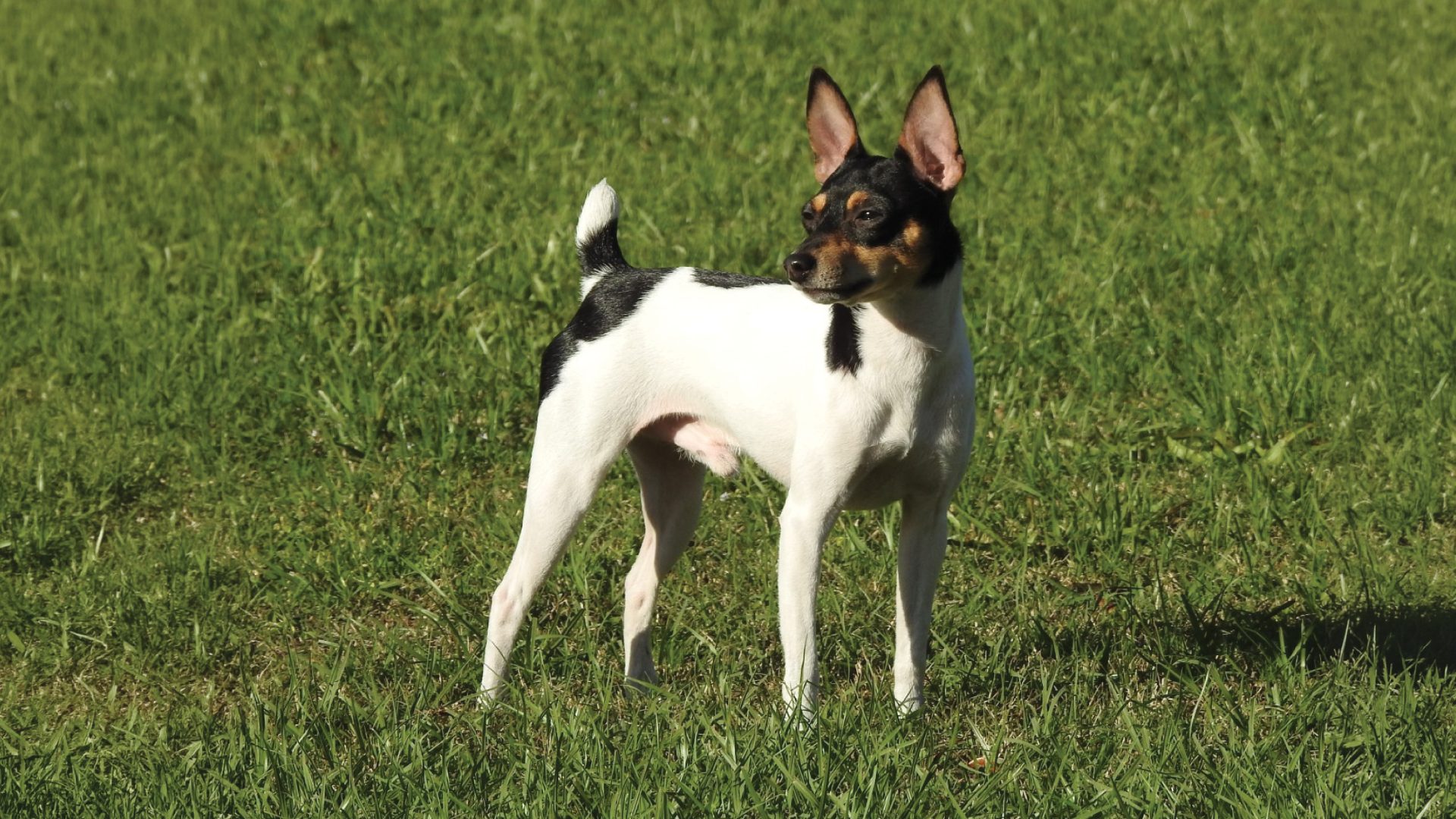
The Toy Fox Terrier is a small, athletic American breed known for its smooth coat, erect ears, alert expression, and lively personality. Developed from smaller Smooth Fox Terriers, the breed combines the confidence and hunting instinct of a terrier with the size and affectionate nature of a companion dog.
Highlights
02/History
The Toy Fox Terrier was developed in the United States during the late nineteenth and early twentieth centuries. Its foundation came primarily from small Smooth Fox Terriers that were selectively bred for compact size while preserving the speed, intelligence, and vermin-hunting ability of the larger breed.
Breeders later introduced several toy breeds to refine size, temperament, and overall type. Manchester Terriers, Chihuahuas, Miniature Pinschers, and Italian Greyhounds are commonly associated with the Toy Fox Terrier’s development.
The breed proved especially useful on farms, where its small size and quick reactions made it an effective hunter of rats, mice, and other vermin. Toy Fox Terriers were also used to hunt squirrels and other small game and became valued as alert household companions.
Their intelligence, agility, and willingness to learn also made them popular performers. Toy Fox Terriers appeared in traveling circuses and other entertainment acts, where they performed tricks and routines that highlighted their balance, speed, and trainability.
For many years, the dogs were registered as smaller Smooth Fox Terriers rather than as a separate breed. Dedicated breeders gradually established a consistent type that combined terrier structure and character with the compact size expected of a toy dog.
The United Kennel Club recognized the Toy Fox Terrier as a distinct breed in 1936. The American Kennel Club later recognized the breed in 2003 and placed it in the Toy Group.
The American Toy Fox Terrier Club serves as the breed’s AKC parent club. Unlike many terriers, the Toy Fox Terrier is classified with the Toy breeds by the AKC because of its small size and long history as a companion.
03/Appearance
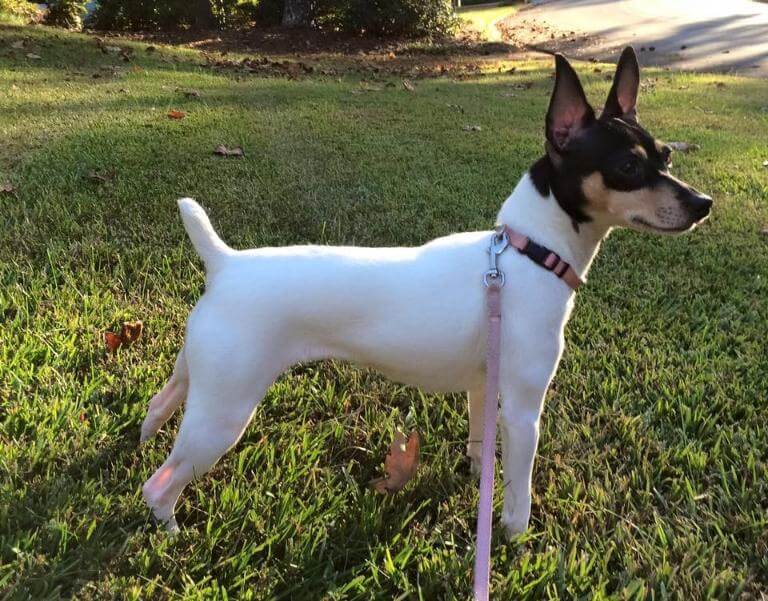
A Toy Fox Terrier stands 8.5 to 11.5 inches tall at the withers and typically weighs between 4 and 9 pounds.
The tail is set high and carried erect when the Toy Fox Terrier is alert. It may be naturally long or traditionally docked in countries where the practice is permitted, and should remain balanced with TFT’s compact, square outline.
The Toy Fox Terrier is square in proportion, with the length of the body from the point of the shoulder to the point of the buttocks approximately equal to the height at the withers. The overall outline is compact, balanced, athletic, and elegant without appearing fragile.
The body is strong for TFT’s small size, with a deep chest, well-sprung ribs, a level topline, and a short, firm loin. Bone is proportionate and refined while still providing the strength and agility expected of a terrier developed for vermin hunting.
Skull: The Toy Fox Terrier has a moderately wide, slightly rounded skull that narrows gradually toward the muzzle. The stop is distinct, and the head remains balanced with the dog’s small, athletic body.
Expression: The expression is alert, intelligent, and lively, reflecting the TFT’s confident and curious character.
Eyes: The eyes are dark, round, and moderately prominent without appearing bulging. They are set well apart and contribute to the breed’s bright, attentive expression.
Ears: The ears are erect, pointed, and set high on the skull. They are relatively large in proportion to the head and should be carried upright when the dog is alert.
Muzzle: The muzzle is strong and gradually tapers toward the nose. It should be proportionate to the skull and should not appear weak or overly pointed.
Texture: The Toy Fox Terrier has a short, smooth, fine coat that lies close to the body and has a natural sheen. The coat should feel soft and sleek while still providing a clean, polished outline.
Standard Colors
Standard Markings
04/Consider
The Toy Fox Terrier is lively, intelligent, affectionate, and highly alert. Anyone considering the breed should be prepared for consistent training, regular exercise, early socialization, and careful handling suited to a small but athletic dog.
Interaction With Family
The level of affection a breed typically shows towards family members and familiar individuals.
Good With Other Dogs
The innate friendliness of a dog towards other dogs can depend on its breed.
Good With Young Children
The degree to which a breed will typically be patient with young children.
Amount Of Shedding
How much hair a breed typically leaves behind on clothes, furniture and floors.
Frequency Of Grooming
How often a breed needs brushing, bathing or a professional trim to stay in condition.
Amount Of Drooling
How prone a breed is to drool — worth knowing before you keep a towel by the door.
Openness To Strangers
How openly a breed tends to greet new people, visitors and strangers.
Protective Nature
How likely a breed is to alert you to — and stand between you and — anything unfamiliar.
Playfulness Level
How enthusiastic a breed stays about games and play well past puppyhood.
Trainability Level
How readily a breed takes direction and works with you rather than around you.
Barking Level
How much a breed uses its voice, and how readily.
Energy Level
How much get-up-and-go a breed brings to an average day.
Health
The Toy Fox Terrier is generally considered a healthy and long-lived breed with a typical lifespan of 13 to 15 years. Preventive veterinary care, balanced nutrition, regular exercise, good dental hygiene, and maintenance of a healthy weight can help support long-term health.
The Toy Fox Terrier is lively, intelligent, affectionate, and highly alert. Despite its small size, the TFT has a confident terrier personality and often approaches daily life with curiosity and enthusiasm.
The breed is usually closely attached to its family and can be playful and entertaining in the home. Early socialization helps the Toy Fox Terrier become comfortable with unfamiliar people, other dogs, and new environments.
Toy Fox Terriers can live successfully with respectful children, especially when interactions are calm and supervised. Because the breed is small and lightly built, rough handling or accidental falls can cause injury.
Exercise Expectations
A healthy adult generally benefits from about 30 to 45 minutes of activity each day, although particularly energetic individuals may need more. Scent games, retrieving, puzzle toys, and dog sports can provide additional mental engagement. Because of the breed’s strong prey drive and small size, off-leash exercise should take place only in a securely enclosed area.
Grooming Expectations
The Toy Fox Terrier can adapt very well to apartment living when given enough exercise, training, and mental activity. Its alert nature and tendency to bark may require additional management in homes with close neighbors.
The breed is small enough to travel easily and usually enjoys staying close to its family. Care should be taken around high furniture, stairs, and larger dogs because TFT’s small frame can be injured by rough play or falls.
The Toy Fox Terrier usually does best in a household that appreciates its intelligence, energy, and affectionate nature. Regular companionship, consistent routines, and structured activity help the breed thrive.
05/Puppies
Toy Fox Terrier puppies are lively, curious, affectionate, and quick to learn. Early routines, positive socialization, patient training, and careful handling help any pup develop into a confident and well-mannered adult.
A Toy Fox Terrier puppy benefits from a predictable daily schedule that includes regular meals, potty breaks, sleep, play, training, and quiet time. A crate or secure puppy area can provide a safe place to rest and support housetraining when direct supervision is not possible.
Early socialization should introduce the puppy to different people, well-mannered dogs, household sounds, surfaces, vehicles, and unfamiliar environments. These experiences should remain positive and appropriate for the puppy’s age.
Training can begin as soon as the puppy arrives home. Short sessions can introduce name response, recall, leash walking, basic manners, impulse control, and calm greetings. Because the TFT is intelligent and energetic, varied training can help keep the puppy engaged.
A Toy Fox Terrier puppy should receive a complete and balanced diet formulated for growth. Because of the breed’s small size, meals should be appropriately portioned, and young puppies should not go excessively long between feedings.
Exercise should focus on supervised play, short walks, and gentle exploration. Repetitive jumping from furniture, rough handling, and other high-impact activity should be limited while the puppy is still developing.
Regular veterinary visits are important during the first year. Grooming should also begin early so that the puppy becomes comfortable with brushing, nail trimming, ear checks, tooth brushing, and general handling.
06/Activities
Toy Fox Terriers are energetic, intelligent, and athletic dogs that often enjoy activities involving speed, scent, problem-solving, and close work with a handler. Here are some of the dog sports and activities in which Toy Fox Terriers may participate:
Agility: Toy Fox Terriers can use their speed, balance, and quick reactions while navigating obstacle courses.
Obedience: Obedience Trials allow the TFT to demonstrate focus, accuracy, and cooperation with a handler.
Rally: Rally Obedience combines movement through a course with varied obedience exercises that can help keep training engaging for this quick-learning breed.
Scent Work: Toy Fox Terriers can search for specific odors hidden in containers, indoor spaces, outdoor areas, or vehicles.
Fast CAT: This timed 100-yard dash gives the breed an opportunity to use its speed and chasing instinct in a controlled setting.
Barn Hunt: Barn Hunt allows Toy Fox Terriers to use their natural vermin-hunting instincts to locate safely enclosed rats hidden among bales of straw.
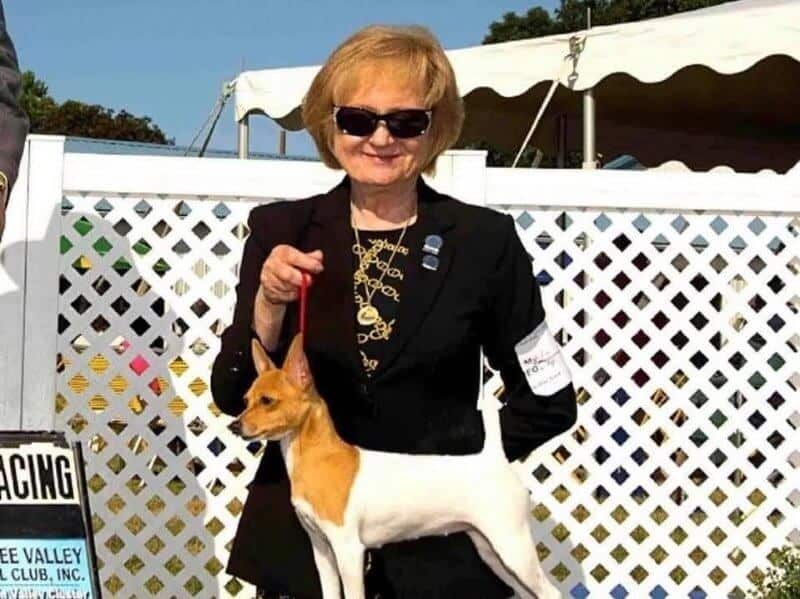
Conformation Shows: Toy Fox Terriers compete in Conformation Shows, where judges evaluate each dog according to the Breed Standard, including structure, movement, coat, expression, temperament, and overall type.
Trick Dog: Trick training provides mental stimulation and gives the TFT a productive way to use its intelligence and enthusiasm.
Therapy Work: A calm, friendly, and well-socialized Toy Fox Terrier may visit hospitals, schools, assisted living facilities, and other settings to provide companionship.
Canine Good Citizen: Toy Fox Terriers may participate in programs that evaluate everyday manners, social behavior, and reliability around people and other dogs.
Gallery
07/Standards
The Toy Fox Terrier is recognized by the world’s leading registries and kennel organizations, which categorize the breed into a specific Group based on its unique characteristics. This breed is recognized worldwide under the following Group designations:
The ideal Toy Fox Terrier is described by a Breed Standard that is approved by each of the world’s leading registries and kennel organizations. The Standards for this breed may be found in the following links:
08/Clubs
Toy Fox Terrier clubs support breed education, responsible breeding, health initiatives, rescue work, and participation in Conformation Shows and performance events.
American Toy Fox Terrier Club: Founded in 1994, the American Toy Fox Terrier Club is the AKC parent club for the breed.
09/Rescue
Breed-specific rescue organizations provide help to Toy Fox Terriers that have been surrendered, abandoned, or found in shelters. These groups may provide foster care, veterinary treatment, behavioral evaluation, and placement with an appropriate adoptive family.
American Toy Fox Terrier Club Rescue: The breed’s American Kennel Club parent club provides rescue information and can help connect Toy Fox Terriers in need with foster or adoptive homes across the United States.
Toy Fox Terrier Rescue: Volunteer rescue networks and breed enthusiasts in the US may assist with rehoming, foster care, and adoption of Toy Fox Terriers in need.
Because the Toy Fox Terrier is a relatively uncommon breed, dogs available through dedicated rescue programs may be limited. Local shelters, broader toy breed and terrier rescue organizations, adoption databases, and breed clubs can provide additional information about a Toy Fox Terrier or Toy Fox mix currently needing a home.
10/Facts
An American Breed
The Toy Fox Terrier was developed in the United States from smaller Smooth Fox Terriers and several toy breeds.
Bred as a Ratter
Despite its tiny size, the TFT was used to control rats, mice, and other vermin around farms and homes.
A Talented Performer
Toy Fox Terriers became popular in traveling circuses and entertainment acts because of their intelligence, agility, and the ability to learn tricks.
Known for Its Erect Ears
The breed’s large, upright ears and bright expression are among its most recognizable features.
11/FAQ
Toy Fox Terriers can make excellent pets for people who want an affectionate, intelligent, and energetic companion. They need regular exercise, consistent training, and plenty of interaction with their family.
Official Standard of the Toy Fox Terrier
General Appearance: The Toy Fox Terrier is truly a toy and a terrier and both have influenced his personality and character. As a terrier, the Toy Fox Terrier possesses keen intelligence, courage, and animation. As a toy his is diminutive, and devoted with an endless abiding love for his master. The Toy Fox Terrier is a well-balanced Toy dog of athletic appearance displaying grace and agility in equal measure with strength and stamina. His lithe muscular body has a smooth elegant outline which conveys the impression of effortless movement and endless endurance. He is naturally well groomed, proud, animated, and alert. Characteristic traits are his elegant head, his short glossy and predominantly white coat, coupled with a predominantly solid head, and his short high-set tail.
Size, Proportion and Substance: Size - 8½ to 11½ inches, 9 to11 preferred, 8½ to 11½ acceptable. Proportion - The Toy Fox Terrier is square in proportion, with height being approximately equal to length; with height measured from withers to ground and length measured from point of shoulder to buttocks. Slightly longer in bitches is acceptable. Substance - Bone must be strong, but not excessive and always in proportion to size. Overall balance is important. Disqualification - Any dog under 8½ inches and over 11½ inches.
Head: The head is elegant, balanced and expressive with no indication of coarseness. Expression is intelligent, alert, eager and full of interest. Eyes - clear, bright and dark, including eye-rims, with the exception of chocolates whose eye-rims should be self-colored. The eyes are full, round and somewhat prominent, yet never bulging, with a soft intelligent expression. They are set well apart, not slanted, and fit well together into the sockets. Ears - The ears are erect, pointed, inverted V-shaped, set high and close together, but never touching. The size is in proportion to the head and body. Disqualification - Ears not erect on any dog over six months of age. Skull - is moderate in width, slightly rounded and softly wedge shaped. Medium stop, somewhat sloping. When viewed from the front, the head widens gradually from the nose to the base of the ears. The distance from the nose to the stop is equal to the distance from the stop to the occiput. The cheeks are flat and muscular, with the area below the eyes well filled in. Faults -Apple head. Muzzle - Strong rather than fine, in proportion to the head as a whole and parallel to the top of the skull. Nose - Black only with the exception of self-colored in chocolate dogs. Disqualification - Dudley nose. Lips - are small and tight fitting. Bite - a full complement of strong white teeth meeting in a scissors bite is preferred. Loss of teeth should not be faulted as long as the bite can be determined as correct. Disqualification - Undershot, wry mouth, overshot more than ⅛ inch.
Neck, Topline and Body: The neck is carried proudly erect, well set on, slightly arched, gracefully curved, clean, muscular and free from throatiness. It is proportioned to the head and body and widens gradually blending smoothly into the shoulders. The length of the neck is approximately the same as that of the head. The topline is level when standing and gaiting. The body is balanced and tapers slightly from ribs to flank. The chest is deep and muscular with well sprung ribs. Depth of chest extends to the point of elbow. The back is straight, level, and muscular. Short and strong in loin with moderate tuck-up to denote grace and elegance. The croup is level with topline and well-rounded. The tail is set high, held erect and in proportion to the size of the dog. Docked to the third or fourth joint.
Forequarters: Forequarters are well angulated. The shoulder is firmly set and has adequate muscle, but is not overdeveloped. The shoulders are sloping and well laid back, blending smoothly from neck to back. The forechest is well developed. The elbows are close and perpendicular to the body. The legs are parallel and straight to the pasterns which are strong and straight while remaining flexible. Feet are small and oval, pointing forward turning neither in nor out. Toes are strong, well-arched and closely knit with deep pads.
Hindquarters: Hindquarters are well angulated, strong and muscular. The upper and lower thighs are strong, well muscled and of good length. The stifles are clearly defined and well angulated. Hock joints are well let down and firm. The rear pasterns are straight. The legs are parallel from the rear and turn neither in nor out. Dewclaws should be removed from hindquarters if present.
Coat: The coat is shiny, satiny, fine in texture and smooth to the touch. It is slightly longer in the ruff, uniformly covering the body.
Color: Tri-Color: Predominately black head with sharply defined tan markings on cheeks, lips and eye dots. Body is over fifty-per-cent white, with or without black body spots. White,
Chocolate and Tan: Predominately chocolate head with sharply defined tan markings on cheeks, lips and eye dots. Body is over fifty-percent white, with or without chocolate body spots. White and Tan: Predominately tan head. Body is over fifty-percent white with or without tan body spots. White and Black: Predominately black head. Body is over fifty percent white with or without black body spots. Color should be rich and clear. Blazes are acceptable, but may not touch the eyes or ears. Clear white is preferred, but a small amount of ticking is not to be penalized. Body spots on black headed tri-colors must be black; body spots on chocolate headed tri-colors must be chocolate; both with or without a slight fringe of tan alongside any body spots near the chest and under the tail as seen in normal bi-color patterning. Faults - Color, other than ticking, that extends below the elbow or the hock. Disqualifications - A blaze extending into the eyes or ears. Any color combination not stated above. Any dog whose head is more than fifty-percent white. Any dog whose body is not more than fifty-percent white. Any dog whose head and body spots are of different colors.
Gait: Movement is smooth and flowing with good reach and strong drive. The topline should remain straight and head and tail carriage erect while gaiting. Fault - Hackney gait.
Temperament: The Toy Fox Terrier is intelligent, alert and friendly, and loyal to its owners. He learns new tasks quickly, is eager to please, and adapts to almost any situation. The Toy Fox Terrier, like other terriers, is self-possessed, spirited, determined and not easily intimidated. He is a highly animated toy dog that is comical, entertaining and playful all of his life. Any individuals lacking good terrier attitude and personality are to be faulted.
Disqualifications: Any dog under 8½ inches or over 11½ inches. Ears not erect on any dog over six months of age. Dudley nose. Undershot, wry mouth, overshot more than ⅛ inch. A blaze extending into the eyes or ears. Any color combination not stated above. Any dog whose head is more than fifty percent white. Any dog whose body is not more than fifty percent white. Any dog whose head and body spots are of different colors.
Approved: July 8, 2003
Effective: August 27, 2003

Meet the Breeders
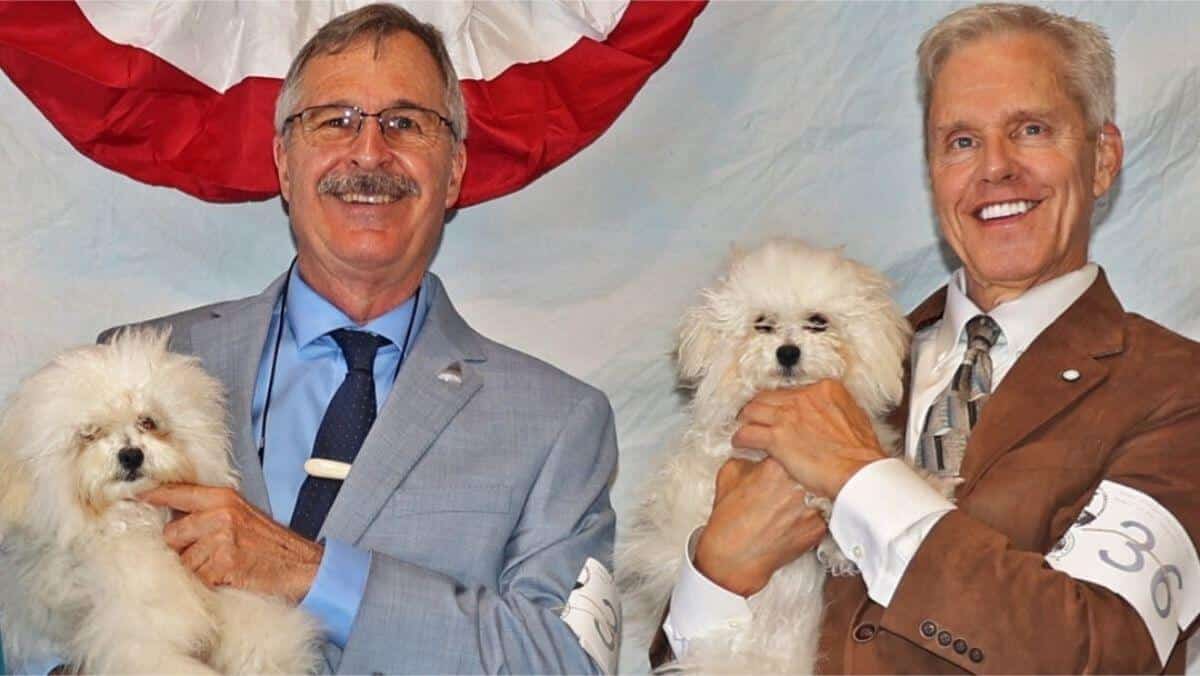
Bob Shailer & Phil Lasswell is the breeder behind the Janus Show Dogs. Read about the kennel’s beginnings, the champions, the puppies.
Meet the Breeders
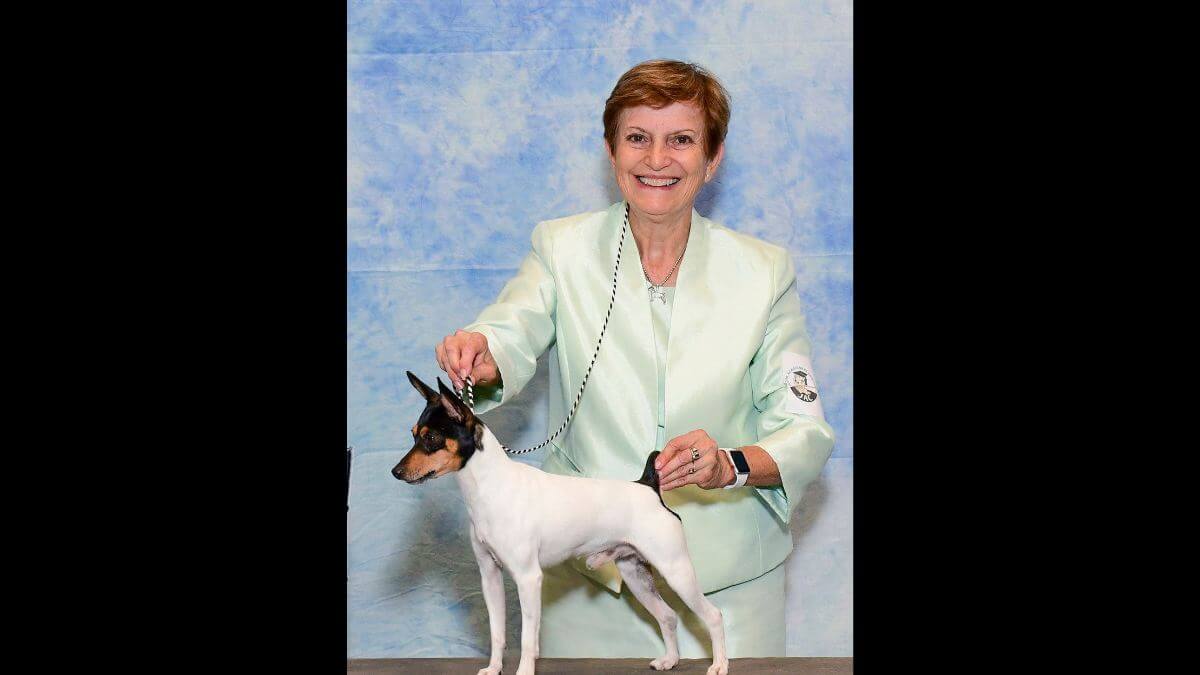
Susan Thibodeaux of Kallmee shares her insights on Manchester Terriers, show puppy selection, breed trends, and the dog show community.

Meet the Breeders
Amanda Halsey of DynAsty Toy Fox Terriers shares insights on puppy evaluation, breed health, dog shows, and social media.
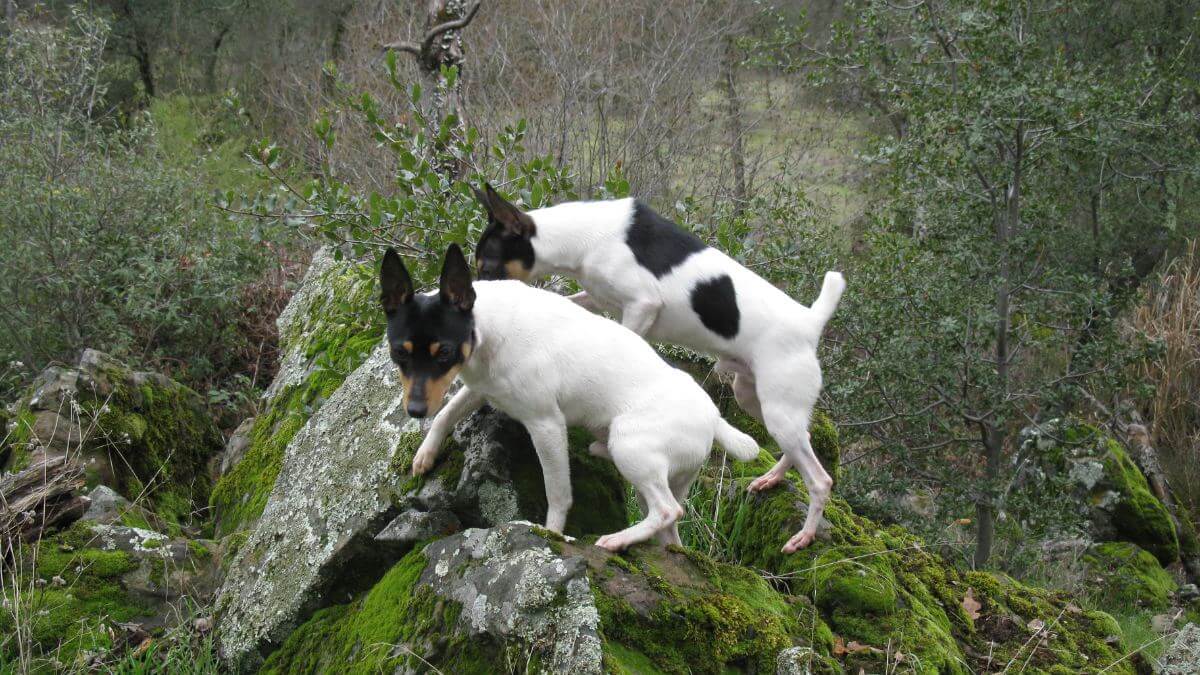
The Toy Fox Terrier: a small, intelligent, and athletic dog with a big personality, loyal nature, and charming character.

National Owner-Handled Series (NOHS)
Insights from an Owner Handler Janet Weerts. Janet shares her opinions on various topics about dog handling in the modern show ring.

All About Judging
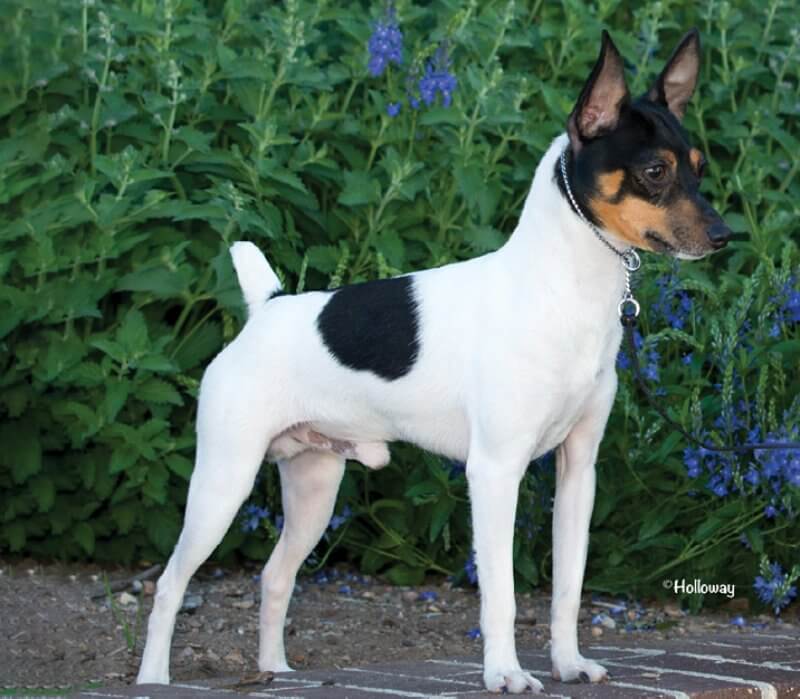
Judging Toy Fox Terriers (TFT): Gain expert insights, breed standards, and essential tips in this must-read article for dog show enthusiasts.

Discover the differences between owning large breeds vs Toy dogs. Dive into a journey filled with tiny surprises and heartfelt transitions.

Meet the Breeders
Susan Thibodeaux is the breeder behind Kallmee Toy Fox Terriers. Read about the kennel’s beginnings, the puppies, and much more!

Meet the Breeders
Sheryl Irwin is the breeder behind StarFox Toy Fox Terriers. Read about the kennel’s beginnings, the sires, the dams, the puppies, and more!
Nose: The nose is black, except in chocolate-colored dogs, where it may correspond with the coat color.
Bite: The Toy Fox Terrier has strong white teeth that meet in a scissors bite.
A Note About Color: The coat of the Toy Fox Terrier must be over fifty percent white in any of the four recognized colors, with or without body spots. The head is predominately a color, with sharply defined tan markings on the cheeks, lips, and eye dots on tri-colored dogs. Color should be rich and clear. Blazes are acceptable, but may not touch the eyes or ears. Clear white is preferred, but a small amount of ticking is not to be penalized in the show ring. Body spots on black-headed tri-colors must be black; body spots on chocolate-headed tri-colors must be chocolate; both with or without a slight fringe of tan alongside any body spots near the chest and under the tail as seen in normal bi-color patterning. Color, other than ticking, that extends below the elbow or the hock is considered a fault. A blaze extending into the eyes or ears; any color combination not stated; any dog whose head is more than fifty percent white; any dog whose body is not more than fifty-percent white; and any dog whose head and body spots are of different colors are considered disqualifications.
Coat Type
Smooth
The structure of the coat this breed carries.
Coat Length
Short
How long the breed's coat grows when kept in condition.
Adaptability Level
How easily a breed copes with changes in home, routine, noise and weather.
Mental Stimulation Needs
How much a breed needs a job, a puzzle or training to stay content.
A Toy Fox Terrier should receive a complete and balanced diet suited to the dog’s age, activity level, and body condition. Portions should be measured carefully because even a small amount of excess weight can affect mobility and overall health.
A puppy generally needs three or four small meals each day before gradually moving to two meals. Most adult TFTs are fed twice daily, with the amount adjusted according to the food’s caloric density and the dog’s activity level.
Treats can be useful during training but should be given sparingly. Fresh water should always be available.
The Toy Fox Terrier is highly intelligent and usually quick to learn. Training is most effective when sessions are short, varied, and supported by praise, food rewards, toys, or play.
Early socialization should introduce the puppy to different people, well-mannered dogs, environments, sounds, and surfaces. Recall, leash manners, impulse control, and calm greetings are especially useful because the breed may react quickly to movement or interesting scents.
Clear and consistent expectations help prevent unwanted habits such as excessive barking, chasing, or ignoring commands. Patient, reward-based training usually produces the best results.
The breed sheds moderately throughout the year, with shedding sometimes becoming more noticeable during seasonal changes. Bathing is needed only occasionally unless the dog becomes particularly dirty. Nails should be trimmed regularly, ears should be checked for irritation or debris, and teeth should be brushed routinely.