Members
01/Overview
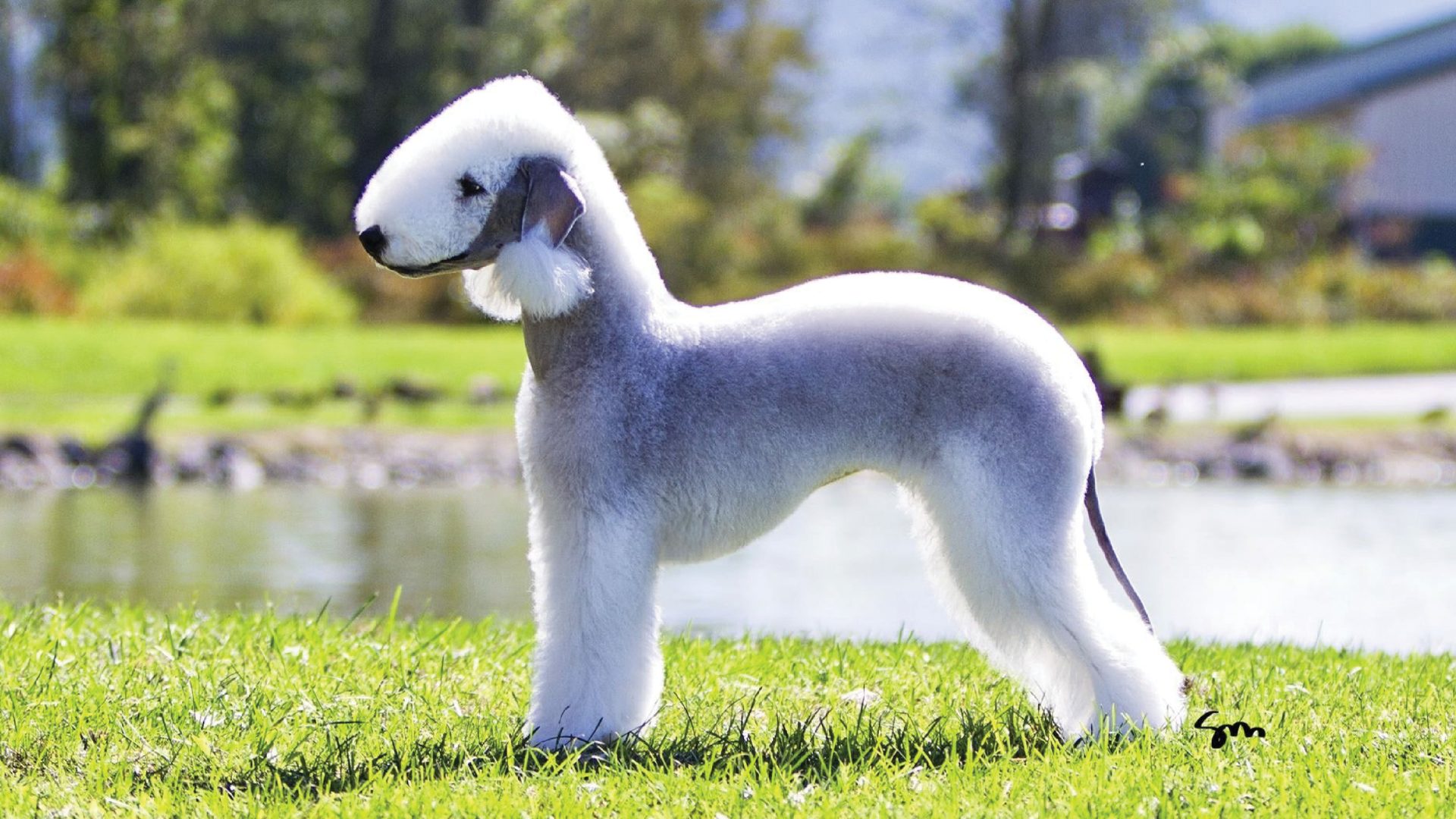
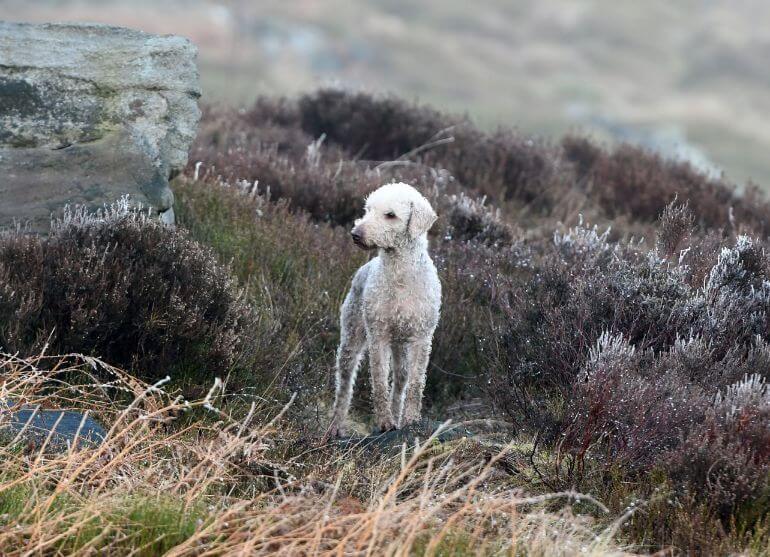
The Bedlington Terrier is a distinctive and elegant-looking breed known for its lamb-like appearance and athleticism. Despite their refined look, Bedlington Terriers are powerful, energetic, and highly adaptable, excelling in various roles from rat hunting and straight racing to companionship in all its forms. Their adaptable nature and keen intelligence make them excellent family pets, while their unique coat requires regular grooming to maintain the breed’s signature appearance.
Highlights
02/History
The Bedlington Terrier traces its origins to Northumberland, England, in the early 19th century, where it was developed as a versatile hunting and working dog. The breed's ancestors were likely a mix of small terriers used for hunting vermin, combined with Whippets or Greyhounds to enhance speed and agility. The result was a breed capable of hunting rats, badgers, and even larger game while being fast enough for racing and strong enough for other endeavors.
The breed was originally known as the Rothbury Terrier, named after the region where it was popular among gypsies, poachers, and miners. However, when the breed became more common in the mining town of Bedlington, it took on its current name, the Bedlington Terrier. The dogs were highly valued for their fearlessness, stamina, and adaptability, making them ideal for controlling vermin in coal mines and open fields.
As the breed's reputation grew, it caught the attention of wealthier sportsmen, who refined the Bedlington Terrier into a more stylish companion while preserving its working ability. By the mid-19th century, Bedlington Terriers were no longer just working-class hunting dogs but also prized show dogs, with the first recorded dog show appearance catalogued in 1870.
The Bedlington Terrier Club of England was founded in 1877, helping to standardize the breed. The American Kennel Club (AKC) officially recognized the breed in 1886, making it one of the earliest recognized terrier breeds in the United States. Over time, the breed transitioned from a working-class hunting dog to a beloved family companion and show competitor.
03/Appearance
The Bedlington Terrier is a medium-sized breed with a graceful yet muscular build. The preferred height for males is 16.5 inches; 15.5 inches for females. Under 16 inches or over 17.5 inches for dogs, and under 15 inches or over 16.5 inches for females, is considered a serious fault. Weight ranges from 17 to 23 pounds, with variations depending on gender as well as overall structure and activity level.
Skull: Narrow yet deep, rounded on top, giving a distinctive domed appearance.
Expression: Mild and gentle, yet alert, reflecting the breed’s intelligence and curiosity.
Eyes: Small, almond-shaped, and set obliquely, with color depending on coat—darker for blue-coated dogs and lighter for liver and sandy colors.
Ears: Set low and hanging close to the cheeks, triangular with rounded tips, covered in fine, silky hair with a small tassel at the tip.
Muzzle: Long and tapering, blending smoothly with the skull, with no pronounced stop.
Nose: Large and well-defined, with black pigmentation for blue-coated dogs and brown for liver and sandy varieties.
Bite: Level or scissors, with large, strong, white, teeth and correctly aligned premolars and molars.
The Bedlington Terrier has a slightly longer-than-tall body, with a lithe and graceful appearance and no sign of coarseness, weakness, or shelliness. The chest is deep, with flat ribs. A natural arch over the loin creates a definite tuck-up of the underline, encouraging both speed and stamina. The breed moves with a unique lightness that appears “springy” at a slower pace.
Texture: The Bedlington Terrier has a unique, crisp yet soft coat that is distinctive among terriers. The coat is a mixture of hard and soft hair, creating a linty, wool-like texture that stands slightly away from the skin. Unlike many terrier breeds, the Bedlington's coat is not wiry but rather curly, especially on the head and face. Regular grooming and clipping are required to maintain its signature lamb-like appearance, and puppies are typically trimmed initially at six weeks old.
Standard Colors
04/Consider
Bedlington Terriers are active, intelligent, and determined dogs with a strong prey drive and a history as a working terrier. They thrive in environments where they receive consistent training, regular exercise, and social interaction. Their distinctive coat requires regular grooming, and their energetic personality makes them best suited for engaged and attentive caretakers who can provide them with both mental and physical stimulation.
Interaction With Family
The level of affection a breed typically shows towards family members and familiar individuals.
Good With Other Dogs
The innate friendliness of a dog towards other dogs can depend on its breed.
Good With Young Children
The degree to which a breed will typically be patient with young children.
Amount Of Shedding
How much hair a breed typically leaves behind on clothes, furniture and floors.
Frequency Of Grooming
How often a breed needs brushing, bathing or a professional trim to stay in condition.
Amount Of Drooling
How prone a breed is to drool, worth knowing before you keep a towel by the door.
Openness To Strangers
How openly a breed tends to greet new people, visitors and strangers.
Protective Nature
How likely a breed is to alert you to anything unfamiliar, and stand between you and it.
Playfulness Level
How enthusiastic a breed stays about games and play well past puppyhood.
Trainability Level
How readily a breed takes direction and works with you rather than around you.
Barking Level
How much a breed uses its voice, and how readily.
Energy Level
How much get-up-and-go a breed brings to an average day.
Health
The Bedlington Terrier is a generally healthy and long-lived breed, with a lifespan of 11 to 16 years. The breed is known for its resilience and endurance, but responsible breeding, routine veterinary care, and a well-balanced diet play a crucial role in maintaining their overall well-being.
The Bedlington Terrier is a gentle, affectionate, and intelligent breed with a strong sense of loyalty to its family. While they are calm and loving at home, they retain their terrier spirit, displaying bursts of high energy and playfulness when engaged. They are highly adaptable and can thrive in various living environments, including apartments, as long as they receive proper exercise and stimulation.
Bedlingtons are known for their alert and protective nature, making them excellent watchdogs. While they are friendly and social with people, they may be reserved around strangers until properly introduced. They typically get along well with other dogs, but their high prey drive can make them unsuitable for homes with small pets like rodents or rabbits. With early socialization, they develop into well-mannered, confident companions that are affectionate yet independent.
Exercise Expectations
Due to their hunting background, Bedlington Terriers enjoy activities like lure coursing, fetch, and agility training. They have a strong prey drive, so off-leash activities should be conducted in fenced areas to prevent them from chasing after small animals. Providing at least 30 to 60 minutes of exercise per day helps prevent boredom and ensures they remain well-behaved.
The Bedlington Terrier is a versatile and adaptable breed that thrives in both city and country living, as long as they receive proper exercise and attention. They are affectionate and loyal with their families, forming strong bonds with their human companions, but they do not tolerate being left alone for long periods. They do best in homes where they can be actively involved in family activities.
Their short but dense coat provides moderate protection from the elements, but they may need a sweater in cold weather. Due to their high prey drive, care should be taken when introducing them to small pets, and they should always be supervised outdoors unless in a securely fenced area. With proper training, socialization, and engagement, the Bedlington Terrier makes a loving, intelligent, and fun companion for an active household.
05/Puppies
Raising a Bedlington Terrier puppy requires patience, consistency, and early socialization to help them grow into well-adjusted and confident adults. These puppies are intelligent, energetic, and playful, but they also have a sensitive nature, making positive reinforcement training essential.
Early socialization is crucial for Bedlington Terrier puppies to develop good manners and confidence. Introducing them to different people, sounds, environments, and other dogs helps prevent shyness or excessive wariness as they mature. Basic obedience training should start early, as they are quick learners but can be independent thinkers.
A nutritious, high-quality puppy diet is essential to support their rapid growth and muscle development. Puppies should be fed three to four small meals per day, gradually transitioning to two meals per day as they reach adulthood. Monitoring their weight and ensuring they receive the proper balance of nutrients is important, especially since the breed is prone to copper toxicosis, requiring careful dietary management.
Bedlington Terrier puppies have high energy levels but should have moderate, controlled exercise to protect their developing joints. Short play sessions, supervised outdoor exploration, and gentle leash training help build their confidence and coordination. Providing safe chew toys helps with teething and prevents destructive chewing behaviors.
Regular grooming routines should begin early to accustom puppies to brushing, bathing, nail trimming, and ear cleaning. Establishing these habits from a young age ensures that they are comfortable with handling and professional grooming as they grow.
06/Activities
Agility: The Bedlington Terrier excels in Agility, using its speed and quick reflexes to navigate obstacle courses with precision.
Obedience: Their intelligence and eagerness to please make them strong competitors in Obedience Trials, where they showcase their ability to follow commands.
Rally: This sport combines Obedience with teamwork, allowing the breed to demonstrate its responsiveness and bond with its handler.
Lure Coursing: Bedlington Terriers have a strong instinct to chase, making Lure Coursing an ideal activity where they can sprint after a moving lure.
Earthdog Trials: Their history as a vermin hunter makes them well-suited for Earthdog competitions, where they navigate tunnels in search of hidden quarry.
Fast CAT: With their Whippet-like speed, Bedlington Terriers enjoy Fast CAT, a timed 100-yard dash that measures their natural running ability.
Conformation Shows: Recognized by the AKC, the breed competes in Conformation Events, where they are judged on structure, movement, and adherence to the breed standard.
Therapy Work: Their gentle and affectionate nature makes them excellent Therapy Dogs, providing comfort in hospitals, schools, and nursing homes.
Gallery
07/Standards
The Bedlington Terrier is recognized by the world’s leading registries and kennel organizations, which categorize the breed into a specific Group based on its unique characteristics. This breed is recognized worldwide under the following Group designations:
The ideal Bedlington Terrier is described by a Breed Standard that is approved by each of the world’s leading registries and kennel organizations. The Standards for this breed may be found in the following links:
08/Clubs
Bedlington Terrier Club of America: The official parent club for the breed in the United States, recognized by the American Kennel Club (AKC). The BTCA provides education, supports breed health initiatives, and organizes events such as Conformation shows and performance trials.
National Bedlington Terrier Club: The UK Kennel Club registered breed club dedicated to preserving and promoting the Bedlington Terrier. The BTC hosts shows, health testing programs, and breed education events.
09/Rescue
For those interested in adopting a Bedlington Terrier or assisting in rescue efforts, several organizations are dedicated to rescuing and rehoming Bedlington Terriers and their mixes. These groups provide valuable resources and support for both the dogs in need and potential adopters.
Bedlington Terrier Club of America Rescue: The BTCA operates a rescue program focused on aiding stray, abandoned, or surrendered Bedlington Terriers.
Bedlington Terrier Rescue Foundation: Established in 1976, the BTRF is committed to rescuing, rehoming, and supporting Bedlington Terriers and their crosses throughout the UK.
10/Facts
Originally Called the Rothbury Terrier
Before being named after the town of Bedlington, the breed was known as the Rothbury Terrier, favored by gypsies and miners for hunting and poaching.
One of the Fastest Terrier Breeds
Thanks to their Whippet ancestry, Bedlington Terriers are remarkably fast and agile, excelling in sprinting and lure coursing competitions.
Once a Status Symbol Among Nobility
By the late 19th century, the breed had transitioned from a working-class dog to a fashionable companion among the British elite.
Copper Sensitivity
Bedlington Terriers are one of the only dog breeds prone to copper toxicosis, a hereditary condition that affects liver function.
11/FAQ
Bedlington Terriers are considered a low-shedding breed, thanks to their unique and distinctive curly coat. However, their hair grows continuously and requires regular trimming and brushing to prevent matting.

Written by
Dan Sayers is the Executive Editor of SHOWSIGHT. He is a member of the World Dog Press Association and the Dog Writers Association of America, which recognized his illustrations in the award-winning Encyclopedia of K-9 Terminology. Dan is a longtime supporter of the sport of dogs and an advocate for the conservation of recognized breeds in all their forms and functions. He is a member of the Morris and Essex Kennel Club, and for 45 years, the Irish Water Spaniel Club of America where he serves as AKC Delegate, Archivist, and approved Breed Mentor. Dan breeds under the Quiet Storm prefix and has judged the IWSCA National Specialty Sweepstakes twice.
Official Standard of the Bedlington Terrier
General Appearance: A graceful, lithe, well-balanced dog with no sign of coarseness, weakness or shelliness. In repose the expression is mild and gentle, not shy or nervous. Aroused, the dog is particularly alert and full of immense energy and courage. Noteworthy for endurance, Bedlingtons also gallop at great speed, as their body outline clearly shows.
Head: Narrow, but deep and rounded. Shorter in skull and longer in jaw. Covered with a profuse topknot which is lighter than the color of the body, highest at the crown, and tapering gradually to just back of the nose. There must be no stop and the unbroken line from crown to nose end reveals a slender head without cheekiness or snipiness. Lips are black in the blue and blue and tans and brown in all other solid and bi-colors. Eyes - Almond-shaped, small, bright and well sunk with no tendency to tear or water. Set is oblique and fairly high on the head. Blues have dark eyes; blues and tans, less dark with amber lights; sandies, sandies and tans, light hazel; livers, livers and tans, slightly darker. Eye rims are black in the blue and blue and tans, and brown in all other solid and bi-colors. Ears - Triangular with rounded tips. Set on low and hanging flat to the cheek in front with a slight projection at the base. Point of greatest width approximately 3 inches. Ear tips reach the corners of the mouth. Thin and velvety in texture, covered with fine hair forming a small silky tassel at the tip. Nose - Nostrils large and well defined. Blues and blues and tans have black noses. Livers, livers and tans, sandies, sandies and tans have brown noses. Jaws - Long and tapering. Strong muzzle well filled up with bone beneath the eye. Close-fitting lips, no flews. Teeth - Large, strong and white. Level or scissors bite. Lower canines clasp the outer surface of the upper gum just in front of the upper canines. Upper premolars and molars lie outside those of the lower jaw.
Neck and Shoulders: Long, tapering neck with no throatiness, deep at the base and rising well up from the shoulders which are flat and sloping with no excessive musculature. The head is carried high.
Body: Muscular and markedly flexible. Chest deep. Flat-ribbed and deep through the brisket, which reaches to the elbows. Back has a good natural arch over the loin, creating a definite tuckup of the underline. Body slightly greater in length than height. Well-muscled quarters are also fine and graceful.
Legs and Feet: Lithe and muscular. The hind legs are longer than the forelegs, which are straight and wider apart at the chest than at the feet. Slight bend to pasterns which are long and sloping without weakness. Stifles well angulated. Hocks strong and well let down, turning neither in nor out. Long hare feet with thick, well-closed-up, smooth pads. Dewclaws should be removed.
Coat: A very distinctive mixture of hard and soft hair standing well out from the skin. Crisp to the touch but not wiry, having a tendency to curl, especially on the head and face. When in show trim must not exceed 1 inch on body; hair on legs is slightly longer. Tail: Set low, scimitar-shaped, thick at the root and tapering to a point which reaches the hock. Not carried over the back or tight to the underbody.
Color: Blue, sandy, liver, blue and tan, sandy and tan, liver and tan. In bi-colors the tan markings are found on the legs, chest, under the tail, inside the hindquarters and over each eye. The topknots of all adults should be lighter than the body color. Patches of darker hair from an injury are not objectionable, as these are only temporary. Darker body pigmentation of all colors is to be encouraged.
Height: The preferred Bedlington Terrier dog measures 16½ inches at the withers, the bitch 15½ inches. Under 16 inches or over 17½ inches for dogs and under 15 inches or over 16½ inches for bitches are serious faults. Only where comparative superiority of a specimen outside these ranges clearly justifies it, should greater latitude be taken.
Weight: To be proportionate to height within the range of 17 to 23 pounds.
Gait: Unique lightness of movement. Springy in the slower paces, not stilted or hackneyed. Must not cross, weave or paddle.
Approved September 12, 1967
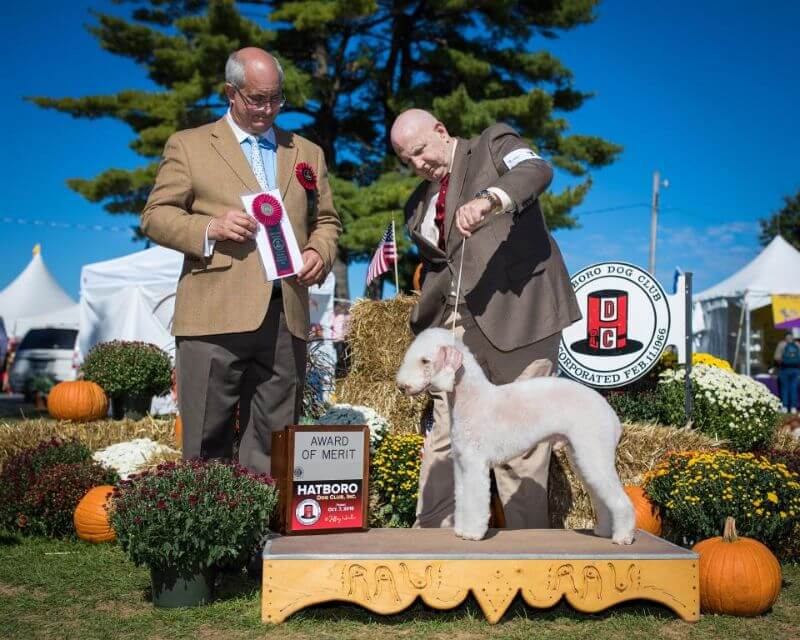

I have had some great dogs. All were bred by others. They arrived by design, chance, or both. “A Secondhand Dog” is the story about Marcus.
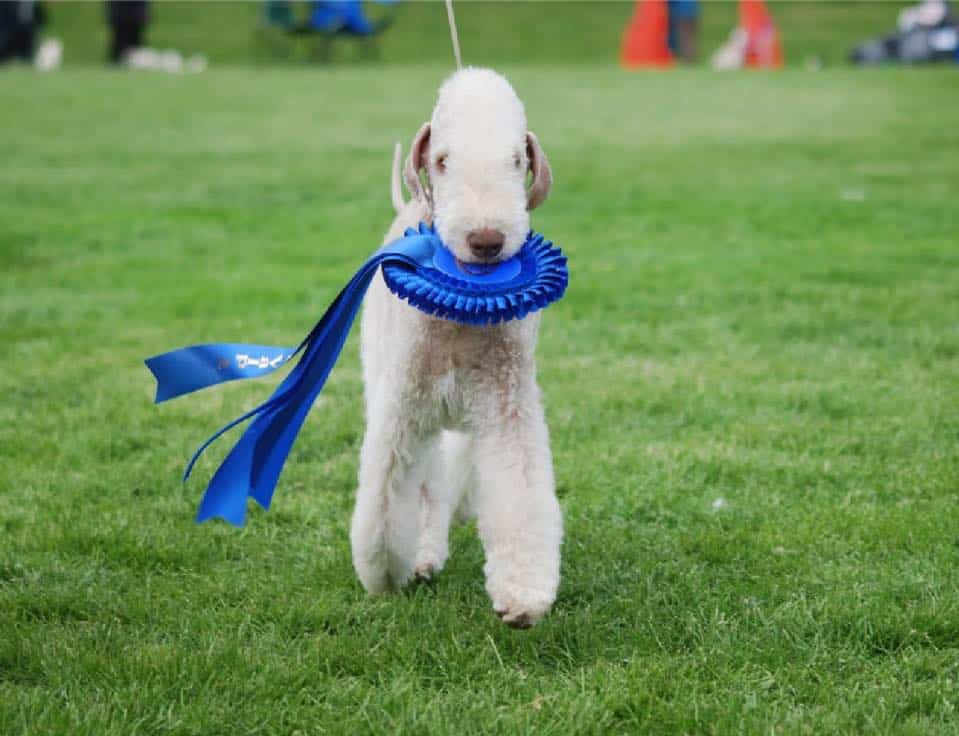
I have had some great dogs. All were bred by others. They arrived by design, chance, or both. “A Secondhand Dog” is the story of one of them.
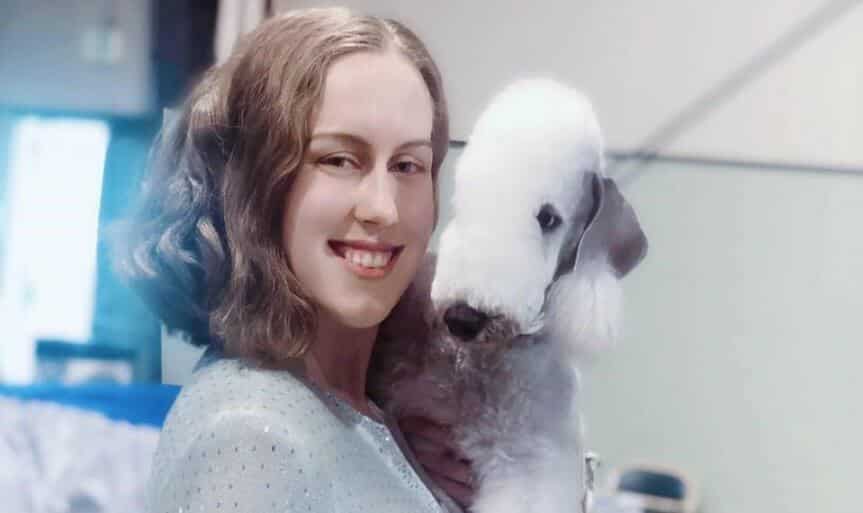
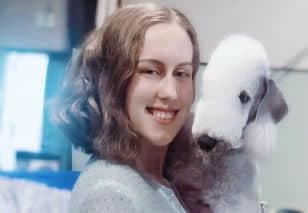
Meet the Owner Handlers
Interview with Owner Handler Katie Cecilio – I’ve been involved in the fancy for almost four years, all of those as an Owner Handler!
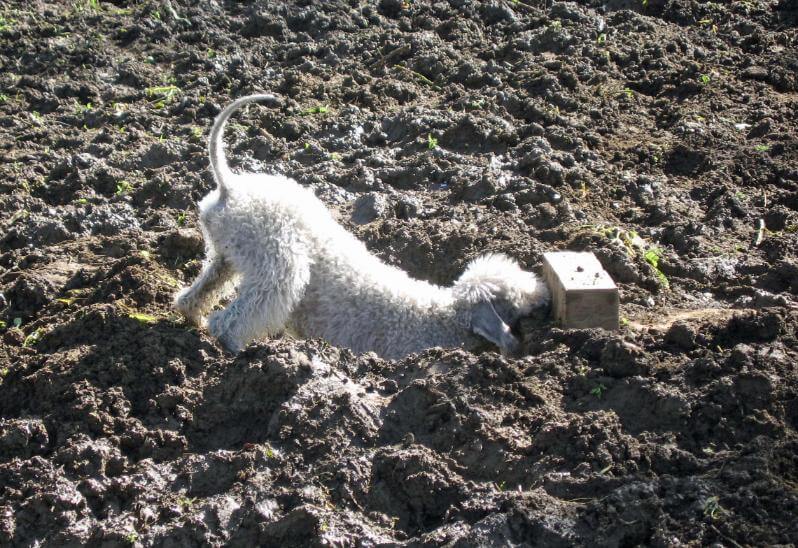
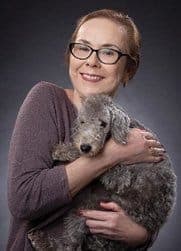
Earthdog
NATIONAL EARTHDOG TESTS hosted by the Bedlington Terrier Club of America, Monday (Columbus Day) October 10, 2022. Ev-ry Place, LLC., 1333
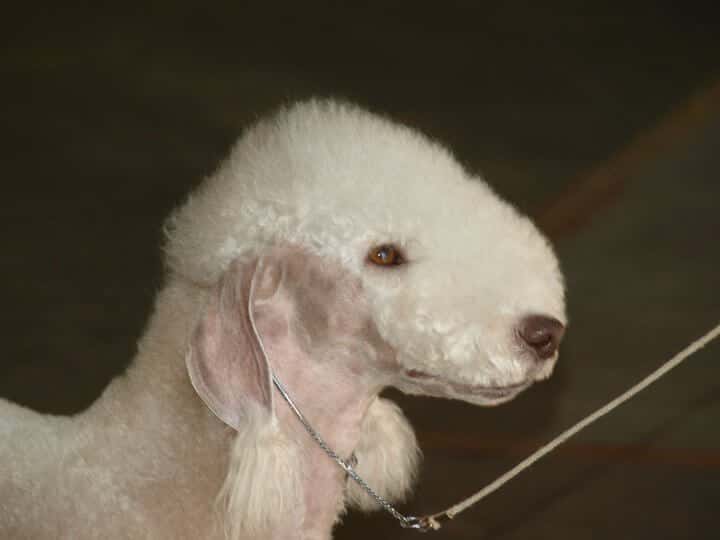
It has been most disturbing to observe the steady decline of the population of our purebred Bedlington Terrier over the past two decades.
The Bedlington Terrier’s Vocation – Most current judges’ education seminars begin with the words “The [trivet hound] was originally bred for…
The Bedlington Terrier's tail is set low, scimitar-shaped, and tapers to a point which reaches the hock. It should never be carried above the topline or tight to the underbody. The tail complements the breed’s elegant and balanced silhouette.
Standard Markings
A Note About Color: Puppies are born with either black or brown coats that lighten with age. Any markings are apparent but become more difficult to see in adult dogs. The topknots of all adults should be lighter than the body color. In the show ring, patches of darker hair from an injury are not objectionable, as these are only temporary. Darker body pigmentation of all colors is to be encouraged; however, Bedlingtons will vary in coat color all their lives, and lighter to darker shades of all colors are acceptable.
Coat Type
Curly
The structure of the coat this breed carries.
Coat Length
Medium
How long the breed's coat grows when kept in condition.
Adaptability Level
How easily a breed copes with changes in home, routine, noise and weather.
Mental Stimulation Needs
How much a breed needs a job, a puzzle or training to stay content.
A nutritionally balanced diet is essential for maintaining the Bedlington Terrier’s energy levels and overall health. As an active breed, they require high-quality food with a good balance of protein, fats, and essential nutrients to support muscle development and coat health.
Bedlington Terrier puppies should be fed three to four meals per day, using a small-breed or medium-breed puppy formula to promote steady growth. As they mature, they should transition to two meals per day, with portion sizes adjusted based on activity level, metabolism, and weight. Most adult Bedlington Terriers require about 1 to 1.5 cups of dry food per day, but individual needs may vary. Because the breed is prone to copper toxicosis, it is important to choose a diet with appropriate copper levels as recommended by a veterinarian.
The Bedlington Terrier is highly intelligent and eager to learn, making them responsive to training when consistent and positive reinforcement techniques are used. They are quick learners but may exhibit a stubborn or independent streak, especially if training lacks structure or variety. Early socialization and obedience training are essential to shape them into well-behaved companions.
While they enjoy pleasing their human companions, they also have strong hunting instincts, which may lead to chasing small animals if not trained properly. Leash training is essential, as their prey drive can make them prone to sudden sprints after moving objects. They respond best to reward-based training, and harsh corrections should be avoided, as they are sensitive dogs who thrive on positive reinforcement.
Grooming Expectations
Bathing should be done as needed, using a gentle dog shampoo to keep their coat clean and healthy. Their ears should be checked and cleaned regularly to prevent infections, and their nails should be trimmed to avoid overgrowth. Dental care is important, as the breed is prone to plaque buildup, so regular tooth brushing is advised. With proper grooming, their coat remains soft, clean, and free from matting.