Members
01/Overview
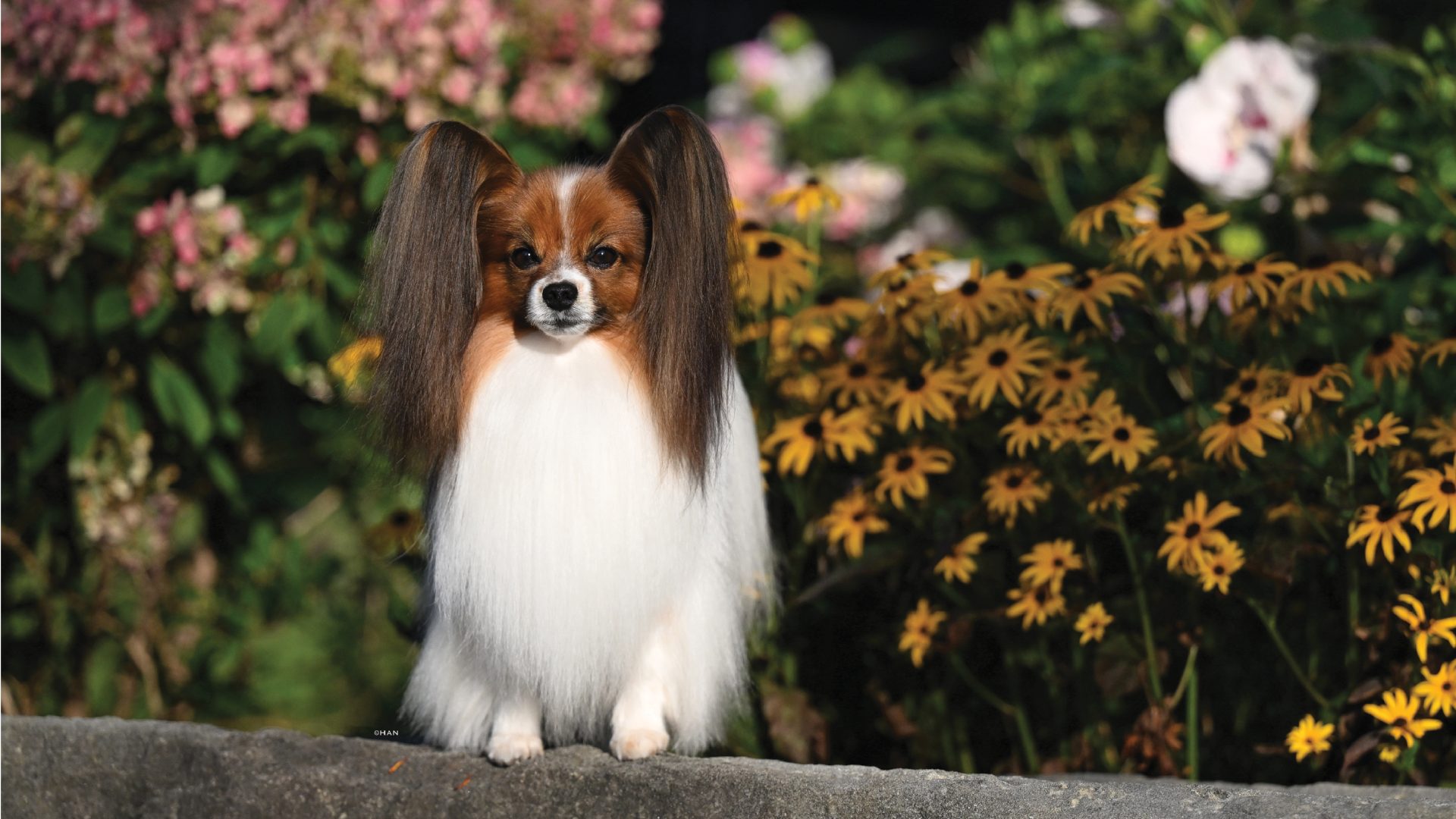
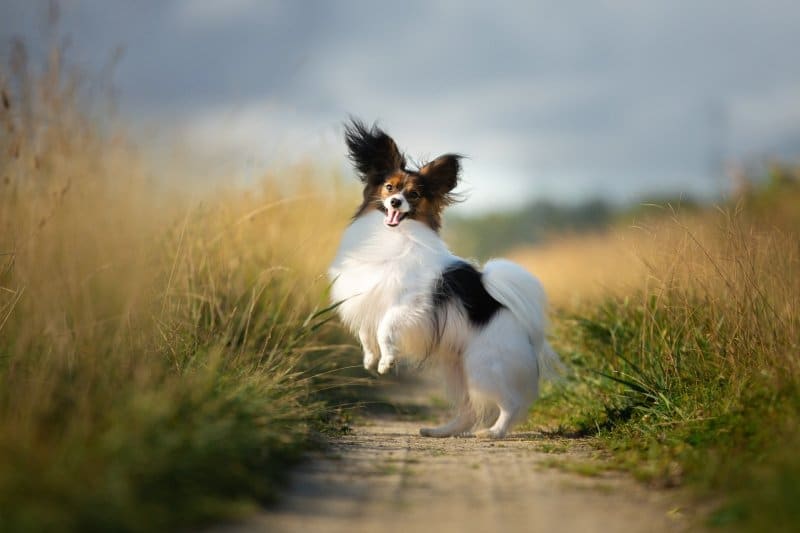
Once known as the Continental Toy Spaniel, the Papillon (French for “butterfly”) is a small and elegant breed, renowned for its distinctive butterfly-like ears and plumed tail. (A drop-eared variety is commonly referred to as the Phalène (French for “moth”). This breed combines delicate beauty with a robust constitution and vibrant personality. Favored by nobility for centuries, the breed's expressive, alert demeanor and abundant coat make it a perennial favorite, with an amiable nature that endears it to those who appreciate an active and amiable little dog.
Highlights
02/History
The Papillon, whose name translates to "butterfly" in French, owing to the breed's distinctive, butterfly-like ear fringes, has a history that is as rich and decorative as the dogs themselves. Originating from the toy spaniels that are frequently depicted in paintings by the Old Masters, from Titian to Rubens, the Papillon has graced the laps of ladies and nobles throughout the Renaissance era.
The breed's development is primarily European, with significant refinement taking place in France and Belgium. This toy spaniel became particularly fashionable in Italy and Spain, where they were bred smaller and given the distinctive erect-eared look that differentiates the Papillon from its drop-eared counterpart, the Phalène, which translates to "moth," a variety that still exists today.
The Papillon was not only a lapdog. It was a companion to the nobility and royalty across Europe, and has been owned by historical figures such as Madame de Pompadour, Marie Antoinette, and the infamous Marquise de Sévigné.
Official recognition of the breed has been widespread, with the American Kennel Club (AKC) acknowledging the Papillon in the early 20th century, specifically in 1935. The Fédération Cynologique Internationale (FCI) also recognizes the Papillon, as does The Kennel Club (UK), solidifying the breed's global recognition.
Throughout its history, the Papillon has remained true to its heritage as a charming and intelligent companion dog, thriving in various roles from a royal favorite to a competitive show dog, and as a beloved pet. The breed's presence in modern times, from dog shows to homes, attests to its timeless appeal and the successful preservation of its lineage and distinctive characteristics.
03/Appearance
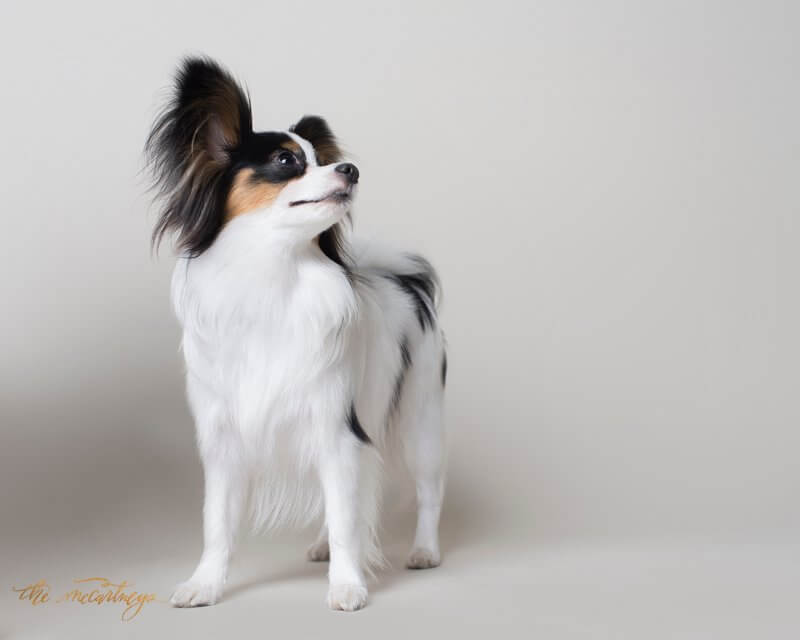
Adult Papillons usually stand between 8 and 11 inches tall at the shoulder. The weight of a Papillon is typically commensurate with the height, but ideally, an adult Papillon should weigh between 5 to 10 pounds, maintaining a graceful and slight build without appearing frail. Dogs over 11 inches in height are not acceptable.
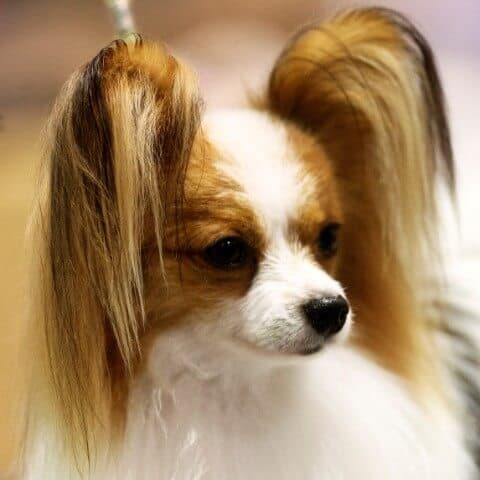
Proportion and substance are key elements of the Papillon's profile. The breed should exhibit a balanced appearance with a slightly longer body than tall. Despite their fine-boned structure, these dogs possess a sturdy body that displays a certain quickness. They should not appear too dainty or delicate; rather, they should showcase a balance of agility and ease. The harmony of proportions contributes to the breed's elegance and its ability to perform as both a fun-loving companion and a successful competitor in many dog sports.
Texture: The coat is one of Papillon’s most distinctive features, with a fine and silky texture that lies flat and flows elegantly when the dog moves. The absence of an undercoat contributes to the coat’s silky feel, and while the coat is abundant and long, it should not hinder the Papillon's movement or appear overly thick. The hair is short on the skull, muzzle, front of the forelegs, and from the hind feet to the hocks, and it is long on the back of the forelegs as feathering, back of the hindlegs as breeches (culottes), and on the tail as a plume. A profuse frill covers the chest and the ears are well fringed with long, silky hair.
Standard Colors
04/Consider
The Papillon, with its friendly demeanor and spirited nature, is a popular choice among dog enthusiasts and families. However, owning this breed, as with any dog, comes with specific responsibilities and factors to consider to ensure the well-being of both the dog and the caretaker.
Interaction With Family
The level of affection a breed typically shows towards family members and familiar individuals.
Good With Other Dogs
The innate friendliness of a dog towards other dogs can depend on its breed.
Good With Young Children
The degree to which a breed will typically be patient with young children.
Amount Of Shedding
How much hair a breed typically leaves behind on clothes, furniture and floors.
Frequency Of Grooming
How often a breed needs brushing, bathing or a professional trim to stay in condition.
Amount Of Drooling
How prone a breed is to drool, worth knowing before you keep a towel by the door.
Openness To Strangers
How openly a breed tends to greet new people, visitors and strangers.
Protective Nature
How likely a breed is to alert you to anything unfamiliar, and stand between you and it.
Playfulness Level
How enthusiastic a breed stays about games and play well past puppyhood.
Trainability Level
How readily a breed takes direction and works with you rather than around you.
Barking Level
How much a breed uses its voice, and how readily.
Energy Level
How much get-up-and-go a breed brings to an average day.
Health
The Papillon generally boasts a robust and resilient constitution that is characteristic of the breed. However, as all breeds and mixed breeds, it may be predisposed to certain hereditary health conditions. It is important for prospective owners to be well-informed about these potential health concerns and to engage in diligent health monitoring and care with the guidance of a reputable breeder and a competent veterinarian. Papillon breed is known for its longevity, with an average lifespan of 14 to 16 years, but with proper care, regular check-ups, and a balanced diet, many can thrive beyond these years.
The Papillon is an embodiment of grace and vivacity, traits that endear them to enthusiasts and pet owners alike. Their personality is characterized by a sprightly intelligence and a cheerful disposition, making them excellent companions, particularly for those who can match their lively spirit with equal enthusiasm. While they are agile and alert, these dogs also possess a sweet-natured gentleness, a combination that often makes them adaptable to various living situations, including the bustling family environment.
For the novice owner, Papillon's eagerness to please and quick learning aptitude come as a welcome surprise. However, their sensitivity to the tone of voice and environment should not be underestimated. It is important for training to be consistent and positive, as harsh methods can often do more harm than good with this breed. When it comes to being alone, Papillons generally prefer the company of their human companions and can struggle with isolation. Therefore, they are best suited to households where they can enjoy regular interaction.
Their amiable nature extends to their relationships with other dogs; they tend to be sociable and playful. However, due to their small size, interactions with much larger dogs should be supervised to prevent any accidental harm. Similarly, while Papillons can be wonderful with children, the play should be supervised, especially with younger children who may inadvertently handle them too roughly.
Papillons often greet strangers with enthusiasm, yet they retain a discerning instinct, which can make them excellent alert dogs. Their friendliness does not detract from their ability to be cautious in new situations, making them well-balanced pets who are both welcoming and wise. It's this blend of traits that make the Papillon an engaging and delightful breed to consider for those seeking an active and affectionate canine partner.
Exercise Expectations
Daily exercise for a Papillon should include a combination of physical activities like walks or play sessions, along with mental challenges such as puzzle toys or training exercises that tap into their intelligence. They are known for their agility and often excel in dog sports that allow them to demonstrate their nimble movements and sharp minds. The intensity of the exercise should be moderate, in line with their size and physical capabilities. Vigorous play sessions can be interspersed with periods of rest to ensure they don't overexert themselves. Playfulness is a hallmark of the breed, and they often enjoy interactive games that involve both their human partners and other dogs. Engaging a Papillon in regular exercise not only keeps them fit but also helps to mitigate potential behavior issues that can stem from boredom or excess energy. A well-exercised Papillon is typically a happy and content companion, less prone to anxious behaviors or unwanted barking. While they are adaptable to various living situations, including apartment living, it is crucial to provide them with enough exercise to prevent restlessness. This can be achieved through indoor play if outdoor space is limited. However, access to a secure area where they can run freely and explore is ideal for meeting their exercise requirements. Incorporating exercise into the daily routine is essential for the Papillon, and when their energy is channeled through positive outlets, their delightful personality shines brightest. The goal is to provide balanced activity that aligns with their vivacious spirit without overtaxing their petite frame.
Living with a Papillon can be a delightful experience, as they adapt well to a variety of living environments, including apartments. Their small size makes them suitable for compact living spaces, provided their exercise needs are met. Despite their active nature, they can thrive in smaller homes if they are given ample opportunity for play and activity throughout the day.
Papillons are generally good companions for those living in climates with moderate temperatures. They do possess a single coat that provides some insulation, but because they lack a dense undercoat, extreme cold can be challenging for them. In such conditions, protective clothing and limited exposure to the cold can help keep a Papillon comfortable during short walks.
Conversely, in hot weather, Papillons require protection from the heat and adequate shade and hydration, just like any other dog. Their coat can offer some protection against the sun, but it's important to avoid prolonged outdoor activity during peak sun hours to prevent overheating. Indoor play and exercise during the hottest part of the day can help in maintaining their energy levels while keeping them safe.
When considering living arrangements for a Papillon, it's also important to think about their social needs. They form strong bonds with their human companions and can be prone to separation anxiety if left alone for extended periods. Therefore, it's beneficial to have a schedule that allows for regular interaction throughout the day, whether that's through a family member's presence or via a pet sitter or doggy daycare.
05/Puppies
Raising a Papillon puppy is a commitment that comes with the joy of watching a lively and affectionate companion grow. These puppies are as inquisitive as they are spirited, with a dash of mischief in their bright eyes. From the moment a Papillon puppy bounds into your life, it brings an air of elegance and an enduring zest for play.
Caring for Papillon puppies demands attentiveness to their physical and social development. Early socialization is crucial and should include exposure to various people, sights, sounds, and experiences. This early exposure helps your Papillon puppy grow up to be a well-rounded dog, fostering confidence and ease in new situations.
Nutrition tailored to small-breed puppies is vital for their growth and health. These puppies often benefit from a diet formulated for their high energy levels and developmental needs. Proper feeding schedules and portion control are important to avoid overfeeding, as small breeds can easily become overweight with excessive calorie intake.
Regular veterinary check-ups are a cornerstone of puppy care, ensuring that vaccinations are up to date and that the puppy is growing healthily. Deworming and preventative care for fleas and ticks are also important parts of the health routine.
Papillon puppies will also begin to exhibit the intelligence and eagerness to please that the breed is known for. Engaging them in gentle training using positive reinforcement methods will not only teach them good manners but will also provide the mental stimulation they crave. Training sessions are also a chance for bonding and establishing a communication pathway between you and your puppy.
Due to their small stature, care must be taken to create a safe environment for Papillon puppies. This means protecting them from hazards such as larger dogs or rough play and making sure that they cannot fall from high places.
In terms of grooming, establishing a routine early on is important. Acclimating your Papillon puppy to grooming practices like brushing, nail clipping, and bathing can make these experiences more pleasant throughout their life.
When it comes to house training, consistency is key. Papillon puppies, like many small breeds, can take a bit longer to house train. Regular and frequent trips outside, positive reinforcement, and a patient, consistent approach will help guide them through this process.
Lastly, remember that the affectionate nature of Papillon puppies means they will seek a lot of attention and love. Providing a nurturing environment with plenty of affection and engagement will help your puppy thrive and develop into a loving, sociable, and happy adult Papillon.
06/Activities
Papillons are not only charming companions but also versatile and agile competitors in a variety of dog sports. Their intelligence and eagerness to learn make them well-suited for structured activities that can keep them mentally and physically stimulated. Here are some activities and dog sports in which Papillons can participate:
Participation in these activities not only enriches the lives of Papillons but also strengthens the bond between the dog and its handler. It's also an excellent way to meet and socialize with others who share a passion for this dynamic breed. Whether competing at a high level or simply enjoying an active lifestyle, Papillons are always ready for the next adventure.
Gallery
07/Standards
The Papillon is recognized by the world's leading registries and kennel organizations, which categorize the breed into a specific Group based on its unique characteristics. This breed is recognized worldwide under the following Group designations:
The ideal Papillon is described by a Breed Standard that is approved by each of the world’s leading registries and kennel organizations. The Breed Standards for this breed may be found in the following links:
08/Clubs
09/Rescue
10/Facts
Name Origin
The word 'Papillon' is French for 'butterfly'. The breed was named for its prominent ears, which, when erect, resemble the wings of a butterfly. In some Papillons, the ears are droopy, and this variety is known as the 'Phalène', which means 'moth', a reference to the position of the moth's wings when at rest.
Royal Favorite
Papillons have been favored by royalty and nobility throughout history. Notable figures such as Madame de Pompadour and Marie Antoinette are said to have cherished these elegant dogs.
Artistic Presence
They've been featured in numerous Renaissance paintings, often sitting on the laps of noblewomen, which testifies to their long-standing status as companion dogs.
Intelligence
Papillons are known for their intelligence and are ranked among the top ten smartest dog breeds. They are quick learners and can excel in obedience training.
Longevity
These dogs are known for their relatively long lifespan, typically living between 14 to 16 years, with many Papillons exceeding this average.
Celestial Recognition
There's a celestial nod to this breed as well. The Papillon has a star named after it – 'The Papillon Star' in the constellation of Puppis, which aptly translates to 'The Stern of the Ship' in Latin, but in this context, it is a delightful coincidence linking it to the 'Puppy'.
The Butterfly Effect
The impact of a Papillon's presence in a home is often compared to the 'butterfly effect,' a term in chaos theory where a small change in one state can result in large differences in a later state. Papillons often bring significant joy and liveliness to their homes, disproving the notion that only large dogs can have a big impact on family life.
Cinematic Appearances
Papillons have graced the silver screen and are remembered for their roles in movies like 'Good Boy!' and 'Babe: Pig in the City', showcasing their versatility and appeal beyond the dog show circuit.
Survivors' Spirit
Historically, a Papillon named 'Toy' was reportedly the only dog to survive the sinking of the Titanic. The breed's resilience and tenacity are echoed in such tales of survival.
11/FAQ
Papillons do shed, although typically not excessively. They have a single coat with long, fine hair that will shed seasonally. Regular brushing can help to reduce the amount of hair that ends up on your clothes and furniture, and it can also keep their coat healthy and reduce matting.

Written by
Dan Sayers is the Executive Editor of SHOWSIGHT. He is a member of the World Dog Press Association and the Dog Writers Association of America, which recognized his illustrations in the award-winning Encyclopedia of K-9 Terminology. Dan is a longtime supporter of the sport of dogs and an advocate for the conservation of recognized breeds in all their forms and functions. He is a member of the Morris and Essex Kennel Club, and for 45 years, the Irish Water Spaniel Club of America where he serves as AKC Delegate, Archivist, and approved Breed Mentor. Dan breeds under the Quiet Storm prefix and has judged the IWSCA National Specialty Sweepstakes twice.
Official Standard of the Papillon
General Appearance: The Papillon is a small, friendly, elegant toy dog of fine-boned structure, light, dainty and of lively action; distinguished from other breeds by its beautiful butterfly-like ears.
Size, Proportion, Substance: Size - Height at withers, 8 to 11 inches. Fault - Over 11 inches. Disqualification - Over 12 inches. Proportion - Body must be slightly longer than the height at withers. It is not a cobby dog. Weight is in proportion to height. Substance - Of fine-boned structure.
Head: Eyes dark, round, not bulging, of medium size and alert in expression. The inner corners of the eyes are on line with the stop. Eye rims black. Ears - The ears of either the erect or drop type should be large with rounded tips, and set on the sides and toward the back of the head. (1) Ears of the erect type are carried obliquely and move like the spread wings of a butterfly. When alert, each ear forms an angle of approximately 45 degrees to the head. The leather should be of sufficient strength to maintain the erect position. (2) Ears of the drop type, known as the Phalene, are similar to the erect type, but are carried drooping and must be completely down. Faults - Ears small, pointed, set too high; one ear up, or ears partly down. Skull - The head is small. The skull is of medium width and slightly rounded between the ears. A well-defined stop is formed where the muzzle joins the skull. Muzzle - The muzzle is fine, abruptly thinner than the head, tapering to the nose. The length of the muzzle from the tip of the nose to stop is approximately one-third the length of the head from tip of nose to occiput. Nose black, small, rounded and slightly flat on top. The following fault shall be severely penalized - Nose not black. Lips tight, thin and black. Tongue must not be visible when jaws are closed. Bite - Teeth must meet in a scissors bite. Faults - Overshot or undershot.
Neck, Topline, Body: Neck of medium length. Topline - The backline is straight and level. Body - The chest is of medium depth with ribs well sprung. The belly is tucked up. Tail long, set high and carried well arched over the body. The tail is covered with a long, flowing plume. The plume may hang to either side of the body. Faults - Low-set tail; one not arched over the back, or too short.
Forequarters: Shoulders well developed and laid back to allow freedom of movement. Forelegs slender, fine-boned and must be straight. Removal of dewclaws on forelegs optional. Front feet thin and elongated (hare-like), pointing neither in nor out.
Hindquarters: Well developed and well angulated. The hind legs are slender, fine-boned, and parallel when viewed from behind. Hocks inclined neither in nor out. Dewclaws, if any, must be removed from hind legs. Hind feet thin and elongated (hare-like), pointing neither in nor out.
Coat: Abundant, long, fine, silky, flowing, straight with resilient quality, flat on back and sides of body. A profuse frill on chest. There is no undercoat. Hair short and close on skull, muzzle, front of forelegs, and from hind feet to hocks. Ears well fringed, with the inside covered with silken hair of medium length. Backs of the forelegs are covered with feathers diminishing to the pasterns. Hind legs are covered to the hocks with abundant breeches (culottes). Tail is covered with a long, flowing plume. Hair on feet is short, but fine tufts may appear over toes and grow beyond them, forming a point.
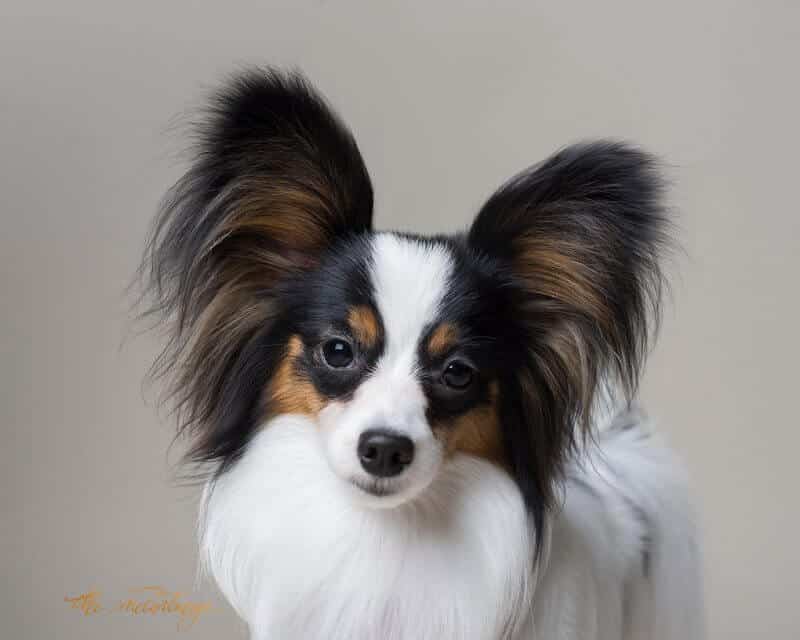
Color: Always parti-color or white with patches of any color(s). On the head, color(s) other than white must cover both ears, back and front, and extend without interruption from the ears over both eyes. A clearly defined white blaze and noseband are preferred to a solidly marked head. Symmetry of facial markings is desirable. The size, shape, placement, and presence or absence of patches of color on the body are without importance. Among the colors there is no preference, provided nose, eye rims and lips are well pigmented black. The following faults shall be severely penalized - Color other than white not covering both ears, back and front, or not extending from the ears over both eyes. A slight extension of the white collar onto the base of the ears, or a few white hairs interspersed among the color, shall not be penalized, provided the butterfly appearance is not sacrificed. Disqualifications - An all-white dog or a dog with no white.
Gait: Free, quick, easy, graceful, not paddlefooted, or stiff in hip movements.
Temperament: Happy, alert and friendly. Neither shy nor aggressive.
Disqualifications: Height over 12 inches. An all-white dog or a dog with no white.
Approved June 10, 1991
Effective July 31, 1991
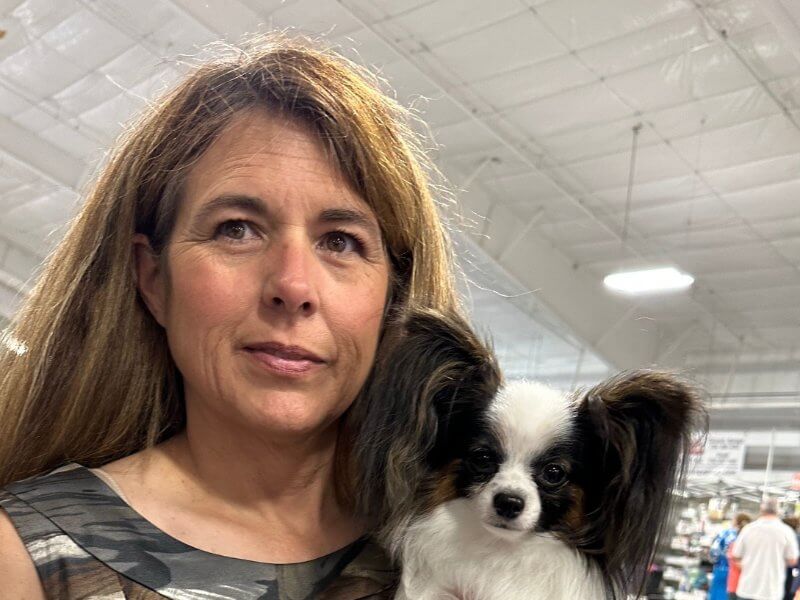

Meet the Breeders
Jennifer Able-Jones is the breeder behind the J Bar Papillons. Read about the kennel’s beginnings, the sires, the dams, the puppies & more!
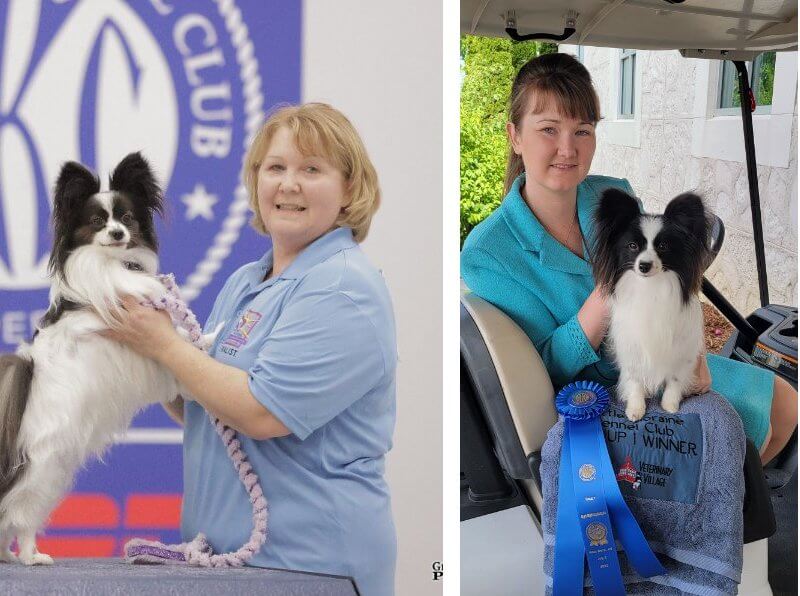
Meet the Breeders
Candy and Hannah Janke are the breeders behind Sleepy Creek Kennel. Read about the kennel’s beginning, the pups, and much more!
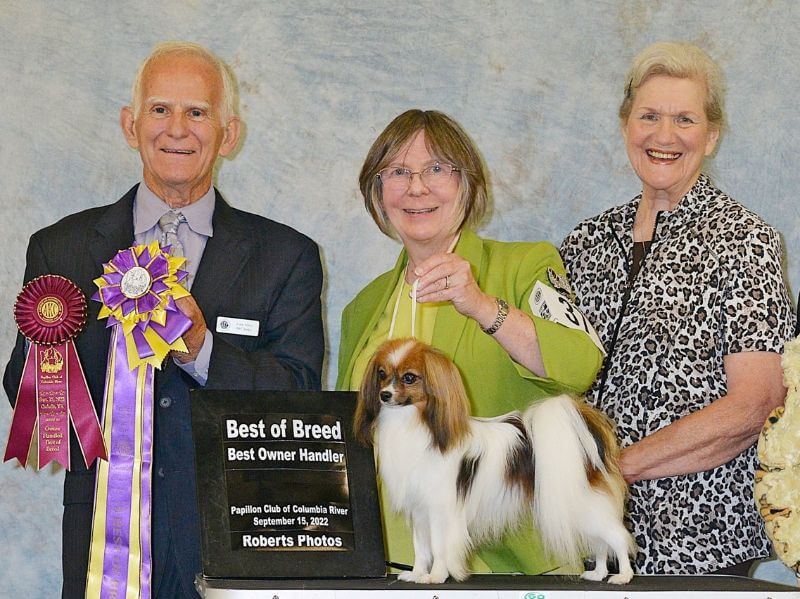
Meet the Breeders
Marion Ford is the breeder behind Akai Papillons. Read about the kennel’s beginnings, the sires, the dams, the puppies, and much more!
All About Judging
Discover the charming and elegant Papillon dog breed – known for their butterfly-like ears, affectionate personality, and high intelligence.

All About Judging
Papillons are a small dog breed, measuring 8 to 11 inches at the shoulder. They are gregarious, elegant, smart, and athletic. Read more.

All About Judging
Fine-boned, dainty, elegant, happy, alert, and friendly. When judging Papillons, keep these words from the breed standard in mind.
The tail is a prominent feature of the Papillon, carried proudly arched over the body and covered with a long, flowing plume of hair. It is set high, curving over the back without turning to either side, giving the breed a look of refinement and poise. The tail's carriage often reflects the dog's mood and level of alertness, but when relaxed, it may be carried lower. Regardless, the tail is an extension of the spine and thus should not be kinked or deviate from the ideal description.
This Papillon’s plumed tail is an important component of the breed’s silhouette. It is arched over the back, never docked, with long hair that falls elegantly on either side of the body, resembling the fine spray of a well-groomed fountain. In motion, the tail's feathering may flutter gracefully, accentuating the breed's lively gait.
Standard Markings
A Note About Color: The Papillon is always parti-colored or white with patches of color(s). On the head, the colored area must cover both ears (front & back), and extend without interruption from the ears over both eyes. A clearly-marked white blaze and noseband are preferred and symmetrical markings are desirable, thus creating the impression of a butterfly. The size, shape, and placement (and the presence or absence) of colored body patches are unimportant, although ears that are colored white, in whole or in part, and eyes that are surrounded by white are not desirable. All-white dogs and dogs with no white are not acceptable in the breed.
Coat Type
Silky
The structure of the coat this breed carries.
Coat Length
Medium
How long the breed's coat grows when kept in condition.
Adaptability Level
How easily a breed copes with changes in home, routine, noise and weather.
Mental Stimulation Needs
How much a breed needs a job, a puzzle or training to stay content.
Feeding a Papillon requires attention to their small size and high energy levels. As puppies, they need a diet that supports their rapid growth and development, typically involving more frequent meals of specially formulated food for small-breed puppies. The transition to adult food should be done gradually and under the guidance of a veterinarian to avoid any digestive upset.
For an adult Papillon, the amount of food, usually measured in cups per day, should correspond to their activity level, age, and individual metabolism. While there's no one-size-fits-all answer for the exact quantity, many adult Papillons thrive on a daily intake ranging from a quarter to a half cup of high-quality dry dog food, divided into two meals.
Monitoring their weight is crucial, as overfeeding can lead to obesity, particularly in a small dog with a dainty structure like the Papillon. Adjusting food portions and treating practices will be important to maintain their ideal weight. To determine the appropriate amount, consult with a veterinarian, who can recommend a feeding schedule and amount based on the specific needs of your dog.
For Papillons, who often exhibit a hearty appetite, it's essential to measure their food and resist the temptation to offer too many additional treats or table scraps. They might be small, but their nutrition needs to be taken as seriously as that of a larger dog, with a balanced diet being paramount for their overall health and well-being. Regular check-ins with the vet can help confirm that their dietary needs are being met as they grow from playful puppies into elegant adults.
Training a Papillon can be a rewarding endeavor, thanks to their sharp intellect and desire to please their human companions. They typically respond well to positive reinforcement techniques such as praise, play, and treats, which can make training sessions both fun and effective. Their intelligence means they pick up on commands quickly, but it also means they can become bored with repetition, so keeping training varied and engaging is key.
While they are not known for excessive barking, Papillons may alert you to new stimuli in their environment, which can be managed with consistent training. They have moderate tendencies to bark, which can be curbed through proper socialization and training from a young age.
Their smart and curious nature often leads them to explore and sometimes wander, which underscores the importance of reliable recall training. Although they are small, they have a surprising level of energy and enjoy activities that stimulate both their mind and body.
Despite their size, Papillons have a good deal of prey drive, which is a remnant of their history as companions for noblewomen and symbols of alertness and watchfulness in historic paintings. Therefore, they might chase after small animals if given the chance.
Their size does not limit their ability to learn a wide array of tricks and behaviors. From basic obedience to more complex tasks, Papillons are capable and enthusiastic students. Consistent, patient training can tap into their natural abilities, making them stars in obedience and agility courses.
The key to successfully training a Papillon lies in understanding their personality. They respond best to a gentle approach and can be sensitive to harsh tones or treatment. Their training should be an exercise in building a bond of mutual respect and enjoyment, which will lead to the best outcomes for both the dog and their handler.
Grooming Expectations
When brushing a Papillon, it's important to be gentle to avoid damaging the fine hairs. Using a soft-bristled brush can effectively remove loose fur and distribute natural oils throughout the coat, keeping it healthy and shiny. Despite their elegant appearance, Papillons are still dogs that love to play and sometimes get dirty, so occasional baths are necessary to keep them clean. However, overbathing can strip their coat of natural oils, so it's important to bathe them only when needed. The amount of shedding for a Papillon is generally low compared to other breeds, but they will shed some hair, especially seasonally. Regular grooming not only minimizes the amount of hair left around the home but also allows for early detection of any skin issues or parasites. In addition to coat care, Papillon grooming also includes dental hygiene, nail trimming, and ear cleaning. Cleaning their teeth regularly can prevent dental issues, which small breeds can be prone to. Their nails should be trimmed regularly to avoid overgrowth, which can be painful and cause problems walking. Ear care is particularly important for Papillons due to their large, open ears; keeping them clean and dry can prevent infections.
One of the many joys of living with a Papillon is their adaptable nature. They can be as content lounging on the couch with their caretakers as they are taking brisk walks or engaging in play. Their intelligence and alertness make them excellent housemates, and they tend to be quick to alert their family to anything unusual.