Members
01/Overview
The Parson Russell Terrier is a bold and clever terrier, swift enough to run with horses and fearless enough to dig in and flush a fox from his lair. Independent problem solvers, PRTs can have their own ideas on how to go about things.
Highlights
02/History
The Parson Russell Terrier originated in England during the nineteenth century and is closely associated with the Reverend John Russell, an English clergyman and enthusiastic fox hunter.
Russell wanted a terrier that could accompany foxhounds during a hunt and then follow a fox underground when necessary. He selected dogs for stamina, courage, flexibility, and the ability to work independently without being overly heavy or coarse.
The breed developed from working fox terriers of the period. These dogs were expected to cover ground efficiently, fit into narrow earths, and remain capable of working for extended periods alongside larger hunting dogs.
Over time, different types of “Russell” terriers were developed, including both taller- and shorter-legged dogs. The taller, more squarely built type eventually became recognized as the Parson Russell Terrier, while the shorter and more rectangular type became known as the Russell Terrier.
The Parson gained formal recognition in the United Kingdom during the late twentieth century. Organized breeding helped to establish a written Breed Standard while preserving the working qualities that had defined the dogs for generations.
The American Kennel Club recognized the breed in 1997 under the name Jack Russell Terrier. In 2003, the AKC officially changed the breed’s name to Parson Russell Terrier to distinguish it more clearly from other Russell-type terriers.
The Parson Russell Terrier Association of America serves as the breed’s AKC parent club. The breed is a member of the AKC Terrier Group.
03/Appearance
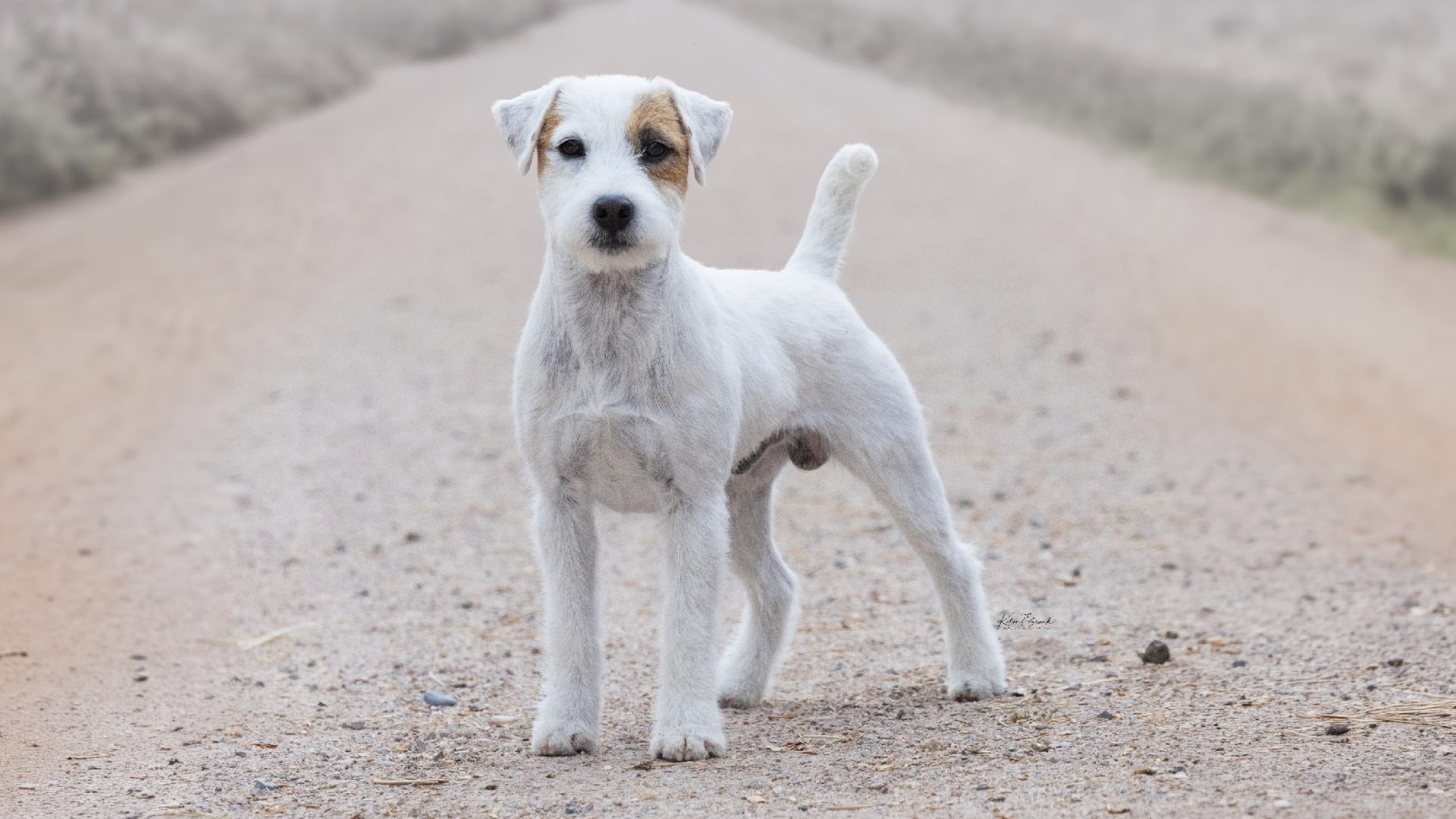
An adult male Parson Russell Terrier stands approximately 14 inches tall at the withers, while a female measures approximately 13 inches. The Parson typically weighs between 13 and 17 pounds.
Skull: The Parson Russell Terrier has a flat, moderately broad skull that gradually narrows toward the eyes. The head should appear balanced, clean, and proportionate to the body.
Expression: The expression is keen, intelligent, and alert, reflecting the breed’s lively and confident nature.
Eyes: The eyes are almond-shaped, dark, and moderately deep-set. They should have a bright, intense expression without appearing overly prominent.
Ears: The ears are small, V-shaped, and drop forward close to the head. They should be carried neatly and contribute to the breed’s alert appearance.
Muzzle: The muzzle is strong, rectangular, and slightly shorter than the skull. It should be well filled under the eyes and remain free from weakness or excessive taper.
Nose: The nose is black and well developed.
Bite: The Parson Russell Terrier has complete dentition with large teeth that meet in a scissors bite.
The Parson Russell Terrier is a small, balanced, athletic terrier with a nearly square outline. The body is proportioned so the distance from the withers to the ground is approximately equal to the length from the point of the shoulder to the point of the buttocks.
The chest is moderately narrow and should be flexible enough to allow the dog to work underground. Bone is moderate and proportionate to the breed’s size, providing strength and durability without making the dog appear heavy or coarse.
Texture: The Parson Russell Terrier may have either a smooth or broken coat. Both coat types should be naturally harsh, dense, close, and weather-resistant, with enough undercoat to provide protection without appearing soft or woolly.
Standard Colors
Standard Markings
04/Consider
The Parson Russell Terrier is energetic, intelligent, confident, and highly driven. Anyone considering the breed should be prepared for regular exercise, early socialization, consistent training, and plenty of mental stimulation.
Interaction With Family
The level of affection a breed typically shows towards family members and familiar individuals.
Good With Other Dogs
The innate friendliness of a dog towards other dogs can depend on its breed.
Good With Young Children
The degree to which a breed will typically be patient with young children.
Amount Of Shedding
How much hair a breed typically leaves behind on clothes, furniture and floors.
Frequency Of Grooming
How often a breed needs brushing, bathing or a professional trim to stay in condition.
Amount Of Drooling
How prone a breed is to drool, worth knowing before you keep a towel by the door.
Openness To Strangers
How openly a breed tends to greet new people, visitors and strangers.
Protective Nature
How likely a breed is to alert you to anything unfamiliar, and stand between you and it.
Playfulness Level
How enthusiastic a breed stays about games and play well past puppyhood.
Trainability Level
How readily a breed takes direction and works with you rather than around you.
Barking Level
How much a breed uses its voice, and how readily.
Energy Level
How much get-up-and-go a breed brings to an average day.
Health
The Parson Russell Terrier is generally a healthy and active breed with a typical lifespan of 13 to 15 years. Preventive veterinary care, balanced nutrition, regular exercise, dental care, and maintenance of a healthy weight can help support long-term health.
The Parson Russell Terrier is bold, intelligent, energetic, and highly curious. The breed is often confident and lively, with a strong desire to stay active and investigate its surroundings.
Parsons usually form close bonds with their families and can be affectionate and playful at home. Their terrier background can also make them independent, persistent, and quick to react to movement or small animals.
Early socialization will help the breed become comfortable with different people, dogs, environments, and everyday situations. Clear boundaries and consistent handling are especially important for such an active and determined dog.
Exercise Expectations
A healthy adult generally benefits from at least 60 minutes of activity each day, with many individuals enjoying considerably more. Activities that involve chasing, scenting, digging, or problem-solving can be especially appealing. Because of the breed’s terrier instincts, off-leash exercise should take place only in securely enclosed areas. Mental stimulation is just as important as physical exercise.
Grooming Expectations
The Parson Russell Terrier can adapt to different living situations as long as it receives enough exercise, training, and mental stimulation. Its small size can suit apartment living, but the breed’s high energy level still requires an active daily routine.
Parsons often enjoy staying busy and may become bored or destructive if left without enough interaction or purposeful activity. Secure fencing is important because the breed may dig, climb, or chase wildlife.
The Parson Russell Terrier usually does best with people who appreciate an intelligent, energetic, and determined companion. Consistent routines, regular exercise, and opportunities to use both body and mind help the breed thrive.
05/Puppies
Parson Russell Terrier puppies are energetic, curious, bold, and quick to explore their surroundings. They benefit from early socialization, consistent routines, positive training, and plenty of safe opportunities to play, learn, and use their natural instincts.
A Parson Russell Terrier puppy should have a predictable daily schedule that includes regular meals, potty breaks, naps, play, training, and quiet time. A crate or secure puppy area can provide a safe place to rest and can also support housetraining.
Early socialization should introduce the puppy to different people, well-mannered dogs, household sounds, surfaces, vehicles, and unfamiliar environments. These experiences should remain positive and appropriate for the puppy’s age.
Training can begin as soon as the puppy arrives home. Short sessions can focus on name response, recall, leash walking, house training, basic manners, and impulse control. Because the breed is intelligent and highly driven, varied and engaging lessons are especially useful.
A Parson puppy should receive a complete and balanced diet formulated for growth. Young puppies generally do best with several measured meals throughout the day before gradually transitioning to an adult feeding schedule.
Exercise should include supervised play, short walks, and gentle exploration rather than repetitive or high-impact activity. Secure spaces are especially important because Parson Russell Terrier puppies can be quick, curious, and strongly interested in chasing movement.
Regular veterinary visits are important during the first year. Grooming routines such as brushing, nail trimming, ear checks, and tooth brushing should also begin early so that the puppy becomes comfortable with regular handling.
06/Activities
Parson Russell Terriers are energetic, athletic, and highly driven dogs that often enjoy activities involving speed, scenting, digging, problem-solving, and close cooperation with a handler. Here are some of the dog sports and activities in which Parson Russell Terriers may participate:
Earthdog: Parson Russell Terriers can use their natural instincts to locate quarry underground in controlled tests designed for working terriers and Dachshunds.
Barn Hunt: The breed’s strong vermin-hunting background makes Barn Hunt a natural outlet for its scenting ability, determination, and interest in locating rats safely contained in tubes.
Agility: Parsons can use their speed, coordination, and quick reactions while navigating obstacle courses.
Fast CAT: This timed 100-yard dash gives the Parson Russell Terrier an opportunity to use its speed and enthusiasm for chasing.
Obedience: Obedience Trials allow the breed to demonstrate focus, responsiveness, and reliable performance with a handler.
Rally: Rally Obedience combines obedience exercises with movement through a designated course and can provide both mental and physical stimulation.
Scent Work: Parson Russell Terriers can use their strong sense of smell to locate specific odors hidden in containers, indoor spaces, outdoor areas, or vehicles.
Conformation Shows: Parson Russell Terriers compete in Conformation Shows, where judges evaluate each dog according to the Breed Standard, including structure, movement, coat, expression, temperament, and overall type.
Trick Dog: Trick training provides mental stimulation and gives the Parson Russell Terrier an enjoyable way to use its intelligence and problem-solving ability.
Canine Good Citizen: Parson Russell Terriers may participate in programs that evaluate everyday manners, social behavior, and reliability around people and other dogs.
Gallery
07/Standards
The Parson Russell Terrier is recognized by the world’s leading registries and kennel organizations, which categorize the breed into a specific Group based on its unique characteristics. This breed is recognized worldwide under the following Group designations:
The ideal Parson Russell Terrier is described by a Breed Standard that is approved by each of the world’s leading registries and kennel organizations. The Standards for this breed may be found in the following links:
08/Clubs
Parson Russell Terrier clubs support breed education, responsible breeding, health initiatives, Conformation Shows, performance events, and preservation of the Breed Standard.
Parson Russell Terrier Association of America: Founded in 1985, this is the national breed club for the Parson Russell Terrier in the United States and the breed’s AKC parent club.
Canadian Association of Parson Russell Terrier Fanciers: Founded in 1999, Canada’s national organization for Parson Russell Terrier welcomes breeders, exhibitors, and breed enthusiasts.
The Parson Russell Terrier Club UK: Formed in 1983, this is the United Kingdom’s breed club, dedicated to promoting and preserving the Parson Russell Terrier through dog shows, working trials, and educational initiatives.
09/Rescue
Breed-specific rescue organizations help Parson Russell Terriers that have been surrendered, abandoned, or need rehoming. These groups may provide foster care, veterinary treatment, behavioral evaluation, and placement with an appropriate adoptive family.
Parson Russell Terrier Association of America Rescue Resources: The breed’s American Kennel Club parent club can provide rescue contacts, referrals, or guidance for Parson Russell Terriers needing placement in the United States.
Russell Rescue, Inc.: A nonprofit organization that assists Russell-type terriers, including Parson Russell Terriers, through foster care, rehabilitation, and adoption.
Canadian Association of Parson Russell Terrier Fanciers: Canada’s national breed club may provide information or referrals for Parson Russell Terriers needing rescue or rehoming.
Parson Russell Terriers may also be found through local shelters, terrier rescue organizations, and national adoption databases. These resources can provide additional options for people interested in adopting a Parson Russell Terrier or Parson Russell mix.
10/Facts
Developed for Fox Hunting
The Parson Russell Terrier was developed in England to work with foxhounds and pursue foxes both above and below ground.
Closely Associated with Reverend John Russell
The breed takes its name from Reverend John Russell, a nineteenth-century English clergyman and enthusiastic fox hunter who developed working terriers for the hunt.
Built for Underground Work
The breed’s narrow, flexible chest and athletic build help it enter dens while foregoing none of the stamina needed to keep up with the hounds.
Different from the Russell Terrier
The Parson Russell Terrier is generally taller and more square in proportion, while the Russell Terrier is shorter and more rectangular.
11/FAQ
Parson Russell Terriers can make excellent pets for active households that want an intelligent, energetic, and confident companion. They usually do best with regular exercise, consistent training, and plenty of mental stimulation.

Written by
Dan Sayers is the Executive Editor of SHOWSIGHT. He is a member of the World Dog Press Association and the Dog Writers Association of America, which recognized his illustrations in the award-winning Encyclopedia of K-9 Terminology. Dan is a longtime supporter of the sport of dogs and an advocate for the conservation of recognized breeds in all their forms and functions. He is a member of the Morris and Essex Kennel Club, and for 45 years, the Irish Water Spaniel Club of America where he serves as AKC Delegate, Archivist, and approved Breed Mentor. Dan breeds under the Quiet Storm prefix and has judged the IWSCA National Specialty Sweepstakes twice.
Official Standard of the Parson Russell Terrier
General Appearance: The Parson Russell Terrier was developed in the south of England in the 1800's as a white terrier to work European red fox both above and below ground. The terrier was named for the Reverend John Russell, whose terriers trailed hounds and bolted foxes from dens so the hunt could ride on. To function as a working terrier, he must possess certain characteristics: a ready attitude, alert and confident; balance in height and length; medium in size and bone, suggesting strength and endurance. Important to breed type is a natural appearance: harsh, weatherproof coat with a compact construction and clean silhouette. The coat is broken or smooth. He has a small, flexible chest to enable him to pursue his quarry underground and sufficient length of leg to follow the hounds. Old scars and injuries, the result of honorable work or accident, should not be allowed to prejudice a terrier’s chance in the show ring, unless they interfere with movement or utility for work or breeding.
Size, Substance, Proportion: Size -The ideal height of a mature dog is 14 inches at the highest point of the shoulder blade, and bitches 13 inches. Terriers whose heights measure either slightly larger or smaller than the ideal are not to be penalized in the show ring provided other points of their conformation, especially balance, are consistent with the working aspects of the standard. Larger dogs must remain spannable and smaller dogs must continue to exhibit breed type and sufficient bone to allow them to work successfully. The weight of a terrier in hard working condition is usually between 13 to 17 pounds. Proportion - Balance is the keystone of the terrier's anatomy. The chief points of consideration are the relative proportions of skull and foreface, head and frame, height at withers and length of body. The height at withers is slightly greater than the distance from the withers to tail, i.e. by possibly 1 to 1½ inches on a 14 inch dog. The measurement will vary according to height. Substance - The terrier is of medium bone, not so heavy as to appear coarse or so light as to appear racy. The conformation of the whole frame is indicative of strength and endurance. Disqualification - Height under 12 inches or over 15 inches.
Head: Head - Strong and in good proportion to the rest of the body, so the appearance of balance is maintained. Expression - Keen, direct, full of life and intelligence. Eyes - Almond shaped, dark in color, moderate in size, not protruding. Dark rims are desirable, however where the coat surrounding the eye is white, the eye rim may be pink. Ears - Small "V"- shaped drop ears of moderate thickness carried forward close to the head with the tip so as to cover the orifice and pointing toward the eye. Fold is level with the top of the skull or slightly above. When alert, ear tips do not extend below the corner of the eye. Skull - Flat with muzzle and back skull in parallel planes. Fairly broad between the ears, narrowing slightly to the eyes. The stop is well defined but not prominent. Muzzle - Length from nose to stop is slightly shorter than the distance from stop to occiput. Strong and rectangular, measuring in width approximately 2/3 that of the backskull between the ears. Jaws - Upper and lower are of fair and punishing strength. Nose -Must be black and fully pigmented. Bite - Teeth are large with complete dentition in a perfect scissors bite, i.e., upper teeth closely overlapping the lower teeth and teeth set square to the jaws. Faults - Snipey muzzle, weak or coarse head. Light or yellow eye, round eye. Hound ear, fleshy ear, rounded tips. Level bite, missing teeth. Four or more missing pre-molars, incisors or canines is a fault. Disqualifications - Prick ears. Liver color nose. Overshot, undershot or wry mouth.
Neck, Topline, Body: Neck - Clean and muscular, moderately arched, of fair length, gradually widening so as to blend well into the shoulders. Topline - Strong, straight, and level in motion, the loin of moderate length. Body - In overall length to height proportion, the dog appears approximately square and balanced. The back is neither short nor long. The back gives no appearance of slackness but is laterally flexible, so that he may turn around in an earth. Tuck-up is moderate. Chest: Narrow and of moderate depth, giving an athletic rather than heavily-chested appearance; must be flexible and compressible. The ribs are fairly well sprung, oval rather than round, not extending past the level of the elbow. Tail - Docked so the tip is approximately level to the skull. Set on not too high, but so that a level topline, with a very slight arch over the loin, is maintained. Carried gaily when in motion, but when baiting or at rest may be held level but not below the horizontal. Faults - Chest not spannable or shallow; barrel ribs. Tail set low or carried low to or over the back, i.e. squirrel tail.
Forequarters: Shoulders - Long and sloping, well laid back, cleanly cut at the withers. Point of shoulder sits in a plane behind the point of the prosternum. The shoulder blade and upper arm are of approximately the same length; forelegs are placed well under the dog. Elbows hang perpendicular to the body, working free of the sides. Legs are strong and straight with good bone. Joints turn neither in nor out. Pasterns firm and nearly straight. Feet - Round, cat-like, very compact, the pads thick and tough, the toes moderately arched pointing forward, turned neither in nor out. Fault - Hare feet.
Hindquarters: Strong and muscular, smoothly molded, with good angulation and bend of stifle. Hocks near the ground, parallel, and driving in action. Feet as in front.
Coat: Smooth and Broken: Whether smooth or broken, a double coat of good sheen, naturally harsh, close and dense, straight with no suggestion of kink. There is a clear outline with only a hint of eyebrows and beard if natural to the coat. No sculptured furnishings. The terrier is shown in his natural appearance not excessively groomed. Sculpturing is to be severely penalized. Faults - Soft, silky, woolly, or curly topcoat. Lacking undercoat. Excessive grooming and sculpturing.
Color: White, white with black or tan markings, or a combination of these, tri-color. Colors are clear. As long as the terrier is predominantly white, moderate body markings are not to be faulted. Grizzle is acceptable and should not be confused with brindle. Disqualification - Brindle markings.
Gait: Movement or action is the crucial test of conformation. A tireless ground covering trot displaying good reach in front with the hindquarters providing plenty of drive. Pasterns break lightly on forward motion with no hint of hackney-like action or goose-stepping. The action is straight in front and rear.
Temperament: Bold and friendly. Athletic and clever. At work he is a game hunter, tenacious, courageous, and single minded. At home he is playful, exuberant and overwhelmingly affectionate. He is an independent and energetic terrier and requires his due portion of attention. He should not be quarrelsome. Shyness should not be confused with submissiveness. Submissiveness is not a fault. Sparring is not acceptable. Fault: Shyness. Disqualification - Overt aggression toward another dog.
Spanning: To measure a terrier's chest, span from behind, raising only the front feet from the ground, and compress gently. Directly behind the elbows is the smaller, firm part of the chest. The central part is usually larger but should feel rather elastic. Span with hands tightly behind the elbows on the forward portion of the chest. The chest must be easily spanned by average size hands. Thumbs should meet at the spine and fingers should meet under the chest. This is a significant factor and a critical part of the judging process. The dog cannot be correctly judged without this procedure.
Disqualifications: Height under 12 inches or over 15 inches. Prick ears, liver nose. Overshot, undershot or wry mouth. Brindle markings. Overt aggression toward another dog.
Approved: July 13, 2004
Effective: September 29, 2004
Dog Sports
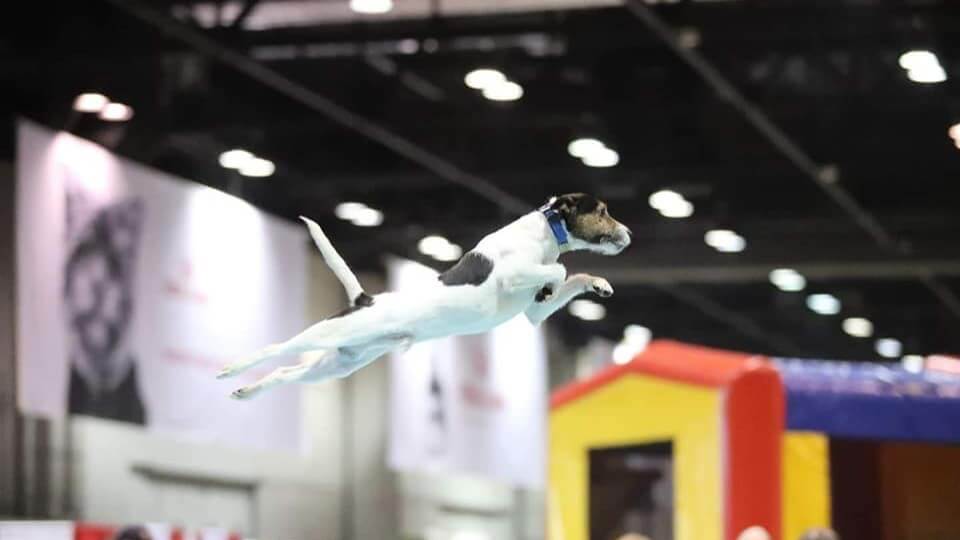
Learn how Parson Russell Terriers excel in performance sports through expert training, competition stories, and real exhibitor experience.


Meet the Judges
Vicki Abbott reflects on judging the Parson Russell Terrier at the 2025 Montgomery County dog show and shares her view on the breed’s future.
Agility
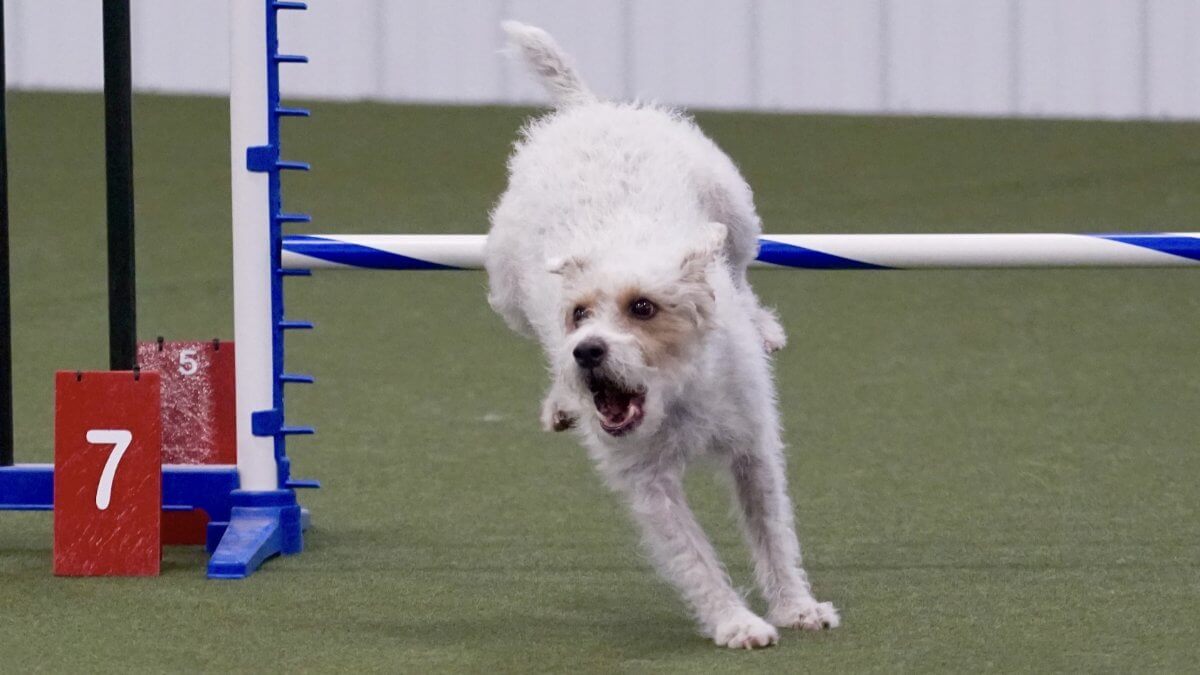
An excited Irishman and his Parson Russell Terrier, Tayto, prepare for their first Westminster Agility competition in 2025.
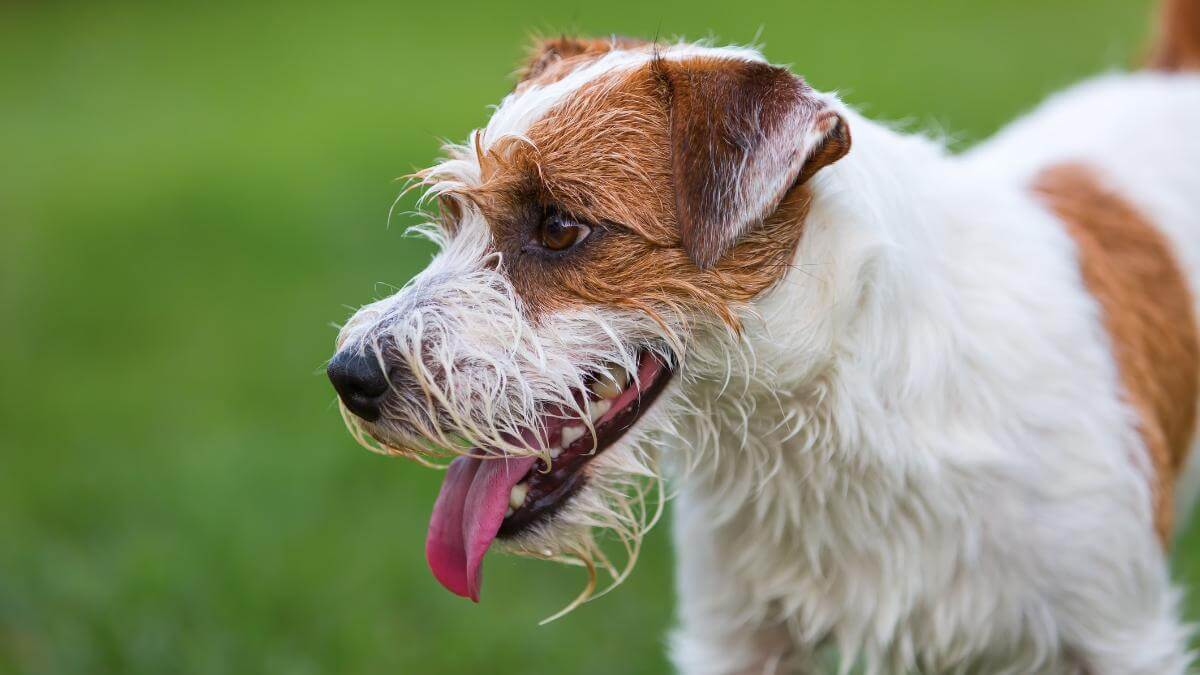
Learn about the Parson Russell Terrier’s history, traits, and role in fox hunting, along with its charm as a companion dog.


Meet the Judges
Dr. Steven L. Keating reflects on judging Parson Russell Terriers at Montgomery and the promising future of Terrier breeds worldwide.
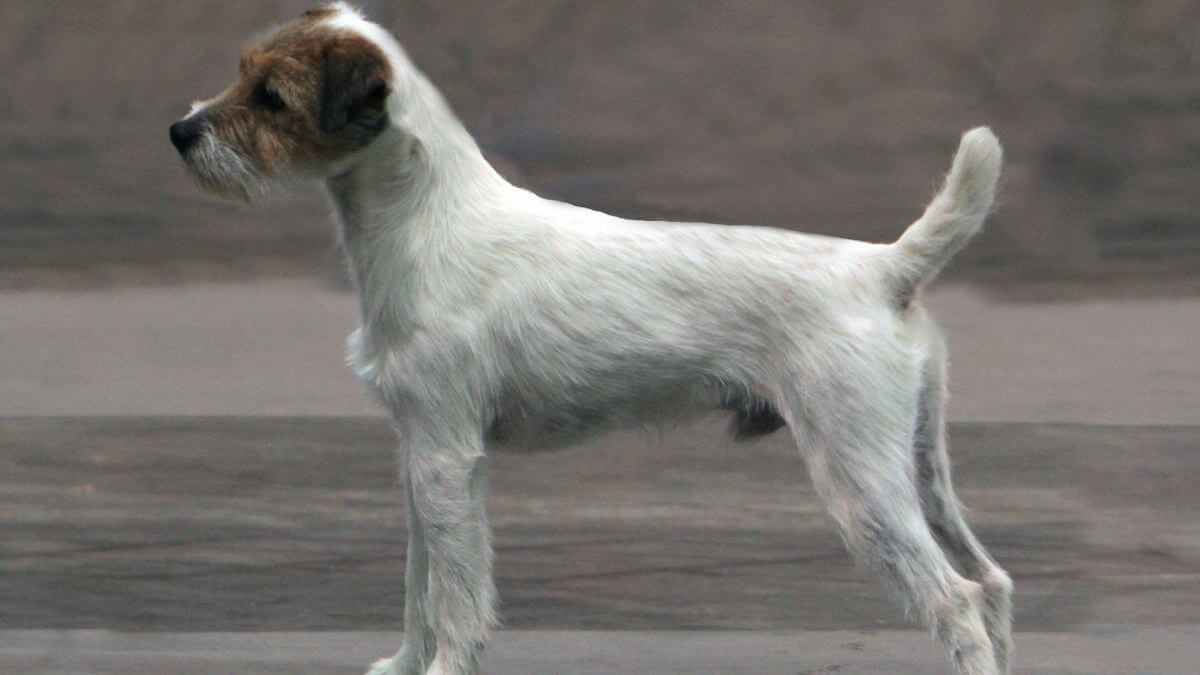
All About Judging
Discover how to judge the Parson Russell Terrier. Navigate breed standard and ensure form meets function flawlessly.


Meet the Judges
Interview with Brian C. Bogart, the 2023 MCKC Dog Show Breed Judge. Read about his experience with judging at the prestigious dog show.
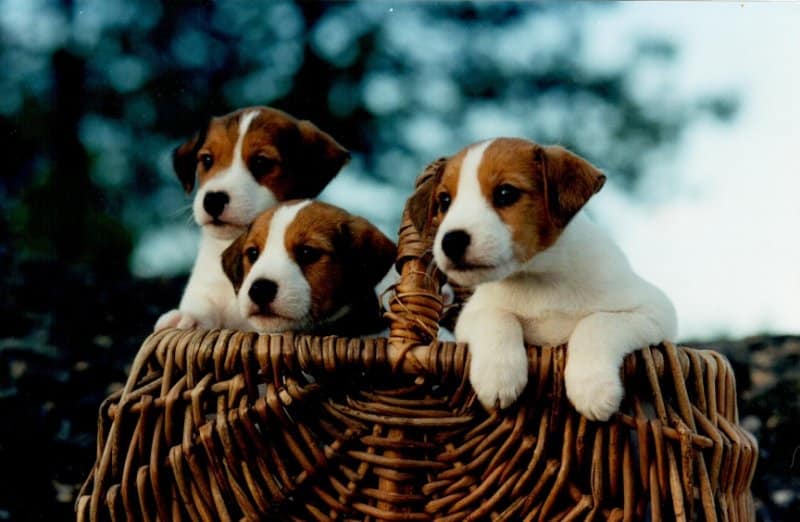

Meet the Breeders
Mary Strom is the breeder behind Snow Wind Parson Russell Terriers. Read about the kennel’s beginnings, dogs, puppies, photos and more!
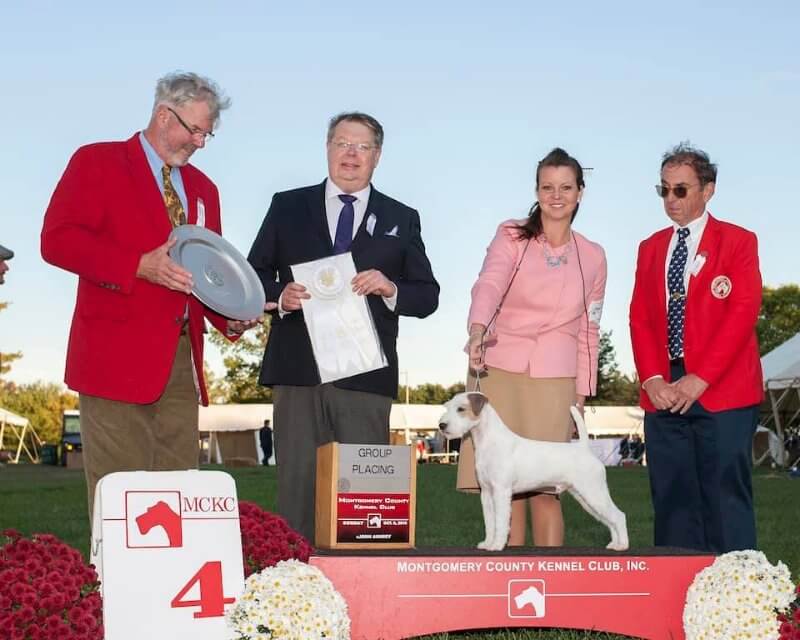
Meet the Breeders
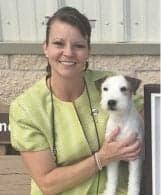
Dana Bryson-Benn is the breeder behind Brywood Parson Russell Terriers. Read about the kennel’s beginnings, champions, puppies, photos & more!
The tail is set high and carried upright when the dog is alert or moving. It should be strong and straight, and may be left natural, or traditionally docked where permitted, in balance with the breed’s compact construction and clean silhouette.
A Note About Color: The coat of the Parson Russell Terrier may be white, white with black or tan markings, or a combination of these, tri-color. The colors are clear. As long as the terrier is predominantly white, moderate body markings are not to be faulted in the show ring. Grizzle is acceptable and should not be confused with brindle, which is considered a disqualification.
Coat Type
Smooth, Double
The structure of the coat this breed carries.
Coat Length
Short
How long the breed's coat grows when kept in condition.
Adaptability Level
How easily a breed copes with changes in home, routine, noise and weather.
Mental Stimulation Needs
How much a breed needs a job, a puzzle or training to stay content.
A Parson Russell Terrier should receive a complete and balanced diet appropriate for the dog’s age, activity level, and body condition. Portions should be measured carefully to support a lean, athletic build without unnecessary weight gain.
Most adult Parsons do well with two measured meals per day, while puppies may need three or four smaller meals as they grow. Treats can be useful during training but should remain a modest part of the dog’s total daily calorie intake.
Maintaining a healthy body condition helps support joint health, endurance, and overall fitness. Of course, fresh water should always be available.
The Parson Russell Terrier is intelligent and quick to learn, but the breed can also be independent and easily bored by repetition. Short, varied, and purposeful training sessions usually work best.
Positive reinforcement using food, praise, toys, or play can help maintain motivation. Early training should include recall, leash manners, impulse control, basic cues, and calm behavior around visitors and other dogs.
Because of the breed’s strong prey drive, reliable recall and careful management around small animals are especially important. Scent games, trick training, and problem-solving exercises can also help keep the Parson mentally engaged.
Broken-coated dogs may benefit from periodic hand-stripping or tidying to preserve the proper harsh texture and natural outline. Bathing is needed only as necessary. Nails should be trimmed regularly, ears should be checked for debris or irritation, and teeth should be brushed routinely. Regular grooming also provides an opportunity to check the skin, paws, and body for anything unusual.