Members
01/Overview
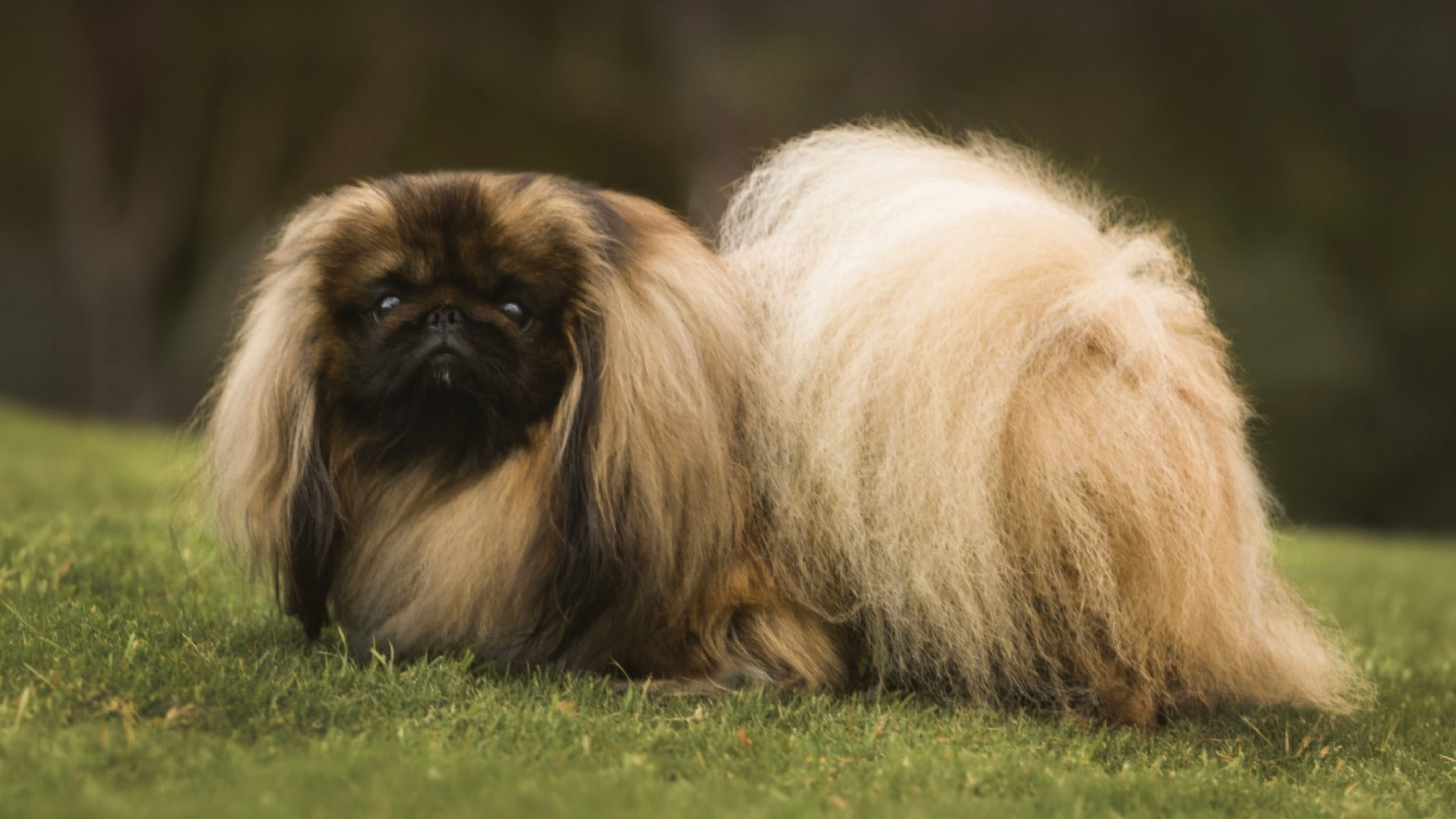
The Pekingese is a small companion breed known for its broad head, short muzzle, long and profuse coat, compact body, and distinctive rolling gait. Dignified, affectionate, and independent, the breed often forms strong bonds with its family while maintaining a confident and self-possessed personality.
Originally developed as a palace companion, the Pekingese carries itself with a characteristic sense of importance. Despite its small size, the breed is sturdy and alert, with a calm indoor manner and a strong awareness of its surroundings.
Highlights
02/History
The Pekingese is an ancient breed from China with a history closely connected to the imperial court. Small lion-like dogs were highly valued by Chinese royalty and were bred as companions for members of the imperial family.
The breed’s appearance was associated with traditional representations of the lion, an important symbol in Chinese culture and Buddhism. Breeders selected for a broad head, short muzzle, heavy coat, and compact body that created the distinctive lion-like appearance still associated with the Pekingese today.
For centuries, Pekingese were closely guarded within the imperial court and were not commonly available outside royal circles. Their role was almost entirely that of a companion, and they were prized for their appearance, temperament, and association with status.
The breed became known in the Western world during the nineteenth century. In 1860, during the Second Opium War, British troops entered the Imperial Palace in Beijing and found several Pekingese. Some of these dogs were taken to England where they attracted considerable attention.
One of the dogs brought to Britain was presented to Queen Victoria and was named Looty. Interest in the breed increased, and additional Pekingese were later imported as breeding programs developed in Europe.
The Pekingese became established in the United States around the turn of the twentieth century. The American Kennel Club recognized the breed in 1906 and placed it in the Toy Group.
03/Appearance
A mature Pekingese typically stands 6 to 9 inches tall at the withers and weighs no more than 14 pounds.
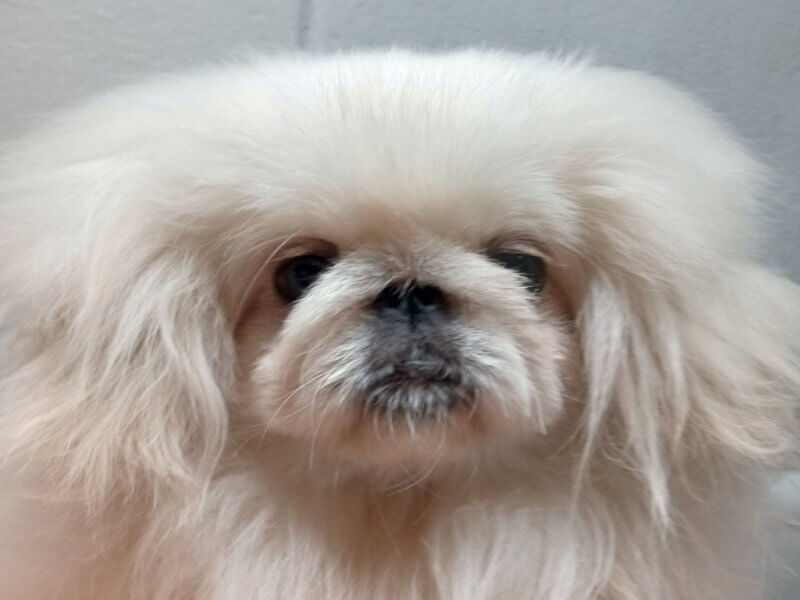
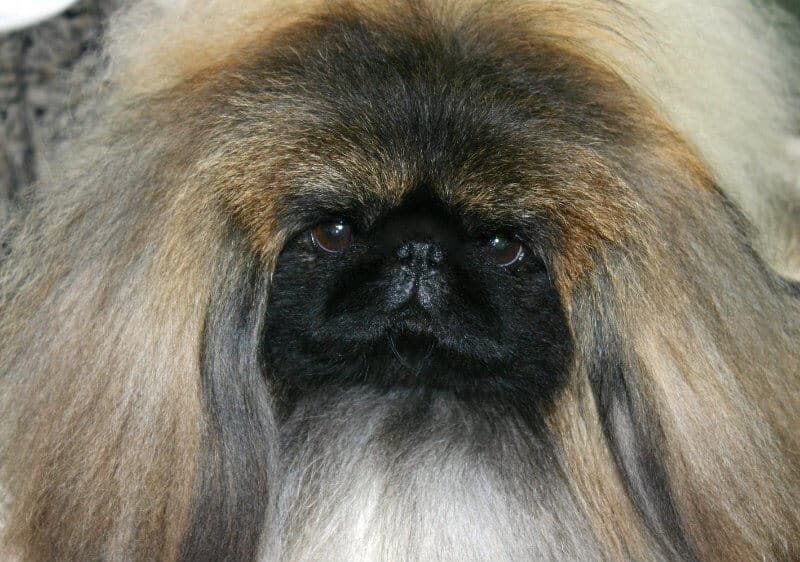
Skull: The Pekingese has a broad, flat skull that is large in proportion to the body. The envelope-shaped head should appear wide and substantial, contributing strongly to the breed’s distinctive expression.
Expression: The expression is alert, intelligent, and dignified, with a confident and self-possessed appearance.
Eyes: The eyes are large, very dark, round, and set wide apart. They should contribute to the breed’s characteristic expression without appearing excessively prominent.
Ears: The ears are heart-shaped, set on the front corners of the skull, and carried close to the head. They are heavily feathered with long hair.
Muzzle: The muzzle is very short, broad, and well cushioned, with a clearly defined facial fold above the nose.
Nose: The nose is broad, short, and black, with open nostrils.
Bite: The Pekingese has an undershot bite, with the lower jaw broad and well developed.
The Pekingese is a compact, heavy-boned Toy breed with a distinctive pear-shaped body. The forequarters are broad and substantial, while the body becomes narrower toward the rear.
The chest is broad and deep, the body is short, and the legs are relatively short. Despite its small size, the breed should feel surprisingly substantial and solid when carefully lifted.
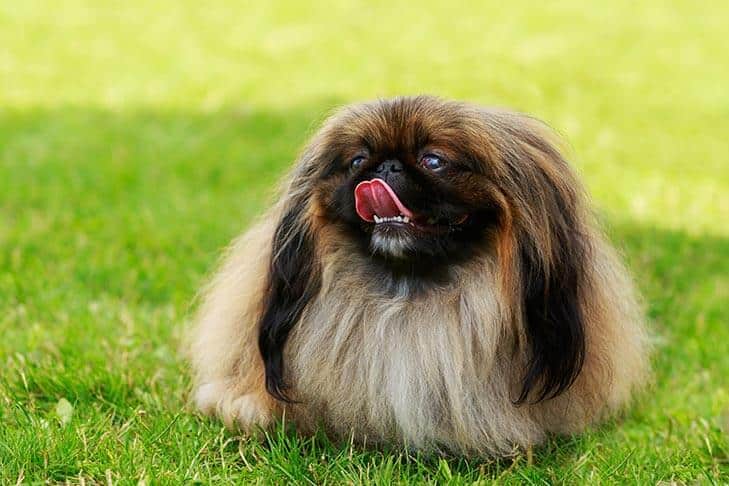
Texture: The Pekingese has a long, coarse outer coat with a soft, thick undercoat. The coat forms a noticeable mane around the neck and shoulders, with feathering on the ears, legs, tail, and toes.
Standard Colors
04/Consider
The Pekingese is affectionate, dignified, independent, and usually closely connected with its family. Anyone considering the breed should be prepared for regular coat care, moderate exercise, early socialization, dental care, and careful management in hot or humid weather.
Interaction With Family
The level of affection a breed typically shows towards family members and familiar individuals.
Good With Other Dogs
The innate friendliness of a dog towards other dogs can depend on its breed.
Good With Young Children
The degree to which a breed will typically be patient with young children.
Amount Of Shedding
How much hair a breed typically leaves behind on clothes, furniture and floors.
Frequency Of Grooming
How often a breed needs brushing, bathing or a professional trim to stay in condition.
Amount Of Drooling
How prone a breed is to drool — worth knowing before you keep a towel by the door.
Openness To Strangers
How openly a breed tends to greet new people, visitors and strangers.
Protective Nature
How likely a breed is to alert you to — and stand between you and — anything unfamiliar.
Playfulness Level
How enthusiastic a breed stays about games and play well past puppyhood.
Trainability Level
How readily a breed takes direction and works with you rather than around you.
Barking Level
How much a breed uses its voice, and how readily.
Energy Level
How much get-up-and-go a breed brings to an average day.
Health
The Pekingese is generally a robust small dog, but its brachycephalic (flat-faced) muzzle and long back require attentive care. Responsible breeders screen breeding stock for inherited conditions and provide health testing information to prospective puppy buyers. A Pekingese typically has a lifespan of 12 to 14 years. Balanced nutrition, daily low-impact activity, weight management, and routine veterinary care support health and longevity.
The Pekingese is affectionate, dignified, independent, and often deeply devoted to its family. The breed tends to carry itself with confidence and may be somewhat reserved with unfamiliar people.
Many Pekes enjoy companionship but are not usually demanding of constant activity. They can be playful and affectionate at home while still maintaining a self-possessed and independent nature.
Early socialization helps the breed become comfortable with different people, dogs, sounds, and environments. Calm, respectful handling is especially important because the Pekingese can be sensitive to rough treatment.
Exercise Expectations
A healthy adult generally benefits from about 20 to 30 minutes of activity each day, divided into shorter sessions. Basic games and relaxed exploration can provide additional mental stimulation. Because of the breed’s short muzzle and heavy coat, exercise should be limited in hot or humid weather. Activity should also be adjusted to the dog’s age, fitness level, and breathing comfort.
Grooming Expectations
The Pekingese is well suited to apartment or house living because of its small size and moderate exercise needs. The breed generally prefers staying close to its family.
Pekingese often do best in calm households where they receive regular companionship and gentle handling. Their compact build, large eyes, and short muzzle mean care should be taken to avoid rough play, high temperatures, and much larger dogs.
The breed usually does best with people who appreciate a dignified, affectionate, and independent companion. Consistent routines, moderate activity, regular grooming, and close attention to comfort help the Pekingese thrive.
05/Puppies
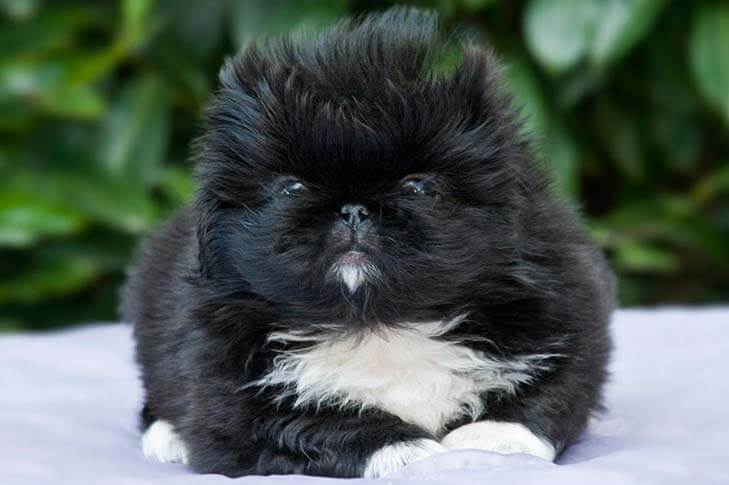
Pekingese puppies are affectionate, curious, playful, and often confident from an early age. They benefit from gentle handling, early socialization, consistent routines, and positive training that respects the breed’s independent nature.
A Pekingese puppy should have a predictable daily schedule that includes regular meals, potty breaks, naps, play, training, and quiet time. A crate or secure puppy area can provide a safe place to rest and can also support housetraining.
Early socialization should introduce the puppy to different people, well-mannered dogs, household sounds, surfaces, vehicles, and unfamiliar environments. These experiences should remain positive and appropriate for the puppy’s age.
Training can begin as soon as the puppy arrives home. Short sessions can focus on name response, recall, leash walking, housetraining, basic manners, and calm behavior around visitors. Because the Pekingese can be independent, patient and consistent training is especially helpful.
A puppy should receive a complete and balanced diet formulated for growth. Young puppies generally do best with several small meals throughout the day before gradually transitioning to an adult feeding schedule.
Exercise should include supervised play, short walks, and gentle exploration rather than strenuous activity. Care should be taken in hot temperatures or humid conditions because the breed’s short muzzle and heavy coat can make overheating more likely.
Regular veterinary visits are important during the first year. Grooming routines such as brushing, combing, nail trimming, ear checks, facial cleaning, and tooth brushing should also begin early so that the puppy becomes comfortable with regular care.
06/Activities
Pekingese are intelligent, observant, and responsive dogs that can enjoy activities involving focus, gentle movement, and close cooperation with a handler. Here are some of the dog sports and activities in which Pekingese may participate:
Obedience: Pekingese can demonstrate focus, responsiveness, and reliable performance with a motivated handler.
Rally: Rally Obedience combines obedience exercises with movement through a designated course and can provide both mental and physical stimulation.
Trick Dog: Trick training provides mental stimulation and gives the Peke an enjoyable way to use its intelligence and problem-solving ability.
Conformation Shows: Pekingese compete in Conformation Shows, where judges evaluate each dog according to the Breed Standard, including structure, movement, coat, expression, temperament, and overall type.
Therapy Work: A calm, friendly, and well-socialized Peke may participate in therapy visits to hospitals, schools, assisted living facilities, and other settings.
Canine Good Citizen: Pekingese may participate in programs that evaluate everyday manners, social behavior, and reliability around people and other dogs.
Companion Activities: Short walks, gentle indoor games, and relaxed exploration can provide enjoyable activity without placing excessive physical demands on the breed.
Gallery
07/Standards
The Pekingese is recognized by the world’s leading registries and kennel organizations, which categorize the breed into a specific Group based on its unique characteristics. This breed is recognized worldwide under the following Group designations:
The ideal Pekingese is described by a Breed Standard that is approved by each of the world’s leading registries and kennel organizations. The Standards for this breed may be found in the following links:
08/Clubs
Pekingese clubs support breed education, responsible breeding, health initiatives, Conformation Shows, and adherence to the Breed Standard.
Pekingese Club of America: Founded in 1909, this is the national breed club for the Pekingese in the United States and the breed’s American Kennel Club parent club.
National Pekingese Club of Canada: Established in 2009, Canada’s national organization for Pekingese welcomes breeders, exhibitors, and breed enthusiasts.
Sovereign Pekingese Association: The original Pekingese Club in the UK merged with the Yorkshire and Eastern Counties Pekingese Club in 2018 to form the Sovereign Pekingese Association, which promotes responsible ownership, breed health, and educational activities in the UK.
09/Rescue
Breed-specific rescue organizations help Pekingese that have been surrendered, abandoned, or need rehoming. These groups may provide foster care, veterinary treatment, behavioral evaluation, and placement with an appropriate adoptive family.
Pekingese Club of America Rescue Resources: The breed’s AKC parent club can provide rescue contacts, referrals, or guidance for Pekingese needing placement in the United States.
Pekingese Rescue Network: A breed-focused rescue resource that helps connect Pekingese in need with foster care, rehabilitation, and adoption opportunities.
National Pekingese Club of Canada: Canada’s national breed club may provide information or referrals for Pekingese needing rescue or rehoming.
Pekingese may also be found through local shelters, Toy breed rescue organizations, and national adoption databases. These resources can provide additional options for people interested in adopting a Pekingese or Pekingese mix.
10/Facts
An Ancient Chinese Companion
The Pekingese was developed in China and was closely associated with the imperial court for centuries.
Inspired by the Lion
The breed’s broad head, heavy coat, and mane-like appearance were intended to resemble traditional representations of lions.
Favored by Royalty
Pekingese were treasured by members of the Chinese imperial family and were historically kept within palace circles.
Looty Was Presented to Queen Victoria
One of the Pekingese taken to Britain after the 1860 occupation of the Imperial Palace in Beijing was presented to Queen Victoria and named Looty.
Known for a Rolling Gait
The breed’s broad front, compact body, and distinctive structure contribute to its characteristic rolling movement.
Recognized by the AKC in 1906
The American Kennel Club recognized the Pekingese in 1906, and the breed is part of the Toy Group.
11/FAQ
Pekingese can make excellent pets for people who want an affectionate, dignified, and relatively calm companion. They usually do best with gentle handling, regular companionship, and a predictable routine.
Official Standard of the Pekingese
General Appearance: The Pekingese is a well-balanced, compact dog of Chinese origin with a heavy front and lighter hindquarters. Its temperament is one of directness, independence and individuality. Its image is lionlike, implying courage, dignity, boldness and self-esteem rather than daintiness or delicacy.
Size, Substance, Proportion: Size/Substance - The Pekingese, when lifted, is surprisingly heavy for its size. It has a stocky, muscular body. All weights are correct within the limit of 14 pounds. Disqualification - Weight over 14 pounds. Proportion - Overall balance is of utmost importance. The head is large in proportion to the body. The Pekingese is slightly longer than tall when measured from the forechest to the buttocks. The overall outline is an approximate ratio of 3 high to 5 long.
Head: Face - The topskull is massive, broad and flat and, when combined with the wide set eyes, cheekbones and broad lower jaw, forms the correctly shaped face. When viewed from the front, the skull is wider than deep, which contributes to the desired rectangular, envelope-shaped appearance of the head. In profile, the face is flat. When viewed from the side, the chin, nose leather and brow all lie in one plane, which slants very slightly backward from chin to forehead. Ears - They are heart-shaped, set on the front corners of the topskull, and lie flat against the head. The leather does not extend below the jaw. Correctly placed ears, with their heavy feathering and long fringing, frame the sides of the face and add to the appearance of a wide, rectangular head. Eyes - They are large, very dark, round, lustrous and set wide apart. The look is bold, not bulging. The eye rims are black and the white of the eye does not show when the dog is looking straight ahead. Nose - It is broad, short and black. Nostrils are wide and open rather than pinched. A line drawn horizontally over the top of the nose intersects slightly above the center of the eyes. Wrinkle - It effectively separates the upper and lower areas of the face. It is a hair-covered fold of skin extending from one cheek over the bridge of the nose in a wide inverted V to the other cheek. It is never so prominent or heavy as to crowd the facial features, obscure more than a small portion of the eyes, or fall forward over any portion of the nose leather. Stop - It is obscured from view by the over-nose wrinkle. Muzzle - It is very flat, broad, and well filled-in below the eyes. The skin is black on all colors. Whiskers add to the desired expression. Mouth - The lower jaw is undershot and broad. The black lips meet neatly and neither teeth nor tongue show when the mouth is closed.
Neck, Body, Tail: Neck - It is very short and thick. Body - It is pear-shaped, compact and low to the ground. It is heavy in front with well-sprung ribs slung between the forelegs. The forechest is broad and full without a protruding breastbone. The underline rises from the deep chest to the lighter loin, thus forming a narrow waist. The topline is straight and the loin is short. Tail - The high set tail is slightly arched and carried well over the back, free of kinks or curls. Long, profuse, straight fringing may fall to either side.
Forequarters: They are short, thick and heavy-boned. The bones of the forelegs are moderately bowed between the pastern and elbow. The broad chest, wide set forelegs and the closer rear legs all contribute to the correct rolling gait. The distance from the point of the shoulder to the tip of the withers is approximately equal to the distance from the point of the shoulder to the elbow. Shoulders are well laid back and fit smoothly onto the body. The elbows are always close to the body. Front feet are turned out slightly when standing or moving. The pasterns slope gently.
Hindquarters: They are lighter in bone than the forequarters. There is moderate angulation of stifle and hock. When viewed from behind, the rear legs are reasonably close and parallel, and the feet point straight ahead when standing or moving.
Coat & Presentation: Coat - It is a long, coarse-textured, straight, stand-off outer coat, with thick, soft undercoat. The coat forms a noticeable mane on the neck and shoulder area with the coat on the remainder of the body somewhat shorter in length. A long and profuse coat is desirable providing it does not obscure the shape of the body. Long feathering is found on toes, backs of the thighs and forelegs, with longer fringing on the ears and tail. Presentation - Presentation should accentuate the natural outline of the Pekingese. Any obvious trimming or sculpting of the coat, detracting from its natural appearance, should be severely penalized.
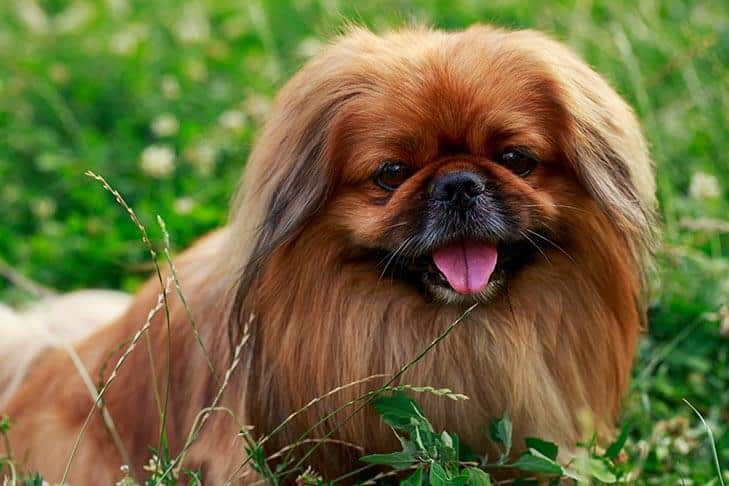
Color: All coat colors and markings are allowable and of equal merit. A black mask or a self-colored face is equally acceptable. Regardless of coat color the exposed skin of the muzzle, nose, lips and eye rims is black.
Gait: It is unhurried, dignified, free and strong, with a slight roll over the shoulders. This motion is smooth and effortless and is as free as possible from bouncing, prancing or jarring. The rolling gait results from a combination of the bowed forelegs, well laid back shoulders, full broad chest and narrow light rear, all of which produce adequate reach and moderate drive.
Temperament: A combination of regal dignity, intelligence and self-importance make for a good natured, opinionated and affectionate companion to those who have earned its respect.
Disqualification: Weight over 14 pounds. The foregoing is a description of the ideal Pekingese. Any deviation should be penalized in direct proportion to the extent of that deviation.
Approved: January 13, 2004
Effective: March 2, 2004

Meet the Breeders
Patti Pytlak is the breeder behind Hyacinth Pekingese. Read about the kennel’s beginnings, the sires, the dams, the puppies, and much more!
All About Judging
Examining Pekingese on the table is similar to the examination of other breeds. Judges should “Examine on the table and judge on the ground.”

Meet the Breeders
Interview with a purebred Pekingese breeder Susan Farrer-Shephard of Deja vu Pekingese Kennels, by Allan Reznik.

It is not acceptable to open the mouth on a Pekingese, unless the judge has an issue with the thumb examination.
Specialty & Group Club News
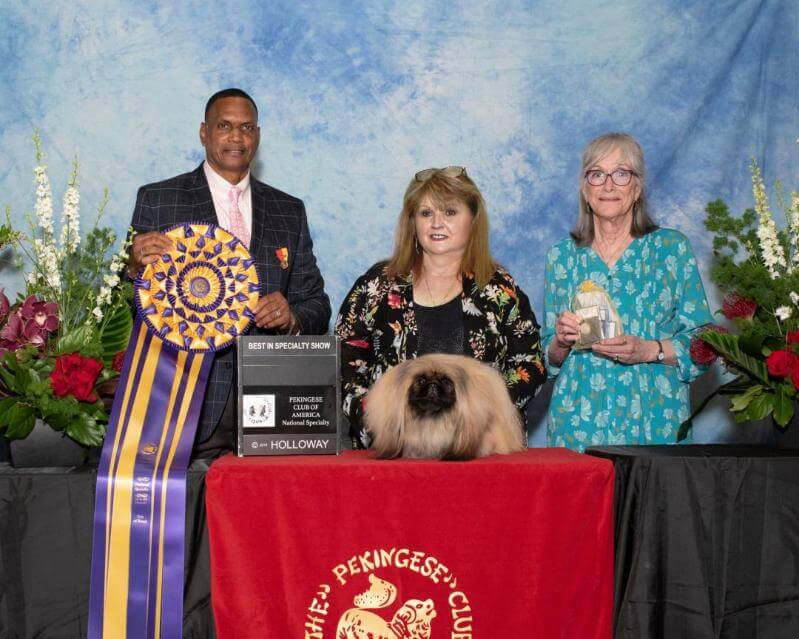
The Pekingese Club of Texas hosted the Pekingese Club of America’s National Specialty on July 6th & 7th in Dallas, Texas.
Meet the Breeders
Interview with Toy Group Breeders Timothy Reese & Randy Winters – Our kennel name is Dunkirk. We currently have three Pekingese and nine

American Kennel Club (AKC)
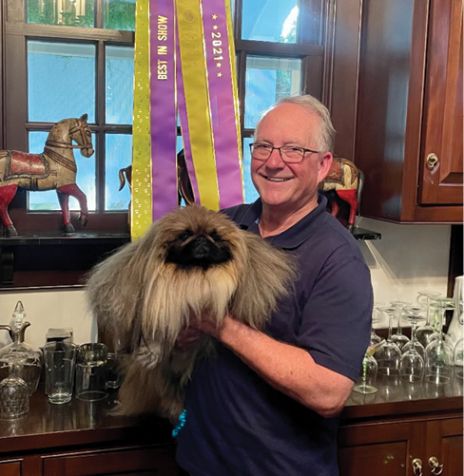
AKC 2021 Breeder of the Year – My interest has been sustained by the challenge of attempting to breed great quality dogs that
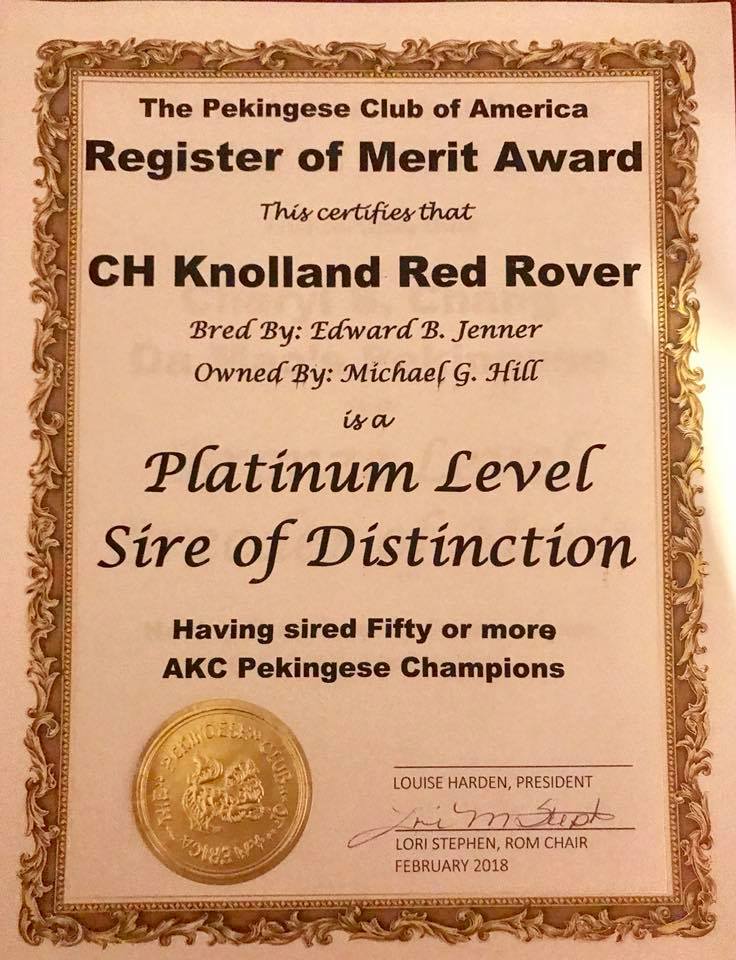

The Age of Rover | A Conversation with Michael Hill. Who would have thought that a semi-casual inquiry about using CH Wendessa Crown Prince
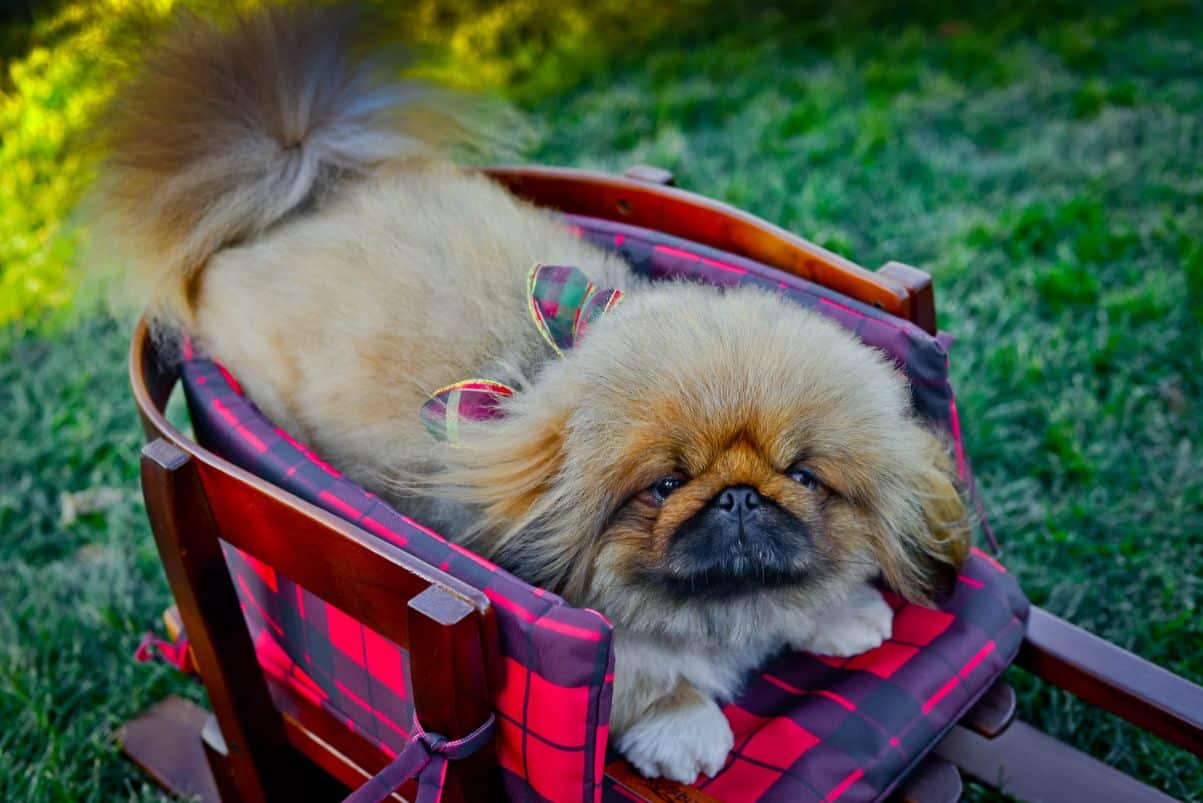
Living with Pekingese | For me, and for most Pekingese enthusiasts, living with Pekingese is more than sharing your life with a dog.
The tail is set high and carried well over the back, slightly arched and free of kinks or curls. It is heavily feathered with long fringing falling to either side, forming an important part of the Pekingese’s characteristic silhouette.
Standard Markings
A Note About Color: All coat colors and markings are allowable and of equal merit. A black mask or a self-colored face is equally acceptable. Regardless of coat color, the exposed skin of the muzzle, nose, lips and eye rims is black.
Coat Type
Double
The structure of the coat this breed carries.
Coat Length
Long
How long the breed's coat grows when kept in condition.
Adaptability Level
How easily a breed copes with changes in home, routine, noise and weather.
Mental Stimulation Needs
How much a breed needs a job, a puzzle or training to stay content.
A Pekingese should receive a complete and balanced diet appropriate for the dog’s age, activity level, and body condition. Portions should be measured carefully because excess weight can place additional strain on the joints and respiratory system.
Most adult Pekingese do well with two measured meals per day, while puppies may need three or four smaller meals as they grow. Treats can be useful during training but should remain a modest part of the dog’s total daily calorie intake.
Maintaining a lean body condition can support mobility, breathing comfort, and overall health. Of course, fresh water should always be available.
The Pekingese is intelligent and capable of learning well, but the breed can also be independent and somewhat strong-willed. Short, positive, and consistent training sessions generally work best.
Food rewards, praise, toys, and gentle play can help maintain motivation. Early training should include recall, leash manners, housetraining, basic cues, and calm behavior around visitors and other dogs.
Because the breed can be sensitive, patient and reward-based methods are usually more effective than harsh corrections. Clear household rules and consistency are especially helpful.
Bathing can be done as needed, followed by thorough drying and careful brushing. The facial area and skin folds should also be kept clean and dry. Nails should be trimmed regularly, ears should be checked for debris or irritation, and teeth should be brushed routinely. Regular coat care is especially important for dogs kept in full coat.