01/Overview
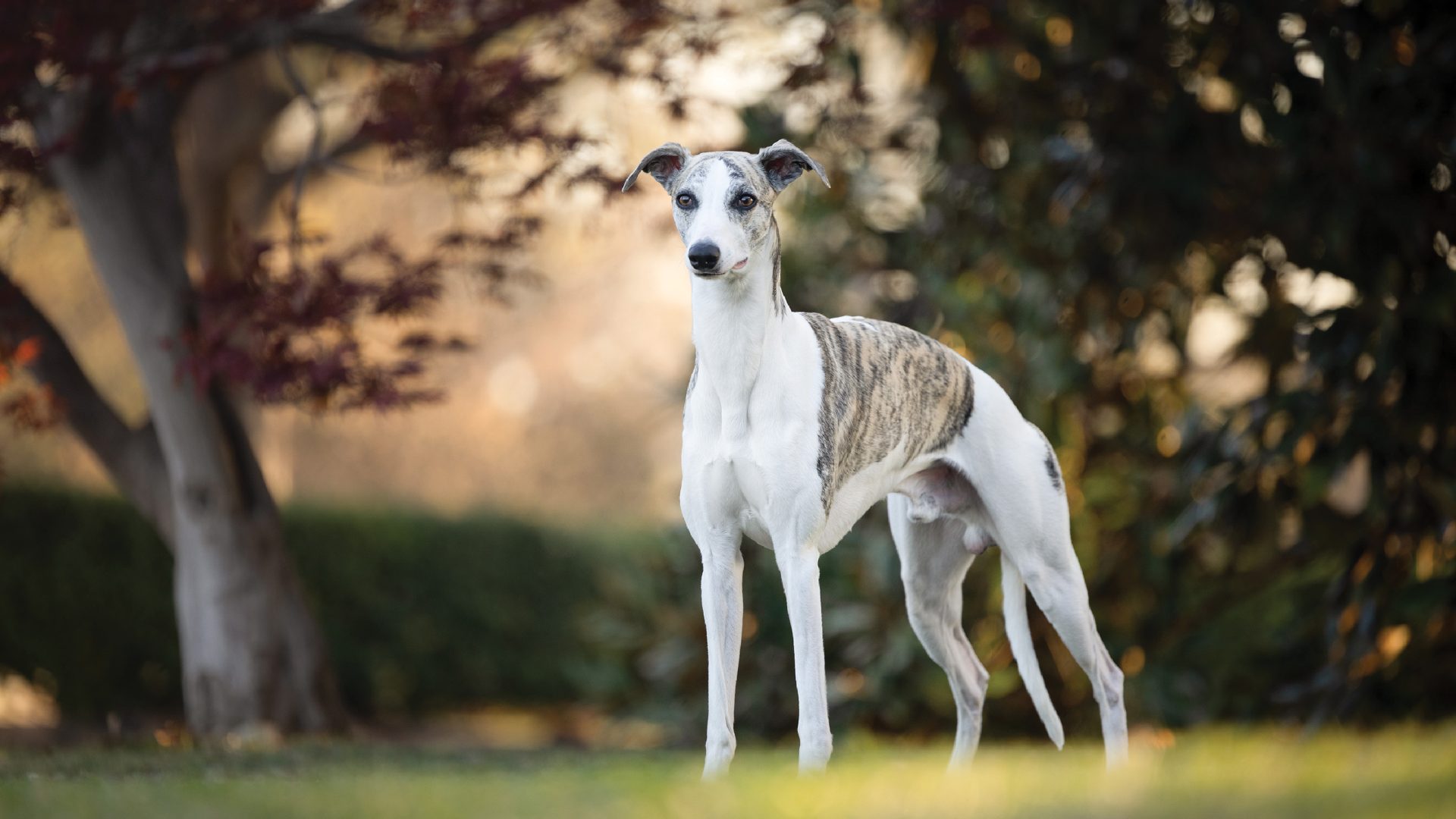
The Whippet is a quick and beautiful purebred recognized for its incredible speed and gentle temperament. The breed was created in England for coursing hares, a pastime which later became outlawed. Today, these sighthounds chase lures for sport. This breed has a slim frame and a sleek coat, and a great desire to chase moving objects. Since it is characterized by a graceful sleekness, the name Whippet has become synonymous with grace.
Highlights
02/History
The mild-mannered Whippet is a very successful member of the lightning-fast group of sprinting canines known as sighthounds. However, unlike some breeds within this clan, the Whippet is not much more than a couple hundred years old. This medium-sized breed was first developed in England during the late 1700s by crossing Greyhounds with terriers.
North-country coal workers enjoyed dog racing and rabbit hunting on their days off, but they couldn’t afford to feed a large dog. Their solution was to cross Greyhounds with smaller dog breeds, producing dogs that competed in races across an open field. Later, when chasing rabbits became outlawed, the dogs chased rags or pieces of cloth.
The Whippet was known as the "Poor Man's Racehorse" and the "Lightning Rag Dog" in its early days because it would chase a rag trailed along a straight course. This early type of lure coursing supported dogs that eventually produced the fastest breed in the world relative to its size.
The Whippet as a breed was recognized in 1891 by the Royal Kennel Club in Great Britain. The American Kennel Club registered the breed somewhat earlier, in 1888, and stories indicate Whippets were brought to America by English mill workers.
03/Appearance
In terms of height, male Whippets measure between 19-22 inches and females are between 18-21 inches tall. Both males and females weigh within a range of 25 to 40 pounds, with females being smaller.
The Whippet displays a fit and slender build, denoting both speed and elegance. The breed is muscular without appearing coarse, and its graceful silhouette is a clear indication of its sporting heritage. The backline runs smoothly from the neck to the tail in a series of alternating S-curves, with a tuck up of the underline that declares this dog an unmistakable member of the sighthound family. Fit for function all but defines the Whippet.
Texture: The single coat of the Whippet is short and smooth and lies close to the body. The texture is firm but only moderate protective.
Standard Colors
04/Consider
The Whippet is a gentle, playful, and affectionate sighthound. Among the breed’s positive qualities are its reluctance to bark and its playfulness with children of all ages. With these qualities in mind, this medium-sized breed has long been popular with families as well as with singles and the elderly. However, sharing a home with this fast and fit breed comes with specific responsibilities and factors that need to be considered for the sake of everyone’s happiness and well-being.
Interaction With Family
The level of affection a breed typically shows towards family members and familiar individuals.
Good With Other Dogs
The innate friendliness of a dog towards other dogs can depend on its breed.
Good With Young Children
The degree to which a breed will typically be patient with young children.
Amount Of Shedding
How much hair a breed typically leaves behind on clothes, furniture and floors.
Frequency Of Grooming
How often a breed needs brushing, bathing or a professional trim to stay in condition.
Amount Of Drooling
How prone a breed is to drool — worth knowing before you keep a towel by the door.
Openness To Strangers
How openly a breed tends to greet new people, visitors and strangers.
Protective Nature
How likely a breed is to alert you to — and stand between you and — anything unfamiliar.
Playfulness Level
How enthusiastic a breed stays about games and play well past puppyhood.
Trainability Level
How readily a breed takes direction and works with you rather than around you.
Barking Level
How much a breed uses its voice, and how readily.
Energy Level
How much get-up-and-go a breed brings to an average day.
Health
To the untrained eye, the Whippet usually appears as a “skinny“ breed. However, like all sighthounds, the breed’s dynamic frame is built for speed and isn’t capable of carrying excessive weight. These dogs are powerful and muscular, despite their slim silhouettes. Responsible breeders understand this and are the best sources for acquiring the healthiest Whippet possible. Responsible breeders screen their stock for diseases and place their puppies in homes that can maintain a similar degree of care throughout each dog’s lifetime. Lifespan: The average lifespan of the Whippet is 12 to 15 years, but with proper care, a balanced diet, and regular check-ups, many can thrive beyond these years.
The Whippet is amiable, gentle, and elegant yet powerful. The breed enjoys daily walks and always appreciates the opportunity to run around in a fenced yard. This sighthound is generally quiet at home, and between walks and bursts of energy, this hound loves to stretch out on a comfortable chair and relax for long hours.
The Whippet typically gets along well with people and other dogs, although early socialization is important. Prey drive is strong in this breed, so it is better to keep these dogs away from cats indoors. Also, because of that prey drive, it’s recommended to always walk this breed on a leash. If a Whippet sees something worth chasing, it will disregard commands such as “stay” and “come” and eagerly pursue its intended quarry.
Because the Whippet rarely barks, it can be a suitable choice for people living in apartment buildings with a lot of neighbors. The breed is not much of a guard dog, however, due to its amiable personality. And despite its friendly nature, it’s still important to expose a Whippet to different people, sights, sounds, and experiences from a young age. With early training and socialization, this gentle and patient breed can become an ideal playmate for older children and the perfect addition to any family.
Exercise Expectations
If a Whippet is not getting enough exercise, it can act out in a variety of ways. A bored dog might appear hyperactive, start gaining weight, become destructive or withdrawn, or even bark, which is not something the breed usually does often. If boredom is suspected, some exercise other than daily walks should be added. The good thing is that the new activities can be fun for both the person and the dog. Playing ball can be a great exercise game for a Whippet. As it is in the breed’s nature, these dogs will probably start chasing the ball, and some can even be encouraged to bring the ball back. Overall, any exercise that contains a lot of short, fast runs and some toys is great for a Whippet. Whippet puppies should be offered five minutes of exercise for every month of age, which means a four-month-old puppy will need 20 minutes of daily exercise. It’s important to keep in mind that walking is considered exercise and not an addition to an exercise regimen.
Whippets are gentle souls, known for their speed but also for their calm and amiable personalities. This combination of traits makes them a perfectly adaptable breed. If they are outside, Whippets will gladly use the opportunity to do sprints and explore. Inside, to the contrary, they will turn into couch potatoes and enjoy their time just lying around.
Whippets are great medium-sized apartment dogs. They don't bark as much as other breeds and they like the comforts of home. Playing with the kids can be their favorite activity too, almost as much as following their favorite person around. With this companionable nature in mind, these dogs don't like being alone for too long.
Low body fat and a short coat makes the Whippet a breed that’s more suited for warm weather. In colder climates, a cozy dog coat or sweater is a necessary addition to winter walks.
05/Puppies
Whippet puppies have wonderful personalities. They are curious and playful, and they have no problem approaching strangers and letting people hold them. When choosing a puppy to bring home, it’s essential to always consider the breeder’s experience with this all-important decision.
Before bringing home a Whippet puppy, make sure to provide a safe and nurturing environment. Since the breed is curious from a young age, constant supervision is required to keep the pup from harm. Providing safe and soft toys will help with teething and add variety to every playtime.
During the puppy's growth stages, nutrition is critical. It's best to feed a Whippet puppy a high-quality food that will ensure it receives all the nutrients needed for healthy growth. Setting a regular feeding plan is also a good idea, as puppies are always growing and need more food than adult dogs.
Regular veterinary check-ups are crucial during the first year of life. Vaccinations, deworming, and basic health checks should be performed to ensure the puppy is growing normally.
Important aspects of puppy care include basic training and socialization. Training puppies at an early stage will encourage them to grow into well-behaved adults. Early and consistent socialization will instill confidence and reduce the chances of fear or aggression later in life.
06/Activities
The Whippet is a sighthound that excels in speed-based activities. These powerful and graceful dogs are agile and versatile too. They can climb, jump and run with the best competitors in an exciting array of dog sports.
Gallery
07/Standards
The Whippet is recognized by the world's leading registries and kennel organizations, which categorize the breed into a specific Group based on its unique characteristics. This breed is recognized worldwide under the following Group designations:
The ideal Whippet is described by a Breed Standard that is approved by each of the world’s leading registries and kennel organizations. The Breed Standards for this breed may be found in the following links:
08/Clubs
09/Rescue
10/Facts
Speed
The Whippet is a sprinter, originally used for hunting and coursing. These sighthounds are extremely fast and capable of reaching speeds up to 35 mph.
Temperament
Whippets are typically gentle, affectionate, and playful companions. Although they are great apartment dogs, these dogs enjoy exercise and love to run in a safely enclosed, fenced yard.
Bathing
The Whippet, with its short, smooth coat, is a moderate shedder that benefits from weekly brushing. However, these thin-skinned dogs only need bathing if they get dirty.
Bark
Whippets are not generally vocal dogs, which means they don’t bark as much as many other breeds. The only time a Whippet is likely to bark is if it’s bored or unhappy.
America
Whippets were originally bred in England; however, the breed has become really popular in the United States. The Whippet appears to have been introduced to America by English mill workers in Massachusetts.
Weight
To anyone who is not familiar with the breed, the Whippet can seem like a skinny dog. Actually, this sighthound’s elegantly curved frame is indicative of the dog’s health and its usefulness as a canine that loves to run.
11/FAQ
Yes, Whippets can be good apartment dogs. While they are known for their speed and enjoy regular opportunities to run, they are also quite calm indoors and are known to be couch potatoes. Regular exercise is essential, but these dogs are certainly adaptable.
Official Standard of the Whippet
General Appearance: A medium size sighthound giving the appearance of elegance and fitness, denoting great speed, power and balance without coarseness. A true sporting hound that covers a maximum of distance with a minimum of lost motion. Should convey an impression of beautifully balanced muscular power and strength, combined with great elegance and grace of outline. Symmetry of outline, muscular development and powerful gait are the main considerations; the dog being built for speed and work, all forms of exaggeration should be avoided.
Size, Proportion, Substance: Ideal height for dogs, 19 to 22 inches; for bitches, 18 to 21 inches, measured at the highest point of the withers. More than one-half inch above or below the stated limits will disqualify. Length from forechest to buttocks equal to or slightly greater than height at the withers. Moderate bone throughout.
Head: Keen intelligent alert expression. Eyes large, round to oval in shape. Small and/or almond shaped eyes are undesirable and are to be faulted. Eyes to be dark brown to nearly black in color. Eye color can vary with coat color, but regardless of coat color dark eyes are always preferred. Light eyes are undesirable and yellow eyes are to be strictly penalized. Blue eye(s) or any portion of blue in the eye(s), as well as both eyes not being of the same color shall disqualify. Fully pigmented eye rims are desirable. Rose ears, small, fine in texture; in repose, thrown back and folded along neck. Fold should be maintained when at attention. Erect ears should be severely penalized. Skull long and lean, fairly wide between the ears, scarcely perceptible stop. Muzzle should be long and powerful, denoting great strength of bite, without coarseness. Lack of underjaw should be strictly penalized. Nose leather to be entirely and uniformly pigmented. Color to be black, dark blue or dark brown, both so dark so as to appear nearly black. Teeth of upper jaw should fit closely over teeth of lower jaw creating a scissors bite. Teeth should be white and strong. Undershot shall disqualify. Overshot one-quarter inch or more shall disqualify.
Neck, Topline, Body: Neck long, clean and muscular, well arched with no suggestion of throatiness, widening gracefully into the top of the shoulder. A short thick neck, or a ewe neck, should be penalized. The back is broad, firm and well muscled, having length over the loin. The backline runs smoothly from the withers with a graceful natural arch, not too accentuated, beginning over the loin and carrying through over the croup; the arch is continuous without flatness. A dip behind shoulder blades, wheelback, flat back, or a steep or flat croup should be penalized. Brisket very deep, reaching as nearly as possible to the point of the elbow. Ribs well sprung but with no suggestion of barrel shape. The space between the forelegs is filled in so that there is no appearance of a hollow between them. There is a definite tuckup of the underline. The tail long and tapering, reaching to at least the inside of the hock when measured down along the hind leg. When the dog is in motion, the tail is carried low with only a gentle upward curve; tail should not be carried higher than top of back.
Forequarters: Shoulder blade long, well laid back, with flat muscles, allowing for moderate space between shoulder blades at peak of withers. Upper arm of equal length, placed so that the elbow falls directly under the withers. The points of the elbows should point neither in nor out, but straight back. A steep shoulder, short upper arm, a heavily muscled or loaded shoulder, or a very narrow shoulder, all of which restrict low free movement, should be strictly penalized. Forelegs straight, giving appearance of strength and substance of bone. Pasterns strong, slightly bent and flexible. Bowed legs, tied-in elbows, legs lacking substance, legs set far under the body so as to create an exaggerated forechest, weak or upright pasterns should be strictly penalized. Both front and rear feet must be well formed with hard, thick pads. Feet more hare than cat, but both are acceptable. Flat, splayed or soft feet without thick hard pads should be strictly penalized. Toes should be long, close and well arched. Nails strong and naturally short or of moderate length. Dewclaws may be removed.
Hindquarters: Long and powerful. The thighs are broad and muscular, stifles well bent; muscles are long and flat and carry well down toward the hock. The hocks are well let down and close to the ground. Sickle or cow hocks should be strictly penalized.
Coat: Short, close, smooth and firm in texture. Any other coat shall be a disqualification. Old scars and injuries, the result of work or accident, should not be allowed to prejudice the dog's chance in the show ring.
Color: Color immaterial.
Gait: Low, free moving and smooth, with reach in the forequarters and strong drive in the hindquarters. The dog has great freedom of action when viewed from the side; the forelegs move forward close to the ground to give a long, low reach; the hind legs have strong propelling power. When moving and viewed from front or rear, legs should turn neither in nor out, nor should feet cross or interfere with each other. Lack of front reach or rear drive, or a short, hackney gait with high wrist action, should be strictly penalized. Crossing in front or moving too close should be strictly penalized.
Temperament: Amiable, friendly, gentle, but capable of great intensity during sporting pursuits.
Disqualifications: More than one-half inch above or below stated height limits. Blue eye(s), any portion of blue in the eye(s), eyes not of the same color. Undershot. Overshot one-quarter inch or more. Any coat other than short, close, smooth and firm in texture.
Approved October 9, 2007
Effective January 1, 2008
Meet the Junior Handlers
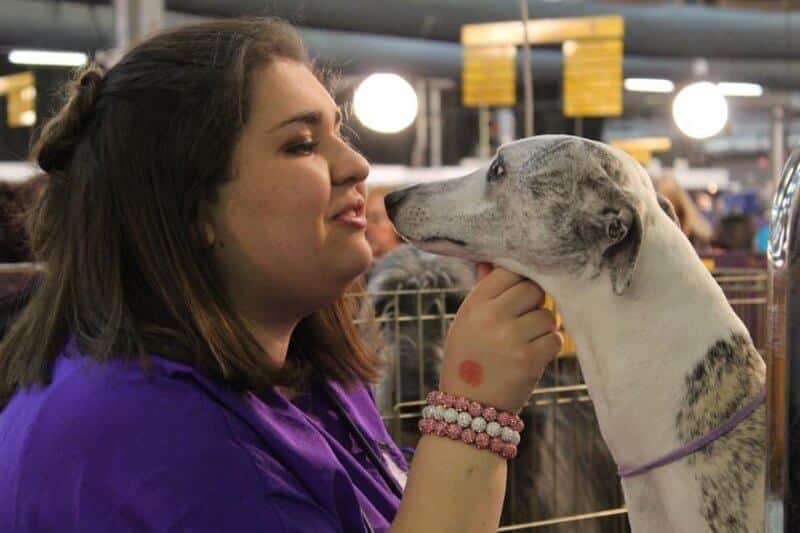
Meet Baylie Smith, a fourth-generation breeder passionate about raising healthy and happy Whippets. Join her in spreading puppy love!


Meet the Owner Handlers
Insights from an Owner Handler, Michelle Ewing. Read about her opinions on various topics about dog handling in the modern show ring.

Meet the Owner Handlers
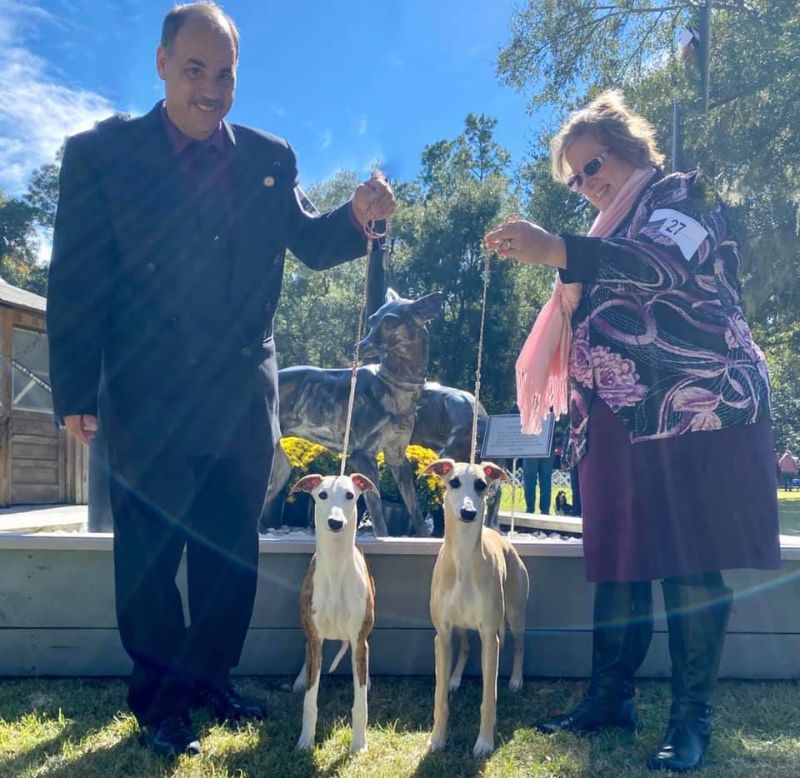
Insights from Owner Handlers: Kim and Paul Norton. Read about their opinions on various topics about dog handling in the modern show ring.
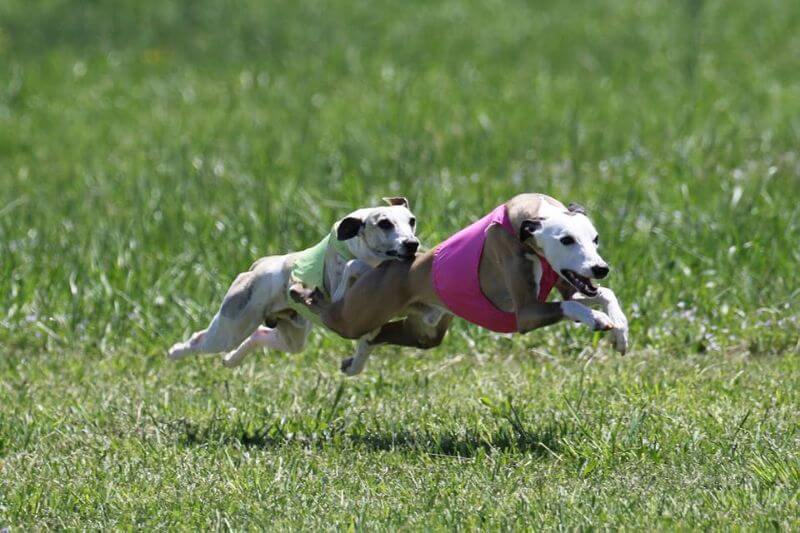
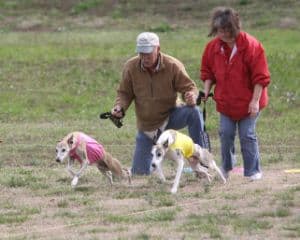
Lure Coursing
Explore the sport of Lure Coursing and find out what combination of characteristics makes the Whippet breed among the best for the sport.

Specialty & Group Club News
Ringside photos and dog show candids from this year’s American Whippet Club National Specialty which was held April 2-9, 2022 in Virginia
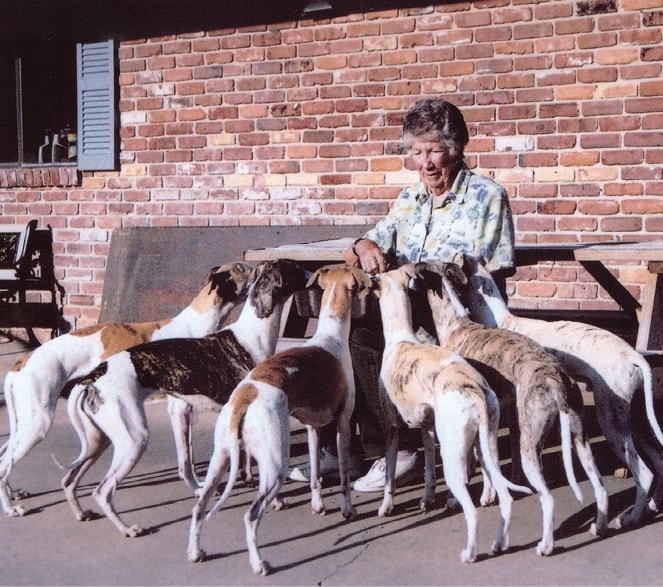

An Interview with Carol Harris | Bo-Bett Farm – Carol Harris of the Ocala, Florida, area passed away on August 7, 2021 at age 98.
Meet the Breeders
Showsight Contributing Author, Allan Reznik sat down with renowned Whippet Breeder Iva Kimmelman – Merci Isle Whippets for a lively

American Kennel Club (AKC)
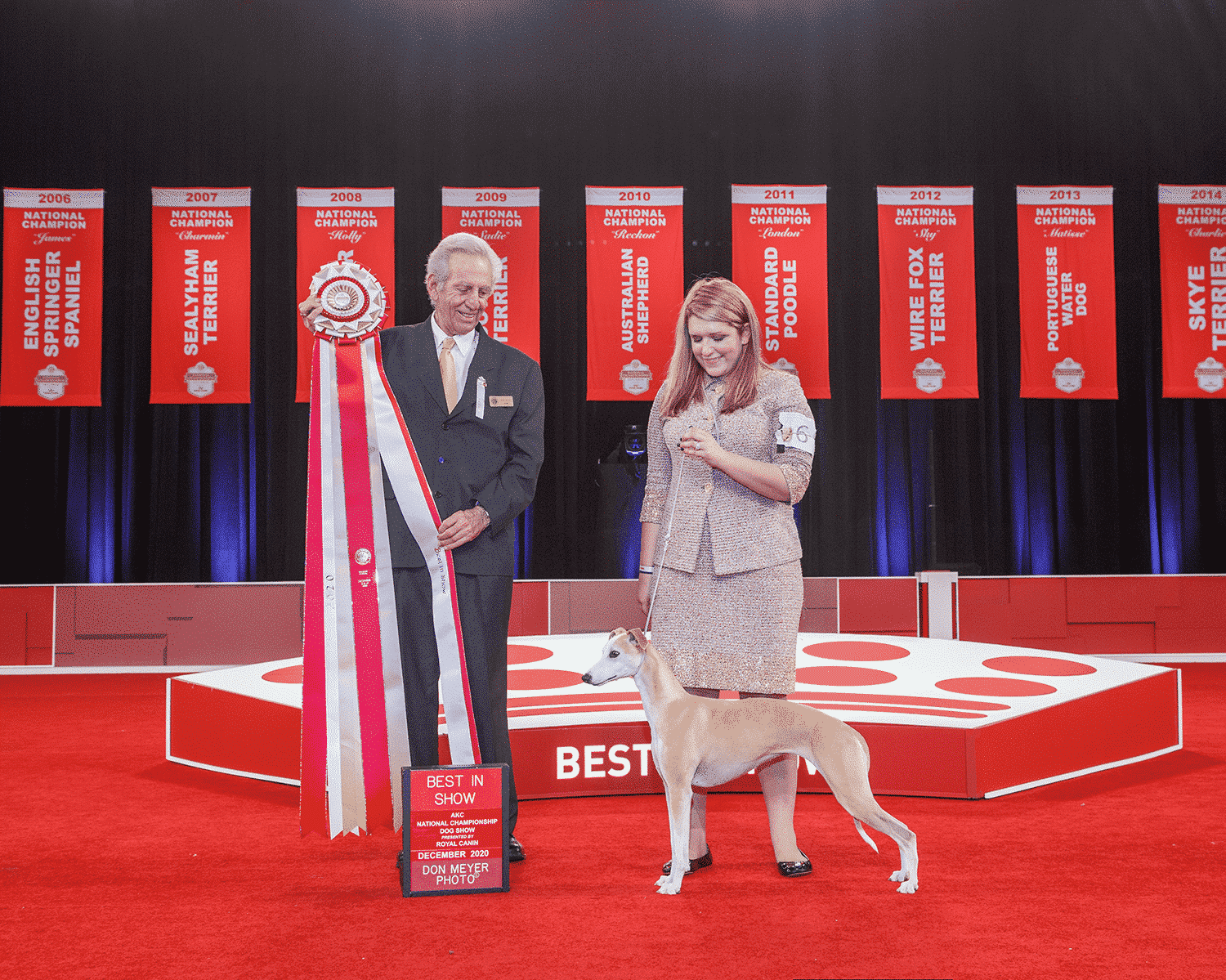
Whippet known as “Bourbon” triumphed over more than 4,000 competitors to earn the title of Best in Show at the 20th AKC National Championship
The tail of the Whippet is long and tapering. It reaches the inside of the hocks when extended downward. The tail is carried low when the dog is moving, with only a modest upward curve. Even when the dog is excited, the tail does not extend above the top of the back.
Standard Markings
A Note About Color: The Whippet is one of the most colorful of all dog breeds. This sighthound’s base coat color may be fawn, red, orange, tan, cream, black, or blue. Markings may appear as brindle with black stripes or brindle with bluish stripes, a black or blue mask, watermarking, sabling, and varying amounts of white. A dog may be all-white or only have white toes and/or tail tip. Ticking on white areas is acceptable; however, definite spotting and the Harlequin pattern are not. Additionally, black and tan, tricolor, and liver-colored coats are not seen on a purebred Whippet, and the merle pattern is indicative of a cross with another breed.
Coat Type
Smooth
The structure of the coat this breed carries.
Coat Length
Short
How long the breed's coat grows when kept in condition.
Adaptability Level
How easily a breed copes with changes in home, routine, noise and weather.
Mental Stimulation Needs
How much a breed needs a job, a puzzle or training to stay content.
The Whippet should be fed a high-quality dog food, purchased commercially or prepared at home with a veterinarian's supervision. The optimal diet would include a combination of high-quality protein, healthy fats, vitamins, minerals, and fiber from vegetables and berries.
An adult Whippet needs 1 to 1.5 cups of food per day, divided into two meals. The dog should be fed at regular intervals throughout the day. Appropriate food must be chosen based on the age, size, and activity level of each dog.
Some Whippets can be prone to obesity, so it’s essential not to overfeed. Always measure each dog’s food and monitor its weight periodically. Avoid giving too many treats and feeding table scraps or human food, which can be too high in fat.
It is important to feed the Whippet high-quality ingredients. Low-quality food can promotec health problems, from obesity to various skin issues.
Whippets are intelligent dogs and inherently happy to please. This often makes training a relatively straightforward process. Being sighthounds, however, they have a strong prey drive and can sometimes become distracted, especially if something catches their eye and tempts them to give chase. Hence, it's crucial to incorporate consistent, positive reinforcement techniques when working with a Whippet.
These dogs respond best to gentle, rewards-based training. Harsh methods or negative reinforcement can prove counterproductive, potentially leading to a fearful or skittish Whippet. Early socialization is essential for the breed, which will expose puppies to a variety of people, places, sounds, and experiences while they're still young. This may all but guarantee they’ll grow up to become well-adjusted adults.
Due to the breed’s prey drive, teaching a reliable recall is critical for these fast-moving hounds. While they love to run and chase, it's essential that they learn to return when called, especially in unfenced areas. It should be noted, however, that training a good recall can be at but impossible with a Whippet.
Additionally, Whippets can excel in various dog sports such as Lure Coursing and Agility. Engaging these dogs in such activities not only reinforces training, it also provides them with a productive outlet for their energy and their need to run.
Grooming Expectations
Although they are short-haired, Whippets do shed. Weekly brushing can aid in the shedding process and will also allow time to check for injuries, rashes, and signs of infection. Grooming should begin at a young age so that a puppy learns to look forward to the routine. A Whippet's teeth should be brushed at least two or three times a week to remove food and to prevent plaque buildup. To avoid gum disease and bad breath, daily brushing and/or dental sticks are generally recommended. A Whippet’s nails should be trimmed once or twice a month as needed. Short, neatly trimmed nails will keep the feet in good condition. Likewise, the ears of a Whippet should be checked periodically and cleaned with a veterinarian-approved cleanser.