Members
01/Overview
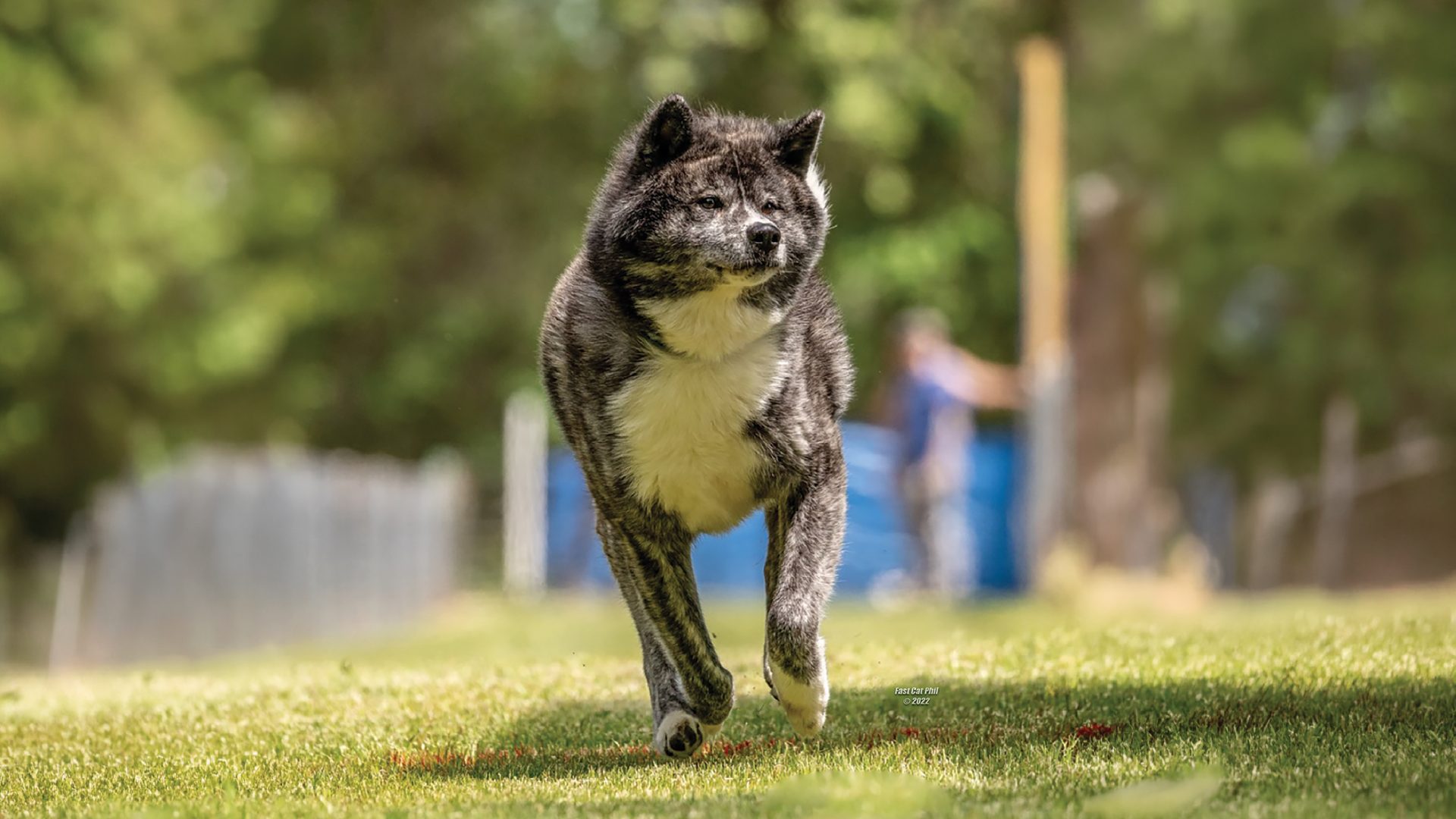
The Japanese Akitainu is a large, powerful spitz-type breed from Japan with a balanced build, erect ears, a thick double coat, and a curled tail carried over the back. Its appearance should combine strength with refinement and agility. The breed is intelligent, dignified, loyal, and often reserved with unfamiliar people.
Highlights
02/History
The Japanese Akitainu originated in Japan, in Akita Prefecture in the northern part of Honshu. Its ancestors were regional hunting dogs traditionally used to pursue large game such as wild boar, deer, and bear in the region’s mountains.
Dogs from the Akita region changed considerably during the 19th and early 20th centuries as other breeds were introduced through crossbreeding. Efforts were later made in Japan to restore the native spitz characteristics and preserve the traditional Japanese type.
In 1931, the Akita was designated a Natural Monument of Japan, reflecting the breed’s cultural importance. Preservation programs increasingly emphasized erect ears, a curled tail, balanced structure, and other traits associated with native Japanese dogs.
World War II severely reduced the breed’s population. After the war, Japanese breeders continued rebuilding the Akitainu while selecting away from traits introduced through earlier crosses. At the same time, Akitas exported to the United States developed along a different path, eventually producing a clear distinction between the Japanese Akitainu and the “American” Akita.
03/Appearance
The Japanese Akitainu typically stands 22.5 to 27.5 inches tall at the withers. Males generally weigh from 65 to 75 pounds, while females usually weigh between 55 and 65 pounds.
Skull: The Japanese Akitainu head is a slightly rounded octagon, with a broad, moderately flat skull that tapers toward the muzzle. The forehead is wide, with a distinct but not abrupt stop.
Expression: The expression is alert, spirited, and intense.
Eyes: The eyes are relatively small, dark brown, and triangular in shape, set slightly obliquely.
Ears: The ears are small, thick, triangular, and carried firmly erect. They are set well apart and incline slightly forward. The leather is thick and slightly cupped.
Muzzle: The muzzle is strong, moderately broad at the base, and tapers gradually toward the nose without appearing pointed. It is 40 percent of the total head length.
Nose: The nose is black; for white dogs faded black is acceptable but not preferred.
Bite: The jaws are strong, with a scissors bite and a full complement of strong, substantial, evenly aligned teeth..
The Japanese Akitainu is slightly longer than tall, with a balanced, powerful build and moderate bone. Males should appear clearly masculine and females feminine, without either appearing coarse or overly heavy.
The chest is deep, the back is strong and level, and the body is well muscled without losing agility. Overall, the breed combines strength, balance, and refinement in a distinctly Japanese spitz-type silhouette.
Texture: The Japanese Akitainu has a triple coat with an outer coat of coarse, straight guard hairs that stand off the body. The two inner coats are under coats. One is thicker and somewhat soft, generally matching the coat color. The second is closest to the skin and is generally thicker and wool-like in texture and can be a different color than the guard coat. Tail guard hairs are much longer and fuller. In the show ring, the Japanese Akitainu should be presented in a natural state without trimming or shaping. A short, flat coat is a fault, and a long coat is a disqualification.
Standard Colors
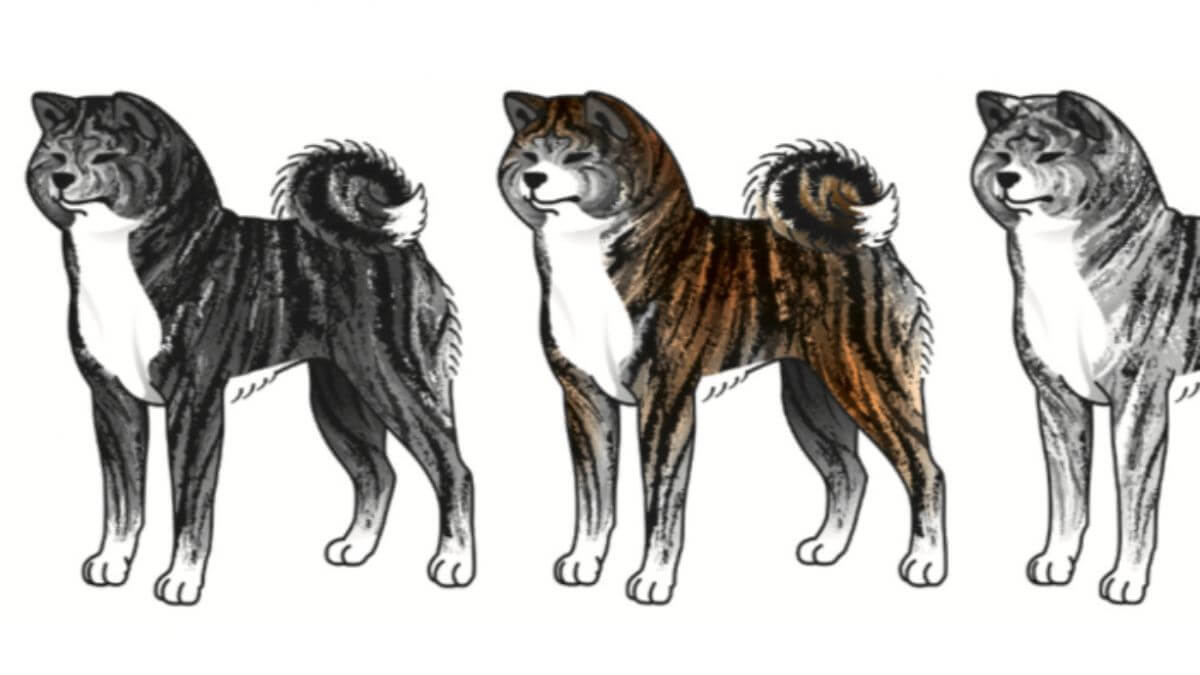
Standard Markings
04/Consider
The Japanese Akitainu is intelligent, dignified, independent, and strongly attached to its family. The breed needs early socialization, consistent training, regular exercise, and calm, confident handling.
Interaction With Family
The level of affection a breed typically shows towards family members and familiar individuals.
Good With Other Dogs
The innate friendliness of a dog towards other dogs can depend on its breed.
Good With Young Children
The degree to which a breed will typically be patient with young children.
Amount Of Shedding
How much hair a breed typically leaves behind on clothes, furniture and floors.
Frequency Of Grooming
How often a breed needs brushing, bathing or a professional trim to stay in condition.
Amount Of Drooling
How prone a breed is to drool, worth knowing before you keep a towel by the door.
Openness To Strangers
How openly a breed tends to greet new people, visitors and strangers.
Protective Nature
How likely a breed is to alert you to anything unfamiliar, and stand between you and it.
Playfulness Level
How enthusiastic a breed stays about games and play well past puppyhood.
Trainability Level
How readily a breed takes direction and works with you rather than around you.
Barking Level
How much a breed uses its voice, and how readily.
Energy Level
How much get-up-and-go a breed brings to an average day.
Health
The Japanese Akitainu is generally a hardy breed with a typical lifespan of about 10 to 13 years. Balanced nutrition, regular exercise, preventive veterinary care, and maintaining a healthy body condition can help support long-term health.
The Japanese Akitainu is dignified, loyal, intelligent, and independent. The breed tends to form strong bonds with its family but is often reserved with unfamiliar people.
Early socialization is important to help develop confidence and appropriate behavior around people, dogs, and new environments. Calm, consistent handling usually works best with this self-possessed breed.
Exercise Expectations
Around 45 to 60 minutes of exercise each day is suitable for many healthy adults, depending on age, fitness, and individual energy level. More strenuous activity should be introduced gradually. Off-leash activity should take place only in securely enclosed areas because the breed can be independent and individual dogs may have a strong prey drive.
Grooming Expectations
The Japanese Akitainu does best in a home that can provide structure, consistent training, regular exercise, and early socialization. The breed is generally calm indoors when its physical and mental needs are met.
A securely fenced yard can be helpful, but it does not replace daily walks and interaction. Careful introductions to unfamiliar dogs and people are important because the breed can be reserved and selective.
The Japanese Akitainu is best suited to people who appreciate an independent, dignified companion and are prepared to provide confident handling, regular exercise, and consistent boundaries.
05/Puppies
Japanese Akitainu puppies are intelligent, observant, and often independent from an early age. They benefit from early socialization, consistent routines, and calm, positive training to help them develop confidence and appropriate behavior.
A Japanese Akitainu puppy should have a regular schedule that includes meals, potty breaks, naps, play, and short training sessions. A crate or secure puppy area can help with housetraining and provide a safe place to rest.
Early socialization should include positive exposure to different people, well-mannered dogs, household sounds, surfaces, vehicles, and unfamiliar environments. Introductions should be gradual and controlled because the breed can be naturally reserved.
Training can begin with name response, recall, leash walking, house training, basic cues, and impulse control. Short, reward-based sessions usually work best.
Puppies should receive a complete and balanced diet formulated for growth, divided into several small meals each day. Exercise should focus on supervised play, short walks, and age-appropriate exploration rather than prolonged or strenuous activity.
Routine veterinary care, vaccinations, parasite prevention, nail trimming, ear checks, tooth brushing, and regular coat care should also begin during puppyhood.
06/Activities
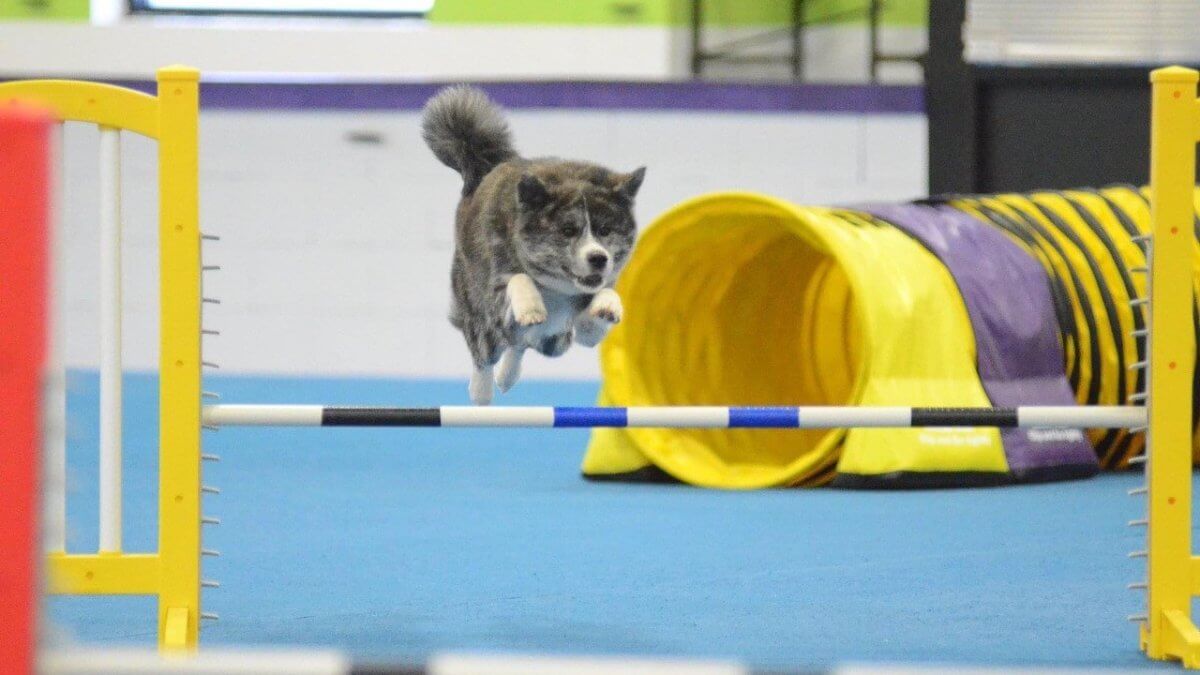
Japanese Akitainu are intelligent, athletic dogs that can enjoy activities involving control, movement, scenting, and teamwork with a handler. Here are some activities and dog sports in which the breed may participate:
Obedience: Japanese Akitainu can perform structured exercises that test focus, responsiveness, and control.
Rally: Rally Obedience combines obedience exercises with movement through a predetermined course and can provide both mental and physical stimulation.
Scent Work: The breed can use its sense of smell to locate specific odors in different environments.
Tracking: Japanese Akitainu may enjoy following scent trails and working through structured tracking exercises.
Fast CAT: Some dogs may enjoy short-distance lure chasing that allows them to use their speed and prey drive.
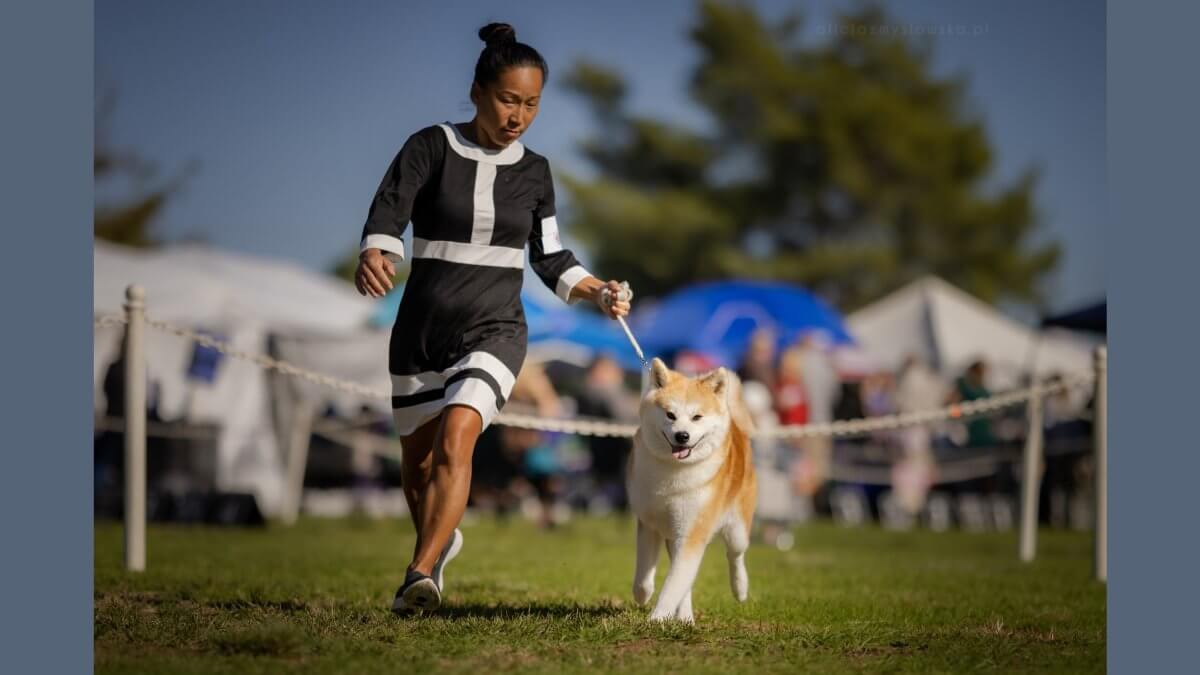
Conformation Shows: Japanese Akitainu compete in Conformation Shows, where judges evaluate each dog according to the Breed Standard.
Trick Dog: Trick training can provide mental stimulation and strengthen communication between the dog and handler.
Canine Good Citizen: The breed may participate in programs that evaluate everyday manners and appropriate behavior around people and other dogs.
Hiking and Exploring: Properly conditioned adults can enjoy walks, hikes, and controlled outdoor exploration.
Gallery
07/Standards
The Japanese Akitainu is recognized by the world’s leading registries and kennel organizations, which categorize the breed into a specific Group based on its unique characteristics. This breed is recognized worldwide under the following Group designations:
The ideal Japanese Akitainu is described by a Breed Standard that is approved by each of the world’s leading registries and kennel organizations. The Standards for this breed may be found in the following links:
08/Clubs
Japanese Akitainu clubs support breed education, responsible breeding practices, health initiatives, promotion of the Breed Standard, and participation in Conformation Shows and other dog-centered activities.
Japanese Akitainu Club of America: Founded in 1997, this national breed organization is dedicated to preserving and promoting the Japanese Akitainu throughout the United States.
09/Rescue
Because the Japanese Akitainu is relatively uncommon outside Japan, dedicated breed-specific rescue organizations are limited. Rescue assistance is often coordinated through the breed club, individual volunteers, or broader Akita rescue networks.
Japanese Akitainu Club of America: The AKC parent club for the breed can provide rescue contacts, rehoming guidance, or information about a Japanese Akitainu needing placement in the US.
10/Facts
Japanese Origin
The Japanese Akitainu was developed in Japan and is closely associated with Akita Prefecture in northern Honshu.
Historic Hunting Dog
Its ancestors were used to hunt large game, including wild boar, deer, and bear, in mountainous terrain.
Distinct from the American Akita
The Japanese Akitainu and the “American” Akita developed along different breeding paths and are now recognized as distinct breeds.
Strong Native Spitz Features
Erect ears, a curled tail, a triple coat, and a balanced, refined build are important characteristics of the Japanese Akitainu.
11/FAQ
Japanese Akitainu can make excellent pets for people who appreciate an independent, loyal, and dignified companion. They need early socialization, consistent training, and regular exercise.

Written by
Dan Sayers is the Executive Editor of SHOWSIGHT. He is a member of the World Dog Press Association and the Dog Writers Association of America, which recognized his illustrations in the award-winning Encyclopedia of K-9 Terminology. Dan is a longtime supporter of the sport of dogs and an advocate for the conservation of recognized breeds in all their forms and functions. He is a member of the Morris and Essex Kennel Club, and for 45 years, the Irish Water Spaniel Club of America where he serves as AKC Delegate, Archivist, and approved Breed Mentor. Dan breeds under the Quiet Storm prefix and has judged the IWSCA National Specialty Sweepstakes twice.
Official Standard of the Japanese Akitainu
History: The Japanese Akitainu’s history parallels that of the other five existing native Japanese breeds, shifting from the brink of extinction to becoming a natural monument, a cultural symbol and a source of national pride. In the mountainous terrain of the Tōhoku region, where Akita Prefecture is located, traditional village hunters called Matagi developed the Matagiinu (Matagi Dog), a slightly larger than medium-sized dog to hunt large game. The Matagiinu is considered the ancestor of the modern-day Akitanu. Due to civil unrest in the Ōdate area, noblemen began to use their hunting dogs to guard their homes and property. Across various historical periods (Edo to Meiji and Taisho), some Akitainu were crossed with larger western breeds to yield winning results in dog fight rings. By the Meiji era, there was a push to preserve all native Japanese breeds, but the Akitainu was deemed as the most impure due to its mixing with western breeds. In 1927, Akitainu Hozonkai (AKIHO), the world’s first and most influential Akitainu registry and organization, was established in the city of Ōdate, ushering in a concerted effort to restore and preserve the characteristics of the original native Akita dogs. The Akitainu was officially designated Tennen Kinen Butsu (Natural Monument) of Japan in 1931; however, continued restoration efforts were interrupted by WWII. It is believed that only 18 Akitainu existed by war’s end and some were said to have been crossbred to military German Shepherd Dogs while a few pure specimens remained in remote villages in northern Japan. Japanese Akitainu breeders again began to restore the breed away from the transitional mixed Akita dogs to their native origin. Finally, with fewer external interruptions, throughout the post-war decades, breeders made great strides restoring and preserving the Akitainu. With encouragement from Japan, the first overseas AKIHO club was officially established in 1970 in the US, and with encouragement from AKIHO North America, the Japanese Akitainu Club of America was formed in 1997.
General Appearance - The Japanese Akitainu is the largest of the native dog breeds of Japan and was originally used for hunting game in the mountainous terrain of the Tōhoku region where Akita Prefecture is located. The Japanese Akitainu is a large, sturdily built, well balanced Spitz-type dog whose head, triple coat, and curled tail are defining physical features of this unique breed. Males and females are clearly distinguishable from each other with males possessing a more robust body structure and masculine facial features, and females, a more refined body structure and feminine facial features. The moderately angulated Japanese Akitainu is exhibited naturally without trimming of whiskers, styling, or color enhancements.
Size Proportion, Substance - Males 25 to 27½ inches at the withers; females 22½ to 25 inches at the withers. The preferred size is the middle of the range for each sex. Weight at preferred size is approximately 65 to 75 pounds for males, 55 to 65 pounds for females. Males have a height to length ratio of 10 to 11; females have a slightly longer body length. Bone is moderate. Disqualification – Males under 25 inches; females under 22½ inches.
Head - Expression is alert, spirited, and intense. The shape of the head is a slightly rounded octagon when viewed from the front. The fullness of the cheeks, as well as the coat on the cheeks and neck, support this shape. Eyes are dark brown, deep-set, almond-shaped, relatively small, and slightly raised at the outside corners. Eye rims are thick and black. The eyes should not appear too close together or too far apart. Faults – Round eyes. Light colored irises. Light colored eye rims. Droopy or loose eye rims. Ears are wide-set, equilaterally triangular in shape, pricked, rather small in size, and somewhat rounded at the tip. The leather is thick and slightly cupped. Ears are angled forward off the back of the head and face. From the profile view, the forward tilting ears are at a 75 to 90 degree angle to a line drawn along the bridge of the muzzle. Disqualification – Dropped ear or ears. Skull size is moderate and in proportion to the body. The forehead is broad and flat, preferably with a distinct furrow extending from the stop to the top of the skull. Stop is moderate. Fault – Wrinkled or loose skin on the forehead. Muzzle is round, full, moderate in length with a broad base tapering towards the nose. Muzzle length is 40 percent of the total head length from occiput to nose tip. It is preferred that whiskers remain intact. Fault – Overly narrow or heavy muzzle. Lips are tight and black. Fault – Loose, saggy lips. Nose is black. For white dogs, faded black and snow noses are acceptable. Black is always preferred. Disqualification – Butterfly nose. Bite is scissors, with a full complement of strong, substantial, evenly aligned teeth. Fault – Missing teeth, unhealthy dentition. Tongue is pink. Fault – Black or spotted tongue. Disqualification – Overshot or undershot bite.
Neck, Topline, Body - Neck is short, thick, arched, and is in proper angle and in balance with the head. Fault – Dewlap or loose skin on neck. Topline is straight and level to the base of the tail. Body is well muscled without the appearance of looseness or coarseness. Chest is well-developed reaching to the elbow; width is neither too narrow, nor too broad; depth measured from the withers to the lowest point of the chest is approximately 50 percent of the height of the dog at the withers. Ribs are moderately sprung. Tuck-up is tight and well-drawn. Back is strong and level. Loins are muscular. Tail – Tail is high-set with a strong, thick root well-curled over the back. Size of curled tail should be in balance with the head. The ideal tail curl forms a nearly complete circle. When let down, the tip of the guard hairs on the tail reaches almost to the hock or extends past. The following tail curls are acceptable: single and double curl. The tail may lay on top of the back or on either side. Fault – Short tail. Disqualification – Sickle tail or uncurled tail (while dog is in motion, not at rest).
Forequarters - Shoulders are moderately sloped forward and nicely developed. Adequate or moderate bone is essential. Elbows are set close to the body and turn neither in nor out. Forelegs and feet are moderately spaced, straight, and parallel. Pasterns are slightly slanted with 15 degrees being ideal. Presence of front dew claws preferred, but not necessary. Feet are round, tight, well-knuckled, and have a firm grip, often described as cat-like. Individual toes are similar in length. The nails should be short and strong. Pads are thick. Fault – Flat or splayed feet.
Hindquarters - Angulation of the hindquarters is moderate. Hind legs are thick and well developed, with a powerful grip, thrust. and stance. Upper thighs are well developed. The hocks are straight when viewed from the side and rear. Feet as in forequarters. Fault – Cow or bow hocks.
Coat - Triple coated with the outer coat consisting of coarse, straight guard hairs that stand off the body. The two inner coats are under coats. One is thicker and somewhat soft, generally matching the coat color. The second is closest to the skin and is generally thicker and wool-like in texture and can be a different color than the guard coat. Tail guard hairs are much longer and fuller. The Japanese Akitainu should be presented in a natural state without trimming or shaping. Fault – Short, flat coat. Disqualification – Long coat.
Color - Coat color is as specified herein, with the three allowed colors given equal consideration – red, brindle (of varying colors) and white. All colors are rich, clear, and bright. Red and brindle coats must possess urajiro (light cream or white underside shading). For reds, the color should be vivid and rich. The white on the face should not be excessive. Omotejiro is the white or cream shading found on the sides of the muzzle and cheeks. Urajiro may appear on the underside of the jaw, neck, abdomen and tail, and on the inside of the legs; the red on the legs will fade in gradient to the white. A white-tipped tail is preferred. Serious Fault – Black saddle. For brindles, the pattern is defined as clearly marked dark fine streaks or stripes laid over a lighter background color. A brindle coat is identified as red brindle (of varying shades), black brindle, or a subtype called Shimofuri (grey/silver). Brindles may be self-masked or possess a white blaze that extends up the muzzle. The preferred brindle possesses roppaku (six points of white markings) which may be of varying degrees, on the muzzle, four paws, and tip of the tail. Urajiro for brindles may appear on the underside of the jaw, neck, abdomen, tail, and on the inside of the legs. For reds and brindles – Faults – White blaze that extends from the muzzle to the back of the head (hachiware). Excessive ticking on legs or muzzle. Serious Fault – Wide white collar marking extending completely around the neck. Disqualification - Pinto markings. Hachiware blaze that connects to a complete white collar. For whites, color should be as bright as possible. Fault – Biscuit coloring on the ears, rear legs, back, shoulders and tail on a white dog. Disqualification for all colors– Albinism. Black mask.
Gait - Conveys stamina through brisk, powerful, and agile movement. Dogs of this breed take efficient strides, with moderate reach and drive as the back remains level.
Temperament - The Japanese Akitainu is an alert, independent, dignified, and self-confident breed. They are loyal and protective of their family members. They can be reserved and aloof around non-family members, especially strangers, and some may be intolerant of other dogs, particularly dogs of the same sex. The Japanese Akitainu’s outward appearance reflects its inner spirit of calm, quiet strength, and courage. Disqualification – Extreme shyness or aggressiveness.
Summary - The most important breed characteristics of the Japanese Akitainu are: proper head, triple coat, curled tail, moderate angulation, moderate bone, well-balanced proportions, and confident disposition. Any appearance of excessive or inadequate bone or weight that would hinder the original breed function for mountain hunting should be penalized. Form, color, movement, and temperament must all be in harmony.
Disqualifications Males under 25 inches; Females under 22½ inches. Dropped ear or ears. Butterfly nose. Overshot or undershot bite. Sickle tail or uncurled tail (when in motion). Long coat. For reds and brindles - Pinto markings, Hachiware blaze that connects to a complete white collar. For all colors – Albinism, Black mask. Extreme shyness or aggressiveness.
Approved April 11, 2022
Effective January 1, 2023


Meet the Breeders
Interview With Christine Womack, Breeder of Ichigo Japanese Akitainu Kennels 1. Please tell us a little bit about yourself. Where do you live? How many years in dogs? How many years as a breeder? What is your kennel name? Christine Womack: We live in Western New York State and have been involved with dogs—specifically the […]
Meet the Breeders
Steven and Judy Takamatsu of Junketsu Japanese Akitainu share insights on breed type, cultural preservation, health testing, and the sport.

Meet the Breeders
Interview with Amber Eisfeld of Hokkyokusei Kennels on preserving Japanese Akitainu type, breeding ethics, and versatility in sport.


Meet the Breeders
Christine & Robert Womack is the breeder behind the Ichigo. Read about the kennel’s beginnings, the champions, the puppies, and much more!

Meet the Breeders
Amber Eisfeld is the breeder behind the Hokkyokusei Kennels. Read about the kennel’s beginnings, the champions, the puppies, and much more!

Meet the Breeders
Kevin Carroll is the breeder behind Yakumo Sou Japanese Akitainus. Read about the kennel’s beginnings, puppies, and much more!

Dog Shows
Dive deeper into the Japanese Akitainu breed with insights on head characteristics, brindle patterns, and the unique triple coat.
Dog Sports
Explore the unique traits of the Japanese Akitainu, from their independent nature to their suitability for various dog sports.
All About Judging
Explore the journey of the Japanese Akitainu in AKC, learn about their unique characteristics, breed judging, and restoration efforts.
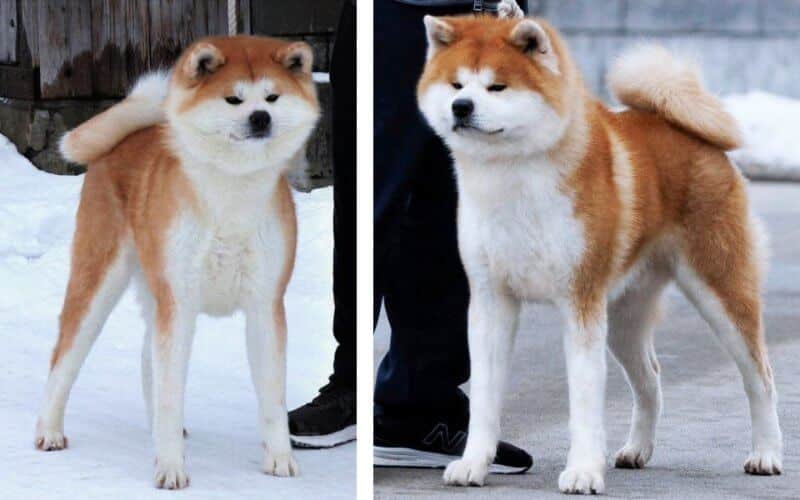
The tail is high-set with a strong, thick root well-curled over the back. The size of the curled tail should be in balance with the head. The ideal tail curl forms a nearly complete circle. When let down, the tip of the guard hairs on the tail reaches almost to the hock or extends past. The following tail curls are acceptable: single and double curl. The tail may lay on top of the back or on either side.
A Note About Color: All colors are rich, clear, and bright. Red and brindle coats must possess urajiro (light cream or white underside shading). For reds, the color should be vivid and rich. The white on the face should not be excessive. Omotejiro is the white or cream shading found on the sides of the muzzle and cheeks. Urajiro may appear on the underside of the jaw, neck, abdomen and tail, and on the inside of the legs; the red on the legs will fade in gradient to the white. A white-tipped tail is preferred. Serious Fault – Black saddle. For brindles, the pattern is defined as clearly marked dark fine streaks or stripes laid over a lighter background color. A brindle coat is identified as red brindle (of varying shades), black brindle, or a subtype called Shimofuri (grey/silver). Brindles may be self-masked or possess a white blaze that extends up the muzzle. The preferred brindle possesses roppaku (six points of white markings) which may be of varying degrees, on the muzzle, four paws, and tip of the tail. Urajiro for brindles may appear on the underside of the jaw, neck, abdomen, tail, and on the inside of the legs.
For reds and brindles
Faults – White blaze that extends from the muzzle to the back of the head (hachiware). Excessive ticking on legs or muzzle. Serious Fault – Wide white collar marking extending completely around the neck. Disqualification - Pinto markings. Hachiware blaze that connects to a complete white collar.
For whites, color should be as bright as possible. Fault – Biscuit coloring on the ears, rear legs, back, shoulders, and tail on a white dog.
Disqualification for all colors – Albinism. Black mask.
Coat Type
Double
The structure of the coat this breed carries.
Coat Length
Medium
How long the breed's coat grows when kept in condition.
Adaptability Level
How easily a breed copes with changes in home, routine, noise and weather.
Mental Stimulation Needs
How much a breed needs a job, a puzzle or training to stay content.
A Japanese Akitainu should receive a complete and balanced diet appropriate for its age, activity level, and body condition. Portions should be measured carefully to help maintain a lean, healthy weight.
Most adults do well with two meals per day, while puppies generally need several smaller meals. Treats can be useful during training sessions but should remain a limited part of the daily calorie intake.
Fresh water should always be available, especially after periods of exercise and outdoor activity.
The Japanese Akitainu is intelligent and capable of learning quickly, but the breed can also be independent and strong-willed. Training should be consistent, patient, and based on positive reinforcement.
Early training should focus on recall, leash manners, basic cues, impulse control, and calm behavior around unfamiliar people and dogs. Short sessions with clear expectations usually work best.
Because the breed can be reserved by nature and may not tolerate rough handling, training should always remain respectful and controlled.
Bathing should be done only as needed. The triple coat should never be shaved because it provides supreme insulation and protection. Nails should be trimmed regularly, ears should be checked for debris or irritation, and teeth should be brushed routinely.