Members
01/Overview
The Lhasa Apso is a small, sturdy Tibetan breed developed as a companion and indoor sentinel. Known for its long, dense coat, alert expression, and confident character, the breed is affectionate with familiar people but often reserved with strangers.
Highlights
02/History
The Lhasa Apso originated in Tibet, where the breed developed over many centuries in monasteries, palaces, and private homes. Its name refers to Lhasa, the traditional capital of Tibet, while “Apso” has been associated with the breed’s long, woolly coat.
Lhasa Apsos were kept primarily as indoor sentinels and companions. Their sharp hearing, alert nature, and tendency to distrust unfamiliar people made them useful for announcing visitors or unusual activity. Larger Tibetan Mastiff-type dogs often guarded outdoor entrances, while the smaller Lhasa Apso remained inside buildings.
The breed held cultural and spiritual importance in Tibet. Lhasa Apsos were closely associated with Buddhist monasteries and were sometimes presented as gifts to respected visitors, officials, and foreign dignitaries. They were not commonly sold, and receiving one as a gift was traditionally regarded as a sign of favor and good fortune.
Dogs from Tibet began reaching the United Kingdom during the nineteenth and early twentieth centuries. Early examples were sometimes confused with other long-coated Tibetan breeds, including the Tibetan Terrier. Greater separation between the breeds developed as imported dogs were studied and more distinct Breed Standards were established.
The Lhasa Apso reached the United States during the 1930s. The American Kennel Club recognized the breed in 1935 and initially classified it in the Terrier Group. In 1959, the breed was moved to the Non-Sporting Group where it remains today.
The Lhasa Apso Club of America was established in 1959 and serves as the breed’s AKC parent club. The organization supports breed education, health research, responsible breeding, and preservation of the breed-specific characteristics.
The Fédération Cynologique Internationale recognizes the Lhasa Apso as a Tibetan breed and places it in Group 9, Companion and Toy Dogs. The Royal Kennel Club recognizes the breed in the Utility Group.
03/Appearance
An adult male Lhasa Apso stands approximately 10 to 11 inches tall at the withers, while a mature female is slightly shorter. The breed typically weighs between 12 and 18 pounds.
Skull: The Lhasa Apso has a moderately narrow skull that falls away behind the eyes. It is neither flat nor domed, and the stop is moderate.
Expression: The expression is alert, thoughtful, and watchful, reflecting the breed’s history as an indoor sentinel.
Eyes: The eyes are dark brown, medium in size, oval, and set toward the front of the head. They should be neither prominent nor deeply set.
Ears: The ears are pendant and heavily feathered, hanging close to the sides of the head.
Muzzle: The muzzle is straight and measures approximately one-third of the distance from the nose to the back of the skull. It should not appear square.
Nose: The nose is black.
Bite: The preferred bite is a reverse scissors bite, with the lower incisors positioned just in front of the upper incisors. The teeth should be set in a broad, straight line.
The Lhasa Apso is longer than tall, with the distance from the point of the shoulder to the point of the buttocks greater than the height at the withers. The body is compact and well balanced, with a level topline and a sturdy frame.
The breed has sufficient bone and substance for its size without appearing coarse or heavy. Its long coat should not conceal the underlying structure or interfere with sound movement.
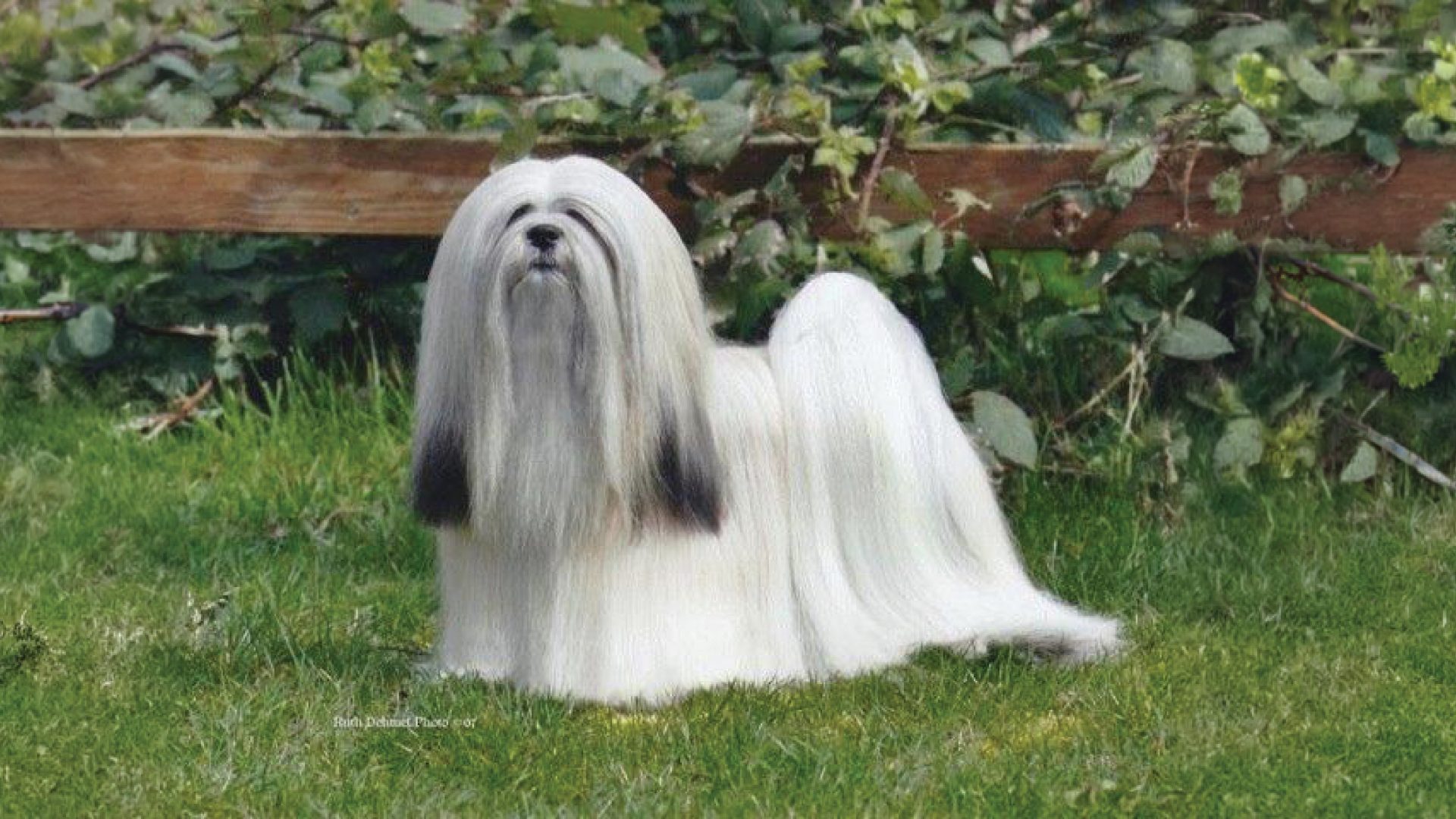
Texture: The Lhasa Apso has a heavy, straight, hard-textured outer coat with a moderate undercoat. The hair is long and dense, but it should not feel woolly or silky. There is a “headfall” of hair and feathering on the legs and feet. The coat on the body is parted from head to tail and falls naturally on both sides.
Standard Colors
04/Consider
The Lhasa Apso is an intelligent and independent companion with a strong instinct to watch over its surroundings. Anyone considering the breed should be prepared for regular coat care, consistent training, moderate daily exercise, and a dog that may be reserved with unfamiliar people.
Interaction With Family
The level of affection a breed typically shows towards family members and familiar individuals.
Good With Other Dogs
The innate friendliness of a dog towards other dogs can depend on its breed.
Good With Young Children
The degree to which a breed will typically be patient with young children.
Amount Of Shedding
How much hair a breed typically leaves behind on clothes, furniture and floors.
Frequency Of Grooming
How often a breed needs brushing, bathing or a professional trim to stay in condition.
Amount Of Drooling
How prone a breed is to drool, worth knowing before you keep a towel by the door.
Openness To Strangers
How openly a breed tends to greet new people, visitors and strangers.
Protective Nature
How likely a breed is to alert you to anything unfamiliar, and stand between you and it.
Playfulness Level
How enthusiastic a breed stays about games and play well past puppyhood.
Trainability Level
How readily a breed takes direction and works with you rather than around you.
Barking Level
How much a breed uses its voice, and how readily.
Energy Level
How much get-up-and-go a breed brings to an average day.
Health
The Lhasa Apso is generally considered a sturdy and long-lived breed. A Lhasa Apso typically has a lifespan of 12 to 15 years. Balanced nutrition, preventive veterinary care, regular exercise, dental hygiene, and maintenance of a healthy weight can support the dog throughout life.
The Lhasa Apso is intelligent, independent, and deeply devoted to familiar people. The breed often carries itself with confidence and may appear reserved or suspicious around strangers.
A Lhasa Apso can suit a first-time caretaker who understands that the breed is not naturally eager to obey every request. Consistent boundaries, patient training, and respect for the dog’s independent nature are important.
Lhasa Apsos can live successfully with children and other dogs when properly introduced, although some individuals prefer calm households and may not tolerate rough handling. Because the breed was developed as an indoor sentinel, it is naturally watchful and may need time to accept unfamiliar visitors.
The Lhasa Apso forms close bonds with its family but is often more self-contained than many other companion breeds. Some dogs tolerate short periods alone reasonably well, though regular interaction and daily activity are still important.
Exercise Expectations
A healthy adult generally benefits from about 30 to 45 minutes of activity each day. The breed does not usually require intense exercise, but regular movement and mental stimulation remain important. Puzzle toys, Scent Work games, and Trick Dog training can provide useful mental engagement.
Grooming Expectations
The Lhasa Apso can adapt well to apartment living when given daily exercise, regular training, and rewarding companionship. Its small size is convenient, but alert barking may need to be managed in buildings with close neighbors.
The breed generally tolerates cool weather well because of its dense coat. In hot and humid conditions, exercise should take place during cooler parts of the day, and the dog should always have access to shade and fresh water.
A Lhasa Apso usually does best in a home that respects its independent personality and provides a predictable routine. Regular grooming, patient training, and calm handling are especially important for this watchful companion.
05/Puppies
Lhasa Apso puppies are curious, confident, and quick to develop their own opinions. Early routines, positive socialization, patient training, and regular grooming help each puppy grow into a well-mannered and adaptable adult.
A Lhasa Apso puppy benefits from a predictable schedule that includes regular meals, potty breaks, sleep, play, training, and quiet time. A crate or secure puppy area can provide a safe place to rest and support housetraining when direct supervision is not possible.
Early socialization should introduce the puppy to different people, well-mannered dogs, household sounds, surfaces, vehicles, and unfamiliar environments. These experiences should remain calm, positive, and appropriate for the puppy’s age.
Training can begin as soon as the puppy arrives in its new home. Short sessions can introduce name response, recall, leash walking, basic manners, and calm behavior around visitors.
A Lhasa Apso puppy should receive a complete and balanced diet formulated for growth. Exercise should focus on supervised play, short walks, and gentle exploration rather than forced running or repetitive jumping.
Grooming should begin early so that the puppy becomes comfortable with brushing, combing, bathing, nail trimming, ear checks, tooth brushing, and handling around the face and feet. Regular veterinary visits are also important during the puppy’s first year.
06/Activities
Lhasa Apsos are intelligent, alert, and capable dogs that can enjoy activities requiring focus, coordination, and cooperation with a handler. Here are some of the dog sports and activities in which Lhasa Apsos can participate:
Obedience: Lhasa Apsos can demonstrate learned exercises, attention, and responsiveness in Obedience Trials.
Rally: Rally combines a course of numbered stations with varied exercises that keep training interesting for this independent breed.
Agility: Lhasa Apsos can use their balance, coordination, and quick movement while navigating obstacle courses.
Scent Work: The Lhasa searches for specific odors hidden in containers, indoor spaces, outdoor areas, or vehicles.
Tracking: In Tracking, the dog follows a scent trail across different types of terrain using concentration and persistence.
Conformation Shows: Lhasa Apsos compete in Conformation Shows, where judges evaluate each dog according to the Breed Standard, evaluating structure, movement, coat, temperament, and overall breed type.
Trick Dog: Trick training provides mental stimulation and encourages communication between the dog and handler.
Therapy Work: A calm and well-socialized Lhasa may visit hospitals, schools, assisted living facilities, and other settings to provide comfort to patients and residents.
Canine Good Citizen: Lhasa Apsos may participate in programs that evaluate everyday manners, social behavior, and reliability around people and other dogs.
Gallery
07/Standards
The Lhasa Apso is recognized by the world’s leading registries and kennel organizations, which categorize the breed into a specific Group based on its unique characteristics. This breed is recognized worldwide under the following Group designations:
The ideal Lhasa Apso is described by a Breed Standard that is approved by each of the world’s leading registries and kennel organizations. The Standards for this breed may be found in the following links:
08/Clubs
Lhasa Apso clubs support breed education, responsible breeding, health initiatives, rescue work, and participation in Conformation shows and Companion events.
American Lhasa Apso Club: Founded in 1959, this is the national breed club for the Lhasa Apso in the United States and the breed’s AKC parent club.
09/Rescue
Breed-specific rescue organizations help Lhasa Apsos that have been surrendered, abandoned, or deposited in shelters. These groups may provide foster care, veterinary treatment, behavioral evaluation, and placement with an appropriate adoptive family.
Lhasa Happy Homes Rescue: Based in Southern California, this organization rescues Lhasa Apsos, Shih Tzus, and other small companion breeds. Its primary work is centered in California, although adoption arrangements may occasionally extend beyond the region.
American Lhasa Apso Club Rescue Resources: The national breed club may help connect people with rescue volunteers, regional contacts, or Lhasa Apsos needing placement in the United States.
Local shelters and broader animal rescue organizations may also receive a Lhasa Apso or Lhasa mix. Adoption databases, nearby shelters, and breed clubs can provide additional information about any dog currently needing a home.
10/Facts
Tibetan Sentinel
The Lhasa Apso was developed as an indoor watchdog in Tibetan monasteries, palaces, and homes, often working in tandem with larger guard dogs stationed outside.
Bark Lion Sentinel Dog
In Tibet, the breed has been associated with the name Abso Seng Kye, commonly translated as “Bark Lion Sentinel Dog.”
A Highly Valued Gift
Lhasa Apsos were traditionally presented as gifts rather than sold. Receiving one was regarded as a sign of honor and good fortune.
Dalai Lama Connection
The 13th Dalai Lama gifted Lhasa Apsos to American traveler C. Suydam Cutting during the 1930s, helping to establish the breed in the United States.
Weather-Resistant Coat
The breed’s heavy double coat, headfall, and feathered feet developed in response to Tibet’s cold climate, strong winds, and rugged terrain.
An “Old Soul” Expression
The Lhasa Apso is known for an alert and thoughtful expression that breed enthusiasts often describe as resembling an “old soul.”
11/FAQ
Lhasa Apsos can make excellent pets for people who appreciate an intelligent, independent, and devoted companion. They do best with patient training, regular grooming, and respectful handling.
Official Standard for the Lhasa Apso
General Appearance: Reflecting his Tibetan heritage as an indoor sentinel on the Tibetan Plateau, north of the Himalayan Mountains, the Lhasa Apso is a small, sturdy, well-balanced rectangular dog of moderation possessing a level topline and a tail carried well over the back. There should be neither exaggeration of any body parts nor hint of massive bone or body. A distinguishing characteristic of the Lhasa Apso is its heavy, dense, double coat that is parted in the middle from head to tail. In addition, the Lhasa Apso has good headfall and well-feathered feet and legs as these features protected this small dog against extreme temperatures and the rough terrain of his native land. A Lhasa Apso is subject to the same requirement of soundness recommended for all breeds. Structural faults are undesirable, regardless of whether or not such faults are specifically mentioned in the standard. Any deviation from the ideal described in the standard should be penalized to the extent of the deviation.
Size: Variable, ideally between 10 and 11 inches at the shoulder. Bitches may or may not be slightly smaller but should possess feminine characteristics which easily distinguish females from males.
Head: Expression - Alert, thoughtful, intelligent. Heavy head furnishings enhance the proper Lhasa expression with good fall over eyes, good whiskers, and beard. Full depth of dark pigmentation on eye rims and lips is essential to achieve the desired softness of expression. Eyes - Dark brown, almond shaped. Round full eyes and very small sunken eyes are undesirable. Ears - Pendant, set slightly above eye level and carried close to the cheeks, heavily feathered. Skull -Narrow, falling away behind the eyes in a marked degree, not quite flat, but not domed or apple-shaped. Stop - Moderate. Muzzle - Straight foreface of fair length with the length from tip of nose to eye to be roughly one-third the total length from nose to back of skull. A square muzzle is objectionable. Nose – Black. Bite - The preferred bite is either level or slightly undershot.
Neck, Topline, Body: Neck - Moderate in length, blending smoothly into the shoulders. Body – Rectangular when viewed in profile, with the length from point of shoulder to point of buttocks being longer than the height at withers. Chest of good depth extending to or slightly below the elbow. Prosternum well developed. Well ribbed up with the ribs extending well back towards hindquarters, strong loin, well-developed quarters and thighs. Topline - level from withers to croup, whether standing or moving. Tail - Well feathered and set sufficiently high to enable the tail to be carried well over the back in a curl lying to the side; there may be a kink at the end. Low carriage of stern is a serious fault. This means that when the Lhasa is moving, the tail is carried well over the back. A dropped tail while standing is not to be penalized.
Forequarters: Shoulders - Well laid back. Elbows close to the body. Shoulder blade and upper arm are ideally equal in length (i.e., length from point of withers to point of shoulder and point of shoulder to point of elbow should be equal.) Viewed from the front, the rib cage is oval in shape. Legs - Heavily furnished with hair. The legs are straight from elbow to pastern. The vertical distance from the withers to the elbow equals the distance from the elbows to the ground. Pasterns - Strong, perpendicular. Dew claws - may be removed. Feet - Well feathered/heavily furnished, should be round and catlike, with good pads. The hair may be trimmed for neatness.
Hindquarters: Well-developed rear assembly. Angulation of hindquarters should be in balance with forequarters to provide equal reach and drive. Legs - Heavily furnished with hair. Hocks -Well let down, set slightly behind the point of buttocks, perpendicular to the ground and turn neither in nor out. Feet – Same as forefeet.
Coat: Double coated, heavy, straight, hard, dense, not woolly or silky, of good length.
Color: All colors equally acceptable.
Gait: The Lhasa Apso gait is smooth and effortless with good front reach and equally strong rear drive without any hint of wasted action. There is no tendency towards hackney, exaggerated lift or rolling. The rear legs reach under the body and push out well behind, carrying the body forward in balance with the front. Going away, the pads of the rear feet give evidence of good follow through, without exaggerated kickup. The legs move parallel coming and going with a tendency to converge to a centerline as the dog increases speed. The topline is level and the tail is carried well over the back and may drape to the side. A Lhasa is shown at its own natural speed, neither raced nor strung-up. It is unacceptable to reward a Lhasa that consistently moves with its tail down.
Temperament/Character: Alert and sensitive to their surroundings, Lhasas are usually gay and assertive but may be chary/aloof with strangers. Their regal attitude gives them an air of seriousness. The breed is extremely intelligent, charming and loyal.
Approved August 13th, 2019
Effective October 1st, 2019


Meet the Judges
Ekarat Sangkunakup reflects on judging Non-Sporting breeds at Westminster 2026, highlighting entry quality, Breed winners, and Group results.

American Kennel Club (AKC)
2025 AKC Breeder of the Year Susan Giles discusses selection, preservation, and a lifelong commitment to the Lhasa Apso breed.


AKC National Championship (Orlando)
Pamela Bruce reflects on judging the Bred-By-Exhibitor Non-Sporting Group at the AKC National Championship and the role of breeders.
Dog Sports
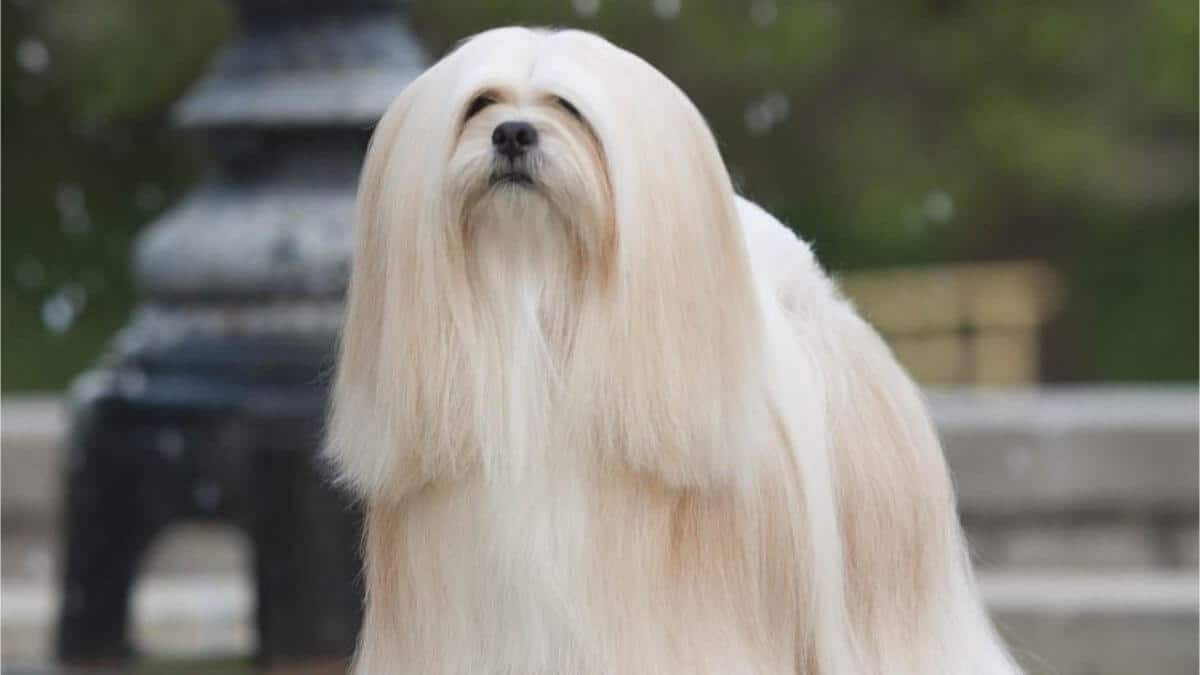
Discover the versatile Lhasa Apso: loyal, intelligent, adaptable, and perfect for any lifestyle, from city to countryside.

All About Judging
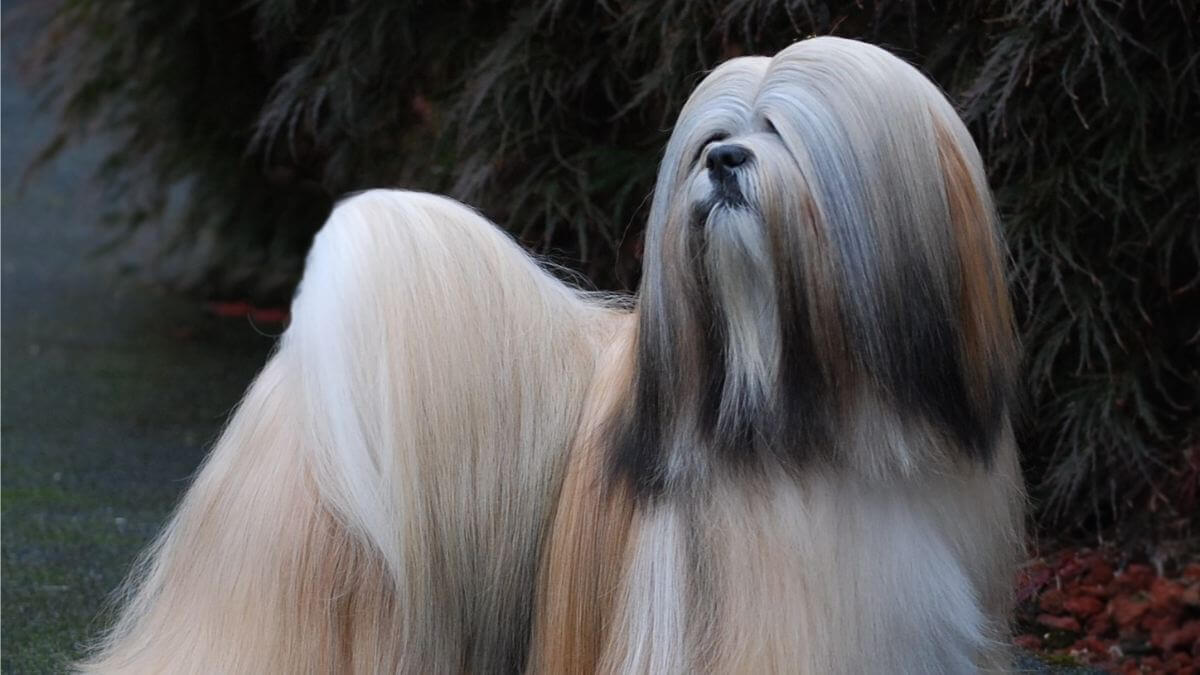
Understanding Lhasa Apsos: Why hands-on examination is crucial for judging these sturdy, well-balanced, mountain dogs.

Agility
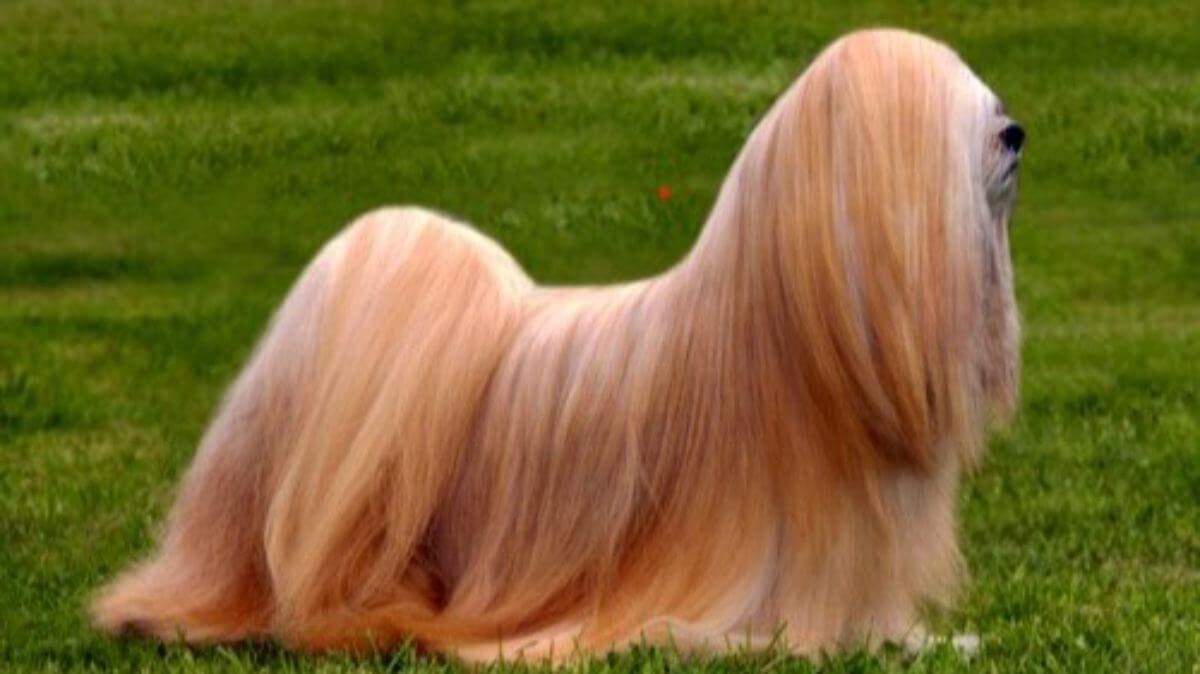
Explore the joys of training Tibetan breeds like Lhasa Apsos in various dog sports, from Agility to Obedience and Rally.
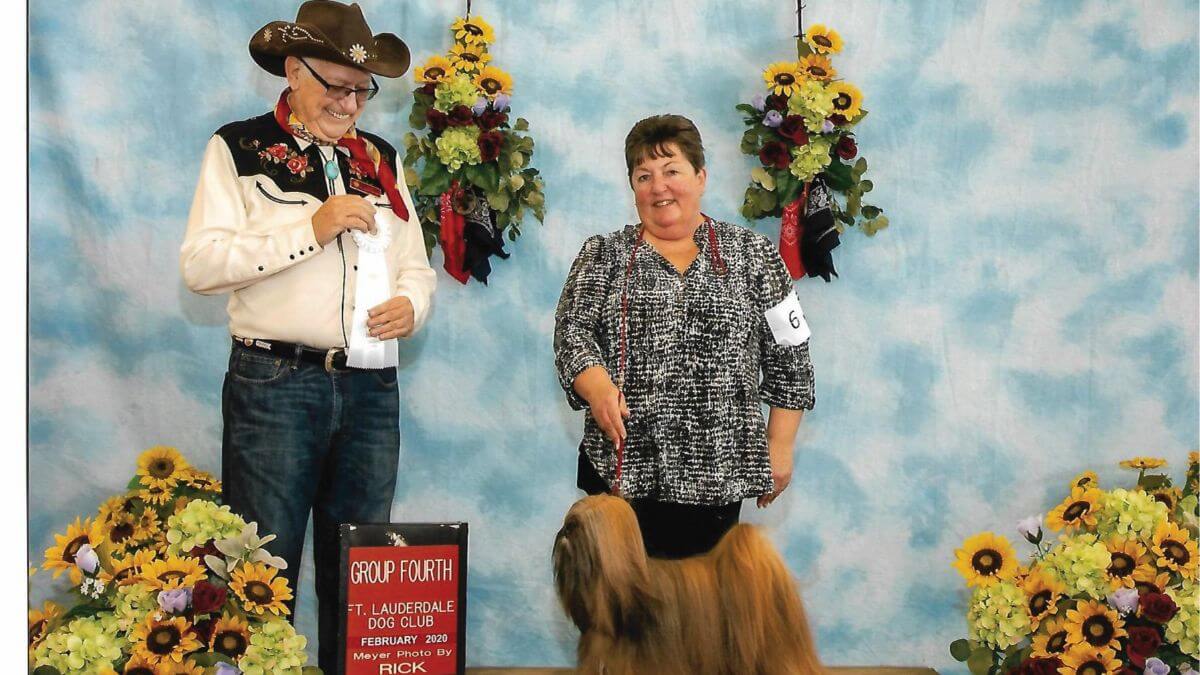
Meet the Breeders
Interview with Carla and Nick Varney, breeders of Hi Tide Lhasa Apsos. Read about the kennel’s beginnings, the puppies, and more.
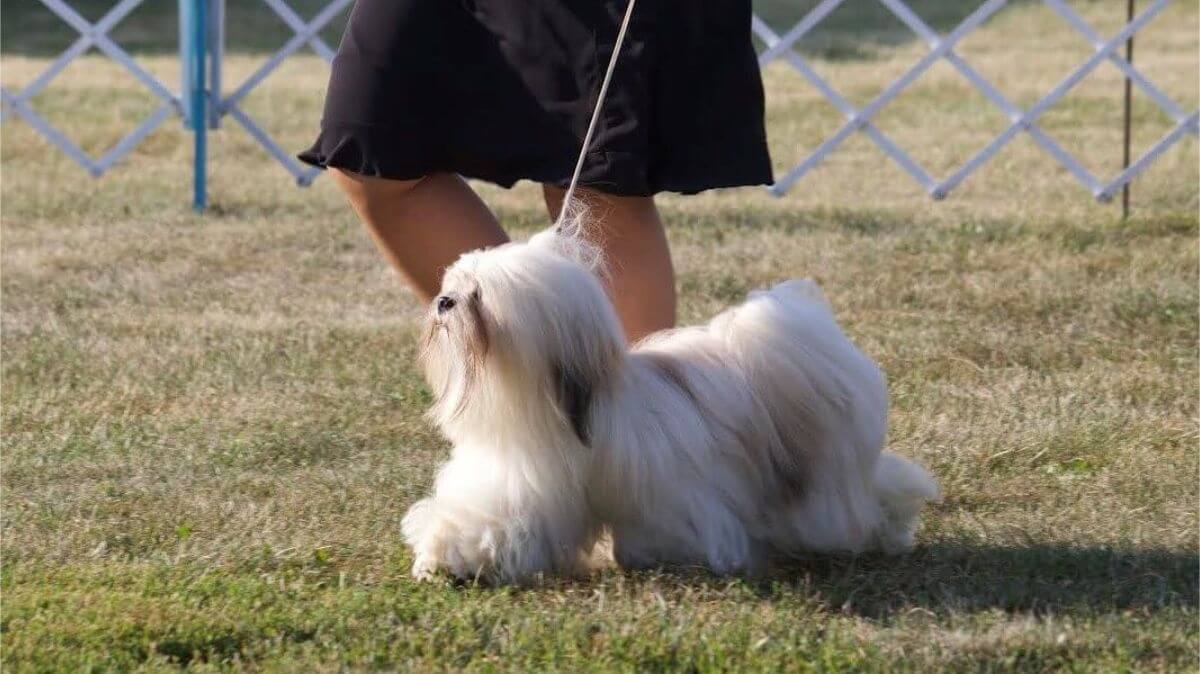
Meet the Breeders
Joyce Johanson is the breeder behind Joyslyn’s Lhasa Apsos. Read about the kennel’s beginnings, puppies, and much more!
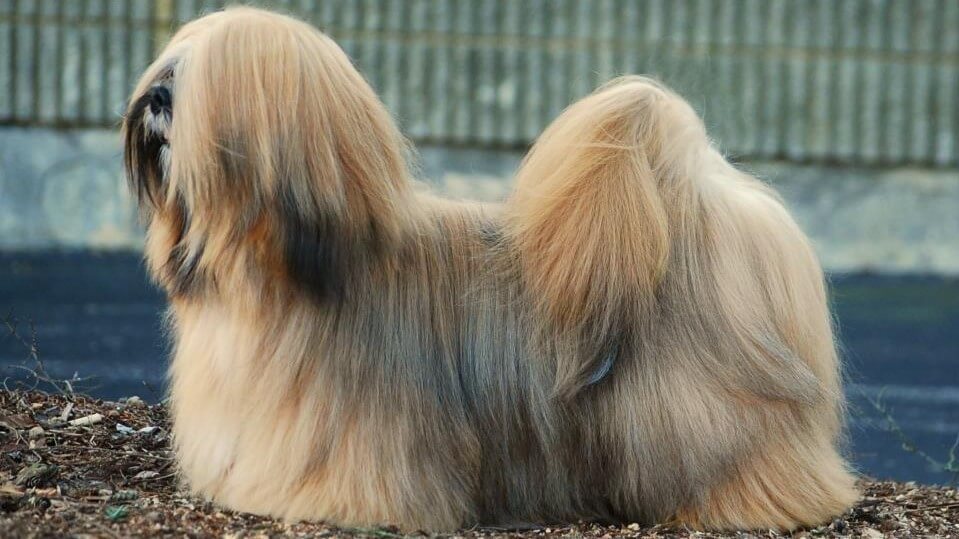

Explore the unique coat color variations of the Lhasa Apso breed, which change over time, adding an element of surprise for their owners.
The tail is set high, well feathered, and carried well over the back. It may have a kink near the end, and it should not be carried low.
Standard Markings
A Note About Color: The Lhasa Apso is a breed of many colors. Some Lhasas have a black mask; others have dark tips to their ears and beard. All colors are considered equal in the show ring, provided the dog’s pigment is black.
Coat Type
Silky
The structure of the coat this breed carries.
Coat Length
Long
How long the breed's coat grows when kept in condition.
Adaptability Level
How easily a breed copes with changes in home, routine, noise and weather.
Mental Stimulation Needs
How much a breed needs a job, a puzzle or training to stay content.
A Lhasa Apso should receive a complete and balanced diet suited to the dog’s age, activity level, and body condition. Portions should be measured carefully because excess weight can place unnecessary strain on the joints.
A puppy generally needs three or four small meals each day before gradually moving to two meals. Most adult Lhasas are fed twice daily and may eat approximately three-quarters to one cup of dry food per day, depending on the food, weight, and activity level.
Treats should be limited, and fresh water should always be available.
The Lhasa Apso is intelligent and capable of learning quickly, but its independent nature can make training a challenge. Short, varied sessions with clear rewards are usually more effective than repetitive drills.
Positive reinforcement through food, praise, and play can help maintain the dog’s interest. Early socialization should introduce the puppy to different people, dogs, sounds, surfaces, and environments.
Lhasa Apsos are alert watchdogs and may bark when they notice unfamiliar activity. Training can teach the dog to settle after sounding an alert, though some degree of watchfulness is natural for the breed.
Recall should be practiced regularly, but off-leash activity is safest only in a secure area. A Lhasa Apso may choose to follow its own interests when distracted.
Many companion dogs are kept in a shorter trim that is easier to maintain. Even with a practical haircut, regular bathing, brushing, and trimming are necessary. The breed sheds relatively little, but loose hair can remain trapped in the coat. Nails should be trimmed regularly, ears should be checked for irritation or debris, and teeth should be brushed routinely.