Members
Joyce Johanson is the breeder behind Joyslyn’s Lhasa Apsos. Read about the kennel’s beginnings, puppies, and much more!
The Weekly Brief
The best of SHOWSIGHT editorials, weekly wins, and breeder commentary — delivered to your inbox every Sunday morning.
Joyce Johanson: My name is Joyce Johanson and I live in Macomb, Illinois. I’ve been in dogs from 1973 to the present.
Joyce Johanson: Our kennel name is Joyslyn’s. Since we are “getting on in years,” we have only eight dogs.
Joyce Johanson: Our puppies are born and raised inside our home.
Joyce Johanson: My first mentor taught me to evaluate puppies at age 8 weeks. I have continued to do that. Of course, from birth to 8 weeks, we are constantly watching the puppies and evaluating what we see.
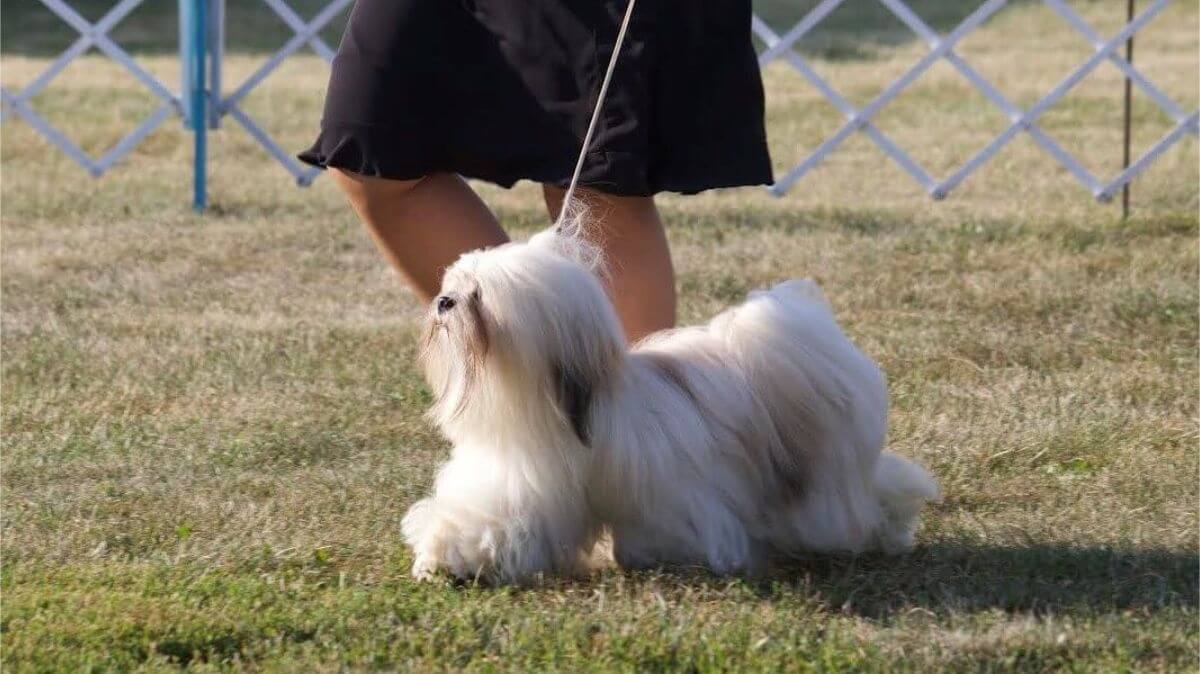
Joyce Johanson: Regarding Conformation showing: Because Lhasa Apsos are, by nature, “chary (suspicious) of strangers” and because each judge is a stranger, we must socialize the puppies and introduce them to different environments as well as teach them ring procedures. The Lhasa is a long-coated breed. A great deal of coat conditioning and grooming, both at home and at the shows, is required to get coats ring-ready.
Joyce Johanson: This wonderful, ancient breed that dates back to 800 BC, is, I fear, headed for extinction. Saving the breed means getting young people involved in learning about the breed, then showing and breeding quality Lhasas.
Joyce Johanson: The Lhasa is a great family pet. A well-bred Lhasa is a joy to own. They are inclined to be “cat-like” in their independent attitude, but they are also fun-loving, clownish, serious, loyal, and loving. Motivated by praise and rewards, they don’t respond well to rough treatment and are quickly bored by repetitive training (e.g., “I’ve already done that twice. Let’s do something else.”)Candidates for owning the breed: People with patience and a sense of humor. People willing to take time to learn about the breed before they buy a Lhasa. People who appreciate the many facets of the Lhasa personality. People willing to learn to groom the dog or take it to a groomer on a regular basis.
Joyce Johanson: Misconception: Coat care is difficult and takes too much time. Best-Kept Secret: Now that would be telling!
Joyce Johanson: Judging is hurried, since judges have to be aware of time limits. That puts more pressure on exhibitors to hurry things along. The quality of judging has not worsened. I appreciate a judge who loves dogs and shows it as opposed to one who seems bored and just wants to get it over with! Too many do fault judging as opposed to looking for a dog’s positive qualities.Number of Shows: Too many on the same weekend. Numbers of exhibits are down, and clubs are having problems financially as a result.
Joyce Johanson: It is good for the sport. People who don’t show still enjoy seeing televised dog shows. Social media piques interest.
Joyce Johanson: People have to stop showing and breeding because of laws that restrict breeding altogether or limit the number of dogs a person can own. Educating legislators has helped in some cases, but it is an uphill battle.The designer dog craze has negatively impacted people’s appreciation for purebred dogs.
Joyce Johanson: Be gentle with your hands, especially with puppies. Lhasas are required to be shown with their headfall down. Vision is restricted. Approach them from the front. Put them on the table if you want to double-check an attribute.

Meet the Breeders