Members
01/Overview
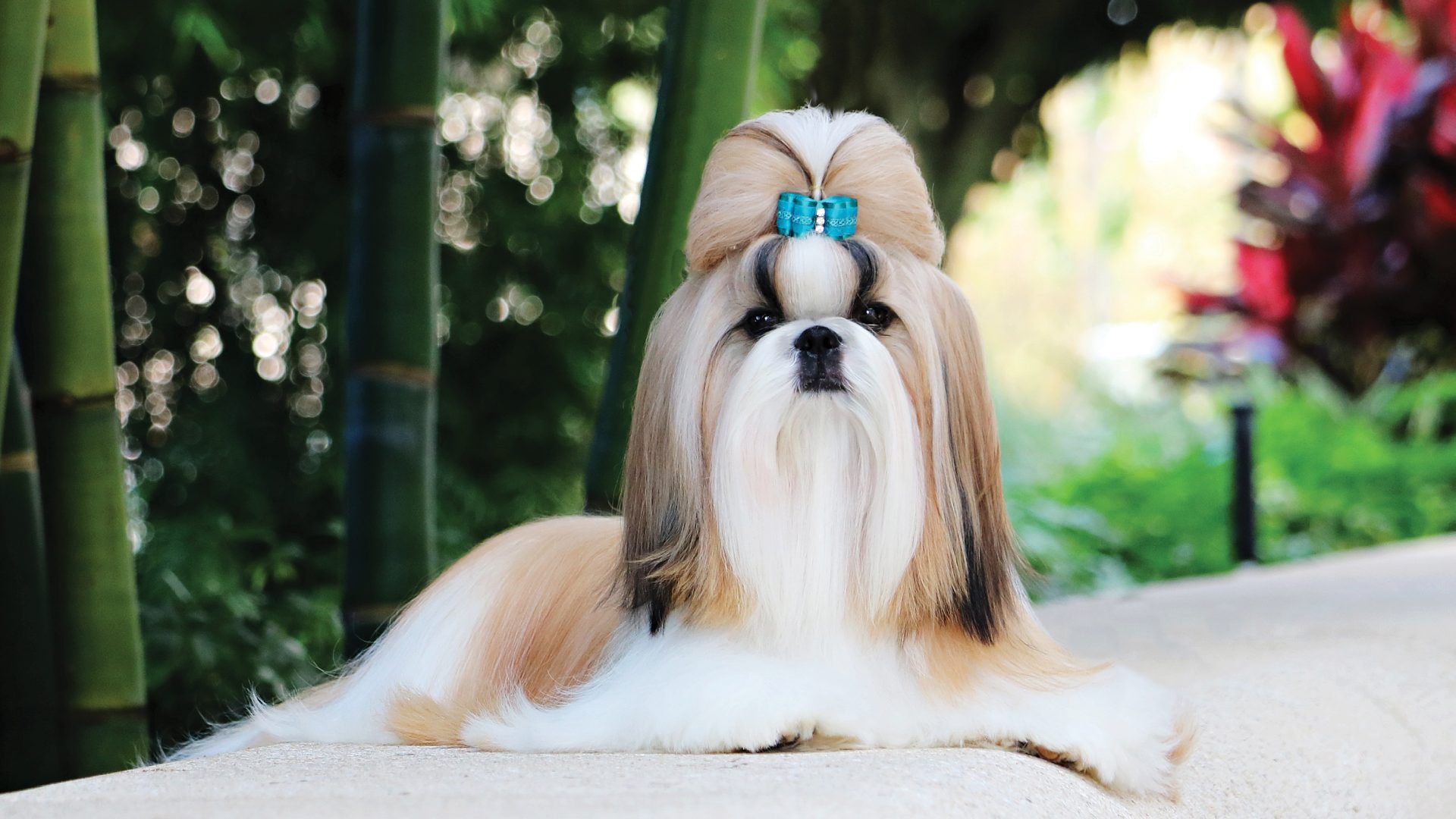
The Shih Tzu, known originally as the "Lion Dog" in Chinese royal circles, is an ancient breed that epitomizes a curious combination of affection and arrogance. This lively little dog, with its luxurious coat and colorful character, is renowned for its warm, expressive eyes and friendly, outgoing personality. A colorful canine companion in a small yet sturdy package, the Shih Tzu has long been a popular choice in households where the breed's considerable charms are appreciated and allowed to flourish.
Highlights
02/History
The Shih Tzu's history is as rich and distinctive as its appearance, intertwined with the legacy of various Chinese dynasties. Originating from the Tibetan Plateau, the Shih Tzu, or "Lion Dog," has long been associated with royalty. Bred primarily as a lapdog and companion, this breed has been valued for centuries for its affectionate disposition and arrogant carriage.
In Tibet, the lion is a symbol of a Buddhist deity, and it is believed the Shih Tzu was bred to resemble a lion. The breed's development is deeply connected with the Buddhist belief in the lion's significance as the protector to the Buddha. The breed was likely created by intermixing of other ancient breeds, such as the Lhasa Apso and the Pekingese.
The Shih Tzu's journey to the West began in the late 19th century, but it wasn't until the 20th century that the breed became popular outside China. During the 1920s and '30s, the first Shih Tzu were brought to Europe, where their unique appearance and charming personalities quickly captured the hearts of dog enthusiasts.
The American Kennel Club (AKC) officially recognized the Shih Tzu in 1969. The Royal Kennel Club (UK) recognized the breed much earlier, following its growing popularity in England. The Fédération Cynologique Internationale (FCI) has also acknowledged the breed, categorizing it within their Companion and Toy Dogs Group.
Throughout the breed's history, Shih Tzu have been treasured for their companionship and have not been bred for any sort of labor or utility. This historical focus on companionship is evident in the breed's demeanor and physical traits, which are ideally suited to being a loving and devoted pet.
The breed's royal Chinese heritage is not just a historical footnote; it has significantly influenced its status as a highly regarded and sought-after companion dog. Today, the Shih Tzu continues to be a popular breed worldwide, cherished for its amiable nature, beautiful appearance, and deep historical roots.
03/Appearance
An adult Shih Tzu typically stands about 9 to 10.5 inches tall at the shoulder and weighs between 9 to 16 pounds. The breed is surprisingly sturdy for its size, although its stature reflects its status as a breed intended to provide comfort, not hard labor.
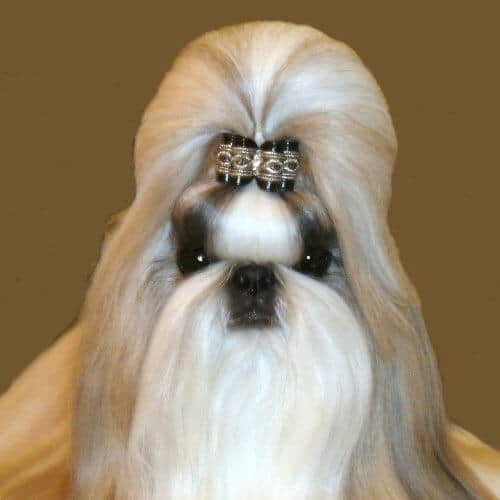
The Shih Tzu is a well-proportioned breed, presenting a sturdy and solid build in a small package. The length between the withers and the root of the tail in a Shih Tzu is slightly longer than its height at the withers, contributing to a slightly elongated but balanced appearance. Despite their diminutive stature, Shih Tzu possess substantial bone and muscle. This sturdy physical composition, and the breed's signature flowing coat, presents a dog with an unmistakably proud bearing.
Texture: The Shih Tzu boasts a luxurious double coat that is dense, long, and flowing. The outer coat is slightly wavy and incredibly soft, resembling human hair. The undercoat is a bit lighter than the topcoat, providing insulation and adding to the overall volume of the coat. The outer coat's long and flowing tresses not only enhance the breed's appearance, they also serve as a protective layer in inclement weather. Trimming of ends of the long hairs, and around the feet and anus, is typically done for neatness and to facilitate ease of movement.
Standard Colors
04/Consider
The Shih Tzu, with its charming personality and beautiful, flowing coat, is a beloved choice for people who appreciate a dog of enormous refinement. Owning a Shih Tzu, however, involves certain responsibilities and considerations to ensure both the dog and its human companion are happy in the relationship.
Interaction With Family
The level of affection a breed typically shows towards family members and familiar individuals.
Good With Other Dogs
The innate friendliness of a dog towards other dogs can depend on its breed.
Good With Young Children
The degree to which a breed will typically be patient with young children.
Amount Of Shedding
How much hair a breed typically leaves behind on clothes, furniture and floors.
Frequency Of Grooming
How often a breed needs brushing, bathing or a professional trim to stay in condition.
Amount Of Drooling
How prone a breed is to drool — worth knowing before you keep a towel by the door.
Openness To Strangers
How openly a breed tends to greet new people, visitors and strangers.
Protective Nature
How likely a breed is to alert you to — and stand between you and — anything unfamiliar.
Playfulness Level
How enthusiastic a breed stays about games and play well past puppyhood.
Trainability Level
How readily a breed takes direction and works with you rather than around you.
Barking Level
How much a breed uses its voice, and how readily.
Energy Level
How much get-up-and-go a breed brings to an average day.
Health
The Shih Tzu is generally a healthy and resilient breed, known for its longevity and spirited nature. However, as with all dogs, Shih Tzu can be prone to a few health issues. It is crucial for prospective caretakers to be aware of these potential concerns and collaborate closely with a reputable breeder and veterinarian to maintain their dog's health throughout its life. The average lifespan of a Shih Tzu is typically between 10 and 18 years, but with attentive care, regular veterinary check-ups, and a well-balanced diet, many dogs will enjoy a robust life well into their senior years.
When considering a Shih Tzu as a companion, understanding the breed's unique personality traits is essential. These lively little "lion dogs" are known for their affectionate and friendly disposition, making them excellent companions in a variety of households.
Shih Tzus are generally great for novice owners due to their adaptable and easygoing nature. They are eager to please and respond well to positive reinforcement, making them relatively straightforward to train. However, their independent streak can sometimes be mistaken for stubbornness, so consistent and patient training is key.
In terms of sensitivity, Shih Tzus are quite intuitive to their owner's emotions, often seeking to comfort their people when they sense distress. This breed thrives on companionship and does not do well when left alone for long periods. Prolonged solitude can lead to anxiety and undesirable behaviors.
Shih Tzus generally get along well with other dogs and household pets, especially if they are raised together. The breed's playful and friendly nature often extends to their interactions with other animals and even to strangers.
This breed is usually excellent with young children, offering a gentle and patient temperament. However, as with any breed, interactions between dogs and small children should always be supervised to ensure everyone's safety.
Shih Tzus are typically friendly towards everyone they meet, extending warm greetings with enthusiasm and curiosity. This trait makes them less suitable as a watchdog, since they're more social than suspicious.
Exercise Expectations
The exercise needs of a Shih Tzu are considered moderate. These dogs are not as high-energy as some breeds, but they do enjoy regular playtime and walks. A daily walk, combined with some play sessions at home, is usually sufficient to keep a Shih Tzu happy and healthy. Exercise doesn't need to be excessively lengthy or strenuous; a leisurely stroll around the neighborhood or park will suffice. In terms of energy level, Shih Tzus typically display a balanced approach. They are playful and spirited dogs without being overly hyperactive, and they enjoy interactive games like fetch. Playtime not only provides physical exercise, it also delivers plenty of mental stimulation. Puzzle toys can also be a great way to keep their minds engaged and active. When it comes to intensity, Shih Tzus are relatively laid back. They are just as happy to cuddle on the sofa as they are to play, making them well-suited to various living arrangements, including apartment life. However, it's important to make sure they get enough exercise to prevent obesity, which can be a health concern for the breed. Playfulness is a notable characteristic of the Shih Tzu. These dogs often maintain a puppy-like demeanor well into adulthood, enjoying play sessions and interaction with their human companions well into their later years.
Integrating a Shih Tzu into a household means creating an environment that caters to the breed's unique characteristics and needs. Known for its adaptability, the Shih Tzu can thrive in various living situations, including apartments, thanks to the breed's compact size and moderate exercise requirements. Yet, despite the ability to adjust to smaller living spaces, it's essential to make sure regular opportunities for walks and play are provided daily to maintain the Shih Tzu's physical and mental well-being.
In terms of weather adaptability, a Shih Tzu's dense double coat offers adequate protection in colder climates. However, the breed's small size and fondness for being indoors mean these dogs should not be exposed to cold temperatures for extended periods. During winter seasons, a little extra warmth, like a dog sweater, can be beneficial for outdoor excursions. On the other hand, the breed's brachycephalic faces makes can them more vulnerable in hot weather. During warmer months, it's important to avoid overexertion and provide a cool, comfortable environment as well as making sure the dog stays hydrated and cool.
The Shih Tzu's overall well-being is greatly enhanced by being an active part of the household. These dogs crave companionship and interaction, and are happiest when they're involved in family activities. Providing these dogs with a comfortable spot in the home, regular grooming to maintain the coat, and sufficient attention and affection are the keys to their happiness.
Alongside the Shih Tzu's physical needs, socialization and training play vital roles. Exposure to diverse experiences, people, and other animals from a young age helps to develop a well-adjusted companion with a confident temperament. Consistent and positive training reinforces good behavior and also strengthens the bond between the Shih Tzu and its human family.
05/Puppies
Shih Tzu puppies are a delight and bring much excitement and joy to any home. These little chrysanthemums, with their adorable faces, playful antics, and affectionate nature, quickly become beloved members of the family. However, raising a Shih Tzu puppy requires dedication, patience, and an understanding of the breed's specific needs during the formative months.
Caring for a Shih Tzu puppy involves more than just providing food and shelter; it's about nurturing the growing pup's physical, emotional, and social development.
From a dietary perspective, Shih Tzu puppies need a balanced diet formulated for small breeds with high energy levels. Meals should be formulated for puppies and rich in nutrients to support rapid growth and development. Feeding small, frequent meals throughout the day helps to maintain energy levels and supports the youngster's metabolism.
In terms of training, the Shih Tzu puppy benefits from early socialization and basic obedience training. Introducing the pup to a variety of people, pets, and environments helps will help it develop into a well-adjusted adult dog. Housetraining requires consistency and patience, as the puppy will learn at its own pace. Positive reinforcement techniques, such as praise and treats, are effective in encouraging the desired behaviors.
Regular veterinary check-ups are crucial during puppyhood to ensure the pup is growing normally and to keep up with its vaccination schedule. These visits are also an opportunity to discuss any concerns and to plan for preventive healthcare measures.
Exercise is important, even for a puppy, but it should be age and size appropriate. Short, gentle play sessions and briefs walks will help to expend the little one's energy and keep it fit, without causing any overexertion.
Grooming should start early with a Shih Tzu puppy to get it accustomed to the process. Regular brushing from a young age helps to prevent matting and tangling of the coat and also serves as a bonding experience.
Lastly, providing a safe and loving environment is essential for a Shih Tzu puppy's wellbeing. Creating a secure space where the pup can rest, play, and explore safely will give it a sense of security and allow its confidence to blossom.
06/Activities
Despite the breed's small size, Shih Tzu can participate in a variety of dog sports. These activities not only offer physical exercise, they also provide mental stimulation, which is crucial for this intelligent breed.
Gallery
07/Standards
The Shih Tzu is recognized by the world's leading registries and kennel organizations, which categorize the breed into a specific Group based on its unique characteristics. This breed is recognized worldwide under the following Group designations:
The ideal Shih Tzu is described by a Breed Standard that is approved by each of the world’s leading registries and kennel organizations. The Breed Standards for this breed may be found in the following links:
08/Clubs
09/Rescue
10/Facts
Ancient Roots
The breed's ancestry can be traced back to ancient China, where the "Lion Dogs" were treasured as royal pets in the Chinese Imperial Palace.
Lion Dog
The name "Shih Tzu" translates to "Lion Dog" in Mandarin, a nod to their intended resemblance to the lion in traditional Chinese art.
Tibetan Connection
Although closely associated with China, the Shih Tzu is believed to have originated in Tibet and was later gifted to Chinese royalty.
Distinctive Face
Shih Tzu are known for their large, dark eyes, a feature that is characteristic of the breed and contributes to the dogs' expressive and endearing appearance.
A Breed of Many Colors
Shih Tzu come in a variety of colors and markings, making each a unique. individual Common colors include black, white, and gold in various combinations.
Long, Luxurious Coat
One of the most striking features of the Shih Tzu is its long, flowing coat, which requires regular grooming to maintain its beauty and health.
Loyal Companions
Known for its affectionate and friendly nature, the Shih Tzu makes an excellent companion and is well-suited for families and individuals alike.
Royal Popularity & Celebrity
The Shih Tzu has been a popular breed among the rich and famous, including Queen Elizabeth II and actress/singer Miley Cyrus.
11/FAQ
The Shih Tzu is considered a low shedder, especially compared to other breeds. This dog's long, flowing coats does lose some hair, but due to the coat's texture and length, it often gets caught within the coat itself rather than falling out onto the floor or furniture. Regular grooming, including brushing and combing, is essential to remove the loose hairs and prevent matting.
Official Standard of the Shih Tzu
General Appearance: The Shih Tzu is a sturdy, lively, alert toy dog with long flowing double coat. Befitting his noble Chinese ancestry as a highly valued, prized companion and palace pet, the Shih Tzu is proud of bearing, has a distinctively arrogant carriage with head well up and tail curved over the back. Although there has always been considerable size variation, the Shih Tzu must be compact, solid, carrying good weight and substance. Even though a toy dog, the Shih Tzu must be subject to the same requirements of soundness and structure prescribed for all breeds, and any deviation from the ideal described in the standard should be penalized to the extent of the deviation. Structural faults common to all breeds are as undesirable in the Shih Tzu as in any other breed, regardless of whether or not such faults are specifically mentioned in the standard.
Size, Proportion, Substance: Size - Ideally, height at withers is 9 to 10½ inches; but, not less than 8 inches nor more than 11 inches. Ideally, weight of mature dogs, 9 to 16 pounds. Proportion - Length between withers and root of tail is slightly longer than height at withers. The Shih Tzu must never be so high stationed as to appear leggy, nor so low stationed as to appear dumpy or squatty. Substance - Regardless of size, the Shih Tzu is always compact, solid and carries good weight and substance.
Head: Head - Round, broad, wide between eyes, its size in balance with the overall size of dog being neither too large nor too small. Fault: Narrow head, close-set eyes. Expression - Warm, sweet, wide-eyed, friendly and trusting. An overall well-balanced and pleasant expression supersedes the importance of individual parts. Care should be taken to look and examine well beyond the hair to determine if what is seen is the actual head and expression rather than an image created by grooming technique. Eyes - Large, round, not prominent, placed well apart, looking straight ahead. Very dark. Lighter on liver pigmented dogs and blue pigmented dogs. Fault: Small, close-set or light eyes; excessive eye white. Ears - Large, set slightly below crown of skull; heavily coated. Skull - Domed. Stop - There is a definite stop. Muzzle - Square, short, unwrinkled, with good cushioning, set no lower than bottom eye rim; never downturned. Ideally, no longer than 1 inch from tip of nose to stop, although length may vary slightly in relation to overall size of dog. Front of muzzle should be flat; lower lip and chin not protruding and definitely never receding. Fault: Snipiness, lack of definite stop. Nose - Nostrils are broad, wide, and open. Pigmentation - Nose, lips, eye rims are black on all colors, except liver on liver pigmented dogs and blue on blue pigmented dogs. Fault: Pink on nose, lips, or eye rims. Bite -Undershot. Jaw is broad and wide. A missing tooth or slightly misaligned teeth should not be too severely penalized. Teeth and tongue should not show when mouth is closed. Fault: Overshot bite.
Neck, Topline, Body: Of utmost importance is an overall well-balanced dog with no exaggerated features. Neck - Well set-on flowing smoothly into shoulders; of sufficient length to permit natural high head carriage and in balance with height and length of dog. Topline - Level. Body - Short-coupled and sturdy with no waist or tuck-up. The Shih Tzu is slightly longer than tall. Fault - Legginess. Chest - Broad and deep with good spring-of-rib, however, not barrel-chested. Depth of ribcage should extend to just below elbow. Distance from elbow to withers is a little greater than from elbow to ground. Croup - Flat. Tail - Set on high, heavily plumed, carried in curve well over back. Too loose, too tight, too flat, or too low set a tail is undesirable and should be penalized to extent of deviation.
Forequarters: Shoulders - Well-angulated, well laid-back, well laid-in, fitting smoothly into body. Legs - Straight, well-boned, muscular, set well-apart and under chest, with elbows set close to body. Pasterns - Strong, perpendicular. Dewclaws - May be removed. Feet - Firm, well-padded, point straight ahead.
Hindquarters: Angulation of hindquarters should be in balance with forequarters. Legs - Well-boned, muscular, and straight when viewed from rear with well-bent stifles, not close set but in line with forequarters. Hocks - Well let down, perpendicular. Fault - Hyperextension of hocks. Dewclaws - May be removed. Feet - Firm, well-padded, point straight ahead.
Coat: Coat - Luxurious, double-coated, dense, long, and flowing. Slight wave permissible. Hair on top of head is tied up. Fault: Sparse coat, single coat, curly coat. Trimming - Feet, bottom of coat, and anus may be done for neatness and to facilitate movement. Fault - Excessive trimming.
Color and Markings: All are permissible and to be considered equally.
Gait: The Shih Tzu moves straight and must be shown at its own natural speed, neither raced nor strung-up, to evaluate its smooth, flowing, effortless movement with good front reach and equally strong rear drive, level topline, naturally high head carriage, and tail carried in gentle curve over back.
Temperament: As the sole purpose of the Shih Tzu is that of a companion and house pet, it is essential that its temperament be outgoing, happy, affectionate, friendly and trusting towards all.
Approved May 9, 1989
Effective June 29, 1989
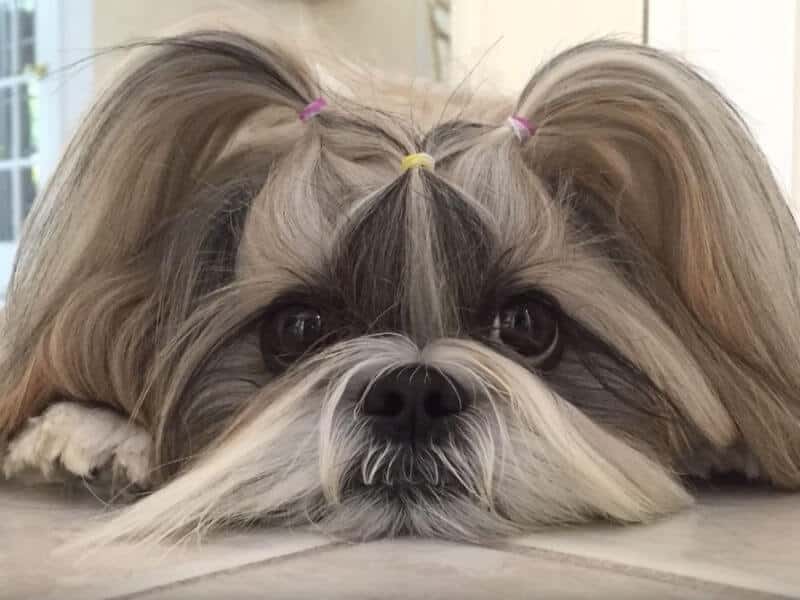

Shih Tzu breed traits and characteristics: Learn more about this lovely Toy dog breed – Shih Tzu colors, sex, age, size.
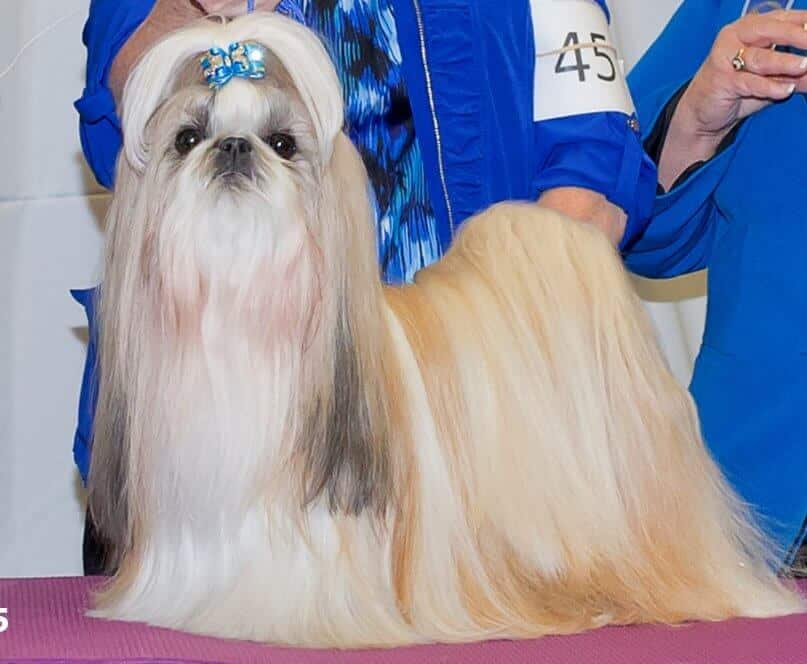

Purebred Shih Tzu Dog Breed – From Head To Tail – In the more than 50 years since I acquired my first purebred Shih Tzu dog, the breed has
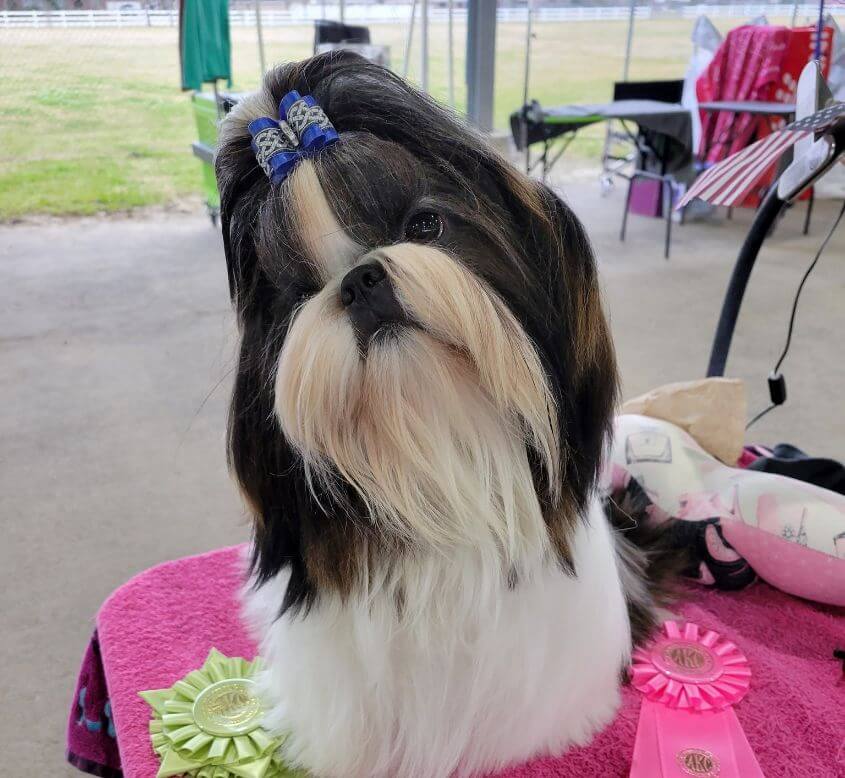

Meet the Breeders
Interview with a Toy Group Breeder Annette Lewis. I guess I’ve been in dogs all my life. My eldest brother showed our Kerry Blue Terriers as
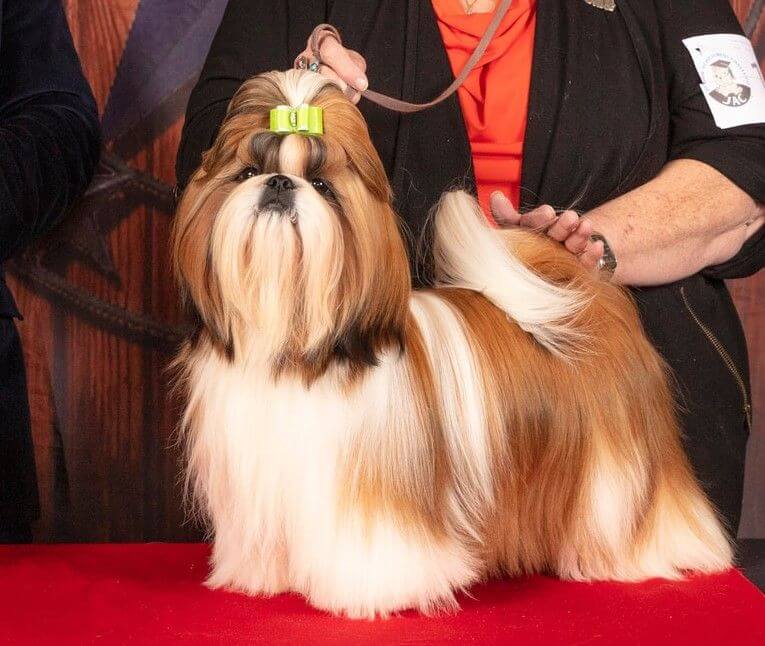
Meet the Breeders
Interview with a Breeder/Owner Handler Breeder Annette Lewis – My name is Annette Lewis. I’m originally from Dallas, but I live in Denison,
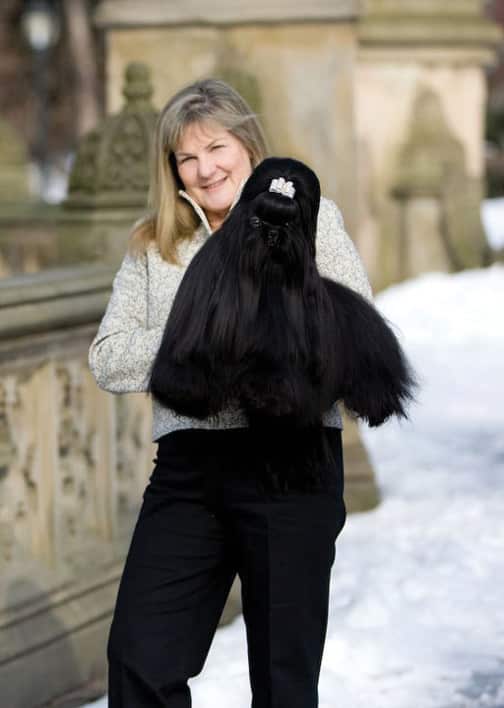

Meet the Breeders
Chatterbox Shih Tzu | L. Sarah Lawrence : I grew up in Southern California on a small ranch in La Tuna Canyon. It was quiet, warm
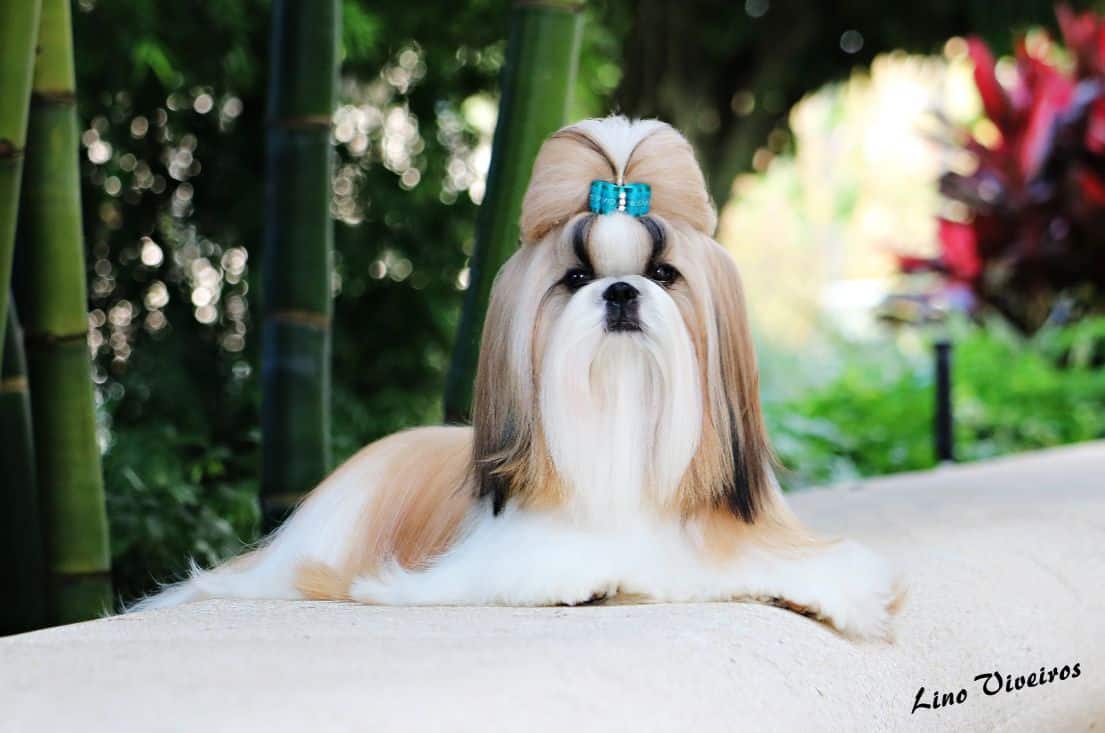

All About Judging
The Shih Tzu breed is a luxuriously coated Toy breed with a distinctive chrysanthemum face, rectangular body, and an amazing personality
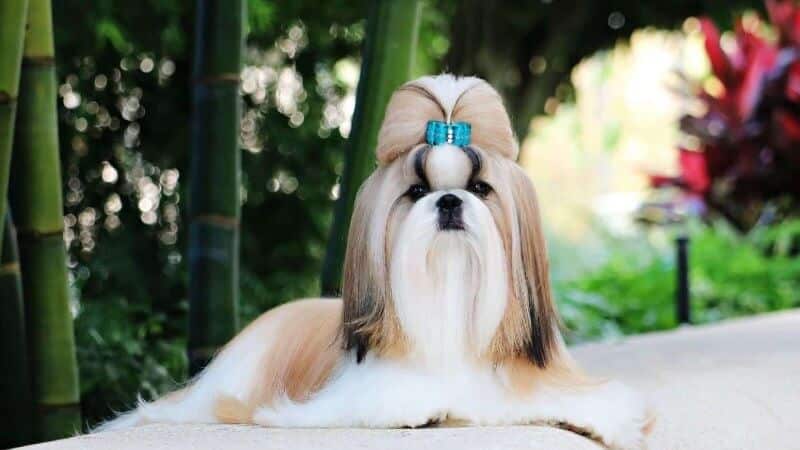

All About Judging
Judging the Shih Tzu can be a challenging task for the newly approved Breed judge. Because the Shih Tzu is a heavily-coated breed, one must
The tail of a Shih Tzu is set high and carried well over the back in a graceful curve. It is heavily plumed with long, flowing hair that blends with the coat on the rest of the dog. The tail should never be set low on the body, nor should it be carried too tightly, too loosely, or flat to the back. Instead, the correct set and gentle curve of the tail are a celebration when the dog is on the move.
A Note About Color: The Shih Tzu can have any coat color or markings. Dark faces and uneven markings are acceptable in the breed.
Coat Type
Double
The structure of the coat this breed carries.
Coat Length
Long
How long the breed's coat grows when kept in condition.
Adaptability Level
How easily a breed copes with changes in home, routine, noise and weather.
Mental Stimulation Needs
How much a breed needs a job, a puzzle or training to stay content.
Proper feeding and nutrition are crucial for the health and well-being of a Shih Tzu. This breed benefits from a well-balanced diet tailored to a dog's specific needs at various life stages.
For a Shih Tzu puppy, it's important to provide a diet that supports rapid growth and development. Puppies generally require more protein and calories than adult dogs, so feeding a high-quality puppy food, divided into three to four small meals per day, can help to provide the necessary nutrients for healthy growth.
As Shih Tzus mature into adulthood, their dietary needs change. Adult dogs typically do well on two meals per day. The amount of food, usually measured in cups, varies depending on the dog's size, age, and activity level. On average, an adult Shih Tzu may require about one-half to one cup of dry dog food per day, divided into two meals. However, this can vary, so it's important to consult with a veterinarian to determine the ideal portion size for a specific dog.
Shih Tzus, like many small dogs, can be prone to obesity. So, it's important to monitor the food that's provided and to weigh the dog regularly. Treats should be given in moderation and factored into the daily calorie intake. It's also important to provide fresh water at all times to keep the dog hydrated.
When choosing food for the Shih Tzu, it's best to consider high-quality ingredients and avoid foods with excessive fillers or artificial additives. Some individuals can be prone to food sensitivities or allergies, so it's important to watch for any signs of digestive upset or skin irritation and consult a veterinarian if concerns arise.
Feeding the Shih Tzu a balanced diet tailored to the dog's age, size, and activity level is key to maintaining overall health and vitality throughout the dog's lifetime.
Training a Shih Tzu can be a rewarding experience due to the breed's intelligent and eager-to-please nature. However, it is important to approach training with the right strategies and understanding of the breed's characteristics and needs.
Shih Tzus are intelligent dogs, capable of learning a wide range of commands and tricks. Be forewarned, however, as they sometimes exhibit a streak of independence that can be mistaken for stubbornness. This trait means they may not always respond to commands as quickly as more obedient breeds. Patience and consistency are key. Using positive reinforcement, such as treats and praise, works best for this breed, as these little wonders respond well to rewards and encouragement.
In terms of the breed's tendency to bark, Shih Tzus are moderately vocal. They may bark to alert their human companions of someone at the door or when they simply want attention. Training them from a young age to understand the command "quiet" can help to manage any excessive barking.
Their intelligence also means the Shih Tzu has a moderate tendency to roam. These dogs are curious and may wander off if they find something interesting to explore. It is important, therefore, to have a secure area for them to play in and to always keep them on a leash during walks.
Despite the breed's "lionesque" appearance, the Shih Tzu is not typically a predatory dog. Individuals may enjoy chasing small toys or playing fetch, but most will display a strong instinct for hunting nothing more than a good time.
Grooming Expectations
The Shih Tzu requires frequent grooming due to the breed's long, flowing coat. Daily brushing is recommended to prevent tangles and mats, which can be uncomfortable for the dog and difficult to remove. A high-quality comb and brush should be used to gently work through the coat, paying special attention to areas prone to matting, such as behind the ears and under the elbows. In terms of shedding, the Shih Tzu is a low shedder. While these dogs do shed some hair, it is not as noticeable as the amount seen in dogs with shorter coats. The hair that's shed often gets caught in the dog's long coat rather than falling onto furniture and clothing. Regular brushing helps to remove the loose hair and keeps shedding under control. The Shih Tzu typically needs a bath every three to four weeks, using a dog-specific shampoo that won't strip the coat of its natural oils. It's also important to keep the face clean, especially around the eyes, as this area can be prone to tear staining. In addition to coat care, other grooming needs include regular trimming of the nails, as overly long nails can cause discomfort and affect mobility. Ear cleaning is also crucial, as the breed's floppy ears can trap moisture and lead to infections. Grooming is an excellent opportunity to check for signs of skin issues and parasites, and it's a great way to bond with the dog. Many owners opt for professional grooming to maintain the breed's traditional show look, but regular at-home grooming can be sufficient to keep a Shih Tzu healthy and happy.