01/Overview
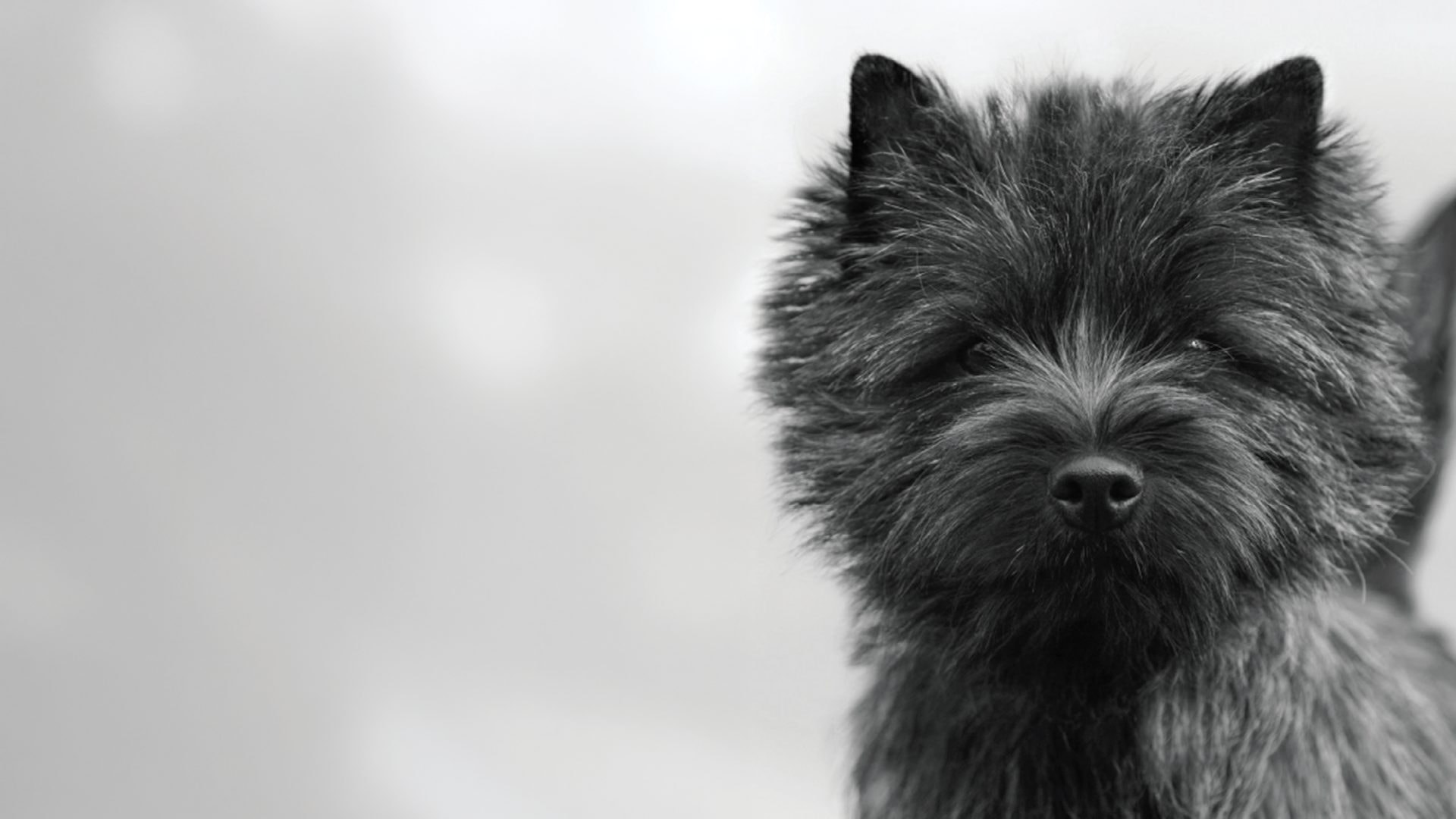
The Cairn Terrier is originally from Scotland, dating from the 17th century when it was closely linked with other types of terriers. The breed was first known as the Shorthaired or Prick-Eared Skye Terrier. Then, in the 19th century, it was named the Cairn for its capacity to root out vermin sheltering in rock piles (cairns). This breed is independent, intelligent, loyal, and friendly; however, they don't enjoy being left alone at home for too long since they like to regularly express their affection for their family.
Highlights
02/History
The Cairn Terrier originates from the Isle of Skye and is recognized as one of Scotland's earliest recognized working dogs. One of the smallest of the go-to-ground terriers, the Cairn was developed to dig into cairns and flush out smaller creatures. In its native land, a "cairn" is a mound of stones used as a boundary or grave marker where rodents liked to live. The local dogs would also hunt in packs to pursue foxes, otters, and other predators. The Cairn's independence, courage, toughness, and awareness served it well when digging and when it was confronted by sharp-toothed quarry.
Cairns were known from the 1600s, but initially, this breed was categorized as a form of “Skye Terrier“ alongside the ancestors of the Scottish and West Highland White Terriers. A Highland sportsman by the name of Captain Martin MacLeod used his dogs to hunt otters. Later enthusiasts included a gamekeeper named Mr. John Macdonald who carried on Macleod’s Drynock strain as the 20th century approached. All of his dogs descended from the Cairn’s earliest progenitors.
In 1912, The Royal Kennel Club of the United Kingdom gave the Cairn Terrier a separate breed designation. In 1912, the first year of recognition, 134 Cairn Terriers were registered, and shortly afterwards, the breed was given Championship status.
While most Cairn Terriers are no longer used for their original purpose, they remain independent and feisty small dogs that enjoy hunting, digging, and playing with their people. Thankfully, the range and availability of canine sports has grown rapidly in recent years, and there's a dog sport that’s ideal for every Cairn.
03/Appearance
The height of the adult male Cairn Terrier is 10 inches at the withers; mature females typically measure 9.5 inches tall.
In terms of weight, a healthy male typically weighs 14 pounds, while the female generally weighs 13 pounds.
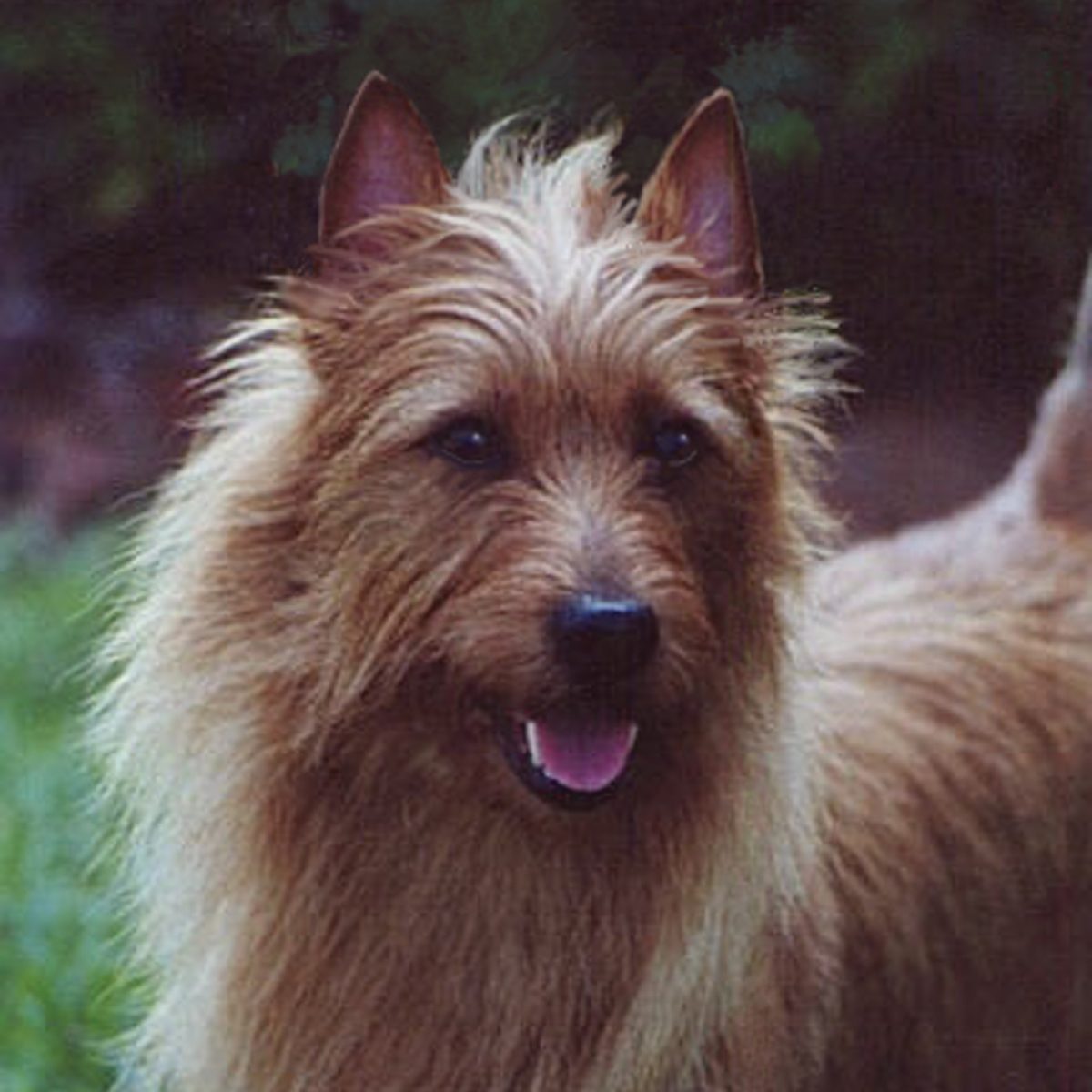
Skull: The Cairn Terrier’s head is medium-sized and is in balance with the body. It is broad in proportion to its length, and there’s a slight indentation with a definite stop between the eyes.
Expression: The expression is friendly and full of life, reflecting the breed’s playful yet alert nature. The look keen and connotes great intelligence.
Eyes: The Cairn’s eyes are medium in size, set wide apart, and a dark hazel color. They are deeply set under a shaggy brow.
Ears: The ears of the Cairn Terrier are set on the corners of the skull, not too close together and not too far apart. . They are small, pointed, carried erect, and not heavily coated.
Muzzle: The breed’s muzzle is short yet full. It is neither too long nor too heavy, and strong enough to support teeth that are surprisingly large for the size of the dog.
Nose: The nose of Cairn is proportional with the muzzle and is always black in color.
Bite: The Cairn Terrier has strong teeth in a level or a scissors bite, where the upper incisors closely overlap the lower incisors. A full complement of teeth is greatly desired.
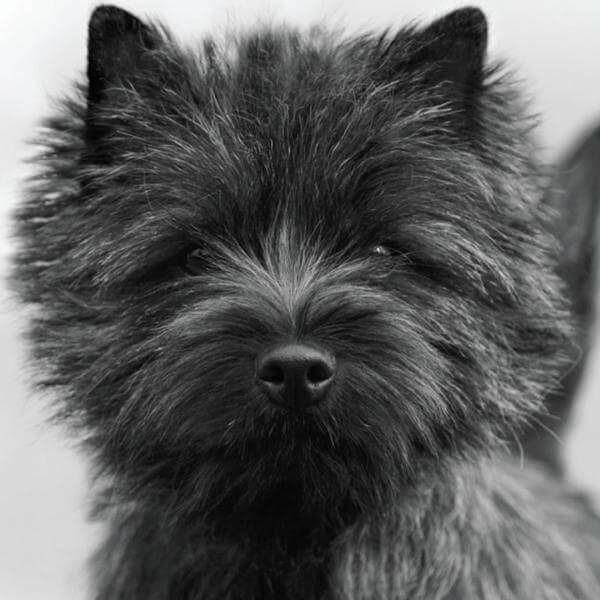
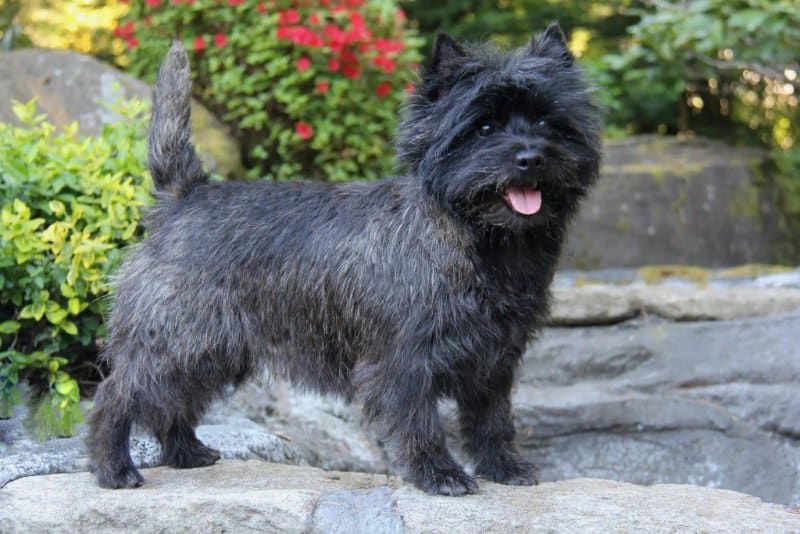
The Cairn Terrier is a small, short-legged breed with a well-proportioned build overall. Its general appearance is easily recognizable and has not changed much over time. The breed’s body is compact and of medium length, with a level back. This dog has sloping shoulders, deep and well-sprung ribs, strong muscular thighs, and a good bend of stifle, characteristics that support its working role as a hunter of vermin in tight spaces. Consequently, the Cairn is noted for its strong but not heavy body when compared with similar terrier breeds.
Texture: The coat of the Cairn Terrier is weather-resistant, consisting of a wiry, harsh, and profuse outer coat that is free from coarseness, and soft, short, and close undercoat. The hair on the head may be somewhat softer than the body coat, but still harsh enough to offer protection from brairs.
Standard Colors
04/Consider
The Cairn Terrier, with its friendliness, playfulness, and loyalty, is a great choice among single dog people and families. However, as with any breed and mixed breed, the breed’s high level of energy and its hunting instincts come with responsibilities that should be considered before acquiring a Cairn.
Interaction With Family
The level of affection a breed typically shows towards family members and familiar individuals.
Good With Other Dogs
The innate friendliness of a dog towards other dogs can depend on its breed.
Good With Young Children
The degree to which a breed will typically be patient with young children.
Amount Of Shedding
How much hair a breed typically leaves behind on clothes, furniture and floors.
Frequency Of Grooming
How often a breed needs brushing, bathing or a professional trim to stay in condition.
Amount Of Drooling
How prone a breed is to drool — worth knowing before you keep a towel by the door.
Openness To Strangers
How openly a breed tends to greet new people, visitors and strangers.
Protective Nature
How likely a breed is to alert you to — and stand between you and — anything unfamiliar.
Playfulness Level
How enthusiastic a breed stays about games and play well past puppyhood.
Trainability Level
How readily a breed takes direction and works with you rather than around you.
Barking Level
How much a breed uses its voice, and how readily.
Energy Level
How much get-up-and-go a breed brings to an average day.
Health
The Cairn Terrier is typically a healthy animal, but like all dogs, some individuals may be prone to genetic health issues due to indiscriminate breeding practices. This is why it’s always best to contact a preservation breeder who is a member of a Cairn Terrier club for information about obtaining a new puppy or adult dog. Lifespan: The average lifespan of the Cairn Terrier is 13 to 15 years, but with proper care, a balanced diet, and regular check-ups, many can thrive even beyond these years.
The Cairn Terrier is a real terrier; independent, alert, and intelligent. However, the Cairn is also wonderfully friendly and outgoing. Temperament, it should be noted, can be affected by several factors such as heredity, training, and socialization.
Early socialization is always key. Exposure to different people, sights, sounds, and experiences while young is important for the Cairn. This breed is happy and cheerful, and typically enjoys meeting new people. Of course, these dogs are devoted to family and like to be a part of their owners’ lives. Playing with kids can be their favorite activity at home. It’s important to note that Cairns are very sensitive and don't like being left alone for too long.
Cairns are curious dogs and are quick to learn. Due to their independence and stubbornness, however, they must know who is in charge. Otherwise, they will take control of things themselves. Early training and socialization tend to help with this sometimes challenging situation.
Because of the Cairn’s high energy level, the top of the list of activities that can be expected are digging, barking, and chasing. When outdoors, these dogs will chase any small animal if given the chance. For example, cats, rabbits, and even small dogs can be considered their quarry. Because of this, they should always be walked on a leash in public places and given a free-run only in a securely fenced yard. Cairns are typically good watchdogs and will always announce visitors.
Overall, the Cairn Terrier is a family dog and a wonderful companion. The breed needs to be in the house or wherever its family goes. It is a great choice for people who want an independent, playful, and alert companion that desires (demands) to be by their side.
Exercise Expectations
The exercise needs of Cairn puppies are different from those of adults, since their bodies are developing and not yet fully mature. Play should be supervised and regular periods of rest need to be scheduled. Older Cairns, despite their graying muzzles and stiffened joints, should still be active enough to maintain muscling and mobility. Daily walks are essential to release the Cairn’s energy reserves. These excursions must be up to one hour a day in length, and two walks a day are best, if possible. Without this exercise, this dog can develop behavior issues such as barking, digging, and even going on an unscheduled exploration. The three main types of exercise for this breed would be daily walks, high-intensity playtime, and mental stimulation. Cairns should be provided with the right kind of toy as a great way to burn energy and stimulate their active minds.
Energetic, curious, independent, and healthy is everything a Cairn Terrier is. The nature of this breed is one of adaptability, whether the dog is living in an apartment or a countryside home. The Cairn can happily thrive in just about any living environment.
If a person’s lifestyle necessitates frequent travel or a relocation, the Cairn will be highly adaptable to the change and will eagerly welcome the new surroundings. The breed’s adaptability makes it ideal for families that value flexibility in their lives.
Because of the Cairn’s double, weather-resistant coat, this breed adapts well to living in a variety of climates. The soft and furry undercoat keeps the dog cool in the summer heat and warm in the winter or when it's raining. The breed’s undercoat does an amazing job at keeping these dogs dry.
Although small in size, the Cairn Terrier is big in terms of energy. The level of energy is typically high, and this requires regular walks and exercise to expend that accumulated energy. Mental stimulation is also important for Cairns to prevent them from developing behavior problems and even becoming aggressive out of frustration and boredom.
When contemplating a Cairn as a family companion or introducing it to other animals, compatibility must be considered. While these dogs can be fantastic with children and other pets when properly socialized, understanding the breed’s prey drive and energy levels is key for managing relationships effectively.
05/Puppies
Cairn Terrier puppies are playful and full of energy from an early stage of life. Their curiosity, combined with their instinct for digging and playing, can make them a bit harder to keep calm; however, if trained and socialized early on, they can be great company for just about anyone.
Before bringing home a Cairn Terrier puppy, it’s best to make sure a safe and nurturing environment is provided. Since this breed is very active from a young age, constant supervision is required to prevent any harm. Providing the puppy with toys will help with its teething as well as its play needs.
During the puppy's growth stages, nutrition is critical. It's best to feed a young Cairn a high-quality puppy food to ensure it gets all the nutrients needed for healthy growth. Setting a regular feeding schedule is also a good idea and will assist with housebreaking.
Regular veterinary check-ups are crucial in the first year of life. Vaccinations, deworming, and basic health checks should be performed to provide the puppy with a healthy start in life.
Training a Cairn Terrier puppy at an early stage will encourage it to grow into a well-behaved adult. Important aspects of puppy care include basic training and socialization. Socialization will instill confidence and can even reduce the chances of fearfulness or aggression later in life.
06/Activities
The Cairn Terrier is a pretty versatile dog and is known for its intelligence, fearlessness, and adaptability. Although first bred for work on the farm to dig vermin from rock piles, over the years it has been involved in a variety of activities and dog sports, showcasing the breed's many skills.
Agility: At Agility Trials, dogs navigate through a pre-set obstacle course within a specified time limit. Tunnels, weave poles, jumps, teeters, and an A-frame are common features on courses comprised of 14-20 obstacles. If properly introduced to the equipment, most Cairns love Agility and participate with great enthusiasm.
Barn Hunt: This activity is based on the Cairn's instinct and ability to find vermin. Courses are built above ground using hay bales to create tunnels. Rats are safely placed in aerated tubes and hidden throughout the course for the dogs to find. Barn Hunt also tests the owner’s ability to “read“ the dog when they have found the hidden rat.
Dock Diving: Dock Diving is a sport in which dogs compete by jumping into a pool of water from a raised platform known as a dock. Dogs can be scored based on distance (the distance between the dock and where they land in the water), speed (how quickly they recover a toy at the pool's end), or height (how high they can jump to fetch a toy dangling above the water).
Earthdog: An Earthdog Trial puts the terrier's working ability and instincts to the test. Earthdog involves tunnels which the dogs must navigate while scenting a rat (the quarry). The dog must track the smell to the quarry and then "work" it. Depending on the sanctioning organization, "working" can refer to any active behavior such as barking, scratching, looking, pawing, or digging. The quarry is always guarded by wooden bars that are positioned across the end of the tunnel. The hunting encounter is carefully controlled, and neither the dog nor the quarry are threatened by the activity.
Fast CAT: This is a timed 100-yard dash for puppies at least 12 months old. In Fast CAT, dogs chase a plastic “bunny“ lure while its speed is measured.
Rally Obedience: Rally-O or Rally is a team sport in which a handler guides their dog around a course, similar to Agility. The distinction is that the course consists of many signals that imply obedience-like skills that a team must complete before proceeding to the next sign. The team strives to complete all of the signs in a certain order in the shortest amount of time. The skills on the placards include sit, down, stay, and heal.
Scent Work: In Scent Work, dogs are trained to detect certain "target odors" in a variety of search scenarios. The dogs are trained to operate as professional detecting canines, using their keen sense of smell to locate specific odors or “prey.”
Therapy Dog: Cairn Terriers can make excellent Therapy Dogs. In this work, dog and handler teams work together to achieve certification for visiting schools, hospitals, nursing homes, and other similar facilities and events. It is recommended that dogs complete some basic obedience training as well as the Canine Good Citizen test to make sure they enjoy this type of social work.
Gallery
07/Standards
The Cairn Terrier is recognized by the world's leading registries and kennel organizations, which categorize the breed into a specific Group based on its unique characteristics. This breed is recognized worldwide under the following Group designations:
The ideal Cairn Terrier is described by a Breed Standard that is approved by each of the world’s leading registries and kennel organizations. The Breed Standards for this breed may be found in the following links:
08/Clubs
Cairn Terrier clubs are indispensable in preserving the breed's written Standard, promoting responsible breeding practices, and fostering a community for enthusiasts and breeders alike. These organizations often serve as hubs for education, organized events, and advocacy for the Cairn Terrier as a unique breed.The Cairn Terrier Club of America (CTCA) is a dog club dedicated to supporting and promoting quality in the purebred breeding of Cairn Terriers. The organization strongly urges members and mentor-breeders to embrace the Breed Standard as specified by the CTCA and recognized by the American Kennel Club as the only requirement of excellence by which Cairn Terriers will be judged.The Cairn Terrier Club of Canada (CTCC) stands as the premier organization in Canada for Cairn Terrier enthusiasts. The club was formed by a small group of Cairn fanciers in 1952.The United Kingdom operates a few clubs, including The Cairn Terrier Club which is the oldest club for Cairns in the world, and the Southern Cairn Terrier Club, which is approved by The Royal Kennel Club.Joining or engaging with these and similar clubs provides Cairn Terrier enthusiasts with a wealth of knowledge and opportunities to connect with others who share the same passion for this affable breed.
09/Rescue
Sadly, not every Cairn Terrier puppy is placed in a loving forever home. When acquired without sufficient research and knowledge, some dogs can end up in adoption or foster situations.In the United States, Cairn Rescue USA is one of the dedicated rescue organizations for the breed. This group is dedicated to rescuing, rehabilitating, and finding new homes for Cairns in need. In addition, the Cairn Terrier Club of America contains a detailed list of hard-working regional rescues.Canadian Cairn Terrier Rescue is the leading rescue organization in Canada. This group of volunteers operates under the broader umbrella of the Cairn Terrier Club of Canada and has found homes for hundreds of Cairns looking for a new lease on life.In the United Kingdom, the most popular rescue group for the breed is the Cairn Terrier Relief Fund. This organization was established in 1969 and provides care for abandoned or neglected Cairns as well as those whose owners can no longer take care of them for any reason.
10/Facts
Famous Cairn Terrier
In 1939, a Cairn Terrier named “Terry” was cast as the character Toto in MGM's production of The Wizard of Oz.
Name
The breed is literally named after a pile of rocks. The word “cairn” refers to a stack of stones that is formed either naturally or by human hand. These formations are great breeding grounds for mice, rats, and other small vermin, and the dogs were created to go into the pile to flush them out.
Feet
The Cairn Terrier’s front paws are well-padded and larger than their rear paws, giving the dogs an advantage while digging for destructive and determined rodents.
11/FAQ
The Cairn Terrier has a typical lifespan of around 13 to 15 years, though some can live even longer with proper care. It's important to note that a balanced diet, regular exercise, and consistent veterinary care are essential factors for ensuring a long and healthy life.
Official Standard of the Cairn Terrier
General Appearance: That of an active, game, hardy, small working terrier of the short-legged class; very free in its movements, strongly but not heavily built, standing well forward on its forelegs, deep in the ribs, well coupled with strong hindquarters and presenting a wel-lproportioned build with a medium length of back, having a hard, weather-resisting coat; head shorter and wider than any other terrier and well furnished with hair giving a general foxy expression.
Head: Skull - Broad in proportion to length with a decided stop and well furnished with hair on the top of the head, which may be somewhat softer than the body coat. Muzzle - Strong but not too long or heavy. Teeth-Large, mouth neither overshot nor undershot. Nose - Black. Eyes - Set wide apart, rather sunken, with shaggy eyebrows, medium in size, hazel or dark hazel in color, depending on body color, with a keen terrier expression. Ears - Small, pointed, well carried erectly, set wide apart on the side of the head. Free from long hairs.
Tail: In proportion to head, well furnished with hair but not feathery. Carried gaily but must not curl over back. Set on at back level.
Body: Well-muscled, strong, active body with well-sprung, deep ribs, coupled to strong hindquarters, with a level back of medium length, giving an impression of strength and activity without heaviness.
Shoulders, Legs and Feet: A sloping shoulder, medium length of leg, good but not too heavy bone; forelegs should not be out at elbows, and be perfectly straight, but forefeet may be slightly turned out. Forefeet larger than hind feet. Legs must be covered with hard hair. Pads should be thick and strong and dog should stand well up on its feet.
Coat: Hard and weather-resistant. Must be double-coated with profuse harsh outer coat and short, soft, close furry undercoat.
Color: May be of any color except white. Dark ears, muzzle and tail tip are desirable. Ideal Size: Involves the weight, the height at the withers and the length of body. Weight for bitches, 13 pounds; for dogs, 14 pounds. Height at the withers - bitches, 9½ inches; dogs, 10 inches. Length of body from 14¼ to 15 inches from the front of the chest to back of hindquarters. The dog must be of balanced proportions and appear neither leggy nor too low to ground; and neither too short nor too long in body. Weight and measurements are for matured dogs at two years of age. Older dogs may weigh slightly in excess and growing dogs may be under these weights and measurements.
Condition: Dogs should be shown in good hard flesh, well muscled and neither too fat or thin. Should be in full good coat with plenty of head furnishings, be clean, combed, brushed and tidied up on ears, tail, feet and general outline. Should move freely and easily on a loose lead, should not cringe on being handled, should stand up on their toes and show with marked terrier characteristics.
Faults
1. Skull - Too narrow in skull.
2. Muzzle - Too long and heavy a foreface; mouth overshot or undershot.
3. Eyes - Too large, prominent, yellow, and ringed are all objectionable.
4. Ears - Too large, round at points, set too close together, set too high on the head; heavily covered with hair.
5. Legs and Feet - Too light or too heavy bone. Crooked forelegs or out at elbow. Thin, ferrety feet; feet let down on the heel or too open and spread. Too high or too low on the leg.
6. Body - Too short back and compact a body, hampering quickness of movement and turning ability. Too long, weedy and snaky a body, giving an impression of weakness. Tail set on too low. Back not level.
7. Coat - Open coats, blousy coats, too short or dead coats, lack of sufficient undercoat, lack of head furnishings, lack of hard hair on the legs. Silkiness or curliness. A slight wave permissible.
8. Nose - Flesh or light-colored nose.
9. Color - White on chest, feet or other parts of body.
Approved May 10, 1938
All About Judging
Read on to learn how the Cairn Terrier breed is judged in the AKC conformation show ring based on the Cairn’s original purpose.

Meet the Breeders
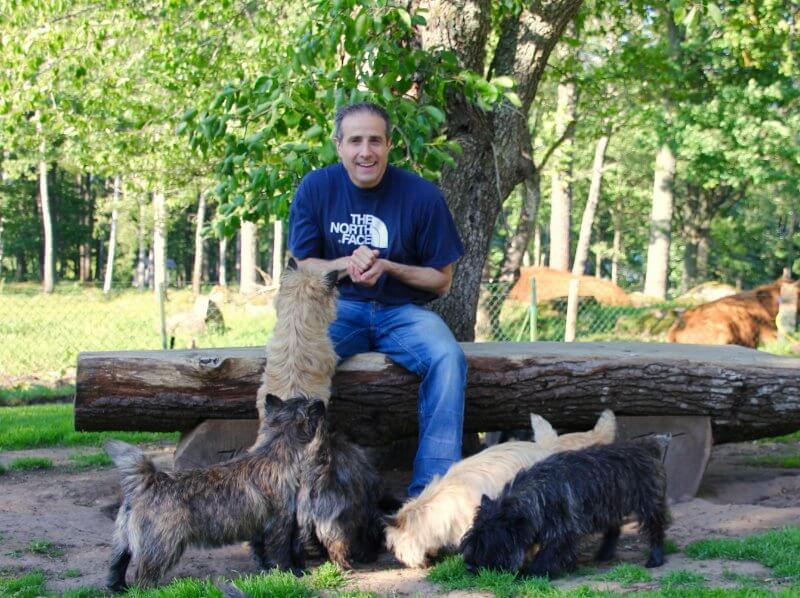
Joe Vernuccio is the breeder behind Ashwood Cairn Terriers. Read about the kennel’s beginnings, dogs, puppies, photos and more!
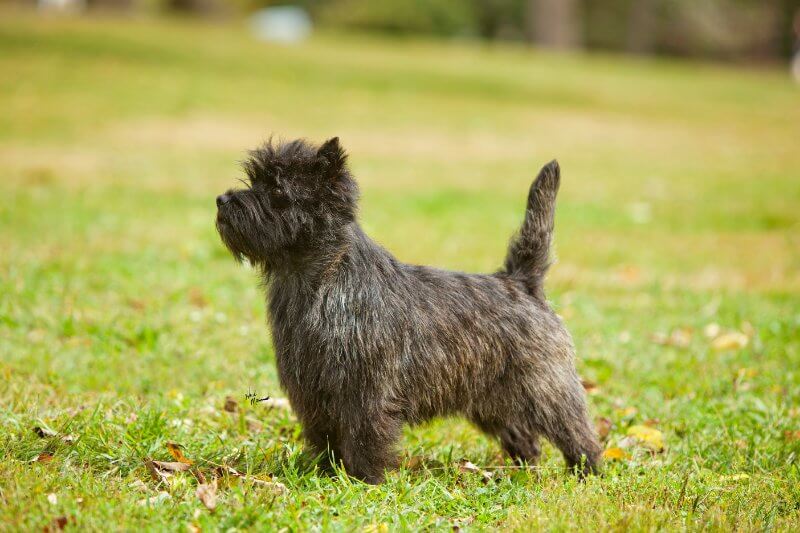

Cairn Terrier is a small terrier dog breed with Scottish roots. The breed was named Cairn because it hunted between Scottish highland cairns.

Earthdog
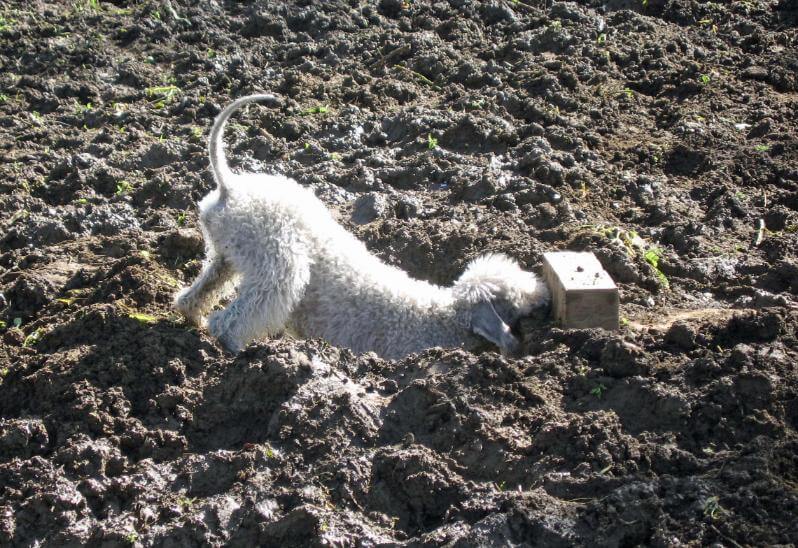
NATIONAL EARTHDOG TESTS hosted by the Bedlington Terrier Club of America, Monday (Columbus Day) October 10, 2022. Ev-ry Place, LLC., 1333

All About Judging
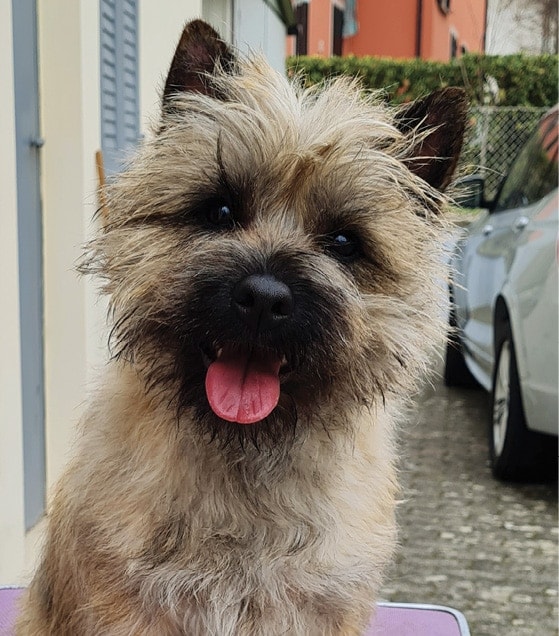
The US Cairn Terrier breed standard of 1938 refers to a “general foxy expression” in a hardy and game Terrier, but it gives no other
The tail of a Cairn Terrier is moderate in length, straight, thick, and strong. It is set on at the level of the back and is wider at the base than at the tip. The tail is furnished with dense hair and is carried between the 12 and 2 o'clock position. It should never curl over the back when the dog is moving.
Standard Markings
A Note About Color: The Cairn Terrier’s coat can be any color except white, solid black, or black and tan. Dark points on the ears and muzzle are very typical, as is brindling on any acceptable color.
Coat Type
Wiry, Double
The structure of the coat this breed carries.
Coat Length
Medium
How long the breed's coat grows when kept in condition.
Adaptability Level
How easily a breed copes with changes in home, routine, noise and weather.
Mental Stimulation Needs
How much a breed needs a job, a puzzle or training to stay content.
The Cairn Terrier should thrive on a high-quality food, whether purchased commercially or cooked at home with a veterinarian's guidance. The daily amount of food that is recommended is one-half to one cup, divided into two meals.
The Cairn’s diet should be tailored to the age of the dog (puppy, adult, or senior), and its size, build, metabolism, and activity level. Highly active dogs will need more food than those that are less active.
High-quality food provides more nourishment, so less will be needed. The food should be measured and split into two meals per day rather than one. Also, it’s important never to leave food out all day and avoid feeding prepackaged food for people; however, if needed, it is safe to supplement with natural foods such as carrots, peppers, blueberries, broccoli, and cauliflower.
In case of a lack of nutrients in the dog’s food, the best supplements to give a Cairn are multivitamins, omega-3 fatty acids, and fish oil.
To check if a Cairn is overweight, both the eye test and the hands-on test should be given. When looking down on the dog, a waist should be apparent. By placing hands on the back and thumbs along the spine, it should be possible to feel, but not see, the ribs. If this is not the case, the dog needs less food and more exercise. Before making any changes to a Cairn’s diet, it’s essential to always check with a veterinarian first.
The Cairn Terrier is a breed known for its lively and tenacious nature. This zest for life, combined with an innate intelligence, makes this dog both a joy to own and a challenge to train.
For those wondering about the Cairn’s ease of training, these dogs can be quite independent. They have a strong-willed nature, often making them appear rather stubborn. This doesn't mean they're untrainable, however. It just requires a consistent and patient approach. Positive reinforcement methods, using treats or praise, typically work best with this breed. Cairns often respond well to rewards, and this can be a great incentive for them to learn.
When it comes to vocalizations, Cairns are known to be quite expressive. They might not always bark without a reason, but they're certainly not silent dogs. Their barking could be in response to unfamiliar sounds or strangers, thus making them decent watchdogs. It's essential to teach them the "quiet" command early on to manage any unnecessary barking.
In terms of intelligence, this breed is undoubtedly smart. The Cairn’s intelligence, combined with a curious nature, can sometimes lead this dog into mischief if not directed appropriately. Training sessions should be regularly provided, but kept short and engaging to hold the student’s attention.
Lastly, the Cairn Terrier’s predation instinct is something to consider. Given the breed’s history as a hunter of small vermin, these dogs have a relatively high prey drive. While this might not pose a problem for most people, those with smaller pets like hamsters or birds should be cautious.
Grooming Expectations
Weekly brushing and combing should be done to check the hair and skin, and hand-stripping is necessary to maintain the coat's proper texture. Because of the Cairn Terrier’s water-resistant coat, bathing is recommended only once every few months. If bathed more often, there’s a chance of damaging the hair and their natural protective oils. When bathing, it’s important to always choose a shampoo for a “hard“ coat. Trimming should be done by a professional groomer and includes some trimming of hair around the Cairn’s eyes for both aesthetic and health reasons. Also, it’s important to make sure the dog’s feet are trimmed, since this is an active breed that is always ready for adventure. Lastly, the Cairn Terrier’s nails should be trimmed regularly, because overgrown nails are uncomfortable for the dog and can even cause pain. Trimmed nails are essential and allow the dog to move freely without discomfort.