Members
01/Overview
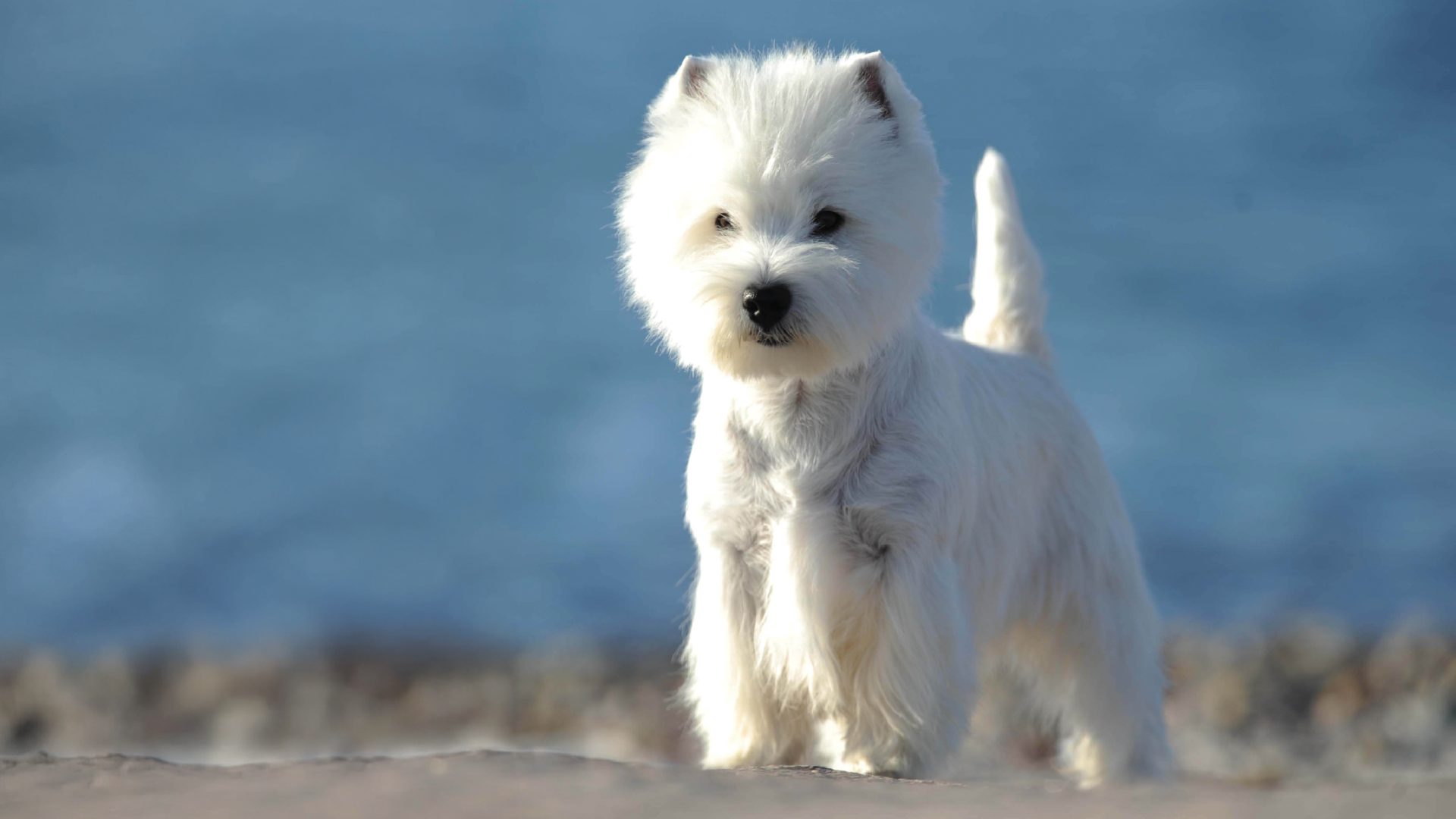
The West Highland White Terrier, affectionately known as the "Westie," is a purebred breed known for its distinctive white coat and lively personality. Originating in the rough and isolated glens and vales of Scotland, this small but robust terrier is not just a pretty face; it packs a lot of character and energy into a compact frame. Initially bred for hunting small rodents, the Westie today is a beloved companion, showcasing a blend of playfulness and independence.
Highlights
02/History
The West Highland White Terrier dog breed has a rich and storied history that traces back several centuries to Scotland. This breed's journey from a working terrier to a beloved companion is filled with interesting facts and developments.
The origin of the West Highland White Terrier can be traced to the rugged terrain of the Scottish Highlands. They were initially bred for hunting and controlling the population of vermin, such as rats and foxes. The breed descends from several varieties of Scottish terriers, which were initially categorized more by their working abilities than their specific breed traits. It's believed that the Westie shares a common lineage with other Scottish terriers like the Cairn Terrier, Scottish Terrier, and Dandie Dinmont Terrier.
A pivotal moment in the breed's history occurred in the 19th century with Colonel Malcolm of Poltalloch. Legend has it that the Colonel accidentally shot and killed one of his wheaten-colored Cairn Terriers during a hunt. Distraught by this incident, he decided to breed only white dogs, which could be easily distinguished from game. This led to the development of the "Poltalloch Terrier," which would later be known as the West Highland White Terrier.
The breed's distinctive white coat was not only a practical choice for visibility during hunts but also became a hallmark of the breed, distinguishing it from other Scottish terriers. The coat is not just aesthetically pleasing but is also a functional feature, providing protection against harsh weather and rough terrain.
The West Highland White Terrier was officially recognized by the Kennel Club (UK) in 1907. The breed quickly gained popularity in Britain and beyond. The American Kennel Club (AKC) recognized the Westie in 1908. Over the years, the breed has become known not just for its hunting prowess but also for its spirited personality and adaptable nature, making it a popular choice for a family pet.
In addition to their role as companions, Westies have been featured in various forms of media and advertising, becoming somewhat of a cultural icon. Their charming appearance and lively disposition have made them favorites in television, movies, and print advertisements.
Today, the West Highland White Terrier is celebrated for its combination of a playful and friendly demeanor with a bold and confident spirit. While they may no longer be used primarily as working terriers, their legacy lives on in their strong personalities and adaptable natures, making them well-loved pets in homes around the world.
03/Appearance
In terms of stature, an adult male West Highland White Terrier typically stands at 11 inches at the shoulder, while a mature female measures about 10 inches. Regarding weight, both males and females generally range from 15 to 20 pounds.
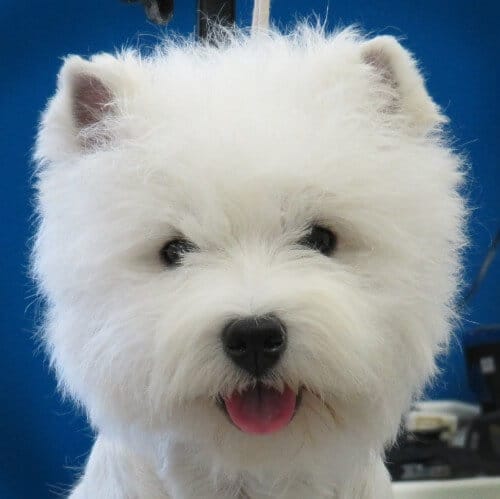
The body length of the West Highland White Terrier, between the withers and the root of the tail, is slightly shorter than the height at the withers, giving the breed a compact appearance. This short-coupled proportion contributes to the breed’s agility and robustness.
The Westie possesses a solid bone structure, with well-muscled legs and powerful hindquarters. Despite the breed’s small size, these dogs are substantial and generally hardy, a nod to their working roots.
Texture: The double coat of a West Highland White Terrier is a defining feature of the breed, characterized by its single color and unique presentation. The undercoat is soft and dense, offering adequate insulation in all weather conditions. The outer coat, by contrast, is hard and straight, and about two inches in length. This protective coat is typically shaped by hand-stripping: the head is shaped by plucking the hair in a rounded shape; the eyebrows are heavy; the ears are trimmed short; the neck and shoulders are shortened; shorter areas are blended into longer furnishings on the stomach and legs. The furnishings may be somewhat softer than the body coat, but soft, silky, or curly coats are unacceptable in the breed, as in an open or single coat.
Standard Colors
04/Consider
Owning a Westie is a delightful experience filled with energy, affection, and a touch of independence. These small, sturdy dogs are known for their friendly disposition and lively personality. While they make excellent companions, potential owners should understand the breed's specific needs and characteristics to provide the best care.
Interaction With Family
The level of affection a breed typically shows towards family members and familiar individuals.
Good With Other Dogs
The innate friendliness of a dog towards other dogs can depend on its breed.
Good With Young Children
The degree to which a breed will typically be patient with young children.
Amount Of Shedding
How much hair a breed typically leaves behind on clothes, furniture and floors.
Frequency Of Grooming
How often a breed needs brushing, bathing or a professional trim to stay in condition.
Amount Of Drooling
How prone a breed is to drool — worth knowing before you keep a towel by the door.
Openness To Strangers
How openly a breed tends to greet new people, visitors and strangers.
Protective Nature
How likely a breed is to alert you to — and stand between you and — anything unfamiliar.
Playfulness Level
How enthusiastic a breed stays about games and play well past puppyhood.
Trainability Level
How readily a breed takes direction and works with you rather than around you.
Barking Level
How much a breed uses its voice, and how readily.
Energy Level
How much get-up-and-go a breed brings to an average day.
Health
The West Highland White Terrier is generally a healthy and hardy breed, reflecting its origins as a working terrier. However, like all breeds and mixed breeds, Westies are prone to certain health conditions. It's crucial for prospective caretakers to be aware of these issues and collaborate closely with a reputable breeder and veterinarian to make sure that their Westie stays healthy throughout its life. The average lifespan of a West Highland White Terrier is about 13 to 15 years. With attentive care, regular veterinary check-ups, and a proper diet, many Westies live full, vibrant lives.
The West Highland White Terrier boasts a personality that is as distinctive as its appearance. These terriers are renowned for their bold, confident, and friendly nature. They are spirited and full of life, often displaying a level of self-assuredness that belies their small stature.
Westies are known for their adaptability, making them suitable for a variety of living situations, including with novice owners. However, their independent streak means they benefit from consistent, patient training. This breed's sensitivity level is moderate; they respond well to positive reinforcement but may not react favorably to harsh or heavy-handed methods.
When it comes to being alone, the Westie can manage some time by itself, but like all dogs, they prefer the company of their humans and should not be left alone for extended periods. They generally do well with other dogs, especially if they have been socialized from a young age. Their prey drive, stemming from their hunting heritage, means caution is advised around smaller pets.
The breed's demeanor with young children is typically good, particularly if the dog has been raised with children from a young age. Supervision is always recommended, however, to ensure safe interactions. In terms of friendliness towards strangers, Westies are usually welcoming but can be initially reserved. Once they warm up, they often become friendly and sociable.
Exercise Expectations
Westies have a moderate to high energy level, reflecting their terrier heritage. They benefit from daily walks, play sessions, and opportunities to explore safely in a fenced yard or park. The intensity of their exercise should be balanced; while they enjoy being active, they do not require excessively strenuous activity. A mix of walks, interactive play, and mental stimulation through training exercises or puzzle toys is ideal for keeping a Westie engaged and healthy. Their playful nature makes them enthusiastic participants in games like fetch, tug-of-war, and hide-and-seek. These activities not only provide physical exercise but also help to strengthen the bond between the Westie and their human companion. In addition, mental exercises such as learning new tricks or navigating simple agility courses can be beneficial for keeping their minds sharp and satisfied. It's important to monitor their exercise routine, especially as they age. While young Westies are usually full of energy, older dogs may need shorter or less intense exercise sessions. Regular, moderate exercise helps maintain their muscle tone, joint health, and overall fitness, preventing issues like obesity.
Living with a West Highland White Terrier is a rewarding experience, offering a blend of companionship, energy, and character. Understanding their specific needs and characteristics is key to creating a harmonious living environment for these spirited little dogs.
West Highland White Terriers adapt well to apartment living, thanks to their small size. However, their active nature means they still require adequate exercise and mental stimulation, regardless of the living space. Regular walks and playtime are essential to keep them happy and healthy in a smaller home.
When it comes to weather adaptability, Westies are quite versatile. Their double coat provides insulation, making them relatively comfortable in cooler climates. However, it's important to protect them from extreme cold, as they are not immune to the effects of very low temperatures. In colder weather, a sweater or coat can help keep them warm during outdoor activities.
In contrast, hot weather requires extra precautions for a West Highland White Terrier. Their white coat can be susceptible to sunburn, so it's important to provide shade and avoid prolonged exposure to direct sunlight. Making sure that they have access to fresh water and a cool place to rest is crucial during warmer months. Exercise should be done during cooler parts of the day to prevent overheating.
05/Puppies
Bringing a West Highland White Terrier puppy into your home is an exciting and rewarding experience. These puppies, with their bright eyes and playful antics, are sure to bring joy and laughter to any household. However, raising a Westie puppy requires commitment, patience, and an understanding of the breed's specific needs during their formative months.
Caring for a West Highland White Terrier puppy begins with creating a safe and nurturing environment. Puppies are naturally curious and full of energy, so it's important to puppy-proof your home, removing any hazards that could pose a risk to their safety.
Nutrition is crucial during this stage. Feeding a high-quality puppy food formulated for small breeds is essential to support their growth and development. Puppies typically eat three to four small meals per day. It's important to maintain consistent feeding times and control portion sizes to prevent overfeeding and promote healthy growth.
Early socialization and training are key components of puppy care. Introducing your Westie puppy to a variety of people, animals, and environments helps them develop into well-rounded and confident dogs. Basic training, including housebreaking, crate training, and learning simple commands, should start early. Positive reinforcement techniques work best, as they encourage good behavior in a gentle and effective manner.
Regular veterinary check-ups are also important for monitoring your puppy's health. Vaccinations, deworming, and general health assessments are part of a preventative care routine that helps ensure a healthy start in life.
Exercise for Westie puppies should be age-appropriate. Short, gentle play sessions are better than strenuous exercise, as their bones and joints are still developing. Mental stimulation through interactive toys and simple puzzles can help keep their active minds engaged.
Finally, grooming should be introduced early. Regular brushing from a young age helps Westie puppies get used to the grooming process, setting the stage for easier grooming sessions as they grow.
06/Activities
West Highland White Terriers are energetic and agile dogs, making them well-suited for a variety of activities and dog sports. These pursuits not only provide physical and mental stimulation for the Westie but also strengthen the bond between dog and handler. Here are some activities and dog sports in which West Highland White Terriers often excel:
Participating in these activities and sports can be a fulfilling way to channel their energy and intelligence. Whether for competition or fun, they provide an opportunity for Westies to shine and for owners to enjoy their unique capabilities and personalities.
Gallery
07/Standards
The West Highland White Terrier is recognized by the world's leading registries and kennel organizations, which categorize the breed into a specific Group based on its unique characteristics. This breed is recognized worldwide under the following Group designations:
The ideal West Highland White Terrier is described by a Breed Standard that is approved by each of the world’s leading registries and kennel organizations. The Breed Standards for this breed may be found in the following links:
08/Clubs
09/Rescue
10/Facts
Origins in Scotland
The West Highland White Terrier originated in Scotland, where it was bred for hunting small rodents and foxes, a testament to its tenacity and courage.
Distinctive White Coat
Westie's white coat was selectively bred for visibility during hunting. This feature set them apart from their terrier cousins and made them easier to spot in the Scottish Highlands.
Connection to Colonel Malcolm
The breed's development is often attributed to Colonel Malcolm of Poltalloch, who, in the 19th century, decided to breed only white terriers after tragically losing a colored terrier during a hunt.
Versatile Actors
Westies have been featured in various forms of media, from television shows to advertisements, thanks to their expressive faces and charming demeanor.
High Pain Tolerance
Originally bred to hunt and dig for prey, Westies have a surprisingly high pain tolerance. This trait, while beneficial in their working roles, means owners must be vigilant about their health and injuries.
Strong Prey Drive
Reflective of their hunting roots, West Highland White Terriers have a strong prey drive. They are known to chase after small animals, necessitating proper training and secure environments.
Popular Among Celebrities
The breed has been a favorite among various celebrities throughout history, further popularizing the Westie.
Long Lifespan
With a lifespan averaging 13 to 15 years, Westies are known for their longevity.
11/FAQ
West Highland White Terriers do shed, but their shedding is generally considered moderate. Their double coat, consisting of a soft undercoat and a harder outer coat, requires regular grooming to manage shedding. Brushing a few times a week helps to remove loose fur and keep shedding under control.
Official Standard of the West Highland White Terrier
General Appearance: The West Highland White Terrier, originally bred to hunt in packs for badger and eradicate vermin in the rough terrain of the Scottish Highlands, is a small, well-boned, hardy-looking terrier, exhibiting confidence and possessed with no small amount of self-esteem. The Westie presents a compact appearance with good balance and substance, and is distinguished by its hard, white, double coat. The breed requires moderation both in structure and presentation, and any exaggerations are discouraged.
Size, Proportion, Substance: The ideal size is eleven inches at the withers for dogs and ten inches for bitches. A slight deviation is acceptable. The Westie is a compact dog, with good balance and substance. The body between the withers and the root of the tail is slightly shorter than the height at the withers. Short-coupled and well boned.
Head: Shaped to present a roundish appearance from the front and in proportion to and balanced with the body. Expression - Inquisitive, intense, keen, intelligent and alert. Eyes - Widely set apart, medium in size, almond shaped, dark brown in color, and deep set. Looking from under heavy brows, they give a piercing look. Eye rims are black. Ears - Small, prick, set wide apart, on the top outer edge of the skull, and carried tightly erect. They terminate in a sharp point; must never be cropped. The hair on the ears is trimmed short and is smooth and velvety, free of fringe at the tips. Black pigmentation is preferred. Skull - Broad, slightly longer than the muzzle, slightly domed between the ears. It gradually tapers to the eyes. There is a defined stop and heavy brows. Muzzle - Blunt, slightly shorter than the skull, powerful and gradually tapering to the nose, which is large and black. The muzzle is well filled below the eyes. The jaws are level and powerful. Lip pigment is black. Bite - The teeth are large for the size of the dog. There must be six incisor teeth between the canines of both lower and upper jaws. A tight scissors or level bite is equally correct.
Neck, Topline, Body, Tail: Neck - Muscular and well set on sloping shoulders. Length in proportion to the rest of the dog. Topline - Flat and level, both standing and moving. Body -Compact and of good substance with defined forechest and buttocks. Ribs extend at least to elbows. The ribs are well arched in the upper half and taper to present a flattish side appearance. Chest is deep and extends at least to the elbows. Width is in proportion to the size of the dog. Back ribs are of considerable depth, and distance from last rib to upper thigh is as short as compatible with free movement of the body. Loin is short, broad and strong. Faults - Barrel ribs, ribs above elbows, lack of definite body overhang. Tail - Relatively short, with good substance, and shaped like a carrot. When erect it is never extended above the top of the skull. It is covered with hard hair without feather, as straight as possible, carried upright or slightly forward but not curled over the back. The tail is set on high enough so that the spine does not slope down to it. The tail is never docked.
Forequarters: Angulation, Shoulders - Shoulder blades are well laid back and well-knit at the withers. The shoulder blade attaches to an upper arm which is equal or nearly equal to the length of the shoulder blade. Faults - Steep or loaded shoulders. Upper arm too short or upright. Legs -Forelegs are muscular and well boned, relatively short, but with sufficient length to set the dog up so as not to be too close to the ground. The front legs are reasonably straight, and thickly covered with short hard hair. They are set in under the shoulder blades with definite body overhang before them. Height from elbow to withers and elbow to ground is approximately the same. Faults - Out at elbows, light bone, fiddle-front. Feet - Forefeet are larger than the hind ones, round, proportionate in size, strong, thickly padded; they may be turned out slightly. Dewclaws may be removed. Black pigmentation is most desirable on pads of all feet and nails, although nails may lose coloration in older dogs.
Hindquarters: Angulation - Thighs are very muscular, stifles well bent, and hocks well let down. Not set wide apart and parallel when viewed from the rear. Legs - Rear legs are muscular and relatively short. Faults - Weak hocks, long hocks, over or lack of angulation, cow hocks. Feet - Hind feet are smaller than front feet, and are thickly padded. Dewclaws may be removed.
Coat: The white double coat is hard and weather-resistant, consisting of straight, hard hair and a short, soft undercoat. The longer jacket hair is approximately 1 ½ to 2 inches of hard hair, plucked and trimmed to blend into the shorter coated side neck, chest, shoulder, and rear. The jacket is smoothly blended into the longer furnishings. Hair is left around the head, plucked and shaped to provide a roundish frame for the face, with the tips of the ears and piercing eyes partially exposed yielding a typical West Highland White Terrier expression. Coat color, texture, and presentation should reflect the breed’s purpose and terrain in which they work.
Color: The color is white, as defined by the breed's name. A hard straight coat which has some wheaten tipping is preferable to a soft white coat.
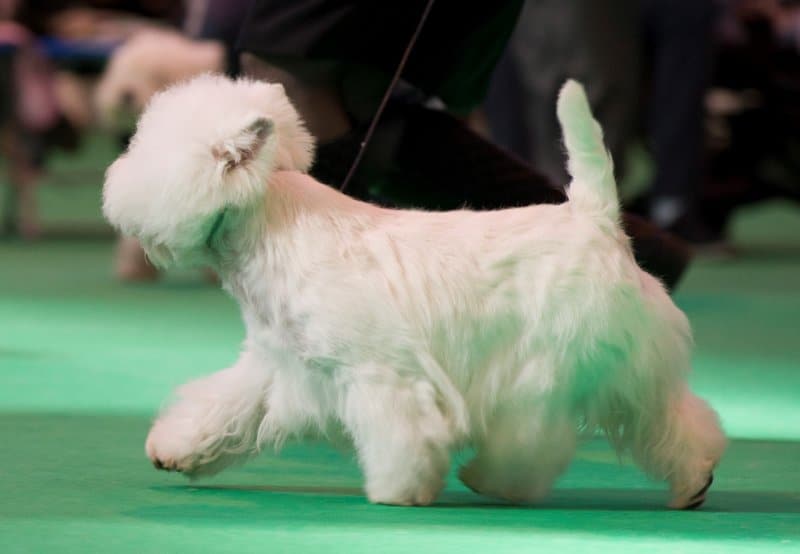
Gait: Movement is free and easy all around; it is a distinctive gait, not stilted. When viewed from the side, the gait is powerful with equally ample reach and drive. The topline remains level. In the front the leg is freely extended by the shoulder. When viewed from the front, the legs do not move parallel but tend to move toward the center of gravity. The hind movement is free, strong, and fairly close, but does not single track. The hocks are freely flexed and drawn close under the body, so that when moving off on the foot the body is thrown or pushed forward with some force. Faults- Lack of reach in front, and/or drive behind. Stiff, stilted movement.
Temperament: Alert, confident, courageous, self-reliant, and Friendly-Possessing no small amount of self-esteem. Faults - Excess timidity or excess pugnacity
Approved February 13, 2024
Effective May 1, 2024

Dog Shows
Westies are smart, fun companions who love adventures. Learn their quirks, training tips, and grooming essentials in this guide.

All About Judging
Discover the origins, traits, and true type of the West Highland White Terrier, bred for tenacity and excellence.
Discover the curious, happy, and sometimes stubborn nature of West Highland White Terriers and their fascinating history.
Profiles & Interviews
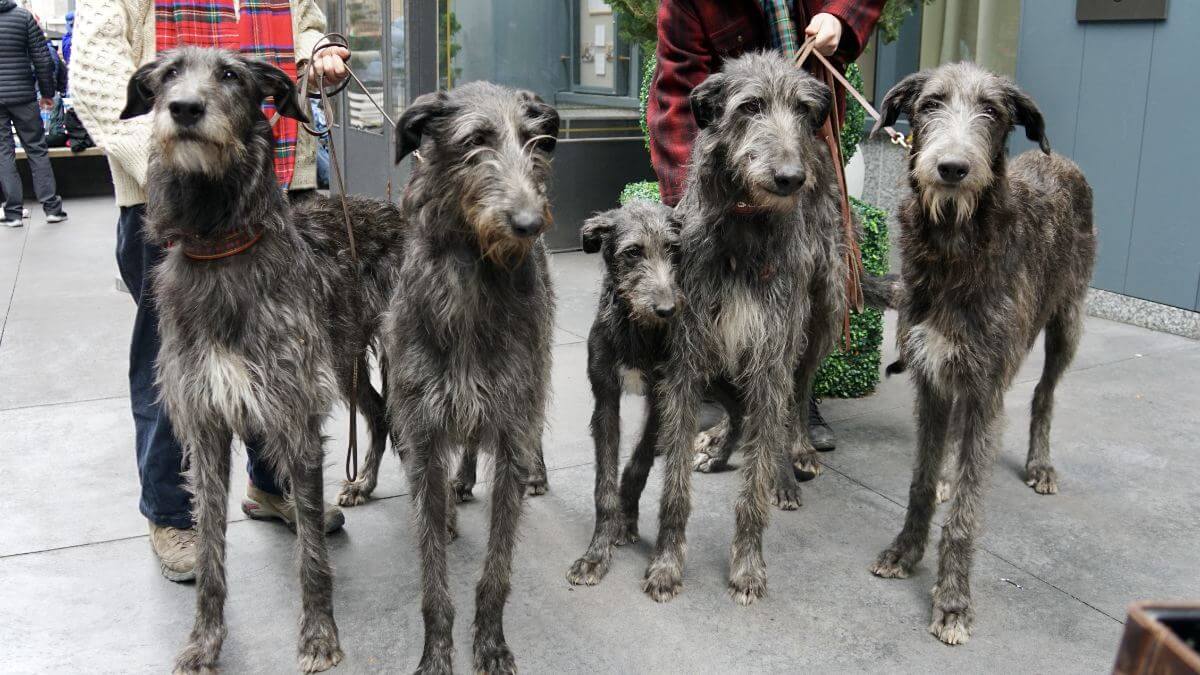
Discover the joy of Scottish heritage at the 2024 Tartan Day Parade, featuring bagpipers, dancers, and adorable Scottish dog breeds.

All About Judging
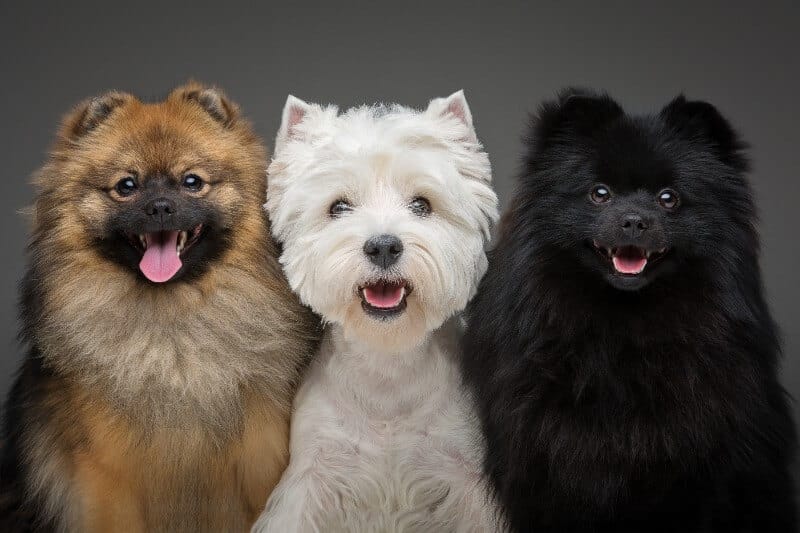
See what sets West Highland White Terriers (Westies) apart from other breeds in terms of balance, coat, head, personality, and more!
All About Judging
West Highland White Terrier – Purpose of a Breed Standard Breeding, showing, and judging dogs is a game of sorts. To play any game well, participants must know the rules and understand the concepts. For instance, in the game of Bridge, if you are not dealt a good hand, you will not win a grand […]
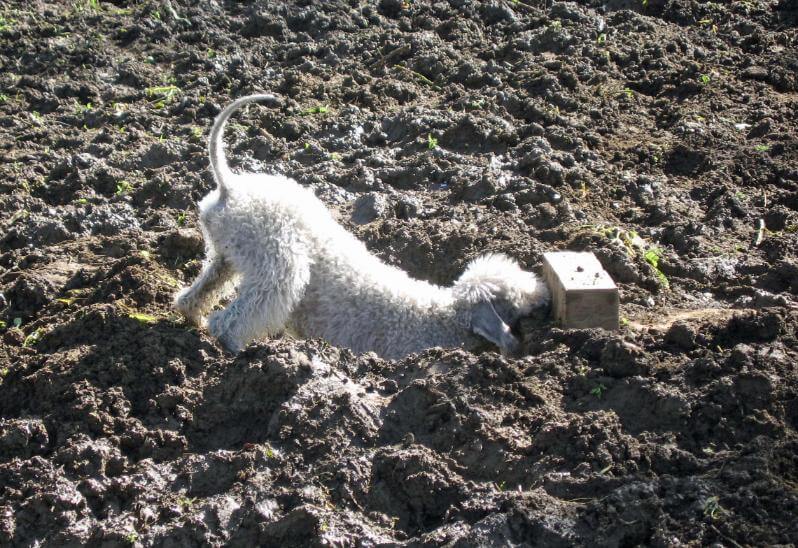

Earthdog
NATIONAL EARTHDOG TESTS hosted by the Bedlington Terrier Club of America, Monday (Columbus Day) October 10, 2022. Ev-ry Place, LLC., 1333
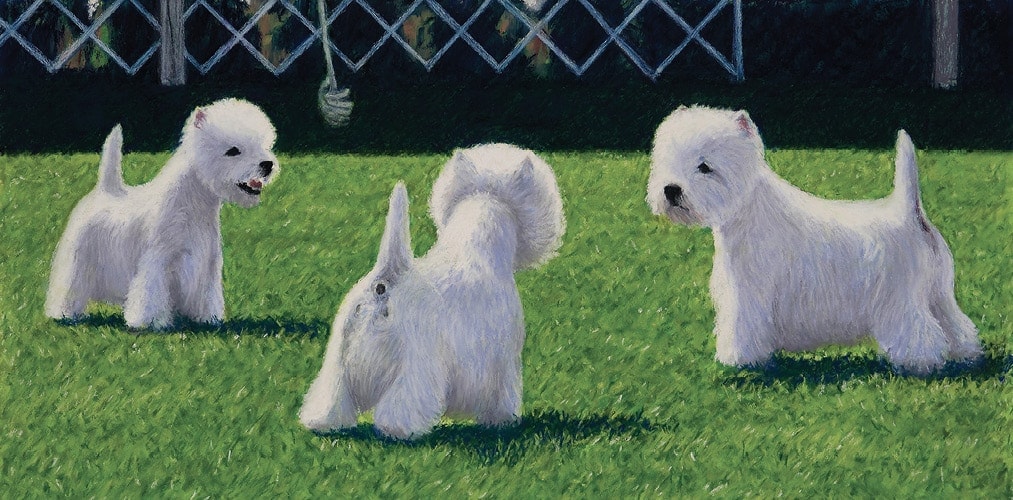

All About Judging
West Highland White Terrier Judging Guide: Conformation judges hold the long-term future of the breeds they judge in their hands.
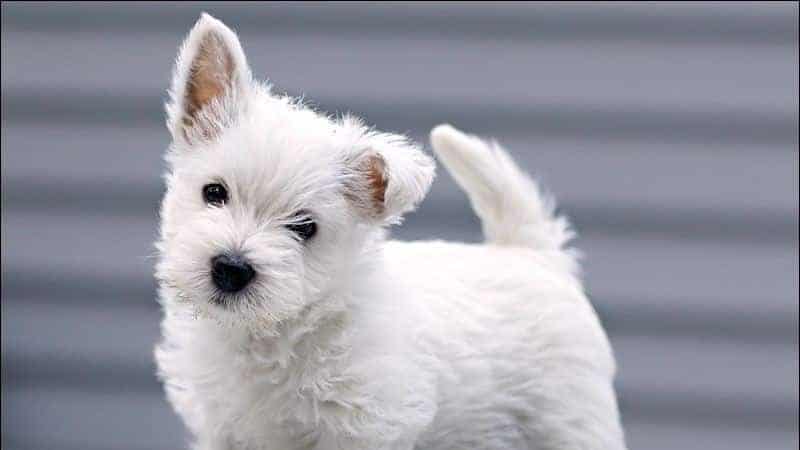

Dive into the Westie community’s breeding insights with this survey from ShowSight Magazine, exploring judging and the breed’s current state.
The West Highland White Terrier has a relatively short tail, averaging 5 to 6 inches in length. It is carrot-shaped and set high on the croup. When erect, the tail is carried as straight as possible and does not curl over the back. The tail is never docked, and should not be long, thin or curled.
A Note About Color: The namesake coat of the West Highland White Terrier may only be white, and any heavy wheaten coloration is undesirable in the breed.
Coat Type
Double
The structure of the coat this breed carries.
Coat Length
Medium
How long the breed's coat grows when kept in condition.
Adaptability Level
How easily a breed copes with changes in home, routine, noise and weather.
Mental Stimulation Needs
How much a breed needs a job, a puzzle or training to stay content.
Feeding a West Highland White Terrier requires attention to their specific dietary needs to make sure that they maintain optimal health and energy levels.
When feeding a Westie puppy, it's important to provide a diet formulated for small breeds with high energy levels. These diets typically contain the right balance of protein, fats, carbohydrates, vitamins, and minerals to support their rapid growth and development. Puppies should be fed three to four times a day to accommodate their smaller stomachs and higher metabolic rate.
As the Westie matures into adulthood, their feeding schedule can be adjusted to two meals per day. Adult Westies typically require a well-balanced diet that includes high-quality dog food. The amount of food, usually measured in cups per day, depends on the dog's size, age, activity level, and metabolism. On average, an adult West Highland White Terrier might require about ½ to 1 ½ cups of dry dog food per day, divided into two meals. However, this can vary, and it's essential to monitor the dog's weight and adjust portions as necessary to avoid overfeeding.
It is also crucial to consider the breed's potential for food sensitivities or allergies when choosing their diet. Some West Highland White Terriers may have a predisposition to skin allergies, which can be exacerbated by certain foods. Consulting with a veterinarian to tailor a diet that suits an individual dog's health needs is always a wise approach.
Training a West Highland White Terrier can be a rewarding and sometimes challenging experience due to their intelligent yet independent nature. Westies are smart dogs with a streak of stubbornness, so patience and consistency are key in their training.
Westies generally respond well to training, especially when it is started early and uses positive reinforcement techniques. They are eager to please and can learn a variety of commands and tricks. However, due to their independent nature, they may sometimes choose to follow their own agenda. Therefore, training sessions should be kept short, fun, and engaging to maintain their interest.
This breed's intelligence means they catch on quickly, but they can also become bored with repetitive tasks. Introducing variety and challenges in training routines can help keep a Westie engaged. They are also known for their vocal nature, so training to manage their tendency to bark is often necessary. Teaching commands like "quiet" or "enough" can be beneficial in controlling excessive barking.
When it comes to wanderlust potential, Westies, owing to their terrier heritage, may have a tendency to chase and explore. Providing them with a secure environment and teaching reliable recall commands are important for their safety. They also have a natural predation instinct, which may manifest in chasing small animals or moving objects, so early socialization and training in this aspect are crucial.
Grooming Expectations
The coat of a West Highland White Terrier is relatively easy to groom despite its appearance. Their double coat, consisting of a soft undercoat and a harder outer coat, needs to be brushed regularly to prevent matting and to remove dirt and loose hair. Brushing a couple of times a week is generally sufficient, but during shedding seasons, more frequent brushing may be required to manage increased shedding. In addition to regular brushing, the breed's coat should be trimmed every few months to maintain its shape and health. Professional grooming is often recommended to achieve the breed's distinctive look, particularly around the face and ears. Shedding is moderate in West Highland White Terriers. Regular grooming helps to minimize the amount of hair shed and keeps their coat bright and clean. Caretakers should also pay attention to other grooming needs, such as nail trimming, ear cleaning, and dental care.