Members
01/Overview
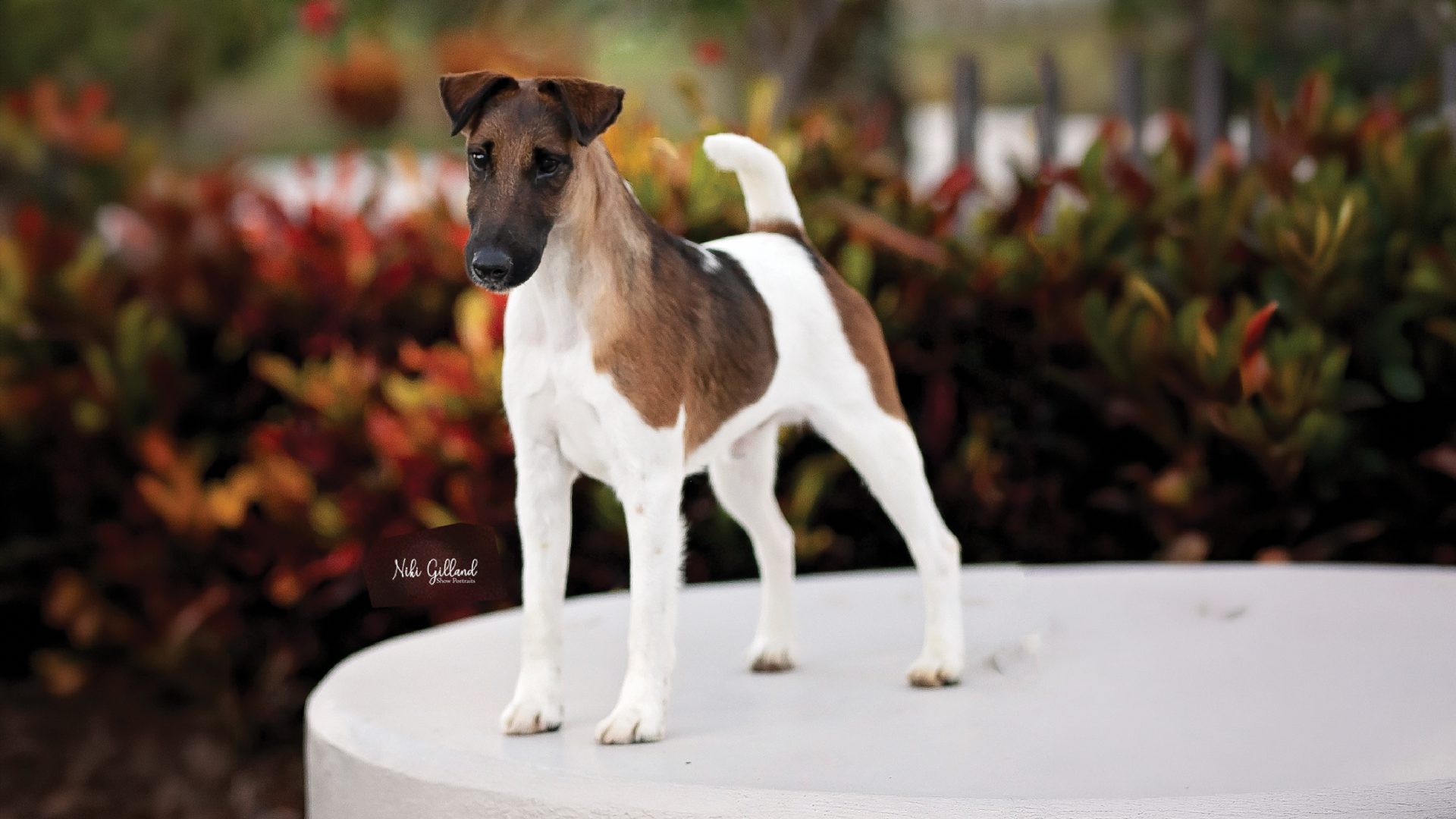
The Smooth Fox Terrier is a small, athletic terrier known for its short coat, clean outline, keen expression, and lively personality. Developed to work alongside foxhounds and drive foxes from underground dens, the breed remains alert, courageous, intelligent, and full of energy.
Highlights
02/History
The Smooth Fox Terrier originated in Great Britain, where terriers had long been used to control vermin and assist mounted foxhunts. Its primary task was to accompany packs of foxhounds and bark to pinpoint the location of a fox when it had gone underground. Once the fox was forced back into the open, the hunt would continue.
Early fox terriers varied considerably in size, coat, color, and structure. Hunters valued dogs with enough leg and stamina to follow the hounds, but also with a compact and flexible body. A predominantly white coat made the terrier easier to distinguish from the fox during the hunt.
The breed developed from old British terrier stock, with possible contributions from Bull Terriers, Greyhounds, Beagles, and other working dogs used to improve strength, speed, scenting ability, and overall balance. Over time, selective breeding produced a more consistent dog with a short, smooth coat, a body without exaggeration, and strong jaws.
Smooth and Wire Fox Terriers were originally considered varieties of the same breed and were sometimes interbred. The Smooth variety became established earlier in organized dog shows and played an important role in shaping the early Fox Terrier type.
The Fox Terrier Club was founded in England in 1876 and published an early Breed Standard for both coat varieties. The American Fox Terrier Club followed in 1885 and became one of the earliest Specialty clubs associated with the American Kennel Club.
The American Kennel Club recognized the Fox Terrier in 1885. Smooth and Wire Fox Terriers were initially registered as two varieties of one breed, but the AKC officially recognized them as separate breeds in 1985. The American Fox Terrier Club serves as the AKC parent club for both breeds.
The Royal Kennel Club recognizes the Smooth Fox Terrier in the Terrier Group. The Fédération Cynologique Internationale also recognizes it as a British breed and places it in Group 3, Terriers, Section 1, Large and Medium-Sized Terriers.
03/Appearance
An adult male Smooth Fox Terrier stands approximately 15.5 inches tall at the withers and weighs about 18 pounds. A mature female is slightly smaller and typically weighs 15 to 17 pounds.
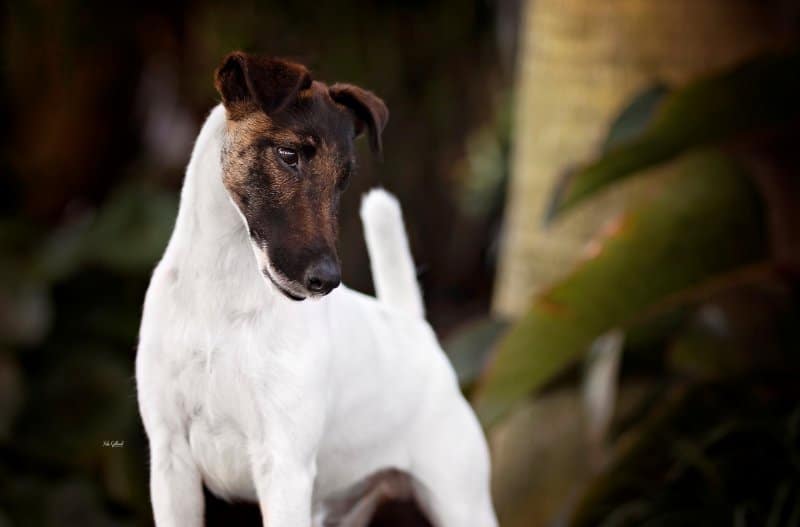
Skull: The Smooth Fox Terrier has a flat, moderately narrow skull that gradually decreases in width toward the eyes. The stop is slight, helping to create the breed’s long, clean head.
Expression: The expression is keen, intelligent, and alert, reflecting the breed’s lively terrier character.
Eyes: The eyes are small, dark, moderately deep-set, and approximately circular in shape. They should convey an attentive and energetic expression.
Ears: The ears are small, V-shaped, and fold forward, close to the cheeks. The fold is above the level of the skull, and the ear leather is of moderate thickness.
Muzzle: The muzzle is strong and gradually tapers toward the nose. The foreface is well filled beneath the eyes and should not appear weak, hollow, or excessively narrow.
Nose: The nose is black.
Bite: The Smooth Fox Terrier has strong teeth that meet in a scissors bite, with the upper incisors closely overlapping the lower incisors.
The Smooth Fox Terrier has a compact, balanced outline, with a short back and a body that appears nearly square in profile. The length of the body should remain proportionate to the height at the withers, allowing the dog to combine speed and endurance with the flexibility needed for work underground.
The chest is deep but not excessively broad, and the ribs are well sprung without restricting movement. Bone is strong and proportionate to the dog’s size, providing sufficient substance without creating a heavy, coarse, or cumbersome appearance.
Texture: The Smooth Fox Terrier has a short, dense, smooth coat that lies flat and close to the body. The hair should be hard, durable, and sufficiently abundant to provide protection without appearing soft, thin, or silky.
Standard Colors
Standard Markings
04/Consider
The Smooth Fox Terrier is energetic, intelligent, and strongly influenced by its working terrier heritage. Anyone considering the breed should be prepared for consistent training, daily exercise, early socialization, and a dog that may dig, chase small animals, or become vocal when bored.
Interaction With Family
The level of affection a breed typically shows towards family members and familiar individuals.
Good With Other Dogs
The innate friendliness of a dog towards other dogs can depend on its breed.
Good With Young Children
The degree to which a breed will typically be patient with young children.
Amount Of Shedding
How much hair a breed typically leaves behind on clothes, furniture and floors.
Frequency Of Grooming
How often a breed needs brushing, bathing or a professional trim to stay in condition.
Amount Of Drooling
How prone a breed is to drool, worth knowing before you keep a towel by the door.
Openness To Strangers
How openly a breed tends to greet new people, visitors and strangers.
Protective Nature
How likely a breed is to alert you to anything unfamiliar, and stand between you and it.
Playfulness Level
How enthusiastic a breed stays about games and play well past puppyhood.
Trainability Level
How readily a breed takes direction and works with you rather than around you.
Barking Level
How much a breed uses its voice, and how readily.
Energy Level
How much get-up-and-go a breed brings to an average day.
Health
The Smooth Fox Terrier is generally considered a healthy and hardy breed. A Smooth Fox Terrier typically has a lifespan of 12 to 15 years. Preventive veterinary care, regular exercise, dental hygiene, balanced nutrition, and maintenance of a healthy weight can support a dog throughout its life.
The Smooth Fox Terrier is lively, confident, curious, and highly alert. This energetic breed often approaches daily life with enthusiasm and can be affectionate, entertaining, and closely attached to its family.
Its strong terrier instincts may include digging, chasing, and investigating anything that moves. Early socialization and consistent boundaries are important, especially around unfamiliar dogs and small animals.
The Smooth Fox Terrier can live successfully with respectful children, particularly when raised with them. Its energetic and sometimes boisterous play style may be better suited to families with older children.
Exercise Expectations
A healthy adult Smooth generally benefits from at least 60 minutes of activity each day, although particularly energetic individuals may need more. Scent games, puzzle toys, retrieving, and dog sports can provide additional mental engagement. Because of the breed’s strong hunting instincts, off-leash exercise should take place only in a securely enclosed area.
Grooming Expectations
The Smooth Fox Terrier can adapt to apartment living when given enough exercise, training, and mental activity. Its alert nature and tendency to bark, however, may require additional management in homes with close neighbors.
A securely fenced yard can provide space for play, but fencing should be checked carefully because the breed can typically dig beneath barriers or pursue animals beyond the property. Outdoor time should not replace daily walks, training, and interaction with the family.
The Smooth Fox Terrier usually does best in an active household that appreciates its confidence, humor, and independent spirit. Regular companionship and structured activity can help prevent boredom and destructive behavior.
05/Puppies
Smooth Fox Terrier puppies are energetic, curious, and quick to investigate their surroundings. Early routines, positive socialization, patient training, and appropriate outlets for their natural terrier instincts help any puppy develop into a confident and manageable adult.
A Smooth Fox Terrier puppy benefits from a predictable daily schedule that includes regular meals, potty breaks, sleep, play, training, and quiet time. A crate or secure puppy area can provide a safe place to rest and support housetraining when direct supervision is not possible.
Early socialization should introduce the puppy to different people, well-mannered dogs, household sounds, surfaces, vehicles, and unfamiliar environments. These experiences should remain positive and appropriate for the puppy’s age.
Training can begin as soon as the puppy arrives in its new home. Short sessions can introduce name response, recall, leash walking, basic manners, impulse control, and calm behavior around visitors. Because the breed may become distracted by movement or scent, recall and focus exercises are especially valuable.
A Smooth Fox Terrier puppy should receive a complete and balanced diet formulated for growth. Exercise should focus on supervised play, short walks, and gentle exploration rather than forced running or repetitive jumping while the puppy is still developing.
Regular veterinary visits are important during the first year. Grooming should also begin early so that the puppy becomes comfortable with brushing, nail trimming, ear checks, tooth brushing, and general handling.
06/Activities
Smooth Fox Terriers are energetic, athletic, and intelligent dogs that often enjoy activities involving speed, scent, problem-solving, and working with a handler. Here are some of the dog sports and activities in which Smooth Fox Terriers may participate:
Earthdog: Smooth Fox Terriers can use their natural hunting instincts to locate quarry underground in a controlled setting.
Barn Hunt: Barn Hunt allows the breed to search for safely enclosed rats hidden among bales of straw.
Agility: The Smooth Fox’s speed, balance, and enthusiasm can make Agility an engaging outlet for physical and mental energy.
Obedience: Obedience Trials test the breed’s ability to perform exercises accurately while working closely with a handler.
Rally: Rally Obedience combines movement through a course with varied obedience exercises that can help maintain the breed’s interest.
Scent Work: Smooth Fox Terriers can search for specific odors hidden in containers, indoor spaces, outdoor areas, or vehicles.
Fast CAT: This timed 100-yard dash provides a controlled opportunity for the breed to use its speed and chasing instinct.
Conformation Shows: Smooth Foxes compete in Conformation Shows, where judges evaluate each dog according to the Breed Standard, including structure, movement, coat, expression, temperament, and overall type.
Trick Dog: Trick training provides mental stimulation and gives the dog a productive way to use its intelligence and enthusiasm.
Canine Good Citizen: Smooth Fox Terriers may participate in programs that evaluate everyday manners, social behavior, and reliability around people and other dogs.
Gallery
07/Standards
The Smooth Fox Terrier is recognized by the world’s leading registries and kennel organizations, which categorize the breed into a specific Group based on its unique characteristics. This breed is recognized worldwide under the following Group designations:
The ideal Smooth Fox Terrier is described by a Breed Standard that is approved by each of the world’s leading registries and kennel organizations. The Standards for this breed may be found in the following links:
08/Clubs
Smooth Fox Terrier clubs support breed education, responsible breeding, health initiatives, rescue work, and participation in Conformation Shows and performance events.
American Fox Terrier Club: Founded in 1885, this is the national club for Smooth and Wire Fox Terriers in the United States and serves as the AKC Parent Club for both breeds.
The Fox Terrier Club: Established in 1876 in England, the club promotes the Smooth Fox Terrier and Wire Fox Terrier in the UK through dog shows and educational initiatives.
09/Rescue
Breed-specific rescue organizations help Smooth Fox Terriers that have been surrendered, abandoned, or found in shelters. These groups may provide foster care, veterinary treatment, behavioral evaluation, and placement with an appropriate adoptive family.
American Fox Terrier Rescue: A volunteer-based organization that assists Smooth Fox Terriers and Wire Fox Terriers across the United States through foster care, rehabilitation, and adoption.
American Fox Terrier Club Rescue Resources: The breed’s AKC Parent Club may provide rescue contacts and information for Smooth Fox Terriers needing placement.
The Fox Terrier Club: The United Kingdom breed club can provide guidance about Smooth Fox Terriers needing rescue or rehoming.
Local shelters and broader terrier rescue organizations may also receive a Smooth Fox Terrier or Smooth Fox mix. Adoption databases, breed clubs, and nearby shelters can provide additional information about dogs currently needing homes.
10/Facts
One of the Earliest Fox Terrier Types
The Smooth Fox Terrier became established in organized dog shows before the Wire variety and helped to shape the early Fox Terrier Standard.
Bred to Work with Foxhounds
The breed was developed to accompany mounted hunts and drive foxes from underground dens.
Once Classified with the Wire Fox Terrier
Smooth and Wire Fox Terriers were originally treated as varieties of one breed before the AKC recognized them separately in 1985.
Strong Natural Instincts
Many Smooth Fox Terriers retain a desire to chase, dig, investigate scents, and pursue small animals.
11/FAQ
Smooth Fox Terriers can make excellent pets for active people who appreciate an energetic, intelligent, and independent dog. They need consistent training, daily exercise, and productive outlets for their terrier instincts.

Written by
Dan Sayers is the Executive Editor of SHOWSIGHT. He is a member of the World Dog Press Association and the Dog Writers Association of America, which recognized his illustrations in the award-winning Encyclopedia of K-9 Terminology. Dan is a longtime supporter of the sport of dogs and an advocate for the conservation of recognized breeds in all their forms and functions. He is a member of the Morris and Essex Kennel Club, and for 45 years, the Irish Water Spaniel Club of America where he serves as AKC Delegate, Archivist, and approved Breed Mentor. Dan breeds under the Quiet Storm prefix and has judged the IWSCA National Specialty Sweepstakes twice.
Official Standard of the Smooth Fox Terrier
General Appearance: The dog must present a generally gay, lively and active appearance; bone and strength in a small compass are essentials; but this must not be taken to mean that a Fox Terrier should be cloddy, or in any way coarse - speed and endurance must be looked to as well as power, and the symmetry of the Foxhound taken as a model. The Terrier, like the Hound, must on no account be leggy, nor must he be too short in the leg. He should stand like a cleverly made hunter, covering a lot of ground, yet with a short back, as stated below. He will then attain the highest degree of propelling power, together with the greatest length of stride that is compatible with the length of his body. Weight is not a certain criterion of a Terrier's fitness for his work-general shape, size and contour are the main points; and if a dog can gallop and stay, and follow his fox up a drain, it matters little what his weight is to a pound or so. N.B. Old scars or injuries, the result of work or accident, should not be allowed to prejudice a Terrier's chance in the show ring, unless they interfere with its movement or with its utility for work or stud.
Size, Proportion, Substance: According to present-day requirements, a full-sized, well balanced dog should not exceed 15½ inches at the withers - the bitch being proportionately lower - nor should the length of back from withers to root of tail exceed 12 inches, while to maintain the relative proportions, the head should not exceed 7¼ inches or be less than 7 inches. A dog with these measurements should scale 18 pounds in show condition - a bitch weighing some two pounds less-with a margin of one pound either way. Balance - This may be defined as the correct proportions of a certain point, or points, when considered in relation to a certain other point or points. It is the keystone of the Terrier's anatomy. The chief points for consideration are the relative proportions of skull and foreface; head and back; height at withers and length of body from shoulder point to buttock-the ideal of proportion being reached when the last two measurements are the same. It should be added that, although the head measurements can be taken with absolute accuracy, the height at withers and length of back and coat are approximate, and are inserted for the information of breeders and exhibitors rather than as a hard-and-fast rule.
Head: Eyes and rims should be dark in color, moderately small and rather deep set, full of fire, life and intelligence and as nearly possible circular in shape. Anything approaching a yellow eye is most objectionable. Ears should be V-shaped and small, of moderate thickness, and dropping forward close to the cheek, not hanging by the side of the head like a Foxhound. The topline of the folded ear should be well above the level of the skull. Disqualifications - Ears prick, tulip or rose. The skull should be flat and moderately narrow, gradually decreasing in width to the eyes. Not much "stop" should be apparent, but there should be more dip in the profile between the forehead and the top jaw than is seen in the case of a Greyhound. It should be noticed that although the foreface should gradually taper from eye to muzzle and should tip slightly at its junction with the forehead, it should not "dish" or fall away quickly below the eyes, where it should be full and well made up, but relieved from "wedginess" by a little delicate chiseling. There should be apparent little difference in length between the skull and foreface of a well balanced head. Cheeks must not be full. Jaws, upper and lower, should be strong and muscular and of fair punishing strength, but not so as in any way to resemble the Greyhound or modern English Terrier. There should not be much falling away below the eyes. This part of the head should, however, be moderately chiseled out, so as not to go down in a straight slope like a wedge. The nose, toward which the muzzle must gradually taper, should be black. Disqualifications - Nose white, cherry or spotted to a considerable extent with either of these colors. The teeth should be as nearly as possible together, i.e., the points of the upper (incisors) teeth on the outside of or slightly overlapping the lower teeth. Disqualifications - Much undershot, or much overshot.
Neck, Topline, Body: Neck should be clean and muscular, without throatiness, of fair length, and gradually widening to the shoulders. Back should be short, straight (i.e., level), and strong, with no appearance of slackness. Chest deep and not broad. Brisket should be deep, yet not exaggerated. The foreribs should be moderately arched, the back ribs deep and well sprung, and the dog should be well ribbed up. Loin should be very powerful, muscular and very slightly arched. Stern should be set on rather high, and carried gaily, but not over the back or curled, docked to leave about three quarters of the original length of the tail. It should be of good strength, anything approaching a "Pipestopper" tail being especially objectionable.
Forequarters: Shoulders should be long and sloping, well laid back, fine at the points, and clearly cut at the withers. The elbows should hang perpendicular to the body, working free of the sides. The forelegs viewed from any direction must be straight with bone strong right down to the feet, showing little or no appearance of ankle in front, and being short and straight in pastern. Both fore and hind legs should be carried straight forward in traveling. Feet should be round, compact, and not large; the soles hard and tough; the toes moderately arched, and turned neither in nor out.
Hindquarters: Should be strong and muscular, quite free from droop or crouch; the thighs long and powerful, stifles well curved and turned neither in nor out; hocks well bent and near the ground should be perfectly upright and parallel each with the other when viewed from behind, the dog standing well up on them like a Foxhound, and not straight in the stifle. The worst possible form of hindquarters consists of a short second thigh and a straight stifle. Both fore and hind legs should be carried straight forward in traveling, the stifles not turning outward. Feet as in front.
Coat: Should be smooth, flat, but hard, dense and abundant. The belly and underside of the thighs should not be bare.
Color: White should predominate; brindle, red or liver markings are objectionable. Otherwise this point is of little or no importance.
Gait: Movement, or action, is the crucial test of conformation. The Terrier's legs should be carried straight forward while traveling, the forelegs hanging perpendicular and swinging parallel with the sides, like the pendulum of a clock. The principal propulsive power is furnished by the hind legs, perfection of action being found in the Terrier possessing long thighs and muscular second thighs well bent at the stifles, which admit of a strong forward thrust or "snatch" of the hocks. When approaching, the forelegs should form a continuation of the straight line of the front, the feet being the same distance apart as the elbows. When stationary it is often difficult to determine whether a dog is slightly out at shoulder, but, directly he moves, the defect - if it exists - becomes more apparent, the forefeet having a tendency to cross, "weave," or "dish." When, on the contrary, the dog is tied at the shoulder, the tendency of the feet is to move wider apart, with a sort of paddling action. When the hocks are turned in-cow-hocks-the stifles and feet are turned outwards, resulting in a serious loss of propulsive power. When the hocks are turned outward the tendency of the hind feet is to cross, resulting in an ungainly waddle.
Temperament: The dog must present a generally gay, lively and active appearance.
Disqualifications: Ears prick, tulip or rose. Nose white, cherry or spotted to a considerable extent with either of these colors. Mouth much undershot, or much overshot.
Approved July 8, 2002
Effective August 28, 2002
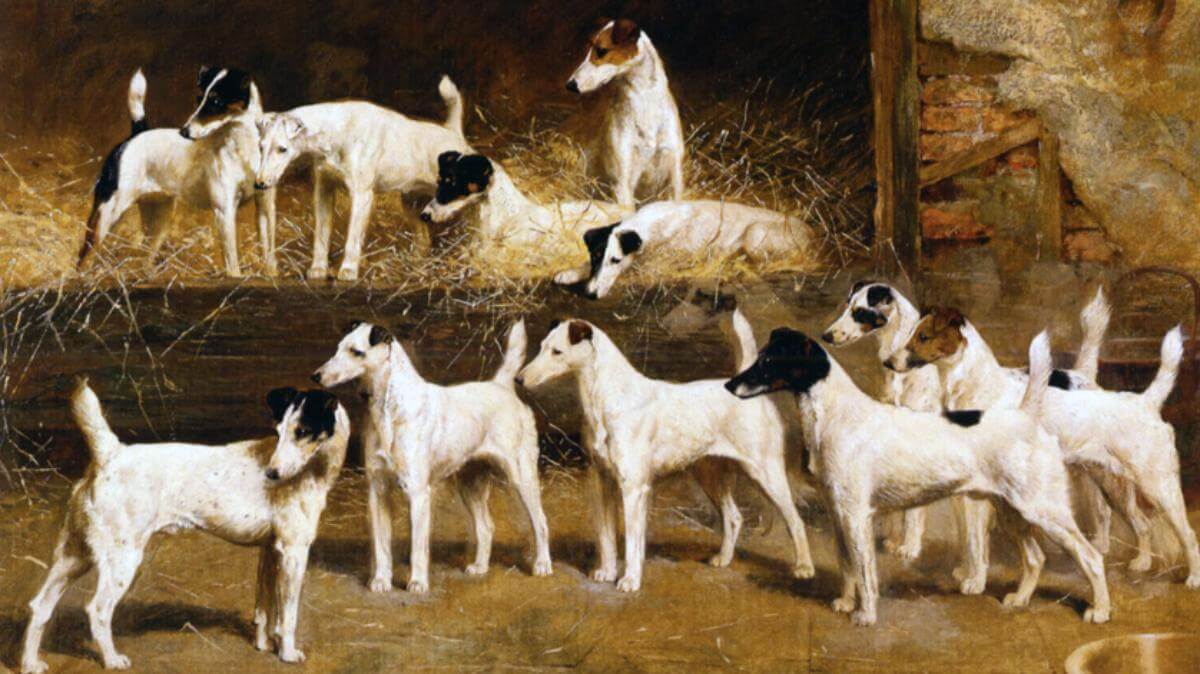

Exploring the Fox Terrier’s form, function, and historic comparison to the hunter horse – strength, stride, and purpose in motion
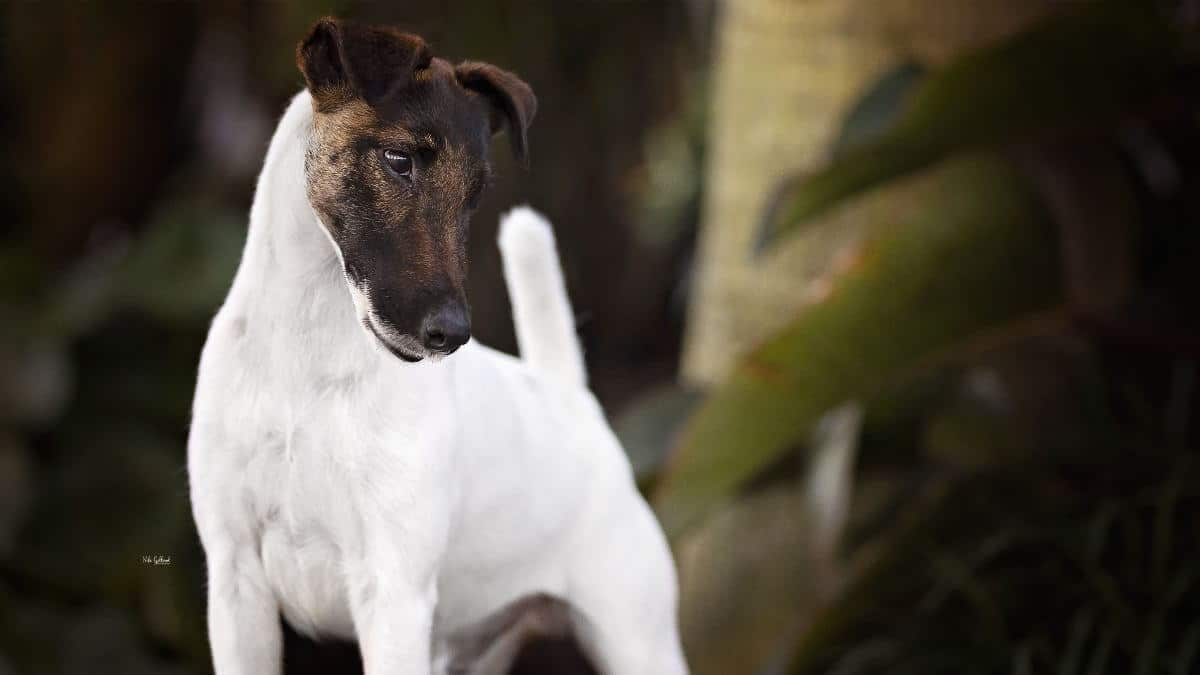
All About Judging
Learn how to judge Smooth Fox Terriers, focusing on balance, conformation, and breed-specific characteristics.


Meet the Judges
William F. Potter, II reflects on judging Smooth Fox Terriers at Montgomery County KC, highlighting breed quality and challenges.

Meet the Breeders
Lindsay Siflinger is the breeder behind Decorum Smooth Fox Terriers. Read about the kennel’s beginnings, puppies, and much more!


Meet the Judges
Interview with Dr. Alton J. Pertuit Jr. 2023 MCKC Dog Show Breed Judge. Read about his experience with judging at the prestigious dog show.
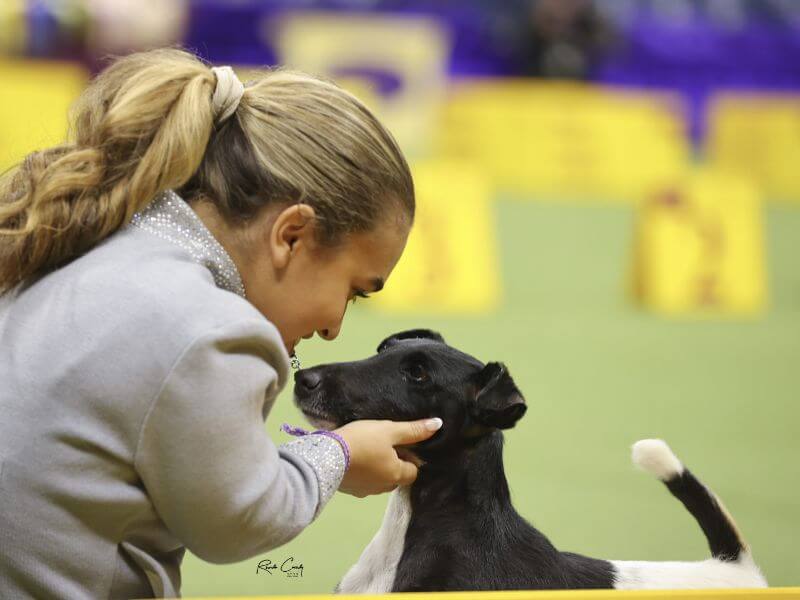
Meet the Junior Handlers
Interview with Annaliese North, 2023 MCKC Best Junior Handler. Discover her journey, triumph, and aspirations in this inspiring feature.
Meet the Judges
Insights from the 2022 MCKC Breed Judge Richard Powell. Read about the judge’s opinions on various topics regarding the show.


Meet the Breeders
Interview with Hound Group Breeder Sheila Allen – Sheez-Beez Kennel Smooth Fox Terriers & Harriers – I currently live in Snohomish,

Meet the Breeders
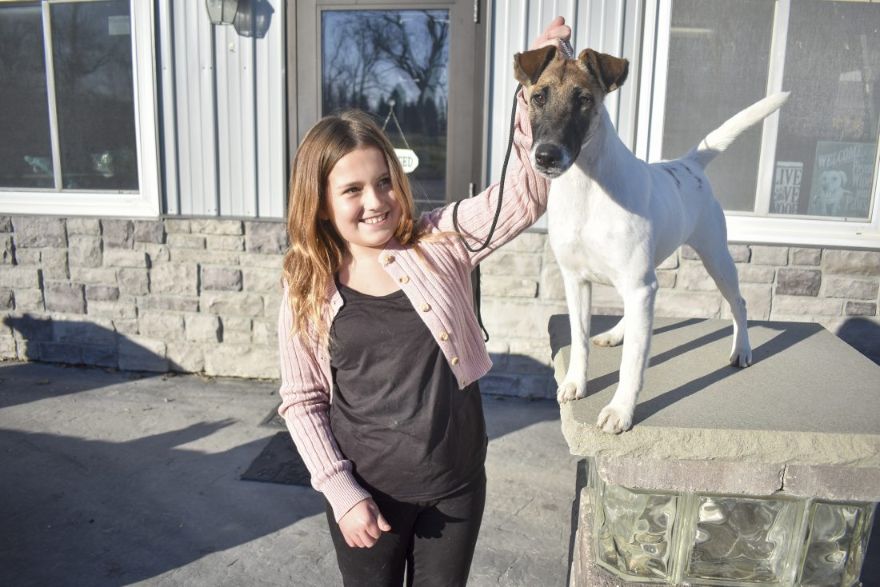
Kalyn Erickson just turned 10 years old in November. She has had dogs all her life. They have been her playmates and her best friends! She started showing at around seven years old, helping with mom and grandma’s Sealyham Terriers. She would take the winners of the class back in and lead them around the […]
The tail is set high and carried upright, but it should not curl over the back. Traditionally docked in countries where the practice is permitted, it is strong and of sufficient length to contribute to the breed’s balanced, athletic outline.
A Note About Color: White should be the predominant color; brindle, red, liver markings are objectionable. Otherwise, color is of little or no importance.
Coat Type
Smooth
The structure of the coat this breed carries.
Coat Length
Short
How long the breed's coat grows when kept in condition.
Adaptability Level
How easily a breed copes with changes in home, routine, noise and weather.
Mental Stimulation Needs
How much a breed needs a job, a puzzle or training to stay content.
A Smooth Fox Terrier should receive a complete and balanced diet suited to the dog’s age, activity level, and body condition. Portions should be measured carefully because excess weight can reduce the breed’s agility and place unnecessary strain on the joints.
A puppy generally needs three or four small meals each day before gradually moving to two meals. Most adults are fed twice daily, with the amount adjusted according to the food’s caloric density and the dog’s exercise level.
Treats can be useful during training but should remain limited. Fresh water should always be available.
The Smooth Fox Terrier is intelligent and capable of learning quickly, but it can also be independent and easily distracted. Training is most effective when sessions are short, varied, and supported by praise, food rewards, toys, or play.
Early socialization should introduce the puppy to different people, well-mannered dogs, environments, sounds, and surfaces. Recall training is especially important because the breed’s prey drive may encourage it to chase wildlife or other small animals.
Clear and consistent rules help prevent unwanted habits such as digging, excessive barking, or ignoring commands. Harsh methods may create resistance, while engaging and patient training usually encourages better cooperation.
The breed sheds moderately, with shedding sometimes becoming more noticeable during seasonal changes. Bathing is needed only occasionally or when the dog becomes particularly dirty. Nails should be trimmed regularly, ears should be checked for irritation or debris, and teeth should be brushed routinely.