Members
01/Overview
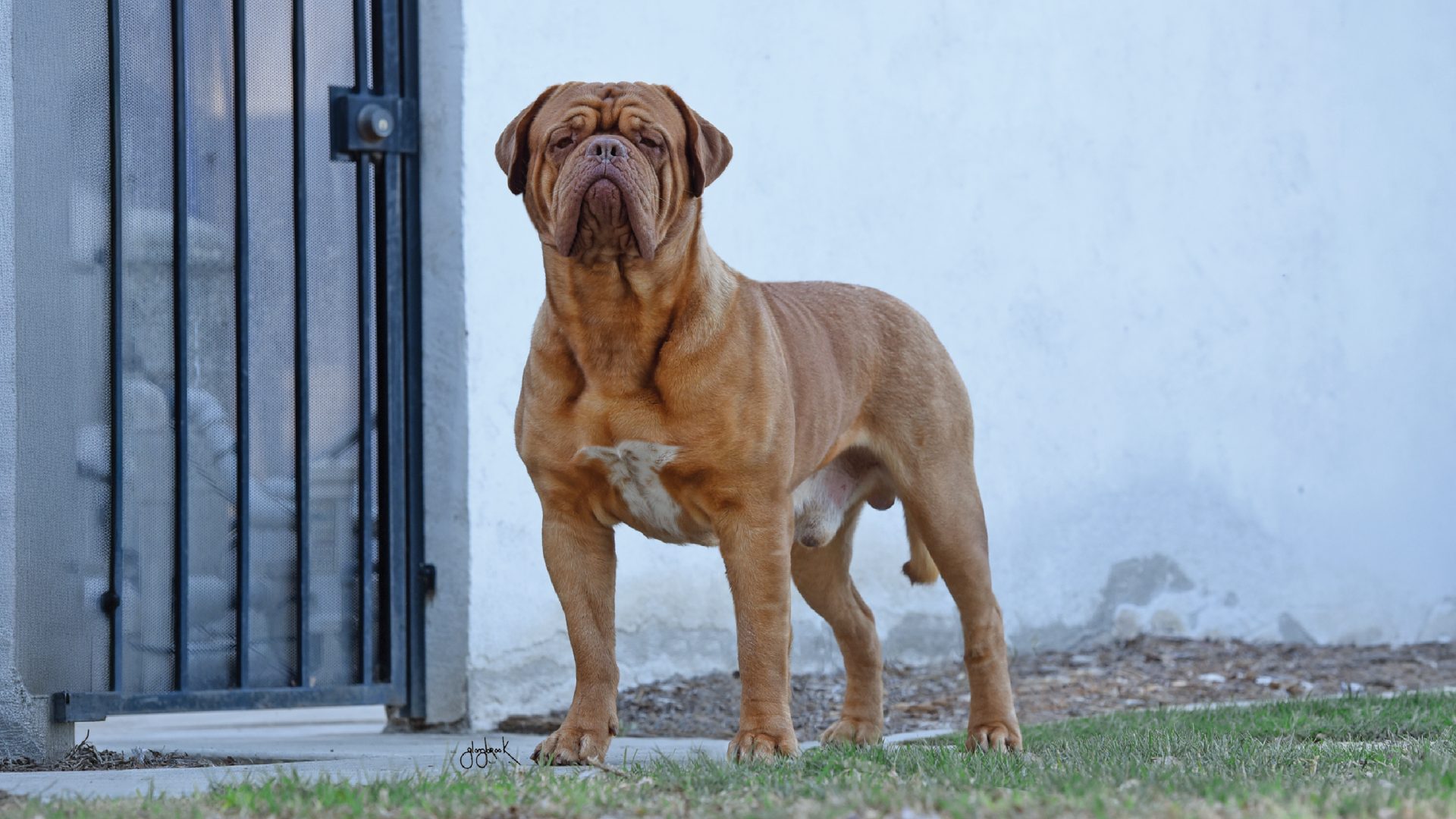
The Dogue de Bordeaux, also known as the French Mastiff, is one of the oldest French breeds of dog. Known for its muscular build and protective nature, the breed has been used historically as an imposing guardian, a big game hunter, and a reliable working dog.
Highlights
02/History
The Dogue de Bordeaux has a history that dates back to ancient Gaul, where it is believed to have descended from molossers and mastiff-type dogs brought to Europe by the Romans. The breed was primarily developed in the Bordeaux region of France, where it served as a versatile working dog.
Historically, Dogues were used for guarding estates, pulling carts, and even hunting large game such as wild boar. By the Middle Ages, they were prized as powerful protectors, often used by the French nobility to guard castles and estates. The breed’s strength and loyalty made it indispensable for both labor and protection.
The Dogue de Bordeaux was first officially recognized in France in 1863 when the breed was exhibited at the first French dog show in Paris. During the 19th century, the breed faced challenges due to changing societal roles and had nearly become extinct by the mid-20th century. Efforts by dedicated breeders helped to revive the breed, with official recognition by the Fédération Cynologique Internationale (FCI) granted in 1954.
In the United States, the Dogue de Bordeaux gained popularity after the breed appeared prominently in the 1989 film Turner & Hooch. The American Kennel Club (AKC) granted full recognition to the breed in 2008, placing it in the Working Group.
03/Appearance
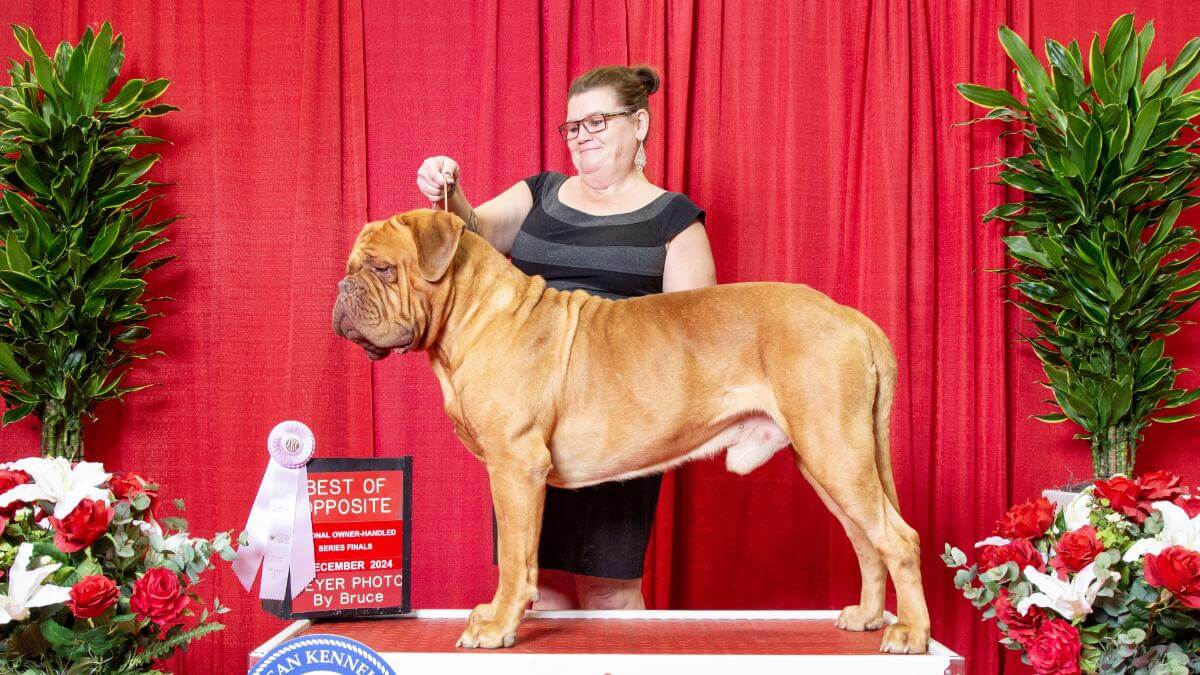
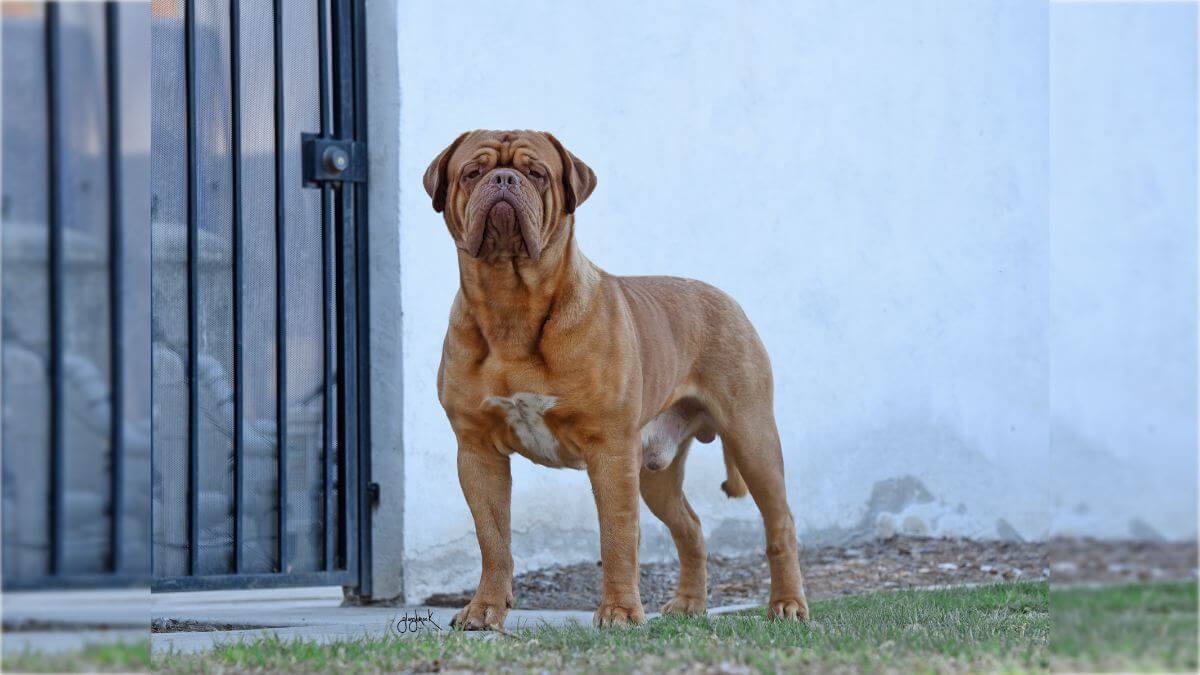
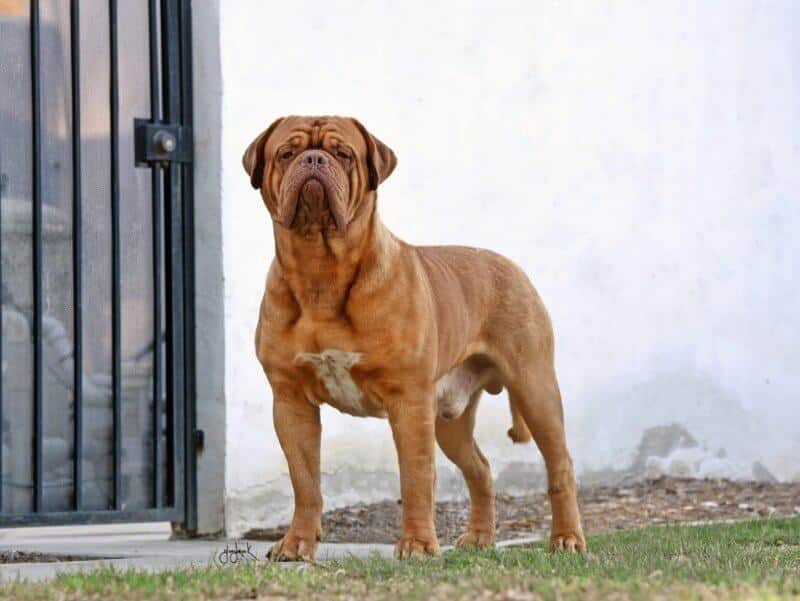
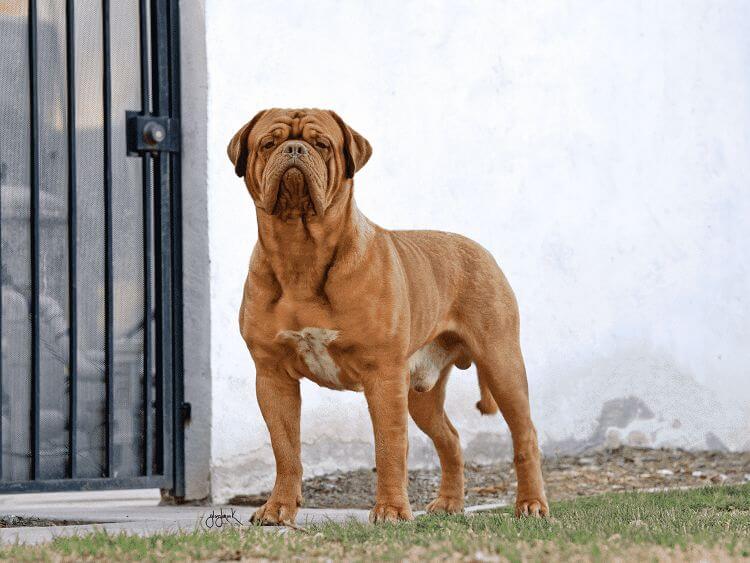
Dogue de Bordeaux males typically stand between 23.5 and 27 inches tall at the shoulder, while females measure from 23 to 26 inches. Adult males generally weigh 110 pounds or more, while mature females weigh at least 99 pounds.
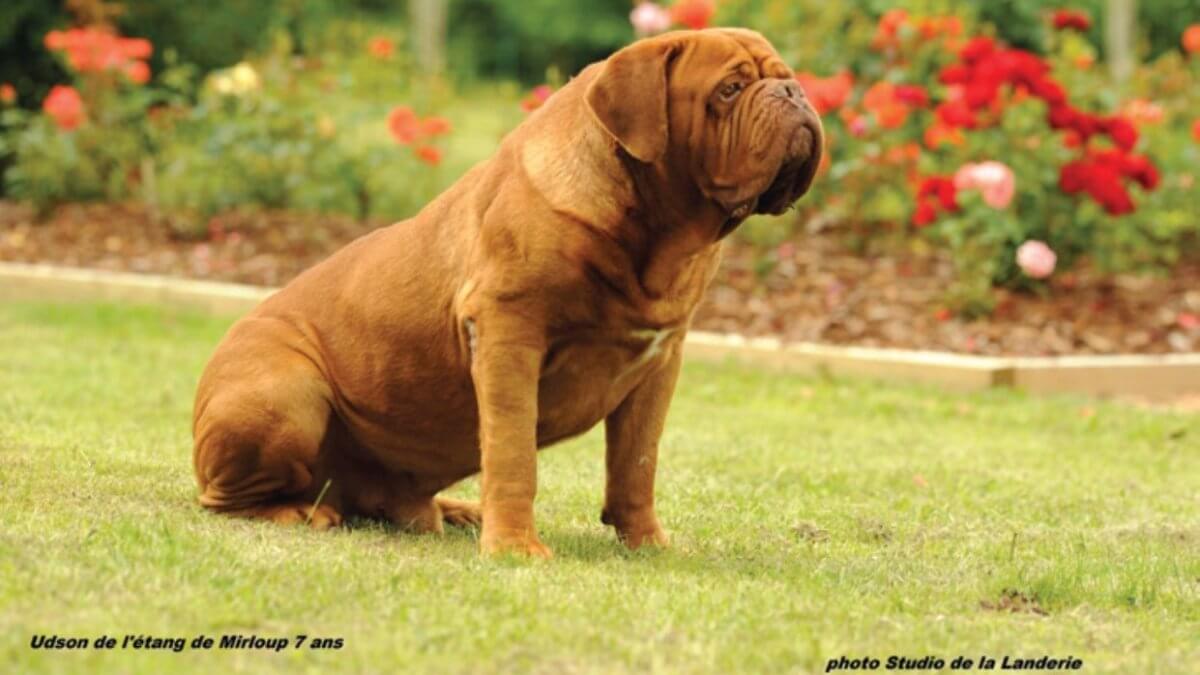
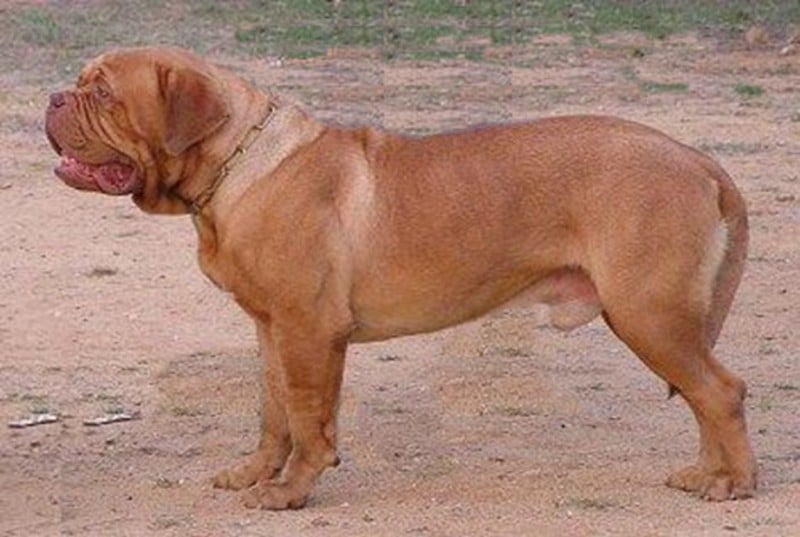
The athletic Dogue de Bordeaux is a massive breed with a powerful and muscular build that appears “rather close to the ground.” The breed's proportions reflect its strength and endurance, with a near-level topline and a back and loin that appear broad when viewed from above.
Texture: The Dogue de Bordeaux has a short, fine, coat that is soft and lies close to the body. The skin is thick and sufficiently loose-fitting without excessive wrinkles. A well-defined dewlap, from the throat forming folds to the chest, hangs without exaggeration.
Standard Colors
Standard Markings
04/Consider
The Dogue de Bordeaux requires a commitment to meeting the needs of this large, loyal, and powerful breed. Prospective owners should be prepared to provide proper training and exercise, and a safe and secure environment to encourage the development of a well-rounded and well-behaved companion.
Interaction With Family
The level of affection a breed typically shows towards family members and familiar individuals.
Good With Other Dogs
The innate friendliness of a dog towards other dogs can depend on its breed.
Good With Young Children
The degree to which a breed will typically be patient with young children.
Amount Of Shedding
How much hair a breed typically leaves behind on clothes, furniture and floors.
Frequency Of Grooming
How often a breed needs brushing, bathing or a professional trim to stay in condition.
Amount Of Drooling
How prone a breed is to drool, worth knowing before you keep a towel by the door.
Openness To Strangers
How openly a breed tends to greet new people, visitors and strangers.
Protective Nature
How likely a breed is to alert you to anything unfamiliar, and stand between you and it.
Playfulness Level
How enthusiastic a breed stays about games and play well past puppyhood.
Trainability Level
How readily a breed takes direction and works with you rather than around you.
Barking Level
How much a breed uses its voice, and how readily.
Energy Level
How much get-up-and-go a breed brings to an average day.
Health
The Dogue de Bordeaux typically has a lifespan of 5 to 8 years, which is shorter than many dogs due to the breed’s large size and predisposition to certain health conditions. While generally resilient, the Dogue benefits from regular veterinary care, a balanced diet, and a healthy lifestyle to maintain its quality of life.
The Dogue de Bordeaux is a loyal, affectionate, and calm breed that forms a deep bond with its family members. While known for its gentle demeanor with children, the breed’s protective instincts make it naturally wary of strangers, requiring early and consistent socialization.
Dogues thrive in homes where they are included in family activities and given plenty of attention, as they can become lonely or anxious if left alone for extended periods. Although generally good with other dogs when properly introduced, their strong personalities may lead to assertive behaviors, especially with unfamiliar animals.
Exercise Expectations
While this is not a high-energy breed, regular exercise is crucial to prevent obesity and strengthen muscles. However, care should be taken to avoid overexertion, especially during hot weather, as the breed is prone to overheating due to its size and short muzzle.
Grooming Expectations
The Dogue de Bordeaux is best suited for homes with a securely fenced yard and enough space to accommodate its large size. While these dogs can adapt to apartment living, their size and strength make a more spacious environment the ideal.
Dogues are sensitive to extreme temperatures and should be kept indoors during hot or cold weather. They are deeply devoted to their families and thrive when included in daily activities, making them excellent companions for households that can meet their breed-specific needs for attention and care.
05/Puppies
Dogue de Bordeaux puppies are affectionate, curious, and quick learners, but their large size and strong personalities require thoughtful support and guidance. Rapid growth during the first year necessitates proper nutrition and care to promote healthy development and minimize joint issues later in life.
Caring for a Dogue de Bordeaux puppy starts with creating a safe, structured environment and setting clear boundaries. Puppy-proofing the home is essential, as the pup’s curiosity and size can lead to accidents or the destruction of cherished household items.
Early socialization is critical to prevent fearfulness or excessive guarding instincts. Introducing the puppy to various people, animals, and environments helps to develop confidence and nurture a calm temperament.
Feeding a high-quality large-breed puppy formula promotes proper growth and supports healthy joints. Meals should be divided into three to four smaller portions daily, transitioning to two meals as the pup matures.
Training should begin early and focus on basic commands and housebreaking, and introducing a crate as a place to comfortably rest and sleep. Positive reinforcement methods, such as treats and praise, work best for this powerful yet companionable breed. Routine veterinary care and support from the puppy’s breeder are vital to monitor growth during this critical period.
With proper care and guidance, the Dogue de Bordeaux puppy will grow into a devoted, protective, and loving family member.
06/Activities
Gallery
07/Standards
The Dogue de Bordeaux is recognized by the world's leading registries and kennel organizations, which categorize the breed into a specific Group based on its unique characteristics. This breed is recognized worldwide under the following Group designations:
The ideal Dogue de Bordeaux is described by a Breed Standard that is approved by each of the world’s leading registries and kennel organizations. The Breed Standards for this breed may be found in the following links:
08/Clubs
09/Rescue
10/Facts
One of the Oldest French Breeds
The Dogue de Bordeaux has origins dating back to ancient Gaul, making it one of the oldest dog breeds in the country.
Historically a Versatile Worker
This breed was used for a variety of tasks, including guarding estates, pulling carts, and hunting large game such as wild boar.
Unique Wrinkled Face
The Dogue’s heavily wrinkled face is a hallmark of the breed and contributes to its dignified and powerful appearance.
Featured in Film
The Dogue de Bordeaux gained widespread popularity after its appearance in the 1989 movie Turner & Hooch.
A Champion of Strength
Known for its immense strength, the Dogue de Bordeaux was historically prized for pulling heavy loads and guarding property.
11/FAQ
Yes, Dogue de Bordeaux shed. Regular weekly brushing helps to manage any loose hair and maintain the coat’s healthy appearance.

Written by
Dan Sayers is the Executive Editor of SHOWSIGHT. He is a member of the World Dog Press Association and the Dog Writers Association of America, which recognized his illustrations in the award-winning Encyclopedia of K-9 Terminology. Dan is a longtime supporter of the sport of dogs and an advocate for the conservation of recognized breeds in all their forms and functions. He is a member of the Morris and Essex Kennel Club, and for 45 years, the Irish Water Spaniel Club of America where he serves as AKC Delegate, Archivist, and approved Breed Mentor. Dan breeds under the Quiet Storm prefix and has judged the IWSCA National Specialty Sweepstakes twice.


Meet the Judges
Robin Hug reflects on judging the 2025 National Dog Show, highlighting quality entries and standout breed performances.

Meet the Judges
Insights from John Ramirez on judging at the 2025 Morris & Essex show, highlighting quality entries and the event’s lasting tradition.

Meet the Breeders
Stephanie Friedley of Amore Kennel shares her journey in Dogues de Bordeaux, focusing on soundness, type, and breed education.
Explore the ancient history, distinctive H.E.A.R.T.S. traits, and versatile working roles of the Dogue de Bordeaux.
All About Judging
Discover key aspects of judging the Dogue de Bordeaux: assess its powerful build, distinctive head, and movement for true breed essence.

The Dogue de Bordeaux is a breed with a “concave outline” and has the most “bulldog features” among the mastiff breeds. Read more.
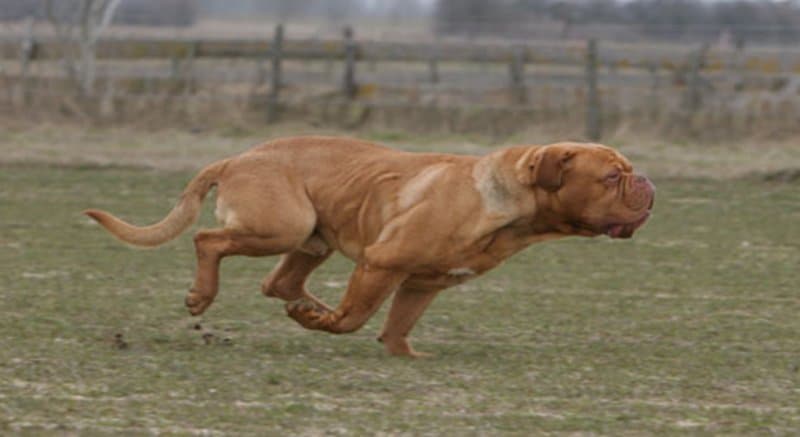
Being athletic is an attribute crucial to the breed’s conformation to the American Kennel Club Dogue de Bordeaux Breed Standard.

Therapy Dog
The most ancient of French dog breeds, the Dogue de Bordeaux, also known as the Bordeaux Mastiff, is a very powerful mastiff-type guard dog.

Breeding with Intention
In this installment of the series, the remaining six Molossoid breeds of Mastiff type (Boerboel, Bullmastiff, Cane Corso, Dogue de Bordeaux
The tail of the Dogue de Bordeaux is very thick at the base and tapers to a point. It is carried low when the dog is relaxed but is carried level with the back, or slightly above, when the dog is active or alert. The tail is natural and not docked, and should not be kinked, knotted, atrophied, or laterally deviated or twisted.
A Note About Color: The Dogue de Bordeaux is a self-colored dog in rich shades of fawn, from dark red fawn to a light fawn. Any other color is not allowed. Individual patches of white are allowable on the forechest (a secondary patch on the throat is acceptable but not preferred), toes (not above the pastern and hock joints), and on the backs of the pasterns. A black mask, if present, spreads out only slightly and does not appear on the skull.
Coat Type
Smooth
The structure of the coat this breed carries.
Coat Length
Short
How long the breed's coat grows when kept in condition.
Adaptability Level
How easily a breed copes with changes in home, routine, noise and weather.
Mental Stimulation Needs
How much a breed needs a job, a puzzle or training to stay content.
The Dogue de Bordeaux requires a high-quality, well-balanced diet tailored to its large size and slower metabolism. Puppies should be fed a large-breed puppy formula to support rapid growth while minimizing stress on the developing joints.
Adult Dogues typically require 4 to 7 cups of food per day, divided into two meals, depending on size, age, and activity level. Access to fresh water is essential, and feeding schedules should be consistent to avoid issues like bloat. Caretakers should avoid overfeeding, as the breed can be prone to obesity, which will exacerbate other health concerns.
The Dogue de Bordeaux is an intelligent breed but can be stubborn, requiring firm yet patient training. Early obedience training and socialization are crucial to manage its protective instincts and ensure it is comfortable around people and other animals.
Positive reinforcement methods, such as treats and praise, work best, as harsh techniques can damage trust and hinder progress. While not overly energetic, the breed benefits from participation in activities that are mentally stimulating. With consistent leadership, the Dogue can become a well-mannered and devoted companion.
Special attention should be given to the breed’s facial wrinkles, which need to be cleaned and dried regularly to prevent infections. Routine grooming also includes trimming nails, cleaning ears, and brushing teeth to ensure overall health and good hygiene.