Members
01/Overview
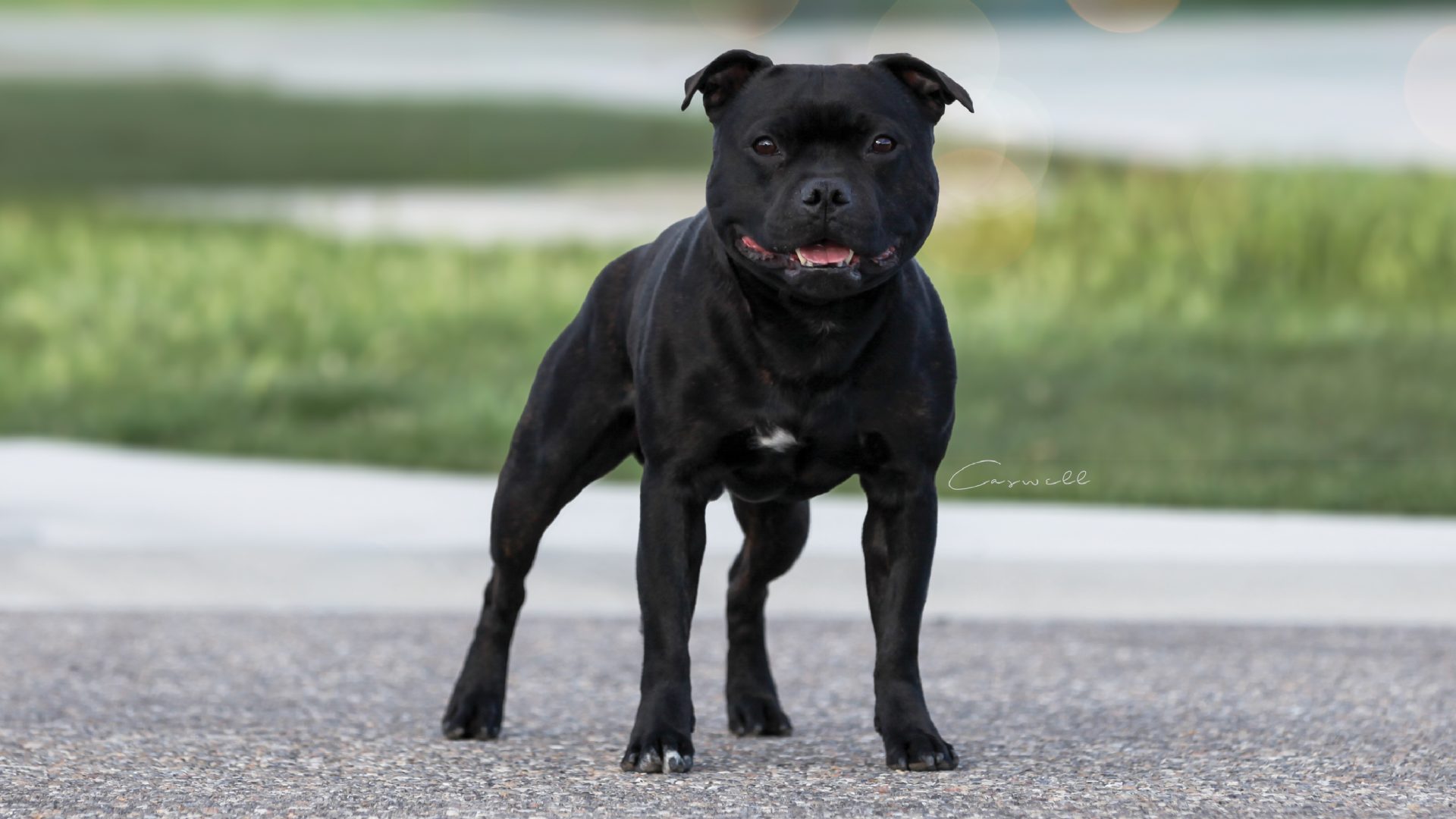
The Staffordshire Bull Terrier, also known as the Stafford, is a compact, muscular terrier with a broad head, powerful build, and deeply affectionate nature. Despite its strength and courageous background, the breed is best known today as a devoted companion that forms close bonds with its family members.
Highlights
02/History
The Staffordshire Bull Terrier originated in England during the nineteenth century. Its development was centered largely in the Midlands, particularly in Staffordshire, where breeders crossed old-style Bulldogs with various terriers to produce strong, agile, and determined dogs.
These early bull-and-terrier dogs were used in blood sports such as bull-baiting and dog fighting. Bull-baiting was outlawed in Britain in 1835, but illegal dog fighting continued in some areas for years afterward. Dogs were selected for their courage, athletic ability, tenacity, and a willingness to work closely with people.
As organized breeding developed, enthusiasts worked to preserve the breed’s distinctive appearance while moving it away from its fighting past. The Staffordshire Bull Terrier gradually became better known as a companion dog, valued for its loyalty, confidence, playfulness, and affection toward people.
The Staffordshire Bull Terrier Club was founded in England in 1935, and the Royal Kennel Club officially recognized the breed that same year. A written Breed Standard helped to establish a consistent type, with a broad skull, pronounced cheek muscles, compact body, and strong yet agile construction.
The breed later gained popularity outside Britain. The American Kennel Club recognized the Staffordshire Bull Terrier in 1974 and placed it in the Terrier Group. The Staffordshire Bull Terrier Club of America serves as the breed’s AKC parent club.
The Fédération Cynologique Internationale also recognizes the Staffordshire Bull Terrier as a British breed and places it in Group 3, Terriers, Section 3, Bull Type Terriers.
03/Appearance
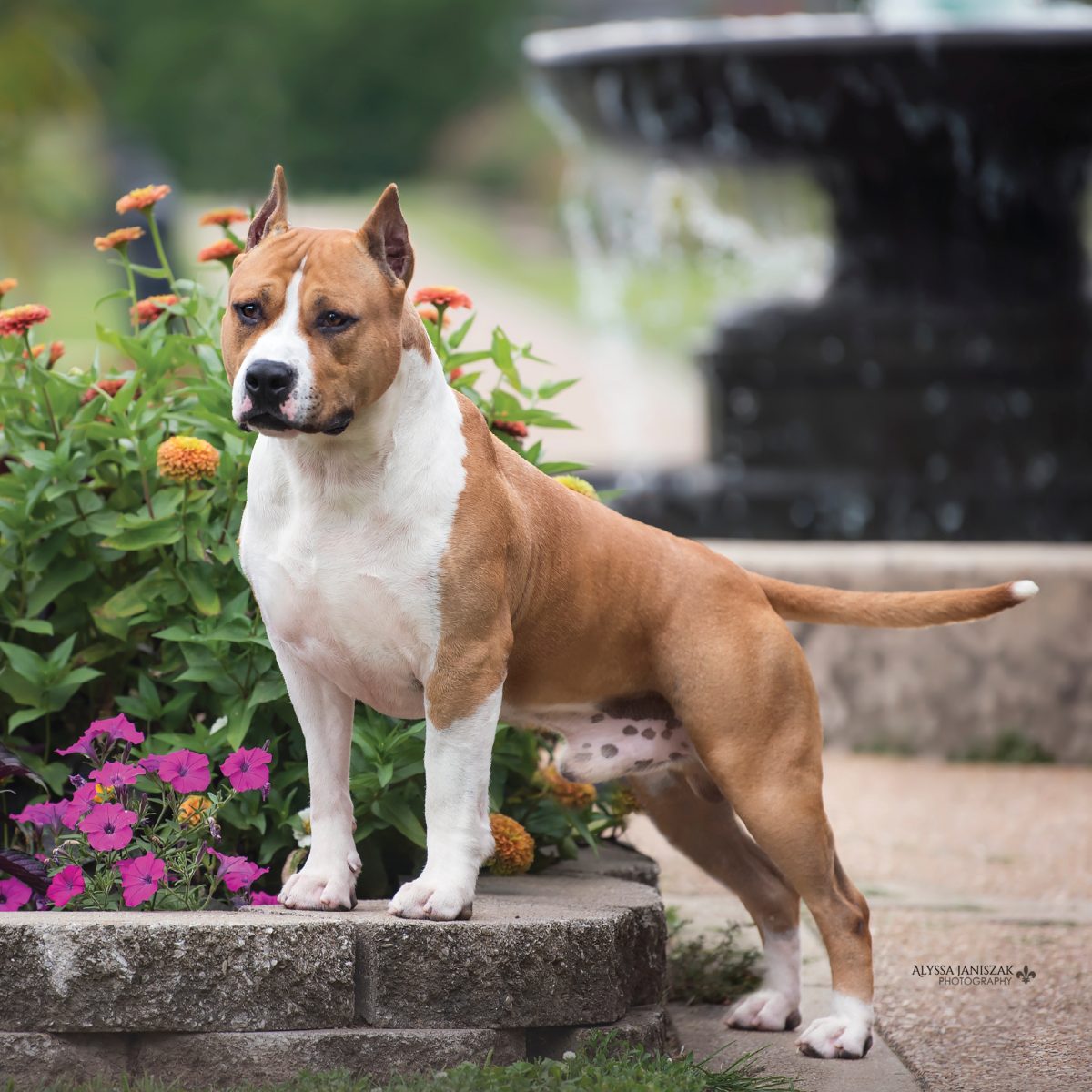
Staffordshire Bull Terriers stand 14 to 16 inches tall at the withers. Adult males typically weigh 28 to 38 pounds, while mature females generally weigh between 24 and 34 pounds.
Skull: The Staffordshire Bull Terrier head is short, deep through, with very pronounced cheek muscles and a distinct stop.
Expression: The expression is alert, confident, and intelligent, with a friendly and attentive quality.
Eyes: The eyes are round, medium-sized, and set to look straight ahead. Dark eyes are preferred, although the color may correspond to the coat color.
Ears: The ears are rose-shaped or half-pricked and should not be large or heavy. Full drop or full prick ears are serious faults according to the AKC Breed Standard.
Muzzle: The foreface is short, with a clean outline and well-developed jaws.
Nose: The nose is black; a pink, or “Dudley,” nose is considered a serious fault.
Bite: The Staffordshire Bull Terrier has strong teeth that meet in a scissors bite, with the upper incisors closely overlapping the lower incisors. A badly undershot or overshot bite is a serious fault.
The Staffordshire Bull Terrier possesses great strength for its size while remaining active and agile. The length of back from withers to tail set is equal to the distance from withers to ground. The overall impression should convey strength, balance, activity, and agility. All are essential to correct type.
The body is close coupled and the chest is broad and deep, with well-sprung ribs and a level topline. Bone and muscle are substantial in proportion to the dog’s size, while the legs remain strong enough to support free and efficient movement.
The AKC Breed Standard calls for straight, well-boned forelegs set rather far apart, with no looseness at the shoulders or weakness at the pasterns. The feet may turn out a little from the pasterns (a slight turnout is correct and should not automatically be faulted). Hindquarters are well-muscled hindquarters, with well-bent stifles, let-down hocks, and parallel rear legs when viewed from behind.
Correct Stafford movement is free, powerful, and agile with economy of effort, with parallel movement front and rear and discernible drive from behind.
Exaggeration should not be rewarded in the show ring; more head, more bone, more width, more muscle, or a lower/heavier outline do not automatically equal more breed type. The Standard calls for strength combined with activity and agility. Exaggeration should not replace balance and soundness.
Texture: The Staffordshire Bull Terrier has a coat that is smooth, short, and close to the skin. The coat should feel firm to the touch and requires relatively little routine maintenance. The coat is not to be trimmed or de-whiskered.
Standard Colors
04/Consider
The Staffordshire Bull Terrier is strong, energetic, affectionate, and closely attached to its family. Anyone considering the breed should be prepared for consistent training, daily exercise, early socialization, and a dog that often wants to remain involved in daily household activities.
Interaction With Family
The level of affection a breed typically shows towards family members and familiar individuals.
Good With Other Dogs
The innate friendliness of a dog towards other dogs can depend on its breed.
Good With Young Children
The degree to which a breed will typically be patient with young children.
Amount Of Shedding
How much hair a breed typically leaves behind on clothes, furniture and floors.
Frequency Of Grooming
How often a breed needs brushing, bathing or a professional trim to stay in condition.
Amount Of Drooling
How prone a breed is to drool, worth knowing before you keep a towel by the door.
Openness To Strangers
How openly a breed tends to greet new people, visitors and strangers.
Protective Nature
How likely a breed is to alert you to anything unfamiliar, and stand between you and it.
Playfulness Level
How enthusiastic a breed stays about games and play well past puppyhood.
Trainability Level
How readily a breed takes direction and works with you rather than around you.
Barking Level
How much a breed uses its voice, and how readily.
Energy Level
How much get-up-and-go a breed brings to an average day.
Health
The Staffordshire Bull Terrier is generally considered a healthy and hardy breed. A Stafford typically has a lifespan of 12 to 15 years. Preventive veterinary care, regular exercise, dental hygiene, balanced nutrition, and maintenance of a healthy weight can support any dog throughout its life.
The Staffordshire Bull Terrier possesses courage, high intelligence, tenacity, affection for friends and children in particular, off-duty quietness, and trustworthy stability.
Since the breed’s original purpose was dog fighting in the bull-and-terrier tradition, there is considerable variation in temperament among individuals of the breed. Some dogs can be assertive around unfamiliar dogs, others can be dog-social. Positive socialization, careful introductions, and responsible supervision are necessary.
Exercise Expectations
A healthy adult generally benefits from about 60 minutes of activity each day, although particularly energetic individuals may need more. Scent games, puzzle toys, retrieving, tug, and dog sports can provide additional mental and physical engagement. Staffords may become overheated during strenuous activity in hot or humid weather. So, exercise should take place only during cooler parts of the day, with regular breaks and access to fresh water provided.
Grooming Expectations
The Staffordshire Bull Terrier can adapt well to apartment living when given enough exercise, training, and companionship. The breed is highly people-oriented and may struggle when left alone for long periods without gradual independence training or appropriate enrichment.
A securely fenced yard can provide space for play, but outdoor time should not replace walks and interaction with the family. Because some Staffords may chase small animals or react strongly to unfamiliar dogs, they should be supervised outdoors and kept on a leash when in unsecured areas.
The Staffordshire Bull Terrier usually does best in a household that appreciates its affectionate nature, physical strength, and energetic personality. Consistent routines, regular activity, and close companionship help this breed thrive.
05/Puppies
Staffordshire Bull Terrier puppies are playful, affectionate, and full of energy. Young Staffords often form a strong attachment to their family and benefit from early routines, positive socialization, patient training, and appropriate outlets for physical and mental energy.
A Staffordshire Bull Terrier puppy benefits from a predictable daily schedule that includes regular meals, potty breaks, sleep, play, training, and quiet time. A crate or secure puppy area can provide a safe place to rest and support housetraining when direct supervision is not possible.
Early socialization should introduce the puppy to different people, well-mannered dogs, household sounds, surfaces, vehicles, and unfamiliar environments. These experiences should remain positive and appropriate for the puppy’s age.
Training can begin as soon as the puppy arrives in its new home. Short sessions can introduce name response, recall, leash walking, basic manners, impulse control, and calm greetings. Because the Stafford becomes strong and enthusiastic as it matures, polite behavior should be encouraged from the beginning.
A Staffordshire Bull Terrier puppy should receive a complete and balanced diet formulated for growth. Exercise should focus on supervised play, short walks, and gentle exploration rather than forced running or repetitive jumping while the puppy is still developing.
Regular veterinary visits are important during the first year. Grooming should also begin early so that the puppy becomes comfortable with brushing, nail trimming, ear checks, tooth brushing, and general handling.
06/Activities
Staffordshire Bull Terriers are strong, athletic, intelligent dogs that often enjoy activities involving speed, problem-solving, physical control, and close work with a handler. Here are some of the dog sports and activities in which Staffords may participate:
Agility: Staffordshire Bull Terriers can use their speed, strength, and coordination while navigating obstacle courses.
Obedience: Obedience Trials allow the Stafford to demonstrate focus, accuracy, and cooperation with a handler.
Rally: Rally Obedience combines movement through a course with varied exercises that can keep training engaging for this enthusiastic breed.
Scent Work: Staffordshire Bull Terriers can search for specific odors hidden in containers, indoor spaces, outdoor areas, or vehicles.
Fast CAT: This timed 100-yard dash gives the breed an opportunity to use its speed and chasing instinct in a controlled setting.
Weight Pull: Properly conditioned Staffords may participate in organized pulling events that test strength, control, and willingness to work.
Conformation Shows: Staffordshire Bull Terriers compete in Conformation Shows, where judges evaluate each dog according to the Breed Standard, including structure, movement, coat, expression, temperament, and overall type.
Trick Dog: Trick training provides mental stimulation and gives the dog a productive way to use its intelligence and eagerness to interact.
Therapy Work: A calm, friendly, and well-socialized Stafford may visit hospitals, schools, assisted living facilities, and other settings to provide part-time companionship.
Canine Good Citizen: Staffordshire Bull Terriers may participate in programs that evaluate everyday manners, social behavior, and reliability around people and other dogs.
Gallery
07/Standards
The Staffordshire Bull Terrier is recognized by the world’s leading registries and kennel organizations, which categorize the breed into a specific Group based on its unique characteristics. This breed is recognized worldwide under the following Group designations:
The ideal Staffordshire Bull Terrier is described by a Breed Standard that is approved by each of the world’s leading registries and kennel organizations. The Standards for this breed may be found in the following links:
08/Clubs
Staffordshire Bull Terrier clubs support breed education, responsible breeding, health initiatives, rescue work, and participation in Conformation shows and Performance events.
Staffordshire Bull Terrier Club of America: Founded in 1974, this is the national breed club for the Staffordshire Bull Terrier in the United States and the breed’s AKC parent club.
Staffordshire Bull Terrier Club of Canada: Established in 1965, Canada’s national organization for the breed welcomes Stafford breeders, exhibitors, companion dog families, and other enthusiasts.
The Staffordshire Bull Terrier Club: Founded in England in 1935, this club promotes the breed in the UK through dog shows and educational initiatives.
09/Rescue
Breed-specific rescue organizations help Staffordshire Bull Terriers that have been surrendered, abandoned, or found in shelters. These groups may provide foster care, veterinary treatment, behavioral evaluation, and placement with an appropriate adoptive family.
Staffordshire Bull Terrier Club of America Rescue: The breed’s American Kennel Club Parent Club provides rescue information and may help connect Staffordshire Bull Terriers in need with foster or adoptive homes across the United States.
Staffordshire Bull Terrier Club of Canada: Canada’s national breed club can provide guidance about Staffords needing rescue, welfare support, or rehoming.
Staffordshire Bull Terrier Welfare: A United Kingdom-based rescue network that helps Staffordshire Bull Terriers needing foster care, rehabilitation, and new homes.
The Stafford Knot, Inc. - 501(c)(3): Mission: The Stafford Knot is dedicated to the education, preservation, health, and welfare of the Staffordshire Bull Terrier. Through independent educational resources, publications, seminars, historical preservation, and our growing archive of Stafford knowledge, we work to protect an informed understanding of the breed—its history, character, structure, health, and purpose. We encourage responsible health testing and thoughtful stewardship of the Staffordshire Bull Terrier, preserve important historical materials for future generations, and provide educational resources freely to Stafford enthusiasts around the world. As a volunteer-driven 501(c)(3) nonprofit organization, we also raise funds and awareness in support of Stafford rescue and welfare. Our purpose is simple: to preserve the past, educate the present, and help protect the future of the Staffordshire Bull Terrier.
Local shelters and broader bull breed rescue organizations may also receive a Staffordshire Bull Terrier or Stafford mix. Adoption databases, breed clubs, and nearby shelters can provide additional information about dogs currently needing homes.
10/Facts
Developed in England’s Midlands
The breed’s early development was closely associated with Staffordshire and nearby industrial communities.
Recognized in Britain in 1935
The Royal Kennel Club officially recognized the Staffordshire Bull Terrier in 1935, the same year the original breed club was established.
Powerful for Its Size
The Stafford is compact but notably muscular, combining strength with impressive agility and remarkable athleticism.
Strongly People-Oriented
Despite its bull-and-terrier ancestry, the breed is widely known today for its affection toward people and close attachment to the family.
11/FAQ
Staffordshire Bull Terriers can make excellent pets for active people who want an affectionate, playful, and devoted companion. They need consistent training, regular exercise, and close involvement in family life.

Written by
Dan Sayers is the Executive Editor of SHOWSIGHT. He is a member of the World Dog Press Association and the Dog Writers Association of America, which recognized his illustrations in the award-winning Encyclopedia of K-9 Terminology. Dan is a longtime supporter of the sport of dogs and an advocate for the conservation of recognized breeds in all their forms and functions. He is a member of the Morris and Essex Kennel Club, and for 45 years, the Irish Water Spaniel Club of America where he serves as AKC Delegate, Archivist, and approved Breed Mentor. Dan breeds under the Quiet Storm prefix and has judged the IWSCA National Specialty Sweepstakes twice.
Official Standard of the Staffordshire Bull Terrier
General Appearance: The Staffordshire Bull Terrier is a smooth-coated dog. It should be of great strength for its size and, although muscular, should be active and agile.
Size, Proportion, Substance: Height at shoulder – 14 to 16 inches. Weight – Dogs, 28 to 38 pounds; bitches, 24 to 34 pounds, these heights being related to weights. Non-conformity with these limits is a fault. In proportion, the length of back, from withers to tail set, is equal to the distance from withers to ground.
Head: Short, deep through, broad skull, very pronounced cheek muscles, distinct stop, short foreface, black nose. Pink (Dudley) nose to be considered a serious fault. Eyes – Dark preferable, but may bear some relation to coat color. Round, of medium size, and set to look straight ahead. Light eyes or pink eye rims to be considered a fault, except that where the coat surrounding the eye is white the eye rim may be pink. Ears – Rose or half-pricked and not large. Full drop or full prick to be considered a serious fault. Mouth – A bite in which the outer side of the lower incisors touches the inner side of the upper incisors. The lips should be tight and clean. The badly undershot or overshot bite is a serious fault.
Neck, Topline and Body: The neck is muscular, rather short, clean in outline and gradually widening toward the shoulders. The body is close coupled, with a level topline, wide front, deep brisket and well sprung ribs being rather light in the loins. The tail is undocked, of medium length, low set, tapering to a point and carried rather low. It should not curl much and may be likened to an old-fashioned pump handle. A tail that is too long or badly curled is a fault.
Forequarters: Legs straight and well boned, set rather far apart, without looseness at the shoulders and showing no weakness at the pasterns, from which point the feet turn out a little. Dewclaws on the forelegs may be removed. The feet should be well padded, strong and of medium size.
Hindquarters: The hindquarters should be well muscled, hocks let down with stifles well bent. Legs should be parallel when viewed from behind. Dewclaws, if any, on the hind legs are generally removed. Feet as in front.
Coat: Smooth, short and close to the skin, not to be trimmed or de-whiskered.
Color: Red, fawn, white, black or blue, or any of these colors with white. Any shade of brindle or any shade of brindle with white. Black-and-tan or liver color to be disqualified. Merle pattern does not exist genetically in the breed and shall be disqualified.
Gait: Free, powerful and agile with economy of effort. Legs moving parallel when viewed from front or rear. Discernible drive from hind legs.
Temperament: From the past history of the Staffordshire Bull Terrier, the modern dog draws its character of indomitable courage, high intelligence, and tenacity. This, coupled with its affection for its friends, and children in particular, its off-duty quietness and trustworthy stability, makes it a foremost all-purpose dog.
Disqualifications:
Black-and-tan or liver color and merle pattern.
Approved July 8, 2025
Effective September 30, 2025


Meet the Judges
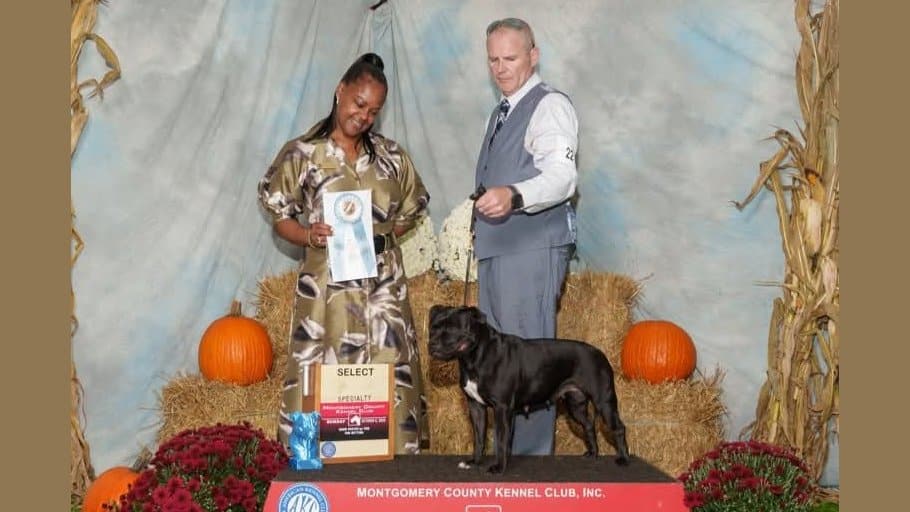
Kimberly Washington reflects on judging the Staffordshire Bull Terriers at the 2025 Montgomery County Kennel Club dog show.
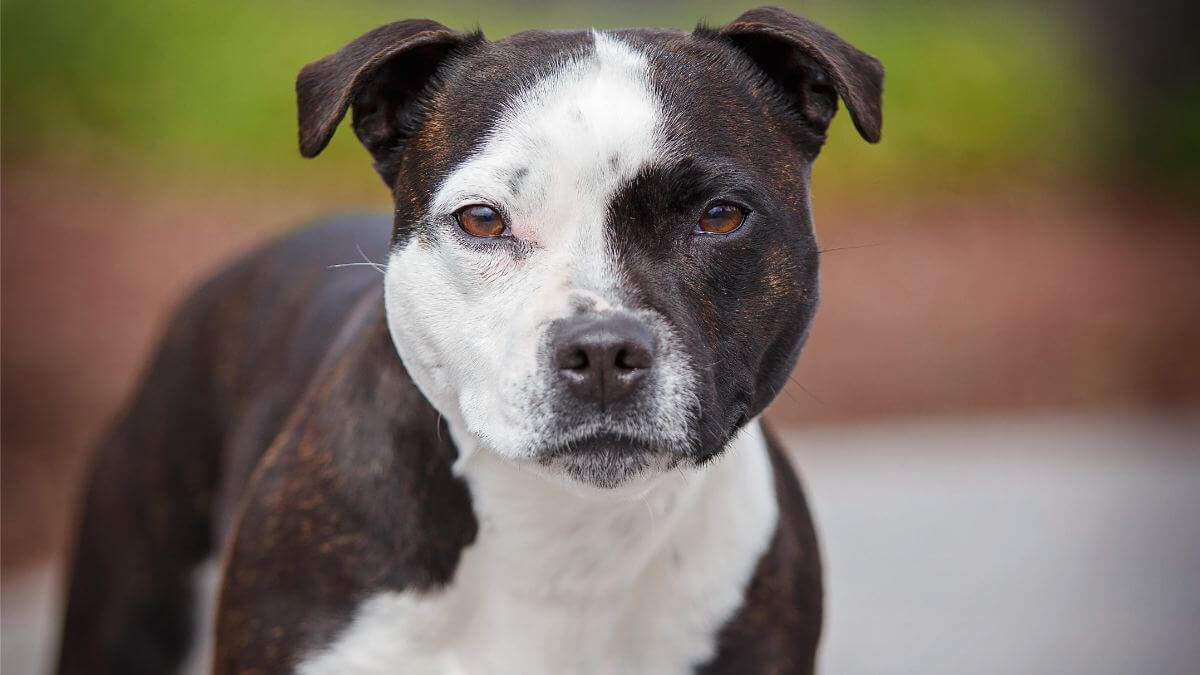
Explore the evolution of the Staffordshire Bull Terrier’s breed standard from its UK origins to modern AKC interpretation.

Meet the Judges
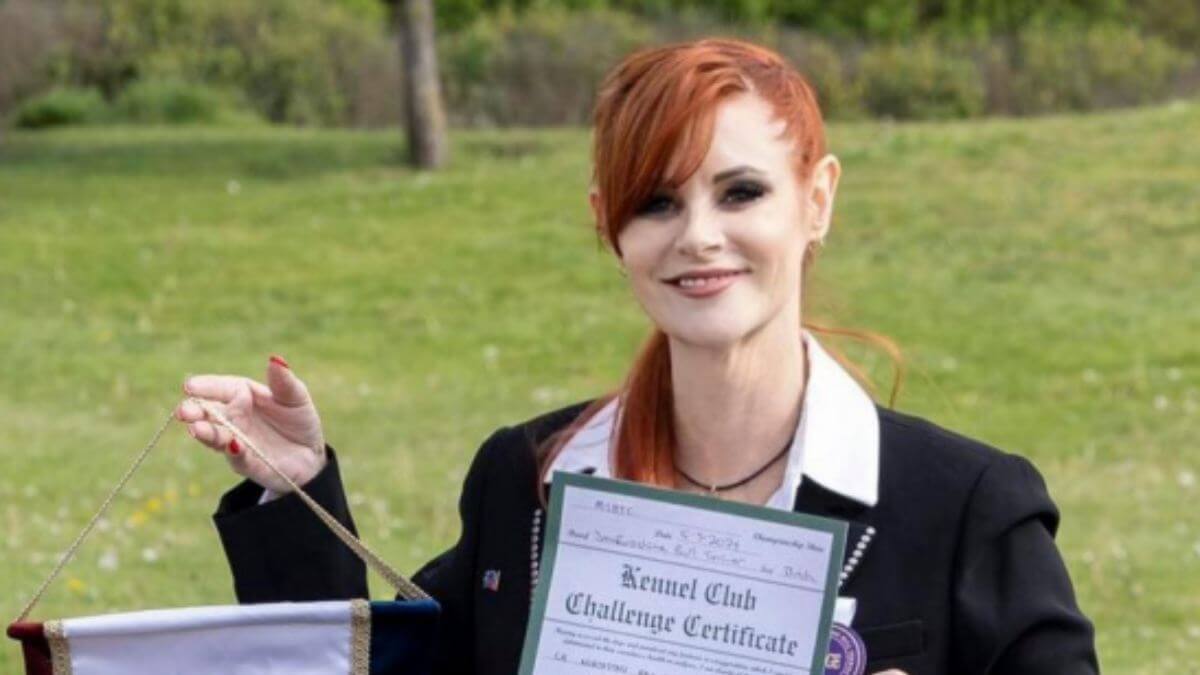
Fiona McBride reflects on judging Staffordshire Bull Terriers at the prestigious Montgomery County KC Terrier Show in 2024.
Dog Sports
Discover the Staffordshire Bull Terrier: agile, muscular, and built for performance, this all-purpose dog is strength in a compact form.
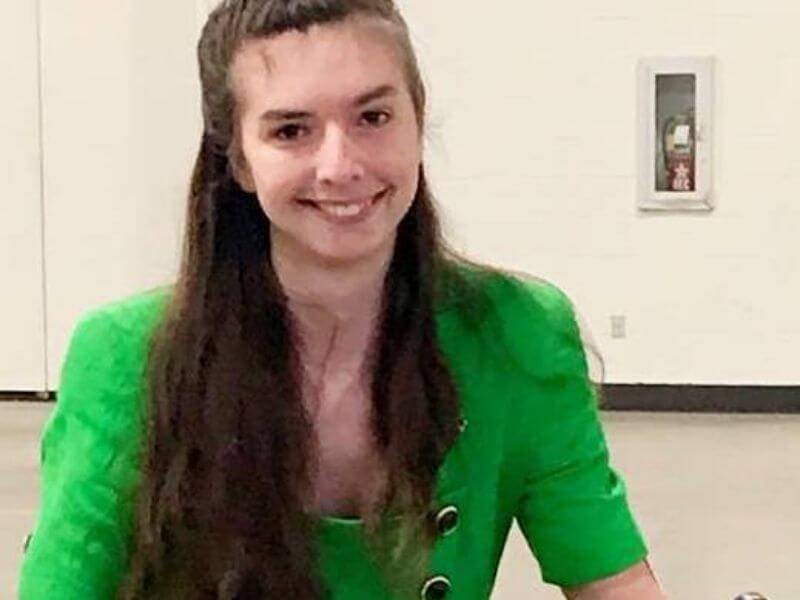

Meet the Owner Handlers
Alexa Keetch: 17 years in dog shows, mastering NOHS. From breeds to AKC College, her journey unfolds in this exclusive interview.
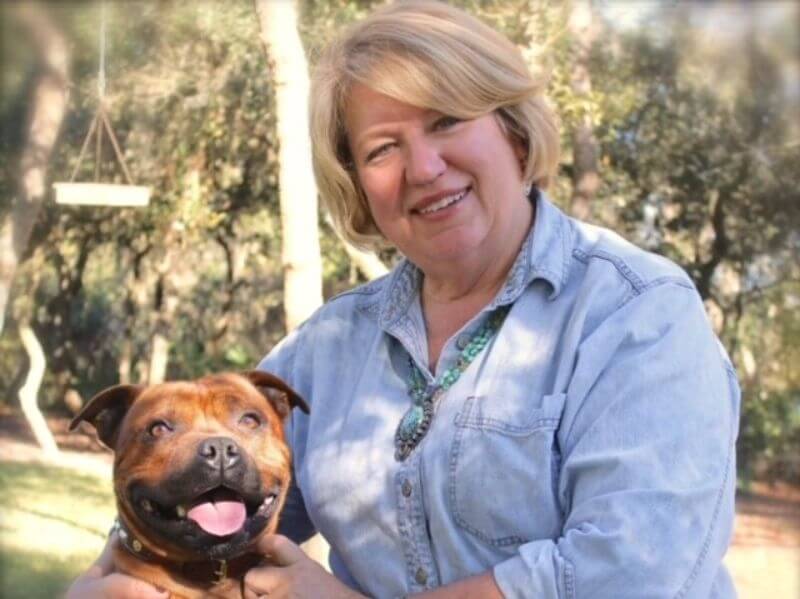
Meet the Breeders
Sandra Carter is the breeder behind Shortyrock Staffords. Read about the kennel’s beginnings, puppies, and much more!
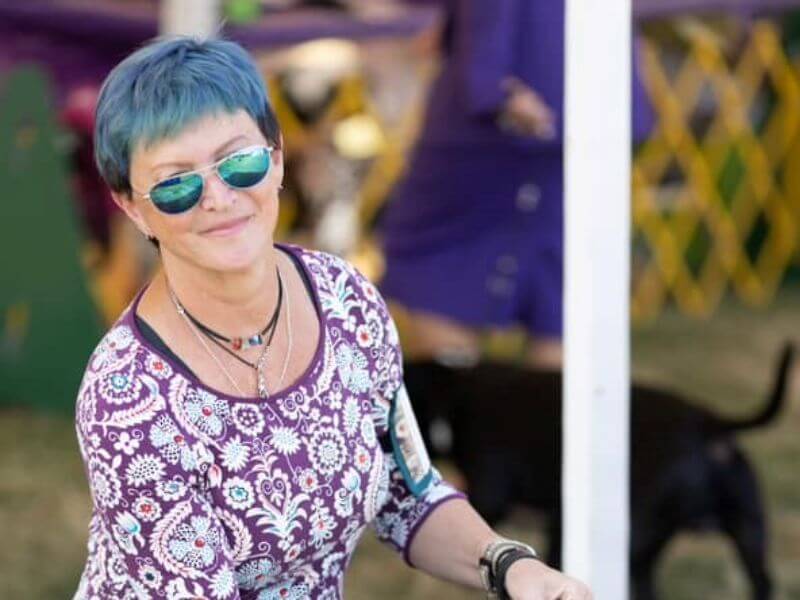
Meet the Breeders
Jim and Lynn Caswell are the breeders behind Wavemaker Stafford and The Stafford Knot. Read about the kennel’s beginnings, and much more!
Meet the Breeders
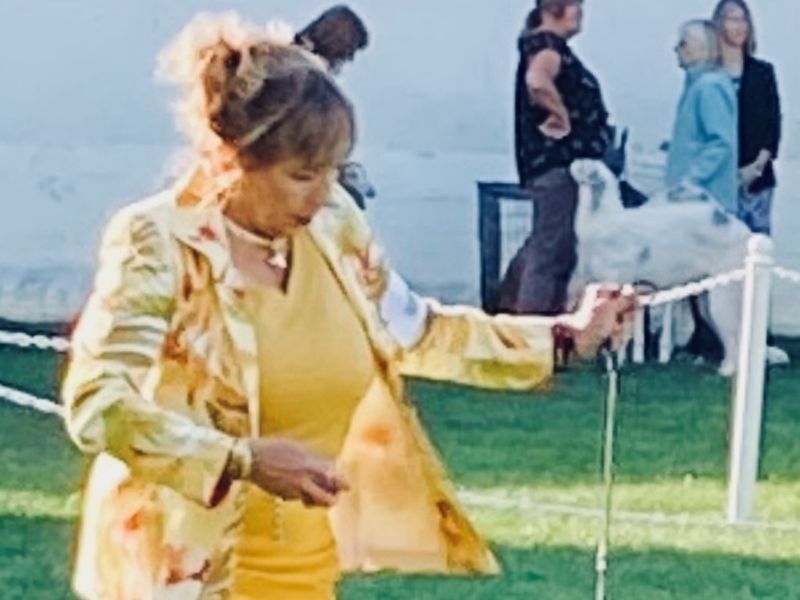
Lorene Wilson is the breeder behind AdoraBull Staffordshire Bull Terriers. Read about the kennel’s beginnings, puppies, and much more!
The tail is of medium length, set low, and tapers to a point. It is carried relatively low and should not curl excessively, contributing to the breed’s balanced and athletic outline. The tail’s shape is said to resemble an old-fashioned pump handle.
Standard Markings
A Note About Color: The AKC Standard permits red, fawn, white, black, or blue; any of these with white; any shade of brindle; or brindle with white. Black-and-tan, liver, and merle are disqualifications. The merle pattern does not exist genetically in the breed and shall be disqualified.
Coat Type
Smooth
The structure of the coat this breed carries.
Coat Length
Short
How long the breed's coat grows when kept in condition.
Adaptability Level
How easily a breed copes with changes in home, routine, noise and weather.
Mental Stimulation Needs
How much a breed needs a job, a puzzle or training to stay content.
A Staffordshire Bull Terrier should receive a complete and balanced diet suited to the dog’s age, activity level, and body condition. Portions should be measured carefully because individual dogs may gain excess weight when overfed or given too many treats.
A puppy generally needs three or four small meals each day before gradually moving to two meals. Most adult Staffords are fed twice daily, with the amount adjusted according to the food’s caloric density and the dog’s exercise level.
Treats can be useful during training but should remain a limited part of the daily diet. Fresh water should always be available.
The Staffordshire Bull Terrier is intelligent, eager to interact, and capable of learning quickly. Training is most effective when sessions are short, consistent, and supported by praise, food rewards, toys, and play.
Early socialization should introduce the puppy to different people, well-mannered dogs, environments, sounds, and surfaces. Leash manners, recall, impulse control, and calm greetings are particularly important because an enthusiastic adult Stafford can be strong and energetic.
Clear boundaries should be introduced early and applied consistently. Harsh training methods may create resistance or damage trust, while patient, reward-based training typically encourages better cooperation.
The breed sheds moderately, although shedding may become more noticeable at certain times of the year. Bathing is needed only occasionally unless the dog becomes particularly dirty. Nails should be trimmed regularly, ears should be checked for irritation or debris, and teeth should be brushed routinely. Skin folds and areas affected by rubbing should also be monitored for redness or irritation.