Members
01/Overview
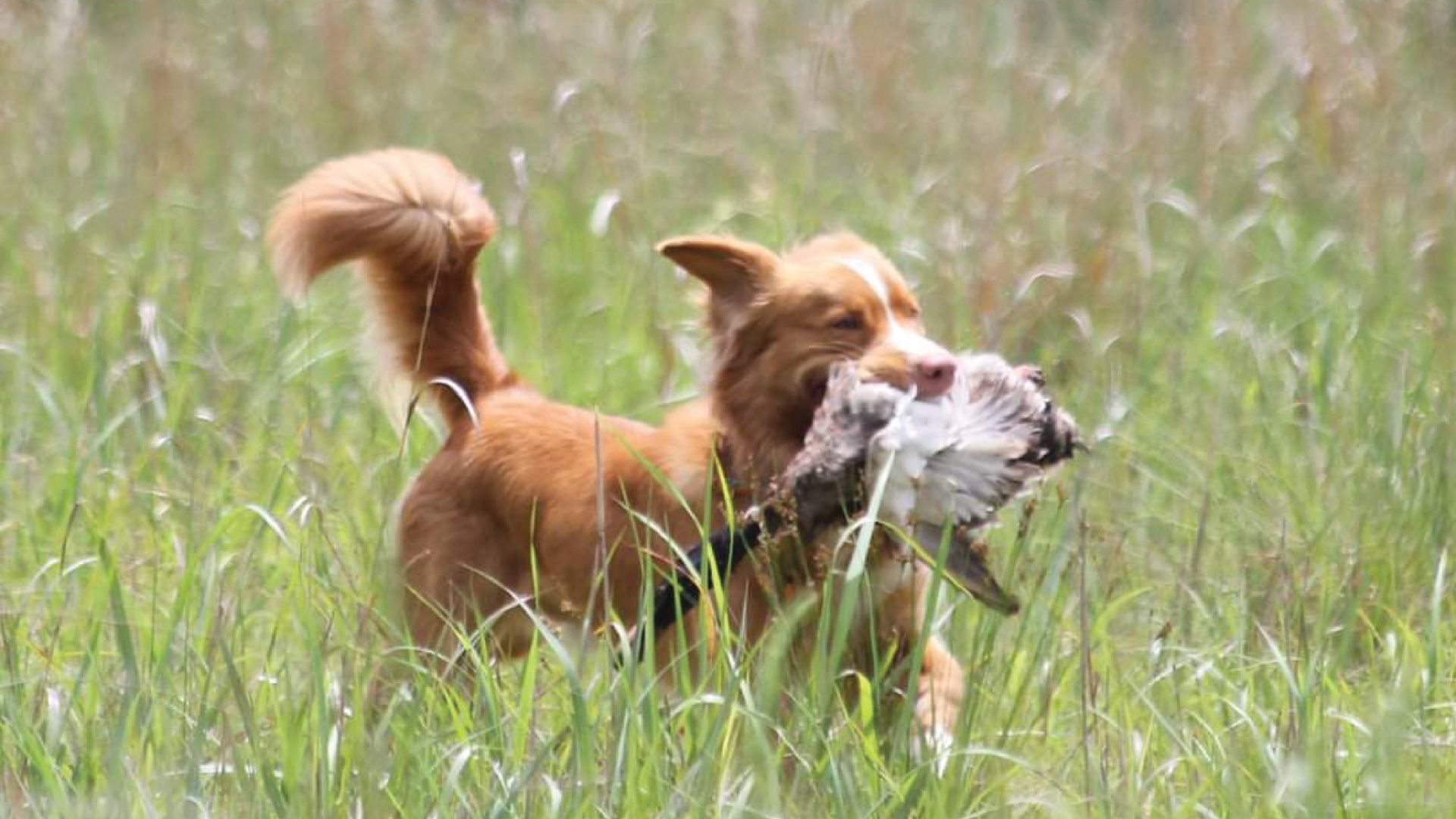
The Nova Scotia Duck Tolling Retriever is a medium-sized, energetic breed known for its remarkable ability to lure and retrieve waterfowl. These dogs are intelligent, versatile, and highly trainable, excelling in various canine activities while maintaining a strong drive to work. Their vibrant personality and affectionate nature make them beloved companions for active families and individuals.
Highlights
02/History
The Nova Scotia Duck Tolling Retriever has a unique history rooted in the hunting traditions of Nova Scotia, Canada. The breed was developed in the early 19th century to assist hunters in the coastal regions of the province, specifically in luring and retrieving ducks and other waterfowl. The term "tolling" refers to the breed’s characteristic behavior of playfully darting along the water’s edge, mimicking the movements of foxes, which naturally attract the curiosity of ducks. Once the birds are lured within shooting range, the Toller retrieves the downed game.
The breed’s development is believed to involve a combination of several established purebreds, including spaniels, retrievers, setters, and possibly even collies. The goal was to create a dog that was both an adept retriever and a skilled tolling specialist, with a temperament suitable for working closely with hunters.
The “Toller” was first known as the "Little River Duck Dog," named after the region in Nova Scotia where it was commonly found. Its distinctive red coat and white markings became a hallmark of the breed, both for its aesthetic appeal and its functional visibility in hunting scenarios.
The Canadian Kennel Club (CKC) officially recognized the Nova Scotia Duck Tolling Retriever as a distinct breed in 1945, making it one of the few breeds to originate in Canada. The breed gained international recognition when it was acknowledged by the Fédération Cynologique Internationale (FCI) in 1982, and later, by the American Kennel Club (AKC) in 2003, where it was placed in the Sporting Group.
While the Nova Scotia Duck Tolling Retriever was initially bred as a bird dog, its friendly and adaptable nature has made it increasingly popular as a family companion. Yet despite its rise in popularity, it remains a relatively rare breed, admired for its combination of beauty, intelligence, and functionality. Today, the Toller is celebrated not only for its historical role as a hunting partner but also for its success in dog sports, therapy work, and as a loyal and loving companion.
03/Appearance
Male Nova Scotia Duck Tolling Retrievers typically stand between 18 and 21 inches tall at the shoulder, while females measure slightly less, ranging from 17 to 20 inches. Weight is in proportion to height and substance, generally between 35 and 50 pounds.
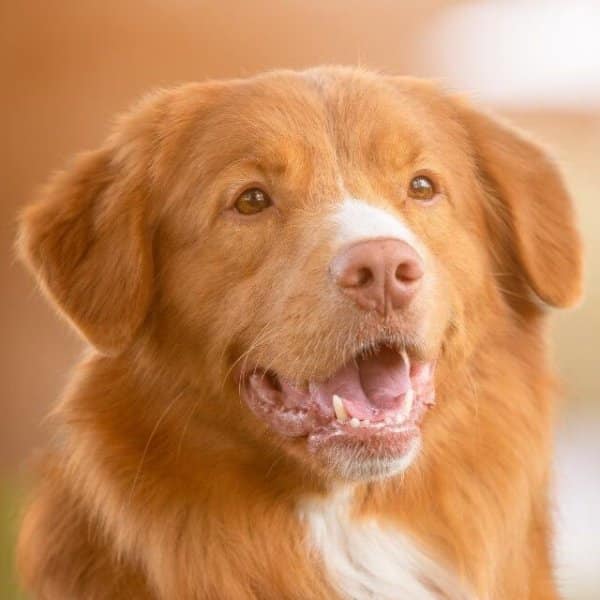
The Nova Scotia Duck Tolling Retriever is a well-balanced, medium-sized dog that is slightly longer than it is tall. It is compact, balanced, and powerful enough to fulfill the demands of fieldwork. Although it is the smallest of the retrievers, the Toller’s form suggests strength with a high degree of agility.
Texture: The Nova Scotia Duck Tolling Retriever’s double coat is designed for functionality. The outer coat is medium in length, medium-soft to the touch, and water-repellent, while the undercoat is dense and insulating to protect against cold and wet conditions. The hair on the muzzle is short and fine, and moderate feathering is present on the chest, body, and tail, and on the legs where it forms “pantaloons.”
Standard Colors
Standard Markings
04/Consider
The Nova Scotia Duck Tolling Retriever is a highly energetic and intelligent breed that thrives in an environment where it can engage in physical activities and mental challenges. These dogs form strong bonds with their families and require consistent attention, making them best suited for active households that are prepared to meet their needs.
Interaction With Family
The level of affection a breed typically shows towards family members and familiar individuals.
Good With Other Dogs
The innate friendliness of a dog towards other dogs can depend on its breed.
Good With Young Children
The degree to which a breed will typically be patient with young children.
Amount Of Shedding
How much hair a breed typically leaves behind on clothes, furniture and floors.
Frequency Of Grooming
How often a breed needs brushing, bathing or a professional trim to stay in condition.
Amount Of Drooling
How prone a breed is to drool, worth knowing before you keep a towel by the door.
Openness To Strangers
How openly a breed tends to greet new people, visitors and strangers.
Protective Nature
How likely a breed is to alert you to anything unfamiliar, and stand between you and it.
Playfulness Level
How enthusiastic a breed stays about games and play well past puppyhood.
Trainability Level
How readily a breed takes direction and works with you rather than around you.
Barking Level
How much a breed uses its voice, and how readily.
Energy Level
How much get-up-and-go a breed brings to an average day.
Health
The Nova Scotia Duck Tolling Retriever is generally a healthy breed with a lifespan of 12 to 14 years. Maintaining good health requires regular veterinary check-ups, a well-balanced diet, and adequate physical activity to support an active lifestyle.
The Nova Scotia Duck Tolling Retriever is an affectionate, intelligent, and playful breed that thrives on human interaction. These dogs are highly people-oriented, forming close bonds with their families and often following their favorite humans from room to room. Tollers are generally friendly with strangers and get along well with children and other pets, making them a great choice as a companion.
While eager to please, Tollers are also known for their independence and occasional stubbornness, which can make training a challenge without consistency and positive reinforcement. They are sensitive to their environment and respond best to gentle and encouraging handling.
Exercise Expectations
As natural retrievers, Tollers love water and excel in activities like swimming and Dock Diving, making them ideal companions for families who enjoy outdoor adventures. Without sufficient exercise and stimulation, they may become bored and develop undesirable behaviors, so they are best suited for active households.
Grooming Expectations
Tollers adapt well to various living situations, but they are best suited to homes where they have access to outdoor space and plenty of exercise. While they can live in apartments if given sufficient activity, they thrive in larger homes with a securely fenced yard where they can run and play safely.
Tollers are well-equipped for colder climates, thanks to their dense, water-resistant coats, but they may need extra care in hot weather to avoid overheating. As sociable dogs, they do best in households where they can be part of daily activities, since they typically do not handle long periods of isolation very well.
05/Puppies
Nova Scotia Duck Tolling Retriever puppies are curious and energetic, requiring early socialization and structured routines to grow into well-rounded adults. Introducing them to new environments, people, and animals during puppyhood helps to develop their confidence and adaptability.
Caring for a Nova Scotia Duck Tolling Retriever puppy involves meeting the little one’s physical, mental, and social needs. A high-quality puppy food designed for large-breed puppies supports controlled growth and helps to prevent joint problems. Meals should be divided into three to four portions daily to avoid overfeeding and promote steady development.
Training should start immediately, focusing on basic obedience, crate training, and house training. Positive reinforcement methods work best, as the Toller pup is eager to learn but can be sensitive to harsh handling. Socialization is equally important to ensure the puppy grows up to be comfortable with new experiences and environments.
Veterinary check-ups are essential for the Toller puppy during the first year to monitor growth and provide vaccinations and preventive care. Establishing grooming routines early, including brushing and nail trimming, accustoms the puppy to being handled and sets the stage for long-term health and hygiene. Balancing exercise and rest is crucial, as overexertion can cause stresses and strains. Short play sessions and interactive games are good for challenging both body and mind.
06/Activities
Gallery
07/Standards
The Nova Scotia Duck Tolling Retriever is recognized by the world's leading registries and kennel organizations, which categorize the breed into a specific Group based on its unique characteristics. This breed is recognized worldwide under the following Group designations:
The ideal Nova Scotia Duck Tolling Retriever is described by a Breed Standard that is approved by each of the world’s leading registries and kennel organizations. The Breed Standards for this breed may be found in the following links:
08/Clubs
09/Rescue
10/Facts
Unique Hunting Technique
The Nova Scotia Duck Tolling Retriever uses playful movements along the shoreline to lure curious ducks closer, a method inspired by foxes.
Smallest Retriever
Tollers are the smallest of all retriever breeds, combining quickness and agility in a medium-sized package.
Canadian Origin
The Toller is one of only a few recognized breeds developed in Canada, with its roots tracing back to the 19th century in Nova Scotia.
Distinctive Scream
Tollers are known for their unique "Toller scream," a high-pitched, excited vocalization often made during play or in anticipation of an activity.
11/FAQ
Yes, Nova Scotia Duck Tolling Retrievers shed moderately throughout the year, with heavier shedding during seasonal changes. Regular brushing helps to manage shedding and keeps the double coat in good condition.

Written by
Dan Sayers is the Executive Editor of SHOWSIGHT. He is a member of the World Dog Press Association and the Dog Writers Association of America, which recognized his illustrations in the award-winning Encyclopedia of K-9 Terminology. Dan is a longtime supporter of the sport of dogs and an advocate for the conservation of recognized breeds in all their forms and functions. He is a member of the Morris and Essex Kennel Club, and for 45 years, the Irish Water Spaniel Club of America where he serves as AKC Delegate, Archivist, and approved Breed Mentor. Dan breeds under the Quiet Storm prefix and has judged the IWSCA National Specialty Sweepstakes twice.
Official Standard for the Nova Scotia Duck Tolling Retriever
General Appearance: The Nova Scotia Duck Tolling Retriever (Toller) was developed in the early 19th century to toll, lure, and retrieve waterfowl. The playful action of the Toller retrieving a stick or ball along the shoreline arouses the curiosity of the ducks offshore. They are lured within gunshot range, and the dog is sent out to retrieve the dead or wounded birds. This medium sized, powerful, compact, balanced dog is the smallest of the retrievers. The Toller's attitude and bearing suggest strength with a high degree of agility. He is alert, determined, and quick, with a keen desire to work and please. Many Tollers have a slightly sad or worried expression when they are not working. The moment the slightest indication is given that retrieving is required, they set themselves for springy action with an expression of intense concentration and excitement. The heavily feathered tail is held high in constant motion while working. The Nova Scotia Duck Tolling Retriever Club (USA) feels strongly that all Tollers should have these innate abilities, and encourages all Tollers to prove them by passing an approved Nova Scotia Duck Tolling Retriever Club (USA) field test.
Size, Proportion and Substance: Size - Height at the withers - males, 18 to 21 inches. The ideal is 19 inches. Females, 17 to 20 inches. The ideal is 18 inches. Bone - is medium. Weight is in proportion to height and bone of the dog. The dog's length should be slightly longer than height, in a ratio of 10 to 9, but should not give the impression of a long back.
Head: Skull - The head is clean-cut and slightly wedge shaped. The broad skull is only slightly rounded, giving the appearance of being flat when the ears are alert. The occiput is not prominent. The cheeks are flat. The length of the skull from the occiput to the stop is slightly longer than the length of the muzzle from the stop to the tip of the nose. The head must be in proportion to body size. Expression - The expression is alert, friendly, and intelligent. Many Tollers have a slightly sad expression until they go to work, when their aspect changes to intense concentration and desire. Eyes - The eyes are set well apart, slightly oblique and almond in shape. Eye color blends with the coat or is darker. Eye rims must be self-colored or black, matching the nose and lips. Faults: large round eyes. Eye rims and/or eyes not of prescribed color. Ears - The high set ears are triangular in shape with rounded tips, set well back on the skull, framing the face, with the base held slightly erect. Ear length should reach approximately to the inside corners of the eyes. Ears should be carried in a drop fashion. Ears are short-coated, and well feathered only on the back of the fold. Stop: The stop is moderate. Muzzle - The muzzle tapers in a clean line from stop to nose, with the lower jaw not overly prominent. The jaws are strong enough to carry a sizeable bird, and softness in the mouth is essential. The underline of the muzzle is strong and clean. Fault - dish face. Nose - The nose is fairly broad with the nostrils well open, tapering at the tip. The color should blend with that of the coat, or be black. Fault: bright pink nose. Disqualification - butterfly nose. Lips and flews - Lips fit fairly tightly, forming a gentle curve in profile, with no heaviness in the flews. Bite - The correct bite is tight scissors. Full dentition is required. Disqualifications - Undershot bite. Wry mouth. Overshot by more than ⅛ inch.
Neck, Backline, Body: Neck - The neck is strongly muscled and well set on, of medium length, with no indication of throatiness. Backline - Level. Faults - roached or sway back. Body - The body is deep in chest, with good spring of rib, the brisket reaching to the elbow. Ribs are neither barrel shaped nor flat. The back is strong, short and straight. The loins are strong and muscular, with moderate tuck-up. Fault - slack loins. Tail - The tail follows the natural very slight slope of the croup, is broad at the base, and is luxuriant and well feathered, with the last vertebra reaching at least to the hock. The tail may be carried below the level of the back except when the dog is alert, when it is held high in a curve, though never touching the body. Faults - tail too short, kinked, or curled over touching the back. Tail carried below the level of the back when the dog is gaiting.
Forequarters: The shoulder should be muscular, strong, and well angulated, with the blade roughly equal in length to the upper arm. The elbows should work close to the body, cleanly and evenly. When seen from the front, the foreleg's appearance is that of parallel columns. The pasterns are strong and slightly sloping. Fault - down in the pasterns. Feet - The feet are strongly webbed, slightly oval medium in size, and tight, with well-arched toes and thick pads. Front dewclaws may be removed. Faults - splayed or paper feet.
Hindquarters: The hindquarters are muscular, broad, and square in appearance. The croup is very slightly sloped. The rear and front angulation should be in balance. The upper and lower thighs are very muscular and equal in length. The stifles are well bent. The hocks are well let down, turning neither in nor out. Rear dewclaws must not be present. Disqualification - rear dewclaws.
Coat: The Toller was bred to retrieve from icy waters and must have a water-repellent double coat of medium length and softness, and a soft dense undercoat. The coat may have a slight wave on the back, but is otherwise straight. Some winter coats may form a long loose curl at the throat. Featherings are soft and moderate in length. The hair on the muzzle is short and fine. Seasonal shedding is to be expected. Overcoated specimens are not appropriate for a working dog and should be faulted. While neatening of the feet, ears, and hocks for the show ring is permitted, the Toller should always appear natural, never barbered. Whiskers must be present. Faults - coat longer than medium length. Open coat.
Color: Color is any shade of red, ranging from a golden red through dark coppery red, with lighter featherings on the underside of the tail, pantaloons, and body. Even the lighter shades of golden red are deeply pigmented and rich in color. Disqualifications - brown coat, black areas in coat, or buff. Buff is bleached, faded, or silvery. Buff may also appear as faded brown with or without silver tips. Markings - the Toller has usually at least one of the following white markings - tip of tail, feet (not extending above the pasterns), chest and blaze. A dog of otherwise high quality is not to be penalized for lack of white. Disqualifications - white on the shoulders, around the ears, back of neck, or across the flanks.
Gait: The Toller combines an impression of power with a springy gait, showing good reach in front and a strong driving rear. Feet should turn neither in nor out, and legs travel in a straight line. In its natural gait at increased speeds, the dog's feet tend to converge towards a center line, with the backline remaining level.
Temperament: The Toller is highly intelligent, alert, outgoing, and ready for action, though not to the point of nervousness or hyperactivity. He is affectionate and loving with family members and is good with children, showing patience. Some individuals may display reserved behavior in new situations, but this is not to be confused with shyness. Shyness in adult classes should be penalized. The Toller's strong retrieving desire coupled with his love of water, endurance and intense birdiness, is essential for his role as a tolling retriever.
Disqualifications: Butterfly nose. Undershot bite, wry mouth, overshot by more than 1/8 inch. Rear dewclaws. Brown coat, black areas in coat, or buff. Buff is bleached, faded or silvery. Buff may also appear as faded brown, with or without silver tips. White on the shoulders, around the ears, back of the neck, or across the flanks.
Approved: June 11, 2001
Effective: September 1, 2001


American Kennel Club (AKC)
Claire Wisch Abraham reflects on judging at the 2025 AKC National Championship, highlighting depth of quality and memorable winners.

Meet the Judges
Gerardo Bernard shares his experience judging at the 2025 National Dog Show, reflecting on prestige, history, and excellence.
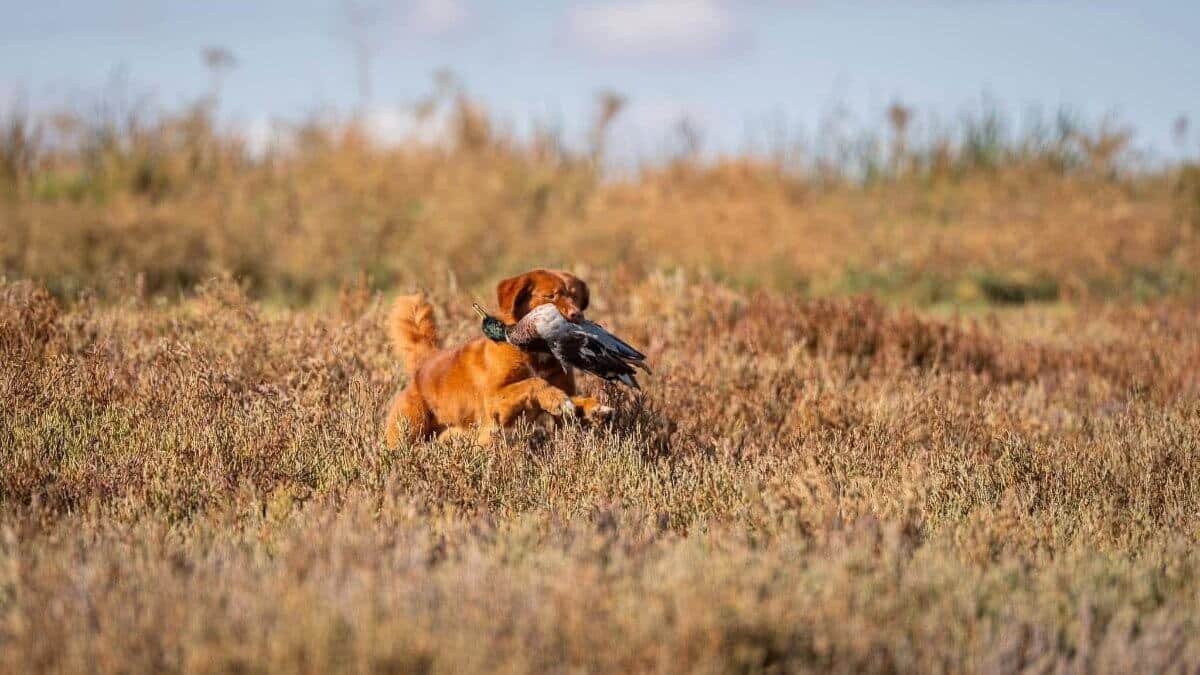

Alicia Figueroa Carlo traces the Toller’s journey from Nova Scotia’s hunting shores to a versatile, energetic retriever celebrated worldwide.
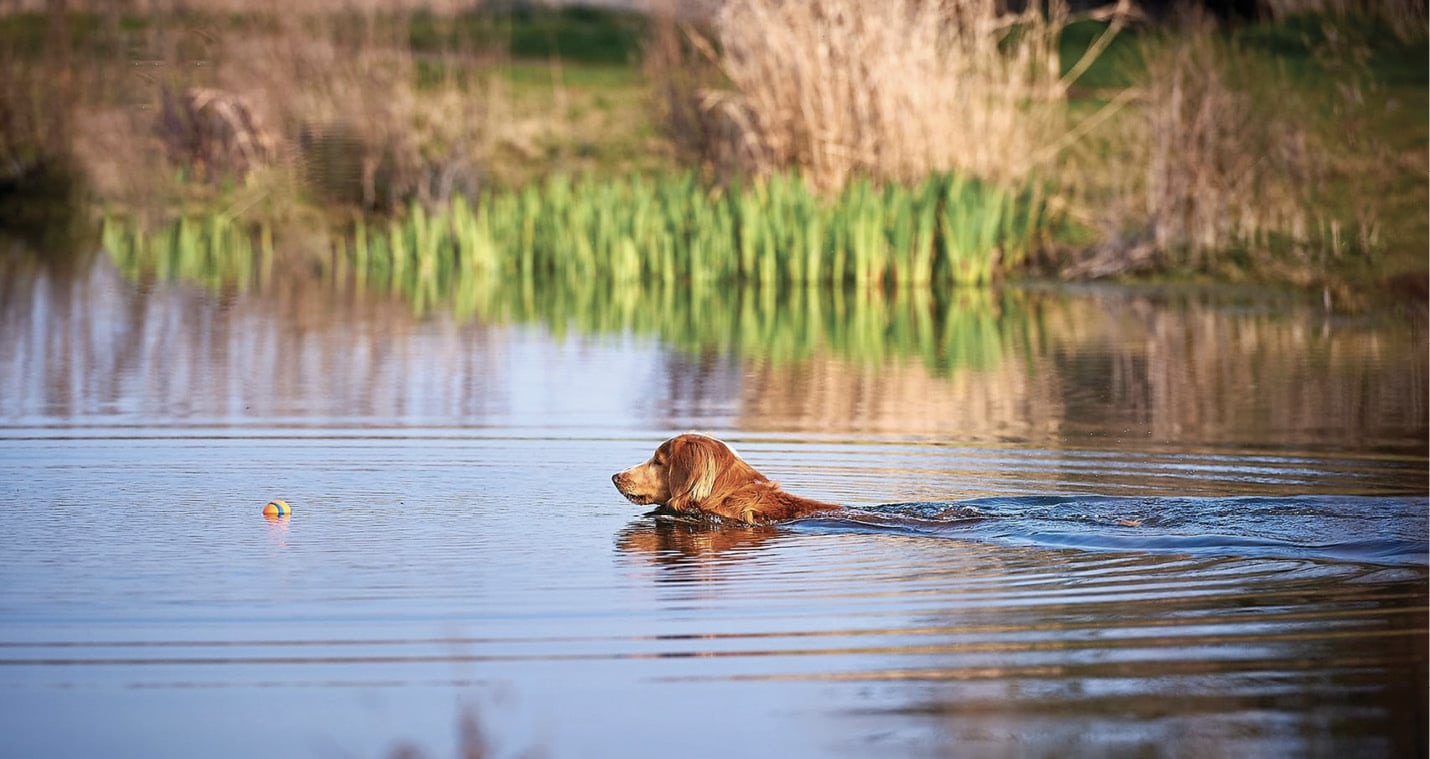
The standard of the Nova Scotia Duck Tolling Retriever temperament states: “The Toller is highly intelligent, alert, outgoing, and ready for action.
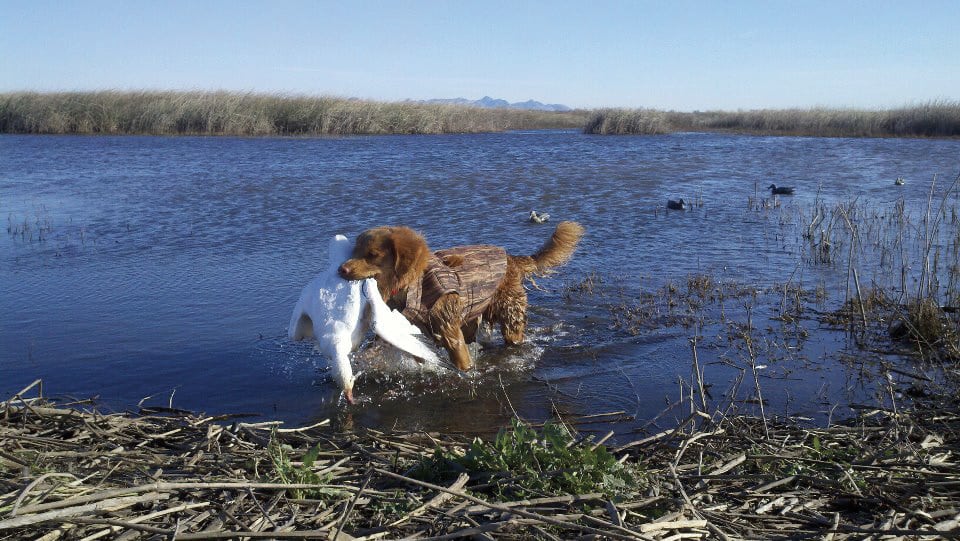
The Nova Scotia Duck Tolling Retriever (Toller) was developed in the early 19th century to toll, lure, and retrieve waterfowl. So, what is tolling?
The tail of the Nova Scotia Duck Tolling Retriever is a defining breed feature. It is set following the very slight slope of the croup, and may be carried below the level of the back except when the dog is moving or otherwise excited, when it is held high in a curve. The tail tapers to a point, and is luxuriantly feathered.
A Note About Color: Any shade of red is allowed, ranging from golden red through dark, coppery red. Lighter shades are deeply pigmented and rich in color. Brown, black, or buff in the coat is not permitted. Markings include at least a white blaze on the head, white on the chest, white feet (not extending above the pasterns), and a white tail tip. White around the ears, on the back of the neck, on the shoulders, and across the flanks is unacceptable.
Coat Type
Double
The structure of the coat this breed carries.
Coat Length
Medium
How long the breed's coat grows when kept in condition.
Adaptability Level
How easily a breed copes with changes in home, routine, noise and weather.
Mental Stimulation Needs
How much a breed needs a job, a puzzle or training to stay content.
Nova Scotia Duck Tolling Retrievers require a high-quality diet that meets their nutritional needs at every stage of life. Puppies benefit from a diet designed for large-breed puppies, which supports controlled growth and helps to prevent joint issues.
Adult Tollers typically consume about 2 to 3 cups of high-quality dog food per day, divided into two meals, to maintain their energy levels and prevent overeating. The exact amount depends on the dog’s age, activity level, and metabolism. Monitoring the dog’s weight and adjusting portion sizes accordingly ensures optimal condition for a lifetime.
Tollers are highly intelligent and eager to learn, making them relatively easy to train with the right approach. Positive reinforcement methods, such as treats, toys, and praise, work best, as these dogs are sensitive and may shut down when harsh training techniques are implemented.
The Toller’s strong prey drive and natural hunting instincts mean early recall training and leash manners are crucial, particularly in areas where distractions like wildlife are present. These dogs can excel in Obedience, Agility, and other canine sports, which not only challenge their minds but also strengthen the bond they share with their human partners. Consistent, engaging training is key to keeping these intelligent dogs mentally stimulated and well-mannered.
The breed’s coat is water-repellent and relatively easy to maintain, but feathering on the legs, chest, and tail should be checked for tangles and debris. Routine care, including nail trimming, ear cleaning, and dental hygiene, is essential to keep them comfortable and for preventing health issues.