Members
01/Overview
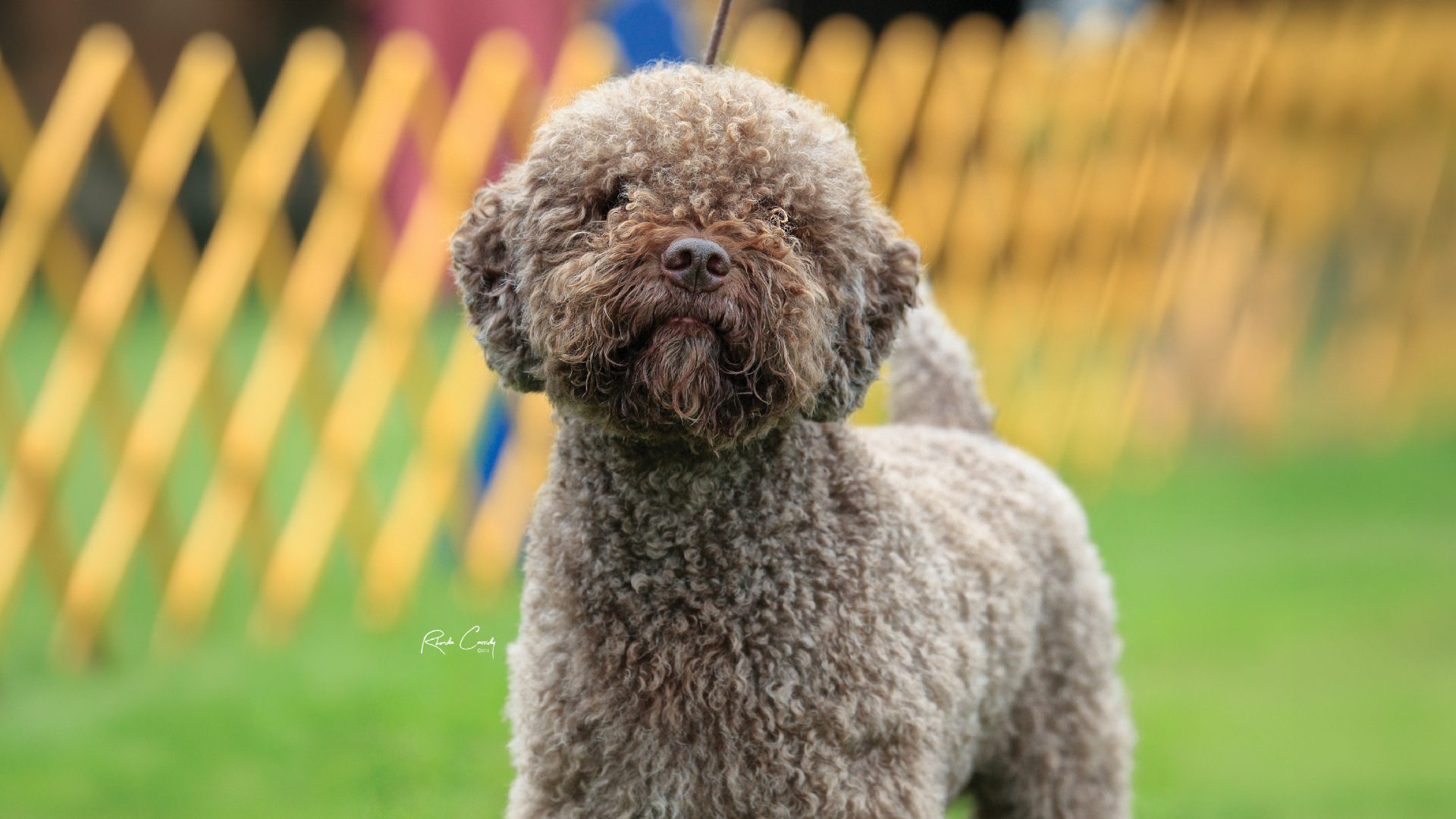
The Lagotto Romagnolo is a versatile and affectionate breed, celebrated for its keen sense of smell and charming personality. Known as the "truffle dog" of Italy, this medium-sized breed excels in finding prized truffles while doubling as a devoted companion. With its curly coat and lively demeanor, the “Lagotto” appeals to dog enthusiasts who appreciate intelligence, adaptability, and a deep bond with their canine partner.
Highlights
02/History
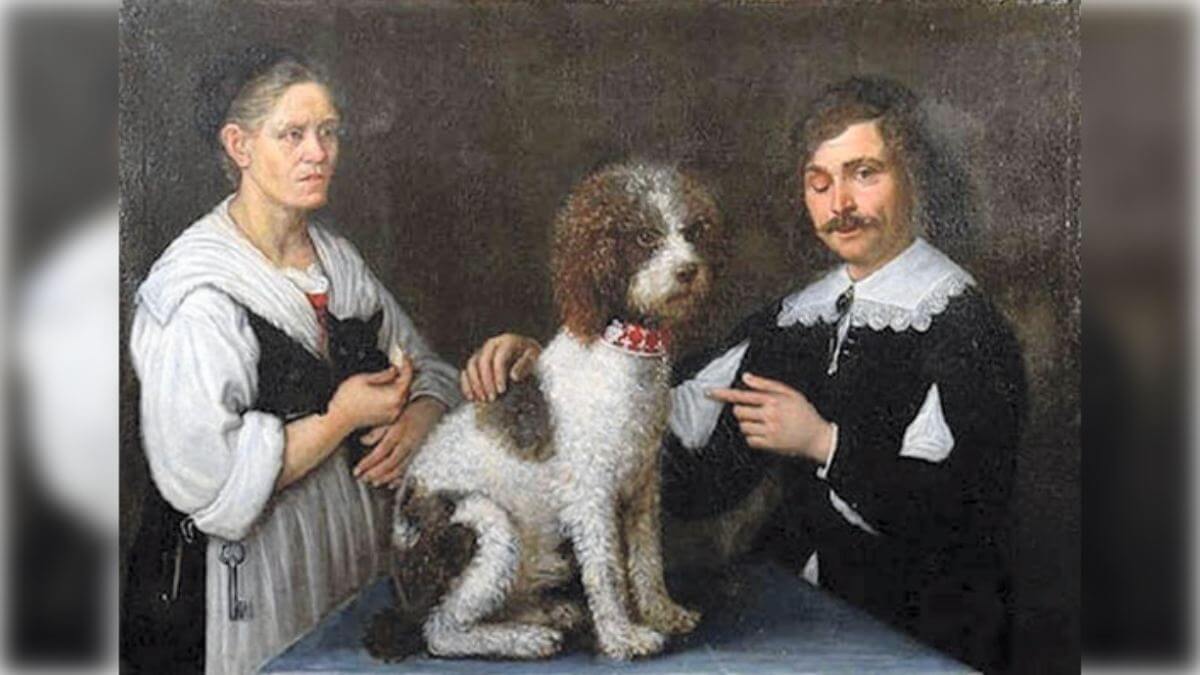
The Lagotto Romagnolo has its roots in the Romagna region of Italy, where it was originally bred as a true water dog. Its name reflects this heritage, with "Lagotto" deriving from the Italian word lago, meaning "lake." These dogs were indispensable in the marshlands, retrieving waterfowl for hunters.
As the wetlands of Romagna were drained for agriculture in the 19th century, the Lagotto transitioned to a new role; truffle hunting. Their exceptional noses and natural digging instincts made them perfect for this task, and they soon became the go-to breed for truffle hunters across Italy.
Despite its long history, the breed faced near extinction in the mid-20th century, as industrialization reduced the need for both water dogs and truffle hunters. Dedicated enthusiasts revived the Lagotto, and the breed gained official recognition..
The Lagotto Romagnolo was officially recognized by the Fédération Cynologique Internationale (FCI) in 1995, by The Kennel Club (UK) in 2001, and by the American Kennel Club (AKC) in 2015. Today, the breed is celebrated not only for its historic roles but also as a beloved companion and participant in a wide variety of dog sports and activities.
03/Appearance
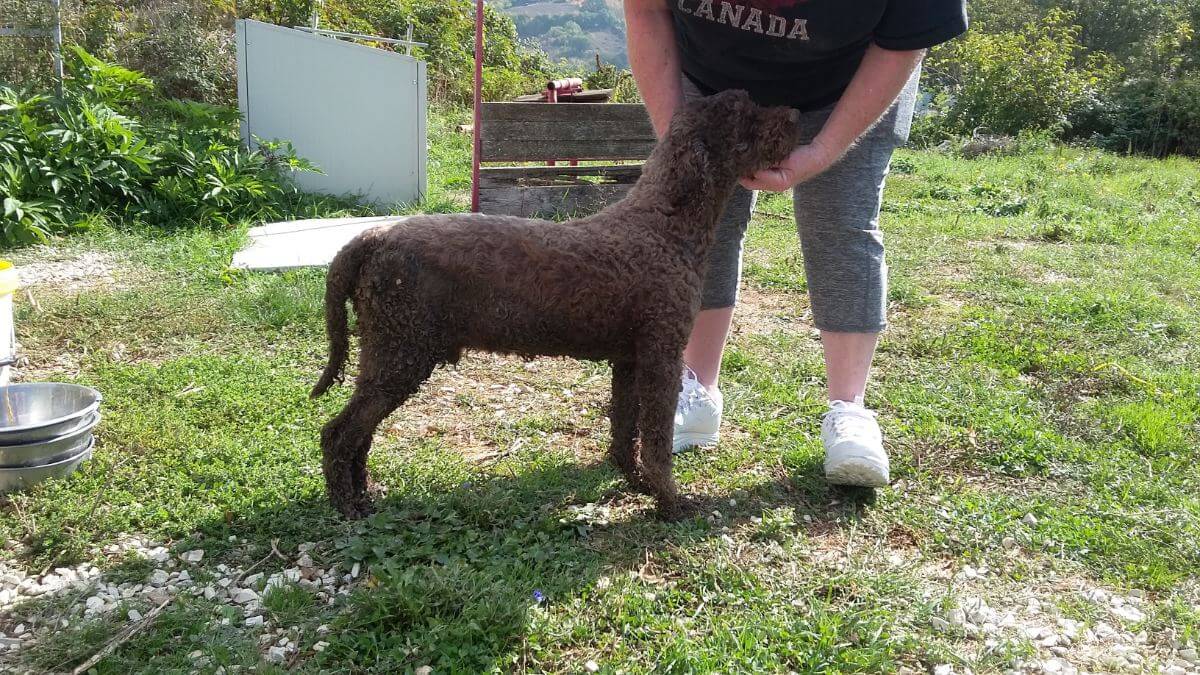
The Lagotto Romagnolo is a medium-sized breed, with males standing between 16.5 and 19.5 inches tall at the shoulder, and females slightly less at 15.5 to 18.5 inches. Males typically weigh 28 to 35 pounds, while females weigh between 24 and 31 pounds
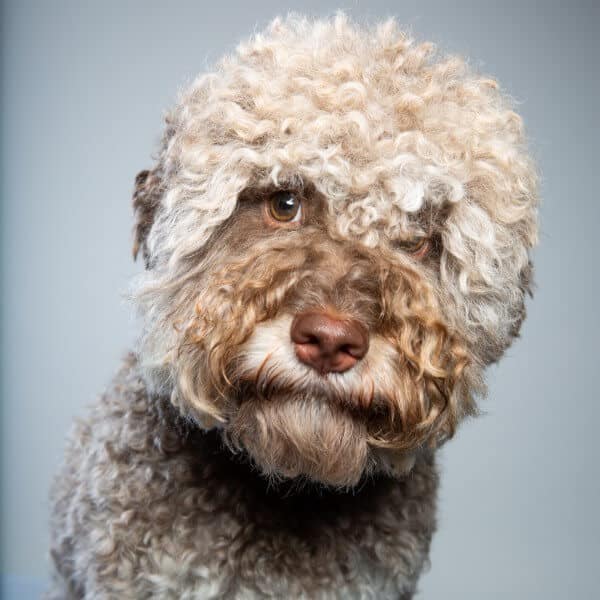
The Lagotto Romagnolo has a square silhouette that emphasizes its well-proportioned and powerfully built frame. The length of the body from the point of the shoulder to the point of the buttocks is equal to the height at the withers. The chest is well-developed but not overly broad, providing adequate room for lung capacity without compromising agility.
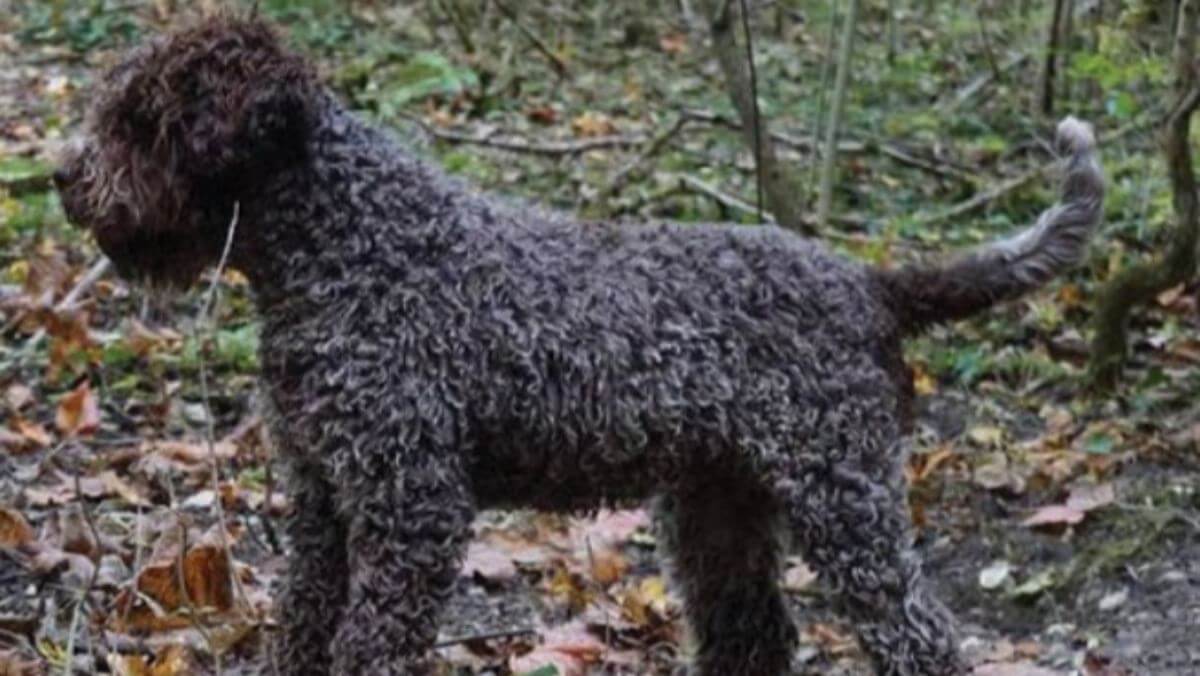
Texture: The Lagotto Romagnolo's coat is characterized by its dense, curly texture that provides excellent protection in harsh environments. The coat is woolly and water-repellant, with a thick topcoat and a visible undercoat. The tight, ring-shaped curls of the coat are evenly distributed across the body. They are more loose on the head, forming abundant eyebrows, whiskers, and a somewhat bristly beard. The coat on the tail is both curly and somewhat bristly. The Lagotto’s coat is rustic in appearance. It is never luxurious, shiny, or corded.
Standard Colors
04/Consider
The Lagotto Romagnolo is a versatile and intelligent breed, but prospective owners need to consider its unique needs and characteristics. The Lagotto’s high energy level, curly coat, and strong scenting ability make it a standout companion, but these traits also require commitment and understanding. This breed thrives in homes that can provide regular mental and physical stimulation, as well as consistent grooming.
Interaction With Family
The level of affection a breed typically shows towards family members and familiar individuals.
Good With Other Dogs
The innate friendliness of a dog towards other dogs can depend on its breed.
Good With Young Children
The degree to which a breed will typically be patient with young children.
Amount Of Shedding
How much hair a breed typically leaves behind on clothes, furniture and floors.
Frequency Of Grooming
How often a breed needs brushing, bathing or a professional trim to stay in condition.
Amount Of Drooling
How prone a breed is to drool, worth knowing before you keep a towel by the door.
Openness To Strangers
How openly a breed tends to greet new people, visitors and strangers.
Protective Nature
How likely a breed is to alert you to anything unfamiliar, and stand between you and it.
Playfulness Level
How enthusiastic a breed stays about games and play well past puppyhood.
Trainability Level
How readily a breed takes direction and works with you rather than around you.
Barking Level
How much a breed uses its voice, and how readily.
Energy Level
How much get-up-and-go a breed brings to an average day.
Health
The Lagotto Romagnolo is generally a healthy breed with a lifespan of 15 to 17 years, which is relatively long for a medium-sized dog. However, like all dogs, individuals may be prone to certain health conditions. Responsible breeders prioritize health testing to minimize the risks, but it is important for owners to remain vigilant about a dog’s overall well-being.
Lagotto Romagnolos are affectionate, intelligent, and eager to please, making them a great choice for both experienced and novice owners. They are highly sensitive dogs, often attuned to the emotions of their human companions.
While the Lagotto can tolerate short periods alone, these dogs are happiest when included in family activities, and are likely to become anxious if left alone for extended periods. Lagottos are typically good with other dogs and get along well with children. Their friendly and approachable nature also makes them generally warm towards strangers, though early socialization helps to ensure confidence in adult dogs.
Exercise Expectations
While Lagottos have a moderate energy level compared to many other breeds, regular activity prevents boredom and the potentially destructive behaviors that result.These dogs are playful and enjoy activities that involve their human companions, which makes them excellent partners for outdoor adventures and dog sports.
Grooming Expectations
The Lagotto Romagnolo typically adapts well to a variety of living environments, including apartments, provided it receives sufficient exercise and mental stimulation. This breed is ideally suited for moderate climates, but individuals can tolerate both cold and hot weather when appropriate precautions are taken.
Lagottos form strong bonds with their families and thrive in homes where they can be part of daily activities. Their moderate energy levels and friendly temperament make them a joy to live with, as long as their physical, mental, and emotional needs are met.
05/Puppies
Lagotto Romagnolo puppies are energetic and curious, and incredibly smart. Early socialization and training are crucial for shaping well-adjusted adult companions. The puppies’ playfulness and adaptability are a joy, but their working instincts thrive in environments where ample mental and physical stimulation are provided.
Caring for a Lagotto Romagnolo puppy starts with a balanced routine of playtime, training, and rest. Early socialization with a variety of people and animals in various environments encourages confidence and supports the development of an outgoing adult dog.
Proper nutrition is essential, with high-quality puppy food designed for medium-sized breeds divided into three to four meals daily. Positive reinforcement training should begin immediately, as Lagotti are intelligent and eager to please. Crate training aids in housebreaking and provides a secure space where the puppy can rest during the day and sleep at night.
Grooming starts early, with regular brushing to prevent tangles. Nail trimming, ear cleaning, and dental care should be gradually introduced and maintained weekly as the puppy matures. Toys and puzzles are great for keeping the puppy’s active mind engaged and reducing destructive behaviors.
Routine veterinary care, including vaccinations and deworming, ensures the Lagotto Romagnolo puppy stays healthy. With consistent attention and routine care, the pup will grow up to become a typically loyal and well-rounded adult companion for years to come.
06/Activities
Gallery
07/Standards
The Lagotto Romagnolo is recognized by the world's leading registries and kennel organizations, which categorize the breed into a specific Group based on its unique characteristics. This breed is recognized worldwide under the following Group designations:
The ideal Lagotto Romagnolo is described by a Breed Standard that is approved by each of the world’s leading registries and kennel organizations. The Breed Standards for this breed may be found in the following links:
08/Clubs
09/Rescue
10/Facts
Truffle Hunting Experts
The Lagotto Romagnolo is the only breed specifically recognized for its truffle-hunting abilities.
Ancient Origins
The breed’s history dates back to ancient Italy, where the Lagotto served as a water dog in the marshlands of Romagna.
Unique Coat
The breed’s dense, curly coat is not only water-resistant but also hypoallergenic, making it a great choice for many allergy-sensitive owners.
Highly Intelligent
The Lagotto Romagnolo ranks among the most intelligent of all dog breeds, excelling in Obedience, Scent Work, and problem-solving tasks.
11/FAQ
Lagotto Romagnolos have a dense, curly coat that sheds minimally, making them a low-shedding breed. Regular grooming, including brushing and trimming, helps manage their coat and prevents matting.

Written by
Dan Sayers is the Executive Editor of SHOWSIGHT. He is a member of the World Dog Press Association and the Dog Writers Association of America, which recognized his illustrations in the award-winning Encyclopedia of K-9 Terminology. Dan is a longtime supporter of the sport of dogs and an advocate for the conservation of recognized breeds in all their forms and functions. He is a member of the Morris and Essex Kennel Club, and for 45 years, the Irish Water Spaniel Club of America where he serves as AKC Delegate, Archivist, and approved Breed Mentor. Dan breeds under the Quiet Storm prefix and has judged the IWSCA National Specialty Sweepstakes twice.
Official Standard for the Lagotto Romagnolo
General Appearance: Small to medium-sized dog, well-proportioned, powerfully built, of rustic appearance, with a dense, curly coat of wooly texture. The dog should give the impression that he has the strength and endurance to work all day in difficult and challenging terrain.
Size, Substance, Proportions: Size – Height at the withers: Dogs 16½ to 19½ inches; Bitches 15½ to 18½ inches. Disqualification - Dog under 16½ or over 19½ inches; bitches under 15½ or over 18½ inches. Substance - Males 28 to 35 pounds. Females 24 to 31 pounds. Important Proportions - The Lagotto is a square dog, measured from the prosternum to the point of ischium and from the highest point of the shoulder to the ground. The length of the head is 40 percent of the height at the withers. The neck is slightly shorter than the length of the head. The length of the skull should be slightly more than half the length of the head. The legs are slightly more than half the height of the dog at the shoulder.
Head: Viewed from above and from the side, the head is a broad blunted wedge. The length of the skull, from stop to occiput, is the same as the width at the widest point of the zygomatic arch. The somewhat arched skull is slightly longer than half the length of the head (56 percent skull to 44 percent muzzle) with unpronounced occiput. Planes of the skull and muzzle diverge slightly - extreme divergence, parallel planes or dish faced appearance are serious faults. Nasal bone is straight. The stop is moderate, with a distinct furrow between the eyes. Frontal sinuses are well developed, giving good fill beneath the eye. Cheeks are flat. The wide robust underjaw defines the shape of the muzzle so that the lips form an upside-down semi-circle. The nose is large with wide open and mobile nostrils and a strongly pronounced median groove. It protrudes very slightly from the front edge of the lips. The nose should be fully pigmented in shades from light to dark brown, varying with coat color. Anything else is a serious fault. Lips are rather tight and not thick. The strong lower jaw determines the profile of the muzzle. The flews are tight fitting and dry. Pigment of the lips varies with coat color from light to dark brown. Well-developed teeth meet, ideally, in a scissor or level bite. A reverse scissor bite is acceptable. Full dentition is preferred. Disqualification - Overshot or undershot bites (where the incisors do not touch those of the opposing jaw). The eyes are set somewhat frontal-obliquely, and fairly well apart. They are large, rounded, fill the sockets, and very slightly protruding. The color of the iris ranges from ochre to hazel to dark brown – no other colors are acceptable. Eyelids are close fitting. Eye rim color will vary with coat color from light to dark brown. Eyelashes are very well developed. The arch of the eyebrow is prominent. The ears are medium-sized in proportion to the head, triangular with rounded tips. The base of the ear is rather wide and is set just above the zygomatic arch. When alert, the top of the ear rises to widen the appearance of the skull, and the front edge of the ear is close to the cheek. When pulled loosely forward, the ear should cover about ¼ of the length of the muzzle. The Lagotto’s expression should be intelligent, friendly and attentive.
Neck, Body, Topline: The neck is strong muscular, thick, and oval in shape. It is lean, well set off from the nape, and slightly arched. The length of neck is slightly less than the total length of the head. Neck should blend smoothly into shoulders. Muscles are extremely powerful. A correct neck is fundamental to function. The Lagotto body is square, compact and strong. The length of the dog, measured from the prosternum to the point of the ischium, should be the same as the height at the top of the scapulae, which are long and quite high-set, rising well above the level of the back. Chest is wide and well-developed, reaching down to the elbows, but not below them. The ribcage is slightly narrowed in front, widening from the sixth rib back, allowing elbows to move smoothly along the body. Ribs are well sprung (width of ribcage at the widest point is about 30 percent of the height of the dog). Underline is straight, with a slight tuck-up at the flank. The scapulae are set high, back straight, loin slightly arched, croup slightly sloping and tail follows the line of the croup. A line drawn from the top of the shoulder to the hip will be slightly sloping. A dog high in the rear or low in the withers is to be penalized. The Lagotto’s back is straight and very muscular. The loin is short-coupled, very strong, and slightly arched. Its width is equal to or slightly exceeds the length, giving strength for digging. Croup is slightly sloped, quite long, broad, and muscular. It forms an angle of approximately 25 to 30 degrees from the horizontal. Flat or steep croups are to be severely penalized. The tail is set on following the line of the croup. At rest, it is carried scimitar-like, and no higher than the back. When excited, the tail is decidedly raised, and carried in a loose arc above the level of the back. Tip of tail should not be carried further forward than the pelvis. The tail should never be curled or carried straight up. The tail tapers from base to end, and should reach to just above the hock. Ringtails or tails carried over the back are serious faults.
Forequarters: The shoulder blades are long (30 percent at the height of the withers), well laid back (yet not too close at tips), muscular, and strong. They are closely attached to the chest, but move freely. The angle formed between the shoulder blade and the upper arm should be approximately 115 degrees. The elbow will fall on a vertical line lowered from the back of the scapula to the ground. The upper arm is as long as the shoulder blade, of light bone structure, muscular, and tucked firmly against the brisket. Legs are straight. The forearm is long, with strong, compact, oval bone. The carpus is fine, robust and mobile, and in complete alignment with the forearm. Pasterns are also in perfect alignment with forearm, and of slightly finer bone. They are moderate in length and slightly sloping. Forefeet are webbed, rounded, and compact, with well-arched, tight toes. Pads have particularly hard soles. Nails are curved and range in color from white to extremely dark brown.
Hindquarters: Angulation of the hindquarter is slightly less than the angle of the forequarter (approximately 110 degrees). Legs are powerful and parallel when seen from the rear. The upper thigh is slightly longer than the shoulder (35 percent of height at withers). It is quite broad, convex, and with well-defined muscles. The second thigh is slightly longer than the upper thigh, well boned and strong. The hindquarters must be perfectly parallel to the spine. The angle of the stifle should be more open than the angle at the hip, (approximately 130 degrees). The hock joint is well let down, wide, clean and strong. Pasterns are thin, cylindrical, and perpendicular to the ground when the dog is standing freely. A vertical line from the point of buttocks to the ground will fall slightly in front of the toes. Hind feet are slightly oval, compact, and webbed. The toes of the back feet are not quite as arched as those of the forefeet; thus, the nails may be straighter.
Skin, Coat: The skin of the Lagotto is thin, firm and close-fitting all over the body, without wrinkles. Pigmentation of the skin and pads harmonizes with the color of the coat, ranging from dark pink to dark brown. Depigmentation anywhere on the body is a serious fault. Coat is extremely important in this breed. Hair should be of wooly texture, semi-rough on the surface. Topcoat should be quite thick, and undercoat visible. The combination of the two repel water. A correct coat is never luxurious or shiny. The body is covered with tight ring-shaped curls, not frizz. Skull and cheeks are covered with thick hair, and the looser curls of the head form abundant eyebrows, whiskers, and a rather bristly beard. The coat covering the tail is both curly and somewhat bristly. The Lagotto must not be corded. Disqualification - smooth or straight coat. The correct trim must always be unpretentious, and contribute to the natural, rustic look typical of the breed. In a curled state the body coat must be trimmed to no more than 1½ inches in depth (not brushed/combed out), and it should be uniform with the silhouette of the dog. Only on the head can the coat be longer than 1½ inches, but should never cover the eyes (should be penalized). The edges of the ears should be trimmed to the leather; the surface of the ear flap should show looser curls, but remain wavy. The area around the genitals and anus may be clipped short. Hair must be of sufficient length that curls and texture can be assessed. Corded dogs or excessively groomed dogs (sculpted or blown out) should be so severely penalized as to be eliminated from competition.
Color: Lagotti can be off-white solid color, white with brown or orange patches, brown roan, orange roan, brown, orange, or sable (in different shades), with or without white. Some dogs have extremities darker than their body color. Tan markings (in different shades) allowed. The colors have a tendency to fade, sometimes to such an extent that the brown areas can appear as silvery/gray roan. All the above colors are equally desirable, including the faded or diluted colors. Disqualification - Black or gray coat or patches; black pigmentation.
Gait/Movement: Lagotti should exhibit an energetic, lively, balanced trot, with moderate reach and drive. Back should remain firm and strong with no tendency to roll. At a trot, the rear foot covers but does not pass the footprint of the front foot. Movement from the front is parallel at a walk or slow trot, never wider than the dog’s shoulder, and tends toward a center line as speed increases. Rear legs are also parallel at a slow gait, converging at increased speed, with hocks staying in a straight line between hip and foot. As the dog increases speed, the neck moves slightly lower and forward. The Lagotto should move with distinction and nobility of bearing. He should not be exhibited in an elongated trot – it is atypical and incorrect for the breed.
Behavior, Temperament: The Lagotto is tractable, adaptable, keen, affectionate, and extremely attached to its owner. He is both highly intelligent and easily trained. He is an excellent companion and a very good watchdog. A natural gift for searching and a very good nose have made the breed very efficient in finding truffles. The former hunting instinct has been modified by genetic selection to avoid distraction by game. This breed should never be aggressive or overly shy.
Faults: Any departure from the foregoing points should be considered a fault and the seriousness with which the fault should be regarded should be in exact proportion to its degree and to the degree that it will affect the dog’s ability to perform its traditional work, as well as the health and welfare of the dog.
Disqualifications: Size - Dogs under 16½ inches or over 19½ inches. Bitches under 15½ inches or over 18½ inches. Bite – Overshot or pronounced undershot bite (incisors of the upper jaw and lower jaw do not touch). Coat – Smooth or straight. Color – Black or gray coat or patches; black pigmentation.
Approved January 14, 2020
Effective March 31, 2020


American Kennel Club (AKC)
Britt Jung reflects on judging at the 2025 AKC National Championship, highlighting depth of quality, mentorship, and exhibitor spirit.


Meet the Breeders
Kendal Walters of Boardwalk shares her passion for breeding Lagotti Romagnoli with a focus on work ethic, type, and connection.
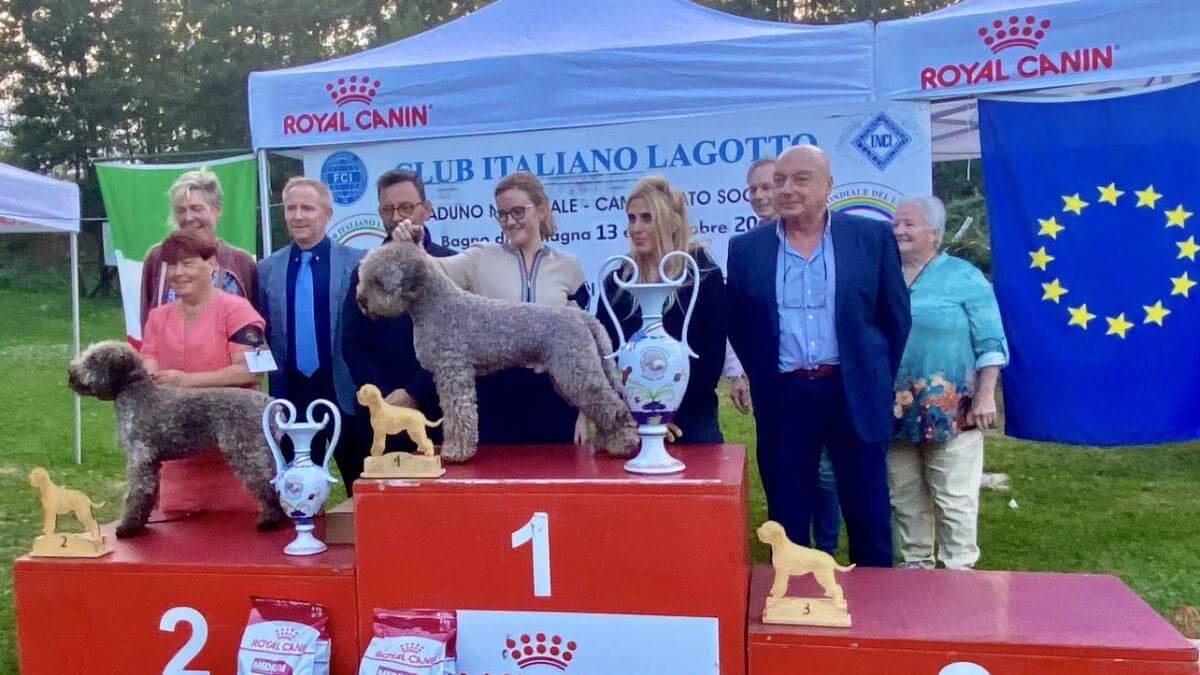
Explore our Italian journey to refine the Lagotto Romagnolo breed standard at the 30th CIL anniversary show, meeting key breeders and dogs.
All About Judging
Explore the Lagotto Romagnolo, a powerful working dog with unique traits for truffle hunting and more. Learn its true standard.
Explore the history and unique traits of the Lagotto Romagnolo, a rustic, curly-coated water dog bred for truffle hunting.
Explore the new Lagotto Romagnolo AKC Breed Standard, covering key changes in color, bite, and rustic grooming guidelines.
Explore the first 25 years of the Lagotto Romagnolo in the US, from early imports to AKC recognition and global connections.
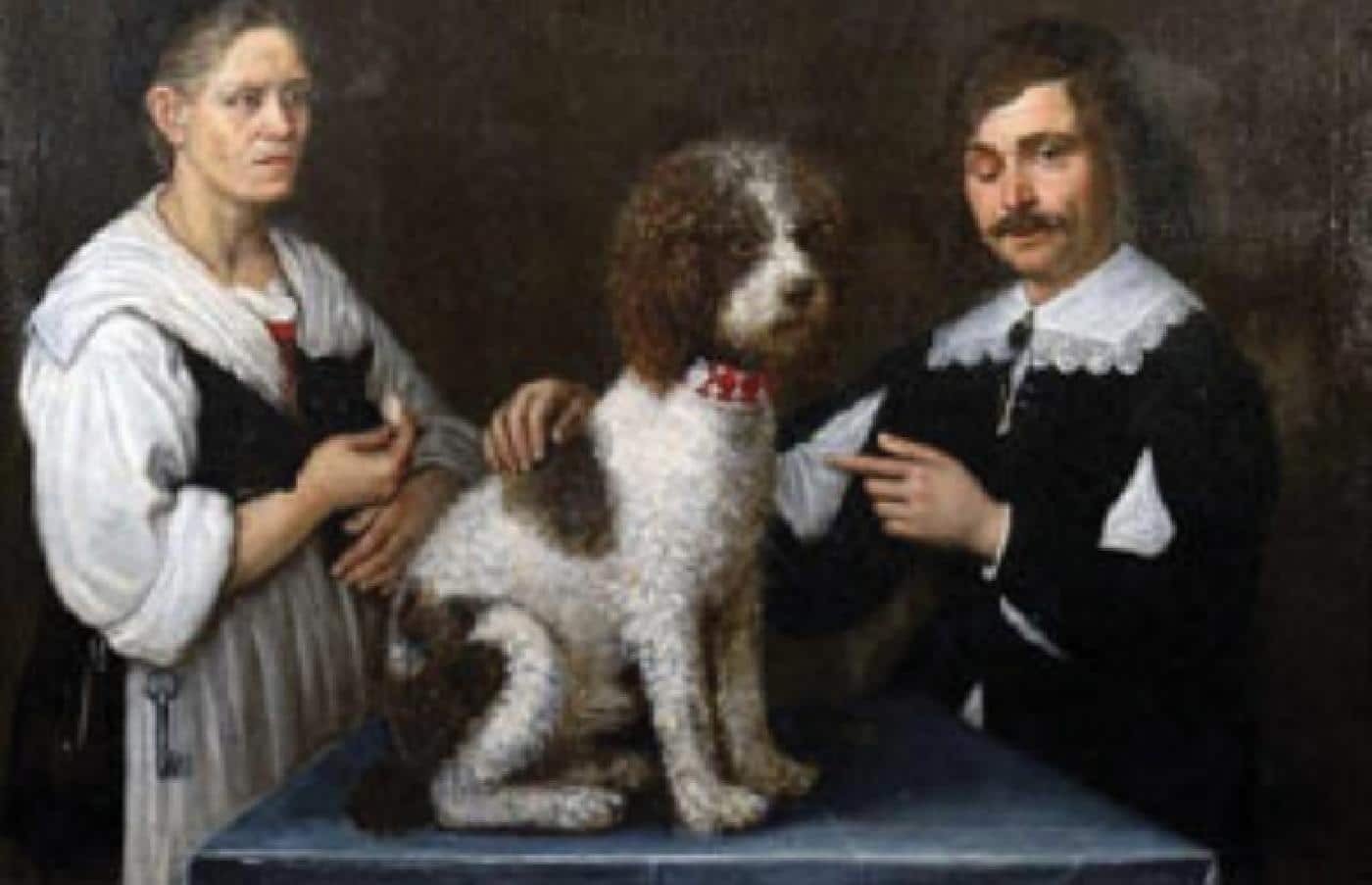
Lagotto Romagnolo is a dog that has been bred to find truffles; it is the only breed specialized in tracking down this precious tuber.

Meet the Owner Handlers
Insights from an Owner Handler, Erin Fogg. Read about her opinions on various topics about dog handling in the show ring.
The Lagotto Romagnolo's tail is medium in length, tapering slightly toward the tip. It is set in line with the croup and is carried scimitar-like when the dog is relaxed. During activity, the tail may be raised but never curls over the back. It is undocked and should never be curled or carried straight up.
Standard Markings
A Note About Color: Lagotti Romagnoli can be off-white, white with brown or orange patches, brown roan, orange roan, brown, orange, or sable in various shades, with or without white. Some dogs may have extremities that are darker than their body color, and tan markings in various shades are permitted. Some coat colors tend to fade over time, sometimes so significantly that brown areas appear silvery or gray roan. All acceptable colors, including faded or diluted shades, are equally desirable. Black or gray coats, black patches, or black pigmentation are unacceptable in the breed.
Coat Type
Double, Curly
The structure of the coat this breed carries.
Coat Length
Medium
How long the breed's coat grows when kept in condition.
Adaptability Level
How easily a breed copes with changes in home, routine, noise and weather.
Mental Stimulation Needs
How much a breed needs a job, a puzzle or training to stay content.
Lagotto Romagnolos require a balanced diet tailored to their age, size, and activity level. Puppies benefit from high-quality puppy food that supports healthy growth. Three to four meals per day is best.
Adult Lagottos thrive on a premium dog food designed for medium-sized breeds, with meals divided into two portions each day to avoid overfeeding. On average, the Lagotto will consume 1.5 to 2.5 cups of dry food daily, depending on the dog’s metabolism and exercise routine. Consulting with the dog’s breeder and veterinarian ensures nutritional needs are being met and helps to maintain a healthy weight.
Lagotto Romagnolos are highly trainable thanks to their intelligence and eagerness to please. They respond well to positive reinforcement techniques such as treats, praise, and play, which encourage consistent and reliable behavior.
The Lagotto has a moderate tendency to bark, often using it as an alert system. Early training can effectively minimize any unnecessary barking. The breed’s intelligence and natural curiosity make these dogs quick learners, though they may also display some independent thinking. They enjoy mental challenges like puzzle toys and scent-based games that engage their natural instincts and keep them stimulated. With proper training, they excel in Obedience, Agility, and other dog sports.
Regular grooming is also necessary to keep the Lagotto’s coat looking its best. Bathing should be done as needed, using a mild dog shampoo to protect the natural oils of the skin and coat, and trimming should take place every six to eight weeks. Routine care of the dog’s ears, nails, and teeth will provide comfort and maintain overall good health.