Members
01/Overview
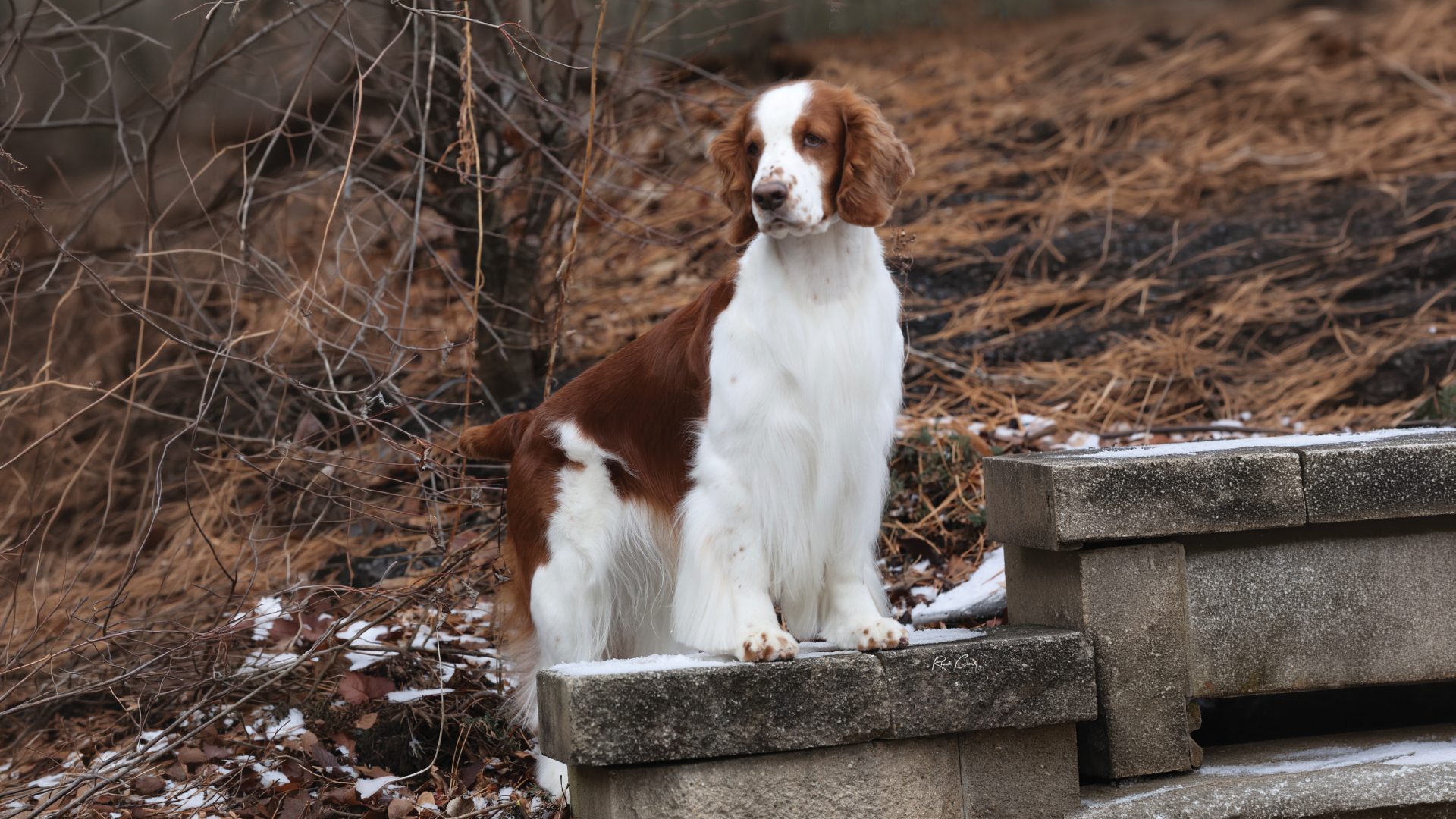
The Welsh Springer Spaniel is a medium-sized flushing spaniel known for its loyal and affectionate nature. Originating in Wales, this versatile dog excels as both a hunting companion and a cherished member of the family. With its striking red and white coat, and boundless enthusiasm, the Welsh Springer is a breed that effortlessly combines beauty and utility, thriving in active households and outdoor settings.
Highlights
02/History
The Welsh Springer Spaniel has a rich history rooted in the rugged landscapes of Wales, where its ancestors were prized as versatile hunting dogs. The breed is believed to share a common lineage with other spaniel breeds, tracing back to ancient Roman or Celtic dogs brought to the British Isles. While early records mention generic “spaniels,” by the 16th century, Welsh farmers and hunters were refining a distinctive red and white variety that would become the breed as it is known today.
Acknowledged for its ability to “spring” gamebirds from dense underbrush, the early dogs were invaluable at a time when hunting was both a necessity and a sport. The Welsh Springer’s strong work ethic, keen nose, and agility made these dogs exceptional hunters in the field. Unlike their English counterparts, the Welsh dogs were bred to navigate the challenging terrain of Wales, developing a somewhat rectangular frame that proved ideal for working in brambles and rocky hillsides.
During the 19th century, the Welsh Springer's popularity grew beyond its native region. It was showcased at early dog shows in the United Kingdom, where its unique red and white coat set it apart from other spaniels. This distinct appearance led to its classification as a separate breed by The Kennel Club (UK) in 1902.
The Welsh Springer Spaniel faced a decline in numbers during World War I and World War II, when resources were scarce and dog breeding took a backseat to wartime priorities. However, dedicated breeders worked diligently to preserve the breed, ensuring its survival and re-establishment in the post-war years.
In the United States, the Welsh Springer Spaniel was recognized by the American Kennel Club (AKC) in 1906. Although the breed has never achieved widespread fame in this country like the English Springer or Cocker Spaniels, it has carved out a niche among dedicated enthusiasts who value its steady temperament and all-around versatility.
03/Appearance
Male Welsh Springer Spaniels typically stand between 18 and 19 inches tall at the shoulder, while females measure slightly less, ranging from 17 to 18 inches. Males generally weigh between 40 and 55 pounds, with females being somewhat lighter, averaging 35 to 50 pounds.
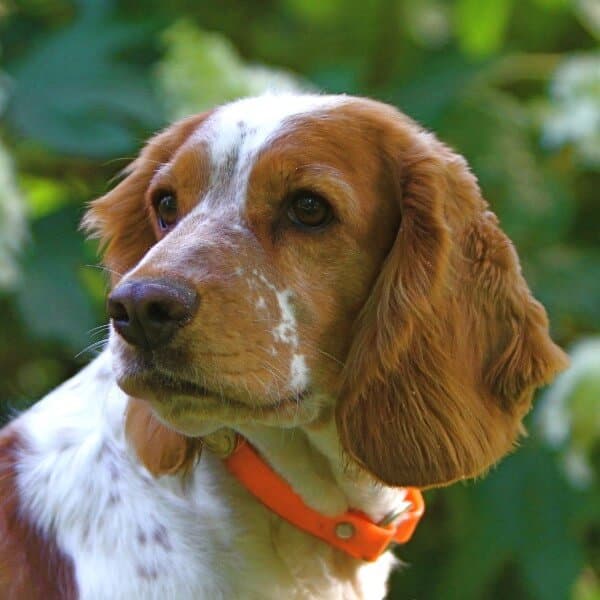
The Welsh Springer Spaniel is slightly longer than it is tall, maintaining a symmetrical and compact frame. The breed’s bone structure is moderate, providing a sturdy foundation suitable for work in the field. Its substance reflects strength and endurance without appearing heavy or coarse.
Texture: The Welsh Springer Spaniel’s coat is soft and silky to the touch, lying flat against the body with a slight wave permitted. The coat is weather-resistant, offering protection during fieldwork in various conditions. Feathering is moderate on the chest, legs, and tail, contributing to the breed’s elegant appearance without being excessive.
Standard Colors
Standard Markings
04/Consider
The Welsh Springer Spaniel is a loving and versatile dog that thrives in active households. The breed’s loyal and eager-to-please nature makes these dogs an excellent choice as a canine companion. However, prospective owners should be mindful of the breed’s exercise requirements and its need to be an active partner in daily activities.
Interaction With Family
The level of affection a breed typically shows towards family members and familiar individuals.
Good With Other Dogs
The innate friendliness of a dog towards other dogs can depend on its breed.
Good With Young Children
The degree to which a breed will typically be patient with young children.
Amount Of Shedding
How much hair a breed typically leaves behind on clothes, furniture and floors.
Frequency Of Grooming
How often a breed needs brushing, bathing or a professional trim to stay in condition.
Amount Of Drooling
How prone a breed is to drool, worth knowing before you keep a towel by the door.
Openness To Strangers
How openly a breed tends to greet new people, visitors and strangers.
Protective Nature
How likely a breed is to alert you to anything unfamiliar, and stand between you and it.
Playfulness Level
How enthusiastic a breed stays about games and play well past puppyhood.
Trainability Level
How readily a breed takes direction and works with you rather than around you.
Barking Level
How much a breed uses its voice, and how readily.
Energy Level
How much get-up-and-go a breed brings to an average day.
Health
The Welsh Springer Spaniel is generally a healthy breed with a lifespan of 12 to 15 years. Regular veterinary check-ups and preventative care are crucial for maintaining good health and an overall sense of well-being.
The Welsh Springer Spaniel is an affectionate and devoted breed that thrives on forming close bonds with its family members. These dogs are eager to please and relatively easy to train, making them particularly well-suitable for novice owners. However, they may not tolerate being left alone for long periods, as they are sensitive and can develop anxiety or destructive behaviors.
Welsh Springers are typically gentle with children and get along well with other dogs when socialized early on. Their initial reserve with strangers often gives way to friendliness as they warm up, and their alert nature makes them effective watchdogs without being overly assertive. These characteristics can make them excellent companions in active and attentive households.
Exercise Expectations
They also enjoy mentally stimulating games, such as fetch or scent-based tasks that will engage their hunting instincts. Regular exercise of any kind is essential to prevent boredom and support overall good health.
Grooming Expectations
The Welsh Springer Spaniel adapts well to different living environments, provided its exercise needs are met. These dogs can thrive in apartments or houses with yards, as long as they have daily opportunities to run and play.
This Welsh Springer prefers moderate climates, handling cool weather better than extreme heat. During hot weather, care should be taken to prevent overheating, especially during periods of exercise. These dogs are happiest when included in family activities, making them ideal companions for households that can provide the time and attention they need.
05/Puppies
Welsh Springer Spaniel puppies are adorable, energetic, and curious, with a natural urge to explore. They are quick learners and thrive in environments where they are exposed to consistent training and socialization from an early age. These puppies require patience and a loving but structured approach to help them along as they grow.
To thrive, the Welsh Springer Spaniel puppy requires proper nutrition, early training, and thoughtful socialization. Feeding should include high-quality puppy food divided into three to four small meals a day to support growth and digestion, with fresh water always available.
Socialization is crucial during the early months of life. Exposing the puppy to new environments, people, and animals will help to build confidence. And basic training, including house training and crate training, should start early, using positive reinforcement to encourage good behavior.
Veterinary check-ups, vaccinations, and grooming habits, like brushing and nail trimming, should also be introduced early to ensure a puppy that grows up to become a healthy and well-adjusted adult.
06/Activities
Gallery
07/Standards
The Welsh Springer Spaniel is recognized by the world's leading registries and kennel organizations, which categorize the breed into a specific Group based on its unique characteristics. This breed is recognized worldwide under the following Group designations:
The ideal Welsh Springer Spaniel is described by a Breed Standard that is approved by each of the world’s leading registries and kennel organizations. The Breed Standards for this breed may be found in the following links:
08/Clubs
09/Rescue
10/Facts
Ancient Origins
The Welsh Springer Spaniel is believed to be one of the oldest spaniel breeds, dating back to the 14th century.
Unique Coat Pattern
The breed’s striking red and white coat is exclusive to the breed, setting it apart from the other spaniels.
Natural Reserve
Unlike many spaniel breeds, Welsh Springers tend to be somewhat reserved around strangers.
Historic Recognition
In 1902, the Welsh Springer Spaniel was officially recognized by The Kennel Club in the UK, distinguishing it as a distinct purebred.
11/FAQ
Yes, Welsh Springer Spaniels shed moderately throughout the year, with heavier shedding during seasonal changes. Regular brushing helps to manage loose hair and keeps the coat in good condition.

Written by
Dan Sayers is the Executive Editor of SHOWSIGHT. He is a member of the World Dog Press Association and the Dog Writers Association of America, which recognized his illustrations in the award-winning Encyclopedia of K-9 Terminology. Dan is a longtime supporter of the sport of dogs and an advocate for the conservation of recognized breeds in all their forms and functions. He is a member of the Morris and Essex Kennel Club, and for 45 years, the Irish Water Spaniel Club of America where he serves as AKC Delegate, Archivist, and approved Breed Mentor. Dan breeds under the Quiet Storm prefix and has judged the IWSCA National Specialty Sweepstakes twice.
Official Standard for the Welsh Springer Spaniel
General Appearance: The Welsh Springer Spaniel is a dog of distinct variety and ancient origin, who derives his name from his hunting style and not his relationship to other breeds. He is an attractive dog of handy size, exhibiting substance without coarseness. He is compact, not leggy, obviously built for hard work and endurance. The Welsh Springer Spaniel gives the impression of length due to obliquely angled forequarters and well developed hindquarters. Being a hunting dog, he should be shown in hard muscled working condition. His coat should not be so excessive as to hinder his work as an active flushing spaniel, but should be thick enough to protect him from heavy cover and weather.
Size, Proportion, Substance: A dog is ideally 18 to 19 inches in height at the withers and a bitch is 17 to 18 inches at the withers. Any animal above or below the ideal to be proportionately penalized. Weight should be in proportion to height and overall balance. Length of body from the withers to the base of the tail is very slightly greater than the distance from the withers to the ground. This body length may be the same as the height but never shorter, thus preserving the rectangular silhouette of the Welsh Springer Spaniel.
Head: The Welsh Springer Spaniel head is unique and should in no way approximate that of other spaniel breeds. Its overall balance is of primary importance. Head is in proportion to body, never so broad as to appear coarse nor so narrow as to appear racy. The skull is of medium length, slightly domed, with a clearly defined stop. It is well chiseled below the eyes. The top plane of the skull is very slightly divergent from that of the muzzle, but with no tendency toward a down-faced appearance. A short chubby head is most objectionable. Eyes should be oval in shape, dark to medium brown in color with a soft expression. Preference is for a darker eye though lighter shades of brown are acceptable. Yellow or mean-looking eyes are to be heavily penalized. Medium in size, they are neither prominent, nor sunken, nor do they show haw. Eye rims are tight and dark pigmentation is preferred. Ears are set on approximately at eye level and hang close to the cheeks. Comparatively small, the leather does not reach to the nose. Gradually narrowing toward the tip, they are shaped somewhat like a vine leaf and are lightly feathered. The length of the muzzle is approximately equal to, but never longer than that of the skull. It is straight, fairly square, and free from excessive flew. Nostrils are well developed and black or any shade of brown in color. A pink nose is to be severely penalized. A scissors bite is preferred. An undershot jaw is to be severely penalized.
Neck, Topline, Body: The neck is long and slightly arched, clean in throat, and set into long, sloping shoulders. Topline is level. The loin is slightly arched, muscular, and close-coupled. The croup is very slightly rounded, never steep nor falling off. The topline in combination with proper angulation fore and aft presents a silhouette that appears rectangular. The chest is well developed and muscular with a prominent forechest, the ribs well sprung and the brisket reaching to the elbows. The tail is an extension of the topline. Carriage is nearly horizontal or slightly elevated when the dog is excited. The tail is generally docked and displays a lively action.
Forequarters: The shoulder blade and upper arm are approximately equal in length. The upper arm is set well back, joining the shoulder blade with sufficient angulation to place the elbow beneath the highest point of the shoulder blade when standing. The forearms are of medium length, straight and moderately feathered. The legs are well boned but not to the extent of coarseness. The Welsh Springer Spaniel's elbows should be close to the body and its pasterns short and slightly sloping. Height to the elbows is approximately equal to the distance from the elbows to the top of the shoulder blades. Dewclaws are generally removed. Feet should be round, tight and well arched with thick pads.
Hindquarters: The hindquarters must be strong, muscular, and well boned, but not coarse. When viewed in profile the thighs should be wide and the second thighs well developed. The angulation of the pelvis and femur corresponds to that of the shoulder and upper arm. Bend of stifle is moderate. The bones from the hocks to the pads are short with a well angulated hock joint. When viewed from the side or rear they are perpendicular to the ground. Rear dewclaws are removed. Feet as in front.
Coat: The coat is naturally straight flat and soft to the touch, never wiry or wavy. It is sufficiently dense to be waterproof, thornproof, and weatherproof. The back of the forelegs, the hind legs above the hocks, chest and underside of the body are moderately feathered. The ears and tail are lightly feathered. Coat so excessive as to be a hindrance in the field is to be discouraged. Obvious barbering is to be avoided as well.
Color: The color is rich red and white only. Any pattern is acceptable and any white area may be flecked with red ticking.
Gait: The Welsh Springer moves with a smooth, powerful, ground covering action that displays drive from the rear. Viewed from the side, he exhibits a strong forward stride with a reach that does not waste energy. When viewed from the front, the legs should appear to move forward in an effortless manner with no tendency for the feet to cross over or interfere with each other. Viewed from the rear, the hocks should follow on a line with the forelegs, neither too widely nor too closely spaced. As the speed increases the feet tend to converge towards a center line.
Temperament: The Welsh Springer Spaniel is an active dog displaying a loyal and affectionate disposition. Although reserved with strangers, he is not timid, shy nor unfriendly. To this day he remains a devoted family member and hunting companion.
Approved June 13, 1989
Effective August 1, 1989
Profiles & Interviews
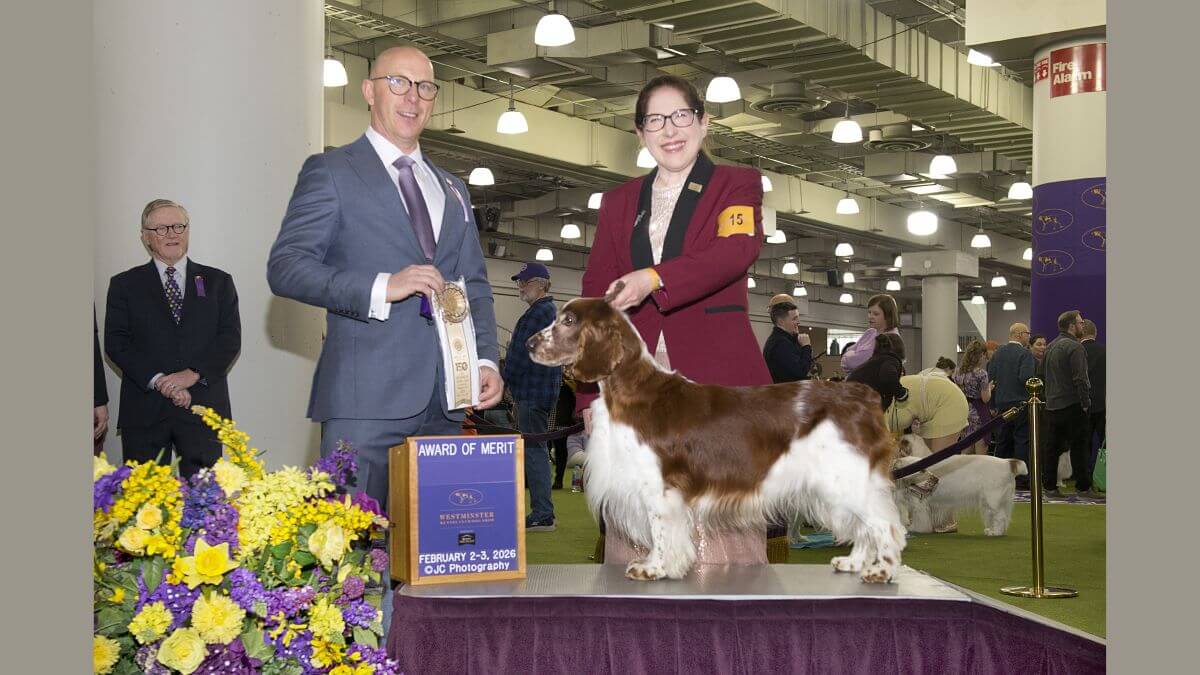
Heidi Rubin Cohen shares her Westminster journey, from first-time exhibitor to returning 25 years later as an owner-handler.


Meet the Judges
Gerardo Bernard shares his experience judging at the 2025 National Dog Show, reflecting on prestige, history, and excellence.


Meet the Breeders
Doug Johnson of Clussexx Kennel breeds top Spaniels and Kooikers with a focus on health, type, and predictability since 1984.

Meet the Breeders
Kit Goodrich shares 47 years of passion for Welsh Springer Spaniels, from breeding and showing to preserving the breed’s purpose and form.
All About Judging
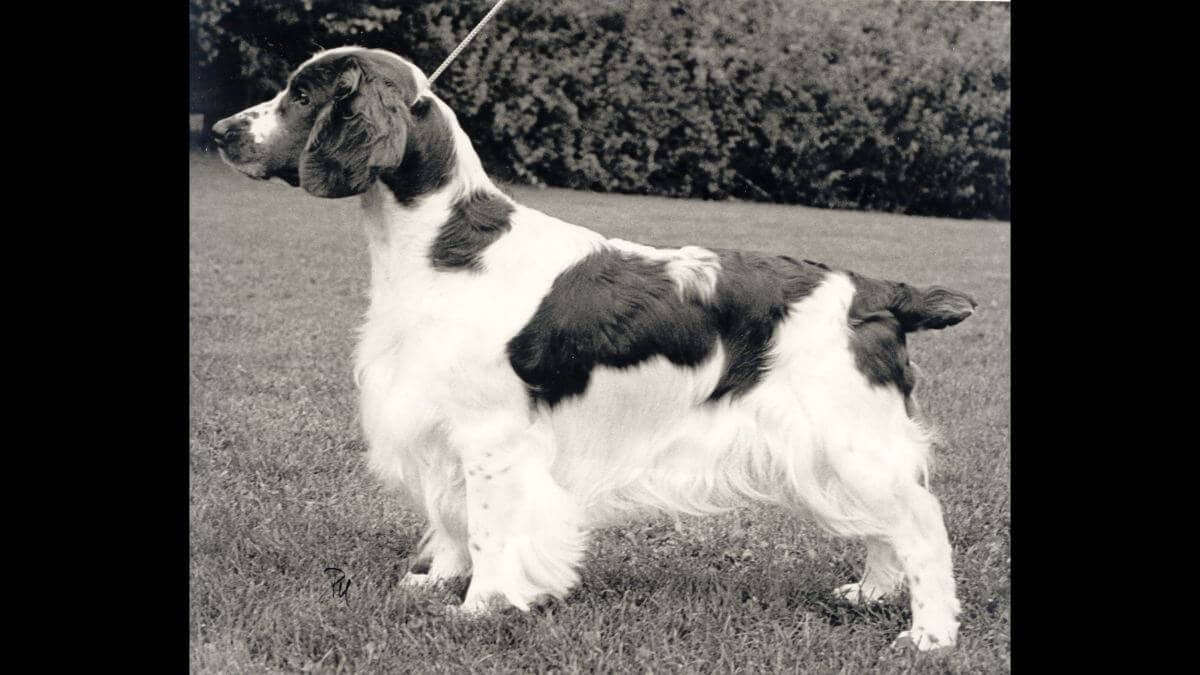
Guidelines for judging the Welsh Springer Spaniel, focusing on function, temperament, movement, and breed standard essentials

Meet the Breeders
Doug Johnson on 40 years of breeding and judging English Toy, Clumber, Sussex, Welsh Springer Spaniels, and Kooikerhondje.

Dog Shows
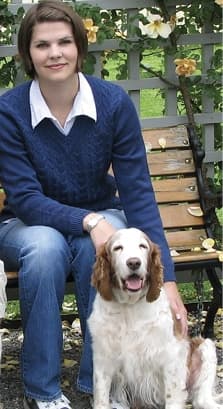
Uncover the unique outline of the Welsh Springer Spaniel breed and its importance in judging. Explore proportions, markings, and more.

National Owner-Handled Series (NOHS)
Interview with Sharon Sherwood: Discover her passion for Welsh Springer Spaniels and insights into competitive dog showing.

All About Judging
Sharon Sherwood is the breeder behind Painted Sky Farms Welsh Springer Spaniels. Read about the kennel’s beginnings, puppies, and much more!
The tail of the Welsh Springer Spaniel is traditionally docked but may also be left at its natural length. It is carried near the horizontal or slightly elevated, and displays a lively action. The tail is well-feathered when undocked.
A Note About Color: The Welsh Springer Spaniel is exclusively a red and white dog. The red is a rich color and may appear in any pattern, and any white area may be flecked with red ticking.
Coat Type
Double
The structure of the coat this breed carries.
Coat Length
Medium
How long the breed's coat grows when kept in condition.
Adaptability Level
How easily a breed copes with changes in home, routine, noise and weather.
Mental Stimulation Needs
How much a breed needs a job, a puzzle or training to stay content.
Welsh Springer Spaniels require a high-quality, balanced diet for maintaining energy levels and overall good health. Puppies benefit from specially formulated puppy food, fed in three or four small meals daily to support growth and digestion. Adults typically thrive on two well-portioned meals a day, with a total daily intake of 1.5 to 2.5 cups of dry food, adjusted for their size, activity level, and metabolism.
Fresh water should always be available, and care should be taken to prevent overfeeding, as the breed can be prone to weight gain. Regular consultations with the dog’s breeder and veterinarian can help to determine the best feeding schedule and portion sizes.
Welsh Springer Spaniels are certainly trainable, thanks to the breed’s intelligence and eagerness to please. Their cooperative nature makes them well-suited for basic obedience training and participation in many dog sports. Positive reinforcement methods, such as treats and praise, are most effective with this sensitive breed. Of course, early socialization is key.
While they are not excessive barkers, Welsh Springers may vocalize when excited or alert, a behavior that can be managed with consistent training. With proper guidance and engagement, they can excel in activities like Obedience and Agility Trials. The breed’s natural curiosity, however, makes recall training essential, especially in unfenced areas..
Bathing is necessary only occasionally, as the breed’s coat naturally repels dirt. Routine ear cleaning is important to prevent infections that are common in breeds with hanging ears. Regular nail trimming and dental care complete the weekly grooming regimen.