Members

01/Overview
The Entlebucher Mountain Dog, hailing from Switzerland, is renowned for a robust and compact stature that exudes strength and agility. This breed, a herder of cows and other livestock, possesses a spirited and energetic disposition that demonstrates a strong work ethic. The Entlebucher is characterized by its loyalty and a devotion to its human family. The breed’s versatility and adaptability have allowed it to transition from a working farm dog to an affectionate protector of the home. The Entlebucher's intelligence and eagerness to please have made it a good candidate for participation in many dog sports today, but its high energy levels necessitates regular exercise and consistent engagement each and every day.
Highlights
02/History
The Entlebucher Mountain Dog, also known as the Entlebucher Sennenhund, traces its origins back to the Swiss Alps, specifically in the Entlebuch Valley, a region in the canton of Lucerne. The breed is the smallest of the four Swiss Mountain Dogs, which also include the Appenzeller Sennenhund, Bernese Mountain Dog, and Greater Swiss Mountain Dog. Historically, the Entlebucher served as a herding dog, working alongside Swiss farmers to manage cattle, protect farmyards, and serve as a loyal companion.
The Entlebucher Mountain Dogs’s prowess in herding, and its robust build, made it an invaluable asset in the agricultural settings of Switzerland. The breed was well-known for its strength, agility, and endurance, qualities that were essential for maneuvering cattle across the challenging Swiss Alps. Its keen intelligence and trainability made the dogs easy to work with, and they quickly became favored for their work ethic and loyalty.
The early 20th century saw the formal recognition of the Entlebucher Mountain Dog as a distinct breed. The Swiss Kennel Club officially recognized the Entlebucher in 1913, setting the stage for its introduction to the broader world of purebred dog fanciers. Despite this recognition, however, the breed remained relatively obscure outside of Switzerland.
The Entlebucher Mountain Dog made its way to the United States in the 1970s, capturing the hearts of discerning American dog enthusiasts with its spirited personality and striking appearance. In the years that followed, the breed gained popularity, albeit gradually, among dog owners and breeders in the United States.
In 2011, the American Kennel Club (AKC) granted the Entlebucher Mountain Dog full recognition, placing it in the Herding Group. This marked a significant milestone for the breed, providing it with greater visibility and opportunities for participation in AKC-sponsored events and competitions.
Internationally, the Entlebucher Mountain Dog is also recognized by the Fédération Cynologique Internationale (FCI) and The Royal Kennel Club (UK), further solidifying its status as a cherished purebred dog worldwide.
Today, the Entlebucher Mountain Dog's legacy as a hardworking herder continues to be celebrated on working farms, and its friendly nature, intelligence, and loyalty have made it a wonderful addition in the right home where its many fine qualities can be appreciated.
03/Appearance
An adult male Entlebucher Mountain Dog typically stands at a height of 17.5 to 20.5 inches at the shoulder, while adult females are generally smaller, measuring 16.5 to 19.5 inches in height.
In terms of weight, males usually weigh between 50 and 65 pounds, with females weighing slightly less, ranging from 40 to 55 pounds.
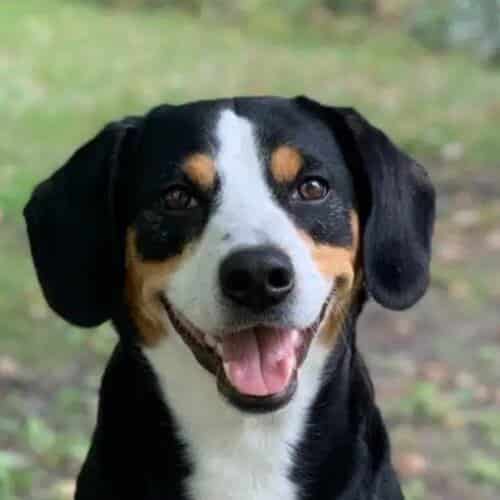
The Entlebucher Mountain Dog boasts a harmonious balance in proportion, displaying a slightly longer body compared to its height at the shoulders. The ideal length-to-height ratio is 10 to 8. The breed exudes considerable substance, with a well-muscled and sturdy physique, vital for its historical role as a herder and drover. The combination of a strong build and agile movement reflects the Entlebucher’s capacity to perform demanding physical tasks with strength and agility.
Texture: The coat of the Entlebucher Mountain Dog is a dense double coat, crucial for the breed’s work in harsh weather conditions. The outer coat is short, harsh, and lies close to the body, providing protection and durability. Beneath this, the undercoat is thick, adding an essential layer of insulation.
Standard Colors
Standard Markings
04/Consider
Choosing to bring an Entlebucher Mountain Dog into your life is a decision that involves recognizing and embracing the unique characteristics of this herding breed. Known for their intelligence, strength, and energetic demeanor, Entlebucher Mountain Dogs require dedicated care, consistent training, and ample exercise. As potential caretakers of this breed, it is crucial to consider their high energy levels and need for engagement, making them more suited to active individuals or families who can provide them with the stimulation and activity they crave.
Interaction With Family
The level of affection a breed typically shows towards family members and familiar individuals.
Good With Other Dogs
The innate friendliness of a dog towards other dogs can depend on its breed.
Good With Young Children
The degree to which a breed will typically be patient with young children.
Amount Of Shedding
How much hair a breed typically leaves behind on clothes, furniture and floors.
Frequency Of Grooming
How often a breed needs brushing, bathing or a professional trim to stay in condition.
Amount Of Drooling
How prone a breed is to drool, worth knowing before you keep a towel by the door.
Openness To Strangers
How openly a breed tends to greet new people, visitors and strangers.
Protective Nature
How likely a breed is to alert you to anything unfamiliar, and stand between you and it.
Playfulness Level
How enthusiastic a breed stays about games and play well past puppyhood.
Trainability Level
How readily a breed takes direction and works with you rather than around you.
Barking Level
How much a breed uses its voice, and how readily.
Energy Level
How much get-up-and-go a breed brings to an average day.
Health
The Entlebucher Mountain Dog is generally considered a healthy and robust breed, reflecting their heritage as working dogs. However, like all dog breeds, they are prone to specific health conditions. Being vigilant and proactive about their health is imperative, as it helps in early detection and management of potential issues. Engaging with reputable breeders who prioritize health screenings and genetic testing can significantly contribute to ensuring you bring a healthy puppy into your home. Lifespan: When it comes to lifespan, the Entlebucher Mountain Dog typically enjoys a life expectancy of around 11 to 13 years.
The personality of an Entlebucher Mountain Dog is a unique blend of energy, intelligence, and loyalty, making them a delightful companion for the right person or family. However, their strong-willed nature and high energy levels might pose a challenge for novice owners. It’s essential to establish clear leadership and provide consistent training to ensure a well-behaved and balanced dog.
Entlebucher Mountain Dogs have a moderate sensitivity level. They are resilient but do best in a stable environment with a consistent routine. When it comes to being left alone, this breed prefers company and can become bored or anxious if left by themselves for extended periods. Providing mental stimulation and physical exercise is crucial in preventing undesirable behaviors.
This breed tends to get along well with other dogs, especially when socialized from a young age. Their herding instincts can sometimes come into play, so supervision and proper introductions are necessary to ensure harmonious interactions. When it comes to young children, the Entlebucher can be a good companion, but their energy and size require supervision to prevent accidental knocks or bumps. Early socialization and training can help in managing their interactions with children and ensuring a positive relationship.
In terms of friendliness toward strangers, the Entlebucher Mountain Dog can be reserved. They are protective of their family and home, which makes them excellent watchdogs. However, they are not typically aggressive without cause. Socialization plays a crucial role in helping them distinguish between normal and threatening scenarios, ensuring they react appropriately.
Exercise Expectations
Their energy level is high, and they exhibit this through their enthusiasm for play and work. Engaging them in activities that not only burn off their physical energy but also provide mental stimulation is crucial. Interactive games, training sessions, and even dog sports can go a long way in keeping an Entlebucher happy and healthy. The intensity of their play and work ethic is evident, showcasing their heritage as working dogs. They excel in activities that involve herding, agility, and obedience, demonstrating their intelligence and willingness to work. Providing them with opportunities to engage in these activities can significantly contribute to their overall well-being. Playfulness is a hallmark of this breed, and they maintain a playful demeanor well into adulthood. Engaging with them in games, providing toys, and encouraging play are excellent ways to bond with an Entlebucher and cater to their playful nature.
Living with an Entlebucher Mountain Dog is a rewarding experience, filled with energy, loyalty, and companionship. However, it is essential to consider their specific needs and characteristics to provide a living environment that suits them.
Entlebucher Mountain Dogs are adaptable, but their high energy levels and need for activity make them better suited to homes where they have space to move and play. They can adapt to apartment living, provided they are given ample exercise and mental stimulation. Without these, they may become bored and potentially disruptive.
When it comes to weather, Entlebuchers have a dense coat that provides them with a good level of protection, but it is crucial to monitor them in extreme conditions. In cold weather, their coat offers protection, but proper shelter and warmth are necessary, especially during harsh winter conditions.
In contrast, in hot weather, their dense coat can make them prone to overheating. Ensuring they have access to shade, water, and avoiding vigorous exercise during the hottest parts of the day is vital.
05/Puppies
The arrival of a litter of Entlebucher Mountain Dog puppies is moment that brings both fun and responsibilities. These puppies are known for their playful and affectionate nature, making them a delightful addition to the right family or household. Like all puppies, however, they require plenty of attention and training, as well as the proper care that encourages each pup to grow up to become a well-adjusted, healthy adult.
Caring for an Entlebucher Mountain Dog puppy involves a commitment to its overall well-being, encompassing the pup's physical health, training, socialization, and emotional needs. From the moment it arrives in its new home, the pup is a whirlwind of activity, eager to explore and play.
Nutrition plays a crucial role in the Entlebucher puppy's development, and providing a balanced and appropriate diet is paramount. Consulting with the pup's breeder and with a veterinarian to determine the right type and amount of food will ensure the puppy receive the necessary nutrients for healthy growth.
Early socialization is a cornerstone of puppy care, exposing a pup to various people, places, and situations. This exposure helps in developing confidence and ensures the puppy grows up to become a well-adjusted adult. Alongside socialization, basic training in commands and manners is essential. The Entlebucher puppy is an intelligent and quick learner, but it also has a strong-willed streak. Consistency and positive reinforcement are key in its training.
Regular veterinary check-ups are vital during puppyhood, ensuring the pup receives the necessary vaccinations and health checks. These visits also provide an opportunity to discuss any concerns and receive guidance on their management.
Providing an Entlebucher puppy with a safe and secure environment to live in in essential. This contributes to the pup's overall well-being, as does providing plenty of toys and stimulation. As an energetic puppy, the Entlebucher require adequate playtime and exercise, even at a young age.
06/Activities
The Entlebucher Mountain Dog is an energetic and agile breed that thrives competing in many dog sports. Participation in these events not only helps to release some of the dog's boundless energy, it also provides essential mental stimulation and opportunities for bonding with its handler. Some of the activities that are suitable for the breed include:
By incorporating these activities and dog sports into their routine, Entlebucher Mountain Dogs thrive, displaying their physical capabilities, intelligence, and joyful nature. These engagements not only contribute to their well-being but also strengthen the bond between them and their human companions, creating a harmonious and happy living environment.
Gallery
07/Standards
The Entlebucher Mountain Dog is recognized by the world's leading registries and kennel organizations, which categorize the breed into a specific Group based on its unique characteristics. This breed is recognized worldwide under the following Group designations:
The ideal Entlebucher Mountain Dog is described by a Breed Standard that is approved by each of the world’s leading registries and kennel organizations. The Breed Standards for this breed may be found in the following links:
08/Clubs
09/Rescue
10/Facts
Swiss Origins
The Entlebucher Mountain Dog is the smallest of the four Swiss Sennenhunds and originated in the municipality of Entlebuch in the canton of Lucerne, Switzerland. It was primarily used as a herding dog, showcasing its strong work ethic and stamina.
High Energy Levels
Entlebuchers are known for their high energy levels and require regular exercise to stay happy and healthy. They excel in dog sports like Herding, Agility, and Obedience, showcasing their intelligence and agility.
Loyal Companions
They are fiercely loyal to their families and tend to form strong bonds with their owners. This loyalty, combined with their protective nature, makes them excellent watchdogs.
Social Dogs
They are social dogs and enjoy being part of family activities. Their playful and affectionate nature makes them great companions, especially for active individuals and families.
Unique Vocalizations
Entlebuchers are known for their unique vocalizations. They don’t just bark; they yodel, chirp, and make other interesting sounds, which can be quite entertaining for their owners.
Size
Being the smallest of the Swiss Mountain Dogs, Entlebuchers are more compact and agile, making them well-suited for a variety of living situations, including smaller homes that can provide ample exercise.
11/FAQ
Yes, Entlebucher Mountain Dogs do shed. Their short, dense coat requires regular grooming to manage shedding and to keep their hair in top condition. While they are not heavy shedders, there will be some hair that's left around the house, particularly during seasonal changes in springtime and autumn.

Written by
Dan Sayers is the Executive Editor of SHOWSIGHT. He is a member of the World Dog Press Association and the Dog Writers Association of America, which recognized his illustrations in the award-winning Encyclopedia of K-9 Terminology. Dan is a longtime supporter of the sport of dogs and an advocate for the conservation of recognized breeds in all their forms and functions. He is a member of the Morris and Essex Kennel Club, and for 45 years, the Irish Water Spaniel Club of America where he serves as AKC Delegate, Archivist, and approved Breed Mentor. Dan breeds under the Quiet Storm prefix and has judged the IWSCA National Specialty Sweepstakes twice.
Official Standard of the Entlebucher Mountain Dog
General Appearance: The Entlebucher Mountain Dog (Shepherd Dog from Entlebuch, or Dog of the Alpine Herdsman) is a native of Switzerland, and the smallest of the four tri-colored Swiss Sennenhund breeds. Swiss farmers have historically used the Entlebucher to move cows from pasture to pasture in the Alps. Their keen intelligence, speed and agility also made them useful for the management of other large animals such as horses and hogs. The Entlebucher is a medium-sized, compact, strongly muscled, elongated drover. He has a short, hard and shiny coat, bright black with symmetrical markings of pure white on blaze, muzzle, chest, and feet; shades of rich fawn to mahogany are present on the eyebrows and between the black and white markings. Prized for his agreeable nature, ease of training, and devotion to family, the Entlebucher possesses an excellent work ethic, and the ability to work alone or in harmony with his master. Given a job, he transforms from a lively, high-spirited playmate, to a serious, tireless, self-assured dog of commanding presence. Although primarily a drover, Entles excel at competitive sports and are willing and enthusiastic partners in any athletic canine activity chosen by their master. Purpose and heritage have resulted in an unusually intense bonding between the Entlebucher and his master; however the Entlebucher should not be considered a breed for the casual owner. He will remain an active, highly energetic dog for his entire lifetime. Because of the guardian traits of this breed, thorough socialization is required during puppyhood; typically Entles are indifferent to, or somewhat aloof with, strangers.
Size, Proportion, Substance: Dogs - 17.5 – 20.5 inches, Bitches - 16.5 to 19.5 inches. Ratio of height at withers to length of body, 8:10 - length to height ratio 10 to 8 measured from point of shoulder to point of rump and ground to withers. Strongly muscled, agile, balanced dog with ample bone; but never overdone. Size alone should never take precedence over type, balance, soundness and temperament. Note that too small a dog generally lacks the power required and too large a dog may lack the agility and mobility desired in a herding dog. Oversize: A male over 20.5 inches will be disqualified, A bitch over 19.5 inches will be disqualified. Undersize: A male under 17.5 inches will be disqualified, a bitch under 16.5 inches will be disqualified. The minimum height ranges set forth shall not apply to dogs or bitches under twelve months of age.
Head: In harmonious proportion to the body, slightly wedged-shaped; clean. Head planes of muzzle and skull more or less parallel. Ratio of muzzle to skull 9:10. Expression - Alert, attentive, and friendly. Eyes - Must be brown, darker eye preferred. Slightly small, roundish shaped, with well fitted, black pigmented rims. Disqualifying fault - Blue eyes or yellow hawk eyes. Ears - Not too big, set on high and relatively wide. When alert, are slightly raised at set-on, turned forward; in repose lay flat and close to head and form a nearly level plane with topskull. Firm, well developed ear-cartilage. Flaps pendulous, triangular, rounded at tips. Skull - Flat on top, broadest between set-on of ears, slightly tapering towards muzzle. Occipital bone barely visible. Frontal furrow barely pronounced with minimal stop. Muzzle - Strong, well chiseled, clearly set off from slightly pronounced cheeks, tapering but not pointed or snipey. Bridge of nose is straight. Whiskers to be left natural. Nose - Black. Lips - Close fitting to jaw, with black pigmentation. Bite - Scissor bite preferred, even bite tolerated. Disqualifying faults - Overshot or undershot jaw; wry mouth.
Neck, Topline, Body: Pleasing smooth merge of neck into topline. Neck - Medium length, strong and clean, merging smoothly with the body. Topline - Sturdy and level. Body - Strong, slightly elongated, length to be in rib cage and not in loin; length to height ratio 10 to 8 measured from point of shoulder to point of rump and ground to withers. Chest - Capacious, broad, deep,and reaching to the elbows; well sprung ribs. Underline - Slightly tucked up. Back -Straight, firm, broad. Loins - Strong, flexible. Croup - Slightly sloping, relatively long. Tail -Natural tail or docked tail is equally acceptable. Natural tail set-on in continuation of the gently sloping croup. In motion can be elevated but never touching the back. Ring-tails highly discouraged.
Forequarters: Strongly muscled but not too heavy. Shoulders are laid back, flat lying, well muscled and never loose. Upper arm length equal or slightly shorter than shoulder blade. Angle of shoulder blade forming an angle of 110 to 120 degrees. Elbows lying well onto the body, turning neither in nor out. Forelegs are short, sturdy, straight and parallel; neither too wide nor too close together. Seen from side placed well under the body. Pastern seen from front in straight continuation of the forearm; seen from side slightly angulated and relatively short. Paws point straight forward; compact, slightly rounded with well-arched toes. Pads coarse and robust. Dewclaws - May be removed on the front legs. Nails - Short, strong; any combination of black or white.
Hindquarters: Well-muscled. Hind legs not too close together; from behind, straight and parallel. Upper thigh - Fairly long, broad and strong. Lower thigh - Approximately equal length to upper thigh; clean. Stifle - Well angulated. Hock joint - Strong; turns neither in nor out. Hock - Relatively short, perpendicular to the ground when dog is standing naturally; from the rear, parallel to each other. Rear dewclaws - Should be removed. Rear feet - Overall description same as front.
Coat: Double coat. Topcoat short, close fitting, harsh and shiny. Undercoat dense; of varying color. Wavy or soft coat tolerated but not preferred. Disqualifying fault - Single coat.
Color: Tricolor. Basic color must be black with tan (fawn to mahogany) and white markings, which should be as symmetric as possible. The tan markings are placed above the eyes, on cheeks, muzzle, either side of the chest, under the tail, and on all four legs. On legs, the tan is situated between the black and the white. Small tan oval islands on cheeks are desired. White markings include a distinct small blaze, which runs without interruption from top of head over bridge of nose and can wholly or partially cover the muzzle. White from chin to chest without interruption. An inverted cross on chest desirable. In full-length tail, white tip is desirable. White on all four feet. Undesirable but tolerated - small white patch on the nape of the neck (not more than 2 inches), high boot, socks and bib. Color and markings should not take precedence over overall soundness, balance and temperament.
Gait: Ground covering, free, fluid movement with good reach and strong drive from rear. As the speed of the gait increases, legs converge - the rear more pronounced.
Temperament: The Entlebucher is a confident cattle dog, neither shy nor vicious; may be reserved with strangers. He is lively, active, persistent, self-assured, and determined. Cheerful and capable of learning, he is loyal and protective of family, herd and property. He is highly intelligent, versatile and adaptable with a strong willingness to work; is quick and responsive to commands from his owner making him especially suited as a companion, herding and general all-purpose dog.
Faults: Any departure from the foregoing points must be considered as a fault, and the seriousness with which the fault should be regarded should be in exact proportion to its degree.
Disqualifications:
Oversize: A Male over 20.5 inches will be disqualified, A Bitch over 19.5 inches will be disqualified. Undersize: A male under 17.5 inches will be disqualified, a bitch under 16.5 inches will be disqualified. The minimum height ranges set forth shall not apply to dogs or bitches under twelve months of age. Absence of undercoat. Blue Eyes or yellow hawk eyes, Overshot or undershot jaw. Wry mouth.
Approved April 11, 2023
Effective June 13, 2023

Meet the Judges
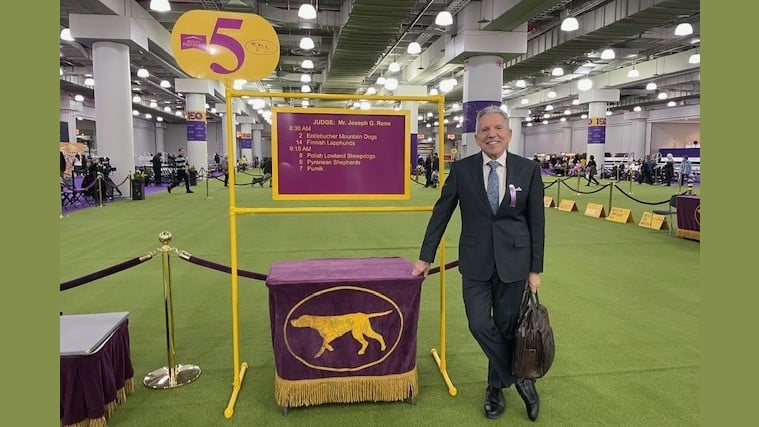
Joseph Reno reflects on judging Herding breeds at the 2026 Westminster KC Dog Show, highlighting Breed winners and overall entry quality.


The Entlebucher Mountain Dog is a tough cattle herder native to the Swiss Alps. It has been an AKC recognized breed since January 2011.
The tail of the Entlebucher Mountain Dog is a continuation of the gently sloping croup and may be either a natural full tail, a natural bobtail, or sometimes docked. Any tail type is acceptable in the breed as all are useful to this dog’s role as a working farm dog.
The natural bobtail is considered a subset of the natural tail and is the original tail type going back to the breed's founders. The Entlebucher carries a dominant gene for bobtails. If one of the parents has a bobtail, there will be puppies born with bobtail/s. Full-length tails will not produce bobtails.
In its natural full length, the breed's gently curved tail is moderately long, reaching to the hocks. It is covered with dense hair, which adds to its somewhat bushy appearance. The tail’s carriage actively displays the dog’s mood and emotions, and may be elevated when the dog is in motion. When the Entlebucher is alert or excited, the full-length tail may be carried higher in a saber-like appearance, but it should never curl over the back in the fashion of a ring-tail.
There are instances where the breed’s tail may be docked, although this practice is becoming less common and is subject to varying regulations depending on the local or national jurisdiction. In some areas, docking may be performed for historical or functional reasons, whereas in others, the preference is to leave the tail in its natural state.
A Note About Color: The double coat of the Entlebucher Mountain Dog is an essential breed characteristic. The topcoat is close-fitting, harsh, and shiny, with clearly defined tri-color markings. The undercoat is dense and varies in color. A single coat is unacceptable for this alpine breed. The coat’s basic color is black, and the tan and white markings should be as symmetrical as possible. Tan markings may be fawn to mahogany in color and appear over the eyes, on the cheeks, muzzle, either side of the chest, under the tail, and on all four legs. White markings appear as a distinct white blaze from the top of the head over the bridge of the nose, from the chin to the chest, and all four feet. An inverted white cross on the chest is desirable as is a tip on the end of a natural tail.
Coat Type
Smooth
The structure of the coat this breed carries.
Coat Length
Short
How long the breed's coat grows when kept in condition.
Adaptability Level
How easily a breed copes with changes in home, routine, noise and weather.
Mental Stimulation Needs
How much a breed needs a job, a puzzle or training to stay content.
Proper nutrition is paramount for the health and well-being of an Entlebucher Mountain Dog, and understanding their dietary needs is crucial for any owner. This active breed requires a balanced diet rich in proteins, fats, and carbohydrates to support their energy levels and overall health.
Puppies, with their rapid growth and high energy levels, need specially formulated puppy food to ensure they receive the necessary nutrients for proper development. Feeding them three to four times a day in controlled portions helps prevent overeating and supports steady growth. As they transition into adulthood, the frequency of meals can be reduced to twice a day, and their diet should shift to high-quality adult dog food.
Adult Entlebucher Mountain Dogs typically require about 2 to 3 cups of dry dog food per day, depending on their age, weight, and activity level. It is crucial to monitor their weight and adjust their food intake accordingly to prevent obesity, as this breed can be prone to weight gain. Regular exercise and a balanced diet are key to maintaining their optimal weight and overall health.
In terms of specific nutritional requirements, paying attention to the protein and fat content in their food is essential. Look for dog food that lists high-quality protein sources, such as meat or fish, as the first ingredient. Adequate fat content, particularly omega-3 fatty acids, supports their joint health and maintains their coat's shine and health.
Water availability is another critical aspect of their diet, and fresh water should be available at all times to keep them hydrated, especially after exercise sessions.
Training an Entlebucher Mountain Dog is an engaging process due to their intelligent and energetic nature. They are quick learners but also have a strong-willed streak, making consistent and positive reinforcement training methods crucial. Starting training and socialization early is key, as it helps in molding their behavior and ensuring they grow into well-adjusted adults.
While their intelligence makes them capable of learning a wide variety of commands and tricks, their independent nature means they may sometimes choose to do things their own way. Patience and consistency are vital in training, as is providing them with enough mental stimulation to keep them engaged.
Their tendency to bark is moderate, and while they can be trained to follow commands to stop barking, they also make excellent watchdogs and may bark to alert their family to anything unusual. Training them to understand when to bark and when to be quiet is essential.
With regards to wanderlust potential, the Entlebucher Mountain Dog has a moderate to high tendency to wander. Their strong herding instincts can sometimes lead them to chase after moving objects or animals, making a secure fence and on-leash walks necessary.
Their predation instincts are present, particularly given their history as working and herding dogs. Training them to manage these instincts, especially around smaller pets, is important. Proper socialization and training can help in managing these tendencies, ensuring they understand how to behave around other animals.
Grooming Expectations
The amount of shedding an Entlebucher Mountain Dog experiences can be described as moderate. While they are not the heaviest shedders, they do lose fur consistently throughout the year, with potential increases during seasonal changes. To manage this, regular brushing sessions are recommended. Brushing not only helps in controlling the shedding but also distributes the natural oils in their coat, promoting a healthy shine and reducing any potential for matting. Grooming an Entlebucher Mountain Dog extends beyond their coat, encompassing aspects such as nail trimming, ear cleaning, and dental care. Ensuring their nails are kept at a comfortable length prevents issues with walking and potential pain from overgrowth. Cleaning their ears regularly helps in preventing infections, while attention to dental hygiene through brushing or approved dental chews contributes to overall health. Despite their moderate shedding and the need for regular grooming, their grooming needs are manageable. They do not require extensive grooming routines, and with consistent care, their coat remains in excellent condition, reflecting their overall health and vitality.