Members
01/Overview
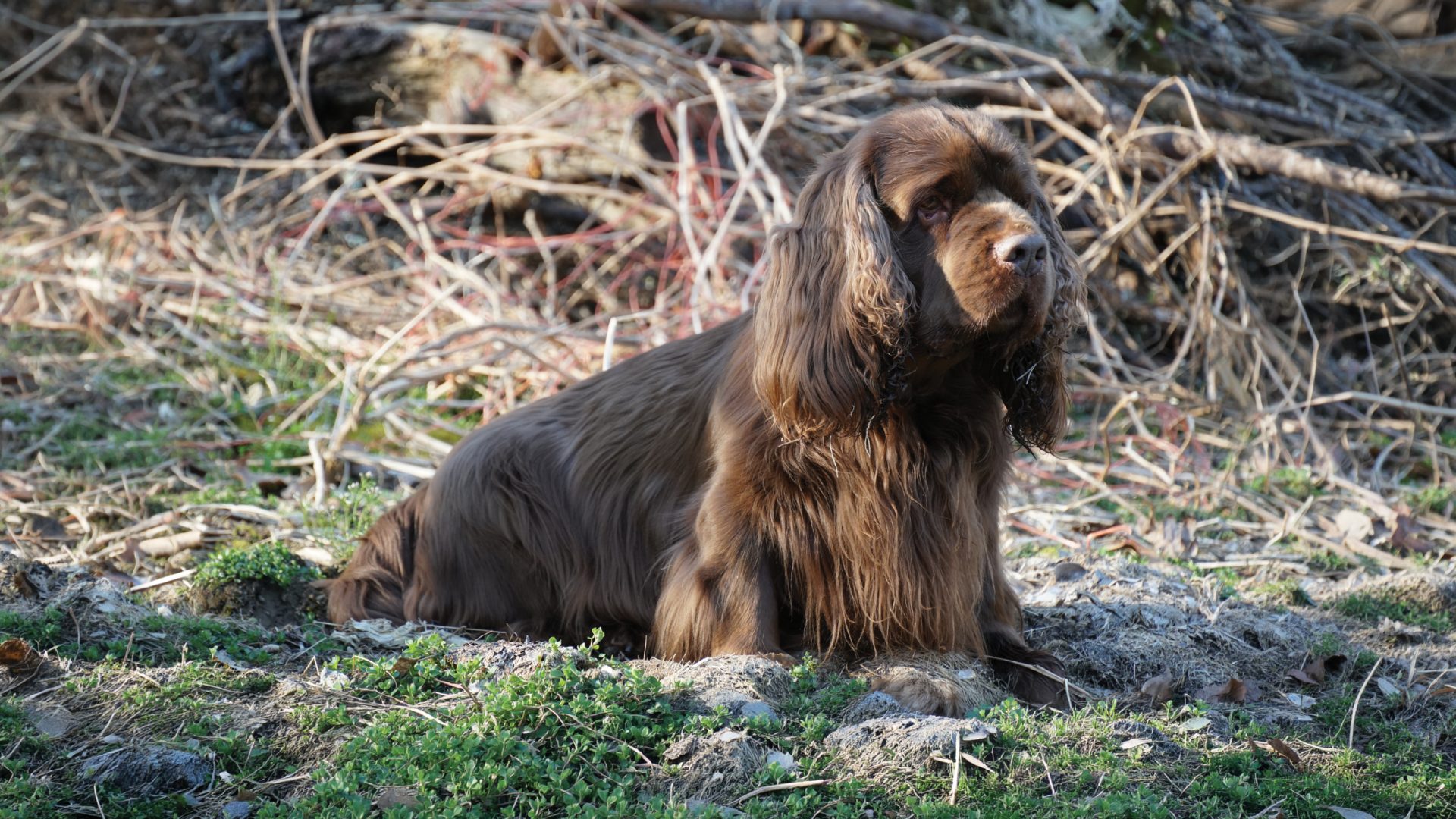
The Sussex Spaniel is a rare and distinctive breed, known for its long, low-slung body and rich golden liver-colored coat. Bred as a slow-paced hunting companion, this spaniel excels at flushing and retrieving game in dense cover. Its calm demeanor and endearing personality make it a cherished companion for hunters and families alike.
Highlights
02/History
The Sussex Spaniel originates from England, where it was developed in the early 19th century as a specialized hunting dog in densely covered terrain. The breed was named after the county of Sussex, a region known for its hedgerows and wooded areas. This environment demanded a dog with determination, strength, and a keen nose. The breed’s development is credited to Mr. Fuller of Rosehill Park, who selectively bred Sussex Spaniels for their ability to work methodically and tirelessly in thick undergrowth.
Unlike other spaniels that work with speed and high energy, the Sussex was encouraged to be slower and more deliberate in its movements, making it highly effective in dense vegetation. This, combined with the breed’s distinctive vocalizations, allowed hunters to keep track of their dogs even when out of sight.
The Sussex faced extinction during the World Wars due to declining interest in hunting and the economic hardship of wartime. A small handful of dedicated breeders worked diligently to preserve the breed, with key efforts led by Joy Freer in England who maintained it through the 1940s.
The Sussex Spaniel was one of the original nine breeds recognized by the American Kennel Club (AKC) in 1884; however, despite its rich history, this affable breed remains one of the rarest of all purebred dogs today.
03/Appearance
The Sussex Spaniel typically stands about 13 to 15 inches tall at the shoulder and weighs between 35 and 45 pounds.
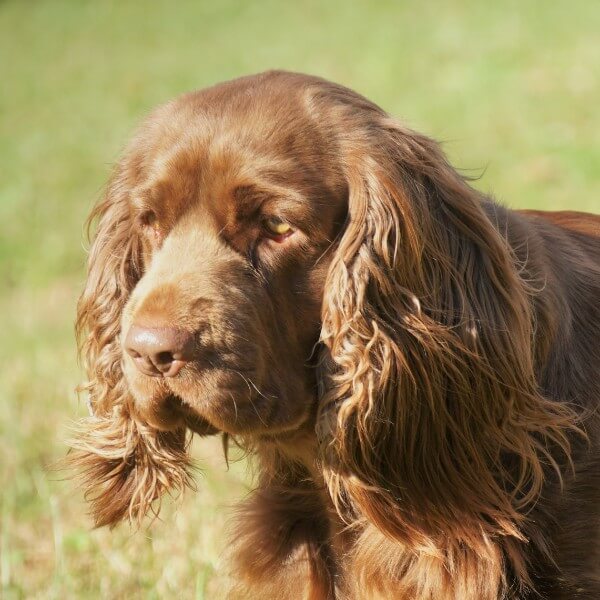
The Sussex Spaniel is a long-bodied, short-legged breed with a distinctive rectangular silhouette. Its sturdy frame features strong, well-boned limbs that ensure balance and functionality in the field. The breed’s muscular and well-developed body emphasizes substance without being overly coarse or unnecessarily heavy.
Texture: The Sussex Spaniel's coat is dense, flat, and abundant, providing excellent protection against harsh weather and rough terrain. The texture is neither overly silky nor wiry, with feathering on the legs and tail that is smooth and moderate in length. The coat's thickness and texture are designed to shield the dog while hunting in dense cover.
No markings are recognized.
Standard Colors
04/Consider
The Sussex Spaniel is a loyal and adaptable companion, blending its hunting heritage with a calm, affectionate (and sometimes silly) demeanor. However, potential owners should be aware of the breed's specific needs, from health considerations to personality quirks, to make sure this unique and gorgeous purebred is a good match.
Interaction With Family
The level of affection a breed typically shows towards family members and familiar individuals.
Good With Other Dogs
The innate friendliness of a dog towards other dogs can depend on its breed.
Good With Young Children
The degree to which a breed will typically be patient with young children.
Amount Of Shedding
How much hair a breed typically leaves behind on clothes, furniture and floors.
Frequency Of Grooming
How often a breed needs brushing, bathing or a professional trim to stay in condition.
Amount Of Drooling
How prone a breed is to drool, worth knowing before you keep a towel by the door.
Openness To Strangers
How openly a breed tends to greet new people, visitors and strangers.
Protective Nature
How likely a breed is to alert you to anything unfamiliar, and stand between you and it.
Playfulness Level
How enthusiastic a breed stays about games and play well past puppyhood.
Trainability Level
How readily a breed takes direction and works with you rather than around you.
Barking Level
How much a breed uses its voice, and how readily.
Energy Level
How much get-up-and-go a breed brings to an average day.
Health
The Sussex Spaniel is generally a healthy breed with a typical lifespan of 13 to 15 years. Regular vet check-ups and preventative care can help this massively-built spaniel live a long and happy life.
The Sussex Spaniel is a gentle breed, known for its loyalty to its human companions and its affection towards strangers. While the breed is patient and kind, the Sussex can be sensitive and may not thrive in environments where it will be left alone for extended periods. The calm demeanor of the breed can make this dog a suitable choice for novice handlers, although its independent streak might occasionally require a firm but loving approach.
Sussex are typically good with other dogs and can adapt well to living with young children, provided early socialization is given and proper introductions are made. Friendly towards everyone they meet, they possess a reserved charm rather than an overly exuberant personality. Their quiet confidence and deep attachment to their family make them an excellent choice as a companion for a wide variety of people.
Exercise Expectations
This Sussex is best suited for a home where it can enjoy a securely fenced yard or regular outdoor adventures, as the breed’s keen nose could easily lead it astray if unsupervised. Despite a calm demeanor indoors, these dogs benefit greatly from mental stimulation and interaction with their human companions all day, every day.
Grooming Expectations
The Sussex Spaniel adapts well to various living situations, including apartments, provided they receive adequate daily exercise. However, the breed’s low energy indoors and need for companionship make them better suited to homes where they are not left alone for extended periods. Sussex enjoy spending time with their family and thrive in a close-knit environment.
This Sussex handles cool weather well, thanks to its dense coat, but these dogs may need extra care in hot climates, as their shorter legs and sturdy build make them prone to overheating. This rare and lovable breed is happiest when living as part of a family that understands and accommodates its unique qualities as well as its emotional needs.
05/Puppies
Sussex Spaniel puppies are really appealing with their friendly faces and playful demeanor, but they require proper guidance that will encourage them to become well-adjusted adults. Known for their curiosity and occasional mischievousness, they benefit from patient, attentive care as they explore the world around them. Early socialization, consistent training, and structured routines are vital during the formative months of life.
Caring for a Sussex Spaniel puppy involves providing a nurturing environment that supports growth and emotional well-being. Every puppy requires a high-quality, age-appropriate diet divided into three to four meals per day, with fresh water always available. Monitoring the pup’s food intake is important to prevent overfeeding, as this breed can be prone to weight gain.
Socialization during the early months is crucial to help the Sussex puppy develop confidence. Introducing new people, pets, and environments at this time can foster a more well-rounded personality. Positive reinforcement training, starting with simple commands like sit and stay, sets the foundation for good behavior.
Housetraining requires consistency with this breed, with a regular schedule established for bathroom breaks and rewards given for each success. Providing safe, engaging toys will satisfy the puppy’s curiosity and chewing instincts while preventing damage to shoes and household furnishings.
Regular veterinary care, including vaccinations, deworming, and health checks, is essential for the Sussex Spaniel puppy. Likewise, early grooming routines, such as ear cleaning, coat brushing, and nail trimming, will help to keep the pup as healthy on the outside as it is on the inside.
06/Activities
Gallery
07/Standards
The Sussex Spaniel is recognized by the world's leading registries and kennel organizations, which categorize the breed into a specific Group based on its unique characteristics. This breed is recognized worldwide under the following Group designations:
The ideal Sussex Spaniel is described by a Breed Standard that is approved by each of the world’s leading registries and kennel organizations. The Breed Standards for this breed may be found in the following links:
08/Clubs
09/Rescue
10/Facts
Original AKC Breed
The Sussex Spaniel was one of the first nine breeds recognized by the American Kennel Club in 1884.
Golden Liver Coat
It is the only breed of dog that must have a golden liver-colored coat.
Distinctive Voice
Known for its deep, baying bark, the Sussex uses its "voice" while working, helping handlers track its movements in dense cover.
Rare & Resilient
The breed nearly went extinct during World War II, but thanks to dedicated breeders it was preserved and continues to be seen today.
Compact Hunting Companion
Unlike many other spaniel breeds, the Sussex Spaniel was specifically bred for slower, more deliberate hunting in dense and challenging terrain.
11/FAQ
Yes, Sussex Spaniels shed moderately throughout the year. Regular grooming helps to manage shedding and keeps the breed’s beautiful coat in good condition.

Written by
Dan Sayers is the Executive Editor of SHOWSIGHT. He is a member of the World Dog Press Association and the Dog Writers Association of America, which recognized his illustrations in the award-winning Encyclopedia of K-9 Terminology. Dan is a longtime supporter of the sport of dogs and an advocate for the conservation of recognized breeds in all their forms and functions. He is a member of the Morris and Essex Kennel Club, and for 45 years, the Irish Water Spaniel Club of America where he serves as AKC Delegate, Archivist, and approved Breed Mentor. Dan breeds under the Quiet Storm prefix and has judged the IWSCA National Specialty Sweepstakes twice.
Official Standard of the Sussex Spaniel
General Appearance: The Sussex Spaniel was among the first ten breeds to be recognized and admitted to the Stud Book when the American Kennel Club was formed in 1884, but it has existed as a distinct breed for much longer. As its name implies, it derives its origin from the county of Sussex, England, and it was used there since the eighteenth century as a field dog. During the late 1800's the reputation of the Sussex Spaniel as an excellent hunting companion was well known among the estates surrounding Sussex County. Its short legs, massive build, long body, and habit of giving tongue when on scent made the breed ideally suited to penetrating the dense undergrowth and flushing game within range of the gun. Strength, maneuverability, and desire were essential for this purpose. Although it has never gained great popularity in numbers, the Sussex Spaniel continues today essentially unchanged in character and general appearance from those 19th century sporting dogs. The Sussex Spaniel presents a long and low, rectangular and rather massive appearance coupled with free movements and nice tail action. The breed has a somber and serious expression. The rich golden liver color is unique to the breed.
Size, Proportion, Substance: Size - The height of the Sussex Spaniel as measured at the withers ranges from 13 to 15 inches. Any deviation from these measurements is a minor fault. The weight of the Sussex Spaniel ranges between 35 and 45 pounds. Proportion - The Sussex Spaniel presents a rectangular outline as the breed is longer in body than it is tall. Substance - The Sussex Spaniel is muscular and rather massive.
Head: Correct head and expression are important features of the breed. Eyes - The eyes are hazel in color, fairly large, soft and languishing, but do not show the haw overmuch. Expression - The Sussex Spaniel has a somber and serious appearance, and its fairly heavy brows produce a frowning expression. Ears - The ears are thick, fairly large, and lobe-shaped and are set moderately low, slightly above the outside corner of the eye. Skull and Muzzle - The skull is moderately long and also wide with an indentation in the middle and with a full stop. The brows are fairly heavy, the occiput is full but not pointed, the whole giving an appearance of heaviness without dullness. The muzzle should be approximately three inches long, broad, and square in profile. The skull as measured from the stop to the occiput is longer than the muzzle. The nostrils are well-developed and liver colored. The lips are somewhat pendulous. Bite - A scissors bite is preferred. Any deviation from a scissors bite is a minor fault.
Neck, Topline, Body: Neck - The neck is rather short, strong, and slightly arched, but does not carry the head much above the level of the back. There should not be much throatiness about the skin. Topline and Body - The whole body is characterized as low and long with a level topline. The chest is round, especially behind the shoulders, and is deep and wide which gives a good girth. The back and loin are long and very muscular both in width and depth. For this development, the back ribs must be deep. Tail - The tail is set low. When gaiting, the Sussex Spaniel exhibits nice tail action, but does not carry the tail above the level of the back. The tail may be docked or undocked. If docked, the tail is 5 to 7 inches long.
Forequarters: The shoulders are well laid back and muscular. The upper arm should correspond in length and angle of return to the shoulder blade so that the legs are set well under the dog. The forelegs should be very short, strong, and heavily boned. They may show a slight bow. Both straight and slightly bowed constructions are proper and correct. The pasterns are very short and heavily boned. The feet are large and round with short hair between the toes.
Hindquarters: The hindquarters are full and well-rounded, strong, and heavily boned. They should be parallel with each other and also set wide apart-about as wide as the dog at the shoulders. The hind legs are short from the hock to the ground, heavily boned, and should seem neither shorter than the forelegs nor much bent at the hocks. The hindquarters must correspond in angulation to the forequarters. The hocks should turn neither in nor out. The rear feet are like the front feet.
Coat: The body coat is abundant, flat or slightly waved, with no tendency to curl. The legs are moderately well-feathered, but clean below the hocks. The ears are furnished with soft, wavy hair. The neck has a well-marked frill in the coat. The tail is thickly covered with moderately long feather. No trimming is acceptable except to shape foot feather, or to remove feather between the pads or between the hock and the feet. The feather between the toes must be left in sufficient length to cover the nails.
Color: Rich golden liver is the only acceptable color and is a certain sign of the purity of the breed. Dark liver or puce is a major fault. White on the chest is a minor fault. White on any other part of the body is a major fault.
Gait: The round, deep and wide chest of the Sussex Spaniel coupled with its short legs and long body produce a rolling gait. While its movement is deliberate, the Sussex Spaniel is in no sense clumsy. Gait is powerful and true with perfect coordination between the front and hind legs. The front legs do not paddle, wave, or overlap. The head is held low when gaiting. The breed should be shown on a loose lead so that its natural gait is evident.
Temperament: Despite its somber and serious expression, the breed is friendly and has a cheerful and tractable disposition.
Faults: The standard ranks features of the breed into three categories. The most important features of the breed are color and general appearance. The features of secondary importance are the head, ears, back and back ribs, legs, and feet. The features of lesser importance are the eyes, nose, neck, chest and shoulders, tail, and coat. Faults also fall into three categories. Major faults are color that is too light or too dark, white on any part of the body other than the chest, and a curled coat. Serious faults are a narrow head, weak muzzle, the presence of a topknot, and a general appearance that is sour and crouching. Minor faults are light eyes, white on chest, the deviation from proper height ranges, lightness of bone, shortness of body or a body that is flatsided, and a bite other than scissors. There are no disqualifications in the Sussex Spaniel standard.
Approved October 10, 2023
Effective January 1, 2024


Meet the Judges
Gerardo Bernard shares his experience judging at the 2025 National Dog Show, reflecting on prestige, history, and excellence.
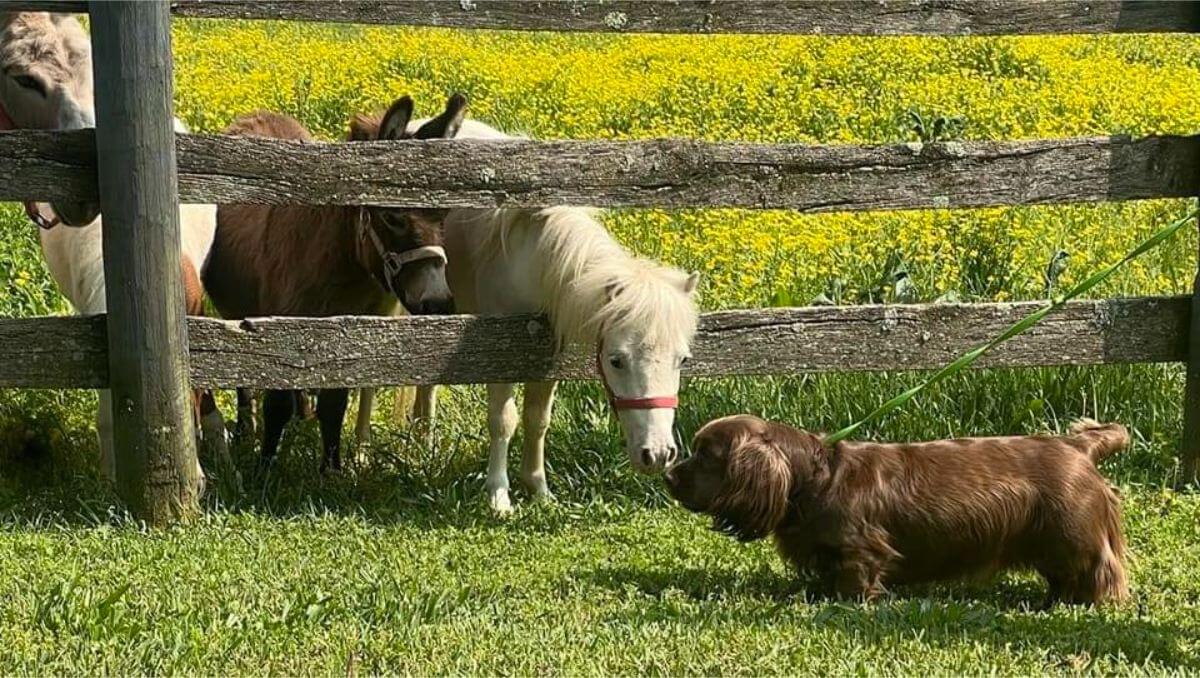
Sporting Group
Explore the unique traits and misconceptions of the rare Sussex Spaniel, the gentleman’s hunting dog with a lively field presence.
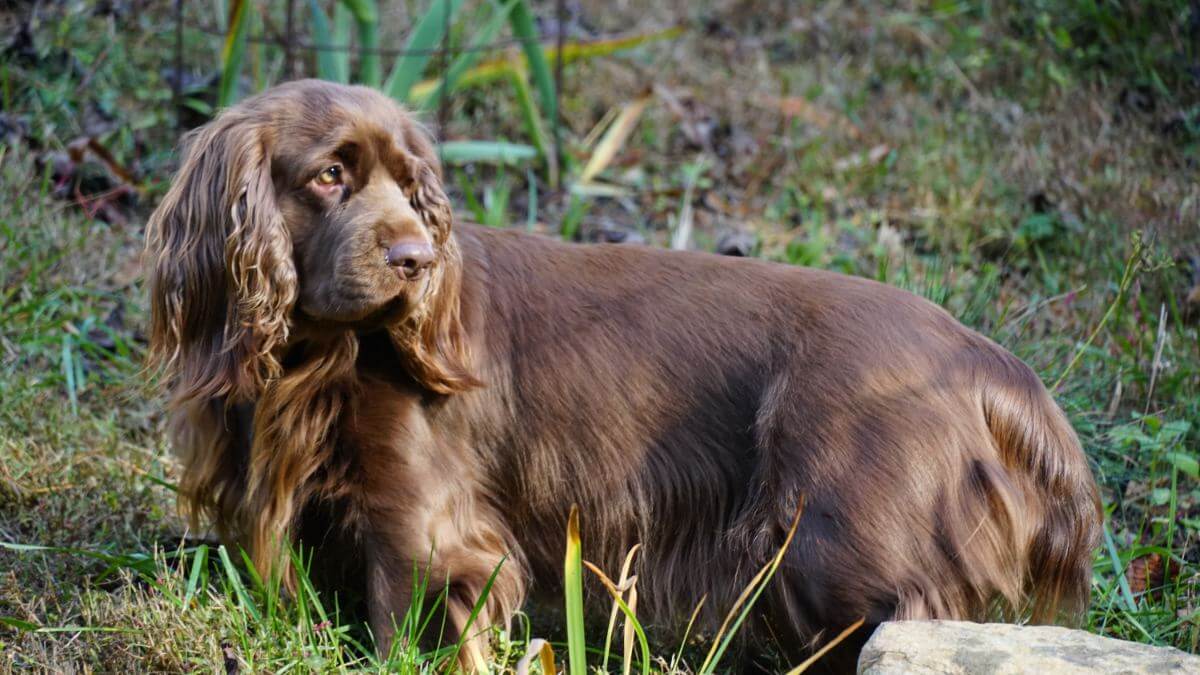
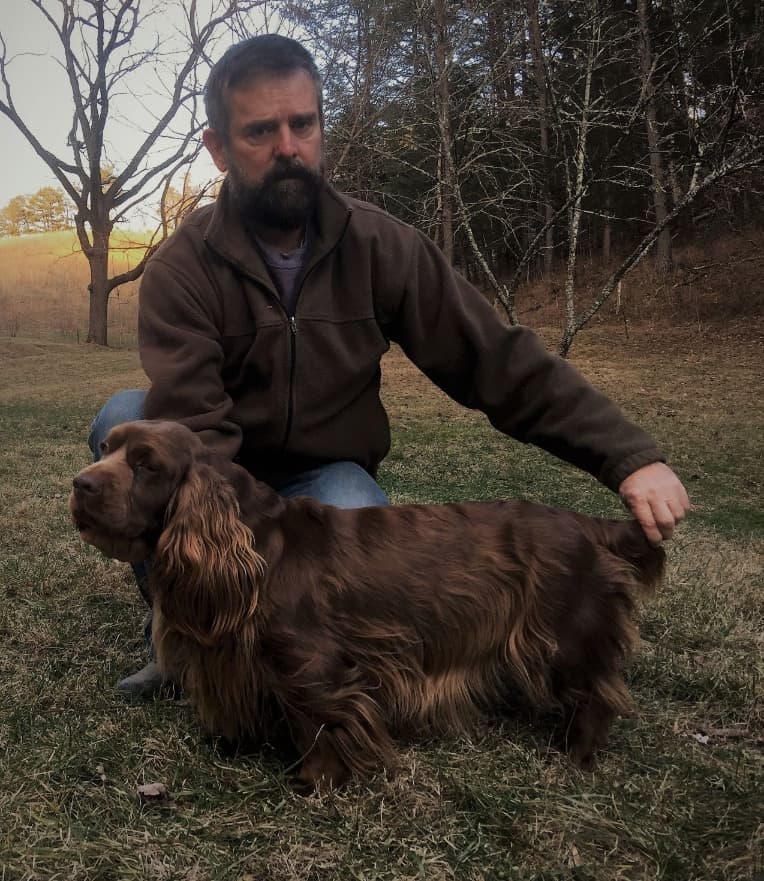
Explore the evolution of the Sussex Spaniel standard and how the AKC revised its points and faults system for judging.
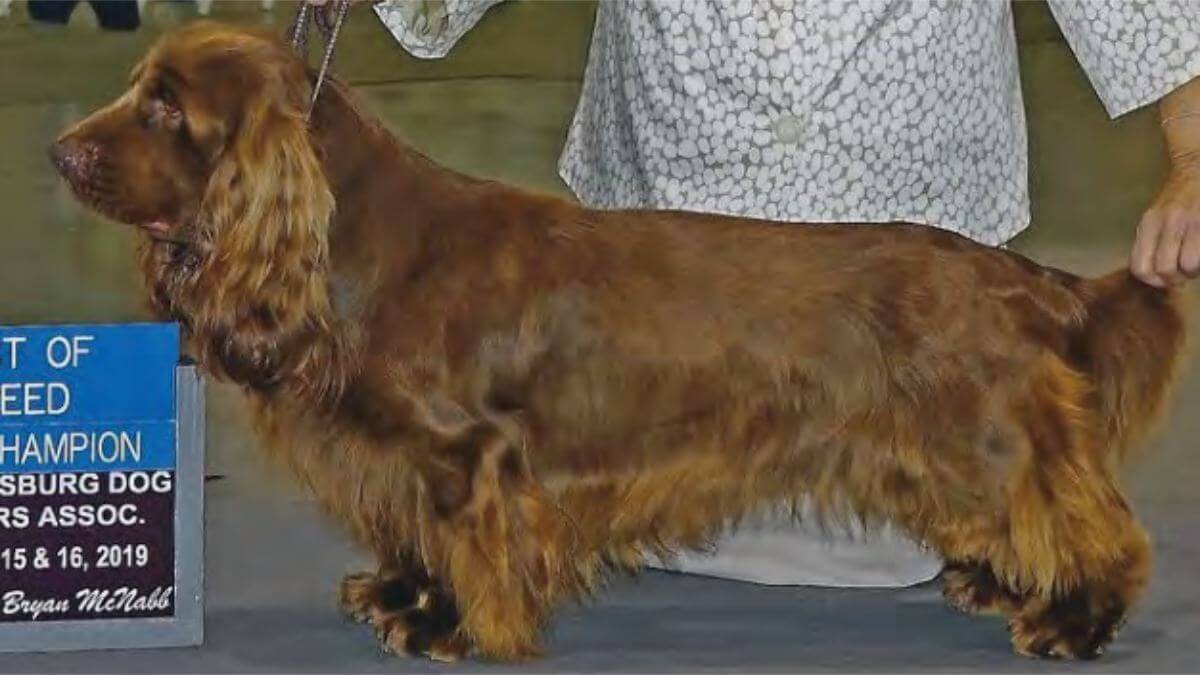
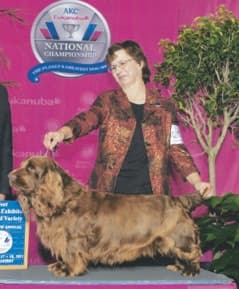
Committed to upholding the AKC Standard for Sussex Spaniels, preserving historical consistency and breed integrity for future generations.
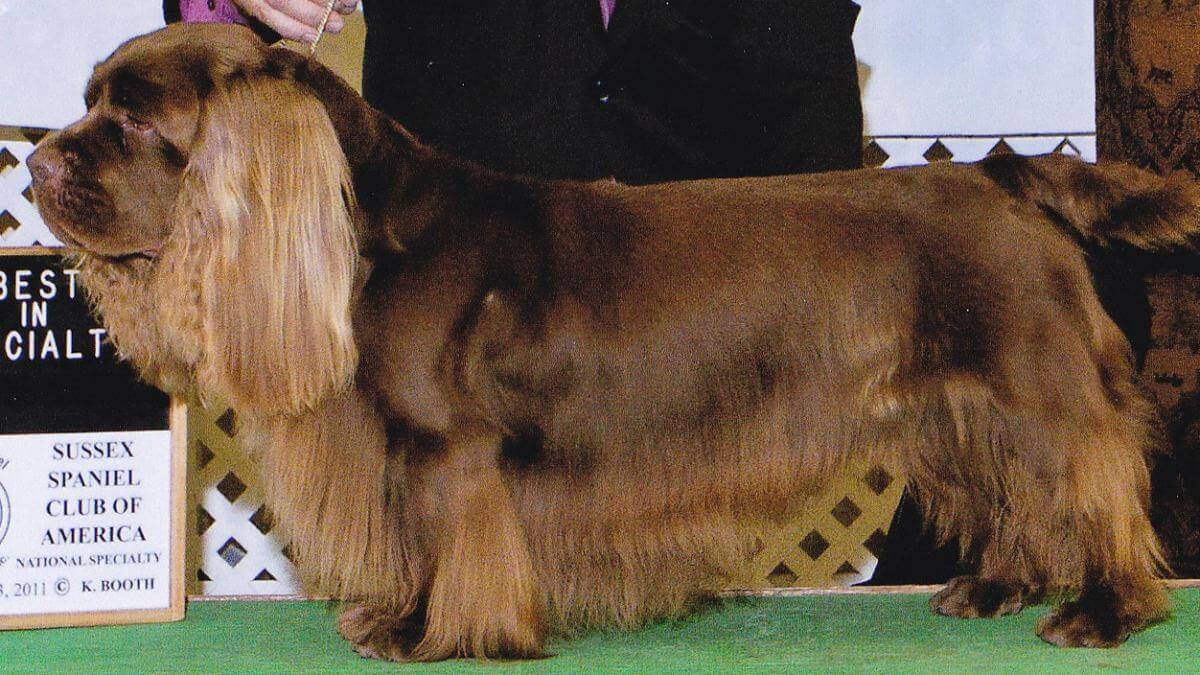
All About Judging
Judging the Sussex Spaniel: Learn key breed characteristics, including balance, proportion, and the “Six L’s” to guide your evaluation.
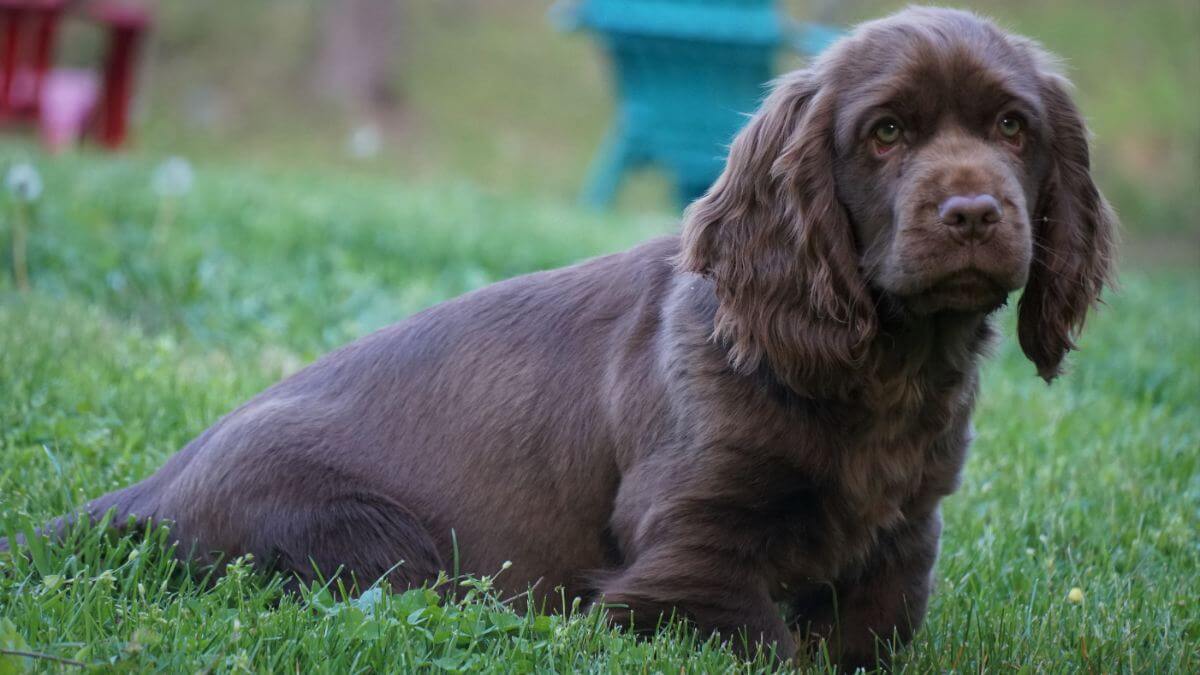
The Sussex Spaniel’s “sad” expression is functional for hunting and adds to their charm, making them both practical and irresistibly cuddly.


Meet the Breeders
Doug Johnson on 40 years of breeding and judging English Toy, Clumber, Sussex, Welsh Springer Spaniels, and Kooikerhondje.

Dog Shows
Explore a journey through nostalgia as spring cleaning unveils forgotten treasures from a lifetime in the world of dogs. Memories await!

Meet the Breeders
Katie Tuttle is the breeder behind Brass Lite Sussex Spaniels. Read about the kennel’s beginnings, puppies, and much more!
The Sussex Spaniel's tail is traditionally docked to about 5 to 7 inches in length, giving it a distinct appearance. In countries where the practice is not permitted, the natural tail is of medium length, carried level with the back, and covered in moderate feathering. Whether docked or natural, the tail is set low with a carriage that complements the breed's long and low silhouette.
Coat Type
Double
The structure of the coat this breed carries.
Coat Length
Medium
How long the breed's coat grows when kept in condition.
Adaptability Level
How easily a breed copes with changes in home, routine, noise and weather.
Mental Stimulation Needs
How much a breed needs a job, a puzzle or training to stay content.
The Sussex Spaniel requires a high-quality, balanced diet tailored to its age, size, and activity level. Puppies benefit from meals that are rich in nutrients to support their growth, typically divided into three meals a day until they’ve reached adulthood.
Adult Sussex generally thrive on two measured meals per day, totaling about 1.5 to 2 cups of food daily, depending on their activity level and metabolism. Monitoring weight is crucial, as the breed’s compact frame can make them prone to obesity. Feeding schedules, combined with regular exercise, help them maintain a healthy physique.
Training a Sussex Spaniel is a rewarding experience, as these dogs are intelligent and eager to please, though they may exhibit occasional stubbornness. Positive reinforcement methods work best, as they respond well to treats, praise, and gentle encouragement. Early socialization and basic obedience training are essential to make sure they grow into well-mannered companions as adults.
The Sussex has a moderate tendency to bark, often using their distinctive "voice" when excited or alerting to something unusual. They possess a strong nose and natural hunting instincts, so training should also focus on managing wanderlust and channeling their focus appropriately.
The long ears of the Sussex need regular inspection and cleaning to prevent infections, as the breed is prone to ear issues. Routine bathing every few months, or as needed, keeps the coat clean and healthy. Nail trimming, teeth brushing, and checking for skin issues should also be part of the grooming regimen.