Members
01/Overview
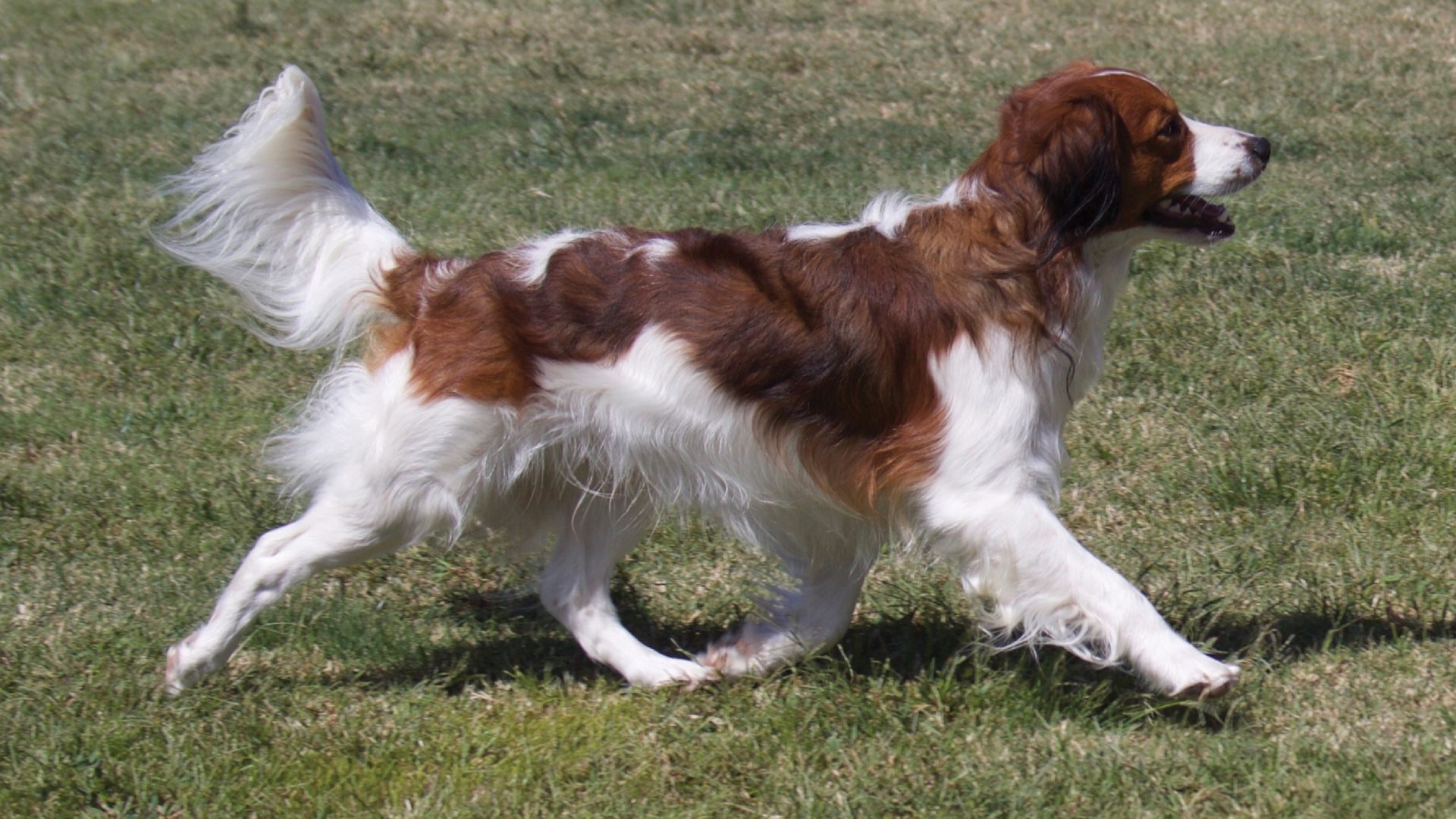
The Nederlandse Kooikerhondje, or Kooiker for short, is a small spaniel-type breed from the Netherlands known for its cheerful demeanor and striking orange-red and pure white coat. Originally bred as a duck decoy dog, the breed is now cherished for its versatility, intelligence, and devotion as a companion. Whether in the field, at home, or competing in dog sports, the Kooiker is a lively and loyal partner.
Highlights
02/History
The Nederlandse Kooikerhondje has a rich history dating back to at least the 16th century in the Netherlands, where it has been depicted in paintings by Dutch masters like Jan Steen and Rembrandt. Developed as a duck decoy dog, these small spaniels worked alongside hunters, luring ducks into traps with their wagging tails—a technique known as tolling. This method was particularly effective through the use of enclosures, or eendenkoois, from which the breed gets its name: "Kooiker" refers to the hunter managing the decoy, and "hondje" means "little dog."
The breed’s popularity declined in the early 20th century due to the mechanization of hunting and the decline of traditional duck hunting using decoys. By the 1940s, the breed was nearly extinct, with fewer than 30 individuals remaining. Baroness van Hardenbroek van Ammerstol spearheaded efforts to save the Kooikerhondje, using surviving dogs and crossbreeding to preserve its unique traits. Her work not only revitalized the breed but also ensured its recognition as a national treasure in the Netherlands.
In 1990, the Nederlandse Kooikerhondje gained recognition from the Fédération Cynologique Internationale (FCI), solidifying its status as an official breed. It was later recognized by The Kennel Club (UK) in 2014 and the American Kennel Club (AKC) in 2018, joining the Sporting Group. While the breed remains relatively rare outside of its homeland, it is celebrated for its historical significance, working ability, and lively temperament.
03/Appearance
The Nederlandse Kooikerhondje is a small-to-medium-sized breed, with males standing around 16 inches tall at the shoulders and females measuring 15 inches. At one year of age, both males and females should be within 1 1/2 inches of these heights, either over or under. Weight typically ranges from 20 to 30 pounds, with males tending toward the higher end of the spectrum.
 Julien & Lambert Photo[/caption]
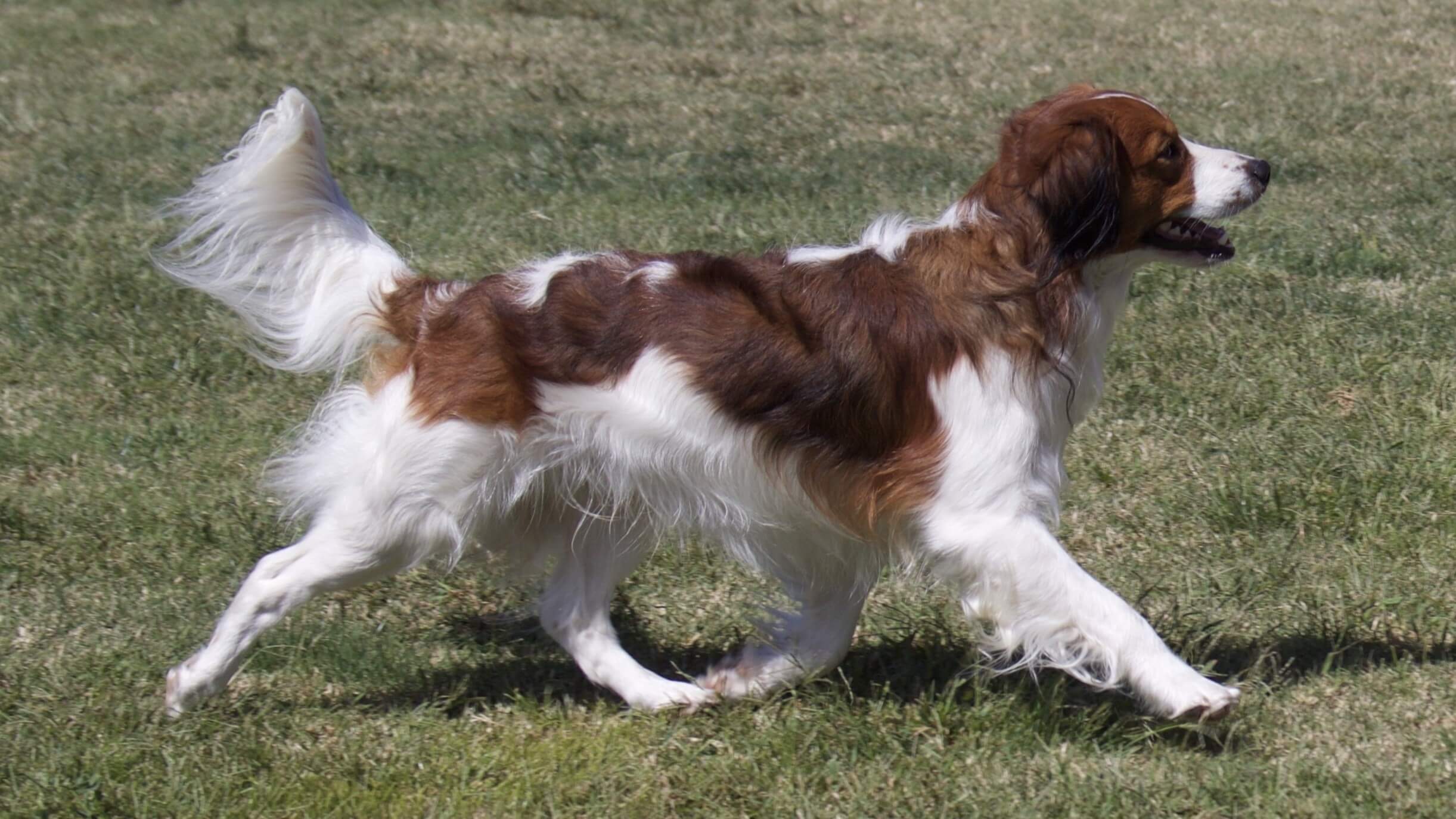
The Nederlandse Kooikerhondje is slightly longer than tall, giving it a rectangular profile that enhances its agility and grace. The breed’s clean-cut build is lightweight yet sturdy, reflecting its function as a working dog capable of performing quick, precise movements. The chest reaches the elbows and the ribs are moderately sprung, allowing ample lung capacity. A slight tuck-up and a short, broad loin convey a sense of athleticism and refinement, without appearing delicate.
Texture: The Nederlandse Kooikerhondje has a medium-length silky coat that lies close to the body. It is weather-resistant, with a functional undercoat. The coat is slightly wavy or straight, with feathering on the ears, legs, and tail which add much to the breed’s rather elegant appearance. Breeching on the hind legs is fairly long, and feathered black tips on the ears (called earrings) are a desirable breed characteristic.
Standard Colors
Standard Markings
04/Consider
The Nederlandse Kooikerhondje is a versatile breed with plenty of charm, but potential owners should be aware of its specific needs. This active and intelligent breed thrives in homes that can provide mental and physical stimulation, consistent training, and a loving environment. Its unique combination of energy and sensitivity makes it a great companion for the right household, but a Kooiker may require extra attention in certain areas, such as socialization and training.
Interaction With Family
The level of affection a breed typically shows towards family members and familiar individuals.
Good With Other Dogs
The innate friendliness of a dog towards other dogs can depend on its breed.
Good With Young Children
The degree to which a breed will typically be patient with young children.
Amount Of Shedding
How much hair a breed typically leaves behind on clothes, furniture and floors.
Frequency Of Grooming
How often a breed needs brushing, bathing or a professional trim to stay in condition.
Amount Of Drooling
How prone a breed is to drool, worth knowing before you keep a towel by the door.
Openness To Strangers
How openly a breed tends to greet new people, visitors and strangers.
Protective Nature
How likely a breed is to alert you to anything unfamiliar, and stand between you and it.
Playfulness Level
How enthusiastic a breed stays about games and play well past puppyhood.
Trainability Level
How readily a breed takes direction and works with you rather than around you.
Barking Level
How much a breed uses its voice, and how readily.
Energy Level
How much get-up-and-go a breed brings to an average day.
Health
The Nederlandse Kooikerhondje is generally a healthy breed with a lifespan of 12 to 15 years. Responsible breeders work to minimize hereditary health issues, but regular veterinary care and preventative measures are crucial for maintaining a dog’s overall well-being.
The Nederlandse Kooikerhondje is an affectionate, intelligent, and lively breed that forms strong bonds with its family. These dogs are sensitive and eager to please, making them highly trainable, but they do require a gentle and consistent approach.
While Kooikers are friendly with their loved ones, they can be reserved around strangers, a trait that may be improved with early socialization. These good-natured dogs generally get along well with other animals and children, but they thrive best in a calm, structured environment. Their playful and active nature makes them an excellent companion for families or individuals who can dedicate time to their daily needs.
Exercise Expectations
Kooikers enjoy activities that challenge their intelligence and natural instincts, such as Scent Work and Agility training. While they adapt well to various living environments, they are happiest in homes that provide ample opportunities for physical and mental engagement. Regular exercise also helps to prevent boredom, which can lead to unwanted behaviors.
Grooming Expectations
The Nederlandse Kooikerhondje is adaptable and can thrive in a variety of living situations, provided it receives enough exercise and mental stimulation. These faithful and easygoing companions are best suited to homes where they can be an integral part of family life.
The Kooiker tolerates moderate climates well, though care should be taken in extreme cold or heat. The breed’s affectionate and playful nature makes these dogs excellent companions, but they are happiest in environments where their cheerful character and zest for working can be appreciated.
05/Puppies
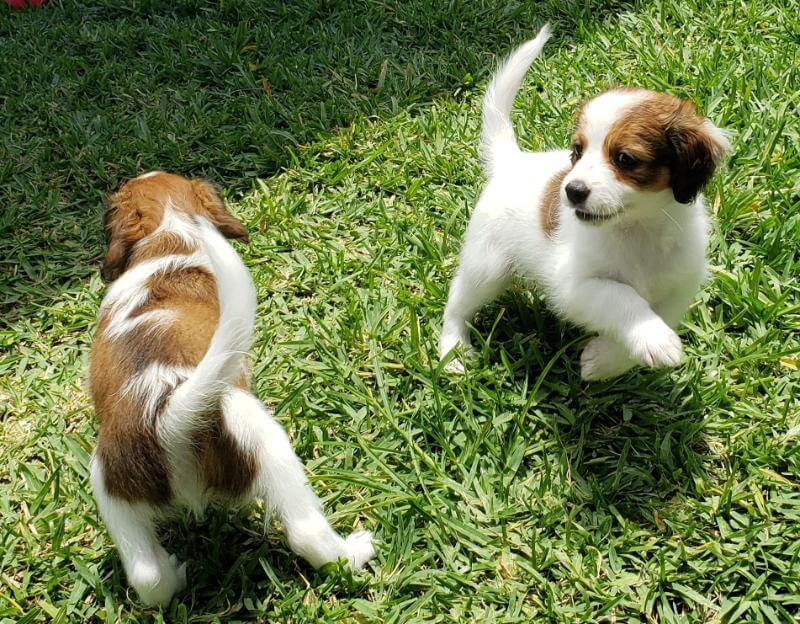
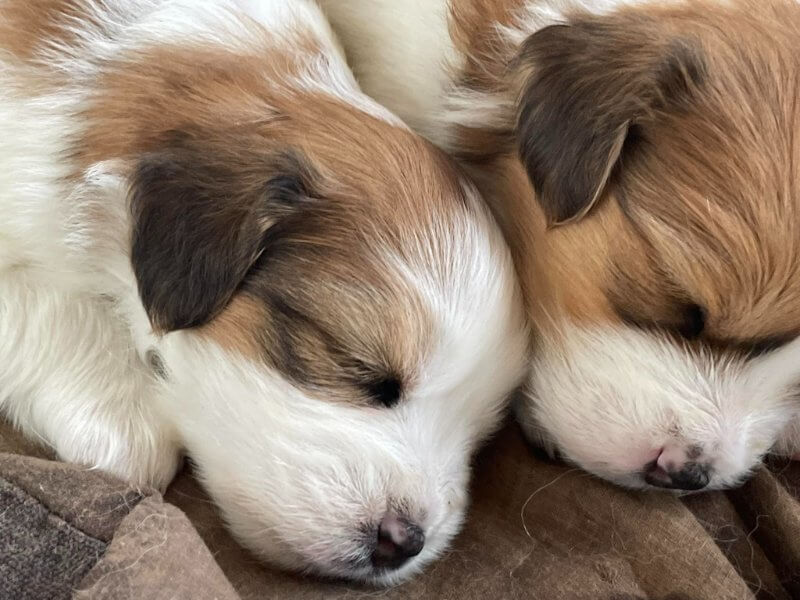
Nederlandse Kooikerhondje puppies are full of energy and curiosity, bringing joy to any home. The first few months of life is a critical time for shaping their temperament and behavior, so providing consistent training, socialization, and care is essential. These intelligent and sensitive puppies thrive in structured environments where their mental, emotional, and physical needs can be met.
Caring for a Nederlandse Kooikerhondje puppy starts with establishing a routine that includes proper nutrition, frequent socialization, and positive reinforcement training. The puppy should be fed high-quality puppy food divided into three to four meals daily to support its growth and energy needs.
Socialization should begin early, exposing the puppy to various people, pets, and environments that will help to build confidence and reduce fearfulness. Training sessions should be short, engaging, and reward-based, as Kooikers respond best to positive reinforcement. Crate training is highly recommended for housebreaking and providing a safe, comfortable space for resting and sleeping.
Grooming should start during puppyhood, with regular brushing to get the Kooiker puppy accustomed to being handled and to maintain the coat. Nail trimming, ear cleaning, and dental care should also be introduced gradually to cultivate a lifetime of good grooming habits. Regular veterinary check-ups and vaccinations are crucial to keeping the puppy healthy and ensuring proper development.
06/Activities
Gallery
07/Standards
The Nederlandse Kooikerhondje is recognized by the world's leading registries and kennel organizations, which categorize the breed into a specific Group based on its unique characteristics. This breed is recognized worldwide under the following Group designations:
The ideal Nederlandse Kooikerhondje is described by a Breed Standard that is approved by each of the world’s leading registries and kennel organizations. The Breed Standards for this breed may be found in the following links:
08/Clubs
09/Rescue
10/Facts
Historic Role
The Nederlandse Kooikerhondje was traditionally used in the Netherlands to lure ducks into traps in a method referred to as tolling—a practice still used in some regions today.
Artistic Legacy
During the 17th century, this breed appeared in Dutch paintings by renowned artists like Jan Steen.
Tail Signal
Their white-tipped tail serves a functional purpose, acting as a visual lure to attract ducks to enclosures called eendenkoois.
Near Extinction
By World War II, the breed was nearly extinct, but it was revived through the dedicated efforts of Baroness van Hardenbroek van Ammerstol.
Rare in the U.S.
The Nederlandse Kooikerhondje is still relatively rare outside Europe and was only officially recognized by the American Kennel Club (AKC) in 2018.
11/FAQ
Yes, Nederlandse Kooikerhondjes shed moderately, with heavier shedding during seasonal changes. Regular brushing helps to manage the coat and reduces loose hair around the home.

Written by
Dan Sayers is the Executive Editor of SHOWSIGHT. He is a member of the World Dog Press Association and the Dog Writers Association of America, which recognized his illustrations in the award-winning Encyclopedia of K-9 Terminology. Dan is a longtime supporter of the sport of dogs and an advocate for the conservation of recognized breeds in all their forms and functions. He is a member of the Morris and Essex Kennel Club, and for 45 years, the Irish Water Spaniel Club of America where he serves as AKC Delegate, Archivist, and approved Breed Mentor. Dan breeds under the Quiet Storm prefix and has judged the IWSCA National Specialty Sweepstakes twice.
Standard of the Nederlandse Kooikerhondje
General Appearance: The Nederlandse Kooikerhondje is a harmoniously built orange-red parti-colored small sporting dog of almost square body proportions. He moves with his head held high; in action, the well-feathered waving tail is carried level with, or above the topline. The ears may have black hair at the tips, the so-called earrings. The dog is presented with a natural, untrimmed coat. Visible scissoring or grooming, except for neatening the feet, is to be severely penalized.
Size Proportion, Substance: Size - Ideal height at the withers: Males 16 inches, Females 15 inches. Disqualification - 1½ inches under the ideal height after 1 year of age or 1½ inches above the ideal height at any age. Proportion - Skull and muzzle are of about equal length. The length of the body from the point of the shoulder (at the scapula/humerus) to the point of the buttocks should be slightly longer than the height at the withers. Length of forelegs from ground to elbow should be equal to depth of body from elbow to withers. Substance - strong bone, but not heavy.
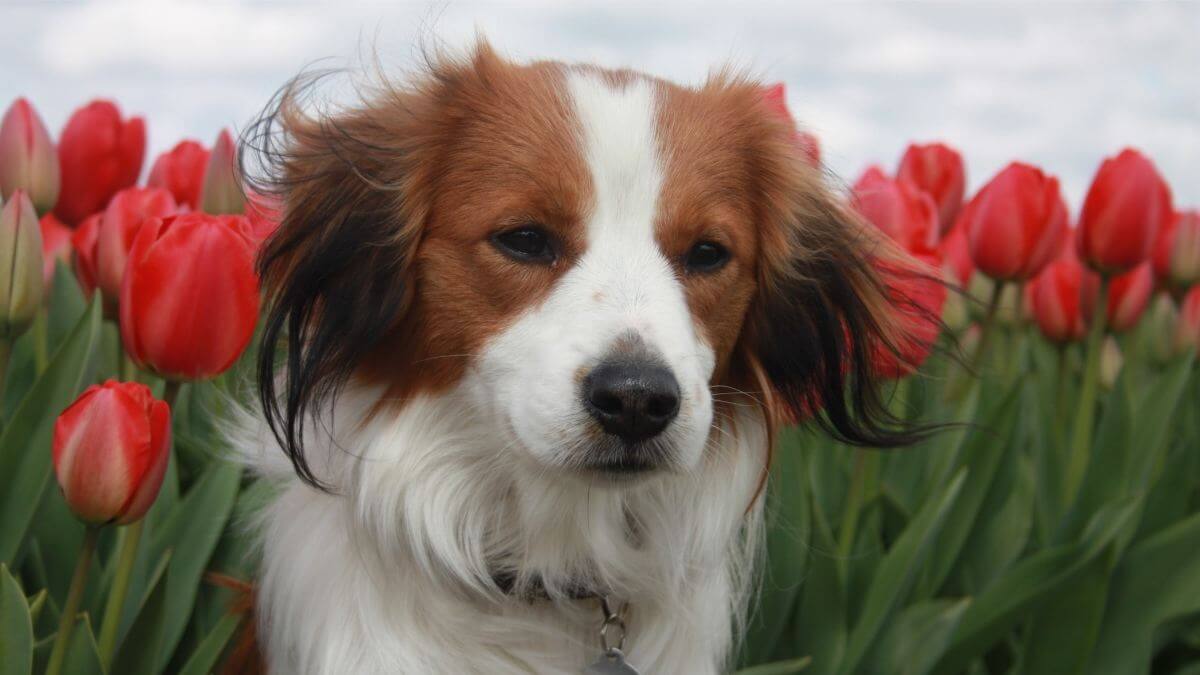
Head: The head is of moderate length, fitting in with the general appearance, clean- cut, with flowing lines. Eyes - Almond-shaped, dark brown with a friendly, alert expression. Ears -Medium size, set above eye level but always lower than the top of the skull. The ears are carried close to the cheeks without a fold. Ear leather should easily reach the inner corner of the eye. Well feathered. Black hair tips ("earrings") are highly desirable. Skull - Sufficiently broad, moderately rounded. Stop - Seen in profile clearly visible but not too deep. Muzzle - Should be a blunt wedge seen from above or in profile, not too deep, nor tapering too much. Well filled under the eye, creating a smooth transition from muzzle to skull. Planes (Muzzle & Skull) - Straight muzzle, almost parallel planes. Nose - Black and well developed. Lips - Preferably well pigmented, close fitting and not pendulous. Bite - Scissors bite. Complete dentition preferable. Level bite acceptable, but less desirable.
Neck, Topline, Body: Neck - Medium length to balance body, clean-cut and strongly muscled. Topline - Smooth level line from the withers to hipbones with a slightly rounded croup. Chest -Reaching to the elbows with moderate spring of ribs. Underline - Slight tuck-up towards the loin. Back - Strong and straight, rather short. Loin - Short and broad, strongly muscled. Tail - Set on so as to follow the topline of the body. Well-feathered with a white plume. The last vertebra should reach the hock joint. When gaiting, carried level with the topline, with an upward curve or almost straight up. Not curling with a ring or circling over the back. When standing, the tail may be held downward.
Forequarters: Shoulders - Shoulder moderately angled in order to create a flowing line from neck to back. Upper Arm - Moderately angled to match layback of shoulder blade, which is of equal length. Forechest - Prosternum - Point of forechest should be slightly protruding beyond the point of the shoulder. Elbow - Close to the body. Legs - Straight and parallel, strong bone of sufficient density and length. Pasterns - Strong and slightly oblique. Forefeet - Small, slightly oval, compact, toes pointing forward.
Hindquarters: Angulation - Moderately angulated, to match forequarters. Seen from the rear, straight and parallel. Legs - Strong bone. Upper Thigh - well muscled. Second Thigh - length equal to upper thigh. Hock Joint - well let down. Hind Feet - Small, oval, compact, toes pointing forward.
Coat: Hair - Of medium length, close lying. May be slightly wavy or straight, but never curly or open. Soft, but with enough texture to be weather resistant. Functional undercoat. Front legs should have moderate feathering reaching to the pastern joints. Hind legs should have fairly long feathered breeches. No feathering below the hock joints. The coat on the head, the front part of the legs and the feet should be short. Sufficiently feathered on the underside of the tail. Longer hair on throat and forechest. Earrings (long feathered black hair tips) are highly desirable.
Color: Distinct patches of clear orange-red on pure white are ideal. A few small spots on the legs or muzzle are acceptable. Chest, belly, and the majority of the legs and tail should be white. Orange red color should predominate on the head and torso and may be present as a mantle or blanket, but is less desirable than distinct patches. Some black hair intermingling with the orange-red color and a slight form of ticking are acceptable, but less desirable. A black tail ring where the color changes from orange-red to white on the tail is permitted. Coloring on the head: A clearly visible white blaze running down to the nose. There should be coloring on the cheeks, ideally ending at the comers of the mouth, and around the eyes. A blaze that is too narrow or too wide or only partly colored cheeks is less desirable. Color should be a consideration only when all else between two dogs is equal. Disqualification - Color that is black and white or tri-color.
Gait: Should be flowing and light-footed, with moderate reach and drive. Limbs parallel.
Temperament: Lively and agile, self-confident and with sufficient perseverance and stamina. Good natured and alert, however not noisy. The breed is faithful, easygoing and friendly to his owners and can be a bit reserved with strangers. When not luring ducks into elaborate man-made traps, the dog is expected to find and kill vermin, and to alert his family to strangers on the property. Hence he needs to be keen, swift and tough. He is a true sporting dog, being attentive and energetic and having a zest for working and with a cheerful character.
Faults: Any departure from the foregoing points should be considered a fault and the seriousness with which the fault should be regarded should be in exact proportion to its degree and the functional health and welfare of the dog and on its ability to perform its traditional work. Ears too small. Ears half-erect, "flying ears". Tail that is too curled. Hackney gait. Curly or silky hair. Open coat. Color that is heavily interspersed with black hairs in the orange-red patches. Too much ticking.
Severe Faults: Anxious behavior. Distinctly low on legs, out of proportion. Blue or yellow eye(s). Undershot or overshot bite. Tail too short, vertebrae not reaching hock- joint. White color on ears, partly or completely. White hair around eyes, one or both.
Disqualifications: 1½ inches under the ideal height after 1 year of age or 1½ inches above the ideal height at any age. Color that is black and white or tri-color.
Approved February 10, 2017
Effective April 1, 2017
Deborah Bean & Betty Dalke Wathne examine the Nederlandse Kooikerhondje, its history, unique traits, and key points for judges in the ring.


Meet the Breeders
Doug Johnson of Clussexx Kennel breeds top Spaniels and Kooikers with a focus on health, type, and predictability since 1984.

Meet the Breeders
Doug Johnson on 40 years of breeding and judging English Toy, Clumber, Sussex, Welsh Springer Spaniels, and Kooikerhondje.
Dog Shows
Discover the fascinating history of the Nederlandse Kooikerhondje, a Dutch breed with a unique role in duck trapping.

Meet the Breeders
Kimberley Layman is the breeder behind Dreamcatcher Kooikerhondjes. Read about the kennel’s beginnings, the sires, the dams, and more!
Meet the Breeders
Ann Knoop-Siderius is the breeder behind Kooikerhondjes van den Iserman Hoeve. Read about the kennel’s beginnings, the champions, and more!
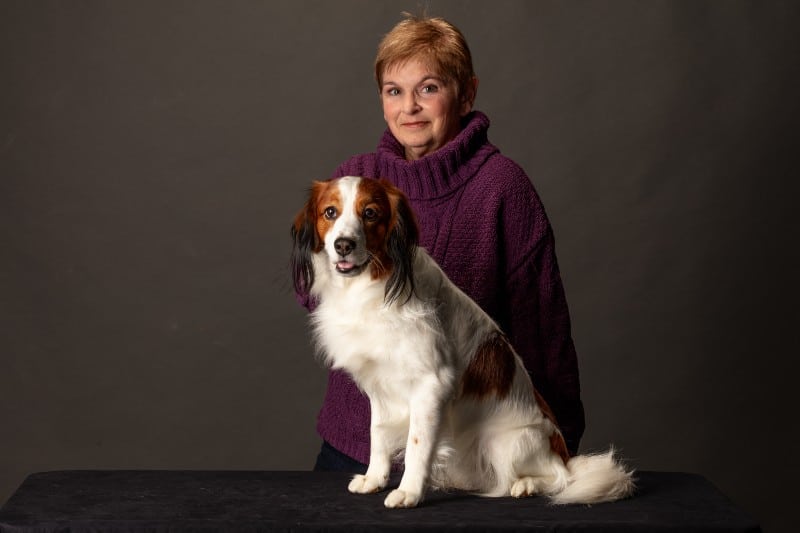
Meet the Breeders
Sheryl Fuller is the breeder behind Waterbound Kooikerhondje. Read about the kennel’s beginnings, the sires, the dams, the puppies, and more!
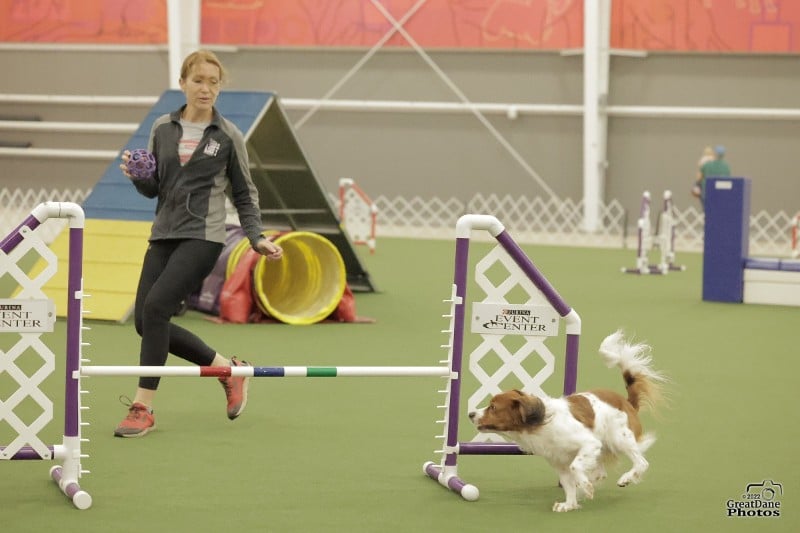
Agility
Interview with Liz Barshack, handler of “Senna,” the 2022 AKC Agility Invitational Winner in the 16″ height category.
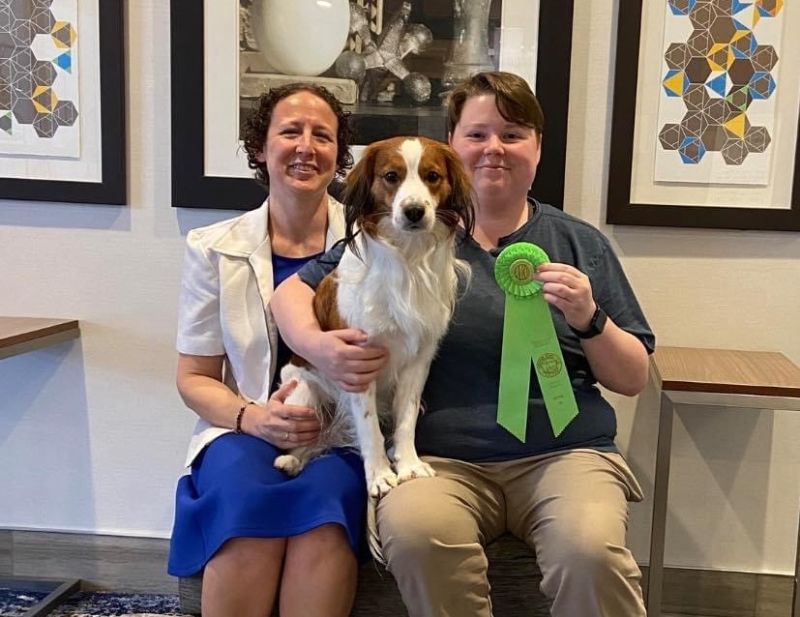
Meet the Owner Handlers
Insights from an Owner Handler, Hailey Perkins. Read about her opinions on various topics about dog handling in the modern show ring.
The Nederlandse Kooikerhondje's tail is never docked. It is of moderate length and carried level with, or slightly above, the topline when in motion. The tail doesn’t curl in a ring or circle over the back. It moves freely and is well feathered, with a white tip. This detail aids in the breed's traditional usefulness as a duck decoy dog.
A Note About Color: The Nederlandse Kooikerhondje's coat should have distinct orange-red patches on a pure white background. The chest, belly, and most of the legs and tail should be white, with small colored spots on the legs or muzzle being acceptable. The orange-red color should dominate the head and torso, with distinct patches preferred over a mantle. Slight black intermingling, subtle ticking, and a black tail ring are permitted, but are less desirable. The head should feature a clearly visible white blaze extending to the nose, with orange-red cheeks reaching the corners of the mouth and surrounding the eyes. Coats that are black and white, or tri-color, are unacceptable in the breed.
Coat Type
Double, Wavy
The structure of the coat this breed carries.
Coat Length
Medium
How long the breed's coat grows when kept in condition.
Adaptability Level
How easily a breed copes with changes in home, routine, noise and weather.
Mental Stimulation Needs
How much a breed needs a job, a puzzle or training to stay content.
The Nederlandse Kooikerhondje benefits from a high-quality diet tailored to their age, size, and activity level. Puppies should be fed nutrient-rich puppy food in three to four daily meals to support their growth and energy needs.
Adult Kooikers typically require 1 to 2 cups of dry dog food per day, divided into two meals, depending on their activity levels and metabolism. Providing balanced nutrition and monitoring portion sizes are crucial for maintaining a healthy weight. Overfeeding can be avoided by consulting with a dog’s breeder and veterinarian.
The Nederlandse Kooikerhondje is highly trainable thanks to its intelligence and eagerness to please, but its sensitive nature requires a positive and patient training approach. Harsh methods can lead to distrust, while consistent praise, treats, and encouragement yield excellent results.
Kooikers excel in Obedience, Agility, and Trick Dog training, and their natural working instincts make them ideal for tasks like Scent Work. Early socialization is crucial to help them feel confident around new people, pets, and environments. And although they can have a moderate tendency to bark, this can be managed effectively with early training.
The coat of the Kooiker naturally repels dirt, so bathing is only necessary occasionally or when the dog becomes particularly dirty. Routine grooming also includes trimming nails, cleaning ears, and maintaining good dental hygiene with regular brushing. These practices help to keep the Kooiker comfortable and in overall good health.