Members

01/Overview
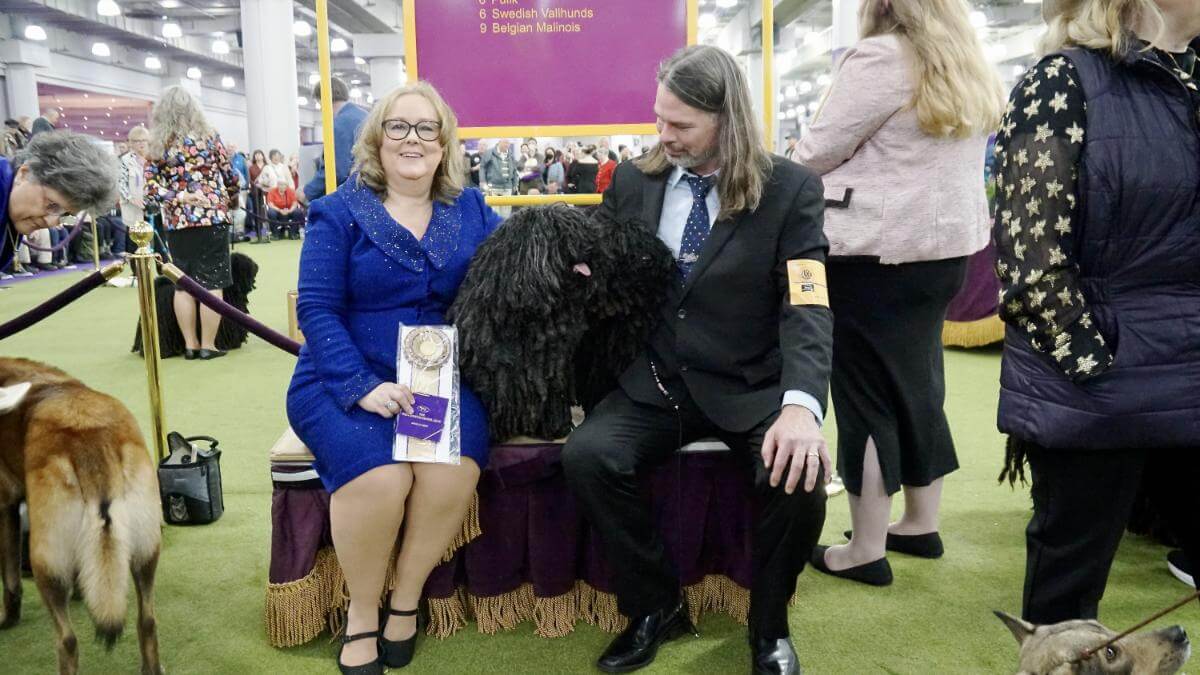
In the breed’s homeland, the Puli, also known as the Hungarian Puli, is still employed as a sheep herder. This herding dog and family companion is known for its long, corded coat that can have the appearance of dreadlocks. Because of its unique coat, this mop-like dog appears considerably larger than it is. The breed is active and enthusiastic, and it requires a lot of exercise and mental stimulation. However, the Puli is as affectionate as it is energetic, making it a great choice for active people.
Highlights
02/History
The Puli is an ancient breed that has been around for at least 2,000 years. Some researchers say that a dog identical to the Puli existed 6,000 years ago or more; others believe the Puli descended from the Tibetan Terrier more recently.
There is evidence that Sumerians herded sheep using Pulik or Puli-type canines. Clay plates discovered in Eridu excavations describe Sumerian laws concerning animals. One of these contains references to a Puli and a Komondor. At the same excavation site, an intact Puli figurine was discovered in the crypt of an eight-year-old girl.
Pulik were brought to Hungary by Magyar tribesmen some 1100 years ago. By the 1800s, Hungarian shepherds recognized the useful qualities of the dogs and began to breed them. The first description of the Puli was recorded in the late 1800s, but by then, the need for the sheepdog had diminished, and so had the breed’s numbers.
In Hungary, having a Puli, a Komondor, or other native Hungarian breeds became a source of pride. Around the same period, the United States Department of Agriculture became interested in the Puli and, in 1935, acquired four purebred Pulik to participate in herding dog testing at the Department's Beltsville, Maryland, facility. The Pulik were claimed to have done well on these tests, but the results were never made public.
When World War II broke out, the testing stopped and the Pulik were sold to professional breeders. Those initial four dogs and their offspring are regarded as the first of their breed in America. The war ultimately proved catastrophic for Hungary, as well as for dog breeders throughout Europe.
The Puli, however, defied the odds and its numbers in Hungary increased after the war. The Hungarian Puli Club established a Breed Standard in 1959, and by the 1960s, the number of Pulik in Hungary had approached pre-war levels. The breed was accepted for registration with the American Kennel Club in 1936, and the Puli Club of America was founded in 1951.
03/Appearance
A mature male Puli typically stands around 17 inches tall at the shoulder, while the adult female usually measures around 16 inches.
Males generally weigh between 28 and 35 pounds, while females weigh slightly less at 23 to 30 pounds.
04/Consider
Pulik are confident, clever, and attentive to their owners. Many act as babysitters and guardians for children and other household pets. They can be acutely aware of the needs of the elderly and the sick. They make excellent therapy dogs. However, they are an active and energetic breed with a strong herding instinct and need a lot of exercise. Their unique corded coat requires meticulous care.
Interaction With Family
The level of affection a breed typically shows towards family members and familiar individuals.
05/Puppies
Puli puppies are lively, intelligent, and full of energy. They require early socialization, training, and grooming to develop into well-adjusted and healthy adults. Their playful nature and charming appearance make them wonderful companions, but it's important to be prepared for the responsibilities that come with raising a Puli puppy, including their grooming needs and high energy levels.
Puli puppies are undeniably cute with their soft, fluffy coats. However, their cords do not fully develop until they are several months old. As puppies, they resemble little balls of fur, and their distinctive cords begin to form as they grow and need proper grooming.
Early socialization is crucial for Puli puppies to prevent fear and aggression issues and encourage confident behavior. Training Puli puppy should start as early as possible. Their intelligence and eagerness to learn make them quick learners. However, they can be independent and sometimes stubborn. Patience and consistency are keys to training and care.
Nutrition is essential during the puppy's growing phases. To ensure a Redbone puppy gets all the nutrition it needs for good growth it should be feeded with high-quality puppy chow. Making a regular feeding schedule is also a smart idea.
Regular veterinary check-ups are crucial in the first year of life. Vaccinations, deworming, and basic health checks should be performed to ensure the puppy is growing normally.
Puli puppies need exercise to stay happy and healthy. Daily play and walks are important for their physical and mental development. Providing them with opportunities to run and explore is essential. Puli puppies have a playful nature and enjoy interactive games and toys. Engaging them in play helps build a strong bond between the owner and the puppy.
06/Activities
Pulik are known for their intelligence, agility, and high energy levels, making them excellent candidates for various dog sports and activities. Engaging in these activities can provide physical and mental stimulation, strengthen the bond between you and your Puli, and help channel their natural instincts.
Agility: Agility is a popular dog sport that involves a timed obstacle course. Pulik excels in agility due to their intelligence and agility. The sport challenges their problem-solving skills, coordination, and physical abilities. Participating in agility trials can be a great way to satisfy Puli's need for exercise and mental stimulation.
Herding Trials: Pulik have a strong herding instinct, and herding trials allow them to engage in herding behaviors in a controlled environment. These trials test a Puli's ability to work with livestock, showcasing their natural herding talents.
Obedience: Obedience training is an essential activity for Pulik. They are intelligent dogs that enjoy learning and performing commands. Participating in obedience training and competitions can help them develop good manners and discipline.
Flyball: Flyball is a relay race for dogs that involves jumping over hurdles to trigger a spring-loaded box, which releases a tennis ball. The dog then retrieves the ball and returns to the starting line. Pulik can excel in flyball with their speed and agility.
Nose Work: Nose work involves teaching dogs to use their sense of smell to locate specific scents. Pulik has an excellent sense of smell and can enjoy this mental stimulation activity. It's a fun and rewarding way to keep their minds sharp.
Tracking: Tracking is a sport that challenges dogs to follow a scent trail to find hidden objects. Pulik can enjoy tracking activities as they tap into their natural abilities as herders and scent-driven dogs.
Dock Diving: Dock diving involves dogs jumping off a dock into a pool, showcasing their jumping and swimming abilities. Pulik can participate in this sport, particularly if they enjoy water.
Gallery
07/Standards
The Puli is recognized by the world’s leading registries and kennel organizations, which categorize the breed into a specific Group based on its unique characteristics. This breed is recognized worldwide under the following Group designations:
08/Clubs
Puli clubs are organizations dedicated to the promotion, preservation, and well-being of the Puli breed. They offer a range of services, resources, and activities for Puli enthusiasts, including breed information, events, rescue and adoption support, and opportunities to connect with other Puli owners.
The Puli Club of America (PCA) is the official parent club for Pulik in the United States. It provides information about the breed, breeder referrals, and resources for Puli owners. The club also organizes events, incPuli Club in the UKluding the National Specialty Show, and supports Puli rescue efforts.
The Hungarian Puli Club of Great Britain is dedicated to preserving and promoting the breed. They offer breed information, health resources, and host events and shows to showcase Pulik.
09/Rescue
When purchased without previous knowledge, Redbones often end up searching for an adoption or fostering. Puli rescue groups are dedicated to the rescue, rehabilitation, and rehoming of Pulik (plural of Puli) in need.
The Puli Club of America (PCA) has an active rescue program dedicated to helping Pulik in the United States.
The Hungarian Puli Club of Great Britain also has a rescue program that assists Pulik in need of rehoming.
10/Facts
Corded Coat
The most iconic feature of the Puli is its corded coat. These cords are formed naturally from the dog's curly hair. The process of developing and maintaining the cords is labor-intensive but results in the breed's distinctive shaggy appearance.
Protective Nature
Pulik are known for their protective instincts. They are loyal to their families and often act as watchdogs. Their alertness and protective nature make them a good choice for home security.
Unique Bark
Pulik has a unique, distinctive bark that is often described as a "yodel." This vocalization was developed to communicate with shepherds while herding.
Herding Instinct
The herding instinct is strong in Pulik. Even if they aren't working on a farm, they may exhibit herding behavior in everyday situations, trying to gather and protect their family.
The Auditor
The Auditor is a Puli dog who lived near Butte, Montana's hazardous Berkeley Pit copper mine. He was well-known for his capacity to survive and prosper in such conditions. He died in 2006, and various memorials have been established in his honor.
11/FAQ
While no dog is completely hypoallergenic, Puli dogs are often considered to be a better option for people with allergies. Their unique corded coat tends to trap dander and hair within the cords, which may reduce the amount of allergen spread through the air. However, allergen sensitivity varies greatly between individuals, so spending time with a Puli is advisable before making a commitment to bring one into an allergy-sensitive home.

Written by
Dan Sayers is the Executive Editor of SHOWSIGHT. He is a member of the World Dog Press Association and the Dog Writers Association of America, which recognized his illustrations in the award-winning Encyclopedia of K-9 Terminology. Dan is a longtime supporter of the sport of dogs and an advocate for the conservation of recognized breeds in all their forms and functions. He is a member of the Morris and Essex Kennel Club, and for 45 years, the Irish Water Spaniel Club of America where he serves as AKC Delegate, Archivist, and approved Breed Mentor. Dan breeds under the Quiet Storm prefix and has judged the IWSCA National Specialty Sweepstakes twice.
Official Standard of the Puli
General Appearance: The Puli is a compact, square appearing, well balanced dog of medium size. He is vigorous, alert and active. Striking and highly characteristic is the shaggy coat which, combined with his light-footed, distinctive movement, has fitted him for the strenuous work of herding flocks on the plains of Hungary. Agility, combined with soundness of mind and body, is of prime importance for the proper fulfillment of this centuries-old task.
Size, Proportion, Substance: Ideally, males are 17 inches measured from the withers to the ground; bitches, 16 inches. An inch over or under these measurements is acceptable. The tightly knit body approximates a square measured from withers to ground and point of shoulder to point of buttock. Medium boned.
Head: The head is of medium size in proportion to the body. The almond shaped eyes are deep set, rather large, and dark brown with black or slate gray eye rims. The ears, set on somewhat higher than the level of the eyes, are hanging, of medium size, V-shape, and about half the head length. The skull slightly domed and medium broad. The stop is defined, but not abrupt. The muzzle is strong and straight, a third of the head length, and ends in a nose of good size. The nose is always black. Flews and gums are black or slate gray. Flews are tight. A full complement of teeth, comparatively large, meet in a scissors bite.
Neck, Topline, Body: The neck is strong, muscular, of medium length and free of throatiness. The back is level and strong, of medium length, with croup sloping slightly. The chest is moderately broad and deep - the ribs well sprung. The loin is short, strong and moderately tucked up. The tail is carried over, and blends into the backline.
Forequarters: The shoulders are well laid back. Upper arm and scapula are approximately equal in length and form an angle of 90 degrees. The forelegs are straight, strong and medium boned with strong and flexible pasterns. Dewclaws, if any, may be removed. The round, compact feet have well arched toes and thick cushioned pads. The Puli stands well up on his pads. The pads and nails are black or slate gray.
Hindquarters: The hindquarters are well developed and muscular with well bent stifles, the rear assembly balancing that of the front. The hocks are perpendicular to the ground and well let down. Dewclaws, if any, may be removed. Feet as in front.
Coat: The dense, weather resistant coat is profuse on all parts of the body. The outer coat is wavy or curly, but never silky. The undercoat is soft, wooly and dense. The coat clumps together easily, and if allowed to develop naturally, will form cords in the adult. The cords are wooly, varying in shape and thickness, either flat or round, depending on the texture of the coat and the balance of undercoat to outer coat. The Puli may be shown either corded or brushed. It is essential that the proper double coat with correct texture always be apparent. With age the coat can become quite long, even reaching to the ground; however, only enough length to properly evaluate quality and texture is considered necessary so as not to penalize the younger or working specimens.
Color: Only the solid colors of rusty black, black, all shades of gray, and white are acceptable; however, on the chest a white spot of not more than 2 inches is permissible. In the black and the gray dogs an intermixture of some gray, black or white hairs is acceptable as long as the overall appearance of a solid color is maintained. The fully pigmented skin has a bluish or gray cast whatever the coat color.
Gait: The Puli is typically a lively, acrobatic dog; light, quick, agile and able to change directions instantly. At a collected or contained trot the gait is distinctive: quick-stepping and animated, not far reaching, yet in no way mincing or stilted. When at a full trot, the Puli covers ground smoothly and efficiently with good reach and drive, the feet naturally tending to converge toward a median line of travel as speed increases. His distinctive movement is essential to the Puli's herding style.
Temperament: By nature an affectionate, intelligent and home-loving companion, the Puli is sensibly suspicious and therefore an excellent watchdog. Extreme timidity or shyness are serious faults.
Faults: Any deviation from the foregoing should be considered a fault, the seriousness of the fault depending upon the extent of the deviation.
Approved February 12, 1983
Reformatted June 19, 1990
Skull: The Puli's skull is moderately broad and slightly domed, but not excessively rounded. It should have a somewhat flattened appearance on top. The stop is moderately defined but not abrupt.
Expression: The expression can vary from one individual to another, and the specific look in the dog’s eyes and overall demeanor can depend on its personality, mood, and specific circumstances. However, the breed’s overall expression should reflect the characteristics of alertness, intelligence, engagement, and playfulness.
Eyes: The eyes are rather large, almond-shaped, and dark brown in color. They are set relatively deeply and are exceedingly expressive. The eye rims may be black or slate gray.
Ears: The ears of the Puli are V-shaped and set somewhat high on the head, giving the Puli an alert and expressive appearance. They are moderately long and hanging, and their length and placement contribute to the breed's characteristic expression.
Muzzle: The muzzle is one-third the length of the skull. It is straight and tapers slightly towards the nose. The lips are tight and either black or slate gray in color, with well-pigmented edges.
Nose: The nose is large and is always black, adding to the breed's distinctive appearance.
Bite: The Puli should have a complete set of strong, white teeth that meet in a scissors bite, where the upper incisors closely overlap the lower incisors.
Pulik, the plural form of Puli, is a medium-sized herding breed. The dog should have a well-proportioned build, balanced and harmonious in all parts denoting ease and agility. The body should be as long as it is tall, with a decidedly compact shape and square proportion. The muscles are well-developed, especially in the hindquarters, to give the dog the power and elasticity required for its historic role. Pulik should appear sturdy and well-built, able to withstand the physical demands of herding.
The Puli carries its tail naturally, over its back in a manner that blends into the backline. This tail carriage is a hallmark of the breed and contributes to its unique silhouette. The tail is set on moderately high is an indicator of the Puli’s general mood. When the dog is alert, the tail is carried either straight over the back, curled over the back, or over the back to either side. When at rest, the Puli’s tail may be carried low. The tail is of moderate thickness, with hair that forms cords like that on the rest of the coat, though the texture can vary.
Texture: The coat is dense, weather-resistant, and profuse on all parts of the body. The outer coat is wavy or curly, never silky, while the undercoat is soft, wooly, and dense.
Standard Colors
Good With Other Dogs
The innate friendliness of a dog towards other dogs can depend on its breed.
Good With Young Children
The degree to which a breed will typically be patient with young children.
Amount Of Shedding
How much hair a breed typically leaves behind on clothes, furniture and floors.
Frequency Of Grooming
How often a breed needs brushing, bathing or a professional trim to stay in condition.
Amount Of Drooling
How prone a breed is to drool, worth knowing before you keep a towel by the door.
Coat Type
Double, Corded
The structure of the coat this breed carries.
Coat Length
Long
How long the breed's coat grows when kept in condition.
Openness To Strangers
How openly a breed tends to greet new people, visitors and strangers.
Protective Nature
How likely a breed is to alert you to anything unfamiliar, and stand between you and it.
Playfulness Level
How enthusiastic a breed stays about games and play well past puppyhood.
Adaptability Level
How easily a breed copes with changes in home, routine, noise and weather.
Trainability Level
How readily a breed takes direction and works with you rather than around you.
Barking Level
How much a breed uses its voice, and how readily.
Energy Level
How much get-up-and-go a breed brings to an average day.
Mental Stimulation Needs
How much a breed needs a job, a puzzle or training to stay content.
Health
The health of a Puli is a crucial consideration for owners. While the breed is generally healthy, understanding its specific health risks and taking preventative measures is essential to ensure a long and happy life for your Puli. Regular veterinary care, a healthy diet, exercise, grooming, and attention to specific breed-related concerns are all part of responsible Puli ownership, helping to keep these remarkable dogs in the best of health.
Pulik are known for their exceptional intelligence. They are quick learners and are capable of solving problems with great agility. This intelligence is a testament to their herding background, where they needed to make quick decisions in managing and protecting livestock.
They have a natural alertness and vigilance that makes them excellent watchdogs. They are often quick to sound the alarm if they perceive something out of the ordinary. Their watchful nature comes from their herding background making them wonderful family guards.
Despite their work-oriented background, Pulik are playful and energetic. They have a youthful spirit and a seemingly endless supply of energy. They love interactive play and thrive on activities that engage both their bodies and minds. Their playful nature makes them great companions for active individuals or families.
Pulik are deeply loyal to their families and form strong bonds with their owners. They are affectionate and enjoy being in the company of their human pack. This loyalty extends to their protective instincts, as they will defend and care for their loved ones.
Known as generally sociable and friendly dogs, they often get along well with other dogs and pets, and when properly socialized, they can be excellent family dogs. Their friendly disposition and love for human companionship make them a beloved choice for families.
A balanced diet is the cornerstone of Puli's health. High-quality commercial dog food is the foundation, carefully chosen to meet the specific needs of the breed. Pulik thrives on diets with protein content ranging from 20% to 30%, providing the essential building blocks for muscle maintenance and energy.
Dietary fat plays a vital role in a Puli's diet, providing the necessary energy to fuel their active lifestyle. Moderate fat content supports their daily activities and helps maintain their coat's health. The Puli's corded coat, a unique feature of the breed, requires proper nutrition to grow and remain in its characteristic corded form.
Puppies, in their growing stages, may require more frequent meals, typically three to four times a day. As they mature into adulthood, most Pulik do well with two meals a day. It is recommended to follow portion labels on packaging, however, every dog is individual and their portions should be adjusted to their weight and activity level.
While treats can be a delightful addition to Puli's diet, it's essential to use them in moderation. Excessive treats can contribute to weight gain and should be considered as part of the daily caloric intake. Supplements are generally not necessary if Puli is receiving a well-balanced diet.
In conclusion, feeding and nutrition are central to the well-being of your Puli. A thoughtfully chosen diet, portion control, and proper hydration are essential components of their health. For Pulik, maintaining their striking corded coat requires not only grooming but also a nutritious diet that supports the growth and health of their distinctive cords.
Pulik are intelligent, independent, and spirited dogs with a strong herding background, so effective training is essential to ensure they become well-behaved and well-adjusted companions.
Training a Puli requires patience and consistency. They appreciate clear and consistent communication. Using clear, concise commands and being consistent with expectations is crucial. Mixed signals should be avoided as Pulik can become confused if commands are not uniform.
Pulik responds well to positive reinforcement training methods. Using rewards such as treats, praise, and toys motivates and reinforces good behavior. Reward-based training helps build a strong bond between the owner and Puli and encourages them to learn and cooperate.
Pulik can be independent and stubborn at times. It's essential to maintain patience and persistence during training. Harsh or punitive methods need to be avoided, as these can be counterproductive and may cause Puli to become resistant. Instead, they react excellently to positive reinforcement methods, such as treats, praise, or toys.
Socializing Puli extensively prevents fear and aggression issues. Encouraging positive interactions with other dogs and people and socialization is particularly important for a breed with a protective nature like the Puli.
Exercise Expectations
They are known for their spirited nature and boundless energy. A typical Puli will benefit from at least 60-90 minutes of exercise each day. This should include a combination of activities such as walking, running, playing, and mental stimulation. Regular exercise helps Pulik maintain a healthy weight and physical fitness. This is essential to prevent obesity, which can lead to various health issues. However, exercise is not just about physical fitness; it also provides important mental stimulation for Pulik. These intelligent dogs thrive on challenges and problem-solving activities. Exercise often involves interactions with other dogs and people, contributing to their socialization and overall well-being. Adequate exercise helps reduce behavioral issues such as excessive barking, digging, and chewing. It channels their energy in a positive direction.
Grooming Expectations
The corded coat is never brushed; instead, it is controlled by hand: first, it is dampened, then the cords are separated and spun. The length of the corded coat is occasionally cut to prevent dust and grime accumulation. However, brushing fluffy coated Puli is needed regularly. Same as brushing, bathing for fluffy and corded Puli is different. Fluffy-coated Puli requires occasional bathing, with the same process as bathing any other breed. Bathing a corded Puli takes a little bit more time since it is needed to soak all the cords fully with water and then to the rest. Proper grooming is not just about appearance but also about the Puli's health and comfort. Neglecting grooming can lead to problems such as matting, skin irritation, and an unpleasant odor. Other maintenance necessities, aside from coat care, include regular cleaning of the ears, as their form can be a magnet for debris and grime. Another important part is tooth care, with frequent brushing or dental chews helping to avoid tartar buildup while preserving good oral health.
Living with a Puli is a unique and fulfilling experience, as these charming Hungarian herding dogs bring a blend of distinctive characteristics and quirky personality traits into daily life.
Pulik are known for their playful and energetic personalities. They have a youthful spirit that never seems to fade, making them fantastic playmates for children and lively companions for active adults. Whether it's a game of fetch, a long walk, or a romp in the backyard, Pulik are always ready for fun and adventure.
The herding instinct is an integral part of Puli's nature. They may exhibit herding behavior with family members or other pets, which can be endearing but also requires management and redirection. Some Pulik participate in herding trials to satisfy this instinct in a controlled setting.
Pulik are loyal and protective of their families. They make excellent watchdogs due to their alert nature, and their protective instincts can provide a sense of security in your home. However, early socialization is important to ensure their protectiveness doesn't become overbearing.
The most significant responsibility of owning a Puli is grooming. Maintaining their corded coat is a labor-intensive process, and it's essential to start grooming when they are still puppies. Pulik are an active breed and require regular exercise to stay happy and healthy. Daily walks, playtime, and mental stimulation are vital components of their routine. They thrive in environments where they have the opportunity to expend their energy.
Pulik are adaptable to various climates, but their thick, corded coat makes them more tolerant of cooler temperatures. In hot climates, it's important to ensure they have access to shade and fresh water to prevent overheating.
The ideal Puli is described by a Breed Standard that is approved by each of the world’s leading registries and kennel organizations. The Standards for this breed may be found in the following links:
Historical Recognition
Pulik are recognized in history, appearing in ancient artwork and literature, often referred to as "sheepdogs of the Hungarians."

Meet the Breeders
Anna Quigley, breeder of Lajosmegyi Pulik, discusses her experience, breed types, and the evolving landscape of the dog show community.