Members
01/Overview
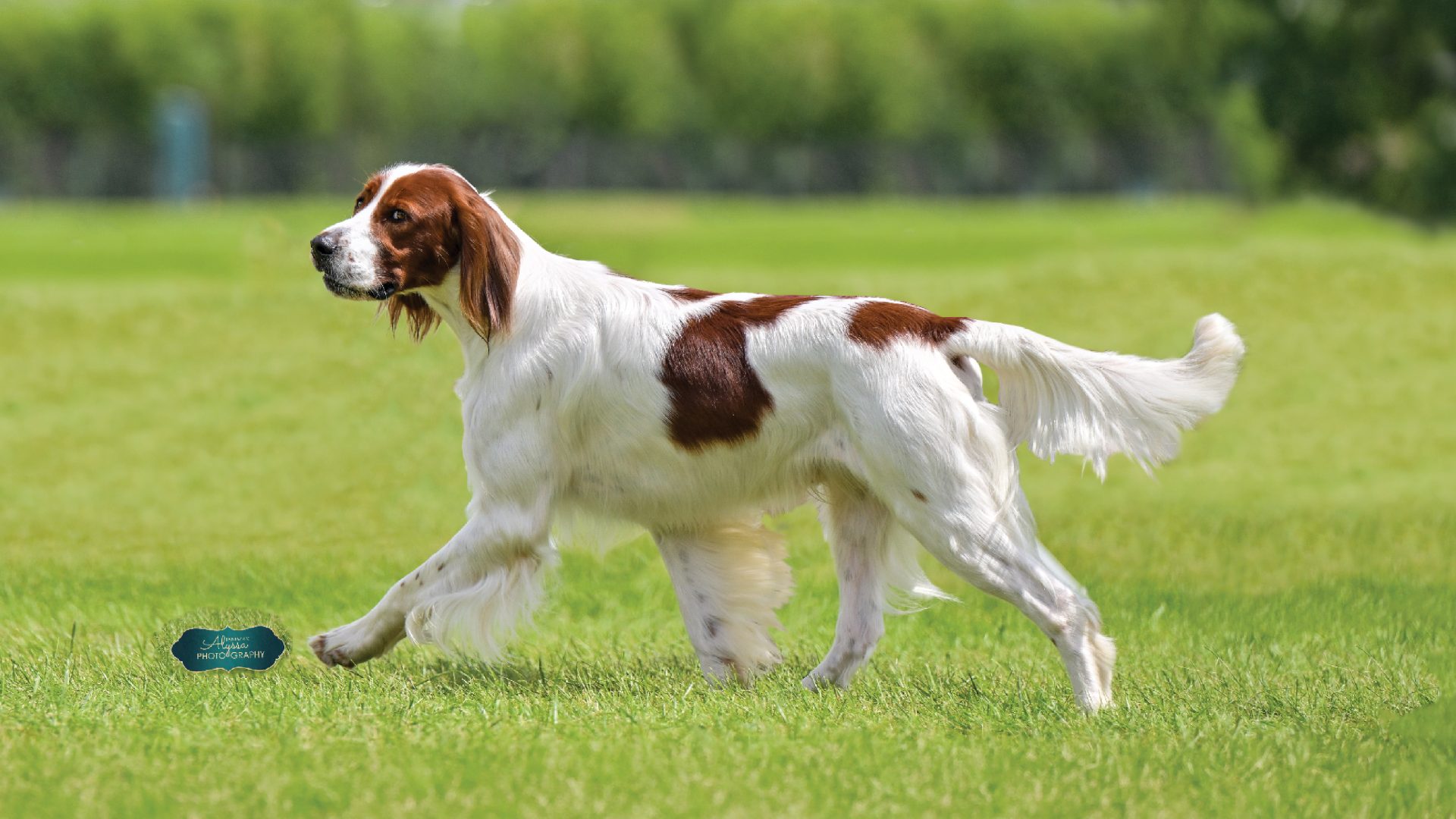
The Irish Red and White Setter is a graceful and athletic bird dog known for its striking coat and exceptional field performance. Bred primarily as a versatile gun dog, this breed combines beauty with function, thriving in both the field and in a family setting. Its warm personality and eagerness to please make it a beloved companion for those who appreciate an active lifestyle.
Highlights
02/History
The Irish Red and White Setter (IRWS) boasts a storied history deeply intertwined with the sporting traditions of Ireland. Originating in the 17th and 18th centuries, the breed was developed as a bird dog, specifically to assist hunters in locating and pointing upland game birds. Referred to as the Rossmore or Arran Setter, early records suggest the breed predates its solid-colored cousin, the Irish Setter.
The distinctive coloring of the IRWS—rich, red patches on a pearly white background—was not only aesthetically pleasing but also practical. The coloration made the dogs highly visible in the field, allowing hunters to keep track of them even in dense cover or challenging terrain. The dogs’ exceptional stamina, keen nose, and cooperative nature earned it widespread popularity among Irish hunters.
However, the IRWS faced a decline in the late 19th and early 20th centuries as the solid red Irish Setter gained favor, both in the field and the show ring. By the early 1900s, the red and white variety was on the brink of extinction. Fortunately, a group of dedicated breeders, particularly Rev. Noble Huston and Dr. R.H. Wallace, worked tirelessly to preserve the breed. Through their efforts, the breed survived and began to reestablish its presence in the canine world.
The Irish Red and White Setter received official recognition by the Irish Kennel Club in the mid-20th century, followed by recognition from the Fédération Cynologique Internationale (FCI). The American Kennel Club (AKC) formally recognized the breed in 2009, placing it in the Sporting Group. Today, the breed enjoys a growing following among enthusiasts who admire its dual purpose as a working partner in the field and an affectionate companion in the home.
03/Appearance
Male Irish Red and White Setters typically stand 24.5 to 26 inches tall at the shoulder, with a weight range of 42 to 60 pounds. Females are slightly smaller, measuring 22.5 to 24 inches in height and weighing between 35 and 50 pounds.
The Irish Red and White Setter is slightly longer than it is tall, giving it a balanced and athletic appearance. Its frame is solid but not overly heavy, allowing for agility and endurance in the field. The breed has a deep chest for lung capacity, a level topline, and strong, well-muscled limbs that support its working abilities.
Texture: The Irish Red and White Setter’s coat is fine and silky, lying flat against the body with a slight wave permissible. Long but not profuse “feathering” covers the back of the legs and the outer flap of the ears. It is reasonably long on the flanks where it extends onto the chest and throat forming a fringe. The tail is well feathered. The coat is short on the head, front of the legs, and on other parts of the body.
Standard Colors
Standard Markings
04/Consider
The Irish Red and White Setter is a high-energy, versatile hunting breed that thrives when both its physical and mental needs are met. Prospective owners should be prepared for its activity levels, intelligence, and deep attachment to its human partners.
Interaction With Family
The level of affection a breed typically shows towards family members and familiar individuals.
Good With Other Dogs
The innate friendliness of a dog towards other dogs can depend on its breed.
Good With Young Children
The degree to which a breed will typically be patient with young children.
Amount Of Shedding
How much hair a breed typically leaves behind on clothes, furniture and floors.
Frequency Of Grooming
How often a breed needs brushing, bathing or a professional trim to stay in condition.
Amount Of Drooling
How prone a breed is to drool, worth knowing before you keep a towel by the door.
Openness To Strangers
How openly a breed tends to greet new people, visitors and strangers.
Protective Nature
How likely a breed is to alert you to anything unfamiliar, and stand between you and it.
Playfulness Level
How enthusiastic a breed stays about games and play well past puppyhood.
Trainability Level
How readily a breed takes direction and works with you rather than around you.
Barking Level
How much a breed uses its voice, and how readily.
Energy Level
How much get-up-and-go a breed brings to an average day.
Health
The Irish Red and White Setter is typically a healthy breed with a lifespan of 11 to 15 years. Regular veterinary care, a nutritious diet, and adequate exercise play key roles in maintaining overall health and well-being.
The Irish Red and White Setter is known for its friendly and outgoing temperament, making it a wonderful companion for families and active individuals. These dogs are highly people-oriented and thrive on attention from their human companions, often forming strong bonds. While they are generally good-natured and gentle, they can be sensitive and may not tolerate harsh corrections.
This breed gets along well with other dogs and can be good with children, especially when socialized to them from an early age. These dogs are typically friendly toward strangers but may retain a slight reserve until they feel comfortable. Due to their strong attachment to their families, they do not do well when left alone for extended periods.
Exercise Expectations
A lack of adequate exercise can lead to boredom, which can manifest as undesirable behaviors, such as chewing or excessive barking. The IRWS is best suited for active families or individuals who can dedicate ample time to fulfilling the dog’s energy needs.
Grooming Expectations
The Irish Red and White Setter is adaptable to various living arrangements, provided it receives adequate exercise and attention. While these dogs can adapt to apartment living, a home with a securely fenced yard is ideal for managing their energy levels.
This breed is better suited to moderate and cooler climates, as they can overheat in extremely hot weather. In cooler weather, their silky coat provides some insulation, though they should not be left outside for prolonged periods in cold temperatures.
The IRWS is happiest when it is part of family activities, requiring a household that can meet the breed’s social and physical needs. These dogs are not well-suited for families that are frequently away or unable to provide mental and physical stimulation each and every day.
05/Puppies
Irish Red and White Setter puppies are lively and curious bundles of joy, requiring early socialization and consistent training to develop into well-rounded adults. Introducing them to new experiences, people, and environments during their early weeks and months is crucial for building confidence and adaptability.
Potential owners should provide a structured routine that balances training, exercise, and rest. These puppies thrive on social interaction and mental stimulation, making them a rewarding choice for dedicated hunters and active families.
Caring for an Irish Red and White Setter puppy involves a combination of proper nutrition, thoughtful training, and regular veterinary care. The IRWS puppy should be fed a high-quality diet designed for large-breed puppies to support healthy growth and prevent rapid weight gain, which can strain developing joints. Meals should be divided into three to four portions per day to avoid overfeeding.
Consistent and positive training should begin as soon as the puppy arrives home. Basic commands, house training, and crate training can be introduced early, using praise and rewards to encourage good behavior. Early leash training is also crucial, as the pup’s energetic and curious nature can lead to pulling or wandering.
Regular veterinary check-ups and vaccinations are vital during the first year of life to monitor growth and overall health. Additionally, establishing a routine for grooming, nail trimming, and dental care from an early age helps the puppy to adjust to these processes and ensures long-term health and hygiene.
The Irish Red and White Setter puppy has high energy levels, but it will also need periods of rest. It’s important to balance exercise with downtime to avoid overexertion. A combination of short play sessions and mental stimulation using puzzle toys or interactive games will help to keep the puppy engaged.
06/Activities
Gallery
07/Standards
The Irish Red and White Setter is recognized by the world's leading registries and kennel organizations, which categorize the breed into a specific Group based on its unique characteristics. This breed is recognized worldwide under the following Group designations:
The ideal Irish Red and White Setter is described by a Breed Standard that is approved by each of the world’s leading registries and kennel organizations. The Breed Standards for this breed may be found in the following links:
08/Clubs
09/Rescue
10/Facts
Ancient Origins
The Irish Red and White Setter is older than the solid-colored Irish Setter, with its origins dating back to at least the 17th century.
Near Extinction
The breed nearly disappeared in the early 20th century, but it was revived thanks to the efforts of breeders like Rev. Noble Huston and Dr. R.H. Wallace.
Practical Coloring
Its red and white coat provides excellent visibility when hunting.
Modern Recognition
The breed gained official recognition from the American Kennel Club (AKC) in 2009, joining the Sporting Group.
11/FAQ
Yes, Irish Red and White Setters shed moderately throughout the year, with more noticeable shedding during seasonal changes. Regular brushing helps to manage the shedding and keeps the coat in good condition.

Written by
Dan Sayers is the Executive Editor of SHOWSIGHT. He is a member of the World Dog Press Association and the Dog Writers Association of America, which recognized his illustrations in the award-winning Encyclopedia of K-9 Terminology. Dan is a longtime supporter of the sport of dogs and an advocate for the conservation of recognized breeds in all their forms and functions. He is a member of the Morris and Essex Kennel Club, and for 45 years, the Irish Water Spaniel Club of America where he serves as AKC Delegate, Archivist, and approved Breed Mentor. Dan breeds under the Quiet Storm prefix and has judged the IWSCA National Specialty Sweepstakes twice.
Official Standard for the Irish Red & White Setter
General Appearance: The Irish Red & White Setter is bred primarily for the field. The standard as set out hereunder must be interpreted chiefly from this point of view and all Judges at Bench Shows must be encouraged to judge the exhibits chiefly from the working standpoint. The appearance is strong and powerful, well balanced and proportioned without lumber; athletic rather than racy with an aristocratic, keen and intelligent attitude.
Size, Proportion & Substance: Dogs are 24½ to 26 inches tall; bitches are 22½ to 24 inches tall. The length of body from point of shoulder to point of buttock is equal or longer than height to top of withers, up to a ratio of 10 L - 9 H. Bone is moderate in proportion to size.
Head: Expression - The gentle expression displays a kindly, friendly attitude. The eyes are dark hazel or dark brown; round or nearly round, with slight prominence and tightly fitted eyelids. The ears are set level with the eyes, well back, lying close to the head. Skull - The skull is broad, in proportion to the body and rounded without showing an occipital protuberance. Stop - The stop is distinct, but not exaggerated. Muzzle - The muzzle is clean and square, of equal length to skull, with parallel planes. Bite - A scissors bite is ideal; a level bite is acceptable.
Neck, Topline & Body: Neck - The neck is moderately long, very muscular, but not too thick, slightly arched, free from all tendency to throatiness. Topline - The topline of the dog, from the withers to the croup should be level, not sloping. The croup should be well rounded and sloping slightly downward to the tailset. Body - The body is strong & muscular with a deep chest and well sprung ribs. The back is very muscular and powerful. Tail - The tail is of moderate length, not reaching below the hock, strong at the root, tapering to fine point; no appearance of ropiness and carried level with or below the back.
Forequarters: Angulation - shoulder blade well laid back with upper arm equal in length and forming a nearly right angle with the shoulder blade. Tips of shoulder blades meeting fairly close, lie flat and are smooth with contours of body. Elbow - The elbows are free, turning neither in nor out. Legs - The forelegs are straight and sinewy, well boned, with strong pasterns. Feet -The feet are close-knit with plenty of feathering between toes.
Hindquarters: The hindquarters are wide and powerful. Legs - The legs are of strong bone, well muscled and sinewy. The thighs, from hip to hock, are long and muscular. The stifle is well bent. The hock is well let down and turns neither in nor out, hocks are of moderate length and strong. Feet - The feet are close-knit with plenty of feathering between toes.
Coat: Long silky fine hair called “Feathering” is present on the back of the fore and hind legs and on the outer ear flap, also a reasonable amount is on the flank extending onto the chest and throat forming a fringe. All feathering is straight, flat and not overly profuse. The tail is well feathered. On the head, front of legs and other parts of the body the hair is short, flat and free from curl but a slight wave is permissible.
Color: The base color is white with solid red patches (clear islands of red color); both colors show the maximum of life and bloom. Flecking but not roaning is permitted around the face and feet and up the foreleg as far as the elbow and up the hind leg as far as the hock. Roaning, flecking and mottling on any other part of the body is objectionable.
Gait: When moving at the trot, the gait is long striding, very lively, graceful and efficient. The head is held high, and the hindquarters drive smoothly and with great power. The forelegs reach well ahead and remain low. Seen from front or rear, the forelegs and hind legs below the hock joint move perpendicularly to the ground with no crossing or weaving.
Grooming: The trimming of an Irish Red and White Setter should be kept to a minimum, maintaining a neat natural appearance and not to be shaved with clippers. Light trimming with thinning shears is allowed. Under the ears, tail, pasterns and hocks may be trimmed for neatness. Feet may be cleared of hair including the bottom and around the edges leaving hair between the toes. No other trimming is allowed including the whiskers which shall remain intact.
Temperament: They display a kindly, friendly attitude, behind which is discernible determination, courage and high spirit.
Faults: Any departure from the foregoing standard is considered a fault and the seriousness of the fault is in exact proportion to its degree.
Approved July 9th, 2019
Effective October 1st, 2019


All About Judging
The Irish Red & White Setter Association breaks down the hunting style and explains how the breed should work in the field.


Meet the Judges
Tyron Atkinson reflects on judging at the Westminster Kennel Club 2026 Dog Show, highlighting breed type, winners, and overall entry quality.

American Kennel Club (AKC)
Claire Wisch Abraham reflects on judging at the 2025 AKC National Championship, highlighting depth of quality and memorable winners.


Meet the Breeders
Lisa Montgomery shares her journey with Irish Red and White Setters, breeding, hunting, judging, and preserving the breed.
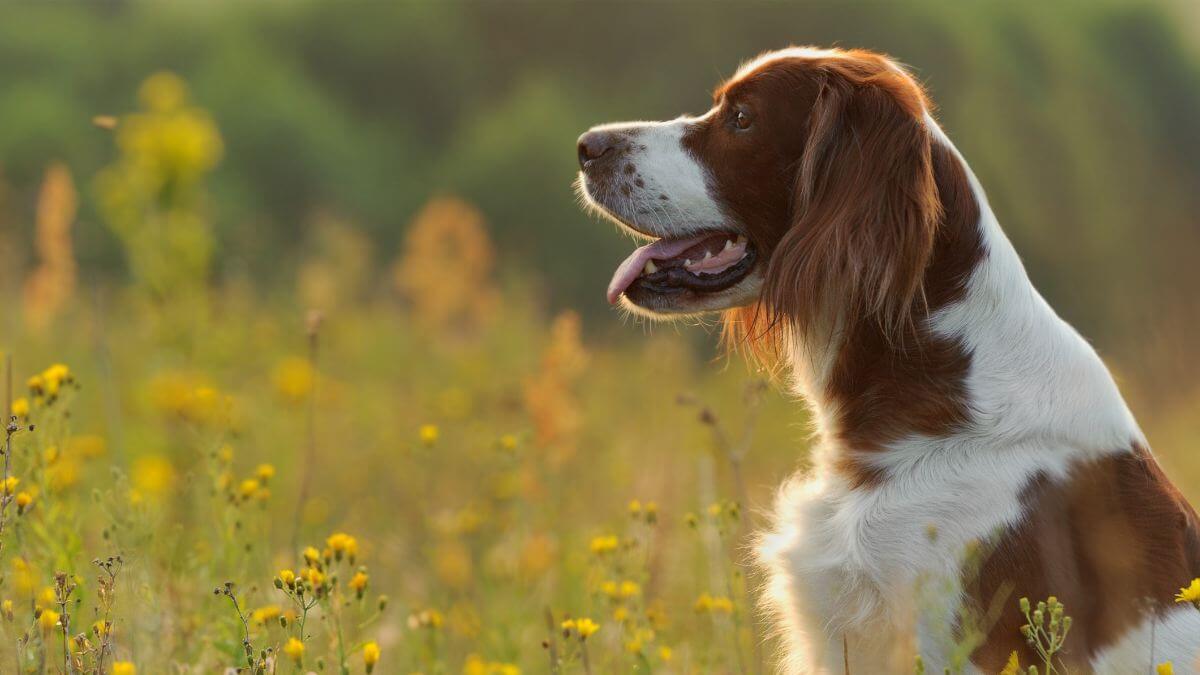
Explore the rich history, hunting prowess, and gentle temperament of the Irish Red and White Setter – your ultimate bird dog.
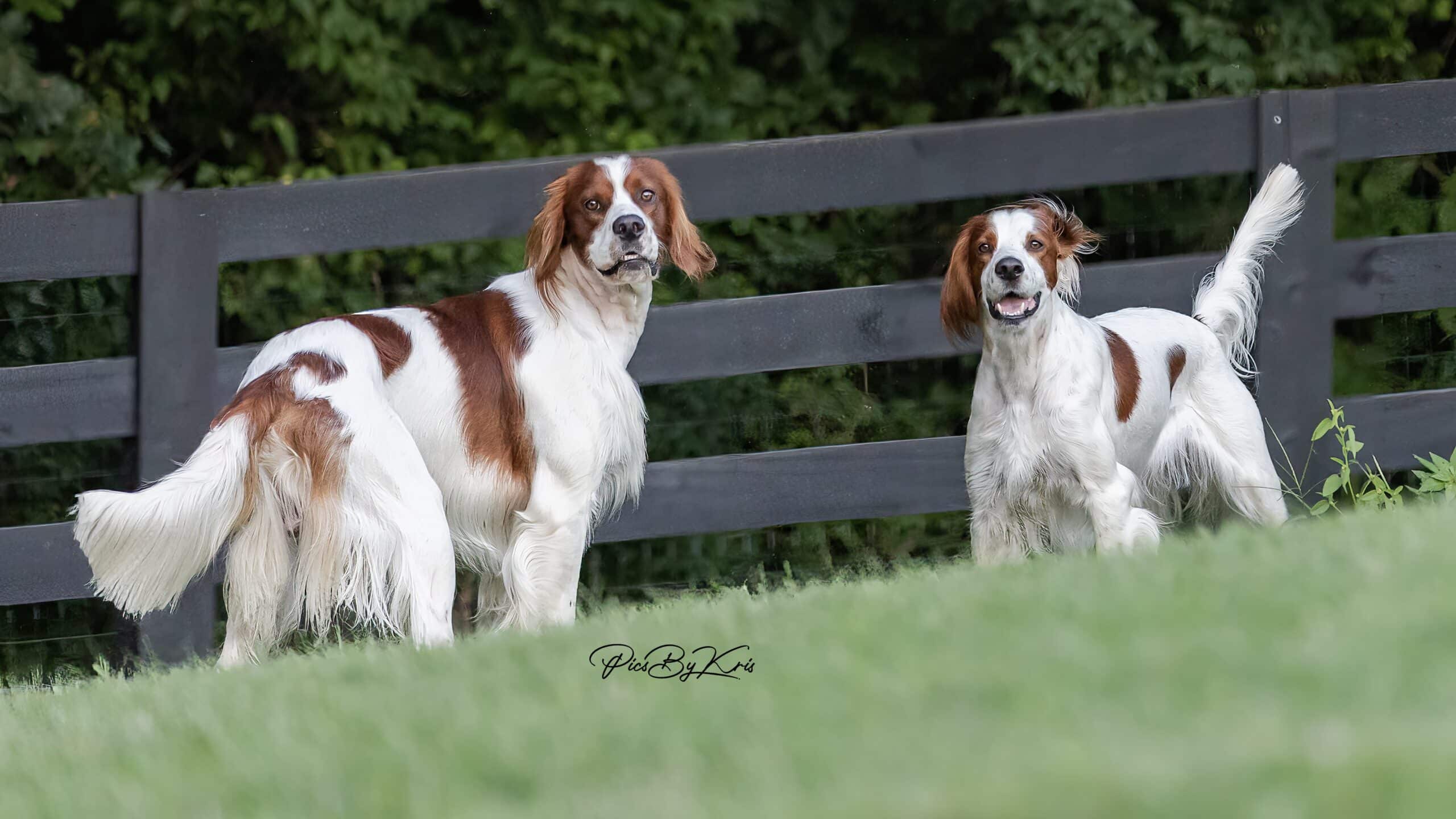
Explore the unique traits of the Irish Red and White Setter, focusing on its strong build, color patterns, and working abilities.
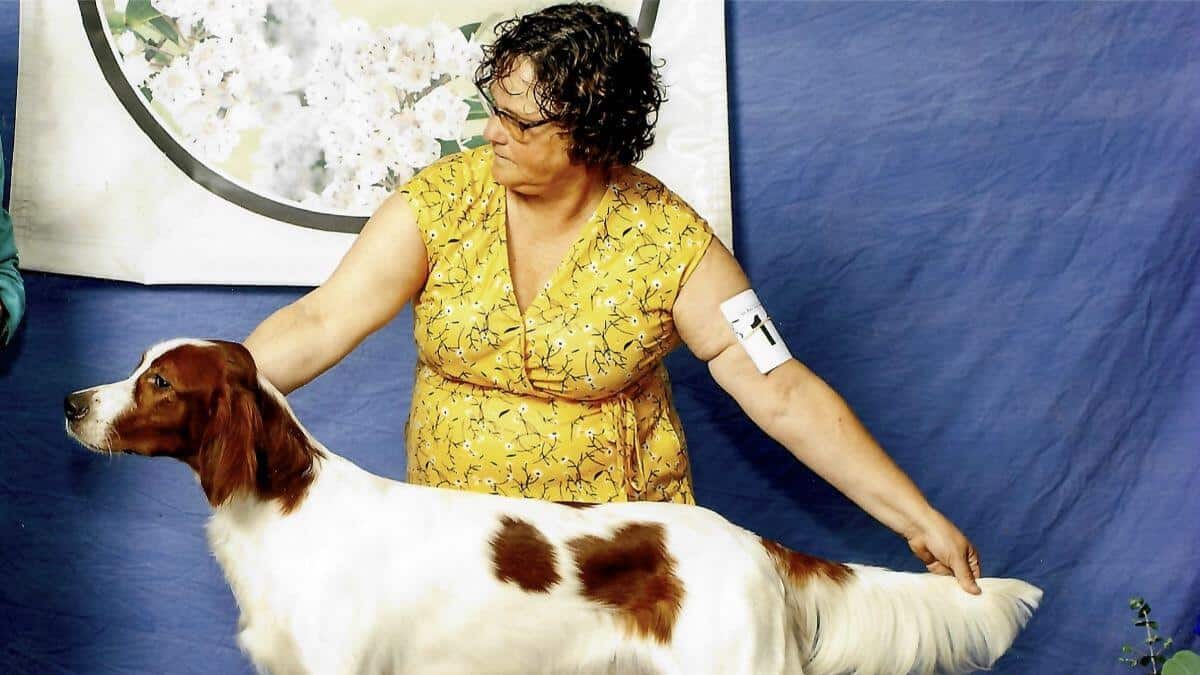
Meet the Breeders
Wendy Bockman is the breeder behind Truly Irish Red and White Setters. Read about the kennel’s beginnings, puppies, and much more!

All About Judging
Learn how the Irish Red and White Setter breed is judged in the Conformation ring and how it differs from its cousin, the Irish Setter.
The tail of the Irish Red and White Setter is of moderate length, not reaching the hock joint. It is set level with the topline and tapers to a fine point. It is strong at the root and is carried horizontally or slightly below the back when the dog is in motion. Feathering adorns the underside of the tail, adding to the breed’s elegant appearance.
A Note About Color: The coat’s color is white with solid red patches (clear “islands”) of red. Both colors show “the maximum of life and bloom.” Red flecking is allowed on the face and feet, and on the forelegs to the elbows and on the rear legs to the hock joint. Roaning is not permitted in the breed, and roaning, flecking, and mottling on any other part of the body is not allowed.
Coat Type
Double, Silky
The structure of the coat this breed carries.
Coat Length
Medium
How long the breed's coat grows when kept in condition.
Adaptability Level
How easily a breed copes with changes in home, routine, noise and weather.
Mental Stimulation Needs
How much a breed needs a job, a puzzle or training to stay content.
Irish Red and White Setters require a high-quality diet that meets their nutritional needs at various life stages; from puppies to adults to seniors. Puppies should be fed a diet specially formulated for their growth phases, split into three to four meals daily to support their development.
For adult dogs, feeding two balanced meals per day is generally recommended, with portion sizes based on the dog’s age, activity level, and metabolism. On average, they consume around 2 to 3 cups of high-quality dog food per day, but this can vary depending on individual needs. Weight gain should be monitored and adjustments made to avoid overfeeding.
The Irish Red and White Setter is an intelligent and eager-to-please breed, making training a rewarding experience. These dogs respond best to positive reinforcement techniques, such as treats, praise, and play, as they can be sensitive to harsh corrections. Early training and socialization are essential to develop good manners and instill confidence.
These dogs are naturally curious and have a moderate need to roam, so training a reliable recall is crucial. Their hunting instincts may also lead to a strong prey drive, making supervision important in open areas. While generally eager learners, they can occasionally exhibit an independent streak, requiring patience and consistency during training sessions.
The feathering on their ears, chest, legs, and tail should be carefully maintained to prevent tangles. Regular cleaning of the ears is essential to reduce the risk of infections, especially since their drop ears can trap moisture. Nail trimming, dental care, and routine bathing complete their grooming regimen.