Members
01/Overview
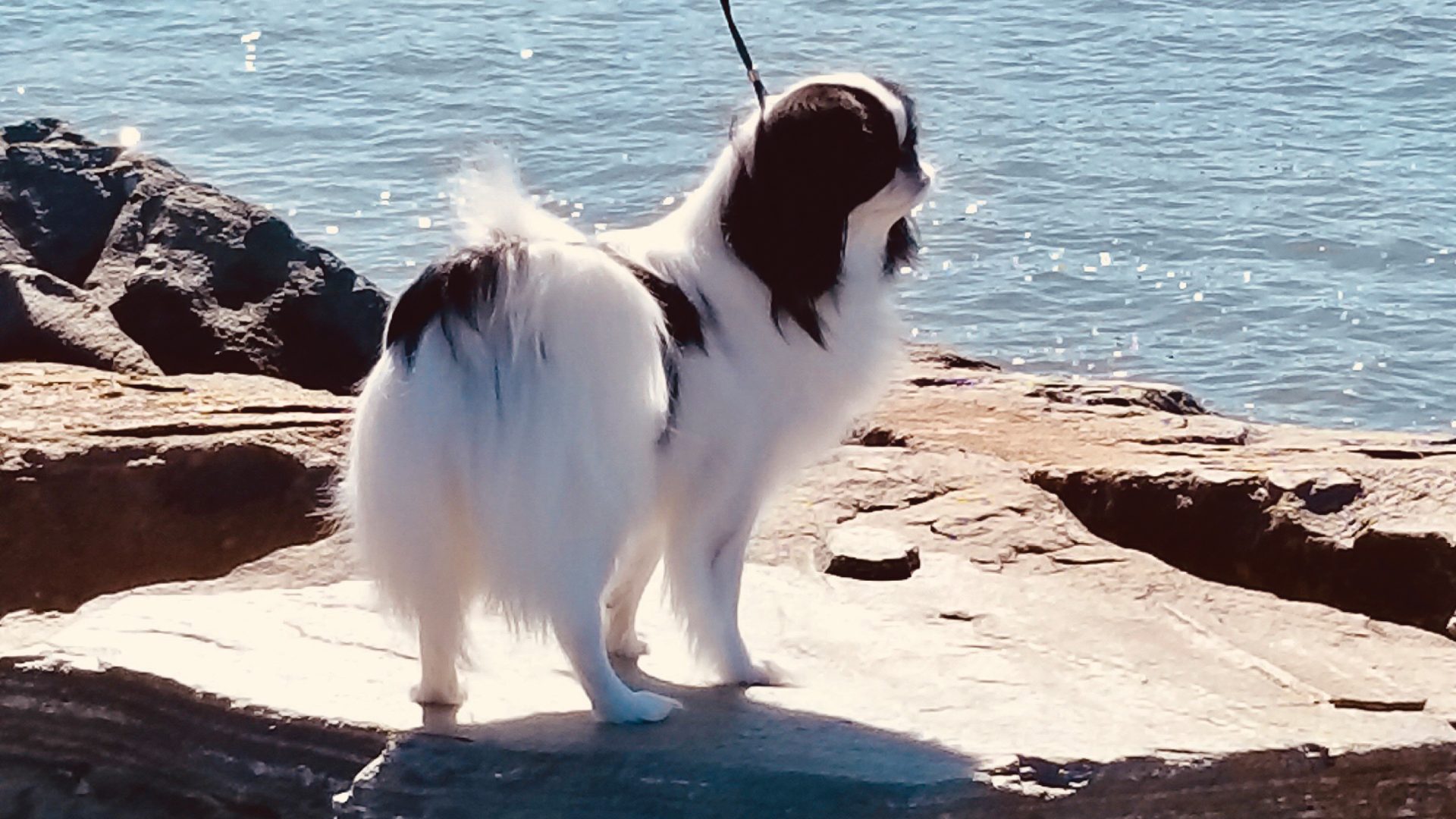
The Japanese Chin is a small, elegant companion breed known for its distinctive expression, silky coat, plumed tail, and graceful movement. The breed is affectionate, intelligent, sensitive, and often described as having a somewhat cat-like personality because of its independence, cleanliness, and habit of climbing onto elevated surfaces.
Highlights
02/History
The Japanese Chin has an ancient history in Asia, although its exact origins are not completely documented. Despite its name, the breed is believed to have developed from small companion dogs that originated in China and were later introduced to Japan, where they became closely associated with the imperial court and aristocracy.
Small dogs of this general type were treasured throughout East Asia for centuries and were often exchanged as valuable gifts among members of royal and noble families. Once established in Japan, the breed was carefully maintained as a companion dog and became an important part of court life.
Japanese breeders refined the Chin into the elegant, compact dog recognized today. The breed was valued primarily for companionship rather than for hunting, guarding, or other working purposes. Its refined appearance, lively expression, and distinctive movement reflected its long association with noble households.
The Japanese Chin began attracting attention in Europe and North America during the nineteenth century as trade and diplomatic contact with Japan increased. Dogs were brought to Western countries as gifts and imports, helping establish breeding populations outside Asia.
The American Kennel Club recognized the breed in 1888 under the name Japanese Spaniel. The name was officially changed to Japanese Chin in 1977, reflecting the breed’s traditional identity more accurately.
The Japanese Chin Club of America serves as the breed’s AKC parent club. The Fédération Cynologique Internationale also recognizes the Japanese Chin and places it in Group 9, Companion and Toy Dogs.
03/Appearance
An adult Japanese Chin stands about 8 to 11 inches tall at the withers and typically weighs between 7 and 11 pounds.
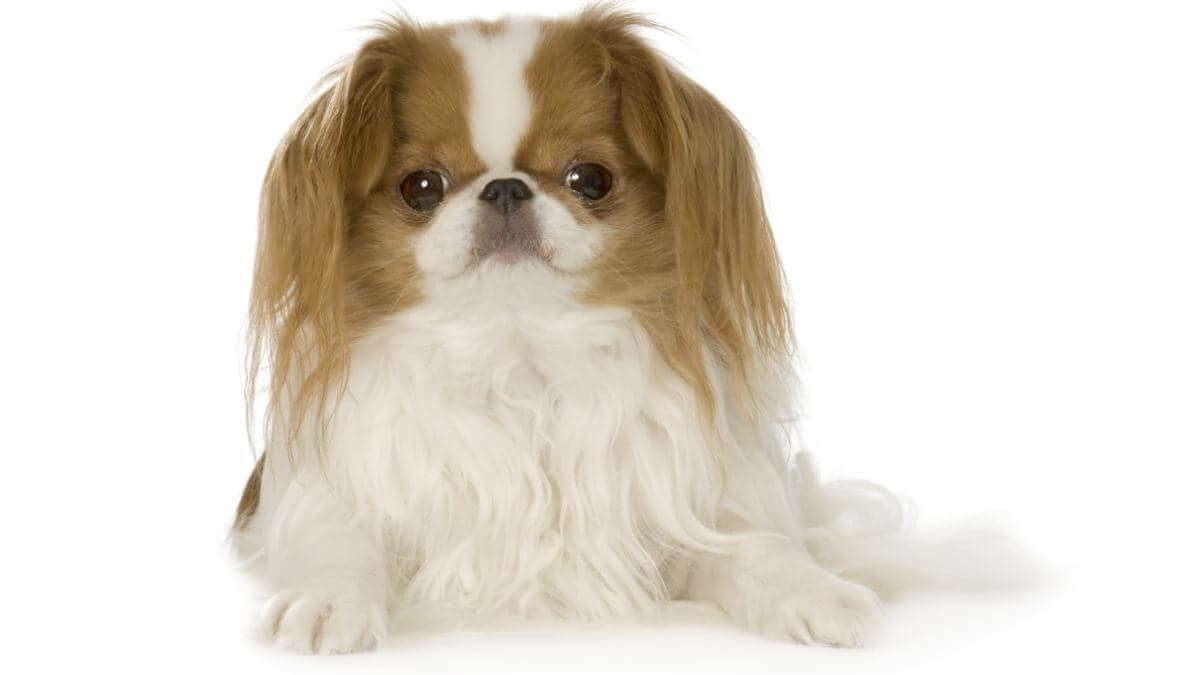
Skull: The Japanese Chin has a broad, rounded skull that is large in proportion to the body. The forehead is prominent, contributing to the breed’s distinctive expression.
Expression: The expression is bright, curious, and characteristic of the breed, with a soft and somewhat astonished appearance.
Eyes: The eyes are large, dark, round, and set wide apart. A small amount of white may show in the inner corners, which contributes to the characteristic Japanese Chin expression.
Ears: The ears are small, V-shaped, set wide apart and high on the head, and carried hanging forward. They are well feathered with long, silky hair.
Muzzle: The muzzle is short, broad, and well cushioned, with the nose positioned high between the eyes.
Nose: The nose is broad with open nostrils. Pigmentation is black in black-and-white dogs and may correspond with the coat color in other color varieties.
Bite: The Japanese Chin typically has a slightly undershot bite, with the jaw broad and the teeth set evenly.
The Japanese Chin is a small, well-balanced, square-proportioned Toy breed with a refined and elegant appearance. The body is compact, with the height at the withers approximately equal to the length of the body.
The breed has fine but sufficient bone, with a level back, moderately broad chest, and a body that should appear light and graceful without seeming fragile. Overall balance, symmetry, and a distinctly aristocratic outline are important characteristics of the breed.
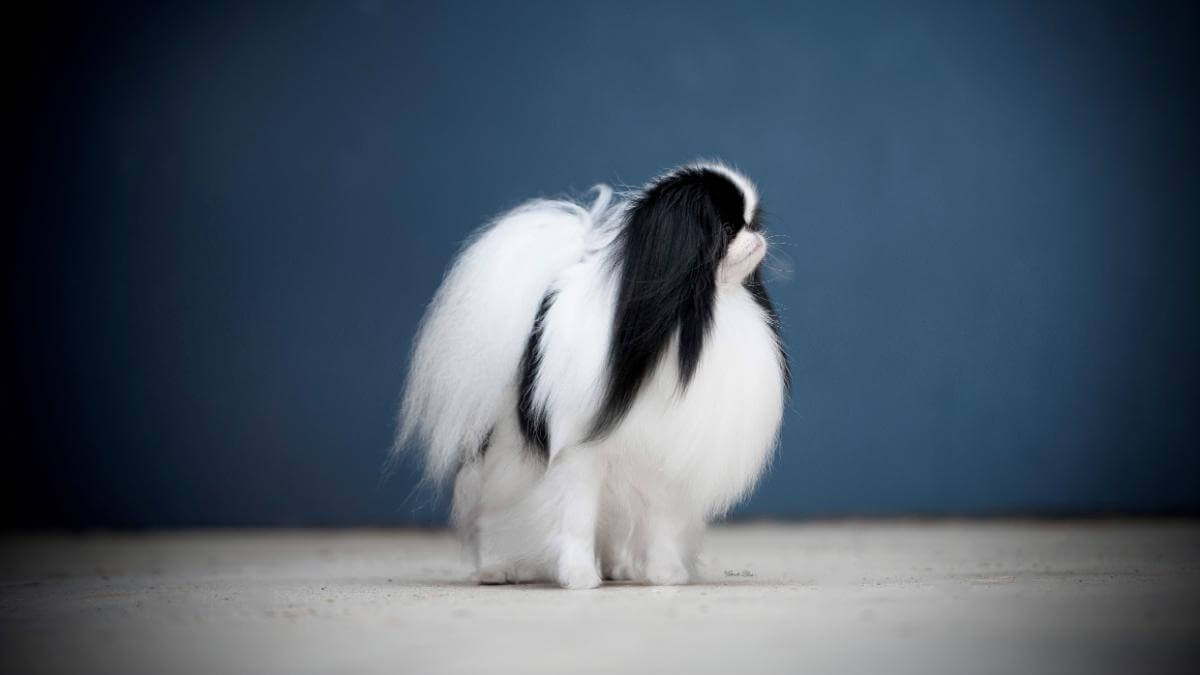
Texture: The Japanese Chin has a single, straight, silky coat with a fine texture. The coat is abundant around the neck, shoulders, chest, ears, and tail, creating a refined and elegant appearance without appearing woolly or overly heavy.
Standard Colors
Standard Markings
04/Consider
The Japanese Chin is affectionate, sensitive, intelligent, and closely attached to its family. Anyone considering the breed should be prepared for gentle handling, early socialization, regular grooming, and moderate daily activity suited to a small companion dog.
Interaction With Family
The level of affection a breed typically shows towards family members and familiar individuals.
Good With Other Dogs
The innate friendliness of a dog towards other dogs can depend on its breed.
Good With Young Children
The degree to which a breed will typically be patient with young children.
Amount Of Shedding
How much hair a breed typically leaves behind on clothes, furniture and floors.
Frequency Of Grooming
How often a breed needs brushing, bathing or a professional trim to stay in condition.
Amount Of Drooling
How prone a breed is to drool, worth knowing before you keep a towel by the door.
Openness To Strangers
How openly a breed tends to greet new people, visitors and strangers.
Protective Nature
How likely a breed is to alert you to anything unfamiliar, and stand between you and it.
Playfulness Level
How enthusiastic a breed stays about games and play well past puppyhood.
Trainability Level
How readily a breed takes direction and works with you rather than around you.
Barking Level
How much a breed uses its voice, and how readily.
Energy Level
How much get-up-and-go a breed brings to an average day.
Health
The Japanese Chin is generally a healthy breed, with a typical lifespan of 10 to 12 years. Preventive veterinary care, balanced nutrition, regular exercise, good dental hygiene, and maintenance of a healthy weight can help support long-term health.
The Japanese Chin is affectionate, sensitive, intelligent, and usually closely attached to its family. The breed tends to be gentle and refined, with a calm indoor manner balanced by brief periods of playful energy.
Many Chin are observant and somewhat independent. They may choose a favorite person but can still be affectionate with the entire household. The breed is often described as cat-like because of its cleanliness, agility, and tendency to perch on furniture or other elevated places.
Early socialization helps the Japanese Chin become comfortable with unfamiliar people, dogs, sounds, and environments. Harsh handling or overly forceful training should be avoided because the breed generally responds best to calm and patient interaction.
Exercise Expectations
A healthy adult Chin often benefits from about 20 to 40 minutes of activity each day, divided into shorter sessions. Games, trick training, and gentle exploration can provide additional mental stimulation. Because of the breed’s short muzzle and small size, exercise should be moderated in hot or humid weather. Care should also be taken around high furniture, stairs, and rough play that could lead to injury.
Grooming Expectations
The Japanese Chin is well suited to apartment or house living because of its small size and moderate exercise needs. The breed generally prefers being indoors with its family and is not well suited to spending long periods alone outdoors.
Chin often enjoy quiet households and comfortable resting places, including sofas, chairs, and other elevated surfaces. Their delicate build makes careful handling important, especially around young children or much larger dogs.
The breed usually does best with people who appreciate a gentle, affectionate, and somewhat independent companion. Regular interaction, a calm routine, and moderate daily activity help the Japanese Chin settle comfortably into family life.
05/Puppies
Japanese Chin puppies are affectionate, curious, playful, and sensitive. They benefit from gentle handling, early socialization, consistent routines, and short training sessions that help build confidence without overwhelming them.
A Japanese Chin puppy should have a predictable daily routine that includes regular meals, potty breaks, naps, play, training, and quiet time. A crate or secure puppy area can provide a safe place to rest and can also support housetraining.
Early socialization should introduce the puppy to different people, well-mannered dogs, household sounds, surfaces, vehicles, and unfamiliar environments. These experiences should remain positive and appropriate for the puppy’s age.
Training can begin as soon as the puppy arrives home. Short sessions can focus on name response, recall, leash walking, basic manners, house training, and calm behavior around visitors. Because the breed is sensitive, patient and reward-based methods are usually the most effective.
A Chin puppy should receive a complete and balanced diet formulated for growth. Young puppies generally do best with several small meals throughout the day before gradually transitioning to an adult feeding schedule.
Exercise should include supervised play, short walks, and gentle exploration rather than strenuous or repetitive activity. Care should be taken around stairs, high furniture, rough play, and hot or humid weather because of the breed’s small size and short muzzle.
Regular veterinary visits are important during the first year. Grooming routines such as brushing, nail trimming, ear checks, facial cleaning, and tooth brushing should also begin early so the puppy becomes comfortable with regular handling.
06/Activities
Japanese Chins are intelligent, agile, and responsive dogs that can enjoy activities combining movement, focus, and close interaction with a handler. Here are some of the dog sports and activities in which Japanese Chins may participate:
Agility: Japanese Chins can use their balance, coordination, and quick reactions while navigating appropriately sized obstacle courses.
Obedience: Obedience Trials allow the breed to demonstrate focus, responsiveness, and cooperation with a handler.
Rally: Rally Obedience combines obedience exercises with movement through a designated course and can be a good fit for the breed’s intelligence and sensitivity.
Scent Work: Japanese Chins can use their sense of smell to locate specific odors hidden in containers, indoor spaces, outdoor areas, or vehicles.
Fast CAT: This timed 100-yard dash gives the Japanese Chin an opportunity to run in a controlled setting.
Conformation Shows: Japanese Chins compete in Conformation Shows, where judges evaluate each dog according to the Breed Standard, including structure, movement, coat, expression, temperament, and overall type.
Trick Dog: Trick training provides mental stimulation and gives the Japanese Chin an enjoyable way to use its intelligence and problem-solving ability.
Therapy Work: A calm, friendly, and well-socialized Japanese Chin may participate in therapy visits to hospitals, schools, assisted living facilities, and other settings.
Canine Good Citizen: Japanese Chins may participate in programs that evaluate everyday manners, social behavior, and reliability around people and other dogs.
Gallery
07/Standards
The Japanese Chin is recognized by the world’s leading registries and kennel organizations, which categorize the breed into a specific Group based on its unique characteristics. This breed is recognized worldwide under the following Group designations:
The ideal Japanese Chin is described by a Breed Standard that is approved by each of the world’s leading registries and kennel organizations. The Standards for this breed may be found in the following links:
08/Clubs
Japanese Chin clubs support breed education, responsible breeding, health initiatives, Conformation shows, Performance events, and adherence to the Breed Standard.
Japanese Chin Club of America: The club traces its origins back to the establishment of the original Japanese Spaniel Club in 1883, which later reorganized and evolved into today's official parent club recognized by the AKC.
The Japanese Chin Club UK: Founded in 1895, the breed club in the UK is dedicated to promoting and preserving the Japanese Chin through dog shows and educational initiatives.
09/Rescue
Breed-specific rescue organizations help Japanese Chins that have been surrendered, abandoned, or found in shelters. These groups may provide foster care, veterinary treatment, behavioral evaluation, and placement with an appropriate adoptive family.
Japanese Chin Club of America Rescue Resources: The breed’s AKC parent club can provide rescue contacts, referrals, or guidance for Japanese Chins needing placement.
Japanese Chin Care and Rescue Effort (JCCARE): A nonprofit rescue organization dedicated to helping Japanese Chins in need across the United States through foster care, rehabilitation, and adoption.
Japanese Chins may also be found through local shelters, toy breed rescue organizations, and national adoption databases. These resources can provide additional options for people interested in adopting a Japanese Chin or Chin mix.
10/Facts
The Breed Has Ancient Asian Roots
The Japanese Chin has a long history as a companion dog in East Asia and became closely associated with Japanese nobility and the imperial court.
Originally Called the Japanese Spaniel in the United States
The American Kennel Club recognized the breed in 1888 as the Japanese Spaniel. The name was officially changed to Japanese Chin in 1977.
Known for a Cat-Like Personality
Japanese Chins are often described as cat-like because of their cleanliness, independence, and tendency to climb onto furniture or other elevated places.
Distinctive Wide-Set Eyes
The breed is known for its large, dark eyes, with a small amount of white sometimes visible in the inner corners, contributing to its characteristic expression.
11/FAQ
Japanese Chins can make excellent pets for people who want an affectionate, gentle, and intelligent companion. They usually do best in homes where they receive regular interaction and are handled with care.

Written by
Dan Sayers is the Executive Editor of SHOWSIGHT. He is a member of the World Dog Press Association and the Dog Writers Association of America, which recognized his illustrations in the award-winning Encyclopedia of K-9 Terminology. Dan is a longtime supporter of the sport of dogs and an advocate for the conservation of recognized breeds in all their forms and functions. He is a member of the Morris and Essex Kennel Club, and for 45 years, the Irish Water Spaniel Club of America where he serves as AKC Delegate, Archivist, and approved Breed Mentor. Dan breeds under the Quiet Storm prefix and has judged the IWSCA National Specialty Sweepstakes twice.
Official Standard of the Japanese Chin
General Appearance: The Japanese Chin is a small, well balanced, lively, aristocratic toy dog with a distinctive Oriental expression. It is light and stylish in action. The plumed tail is carried over the back, curving to either side. The coat is profuse, silky, soft and straight. The dog's outline presents a square appearance.
Size, Proportion, Substance: Size - Ideal size is 8 to 11 inches at the highest point of the withers. Proportion - Length between the sternum and the buttock is equal to the height at the withers. Substance - Solidly built, compact, yet refined. Carrying good weight in proportion to height and body build.
Head: Expression - bright, inquisitive, alert, and intelligent. The distinctive Oriental expression is characterized by the large broad head, large wide-set eyes, short broad muzzle, ear feathering, and the evenly patterned facial markings. Eyes - set wide apart, large, round, dark in color, and lustrous. A small amount of white showing in the inner corners of the eyes is a breed characteristic that gives the dog a look of astonishment. Ears - hanging, small, V-shaped, wide apart, set slightly below the crown of the skull. When alert, the ears are carried forward and downward. The ears are well feathered and fit into the rounded contour of the head. Skull - large, broad, slightly rounded between the ears but not domed. Forehead is prominent, rounding toward the nose. Wide across the level of the eyes. In profile, the forehead and muzzle touch on the same vertical plane of a right angle whose horizontal plane is the top of the skull. Stop -deep. Muzzle - short and broad with well-cushioned cheeks and rounded upper lips that cover the teeth. Nose - very short with wide, open nostrils. Set on a level with the middle of the eyes and upturned. Nose leather is black in the black and white and the black and white with tan points, and is self-colored or black in the red and white. Bite - The jaw is wide and slightly undershot. A dog with one or two missing or slightly misaligned teeth should not be severely penalized. The Japanese Chin is very sensitive to oral examination. If the dog displays any hesitancy, judges are asked to defer to the handler for presentation of the bite.
Neck, Topline, Body: Neck - moderate in length and thickness. Well set on the shoulders enabling the dog to carry its head up proudly. Topline - level. Body - square, moderately wide in the chest with rounded ribs. Depth of rib extends to the elbow. Tail - set on high, carried arched up over the back and flowing to either side of the body.
Forequarters: Legs - straight, and fine boned, with the elbows set close to the body. Removal of dewclaws is optional. Feet - hare-shaped with feathering on the ends of the toes in the mature dog. Point straight ahead or very slightly outward.
Hindquarters: Legs - straight as viewed from the rear and fine boned. Moderate bend of stifle. Removal of dewclaws is optional. Feet - hare-shaped with feathering on the ends of the toes in the mature dog. Point straight ahead.
Coat: Abundant, straight, single, and silky. Has a resilient texture and a tendency to stand out from the body, especially on neck, shoulders, and chest areas where the hair forms a thick mane or ruff. The tail is profusely coated and forms a plume. The rump area is heavily coated and forms culottes or pants. The head and muzzle are covered with short hair except for the heavily feathered ears. The forelegs have short hair blending into profuse feathering on the backs of the legs. The rear legs have the previously described culottes, and in mature dogs, light feathering from hock joint to the foot.
Color: Either black and white, red and white, or black and white with tan points. The term tan points shall include tan or red spots over each eye, inside the ears, on both cheeks, and at the anal vent area if displaying any black. The term red shall include all shades of red, orange, and lemon, and sable, which includes any aforementioned shade intermingled or overlaid with black. Among the allowed colors there shall be no preference when judging. A clearly defined white muzzle and blaze are preferable to a solidly marked head. Symmetry of facial markings is preferable. The size, shape, placement or number of body patches is not of great importance. The white is clear of excessive ticking. Disqualification - any color not listed.
Gait: Stylish and lively in movement. Moves straight with front and rear legs following in the same plane.
Temperament: A sensitive and intelligent dog whose only purpose is to serve man as a companion. Responsive and affectionate with those it knows and loves but reserved with strangers or in new situations.
Disqualifications: Any color not listed.
Approved October 11, 2011
Effective November 30, 2011


Meet the Judges
Connie Clark reflects on judging Toy breeds at Westminster 2026, highlighting entry quality, assignments, and Group success.


Meet the Breeders
Scott Toney, breeder behind the Midwood Japanese Chin, shares his journey, mentors, breeding philosophy, and insights on the breed’s future.


Discover 5 fascinating facts about the Japanese Chin, from ancient origins to their “woo” sound and royal pampering by Geishas and queens.

The Japanese Chin is a small, elegant, and affectionate companion—perfect for families, singles, or seniors seeking a loyal lap dog.
Dog Sports
Discover the joy of Japanese Chins—agile, loving, and full of personality. A breed that will keep you laughing!
Explore the elegance and charm of the Japanese Chin, a regal Toy breed known for its graceful appearance and affectionate nature.


Specialty & Group Club News
Join us for the 2024 Japanese Chin Club of America National Specialty in Portland, Oct 23-25. Enjoy parades, competitions, and many shows!


Meet the Breeders
Marisa Capozzo Schmidt of Dizzy shares her insights on Japanese Chin, show puppy selection, breed trends, and the dog show community.
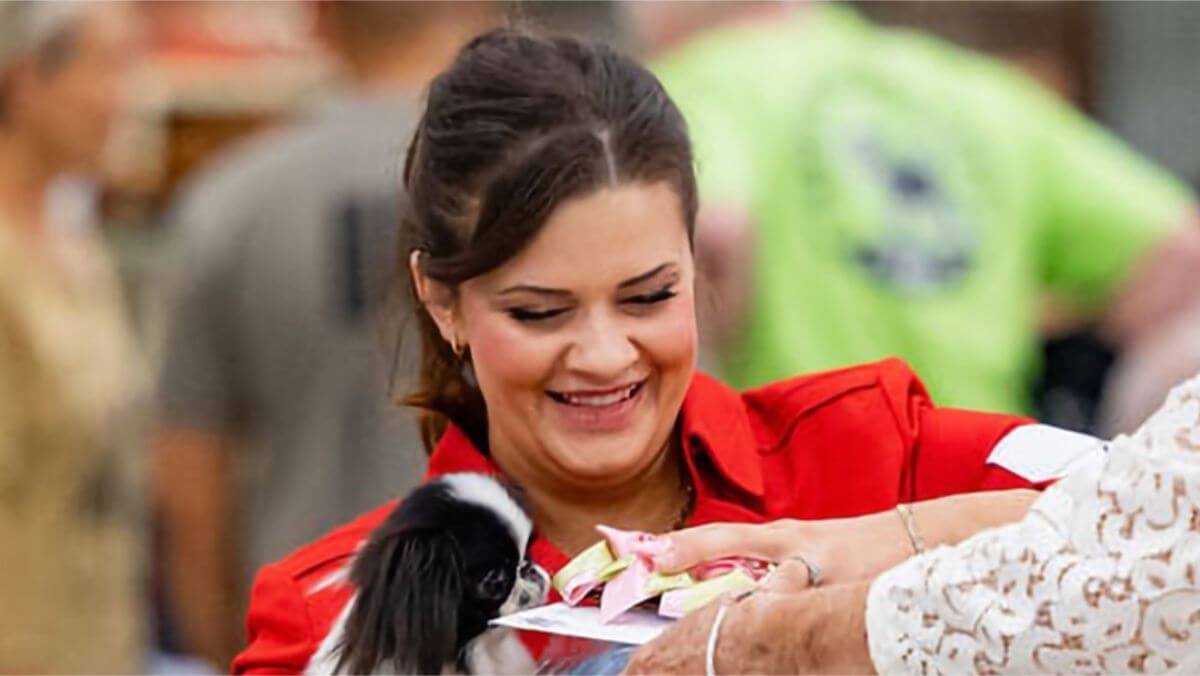
Meet the Breeders
Jamie Moreno of Carousel shares her insights on Japanese Chin, show puppy selection, breed trends, and the dog show community.
The tail is set high and carried arched over the back, with abundant long, silky feathering. Its plumed appearance is an important part of the breed’s elegant and balanced outline.
A Note About Color: The Japanese Chin may be either black and white, red and white, or black and white with tan points. The term “tan points” shall include tan or red spots over each eye, inside the ears, on both cheeks, and at the anal vent area if displaying any black. The term “red” shall include all shades of red, orange, and lemon, and sable, which includes any aforementioned shade intermingled or overlaid with black. A clearly defined white muzzle and blaze are preferable to a solidly marked head. Symmetry of facial markings is preferable. The size, shape, placement or number of body patches is not of great importance. The white is clear of excessive ticking. Any color not listed is a disqualification in the show ring.
Coat Type
Silky
The structure of the coat this breed carries.
Coat Length
Medium
How long the breed's coat grows when kept in condition.
Adaptability Level
How easily a breed copes with changes in home, routine, noise and weather.
Mental Stimulation Needs
How much a breed needs a job, a puzzle or training to stay content.
A Japanese Chin should receive a complete and balanced diet appropriate for the dog’s age, activity level, and body condition. Portions should be measured carefully because excess weight can place additional strain on the joints and cardiovascular system.
Most adults do well with two measured meals per day, while puppies may need three or four smaller meals as they grow. Treats can be useful during training but should remain a modest part of the dog’s total daily calorie intake.
Fresh water should always be available. Maintaining a lean body condition can help support mobility, breathing comfort, and overall health.
The Japanese Chin is intelligent and capable of learning quickly, although the breed can sometimes be independent or easily bored by repetition. Short, positive training sessions usually produce the best results.
Reward-based methods using food, praise, toys, or play can help maintain interest. Early lessons should include recall, leash manners, house training, basic cues, and calm behavior around visitors and other dogs.
Because the Japanese Chin is sensitive, training should remain patient and consistent. Gentle encouragement tends to be more effective than corrections or pressure.
Extra attention should be given to the ears, chest, legs, and tail, where longer hair can tangle more easily. Bathing can be done as needed, followed by thorough drying and gentle brushing. Nails should be trimmed regularly, ears should be checked for debris or irritation, and teeth should be brushed routinely. The facial area should also be kept clean, particularly around the eyes and skin folds.