Members
01/Overview
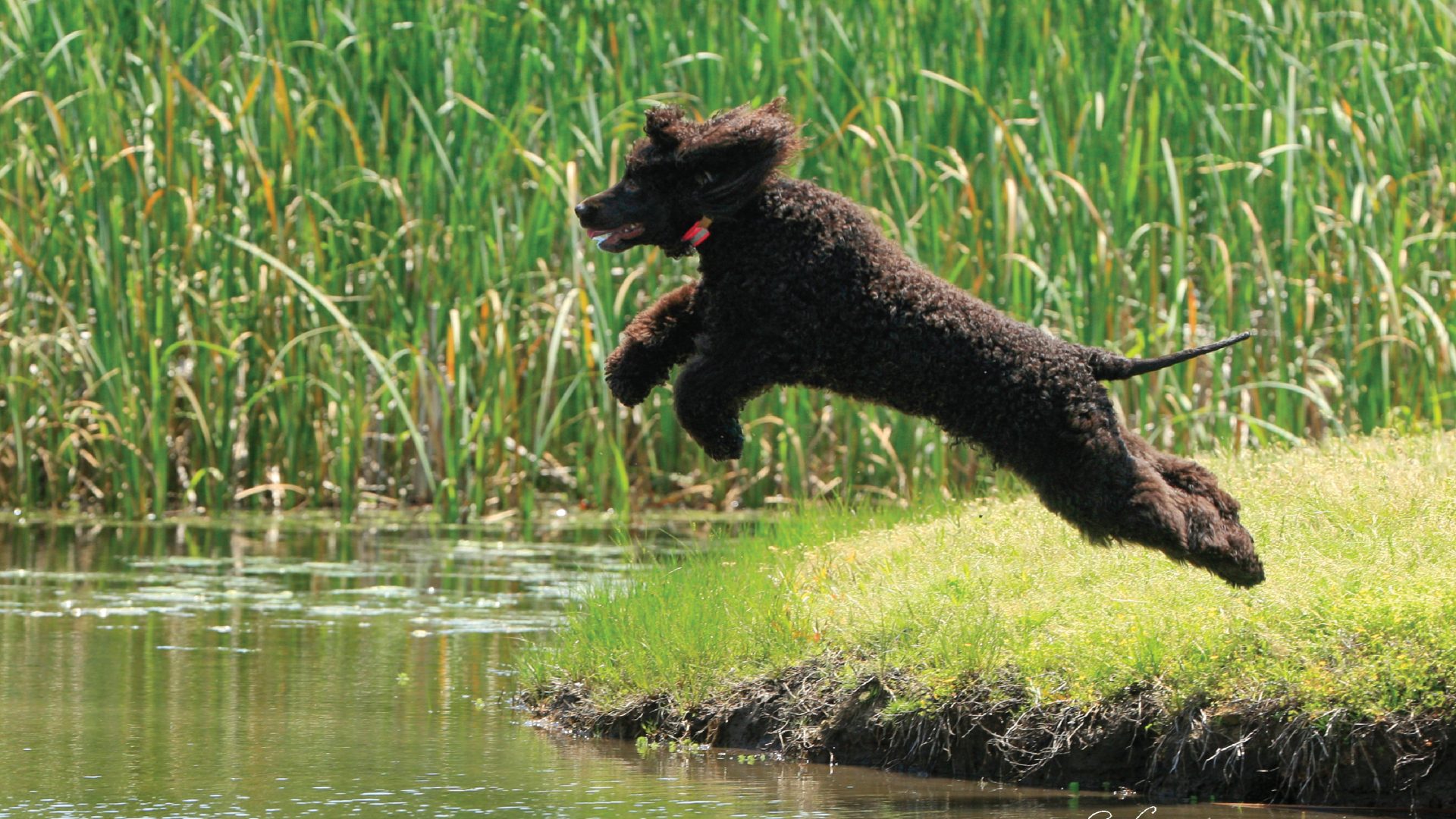
Considered the tallest of the recognized spaniel breeds, the Irish Water Spaniel (IWS) is further distinguished from its cousins by a distinctive topknot, a crisply curled coat with a purplish hue, and a tapering "rat tail." Originally bred in Ireland as a versatile bird dog, the breed remains adept at flushing gamebirds and retrieving on land and in the water. Known for their loyalty and trainability, these dogs typically make extraordinary companions for active households that are able to accommodate the breed's high energy and grooming needs. Most IWS today can adapt well to family life, expressing both their intelligence and their sensitivity in everything they do.
Highlights
02/History
The Irish Water Spaniel (IWS) has a rich history, being one of nine native Irish breeds. Standardized as a unique purebred by the early 19th century, the exact origin of Eire's waterfowl retriever is a topic of intrigue among canine historians. Some argue the breed descends from indigenous dogs (whose ancestors were perhaps brought to the island by traders from the Middle East), whereas others suggest a more recent development through crosses of local spaniels with various Continental breeds. Precise documentation on the breed's ancestry has always been scarce; however, the characteristics that distinguish this water spaniel from all other breeds have been well documented for roughly two centuries.
Historically, the Irish Water Spaniel has been prized for its versatility. Initially bred for retrieving game from lakes and rivers as well as in the open ocean and water-soaked bogs, the breed's skillset was not limited to aquatic environments. The IWS has also excelled as a hunting companion on land, aided by its acute sense of smell and innate retrieving instincts. The breed's unique coat, although perfectly suited for protecting the dog in cold water, has always been a hindrance in thorny brush and dense cover.
The early recognition of the IWS by major kennel clubs underscores the breed's distinctiveness within the contemporary canine world. American Kennel Club recognition, in 1878, represents one of the earliest registrations of any breed in the United States, reflecting the breed's established presence and its popularity among both hunters and dog show enthusiasts.
Despite its early acclaim and adaptability, the Irish Water Spaniel has become a rarity in modern times. Nonetheless, this rather unusual breed is cherished by discerning enthusiasts in North America, Great Britain, Scandinavia, Northern Europe, and of course, in Ireland where it is considered vulnerable to extinction. However, despite the breed's uncommon status throughout the world, its striking appearance and exuberant personality still garner attention wherever it is found.
03/Appearance
An adult male Irish Water Spaniel typically stands at a height of 22 to 24 inches tall at the withers, whereas a mature female is slightly shorter, usually measuring between 21 and 23 inches.
In terms of weight, a male generally weighs between 55 and 68 pounds, while a female typically falls in the range of 45 to 58 pounds.
The Irish Water Spaniel is a harmonious blend of proportion and substance, in moderation. These dogs possess a body that is slightly longer than tall, giving them a robust and off-square appearance in profile. Their general construction exhibits a combination of power and endurance, ensuring they can perform tirelessly whether in the field or in water. The chest is deep with well-sprung ribs, providing ample lung capacity, and the overall musculature is well-developed yet never bulky. This conformation allows for both speed and agility while working. The general appearance of the IWS is one of a well-built, athletic dog that is capable of performing the demanding tasks for which it was originally bred.
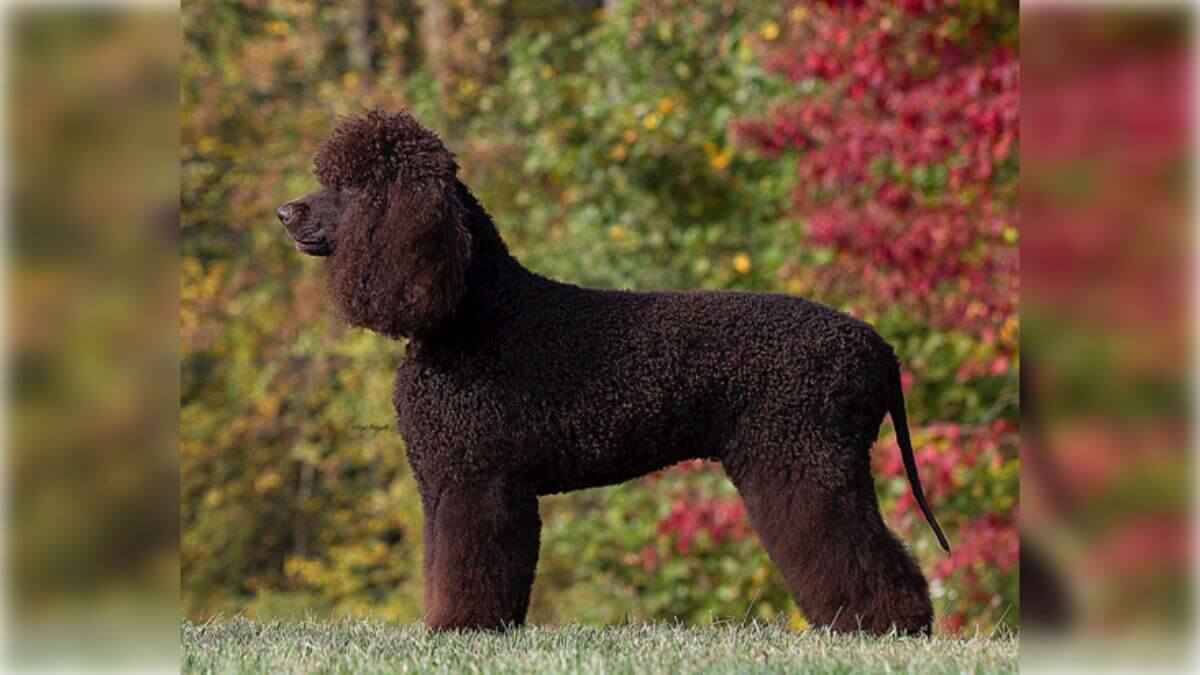
The tail of the Irish Water Spaniel is one of the breed's most distinctive features, often referred to as a "rat tail." This unique characteristic sets the breed apart from all other spaniels and water dogs. The tail is low set and thick at the base, relatively straight, and tapers to a fine point. The base of the tail is covered with dense curls similar to those on the body, but the remainder of hair is short, straight, and smooth to the tip. This peculiarity prevents drag in the water, minimizes damage in the field, and gives the tail its altogether unmistakable appearance.
The Irish Water Spaniel's tail is typically carried level with the back or slightly higher, but it should not be curled or carried over the back. In the show ring, the tail's unique appearance is a point of focus, as it exemplifies one of the breed's most celebrated and distinguishing characteristics.
Texture: The Irish Water Spaniel is adorned with a distinctive coat that is both functional and visually striking. The oily coat is comprised of dense, tightly curled ringlets that provide superb protection in wet environments. Curls cover the neck, body, and base of the tail, with looser curls or waves on the legs. The texture is neither woolly nor coarse. The skull is crowned with a topknot of long, loose curls that abruptly form a widow's peak between the eyes, and the ears are cloaked with curls that extend several inches beyond the ear leather. A beard grows where the lower jaw and throat meet. Weekly grooming and periodic scissoring are required to maintain a healthy coat that is free of mats and debris. Curiously, the coat of the IWS is naturally "patterned" with short, smooth hair on the face and muzzle, on the throat in a V-shaped patch, on the front of the rear legs below the hock, and on most of the tail.
Standard Colors
04/Consider
When considering the Irish Water Spaniel as a companion, potential owners should be mindful of the breed's peculiar characteristics and its care requirements. This breed, known for its intelligence and high energy, thrives in an environment where it can be engaged both physically and mentally. The IWS is well-suited for active families or individuals who enjoy outdoor activities and can provide ample opportunities for exercise and stimulation. Like all spaniels, the IWS is typically sensitive and intuitive. Positive training methods that encourage obedience, without harsh corrections, tend to bring out the best in this breed.
Interaction With Family
The level of affection a breed typically shows towards family members and familiar individuals.
Good With Other Dogs
The innate friendliness of a dog towards other dogs can depend on its breed.
Good With Young Children
The degree to which a breed will typically be patient with young children.
Amount Of Shedding
How much hair a breed typically leaves behind on clothes, furniture and floors.
Frequency Of Grooming
How often a breed needs brushing, bathing or a professional trim to stay in condition.
Amount Of Drooling
How prone a breed is to drool, worth knowing before you keep a towel by the door.
Openness To Strangers
How openly a breed tends to greet new people, visitors and strangers.
Protective Nature
How likely a breed is to alert you to anything unfamiliar, and stand between you and it.
Playfulness Level
How enthusiastic a breed stays about games and play well past puppyhood.
Trainability Level
How readily a breed takes direction and works with you rather than around you.
Barking Level
How much a breed uses its voice, and how readily.
Energy Level
How much get-up-and-go a breed brings to an average day.
Health
The Irish Water Spaniel is generally a healthy breed with a lifespan that typically ranges between 11 and 13 years. Like all dogs, however, individuals can be prone to certain health risks. With proper diet, regular veterinary check-ups, and an active lifestyle, many issues can be managed or prevented.
The Irish Water Spaniel is renowned for its bold and playful personality. These dogs are eager learners with a remarkable intelligence, which generally makes them well-suited for active dog owners. The breed's smartness, however, also means they can be independent thinkers that require thoughtful, positive, and consistent training methods.
Sensitive by nature, Irish Water Spaniels respond best to positive reinforcement and can be quite receptive to their handler's overall mood. Harsh training techniques are likely to be counterproductive. These dogs are known for being loyal and affectionate with their families, forming strong bonds that may exclude anyone outside the family circle.
Irish Water Spaniels typically prefer to spend time with their own people and are unlikely to thrive when left alone for prolonged periods. Isolation will often lead to boredom and potentially destructive behaviors, so mental and physical stimulation are essential. Participation in activities such as hunting and dog sports are particularly beneficial for this breed.
Typically, the Irish Water Spaniel is somewhat reserved toward strangers and prefers having time to warm up to new people. The breed is not known to be overtly aggressive, but individuals can be assertive if they perceive a threat to their family or property. IWS can get along well with other household pets and often make good playmates for children who are respectful. However, as with any dog, interactions should always be supervised. Early and consistent socialization is essential for this active and intelligent breed.
Exercise Expectations
The exercise needs of an Irish Water Spaniel are relatively high. This is an energetic breed that requires a variety of activities, including swimming, running, and playing fetch, that not only cater to the dog's physical needs but also provide the mental stimulation that is essential for this intelligent breed. The intensity of exercise should match the individual dog's age and energy level; however, it's important to balance vigorous activities with periods of rest to prevent overexertion. As puppies, exercise should be moderate to protect developing bones and joints, and it's best to avoid strenuous activities, such as running alongside a bike, until the dog is two years old. It's also important to note that an IWS that doesn't receive adequate exercise can exhibit behavioral issues created by boredom and a lot of pent-up energy. Therefore, regular, structured exercise is key to a happy partnership. For active people who want to integrate a dog into their outdoor lifestyle, the Irish Water Spaniel can be a great choice as a companion.
Living with an Irish Water Spaniel can be a rewarding experience, but it requires accommodating the specific needs of this high energy and extremely intelligent breed. These energetic dogs thrive when they have ample space to explore and opportunities for vigorous physical activity. With plenty of room to run (and the chance to swim), the IWS will prove itself to be an eager and determined outdoor companion. Ownership requires a commitment to daily exercise routines that include long walks and free-runs. Mental stimulation, through interactive toys and training exercises, is also crucial for keeping these dogs engaged. In terms of adaptability to various climates, the IWS is generally tolerant of cold weather; however, snow can accumulate on the bottoms of the feet, which makes walking difficult. During warm summer months it's crucial to provide plenty of water for both drinking and bathing. Like any useful gun dog, the Irish Water Spaniel is exceedingly affectionate and devoted to its family, and can even be content living with a single person. Nonetheless, the breed's innate instincts require early and frequent socialization to prevent an individual dog from becoming overly protective and suspicious of strangers, including small children, neighborhood dogs, and the mail carrier.
05/Puppies
The arrival of a litter of Irish Water Spaniel puppies is a cause for celebration. The pups of this Sporting breed are well-known for their playful and curious nature, and for many months (or years) they can be counted on to bring plenty of energy wherever they go and to everything they do.
From the moment an Irish Water Spaniel puppy captures your heart, a journey of growth and discovery begins for both dog and owner. Initially, creating a safe and welcoming environment is crucial. Puppies of this breed are naturally curious and will explore their surroundings, so it’s important to puppy-proof the home and remove any hazards. Good nutrition also plays a vital role in the puppy's growth and development, so feeding a high-quality puppy food several times a day is recommended. For these active and intelligent pups, socialization and training should start early. Safely exposing the young IWS to a variety of people, environments, and situations helps with developing a confident adult dog. Positive reinforcement techniques work best for training, as they encourage learning and strengthen the bond between the puppy and its people. Exercise should always be appropriate for the puppy's age. Too much exercise can be harmful to developing bones and joints, so short walks, play sessions, and swimming are the safest ways to expend all that energy. And since puppies of this breed eventually grow a long, curly coat, grooming habits should be established early. Regular brushing will help the pup become accustomed to being handled and groomed. As for healthcare, following the guidelines suggested by your puppy's breeder, and providing regular veterinary check-ups, is essential.
06/Activities
Irish Water Spaniels, with their high energy and intelligence, typically excel in many dog sports and outdoor activities. Participation is not only beneficial for meeting a dog's exercise requirements, it also provides mental stimulation and strengthens the bond between an IWS and its handler.
Performance events are particularly well-suited for this breed, given its athleticism and eagerness to learn new things. Some of the sports in which Irish Water Spaniels commonly participate include:
These activities and others not only provide physical and mental stimulation for the Irish Water Spaniel, they also offer opportunities for socialization and community involvement. Engaging an IWS in these endeavors can lead to experiences that challenge both the dog and the handler as their team becomes connected to a community of like-minded dog sports enthusiasts.
Gallery
07/Standards
The Irish Water Spaniel is recognized by the world's leading registries and kennel organizations, which categorize the breed into a specific Group based on its unique characteristics. This breed is recognized worldwide under the following Group designations:
The ideal Irish Water Spaniel is described by a Breed Standard that is approved by each of the world’s leading registries and kennel organizations. The Breed Standards for this breed may be found in the following links:
08/Clubs
09/Rescue
10/Facts
Origins
The Irish Water Spaniel is one of the oldest and most distinctive breeds of spaniel, originally bred in Ireland as a skilled waterfowl retriever.
Coat
The breed's most notable feature is its dense, curly coat, which is water-resistant and provides excellent insulation while swimming.
Rat Tail
The breed is famous for its unique "rat tail," which is thick at the base and tapers to a fine point, with short, smooth hair.
Size
The IWS is the tallest of the AKC-recognized spaniel breeds.
Versatility
Irish Water Spaniels are versatile hunters, equally adept at retrieving in both water and on land.
Rare Breed
Despite their many fine qualities, Irish Water Spaniels are relatively rare compared to most other spaniel breeds.
Temperament
These dogs are known for their playful and clownish behavior with their families, but they can be reserved with strangers.
Intelligence
The IWS is highly intelligent and trainable, excelling in Obedience, Tracking, Agility, and many other dog sports.
Contribution to Other Breeds
The Irish Water Spaniel has contributed to the development of a few other breeds, most notably the American Water Spaniel.
11/FAQ
Irish Water Spaniels are often considered to be a good dog for people with allergies, though it's important to note that no dog is completely hypoallergenic. These dogs have a dense, curly coat that tends to trap dander rather than shed it. Due to this type of coat, the IWS typically produces less dander than many other breeds, which can be beneficial for people with mild allergies to dogs.

Written by
Dan Sayers is the Executive Editor of SHOWSIGHT. He is a member of the World Dog Press Association and the Dog Writers Association of America, which recognized his illustrations in the award-winning Encyclopedia of K-9 Terminology. Dan is a longtime supporter of the sport of dogs and an advocate for the conservation of recognized breeds in all their forms and functions. He is a member of the Morris and Essex Kennel Club, and for 45 years, the Irish Water Spaniel Club of America where he serves as AKC Delegate, Archivist, and approved Breed Mentor. Dan breeds under the Quiet Storm prefix and has judged the IWSCA National Specialty Sweepstakes twice.
Official Standard for the Irish Water Spaniel
General Appearance: That of a smart, upstanding, strongly built moderate gundog bred for all types of shooting, especially for water-fowling. Great intelligence is combined with rugged endurance and a bold, dashing eagerness of temperament. Distinguishing characteristics are a topknot of long, loose curls and a body covered with a dense, crisply curled liver colored coat contrasted by a smooth face and a smooth "rat" tail.
Size, Proportion, Substance: Strongly built and well-boned, the Irish Water Spaniel is of medium length making it slightly rectangular in appearance. A well-balanced dog that should not appear leggy or coarse. Size: Height: Dogs 22 to 24 inches (measured at the highest point of withers), Bitches 21 to 23 inches. Weight: Dogs 55 to 68 pounds, Bitches 45 to 58 pounds.
Head and Skull: The head is cleanly chiseled. The skull is large and high in dome with a prominent occiput and a gradual stop. The muzzle is long, deep and somewhat square in appearance with a strong underjaw. Lips are fine in texture, tight and dry. The nose is large and dark liver in color. The teeth are even with a scissor or level bite. Hair on the face is short and smooth except for a beard of long, loose curls growing at the back of the lower jaw which may continue up the side of the face as sideburns. Topknot: A characteristic of the breed, the topknot consists of long, loose curls covering the skull and falling down over the top of the ears and occiput. The contrast between the smooth face and the topknot is evident in a well-defined peak between the eyes. The topknot, a breed characteristic, should not be trimmed in an exaggerated or excessive manner. Eyes: Set almost flush, the eyes are comparatively small and almond shaped with tight eyelids. The color is a warm tone of medium to dark brown, dark amber but never yellow. The expression is keenly alert, intelligent, direct and quizzical. Ears: Long, lobular, set low, hanging close to the head and abundantly covered with long loose curls of hair.
Neck, Topline, Body: Neck: The neck is long, arching, strong and muscular and is smoothly set into cleanly sloping shoulders. Topline: The rear is equal to or slightly higher than the front never descending or showing sag or roach. Back: Strong, broad and level. Body: Medium length. The ribs are carried well back and so well sprung behind the shoulders as to give a barrel shape. The chest is deep with a brisket extending to the elbows. The loin is short, wide, muscular, and deep so it does not give a tucked-up appearance.
Forequarters: The entire front gives the impression of strength without heaviness. The forechest should be moderate. Shoulders are sloping and moderately laid back, clean and powerful. The upper arms are approximately the length of the shoulder blades with clean elbows set close to the body. Forelegs are well boned, muscular and straight, set well under the withers.
Hindquarters: Sound hindquarters are of great importance to provide drive and power while swimming. They are as high as or slightly higher than the shoulders with powerful, muscular, well-developed thighs. The hips are wide. The croup is rounded and full with the tail set on low enough to give a rounded appearance. The stifles are moderately bent. Hocks are set low and moderately bent. Balance of front and rear angulation is important. Feet: Large, round, somewhat spreading. Well clothed with hair. Pads are thick. Tail: The "Rat Tail" is a striking characteristic of the breed and is strong, low set and carried level with the back and is not quite long enough to reach the point of the hock. The tail is thick at the root where it is covered for two to three inches with short curls which stop abruptly. From that point the tail is covered with smooth hair and the tail tapers to a fine point.
Coat: Proper coat is of vital importance to protect the dog while working. The coat on the face is short and smooth framed by the distinctive topknot and ears of long, loose curls. The coat on the throat is smooth forming a V-shaped patch from the back of the lower jaw behind the beard to the breastbone. The remainder of the neck, body and base of the tail are covered with dense, tight, crisp curls. The remainder of the coat on the tail is short and smooth coated. Forelegs are covered down to the feet with curls or waves all around. The hind legs are also abundantly covered with curls or waves except that the hair is short and smooth on the front of the legs below the hocks. Feet are well clothed with hair. Dogs may be shown in natural coat or trimmed. However, no dog should be groomed or trimmed so excessively as to obscure the curl or texture of the coat.
Color: Rich liver to dark liver with a purplish tinge, sometimes called puce liver. No white hair or markings except for the graying of age.
Gait: Moves freely and soundly with balanced reach and drive. Should be true, precise and not slurring; may have a characteristic rolling motion accentuated by the barrel-shaped rib cage.
Temperament: Very alert, inquisitive and active. Stable in temperament with an endearing sense of humor. May be reserved with strangers but never aggressive or shy.
Faults: The foregoing description is that of the ideal adult Irish Water Spaniel in hard working condition. Any deviation from the above-described dog must be considered to the extent of the deviation, keeping in mind the importance of various features toward the basic original purpose of the breed, which is that of a gundog used for work in all types of shooting and particularly suited to water fowling in difficult marshy terrain.
Approved July 14, 2009
Effective September 1, 2009

Meet the Breeders
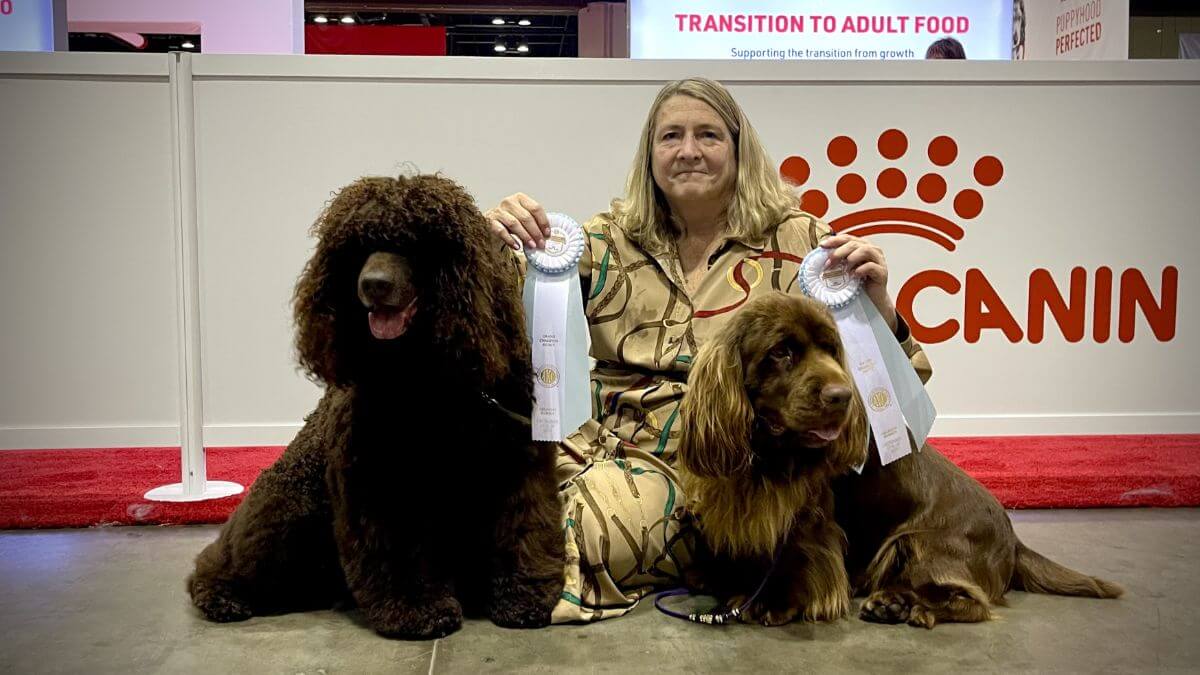
Tara Darling-Lyon of Tara Kennels reflects on nearly 50 years in dogs, mentorship, Bred-By pride, and chasing that elusive Best in Show.

Meet the Judges
Elizabeth Sweigart shares insights on judging Airedales, Wire Fox Terriers, and Irish Water Spaniels at the 2025 Morris & Essex dog show.


Meet the Breeders
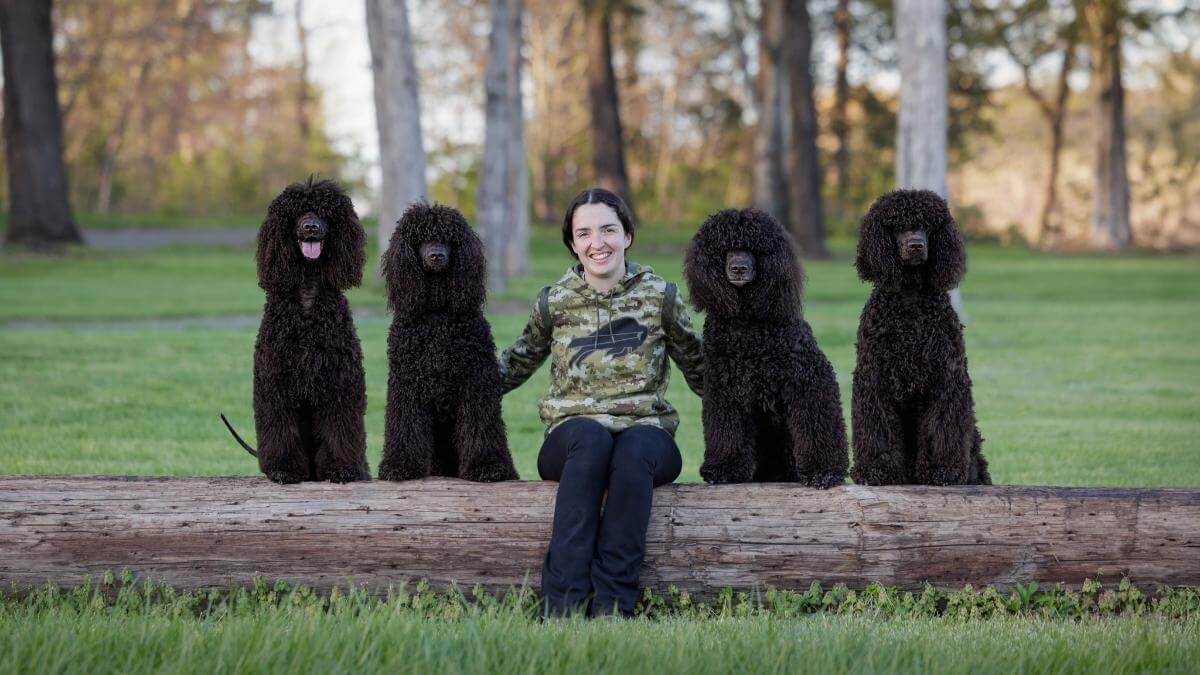
Emily Pikul shares her journey in Irish Water Spaniels, from early mentorship to breeding, sports, and preserving the breed.
Meet the Breeders
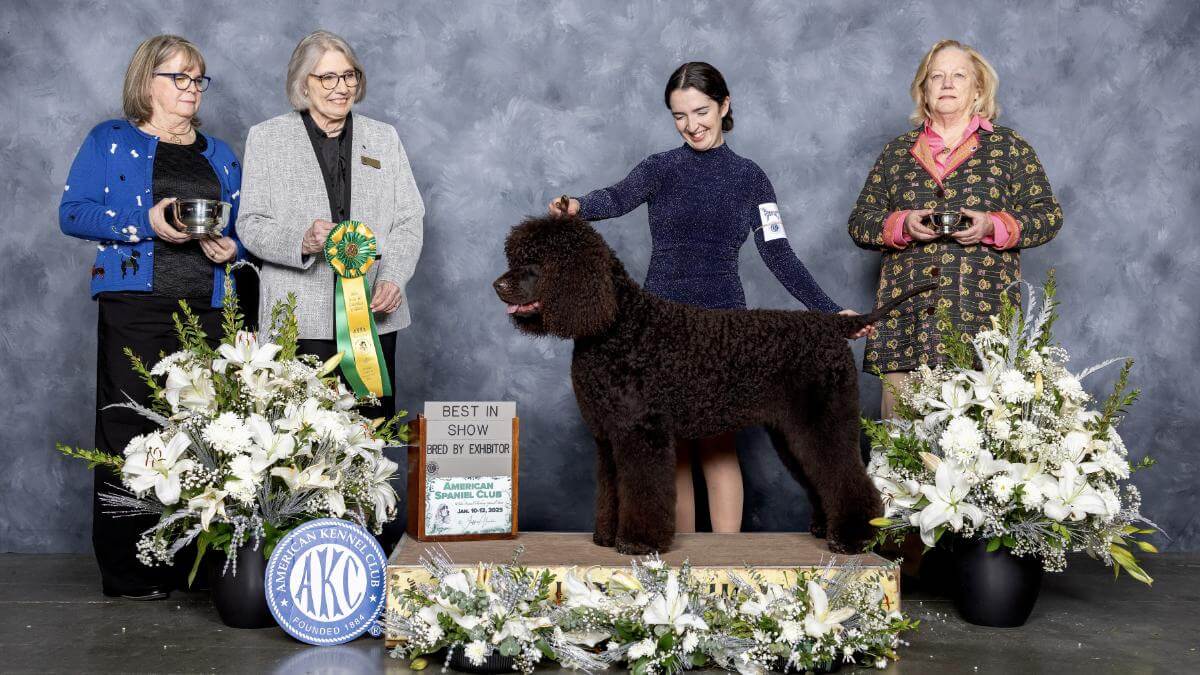
Veterinarian Hannah Loonsk blends science, mentorship, and passion to breed and show versatile, intelligent Irish Water Spaniels.
Meet the Breeders
Hannah L. Loonsk shares her journey as an Irish Water Spaniel breeder, owner-handler, and veterinarian passionate about the breed.
All About Judging
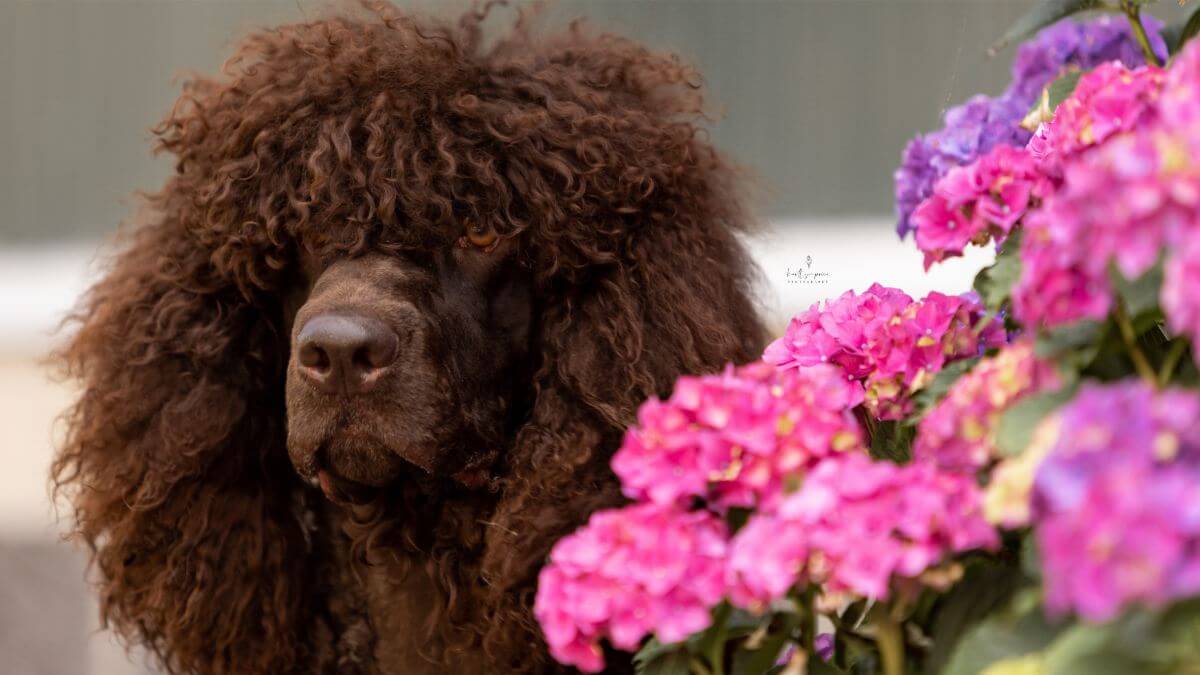
Judging the Irish Water Spaniel: Evaluating breed standards, movement, temperament, and physical traits for top placements.
Dog Shows
Explore the IWSCA’s journey in recognizing Irish Water Spaniels’ versatility, highlighting their achievements across multiple AKC titles.
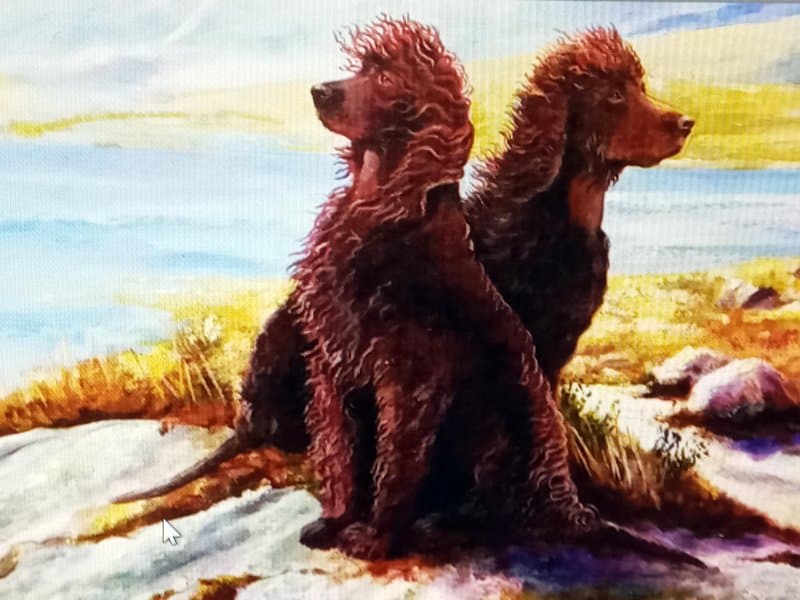

Explore in the world of an Irish canine painter, Louisa Nally, who captures the essence of Irish native breeds and gundogs in her art.
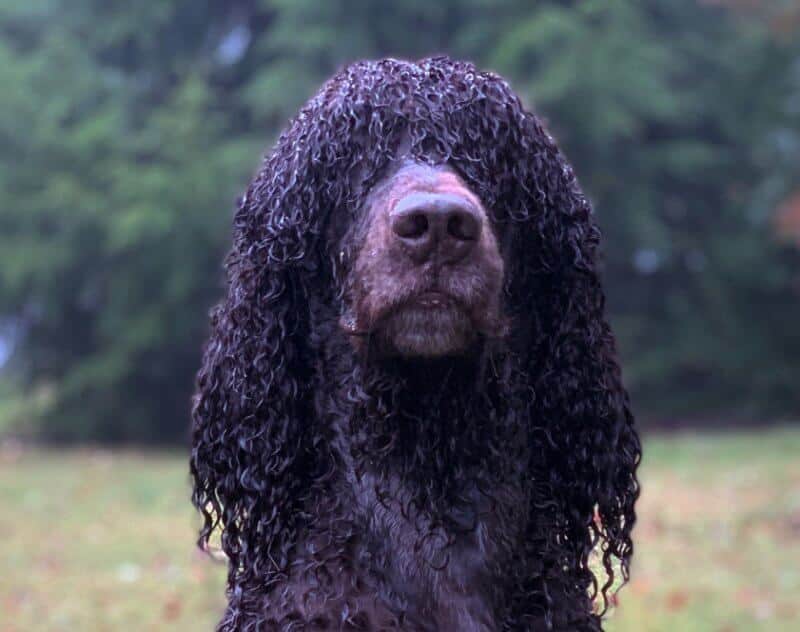
Learn about the importance of the unique coat of the Irish Water Spaniel, from its texture to its pattern and color.
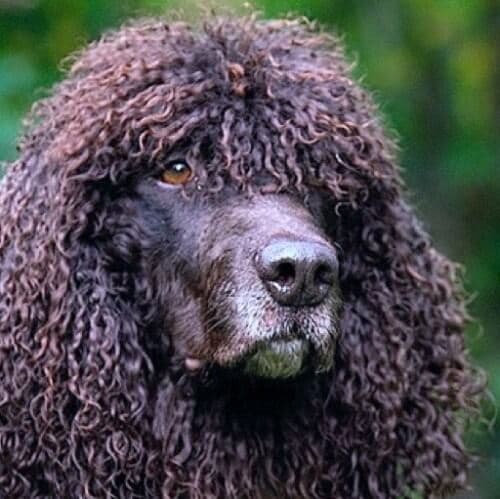 Photo Credit: Kayla Bertagnolli[/caption]
A Note About Color: The Irish Water Spaniel's solid color is a defining characteristic of the breed. The coat is liver-colored with a purplish tinge that's sometimes called puce liver. This unusual color is particularly noticeable at dawn and dusk. With sun exposure, the coat may take on a bronze hue; however, no white hair or markings are acceptable except for graying due to age.
Coat Type
Curly
The structure of the coat this breed carries.
Coat Length
Medium
How long the breed's coat grows when kept in condition.
Adaptability Level
How easily a breed copes with changes in home, routine, noise and weather.
Mental Stimulation Needs
How much a breed needs a job, a puzzle or training to stay content.
 Photo Credit: Rudy Raya[/caption]
Feeding and nutrition are critical aspects of caring for an Irish Water Spaniel, a breed known for its high energy and athleticism. For puppies, a diet formulated for large-breed pups will deliver the appropriate nutrients needed without promoting joint problems. Puppies typically require three to four meals daily, but as the IWS transitions into adulthood the frequency of meals can be reduced. The breeder of an IWS can provide guidance on the type and amount of food that is best suited for the breed, with the amount given based on the dog's age, size, and energy expenditure. Fresh water should always be available, of course, and treats should only be given in moderation as a reward during training sessions. A well-balanced diet, tailored to a dog's individual requirements, is key to keeping an Irish Water Spaniel healthy and happy.
Training an Irish Water Spaniel can be a rewarding experience, given the breed's intelligence and eagerness to please. The IWS is well-known for its ability to take direction and solve (or create!) problems, making the breed a good partner for people who establish a consistent and positive training routine. The breed's intelligence, however, also means these dogs can be independent thinkers. This characteristic calls for a training approach that is both firm and fair. Harsh or negative training methods are likely to be counterproductive and could harm the bond between the dog and its handler. In the right hands, the IWS can perform at advanced levels in a variety of dog sports, including Agility, Dock Diving, and Obedience. Of course, advanced titles in both flushing and retrieving competitions are well within reach for the right dog and handler team. Consistent, positive training and plenty of socialization from an early age are essential to achieve success with this intelligent and intuitive breed.
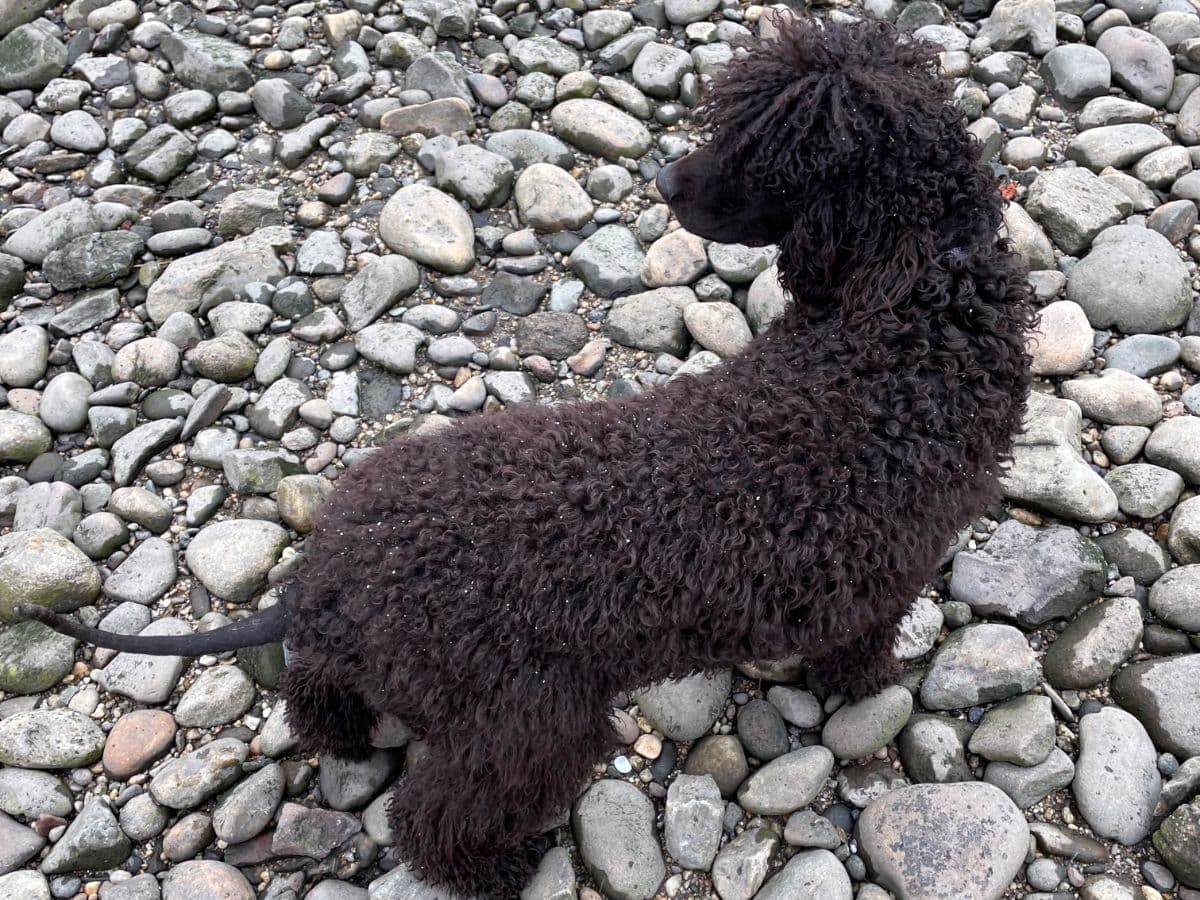 Photo Credit: Dan Sayers[/caption]
Grooming Expectations
The coat of the Irish Water Spaniel consists of tight, crisp, water-repellent ringlets on the neck, body, and base of the tail. Longer, looser curls cover the topknot, ears, beard, and legs, while short, smooth hair covers the muzzle, throat, fronts of the rear legs from the hock to the foot, and the majority of the tail. The breed's unique coat requires regular maintenance to distribute the skin's natural oils, remove any debris, and prevent mats from forming. Brushing the coat weekly is recommended, and periodic trimming is essential for both the dog's comfort and for neatness sake. Shedding is generally moderate in the breed, although the dead hair does largely become entangled in the curls. This characteristic mandates a commitment to brushing and makes the IWS a potential option for individuals with mild allergies. Bathing this breed should only be done as needed, and it's important to use a dog-specific shampoo that will not strip too much of the skin's natural oils. Grooming, of course, also includes nail trimming, ear cleaning, and dental care. In particular, the ears require weekly attention due to their size and shape, which predisposes them to ear infections. Professional grooming every few months can also be beneficial, especially for maintaining the Irish Water Spaniel's breed-typical curls. [caption id="attachment_134030" align="aligncenter" width="1021"] Photo Credit: Kayla Bertagnolli[/caption]