Members
01/Overview
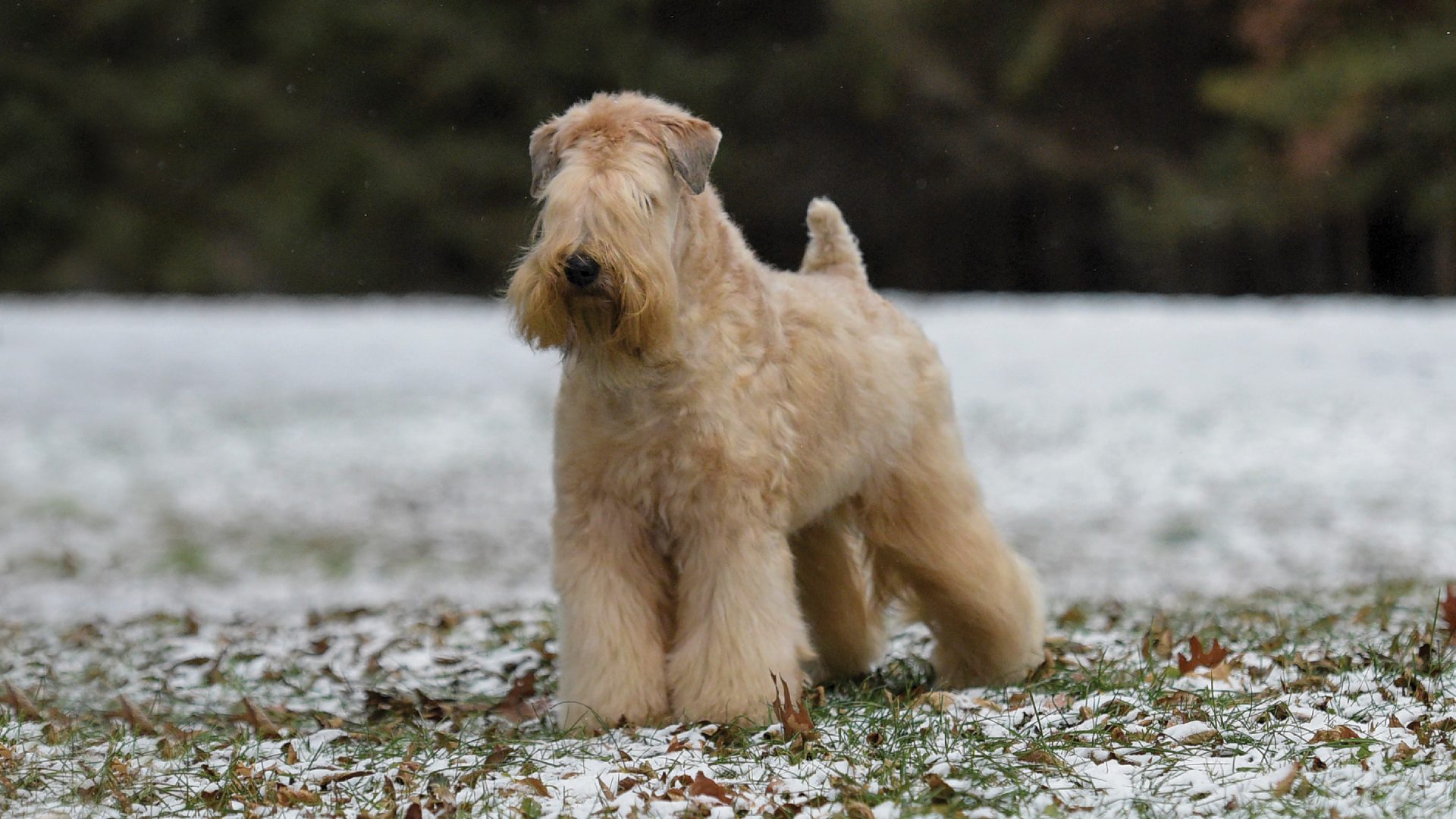
The Soft Coated Wheaten Terrier is a medium-sized Irish terrier breed known for its silky, gently waving coat, square outline, and lively expression. Affectionate, energetic, and people-oriented, the breed combines the determination of a working terrier with a friendly temperament that has made it a popular companion.
Highlights
02/History
The Soft Coated Wheaten Terrier originated in Ireland, where similar wheaten-colored terriers had worked on farms for centuries. These versatile dogs were used to control vermin, guard property, herd livestock, and assist with hunting, making them valuable all-purpose companions for rural families.
Unlike some terrier breeds associated with wealthy sporting estates, the Wheaten was often kept by farmers and working households. The dogs needed to be hardy, intelligent, and adaptable enough to perform several jobs while remaining manageable around the home.
For many years, Irish terriers with wheaten coats were not separated into clearly defined breeds. Dogs resembling the modern Soft Coated Wheaten Terrier appeared alongside early Irish Terriers and Kerry Blue Terriers, and the three breeds likely share parts of their ancestry.
Organized efforts to establish the Soft Coated Wheaten Terrier as a distinct breed began during the early twentieth century. Irish fanciers worked to develop a consistent type and promote the breed at dog shows, helping to distinguish its soft, flowing coat and balanced structure from those of other native terriers.
The Irish Kennel Club officially recognized the breed in 1937 under the name Irish Wheaten Terrier. The breed later became known as the (Irish) Soft Coated Wheaten Terrier.
The first Soft Coated Wheaten Terriers arrived in the United States during the 1940s. Interest grew gradually, and the Soft Coated Wheaten Terrier Club of America was founded in 1962 to support breed development, education, and recognition.
The American Kennel Club recognized the Soft Coated Wheaten Terrier in 1973 and placed it in the Terrier Group. The breed is also recognized by The Royal Kennel Club, and by the Fédération Cynologique Internationale, which classifies it as an Irish breed in Group 3, Terriers, Section 1, Large and Medium-Sized Terriers.
03/Appearance
An adult male Soft Coated Wheaten Terrier stands 18 to 19 inches tall at the withers, while a mature female stands 17 to 18 inches tall. Males typically weigh between 35 and 40 pounds, and females generally weigh from 30 to 35 pounds.
Skull: The Soft Coated Wheaten Terrier has a moderately long, flat skull that is not overly broad. The stop is well defined, and the head remains balanced in proportion to the body.
Expression: The expression is alert, lively, and friendly, reflecting a confident and affectionate character.
Eyes: The eyes are medium-sized, slightly almond-shaped, and set well apart. They are dark brown, with dark rims that contribute to the breed’s keen expression.
Ears: The ears are small to medium in size, V-shaped, and fold forward close to the cheeks. They are set level with the top of the skull and should not appear heavy or overly large.
Muzzle: The muzzle is strong and approximately equal in length to the skull. It is well filled beneath the eyes and should not appear narrow, weak, or pointed.
Nose: The nose is large and black.
Bite: The Soft Coated Wheaten Terrier has strong teeth that meet in a scissors or level bite.
The Soft Coated Wheaten Terrier has a square, balanced outline, with the length of the body from the point of the shoulder to the point of the buttocks approximately equal to the height at the withers. The Wheaten should appear compact and athletic rather than long, heavy, or coarse.
The body is strong and moderately broad, with a deep chest, well-sprung ribs, a short loin, and a firm, level back. Bone is proportionate to the dog’s size, providing sufficient strength and substance while preserving the agility and freedom of movement expected of a working terrier.
Texture: The Soft Coated Wheaten Terrier has a soft, silky, single coat that falls in gentle waves over the body. The coat should move freely and have a natural flow without appearing woolly, harsh, or excessively curly. Longer hair on the head forms the breed’s characteristic fall, beard, and furnishings. For show purposes, the Wheaten is presented to show a terrier outline, but the coat must be of sufficient length to flow when the dog is in motion. The coat must never be clipped or plucked.
Standard Colors
04/Consider
The Soft Coated Wheaten Terrier is affectionate, energetic, and closely attached to its family. Anyone considering the breed should be prepared for regular grooming, consistent training, daily exercise, and a dog that often wants to remain involved in household life.
Health
The Soft Coated Wheaten Terrier is generally considered a healthy and active breed with a lifespan of 12 to 14 years. Preventive veterinary care, regular exercise, dental hygiene, balanced nutrition, and maintenance of a healthy weight can support any dog throughout its life.
The Soft Coated Wheaten Terrier is affectionate, lively, confident, and strongly attached to its family. A Wheaten often greets familiar people with enthusiasm and may remain playful well into adulthood.
The breed is generally outgoing and people-oriented, although individual dogs may be reserved at first with unfamiliar people. Early socialization helps the Wheaten develop confidence and appropriate behavior around visitors, children, other dogs, and new environments.
Wheatens can live successfully with respectful children and often enjoy active family life. Their energetic greetings and tendency to jump may be overwhelming for very young children, so calm manners should be taught early.
Exercise Expectations
A healthy adult generally benefits from about 60 minutes of activity each day, although particularly energetic individuals may need more. Scent games, retrieving exercises, puzzle toys, and dog sports can provide additional mental engagement. Because the Wheaten may chase small animals or become distracted by movement, off-leash exercise should take place only in a securely enclosed area.
Grooming Expectations
The Soft Coated Wheaten Terrier can adapt to apartment living when given enough exercise, training, and companionship. Its boisterous energy, enthusiastic greetings, and tendency to bark may require additional management in homes with close neighbors.
A securely fenced yard can provide space for play, but outdoor time should not replace long walks, training sessions, and interaction with the family. The breed usually prefers remaining involved in most daily household activities.
A Wheaten often does best with people who appreciate its affectionate nature, playful personality, and grooming needs. Regular companionship, consistent routines, and productive activity will help this breed thrive.
05/Puppies
Soft Coated Wheaten Terrier puppies are playful, curious, and highly social. Young Wheatens form close bonds and benefit from early routines, positive socialization, patient training, and regular grooming from the beginning before heading to their forever homes.
A Soft Coated Wheaten Terrier puppy requires a predictable daily schedule that includes regular meals, potty breaks, sleep, play, training, and quiet time. A crate or secure puppy area can provide a safe place to rest and support housetraining when direct supervision is not possible.
Early socialization should introduce the puppy to different people, well-mannered dogs, household sounds, surfaces, vehicles, and unfamiliar environments. These experiences should remain positive and appropriate for the puppy’s age.
Training can begin as soon as the puppy arrives in its new home. Short sessions can introduce name response, recall, leash walking, basic manners, impulse control, and calm greetings. Because Wheatens are often enthusiastic with people, teaching the puppy not to jump up is especially useful.
A Soft Coated Wheaten Terrier puppy should receive a complete and balanced diet formulated for growth. Exercise should focus on supervised play, short walks, and gentle exploration rather than forced running or repetitive jumping while the puppy is still developing.
Regular veterinary visits are important during the first year. Grooming should also begin early so that the puppy becomes comfortable with brushing, combing, nail trimming, ear checks, tooth brushing, and handling of the face, feet, and coat.
06/Activities
Soft Coated Wheaten Terriers are energetic, intelligent, and athletic dogs that often enjoy activities involving movement, problem-solving, and close work with a handler. Here are some of the dog sports and activities in which Soft Coated Wheaten Terriers may participate:
Agility: Soft Coated Wheaten Terriers can use their speed, balance, and enthusiasm while navigating obstacle courses.
Obedience: Obedience Trials allow the Wheaten to demonstrate attention, accuracy, and cooperation with a handler.
Rally: Rally Obedience combines movement through a course with varied exercises that can keep training engaging for this lively breed.
Scent Work: Soft Coated Wheaten Terriers can search for specific odors hidden in containers, indoor spaces, outdoor areas, or vehicles.
Tracking: Tracking allows the breed to follow a scent trail across different types of terrain using concentration and persistence.
Fast CAT: This timed 100-yard dash gives the Wheaten an opportunity to use its speed and chasing instinct in a controlled setting.
Conformation Shows: Soft Coated Wheaten Terriers compete in Conformation Shows, where judges evaluate each dog according to the Breed Standard, including structure, movement, coat, expression, temperament, and overall breed type.
Trick Dog: Trick training provides mental stimulation and gives the breed a productive way to use its intelligence and playful nature.
Therapy Work: A calm, friendly, and well-socialized Wheaten may visit hospitals, schools, assisted living facilities, and other settings to provide companionship to patients and residents.
Canine Good Citizen: Soft Coated Wheaten Terriers may participate in programs that evaluate everyday manners, social behavior, and reliability around people and other dogs.
Gallery
07/Standards
The Soft Coated Wheaten Terrier is recognized by the world’s leading registries and kennel organizations, which categorize the breed into a specific Group based on its unique characteristics. This breed is recognized worldwide under the following Group designations:
The ideal Soft Coated Wheaten Terrier is described by a Breed Standard that is approved by each of the world’s leading registries and kennel organizations. The Standards for this breed may be found in the following links:
08/Clubs
Soft Coated Wheaten Terrier clubs support breed education, responsible breeding, health research, rescue work, and participation in Conformation Shows and performance events.
Soft Coated Wheaten Terrier Club of America: Founded in 1962, this is the national breed club for the Soft Coated Wheaten Terrier in the United States and the breed’s AKC parent club.
Soft-Coated Wheaten Terrier Association of Canada: Established in 1975, Canada’s national organization for the Wheaten welcomes breeders, exhibitors, companion dog families, and other breed enthusiasts.
Soft-Coated Wheaten Terrier Club of Great Britain: Founded in 1955, this is the United Kingdom’s national breed club that promotes the Wheaten through dog shows and educational initiatives.
09/Rescue
Breed-specific rescue organizations help Soft Coated Wheaten Terriers that have been surrendered, abandoned, or found in shelters. These groups may provide foster care, veterinary treatment, behavioral evaluation, and placement with an appropriate adoptive family.
Soft Coated Wheaten Terrier Club of America Rescue: The breed’s AKC parent club provides rescue information and may help connect Wheatens needing placement with regional volunteers or adoptive homes.
Wheatens in Need Rescue: A volunteer-based organization that assists Soft Coated Wheaten Terriers and Wheaten mixes across the United States and Canada through foster care, rehabilitation, and adoption.
Soft-Coated Wheaten Terrier Association of Canada: Canada’s national breed organization can provide guidance about rescue, welfare, or rehoming resources for Wheatens.
Soft-Coated Wheaten Terrier Club of Great Britain: The United Kingdom breed club supports the welfare and rehoming of Soft Coated Wheaten Terriers and may assist people seeking to adopt or surrender a dog.
Local shelters and broader terrier rescue organizations may also receive a Soft Coated Wheaten Terrier or Wheaten mix. Adoption databases, breed clubs, and nearby shelters can provide additional information about dogs currently needing homes.
10/Facts
An Irish Farm Dog
The Soft Coated Wheaten Terrier was developed as an all-purpose farm dog that controlled vermin, guarded property, helped with livestock, and accompanied hunters.
Known for Its Wheaten Coat
The breed’s name comes from the warm, golden shade of its soft coat, which can range from pale beige to deeper wheaten tones.
Puppies Are Born Darker
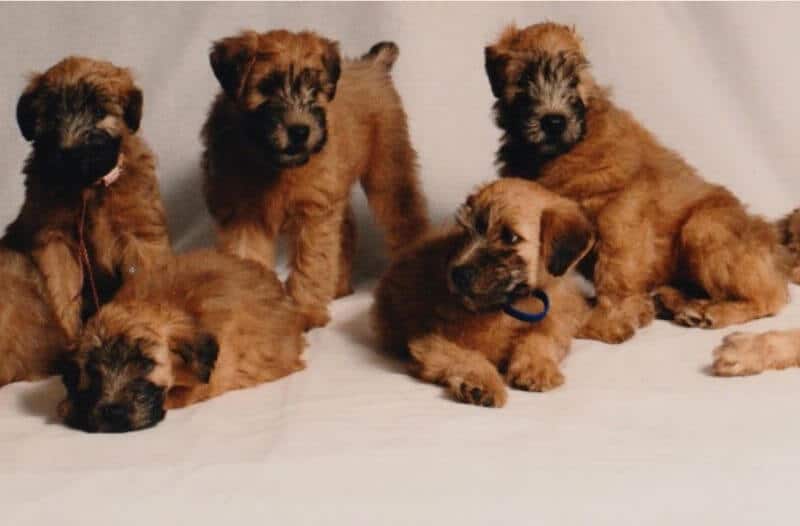
Wheaten puppies are often born with darker coats and black tipping that gradually lightens as the adult coat develops.
A Single-Coated Terrier
Unlike many terriers, the Wheaten has a soft, single coat rather than a harsh outer coat with a dense undercoat.
Recognized in Ireland in 1937
The Irish Kennel Club officially recognized the Wheaten in 1937, helping to establish it as a distinct native Irish breed.
Famous for the "Wheaten Greetin"
Many Soft Coated Wheaten Terriers are known for enthusiastic greetings, which may include jumping, bouncing, and close physical affection.
11/FAQ
Soft Coated Wheaten Terriers can make excellent pets for active people who want an affectionate, playful, and people-oriented companion. They need regular exercise, consistent training, frequent grooming, and plenty of family interaction.

Written by
Dan Sayers is the Executive Editor of SHOWSIGHT. He is a member of the World Dog Press Association and the Dog Writers Association of America, which recognized his illustrations in the award-winning Encyclopedia of K-9 Terminology. Dan is a longtime supporter of the sport of dogs and an advocate for the conservation of recognized breeds in all their forms and functions. He is a member of the Morris and Essex Kennel Club, and for 45 years, the Irish Water Spaniel Club of America where he serves as AKC Delegate, Archivist, and approved Breed Mentor. Dan breeds under the Quiet Storm prefix and has judged the IWSCA National Specialty Sweepstakes twice.
Official Standard of the Soft Coated Wheaten Terrier
General Appearance: The Soft Coated Wheaten Terrier is a medium-sized, hardy, well balanced sporting terrier, square in outline. He is distinguished by his soft, silky, gently waving coat of warm wheaten color and his particularly steady disposition. The breed requires moderation both in structure and presentation, and any exaggerations are to be shunned. He should present the overall appearance of an alert and happy animal, graceful, strong and well coordinated.
Size, Proportion, Substance: A dog shall be 18 to 19 inches at the withers, the ideal being 18½. A bitch shall be 17 to 18 inches at the withers, the ideal being 17½. Major Faults - Dogs under 18 inches or over 19 inches; bitches under 17 inches or over 18 inches. Any deviation must be penalized according to the degree of its severity. Square in outline. Hardy, well balanced. Dogs should weigh 35 to 40 pounds; bitches 30 to 35 pounds.
Head: Well balanced and in proportion to the body. Rectangular in appearance; moderately long. Powerful with no suggestion of coarseness. Eyes dark reddish brown or brown, medium in size, slightly almond shaped and set fairly wide apart. Eye rims black. Major Fault - Anything approaching a yellow eye. Ears small to medium in size, breaking level with the skull and dropping slightly forward, the inside edge of the ear lying next to the cheek and pointing to the ground rather than to the eye. A hound ear or a high-breaking ear is not typical and should be severely penalized. Skull flat and clean between ears. Cheekbones not prominent. Defined stop. Muzzle powerful and strong, well filled below the eyes. No suggestion of snipiness. Skull and foreface of equal length. Nose black and large for size of dog. Major Fault - Any nose color other than solid black. Lips tight and black. Teeth large, clean and white; scissors or level bite. Major Fault - Undershot or overshot.
Neck, Topline, Body: Neck medium in length, clean and strong, not throaty. Carried proudly, it gradually widens, blending smoothly into the body. Back strong and level. Body compact; relatively short coupled. Chest is deep. Ribs are well sprung but without roundness. Tail is set on high. Docked tail preferred. Whether docked or natural, the tail is to be carried upright 90 degrees from the back, either straight or with a slight curve forward. Any deviation from this ideal is to be penalized accordingly.
Forequarters: Shoulders well laid back, clean and smooth; well knit. Forelegs straight and well boned. All dewclaws should be removed. Feet are round and compact with good depth of pad. Pads black. Nails dark.
Hindquarters: Hind legs well developed with well bent stifles turning neither in nor out; hocks well let down and parallel to each other. All dewclaws should be removed. The presence of dewclaws on the hind legs should be penalized. Feet are round and compact with good depth of pad. Pads black. Nails dark.
Coat: A distinguishing characteristic of the breed which sets the dog apart from all other terriers. An abundant single coat covering the entire body, legs and head; coat on the latter falls forward to shade the eyes. Texture soft and silky with a gentle wave. In both puppies and adolescents, the mature wavy coat is generally not yet evident. Major Faults - Woolly or harsh, crisp or cottony, frizzy, kinky or standaway coat; in the adult, a straight coat is also objectionable. Presentation - For show purposes, the Wheaten is presented to show a terrier outline, but coat must be of sufficient length to flow when the dog is in motion. The coat must never be clipped or plucked. Sharp contrasts or stylizations must be avoided. Head coat should be blended to present a rectangular outline. Eyes should be indicated but never fully exposed. Ears should be relieved of fringe, but not taken down to the leather. Sufficient coat must be left on skull, cheeks, neck and tail to balance the proper length of body coat. Dogs that are overly trimmed shall be severely penalized.
Color: Any shade of wheaten. Upon close examination, occasional red, white or black guard hairs may be found. However, the overall coloring must be clearly wheaten with no evidence of any other color except on ears and muzzle where blue-gray shading is sometimes present. Major Fault - Any color save wheaten. Puppies and Adolescents - Puppies under a year may carry deeper coloring and occasional black tipping. The adolescent, under two years, is often quite light in color, but must never be white or carry gray other than on ears and muzzle. However, by two years of age, the proper wheaten color should be obvious.
Gait: Gait is free, graceful and lively with good reach in front and strong drive behind. Front and rear feet turn neither in nor out. Dogs who fail to keep their tails erect when moving should be severely penalized.
Temperament: The Wheaten is a happy, steady dog and shows himself gaily with an air of self-confidence. He is alert and exhibits interest in his surroundings; exhibits less aggressiveness than is sometimes encouraged in other terriers. Major Fault - Timid or overly aggressive dogs.
Approved August 10, 2009
Effective September 30, 2009

Meet the Breeders
Beth Taylor of Cadenza Wheatens shares her passion for Soft Coated Wheaten Terriers, breeding for health, joy, and purpose.
Meet the Breeders
Preservation breeder Pat Mullin shares insights on Soft Coated Wheaten Terriers, judging, and the future of the dog fancy.
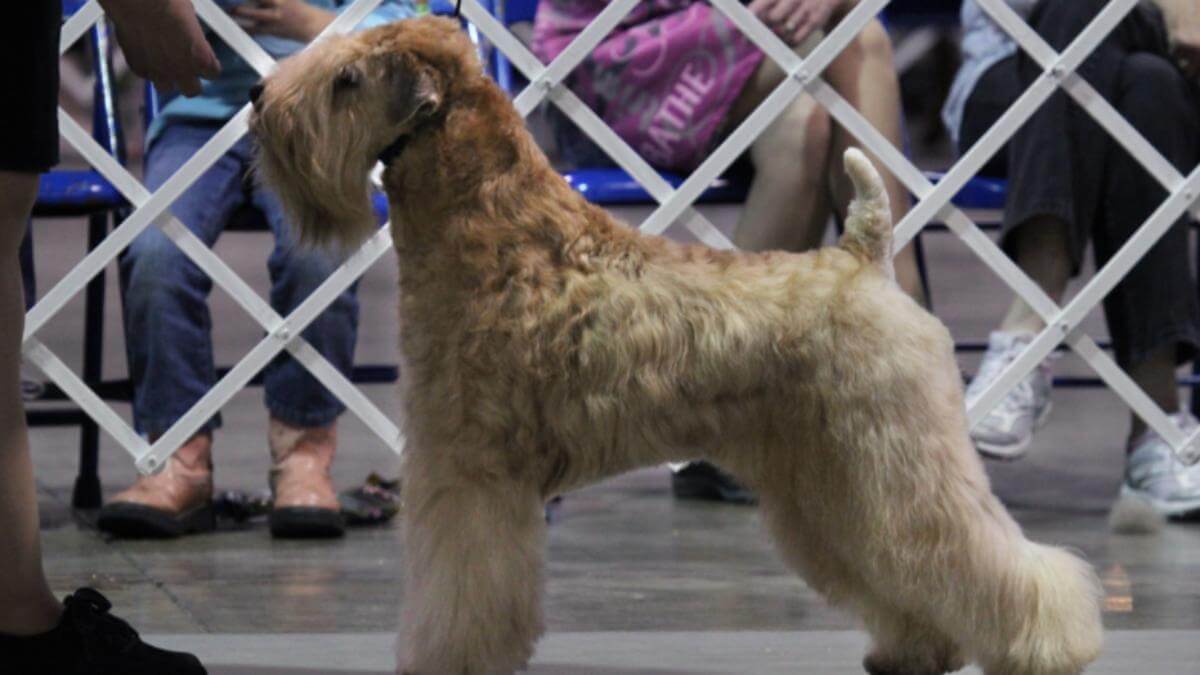
A history of the Soft Coated Wheaten Terrier, breed development, and the importance of understanding type and grooming standards.
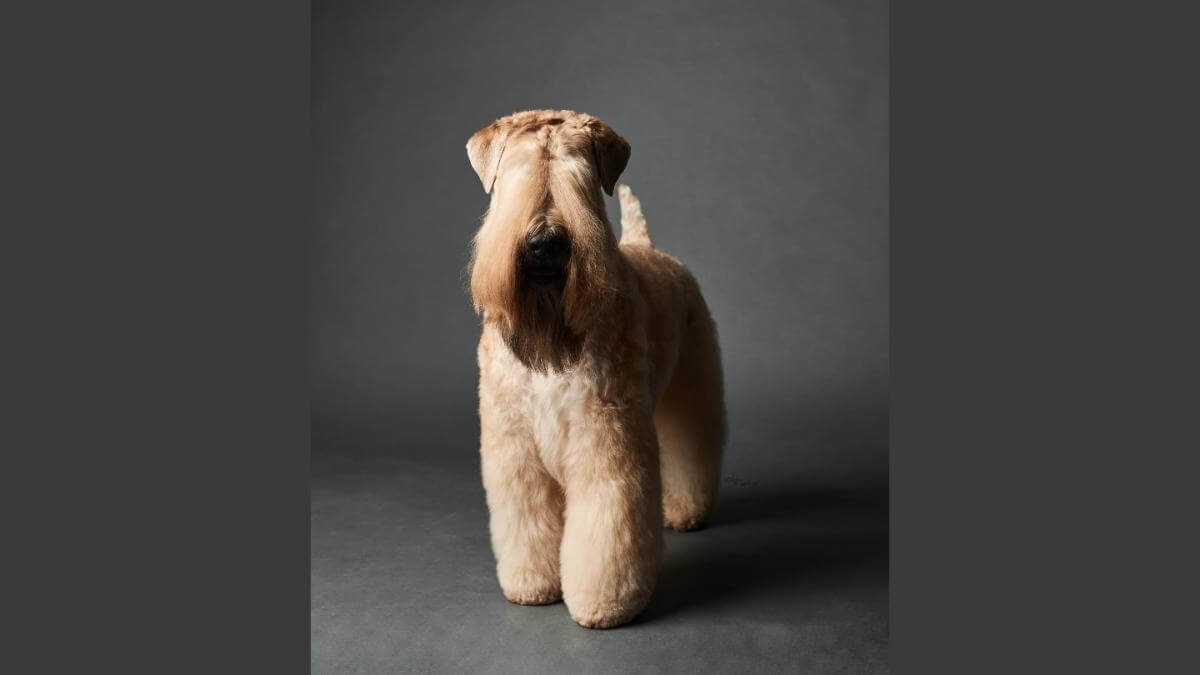
The Soft Coated Wheaten Terrier is a versatile, energetic breed with a rich history. Learn about its characteristics and grooming.
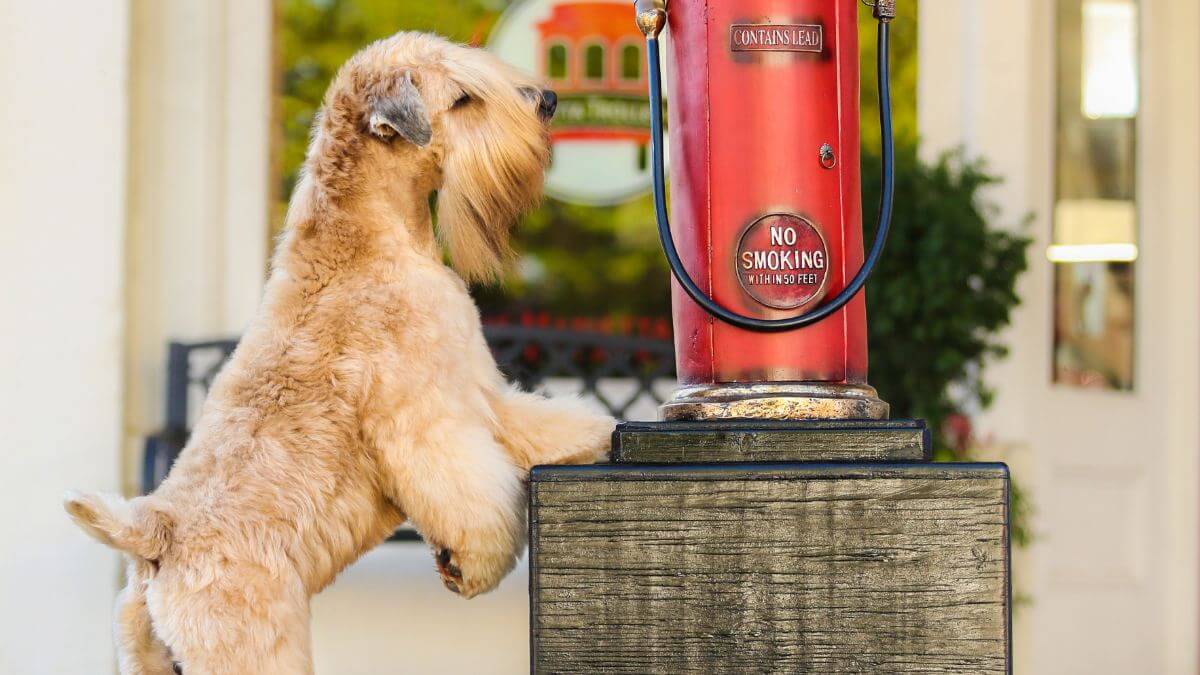
Miscellaneous Class
Discover the journey of the Soft Coated Wheaten Terrier, from its 1960s debut to its AKC recognition and evolving grooming standards.
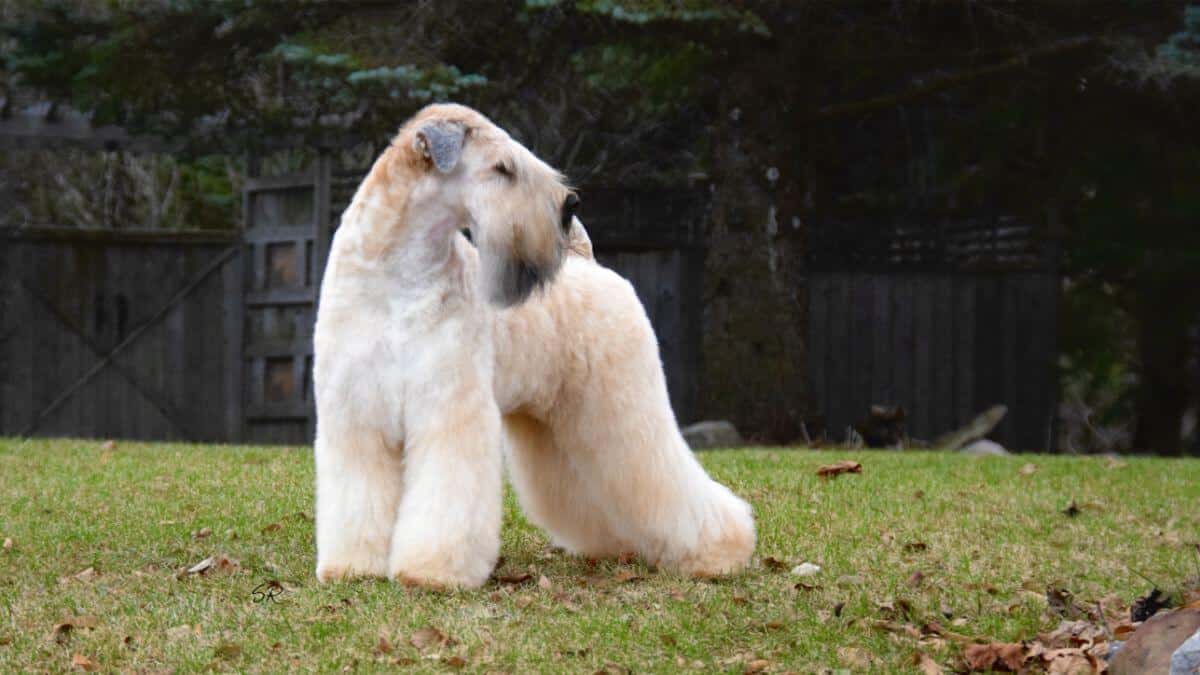
All About Judging
Insightful tips for judges evaluating Soft Coated Wheaten Terriers, focusing on breed essence, conformation, and movement.
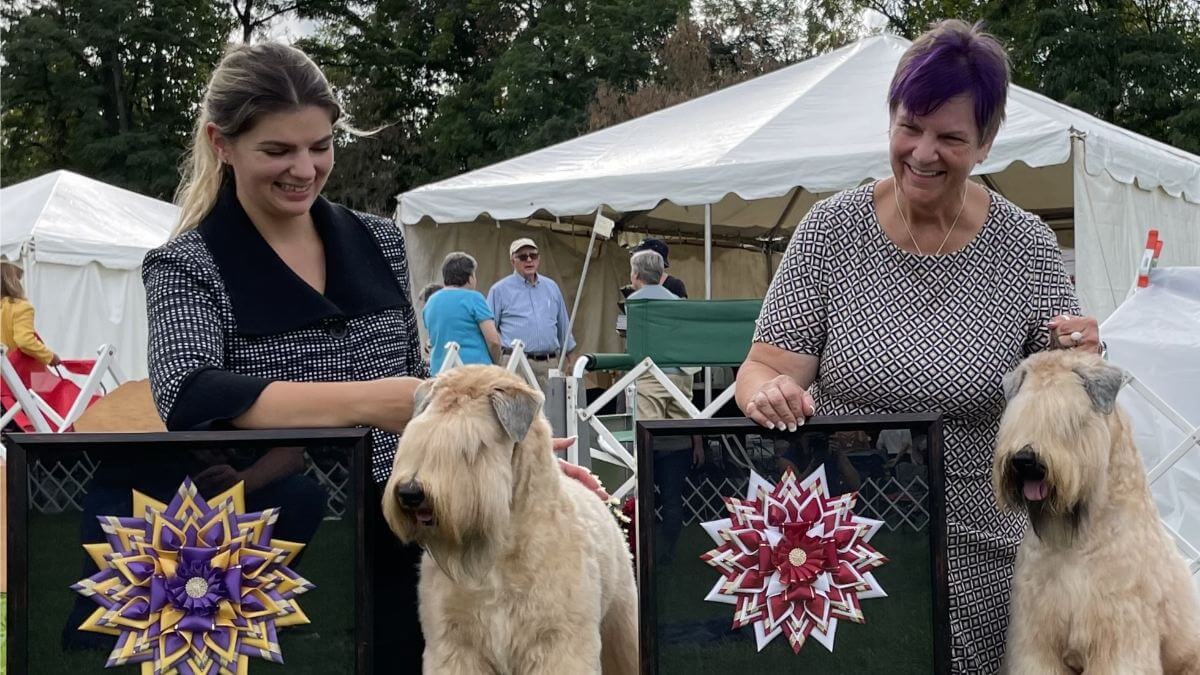
Meet the Breeders
Sydney & Shari Robinson is the breeders behind Keepsake Soft Coated Wheaten Terriers. Read about the kennel, dogs, puppies, photos & more!
Meet the Breeders
Sonya Urquart is the breeder behind Marquee Soft Coated Wheaten Terriers. Read about kennel’s beginnings, dogs, puppies, photos & more!
Meet the Breeders
Brittany Phelps is the breeder behind Adáko Soft Coated Wheaten Terriers. Read about kennel’s beginnings, dogs, puppies, photos & more!
The tail is set high and carried upright without curling over the back. It is traditionally docked in countries where the practice is permitted, while an undocked tail should remain balanced with overall outline and carriage.
A Note About Color: The coat may be any shade of wheaten. Upon close examination, occasional red, white, or black guard hairs may be found. However, the overall coloring must be clearly wheaten with no evidence of any other color except on the ears and muzzle where blue-gray shading is sometimes present. Any color other than wheaten is a major fault in the show ring. Puppies under a year of age may carry deeper coloring and occasional black tipping. The adolescent, under two years of age, is often quite light in color, but must never be white or carry gray other than on the ears and muzzle. However, by two years of age, the proper wheaten color should be obvious.
A Soft Coated Wheaten Terrier should receive a complete and balanced diet suited to the dog’s age, activity level, and body condition. Portions should be measured carefully because excess weight can reduce the breed’s agility and place unnecessary strain on the joints.
A puppy generally needs three or four small meals each day before gradually moving to two meals. Most adult Wheatens are fed twice daily, with the amount adjusted according to the food’s caloric density and the dog’s exercise needs.
Because kidney and protein-losing disorders have been reported in the breed, any special dietary changes should be made with guidance from a veterinarian or the dog’s breeder. Fresh water should always be available.
The Soft Coated Wheaten Terrier is intelligent and capable of learning quickly, but it can also be independent and easily distracted. Training is most effective when sessions are short, varied, and supported by praise, food rewards, toys, or play.
Early socialization should introduce the puppy to different people, well-mannered dogs, environments, sounds, and surfaces. Leash manners, recall, impulse control, and calm greetings are especially important because an excited Wheaten may jump up or pull toward people.
Clear and consistent expectations help prevent unwanted habits, such as excessive barking, chasing, or ignoring commands. Harsh methods may create resistance, while patient and engaging training usually encourages better cooperation.
The coat should be brushed from the skin outward, with particular attention to the beard, legs, belly, ears, and areas where friction causes tangling. Regular trimming helps with maintaining the breed’s characteristic outline and will keep the coat manageable. Soft Coated Wheaten Terriers shed relatively little, but loose hair typically remains trapped in the coat and must be removed through grooming. Bathing is needed as necessary, while nails, ears, and teeth should receive routine care.