Members
Nancy Hjelmstad is the breeder behind Sunset American Staffordshire Terriers. Read about the kennel’s beginnings, puppies, photos and more!

Nancy Hjelmstad
The Weekly Brief
The best of SHOWSIGHT editorials, weekly wins, and breeder commentary — delivered to your inbox every Sunday morning.
Interview with Nancy Hjelmstad, Breeder of Sunset American Staffordshire Terriers
Nancy Hjelmstad: I live in Phoenix, Arizona. I have been in dogs for 30 years. I just started out breeding on my own two years ago, but I’ve been co-breeding with my mentor for almost 15 years.
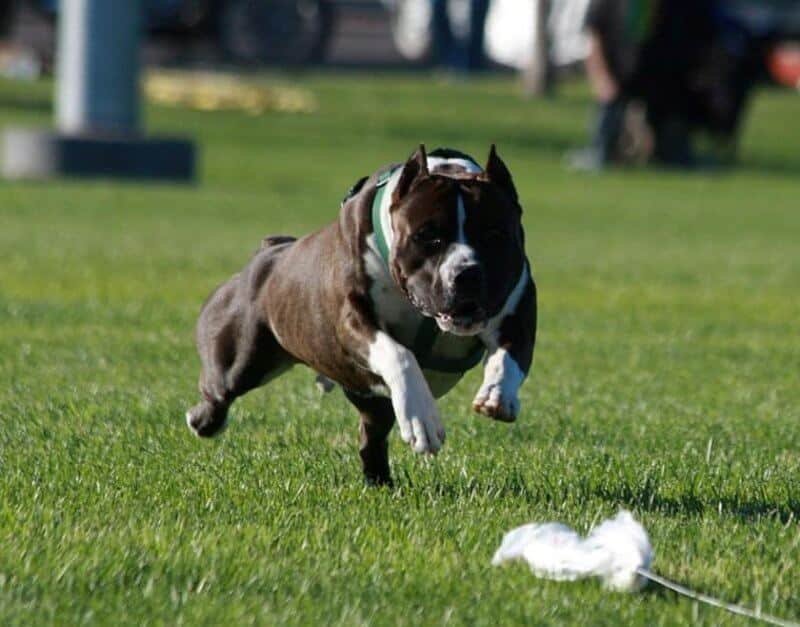
Nancy Hjelmstad: My kennel name is Sunset Kennels. I currently keep four American Staffordshire Terriers; two males and two females.
Nancy Hjelmstad: Judy Magnasco of Malone Kennels in Oregon.
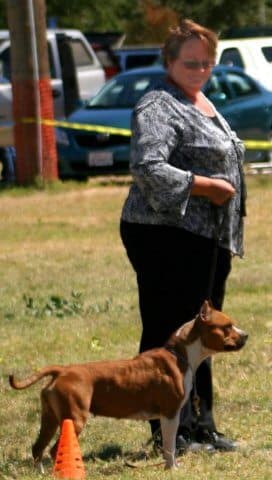
Nancy Hjelmstad: My foundation bitch and favorite breed ambassador was “Lyla,” BISS GRCH Malones Delightfully Lyla. She was the first dog that I got from Judy Magnasco. She is a Malone dog, a blend from the Gaff and Sierra Lines. We co-bred her twice, and produced several beautiful bitches from her and from subsequent co-breedings of her children and grandchildren. Lyla was such an awesome bitch, both in conformation, performance, and temperament. I wanted to see her legacy continue. My stud dog, her grandson, major-pointed Malones Arizona Rising Star, “Copper,” carries on both of those qualities, and I see them in his son, GRCH Leo Flaming Sunset Fire Ball!
My bitch, GRCH Malones Peach Schnapps, “Peaches,” who has produced all of my Sunset Kennel dogs, also came from Judy, from her breedings with the Michl R lines. These are highly intelligent working dogs. Out of her first litter of five, Peaches produced: GRCH Leo; major-pointed Barbie; Nico, who is currently training as a search & rescue dog; Lyla, a working dog on a horse ranch; and Samson, a beloved pet. The puppies from her second litter are all in pet homes, which I love. I get updates on my puppies, which is awesome for any breeder.
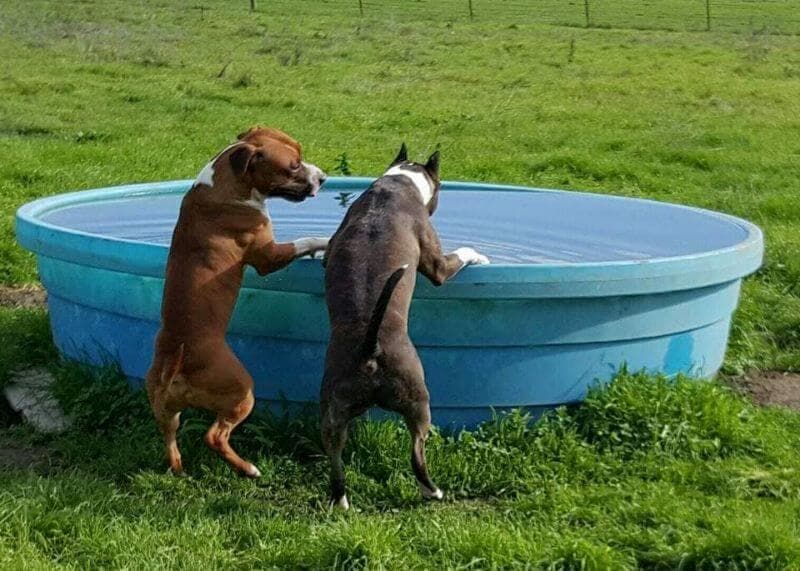
Nancy Hjelmstad: I breed out of my home. I have two outdoor 10’x10’ kennels, a large dog run, a pool, and a landscaped yard. My dogs get supervised yard time as well as pool time. They live inside with me, but have sleeping crates at night. I’m a firm believer in kennel training all of my dogs. I designed and made my own whelping box, which I set up in my spare room to give the bitch a private area. My puppies start the weaning process with a finely-ground chicken & goat’s milk raw diet, and eventually, with softened kibble mixed in. They are litterbox trained, coming out to a large play area in the central living space that’s surrounded by an ex-pen. They get numerous toys and enrichment. I also have my grandchildren over to play and interact with the puppies.
Nancy Hjelmstad: I always consult with my mentor, but I look for a strong, outgoing personality as well as good conformation. I start narrowing down my picks at 4-6 weeks, but final choices can happen as late as 12 weeks.
Nancy Hjelmstad: After deciding on a potential mating, I announce my intentions ahead of time to gage interest, and I start a waiting list of prospective homes. I have a puppy application and interview process for each buyer. Puppy placement is very important, and a good, stable home is paramount. I value my pet homes as much as I do a show home. I love getting updates from both.
Nancy Hjelmstad: That’s a tough question, as I love seeing owner-handled dogs, but I understand the need for professional handlers as well. Winning OHBIS is just as prestigious as a regular BIS, in my opinion. I personally have artificial knees and use a handler so that my dog gets shown to the best of its ability. I currently have a young dog co-owned and shown by a junior handler as well.
Occasionally, it does seem that dogs shown by a professional handler have an unfair advantage. But this is often due to the fact that these highly trained people know how to get the best out of a dog, and a dog that shows well is going to naturally catch the eye. But conformation should always beat out showmanship, IMO.
Nancy Hjelmstad: There are a few health issues within the breed, and this is why health testing is important before breeding. Most importantly, testing is needed for genetic problems like Ataxia, and being aware of problem issues like Cystinuria or Laryngeal paralysis before breeding. Additional tests for hips, elbows, eyes, and hearing are also available if the lines you are breeding together are known to have issues with these. I did complete genetic testing on both my sire and dam before breeding. As well as hips and heart, I’ve never had eye, hearing, or elbow issues with my dogs. I feed a mixture of kibble and raw. I believe the better the diet, the fewer the health problems—and the greater the benefits
Nancy Hjelmstad: Yes, the breed is in good condition overall, even though there are varying opinions on the styles of Amstaffs out there. Most well-bred dogs have few health problems. Poorly bred Amstaffs have had some issues with allergies. This has not been present in Judy’s lines.
I get a little concerned over the number of all-white dogs showing up in some litters and in the show ring, mainly because white dogs can have genetic weaknesses and/or problems that they can pass on to offspring.
Nancy Hjelmstad: I think they make an excellent family dog, but may not be the best choice for the first-time dog owner. I prefer families with some dog experience, people who are willing to work with their dog or have their dog as an active member of the family. Good socialization and training are keyelements to having a balanced dog, no matter the breed, but are especially important when dealing with stronger dog breeds.
Nancy Hjelmstad: I consider Judy Magnasco one, but I wish there were more.
Nancy Hjelmstad: I enjoy doing a variety of performance events and sports with this breed. Once, when teaching dock diving to a young puppy, we had a delightful experience. I had my foundation bitch out there to show this puppy the ropes. The puppy was in a life vest for safety, and we had basically just been trying to teach the pup where the out ramp was. Lyla jumped in after the bumper, and then we placed the puppy in behind her to swim out of the pool via the ramp. On our third throw for Lyla, the puppy launched off after her unexpectedly. As Lyla reached the bumper and turned, the puppy grabbed hold of the trailing end and swam with her to the ramp. Then, flipping around at the ramp, Lyla pulled her puppy out of the pool. Our dock diving pup fully graduated in one session.
The best way to ensure a long and happy relationship with a purebred dog is to purchase one from a responsible breeder. Not sure where to begin finding a breeder? Contact the National Parent Club’s Breeder Referral person, which you can find on the AKC Breeder Referral Contacts page.
Did you know nearly every recognized AKC purebred has a dedicated rescue group? Find your new best friend on the AKC Rescue Network Listing.
Showsight Magazine is the only publication to offer dedicated Digital Breed Magazines for ALL recognized AKC Breeds.
Read and learn more about the smart American Staffordshire Terrier dog breed with articles and information in our American Staffordshire Terrier Dog Breed Magazine.

Meet the Breeders