Members
When training a dog, there is nothing more damaging to a relationship than assuming willful disobedience. Read more.

Connie Cleveland
The Weekly Brief
The best of SHOWSIGHT editorials, weekly wins, and breeder commentary — delivered to your inbox every Sunday morning.
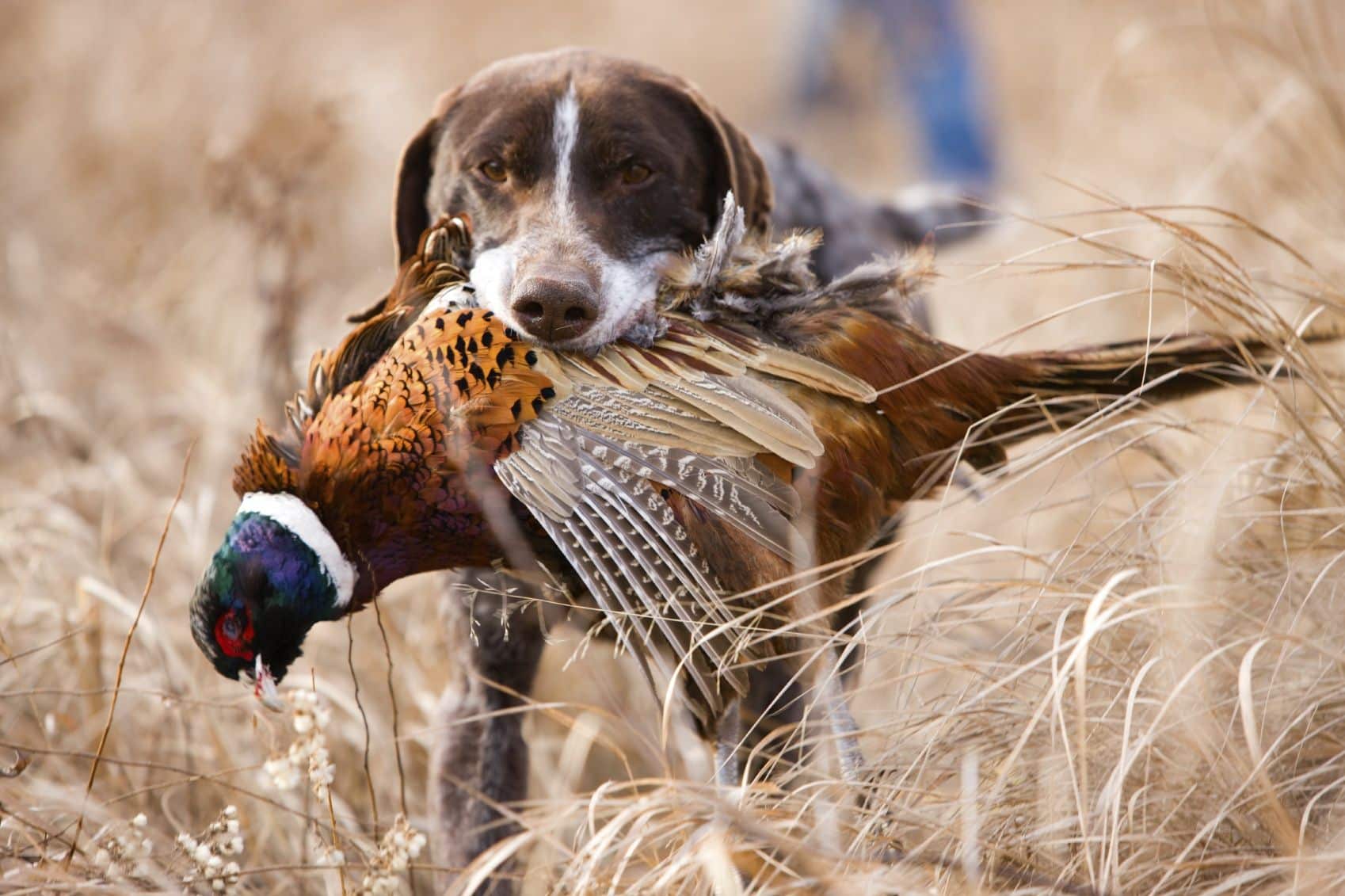
I was training a Golden Retriever for Field Trial competition, a competitive event where hunting dogs compete against one another in retrieving and other aspects of bird hunting. He had developed a problem that seemed to be career-ending. When I attempted to direct him to a bird that he had not seen fall, he would respond to three or four of my whistles or signals giving him direction, but then start hunting, ignoring my commands. Often, he would find the bird while “out of control” of the handler—me!—which is a failing error in competition.
At first it was frustrating, but soon it was infuriating. Words like stubborn and willful seemed to best describe his behavior. Surely, he knew better! How could he be so disobedient?!
Day after day, my determination to gain control intensified. Finally, thinking it was my last option, I took him to trainers more experienced than I was. For five days, I listened as they criticized my ability and the dog’s ability. At the end of the week, their training advice had not yielded any significant progress.
However, one thing had changed. I was dejected, had lost my confidence, and was feeling overwhelmed. I was actually nervous whenever we got “Caleb” out to train.
It was in one of those moments, as I watched Caleb spin out of control, that I saw his behavior as panicked, not willfully disobedient. He appeared frantic to find the bird, as if the mission was to retrieve as fast as he could so that I would stop yelling and blowing the whistle. When he finally found game, he seemed relieved that the whole episode had ended.
I have never seen a dog do well when trying to learn while feeling panicked, nervous, or worried. Nor was this a good learning environment for me either. I took him home, convinced his career had come to an end.
I’m going to share a training secret that is one of the most important I know—and it describes one of the worst dog training mistakes I have made, too.
When dealing with a dog, there is nothing more damaging to a relationship than assuming willful disobedience.
I have known this principle over many years of dog training. During my 30-plus years as the owner of a Dog Obedience business, every day someone would call to complain about a wayward dog and start the conversation by saying, “My dog KNOWS he should not have done (fill in the blank!) yet, while I was not watching, just to spite me, he did!”
Assuming that the dog is purposefully being disobedient causes an adversarial relationship, and much as with people, two adversaries rarely move to the same side of a disagreement.
This important training secret applies to human beings as well. As a teacher, when a student is not doing something the way I have asked, it is easy to assume that I’m being ignored. However, it is often that the student doesn’t understand the instructions or is too anxious to comply.
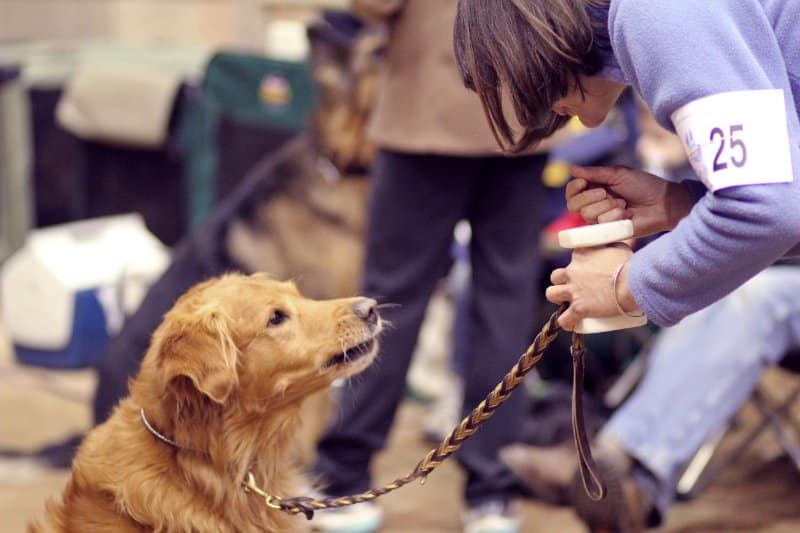
When teaching Dog Obedience classes, I have a rule for my fellow instructors. If a student is not doing what you are asking, ask again, another way. For example, if your instructions are to praise the dog, and the owner is silent, tell them, “Say ‘Good dog!’” If the handler is still mute, perhaps you can get them to praise by saying, “When you hear me say ‘Good dog,’ please repeat it!”
As an employer, it’s easy to become frustrated with an employee who is struggling with a task. Rather than assume incompetence, it is much more likely that he or she has not received clear instructions. This is especially true in a small business environment where policies, procedures, and job descriptions are often not well documented, and employees are asked to do more than one job when others are sick or on vacation.
After returning home with Caleb, discouraged from my five days with more experienced trainers, I asked an older, wiser competitor when it was time to give up on a dog. His answer was, “When training that dog is keeping you from training one you like more.” I didn’t have another dog to train, and I liked training Caleb. I wasn’t ready to quit.
However, I was ready to change my attitude. I was ready to stop assuming the worst. I was ready to make the task simpler, to do a better job of explaining what I wanted, and to help him understand that I could direct him to a bird much faster than he could find one. We started again, very simply, in the backyard, cautiously, patiently. This time I did not assume he was ignoring me, but that he did not understand my whistle and signal commands.
At the end of Caleb’s career, he had earned two different types of championships, something done by only two other Golden Retrievers in the history of the breed.
“In the fall of 2009, Caleb and I faced problems that could have been career-ending, but because of his incredible spirit, and willingness to keep trying to understand what I wanted, we turned a corner.
In the fall of 2011, he finished his Amateur Field Championship and won the Open Stake at the Golden Retriever Club of America National Specialty. He also qualified for the 2012 National Amateur Retriever Championship. In the fall of 2012, he completed his Obedience Trial Championship and qualified and competed in the National Obedience Invitational.
Standing next to Caleb in the field or in the obedience ring is my privilege and honor. As his career draws to a close, I cannot thank him enough for putting up with me.”
Caleb is gone now, but not from my heart. And the lessons he taught me are still with me too.
Is it serendipity that I have recently been given a young Golden Retriever who is struggling to learn how to hear me direct him to a bird he has not seen fall? “Willful” and “stupid” are the words others have used to describe him.
I’m looking forward to the challenge—the challenge of proving that poor communication is much more likely to be the problem.
Assuming that the dog is purposefully being disobedient causes an adversarial relationship, and much as with people, two adversaries rarely move to the same side of a disagreement.
Field Trials
There are three titles offered to AKC Retriever Field Trial competitors: Field Champion, Amateur Field Champion, and Qualified All-Age x2.