Members
Linda Lee is the breeder behind Buzablu Rat Terriers. Read about the kennel’s beginnings, champion dogs, puppies, photos and more!

Linda Lee

The Weekly Brief
The best of SHOWSIGHT editorials, weekly wins, and breeder commentary — delivered to your inbox every Sunday morning.
Interview with Linda Lee, Breeder of Buzablu Rat Terriers
Linda Lee: I live in Colorado. I have been in dogs for 50-plus years; breeding for 10 years.
Linda Lee: My kennel name is Buzablu Rat Terriers. I currently keep 10 dogs.
Linda Lee: I had an interest in showing after I got my first Rat Terrier. I received my first purebred Rat Terrier from Sand’s Kennels. I also used bloodlines of Skippin CJ Rat Terriers.
Linda Lee: My foundation dogs were from Ratitatt Kennels and Sand’s Kennels.
Linda Lee: We have 25 acres with a big dog yard and a kennel attached to our barn with an indoor/outdoor run with heating/air-conditioning. All puppies are whelped in our heated/air-conditioned attached garage in a full kennel set-up. Puppies are raised in this indoor kennel and, as they get older, their space increases to half of the garage area. This area has different services as well as toys, a jungle gym, litter box, and a tug that hangs from the ceiling. Their freedom increases as they get older, to going outside in the yard area under supervision.
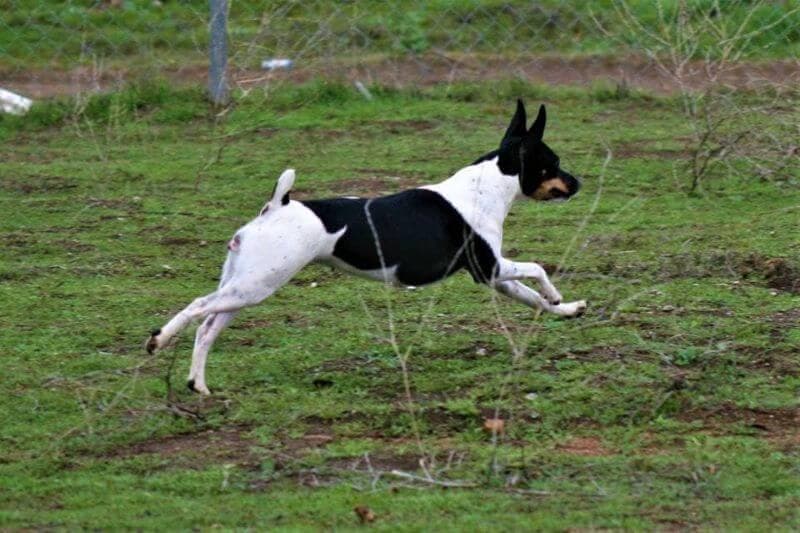
Linda Lee: My mentor/co-breeder and I FaceTime when the pups are between 7 and 8 weeks, to see which puppies will be held back. Also, with raising and being around the litter, I have a feel for what might be held back.
Linda Lee: I have a questionnaire that I have them fill out. If they pass this, I go further.

Linda Lee: Our breed is supposed to be shown at a brisk walk or a slow trot, to show reach and drive with movement off the shoulder and not from the leg. The Rat Terrier is not like other Terriers, which we have noticed many judges do not understand. There is such a variation in our breed on height, from 10 inches up to and including 18 inches, that, at times, we need to adjust how we show a particular dog because of this variation. We want a great topline, a great chest, and a great rear assembly.
Linda Lee: Rat Terriers are generally a healthy breed, but Primary Lens Luxation and Luxating Patellas are concerns. We feed a high-end kibble in the mornings and a raw B.A.R.F. diet with supplements in the evening. We give them a variety of treats such as chicken feet, cow cheeks, cow ears, etc.
Linda Lee: Yes, my Rat Terriers are in very great condition. I think it is important for them to have room to play and run. I have seen dogs crated for way too long, which causes boredom and behavioral issues. They need exercise and a job that will keep them happy.
Linda Lee: I feel Rat Terriers are good for a family dog, but they do need jobs and they do need exercise. They love to be with their people.
Linda Lee: I feel there are still preservation breeders. There are also several new breeders who are not keeping the traits of what makes a correct Rat Terrier.
Linda Lee: These dogs do have big personalities. They are jokers, lovers, and pranksters. They are very smart, and this can come across as being hard-headed. You, as a trainer, just have to make it fun and exciting, and then they will do what you want them to do. The people they choose are their world and they will let you know that.
The best way to ensure a long and happy relationship with a purebred dog is to purchase one from a responsible breeder. Not sure where to begin finding a breeder? Contact the National Parent Club’s Breeder Referral person, which you can find on the AKC Breeder Referral Contacts page.
Did you know nearly every recognized AKC purebred has a dedicated rescue group? Find your new best friend on the AKC Rescue Network Listing.
Showsight Magazine is the only publication to offer dedicated Digital Breed Magazines for ALL recognized AKC Breeds.
Read and learn more about the friendly Rat Terrier dog breed with articles and information in our Rat Terrier Dog Breed Magazine.

Meet the Breeders