Members
01/Overview
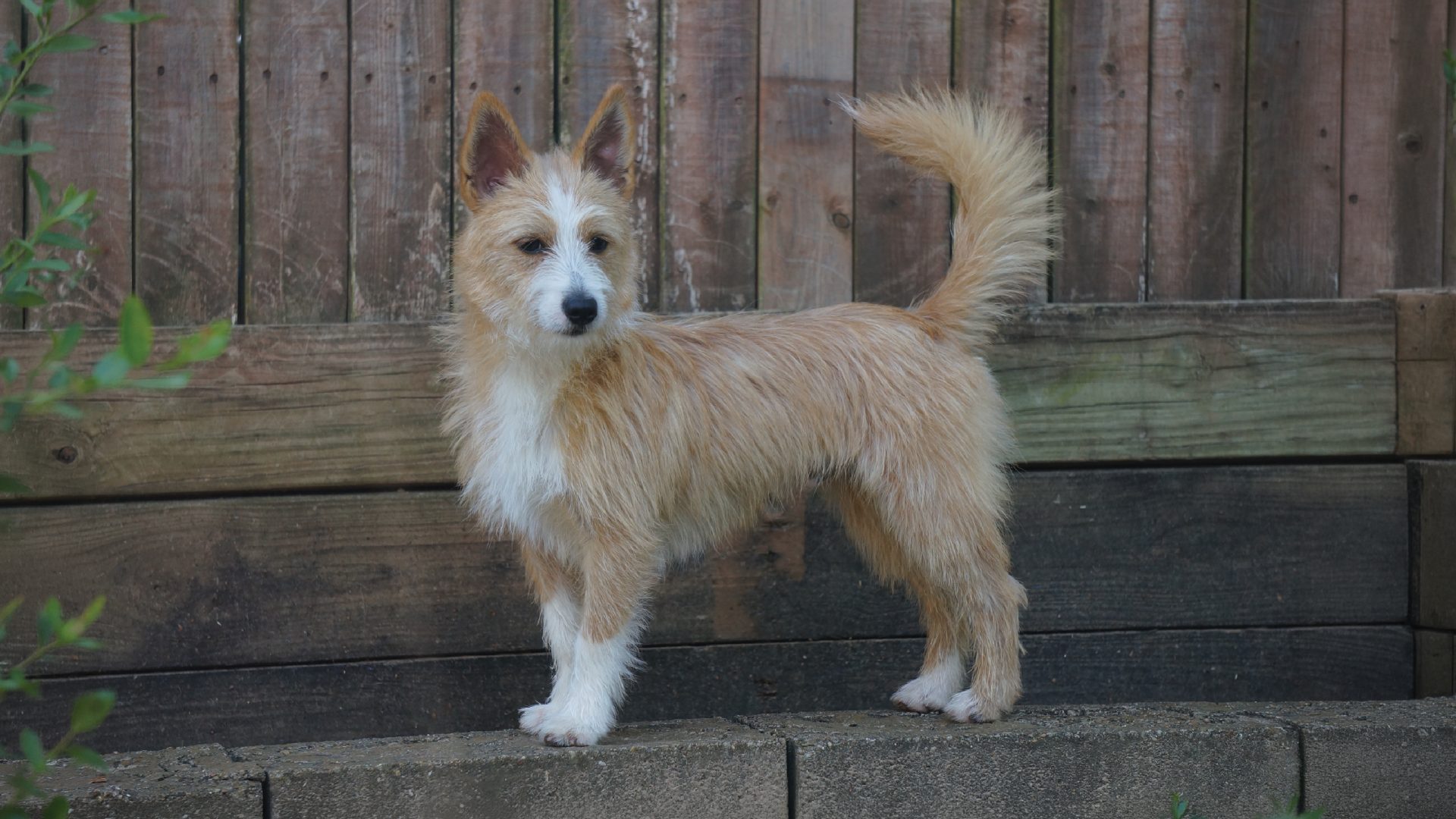
The Portuguese Podengo is an ancient hunting breed from Portugal with an athletic build, erect ears, wedge-shaped head, and either a smooth or wire coat. It was developed for hunting and is built for speed, agility, endurance, and quick movement over varied and rocky terrain.
Highlights
02/History
The Portuguese Podengo developed in Portugal as a versatile hunting dog with roots that trace back many centuries. Dogs of similar type were used throughout the Iberian Peninsula for hunting and general rural work.
Over time, Podengos developed in different sizes to suit different types of game and terrain. Medium-sized (Medio) and large (Grande) dogs were used for more demanding hunting work, while smaller dogs (Pequeno) were especially useful for rabbits and work in tighter spaces.
Portuguese Podengos were selected for speed, agility, endurance, independence, and the ability to hunt using sight, scent, and hearing. Both smooth and wire coats developed, giving the breed flexibility in different climates and working conditions.
The breed remained closely tied to traditional hunting in Portugal and was preserved primarily as a practical working dog. Organized breeding and formal Breed Standards later helped to establish the modern type.
03/Appearance
The Portuguese Podengo Medio stands 16 to 22 inches tall at the withers and weighs approximately 35 to 44 pounds. The Portuguese Podengo Grande stands between 22 and 28 inches tall, with a weight ranging from 44 to 66 pounds.
Skull: The Portuguese Podengo has a wedge-shaped head with a moderately broad skull that narrows gradually toward the muzzle. The stop is only slightly defined.
Expression: The expression is alert, lively, and intelligent.
Eyes: The eyes are small to medium-sized, set obliquely, and may range from honey to brown depending on coat color.
Ears: The ears are triangular, broad at the base, set high, and carried firmly erect. They are highly mobile and contribute strongly to the breed’s alert expression.
Muzzle: The muzzle is pointed and shorter than the skull, tapering gradually toward the nose.
Nose: The nose is well developed, with pigmentation that should harmonize with the coat color.
Bite: The jaws are strong, with a scissors bite.
The Portuguese Podengo is slightly longer than tall, with a lean, athletic body and moderate bone. The breed should appear agile, balanced, and capable of sustained movement without looking heavy or coarse.
The chest is moderately deep, the back is firm, and the body is well muscled. Overall structure should support speed, endurance, and quick movement over varied terrain.
Texture: The Portuguese Podengo may have either a smooth or wire coat. The Smooth coat is short and very dense with an undercoat present. The Wire coat is rough and harsh, not as dense as the Smooth coat, and without an undercoat. The Wire coat produces a distinct beard. The coat is to be shown in a natural state, the face and feet may be trimmed, but no other trimming or shaving is to be condoned. The coat does transition; as the new coat grows in, the old coat dies and comes out in large sections starting at the base of the neck, down the center of the back, and then down the sides of the body. The coat is not to be penalized in this state of change. A silky or soft coat is considered a fault.
Standard Colors
04/Consider
The Portuguese Podengo is alert, active, intelligent, and independent. The breed needs regular exercise, consistent training, early socialization, and secure containment because of its strong hunting instincts.
Interaction With Family
The level of affection a breed typically shows towards family members and familiar individuals.
Good With Other Dogs
The innate friendliness of a dog towards other dogs can depend on its breed.
Good With Young Children
The degree to which a breed will typically be patient with young children.
Amount Of Shedding
How much hair a breed typically leaves behind on clothes, furniture and floors.
Frequency Of Grooming
How often a breed needs brushing, bathing or a professional trim to stay in condition.
Amount Of Drooling
How prone a breed is to drool, worth knowing before you keep a towel by the door.
Openness To Strangers
How openly a breed tends to greet new people, visitors and strangers.
Protective Nature
How likely a breed is to alert you to anything unfamiliar, and stand between you and it.
Playfulness Level
How enthusiastic a breed stays about games and play well past puppyhood.
Trainability Level
How readily a breed takes direction and works with you rather than around you.
Barking Level
How much a breed uses its voice, and how readily.
Energy Level
How much get-up-and-go a breed brings to an average day.
Health
The Portuguese Podengo is alert, active, intelligent, and independent. The breed needs regular exercise, consistent training, early socialization, and secure containment because of its strong hunting instincts.
The Portuguese Podengo is alert, intelligent, energetic, and independent. The breed is generally affectionate with its family but may be reserved or cautious around unfamiliar people.
Its hunting background can make it curious, persistent, and highly responsive to movement and scent. Early socialization helps support confidence and appropriate behavior in different situations.
Exercise Expectations
Around 60 to 90 minutes of activity each day is suitable for many healthy adults, depending on age, fitness, and individual energy level. More demanding activities can be added gradually for properly conditioned dogs. Off-leash activity should take place only in securely enclosed areas because the breed may follow wildlife or interesting scent trails.
Grooming Expectations
The Portuguese Podengo does best in a home that can provide regular exercise, consistent training, and mental stimulation. The breed is active and alert but can settle well indoors when its needs are met.
A securely fenced yard can be useful, but it does not replace daily walks and interaction. Because the breed may have a strong prey drive, care should be taken around small animals and in unsecured areas.
The Portuguese Podengo is best suited to people who appreciate an energetic, intelligent hunting breed and are prepared to provide structure, activity, and secure management.
05/Puppies
Portuguese Podengo puppies are active, curious, and quick to explore their surroundings. They benefit from early socialization, consistent routines, and positive training to help them develop confidence and good manners.
A Portuguese Podengo puppy should have a regular schedule that includes meals, potty breaks, naps, play, and short training sessions. A crate or secure puppy area can help with housetraining and provide a safe place to rest.
Early socialization should include positive exposure to different people, well-mannered dogs, household sounds, surfaces, vehicles, and unfamiliar environments. Because the breed can be alert and independent, these experiences should remain controlled and positive.
Training can begin with name response, recall, leash walking, housetraining, basic cues, and impulse control. Short, reward-based sessions usually work best.
Puppies should receive a complete and balanced diet formulated for growth, divided into several small meals each day. Exercise should focus on supervised play, short walks, and age-appropriate exploration rather than prolonged or strenuous activity.
Routine veterinary care, vaccinations, parasite prevention, nail trimming, ear checks, tooth brushing, and regular coat care should also begin during puppyhood.
06/Activities
Portuguese Podengos are athletic, intelligent hunting dogs that can enjoy activities involving speed, scenting, agility, and teamwork with a handler. Here are some activities and dog sports in which the breed may participate:
Lure Coursing: Portuguese Podengos can use their speed, agility, and prey drive while chasing a mechanically operated lure.
Fast CAT: The breed may enjoy short-distance lure chasing that allows it to use its speed and athleticism.
Scent Work: Portuguese Podengos can use their strong sense of smell to locate specific odors in different environments.
Tracking: The breed may enjoy following scent trails and working through structured tracking exercises.
Agility: Their speed, coordination, and quick movement can make Agility a suitable activity.
Rally: Rally Obedience combines obedience exercises with movement through a predetermined course and can provide both mental and physical stimulation.
Obedience: Portuguese Podengos can perform structured exercises that test focus, responsiveness, and teamwork.
Conformation Shows: Portuguese Podengos compete in Conformation Shows, where judges evaluate each dog according to the Breed Standard.
Trick Dog: Trick training can provide mental stimulation and strengthen communication between the dog and handler.
Hiking and Exploring: Properly conditioned adults can enjoy longer walks, hikes, and supervised outdoor exploration.
Gallery
07/Standards
The Portuguese Podengo is recognized by the world’s leading registries and kennel organizations, which categorize the breed into a specific Group based on its unique characteristics. This breed is recognized worldwide under the following Group designations:
The ideal Portuguese Podengo is described by a Breed Standard that is approved by each of the world’s leading registries and kennel organizations. The Standards for this breed may be found in the following links:
08/Clubs
Portuguese Podengo clubs support breed education, responsible breeding, health initiatives, promotion of the Breed Standard, and participation in Conformation Shows and other activities.
American Portuguese Podengo Medio Grande Club: This is the American Kennel Club (AKC) parent club whose members are dedicated to promoting and preserving the Portuguese Podengo in the United States.
09/Rescue
Because the Portuguese Podengo is relatively uncommon in North America, dedicated breed-specific rescue organizations are limited. Rescue assistance is often coordinated through breed clubs, individual breeders, or broader primitive breed rescue networks.
American Portuguese Podengo Medio Grande Club: The national breed organization can provide rescue contacts, rehoming guidance, or information about a Portuguese Podengo needing placement in the US.
10/Facts
Portuguese Native Breed
The Portuguese Podengo developed in Portugal and is one of the country’s traditional hunting breeds.
Bred for Hunting
The breed was used to pursue game over varied terrain, relying on sight, scent, and hearing.
Two Sizes
Portuguese Podengos are classified as Medio or Grande, depending on size.
Still Used as a Working Dog
Portuguese Podengos continue to be used for hunting in some areas while also participating in Conformation Shows and a variety of dog sports.
11/FAQ
Portuguese Podengos can make excellent pets for active people who appreciate an intelligent, energetic, and independent companion. They need regular exercise, consistent training, and secure management.

Written by
Dan Sayers is the Executive Editor of SHOWSIGHT. He is a member of the World Dog Press Association and the Dog Writers Association of America, which recognized his illustrations in the award-winning Encyclopedia of K-9 Terminology. Dan is a longtime supporter of the sport of dogs and an advocate for the conservation of recognized breeds in all their forms and functions. He is a member of the Morris and Essex Kennel Club, and for 45 years, the Irish Water Spaniel Club of America where he serves as AKC Delegate, Archivist, and approved Breed Mentor. Dan breeds under the Quiet Storm prefix and has judged the IWSCA National Specialty Sweepstakes twice.
Official Standard of the Portuguese Podengo
History: A primitive type dog, its probable origin lies in the ancient prick-eared dogs brought by the Phoenicians and Romans to the Iberian Peninsula in Classic Antiquity. This rustic breed adapted itself to the Portuguese geography and climate, resulting in what is nowadays the primary pack hunting dog in Portugal for large (boar/stag) and small (rabbit) game. The GRANDE, the largest of the Podengos, was developed for deer and wild boar hunting. It will exhaust and hold down the prey and await the hunter's gun. The Grande is now very rare in its home country. The MEDIO, or middle size, was developed for rabbit chasing, flushing, hunting and retrieval. Its hunting style includes catlike stalking and, similar to the Ibizan Hound, it often jumps above the prey before landing on or near it to flush it out of dense brush, rock crevices or burrows. It will dig if necessary, to flush prey.
General Appearance: Well-proportioned muscled, sound with moderate bone. (Grande size heavier body and bone) Lean 4-sided pyramid shaped head with prick ears. Tail - sickle-shaped. Over emphasis on any one feature should be strongly avoided. The Medio and Grande come in two coat textures, smooth and wire. The Podengo is a hunting dog; scars from honorable wounds shall not be considered a fault.
Size, Proportion, Substance: The proportions of the Grande and Medio are almost square. Strong in build, heavier bone present in larger size dogs. Body length from prosternum to point of buttocks is approximately 10 percent longer than the height at the withers. Grande - 22 to 28 inches at the withers, 44 to 66 pounds. Medio - 16 to 22 inches at the withers, 35 to 44 pounds. Disqualification – Under 16 inches.
Head: The head is lean with a flat or slightly arched skull. Shaped like a 4-sided pyramid, tapering towards a slightly protruding nose tip. Occipital bone is moderately defined. The stop is moderately defined. The planes of the skull and muzzle diverge, cheeks lean and oblique (not parallel). Muzzle – The muzzle is straight in profile; slightly shorter than the skull; broader at the base than at the tip. Lips are close fitting, thin, firm, and well pigmented. Teeth – Large strong teeth should meet in a scissors bite. Nose – The nose is tapered and prominent at the tip. It is always darker in color than the color of the coat. Eyes – Almond shaped, very expressive, moderate in size, not prominent, set obliquely, color varies according to coat color from honey to brown. Fault – Eyes of two different colors. Ears – The ears are triangular in shape with their length greater than their width at the base. They are carried erect. Highly mobile, the ear can point forward, sideways, or be folded backward, according to mood. The lowest point of the base is at level of the eye. Fault – Rounded, bent or drooping hound ears. Ears should, at minimum, lift at the base.
Neck, Topline and Body: Neck – The neck is straight, strong and well-muscled. It transitions smoothly from head to body and is free from throatiness. Topline – The top line is typical of larger sight hound straight or slightly arched. Flexible. Body – Well-proportioned body slightly longer than height at withers. Ribs moderately well sprung and well carried back. The chest reaches down to the elbow, medium width. The croup is straight or slightly sloping, broad and muscular. There is a slight tuck up.
Forequarters: The shoulder is long, inclined, and strong, angulation is moderate. The forelegs are straight, lean and well-muscled, with elbows held parallel to the body. The pastern joint is not prominent and the pasterns are short and strong. Presence or absence of front dew claws immaterial. The wrists are very elastic and flexible.
Hindquarters: Well-muscled and clean. Upper thigh long, of medium width, muscular. Moderately angulated. The rear pasterns are strong, short and straight and there are no dewclaws. Feet - Oval, neither cat footed nor hare footed. Toes long, slightly arched, nails strong and preferably dark. Pads firm. Tail - The tail is set moderately high, thick at the base tapering to a fine point, and at rest it falls in a slight curve between the buttocks. When the dog is in motion it rises to the horizontal and is slightly curved or it may go up to vertical in a sickle shape. The hair is fringed on the underside of the wire coat tail. Disqualification - Curled in ring touching the back.
Coat: There are two types of coat: Smooth coat which is short and very dense with undercoat present. Wire coat which is rough and harsh, not as dense as the Smooth coat, and without undercoat. The Wire coat produces a distinct beard. The coat is to be shown in a natural state, the face and feet may be trimmed, but no other trimming or shaving is to be condoned. The coat does transition as the new coat grows in the old coat dies and comes out in large sections starting at the base of the neck, down the center of the back and then down the sides of the body. The coat is not to be penalized in this state of change. Fault - Silky or soft coat.
Color: Preferred: Yellow & white or fawn & white of any shade or primarily white with patches of any shade of yellow or fawn. The following colors are also acceptable: black or shades of brown/red, with white patches or white with patches of black or brown. Fault - Brindle and solid white.
Gait: Side gait is of a typical larger sight hound balanced front and rear. Front action is straight and reaching moderately forward. Going away, the hind legs are parallel and have moderate drive. Convergence of the front and rear legs towards their center of gravity is proportional to the speed of their movement, giving the appearance of an active agile hound, capable of a full day’s hunting.
Temperament: They are an intelligent, independent, affectionate, alert breed, however they can be wary with strangers and this should not be considered a fault in the judging process.
Faults: Eyes of two different colors. Rounded, bent ears. Silky or soft coat. Brindle and solid white.
Disqualifications: Size – Under 16 inches. Tail – Curled in a circle touching the back.
Approved August 17, 2019
Effective date October 22, 2019


Meet the Breeders
Diana McCarty of MIJOKR Portuguese Podengos discusses breed hallmarks, FSS challenges, AKC policies, and preserving primitive breeds.
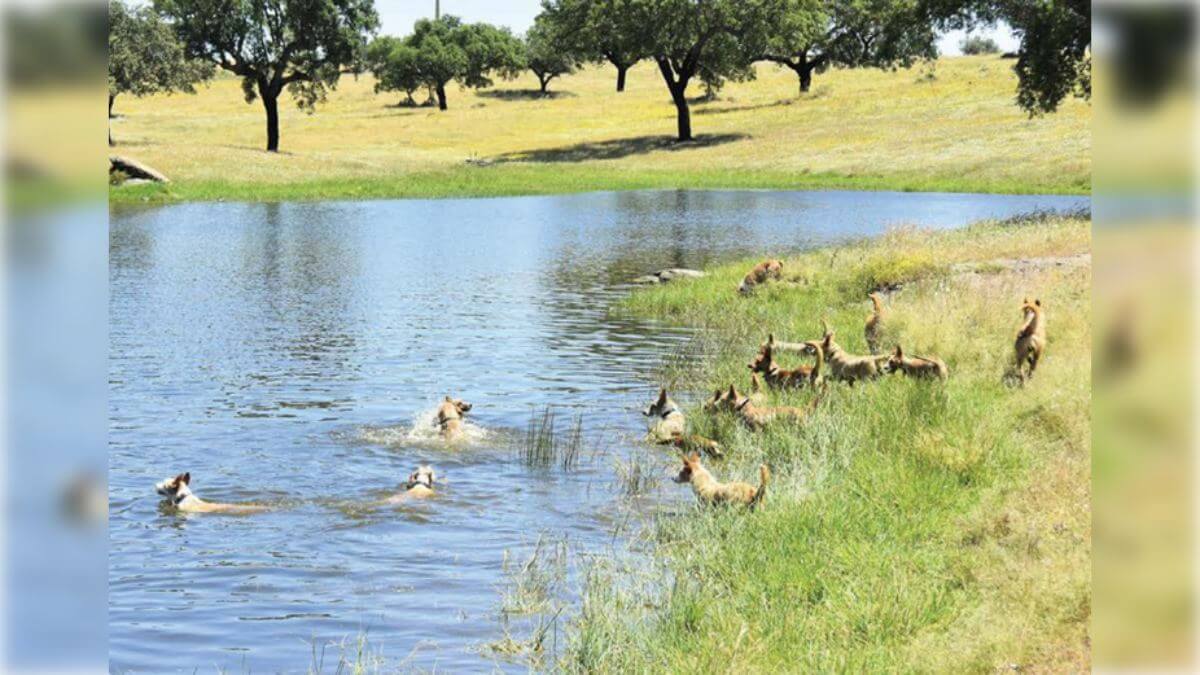
Join us in Portugal for two exciting Podengo breed events, featuring hunting demos, expert insights, and lively discussions.


The Portuguese Podengo breed is also known as Warren Hounds in England. Find out how Podengo’s name developed and changed through history.
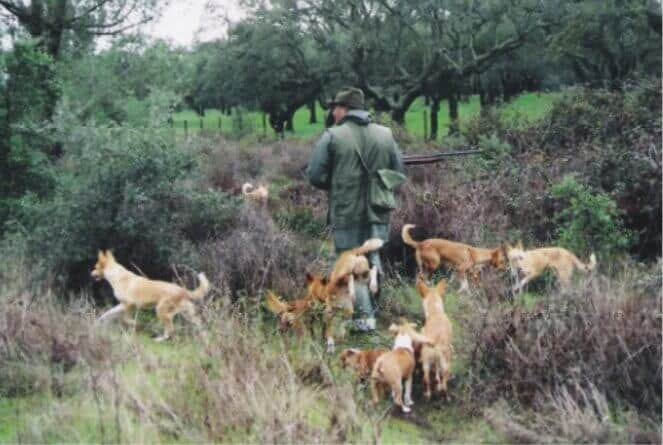
Using both sight and scent to find its prey, you would typically find Portuguese Podengos hunting rabbits, and the Grande hunting boar.
The tail is set relatively high, thick at the base, and tapers toward the tip. At rest, it hangs naturally, while in motion it may be carried horizontally or in a sickle shape, but it should not curl tightly over the back.
Standard Markings
A Note About Color: The preferred colors are yellow & white or fawn & white of any shade, or primarily white with patches of any shade of yellow or fawn. The following colors are also acceptable: black or shades of brown/red, with white patches or white with patches of black or brown. Brindle and solid white are considered faults in the show ring.
Coat Type
Wiry, Smooth
The structure of the coat this breed carries.
Coat Length
Medium
How long the breed's coat grows when kept in condition.
Adaptability Level
How easily a breed copes with changes in home, routine, noise and weather.
Mental Stimulation Needs
How much a breed needs a job, a puzzle or training to stay content.
A Portuguese Podengo should receive a complete and balanced diet appropriate for its age, activity level, and body condition. Portions should be measured to help maintain a lean, healthy weight.
Most adults do well with two meals per day, while puppies generally need several smaller meals. Treats can be useful during training but should remain a limited part of the daily calorie intake.
Fresh water should always be available, especially after exercise or outdoor activity.
The Portuguese Podengo is intelligent and capable of learning quickly, but the breed can also be independent and easily distracted by scent or movement. Training should be consistent, patient, and based on positive reinforcement.
Early training should focus on recall, leash manners, housetraining, basic cues, and calm behavior around people and other dogs. Short sessions with food rewards, praise, and variety usually work best.
Because of the breed’s hunting instincts, reliable recall can be challenging in open areas. Secure containment and leash control are important outdoors.
Bathing can be done as needed. Neither coat type requires extensive trimming. Nails should be trimmed regularly, ears should be checked for debris or irritation, and teeth should be brushed routinely.